The Eye Of The (Sand)Storm…

Well here we are in 2013 and with it comes resolutions that for me, are just begging to be broken. But I have gathered the very best of all my intentions to fulfil a promise I made a couple of posts ago to give you all an overview of my visit to Sand Sculpting Australia’s Under The Sea.

Custody changes during my Melbourne stay (of me from Mum to Lil Chicky and back again, the latter of these taking place in a car park) meant that uploading of photos for this post did not go as seamlessly as planned. But with perseverence – and a return to Gidday HQ’s wifi realm – I have prevailed. So take your marks, get your thongs flip flops on and let’s get this Armchair Tour underway.

This hard working fella can be found in 20,000 Leagues Under The Sea….
…as the ‘in’ crowd – complete with piercings and an assortment of headgear – gathers at The Sign Of The Seahorse to catch up with the latest snail(mail).
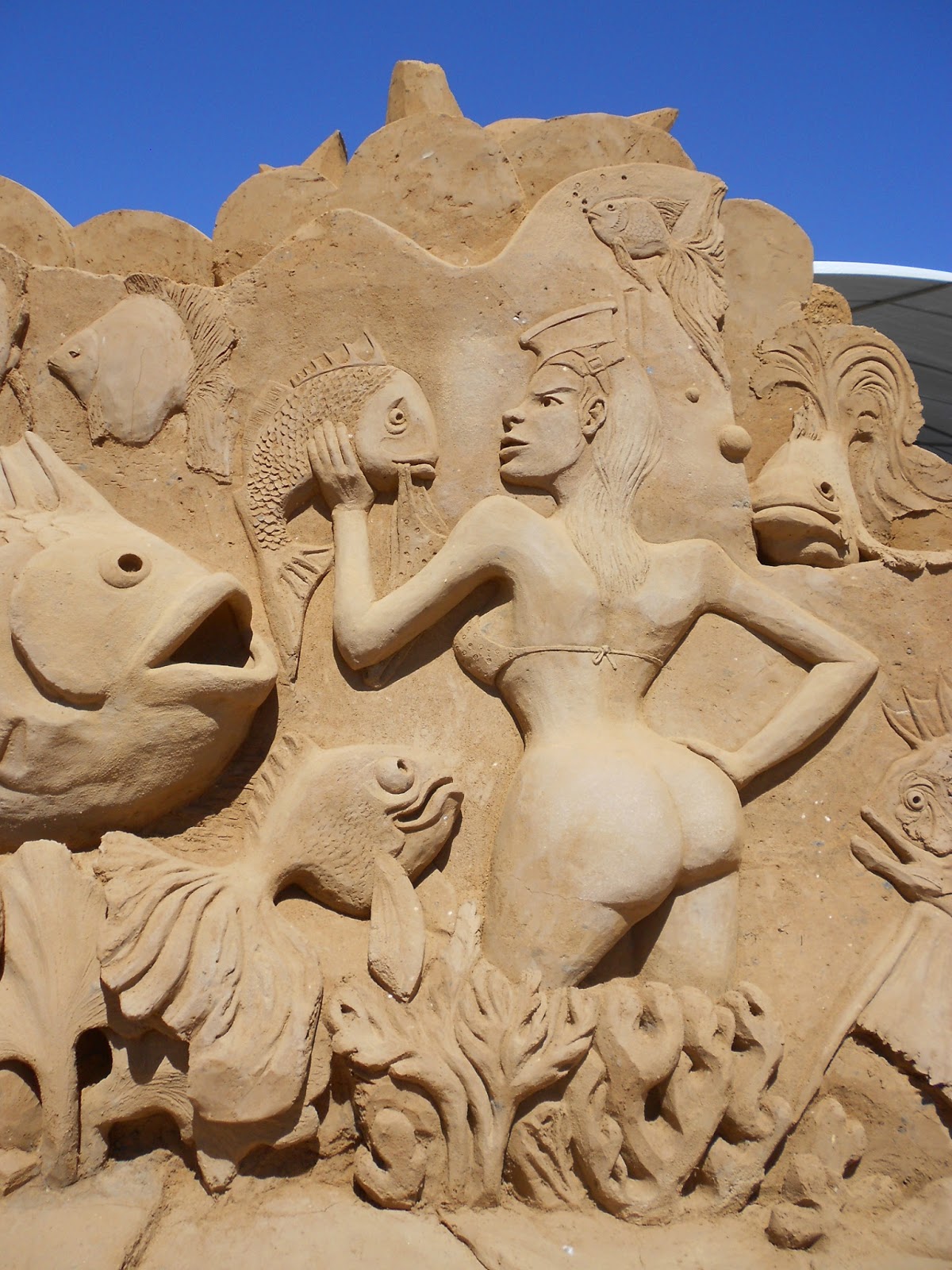
The sirens’ song and come hither looks of Mermaids tempt you to venture further…
…whilst this giant of the sea keeps a beady eye on visitors and carries the weight of a former civilisation – the Lost City of Atlantis – on his back.
Maintenance is an important part of the Sand Sculpting world so it’s best to invest in regular check ups
…before things get out of hand.
This creature of the sea casts a lascivious eye over passersby…
…as it would appear that, like Poseidon, wild horses can’t keep them away.
And just when a couple of cuties might convince you that it’s safe to go back into the water…
…you might find yourself caught out by the bare (faced) cheek of the natives.

It’s a fascinating exhibit with lots of intricate detail and cheeky fun throughout – it’s worthwhile going back and revisiting each to discover new elements you didn’t see the first time around – as well as a speedy 10 minute demonstration of sand sculpting by one of the team on site.


If you want to read a little bit more, you can pop over to Mum’s write up on Weekend Notes. Or if you are actually in the Melbourne area before the 28th April, get yourself down to the Frankston Waterfront and find your very own fishy favourites.

Phew! At last, that’s post 1 (and resolution 1) for 2013 done.

Boats And Bridges…

Being part of a somewhat caring and supportive family, Lil Chicky and I decided that it was time that we do a little window shopping to find the next lucky man in my life. Fortunately, the family had decided to take a ferry ride over to Williamstown yesterday so at 12.30 the family Hamer (including those with a myriad of other names) gathered at Southbank, boarded our ship of dreams and set sail.
 
The one hour cruise took us along the Yarra River and out through The Docklands which has developed significantly since I last lived Down Under – there are lots of interesting buildings to ooh and aah at on the way but for now, let’s maintain some focus on the purpose of this post and leave architectural meanderings for another time.

The title promises bridges and we headed under many of them – here are my top three:

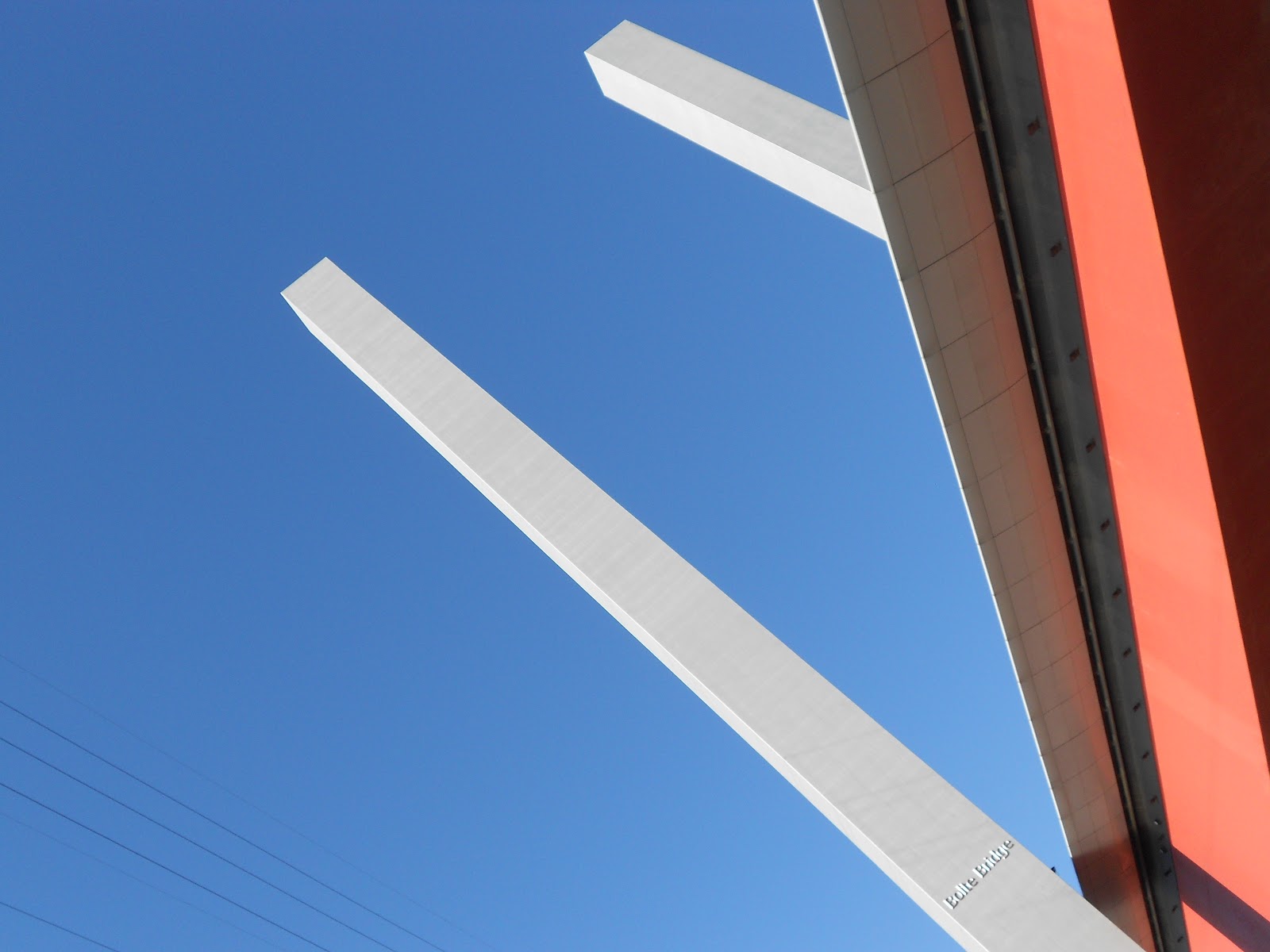
The Bolte Bridge, named for Henry Bolte who remains the longest serving Victorian State Premier (17 years from 1955). The bridge was opened in August 1999) and also forms an integral part of the entrance into Melbourne by car from the airport. The view of the City from here always feels like a big ‘welcome back’ to me. 
This bridge is a new one since my departure – it was difficult to capture the whole bridge but I loved this side, looking like one of those hooped underskirts from yesteryear.
The clean lines of this bridge and the Australian flag fluttering in the breeze typifies the clean, stark lines of the Australian landscape for me – no idea what this bridge is called either but I loved it all the same.
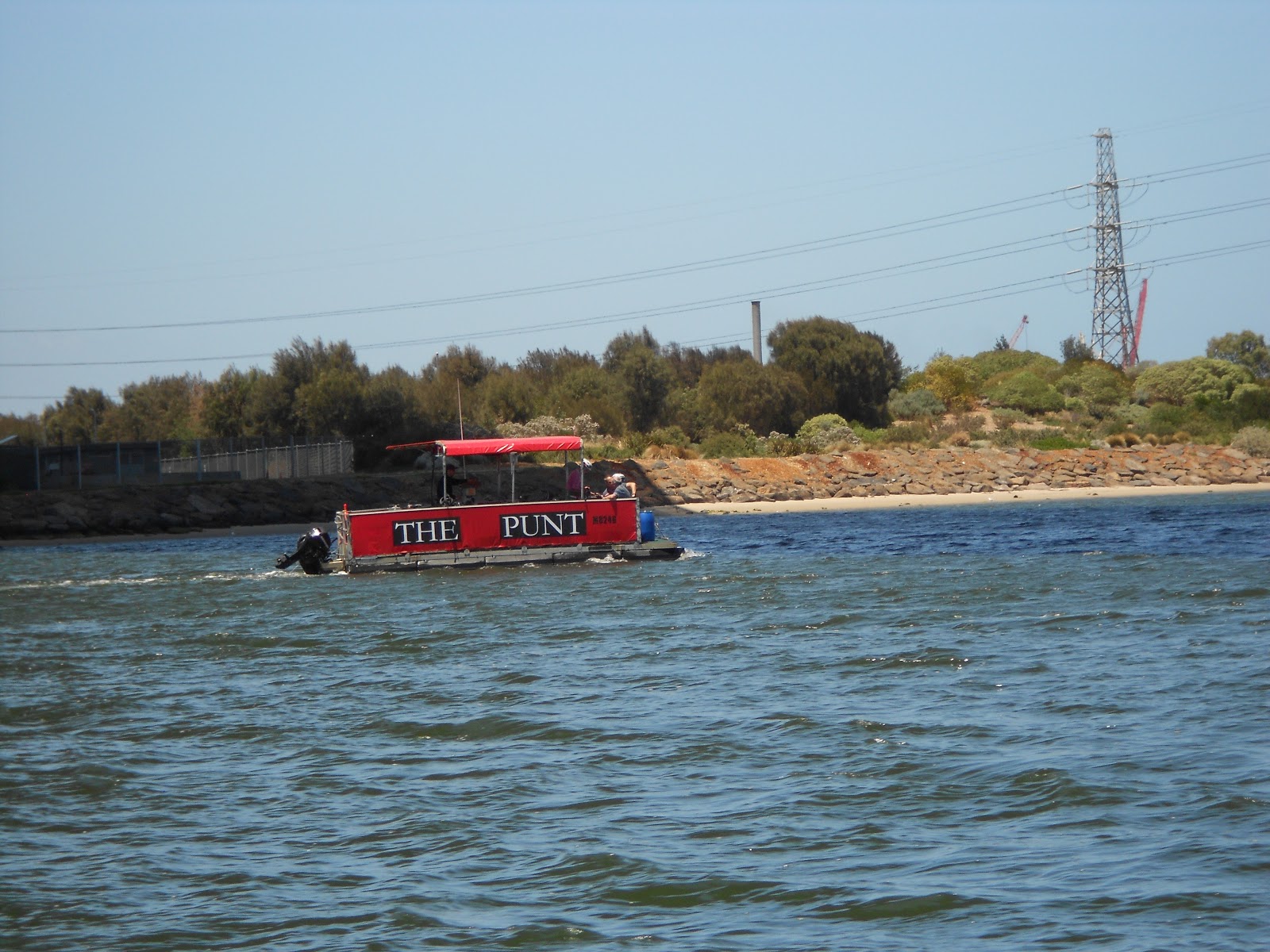
The weather was gorgeous – a pleasant mid 25C – and a gentle breeze cooled our sun-kissed noses and cheeks as we motored along. There were many boats out of all shapes and sizes, some puttering along at a more sedate pace…

Before we knew it, we had arrived at Williamstown Pier so it was off the boat for a stretch of the legs, something to eat and a hearty discussion about our plan of attack (which mainly revolved around ice-cream).
 
Docking at Williamtown foreshore…yes, that bright shiny object is the sun…
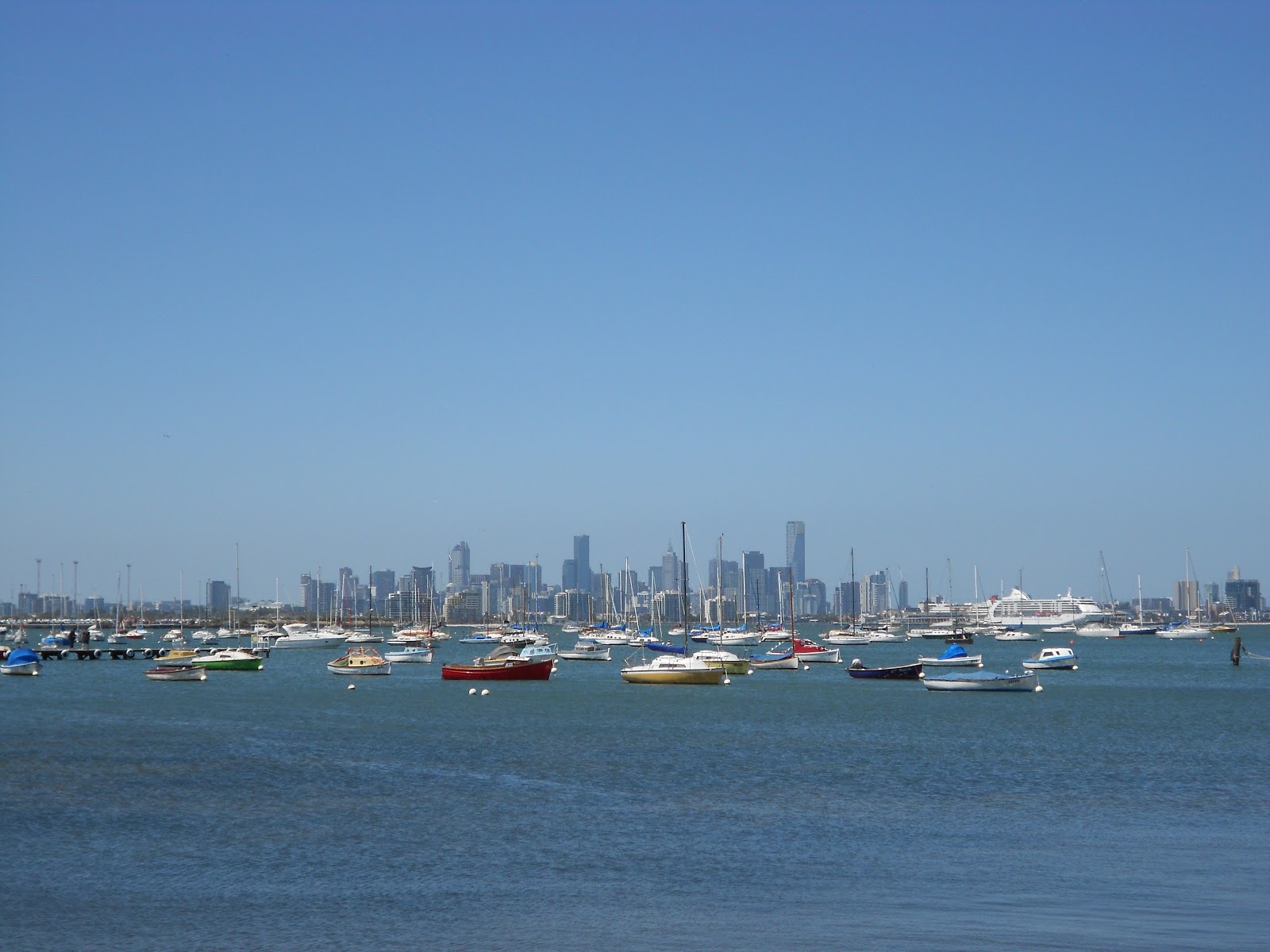
One of the great things about Williamtown (apart from the ice cream) is the fantastic view of the City of Melbourne so here’s the shot, complete with the millionaire shopping arcade boats in the foreground… 

After a pleasant few hours we decided to head back but finding a millionaire/boat had not gone so successfully so we decided to keep our eyes peeled on the way back. A single girl’s work is never done, you know…

As with some of my past experiences with you critters from Mars, this one seemed to over promise (Global Dream? Really?) and under deliver. I know it’s a working boat and all but a lick of paint wouldn’t have gone astray. There’s always something to be said for making an effort.
Now this is more my style: Sleek and white and celebratory even in name. Unfortunately a small child appeared as we chugged past which is just going a bit overboard (pardon the pun) with the accessories I feel….
This one has a spot in the boot for one’s jet ski. Very handy!
Suddenly the Bolte Bridge loomed above us again, signalling that our sea adventure (well the combined waterways of the Yarra River and Port Phillip Bay in any case) would soon be over…
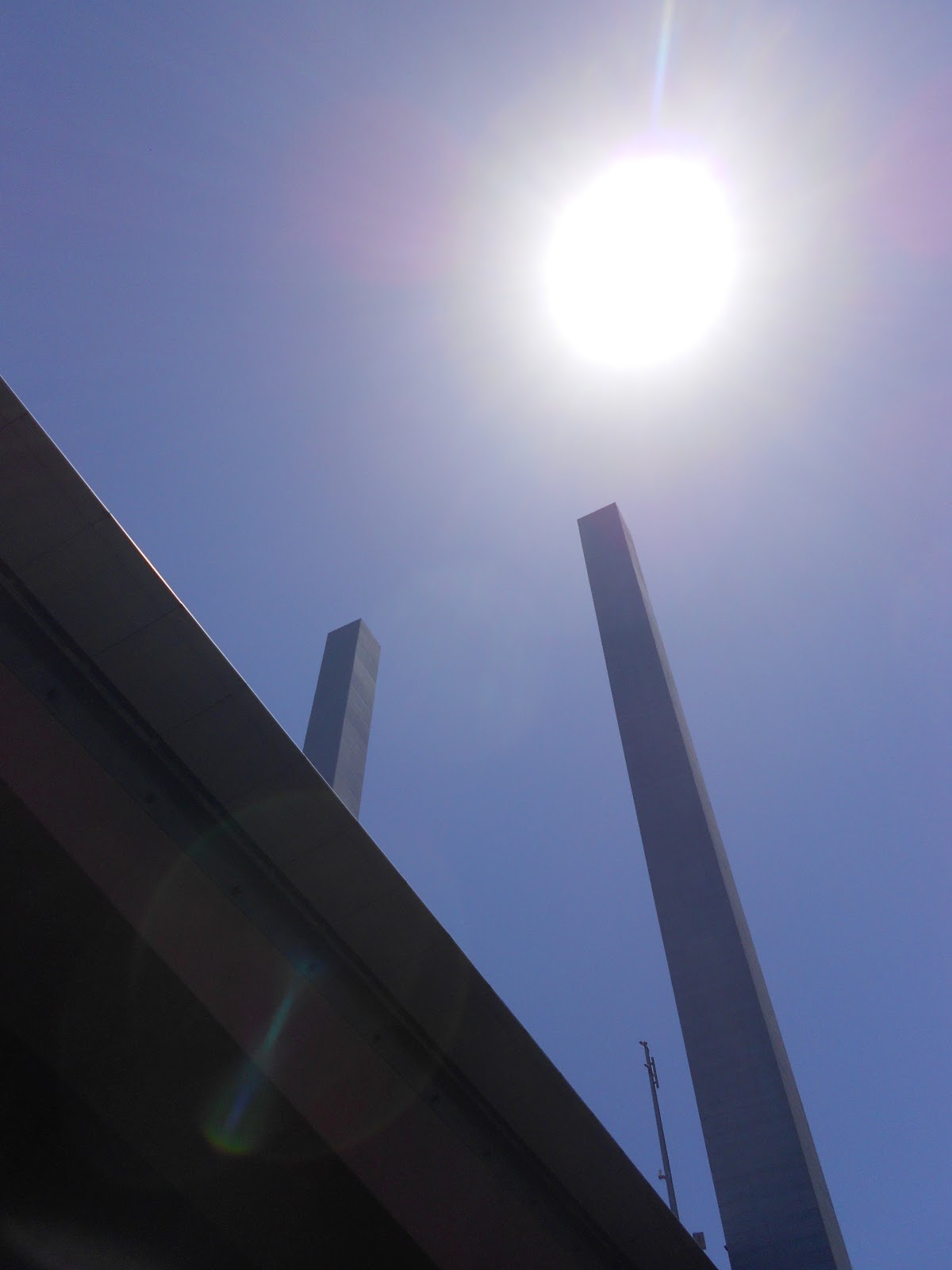
The Bolte Bridge with the bright shiny sun-thing again…
So that was the Day of the Family Hamer, seven intrepid wanderers out to see the world of Williamstown and conquer it with ice cream.
 
Which brings me (not so neatly) to the end of this post, my last for 2012. And all that remains is to wish you a Happy New Year wherever you are and however you choose to celebrate it.
 
There’s one ‘sleep’ left peeps – let’s show 2013 we mean business!

Much Ado About (Doing) Nothing…

By the time you read this, I will have fled the chill in old London Town to sun myself in Langkawi.

For those of you who don’t know, Langkawi is a collection of 99 islands just off the Malaysian Peninsula in the Andaman Sea.

Whilst I’ve been lucky enough to travel a lot this year, exploring new places and reacquainting myself with others, I have not had a ‘do nothing’ beach holiday for about 4 years so back in April, I decided to spend a few pennies and book myself a week in an upmarket pad at the Pelangi Beach Resort and Spa. And after months of waiting for a mere splash of warm sunshine, you can probably imagine that it was with much excitement that I boarded the A380 at Heathrow, especially after a week of sub-zero mornings.

So far I’ve slept (in bed, by the pool), read (in bed, by the pool) and generally moved at a rather lethargic pace. I’ve visited the beach, the bar(s), both resort pools and the spa and my plan is to repeat this pattern for the remainder of my week here. After all, I didn’t pay for a lovely room in an upmarket resort to look around elsewhere or make any more perplexing decisions than which pool vs the beach and which book to read next.

Just in case you were wondering what this level of luscious lethargy looks like, here are a few pics of my inactivity-packed sojourn so far…

DAY1: Arriving in the morning meant my room was not ready so I was forced to wander around and admire the views – this one is just begging for an audience don’t you think?
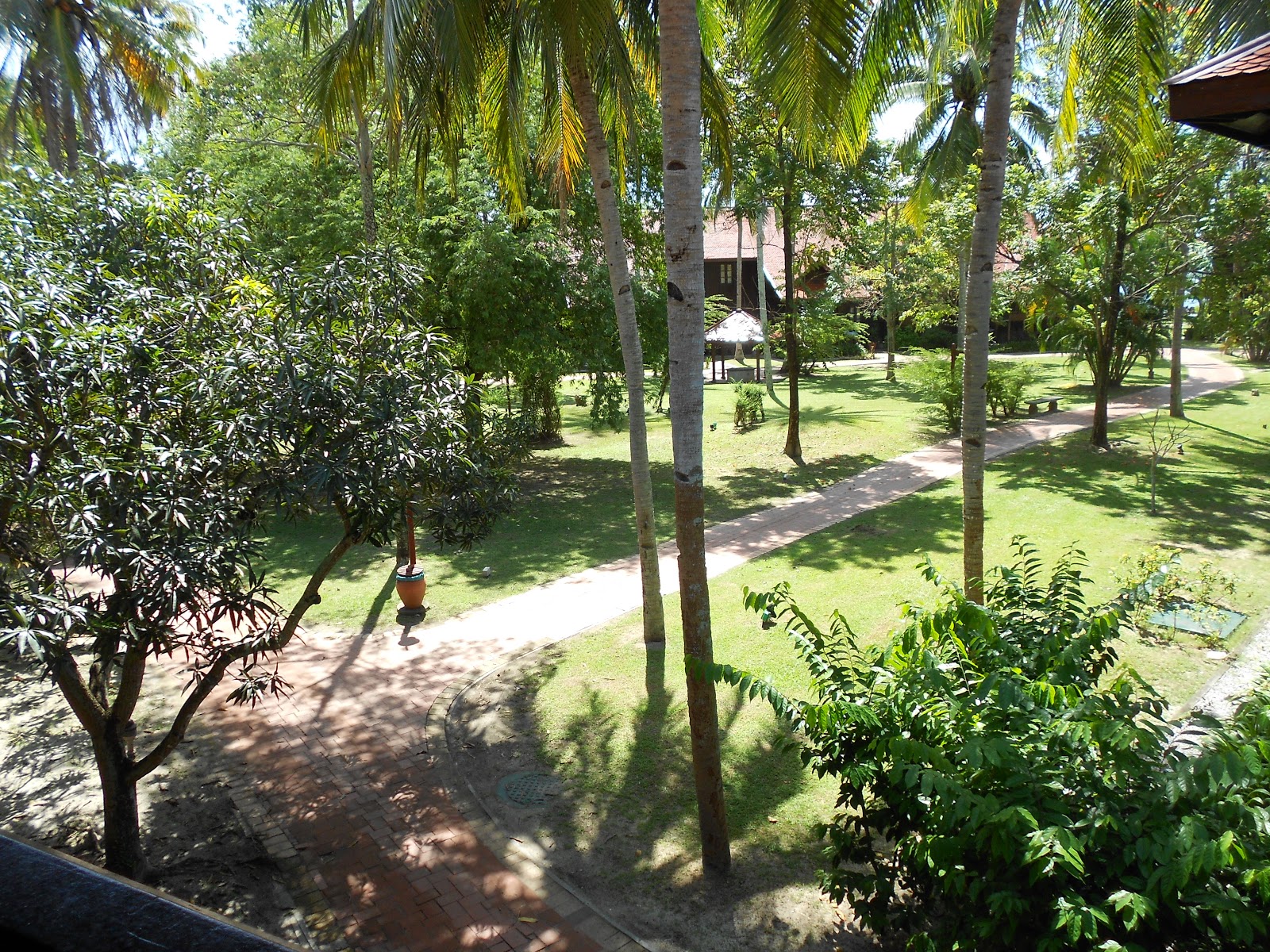
Once my room was ready, all I had to do was sit on my balcony admiring the view…and wait for my luggage which missed the connecting flight from Kuala Lumpur to Langkawi. No big surprise as I had to sprint down the length of one terminal, get on the train to the other terminal, clear customs and security and run halfway up the other terminal to get said flight. I achieved this, sweating and panting, in 20 minutes. My bag did not.
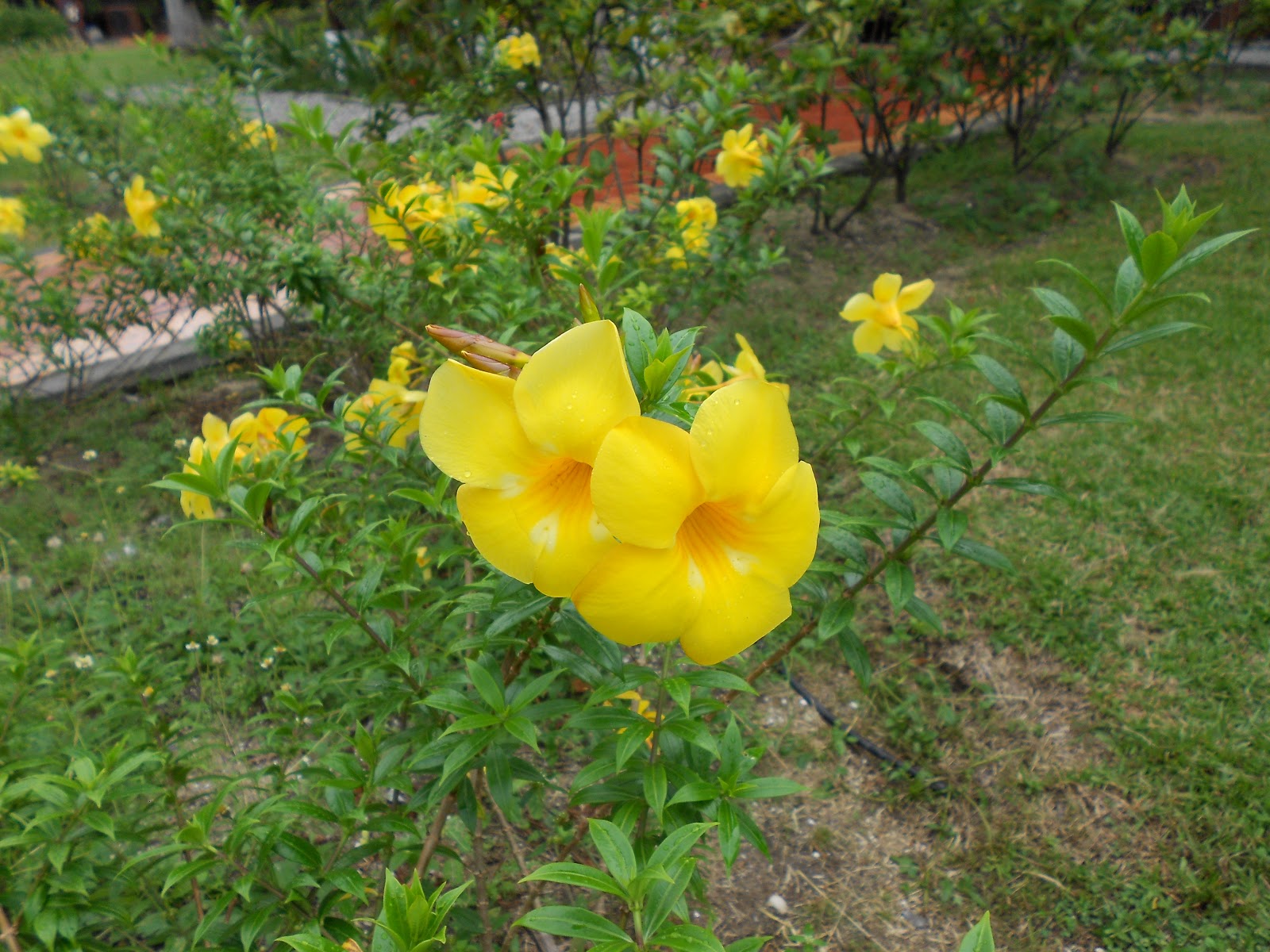
DAY 2: After an hysterical emotional reunion with my luggage last night and a rather average night’s sleep, I transferred my bikini’ed self to a sun lounge beside the pool for a few hours this morning before heading off to the spa. As it has done each afternoon since I got here, a brief (20 minute-ish) yet heavy shower came down during my walk back, but I just had to stop and snap this allamanda. We had these growing all over our side fence when I lived in Brisbane in the 70s so I had a little moment of childish (and wet) nostalgia.
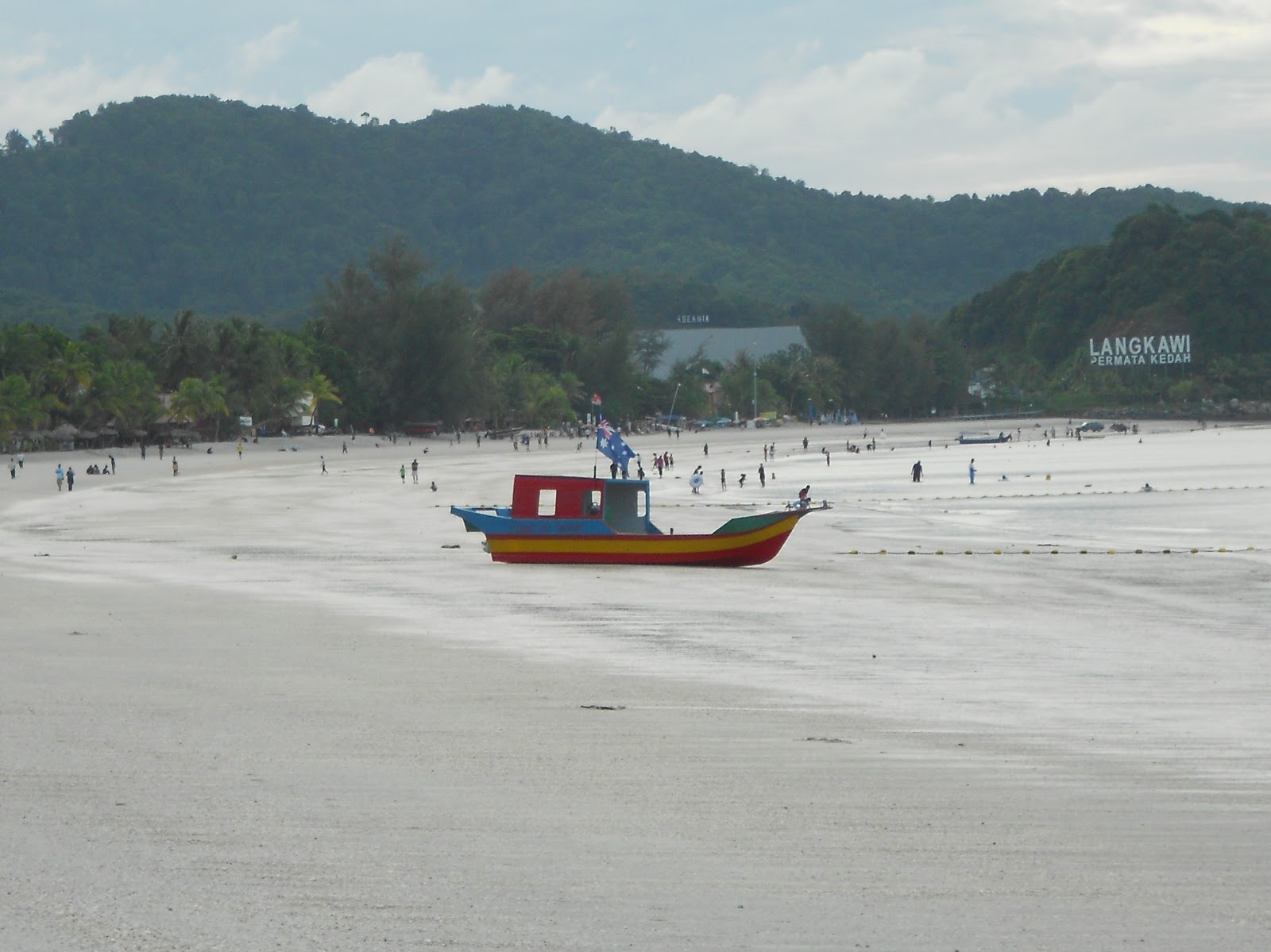
DAY 3: Time for a proper beach walk so up at 8-ish for a 40 minute stroll. This colourful local is flying a flag close to my heart…
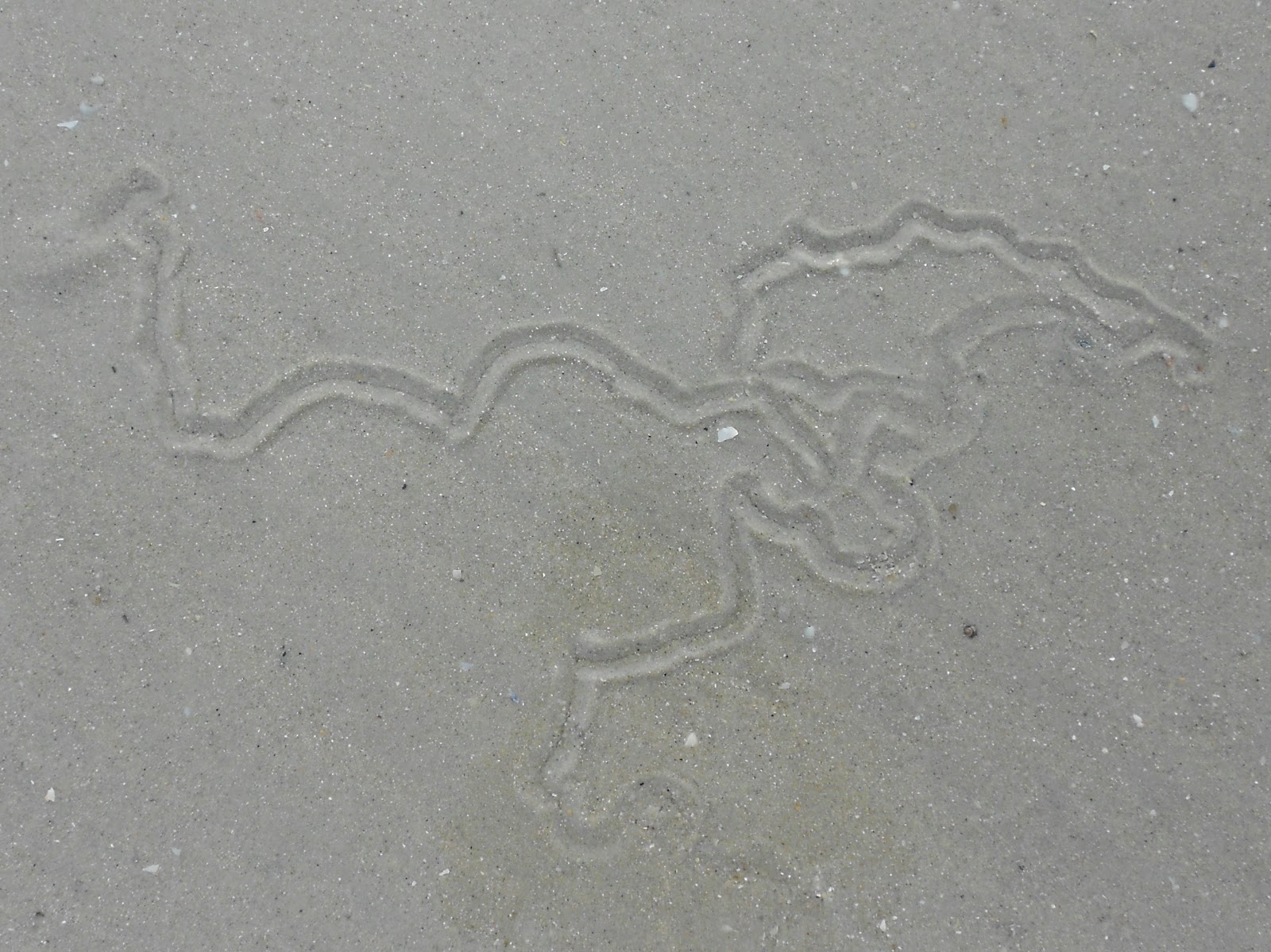
…while this one seemd to have taken a rather long and winding road.
As for my bikini’ed good self, I took my pretty paws (thanks to yesterday’s spa visit) off to the Cascade Pool for the day. (There’s a bar in the pool off to the left of the photo so don’t worry, I didn’t go thirsty.)
DAY 4: Hot and humid again today (surprise!) so it’s back to the Horizons Pool (see DAY 2) for more lying about and reading…
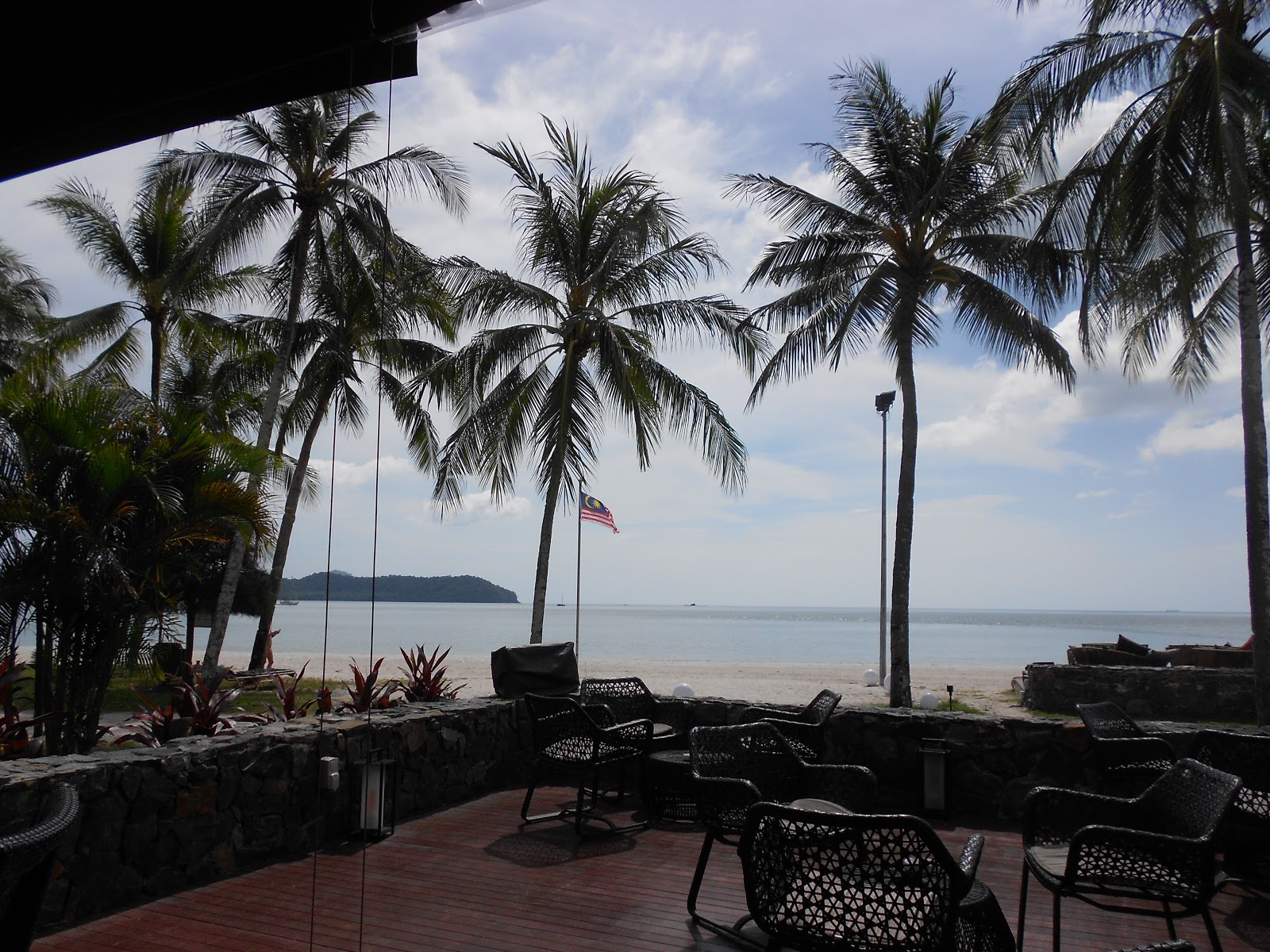
…before a spot of lunch overlooking the beach.
I liked it so much there that I went back that night…
…for a couple of these.

And do you know what? I have plans to simply press repeat and do it all over again. Such are the hardships I must endure.

Sigh…

Eat, Sleep and Be Merry…

Over the last couple of posts, I have shared quite a sombre side of my Krakow experience. And it is true that the dark period in Krakow’s past is an essential part of understanding its character and place as an historic and cultural centre of Eastern Europe.

But Krakow is also filled with a sense of warmth and joyful spirit. The people are friendly. Its medieval history is stamped indelibly in its glorious architecture, cobbled streets and picturesque plazas. It has a wonderful – and accessible – music scene, delicious food and a rich spiritual lineage as a main centre for Catholicism in Europe.

For my part, it would be a shame to let a dark past overshadow your armchair tour of this beautiful and soulful city. I had such a great time that it would be remiss of me not to encourage you to visit. And what better way to wrap everything up than by giving you a list of my favourite bits and a few recommendations to boot. So here goes…

Eat
Generally food is tasty, filling and good value and the best local tipples are beer and vodka. (The Poles are not hugely into wine, but this market is growing.) Suffice to say I ate and drank well.

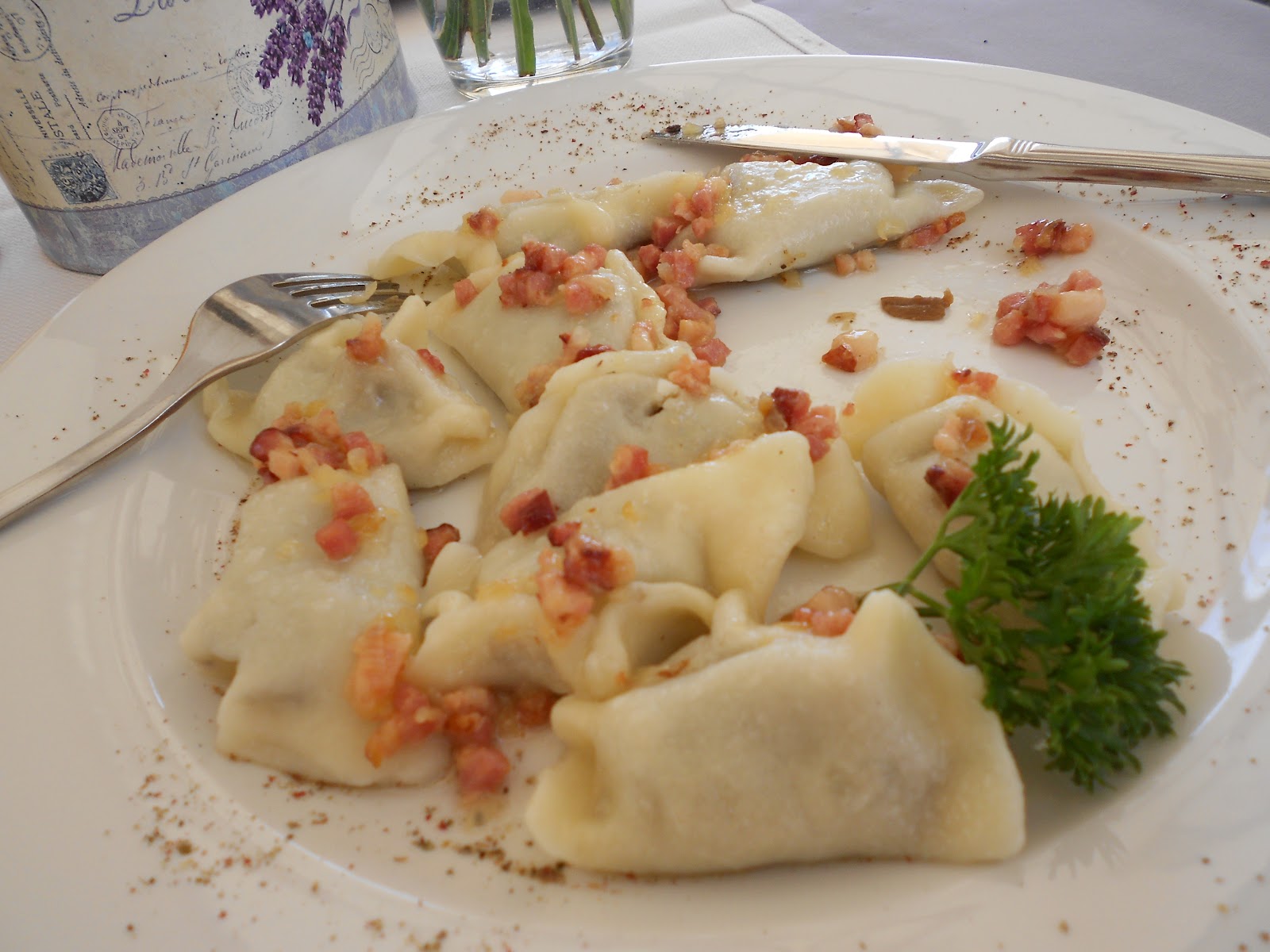
I tried both pierogi and borscht for the first time on this trip – with great success I must say. And my top dining out tip? Miod Malina (translates to Honey Raspberry) a short walk from Rynek Glowny towards Wawel Castle. I sat outside and enjoyed a glass of wine and three delicious courses to the strains of a classical string duet…for about £20.

My first pierogi (dumplings) – sitting looking over the hustle and bustle of the main square on Day 1 – were filled with a delicious mix of cabbage and mushroom. My second helping was on Night 2 (at Miod Malina) – a scrumptious blueberry version served with soured cream. Sigh…I ‘heart’ pierogi!

Sleep
Spacious, cheerful and unbelievable value – that’s Hotel Benefis. This small 4 storey hotel sits across the river from the main hubbub of Krakow but it’s only a 15 minute walk to Rynek Glowny. I had a large 4th floor room with a balcony and a view of the spires of the Wawel Cathedral, Main Square Tower and Mariacka Basilica for slightly less than the price I paid for a box-size room in Rome. Oh and the staff are great.

Hotel Benefis –  highly recommended!

Be Merry
Without a doubt, music be the food of Krakow and play on it did from the bugler’s haunting hejnal from the tower of Mariacka Basilica each hour, an impromptu choir outside the Church of St Adalbert in Rynek Glowny and any number of concert options for a bargain price. You may sniff at the leaflet bearers and their nightly programs as ‘tourist-y’ but for the equivalent of about £12, it is possible to enjoy a healthy dose of the remarkable talent available in this incredibly musical city. Here’s just two:

Day 1: Chamber music at the Church of St Peter and Paul
The Thursday billing was Classical and Film Music so there was the well-known – Mozart, and Vivaldi, Over The Rainbow and Schlinder’s List – and some new discoveries for me. As I sat in that glorious church, the haunting notes of Morricone’s Once Upon A Time In America filling the nave, I felt moved and incredibly blessed to be there.

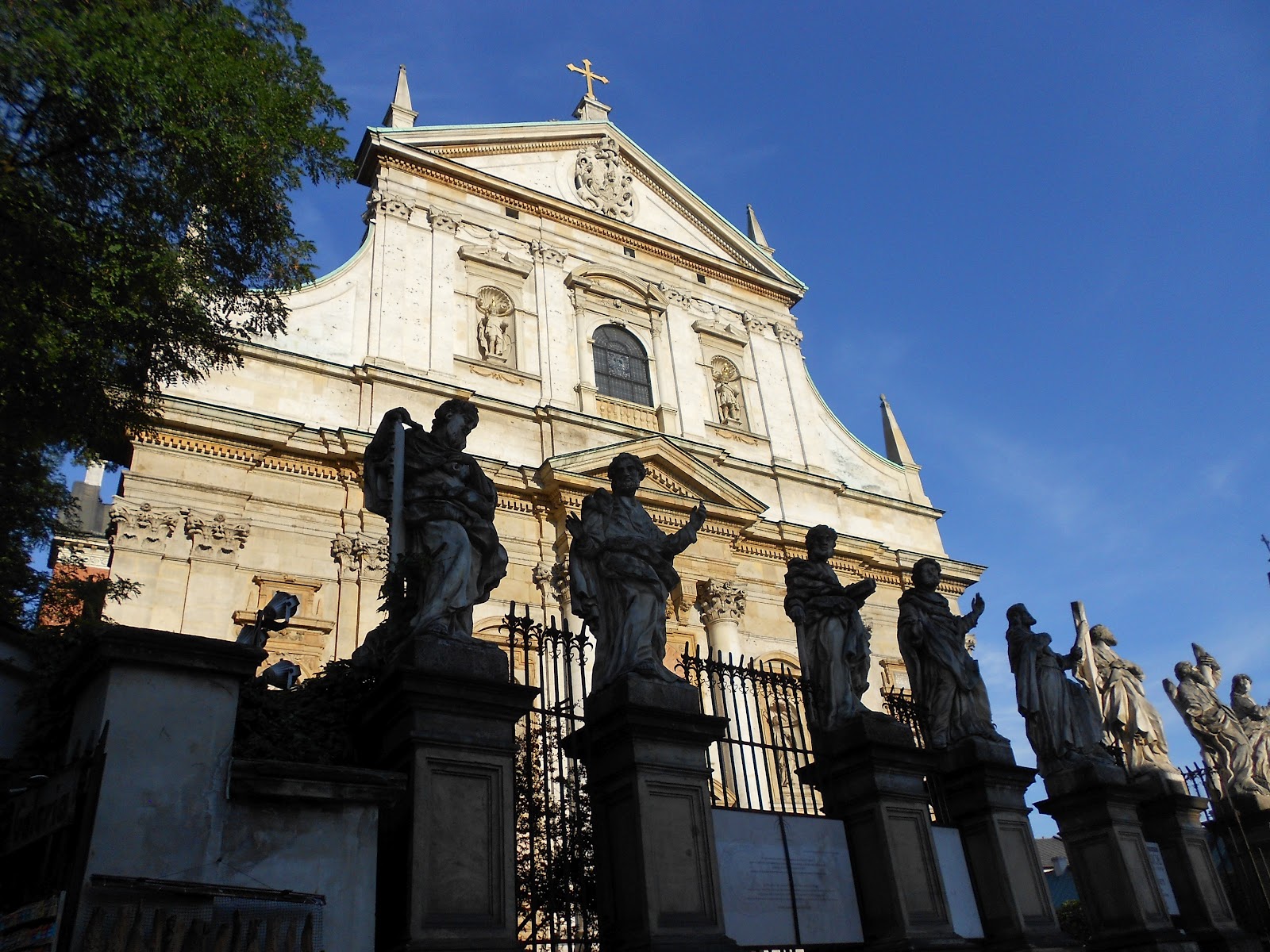
The Church of St Peter & Paul

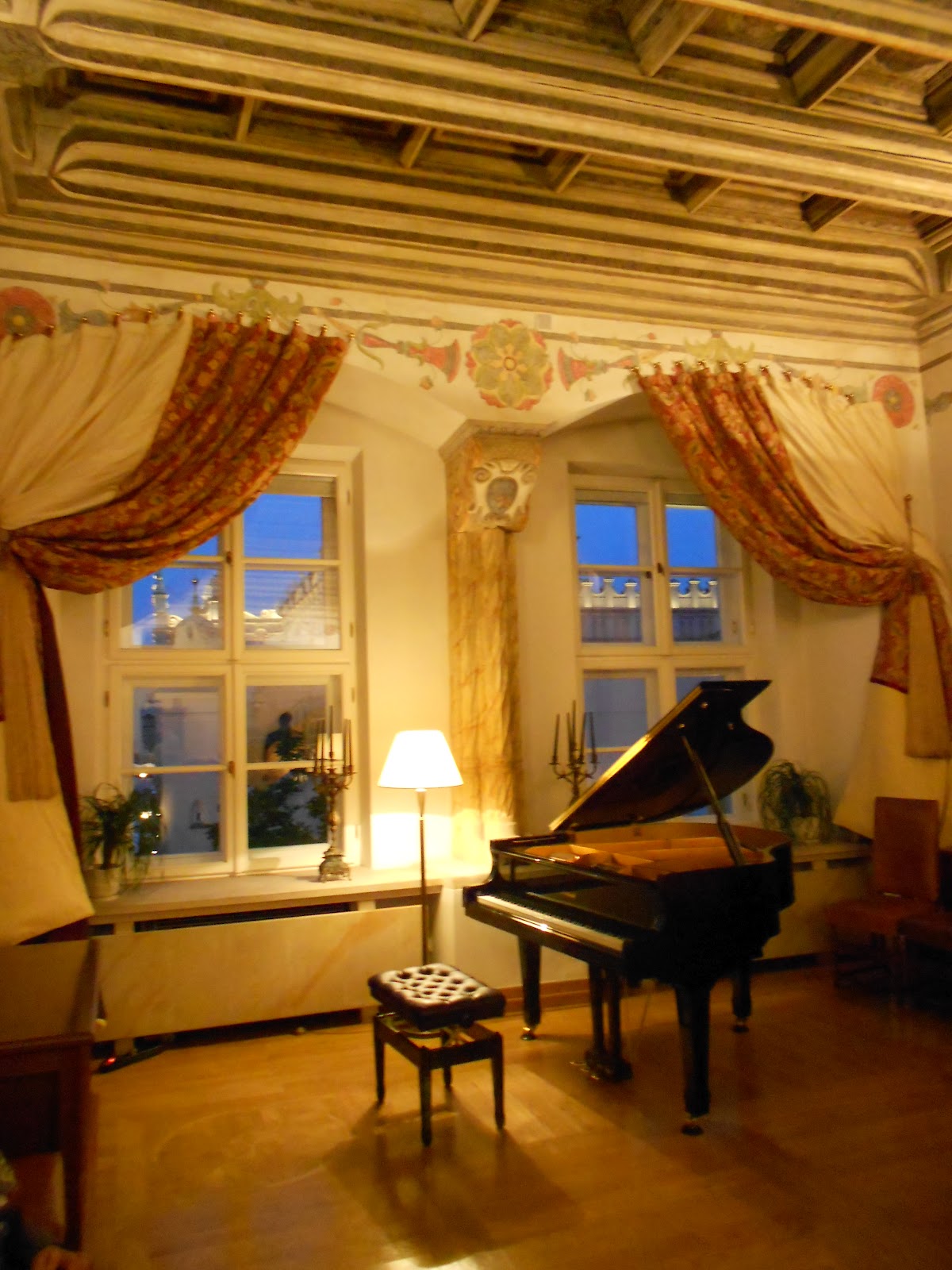
Day 3: Chopin at Bonerowski Palace
Chopin is one of Krakow’s most famous sons and every night you’ll find concerts throughout the city featuring his music. The deft fingers of Pawel Kubica introduced me to my first Chopin on a sparkling Saturday evening that had been left refreshed by the day’s rain.

The salon at Bonerowski Palace

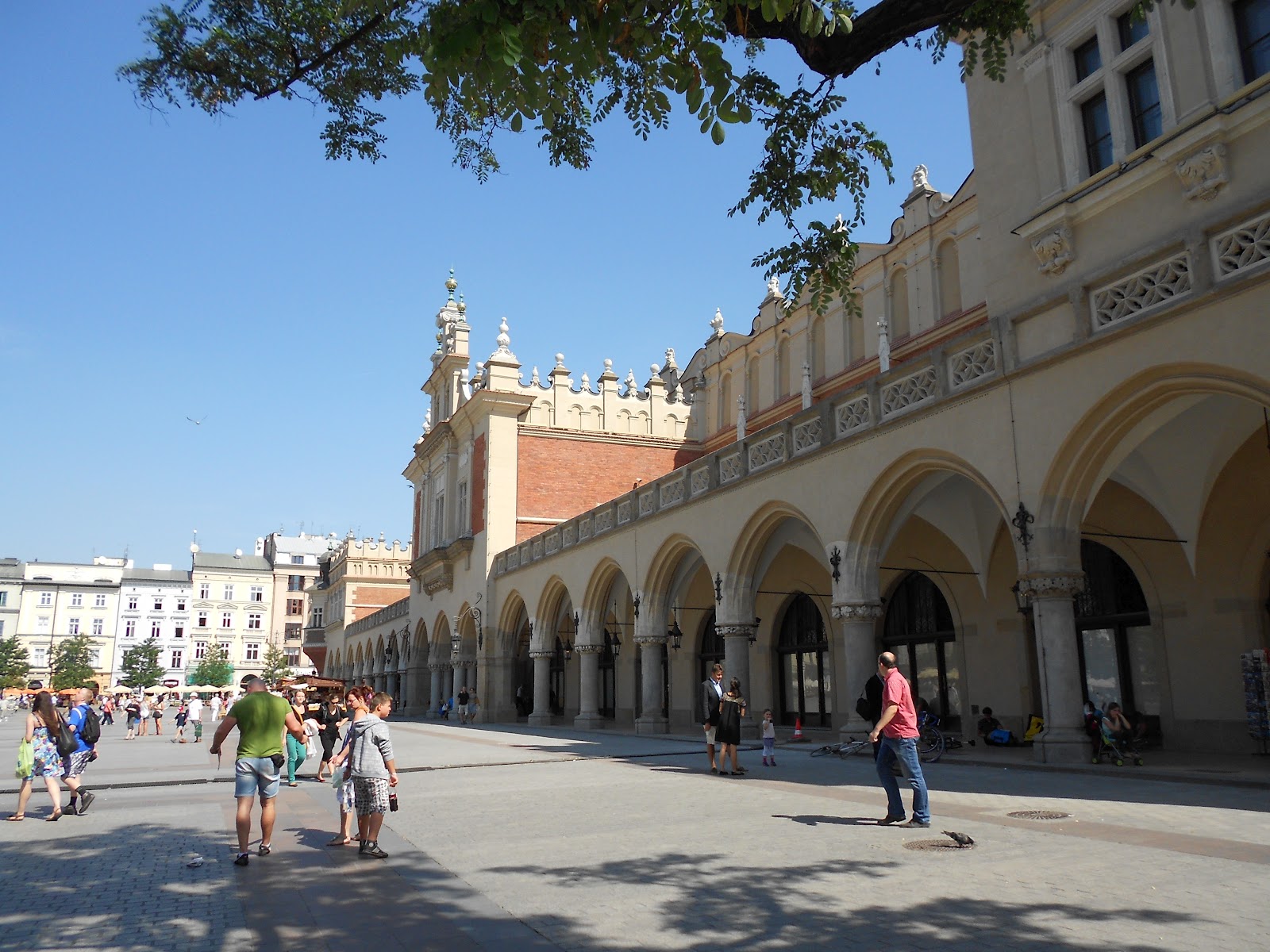
Aside from music, there are many other treats in store if you get yourself to this delightful city. Mariacka Basilica, with its uneven towers soaring above Rynek Glowny, is glorious inside and lush with intricate detail. Rynek Underground is a fascinating museum located under the Cloth Hall in the Main Square which traces the archaelogical history of Krakow. And make sure you wander past The Papal Window and give a nod to Poland’s other favourite son, Karol Wojtyla, who moved to Krakow to attend university, joined the underground seminary during the occupation and rose through the ranks of the Catholic church to be elected its 264th pope, John Paul II, in 1978.
 

The Cloth Hall in Rynek Glowny. There’s a market inside but its real treasure lies underneath.

So that’s it. Four days in Krakow filled with amazing and moving experiences that I’ve done my best to share with you through this series.

I hope you’ve been inspired to visit.
————————-
Other posts in the Krakow series
It Starts With The Locals
Lightly Salted
The Dark Side
A Monstrous Vision

A Monstrous Vision…

After spending the day before wandering though the old Jewish areas of Krakow, I boarded a bus on a grey drizzly Saturday morning for my visit to Auschwitz-Birkenau. I wasn’t sure what to expect – of the day or of myself – and the mood was stilted, even restrained, as the coach wove through the busy traffic and out into the green and undulating Polish countryside.

Auschwitz is actually 3 camps – Auschwitz I, Auschwitz II (Birkenau) and Auschwitz III (Monowitz-Buna, a work camp built near the I.G. Farben industrial complex, which wasn’t part of this visit) – as well as a network of 45 subcamps in the surrounding area. 

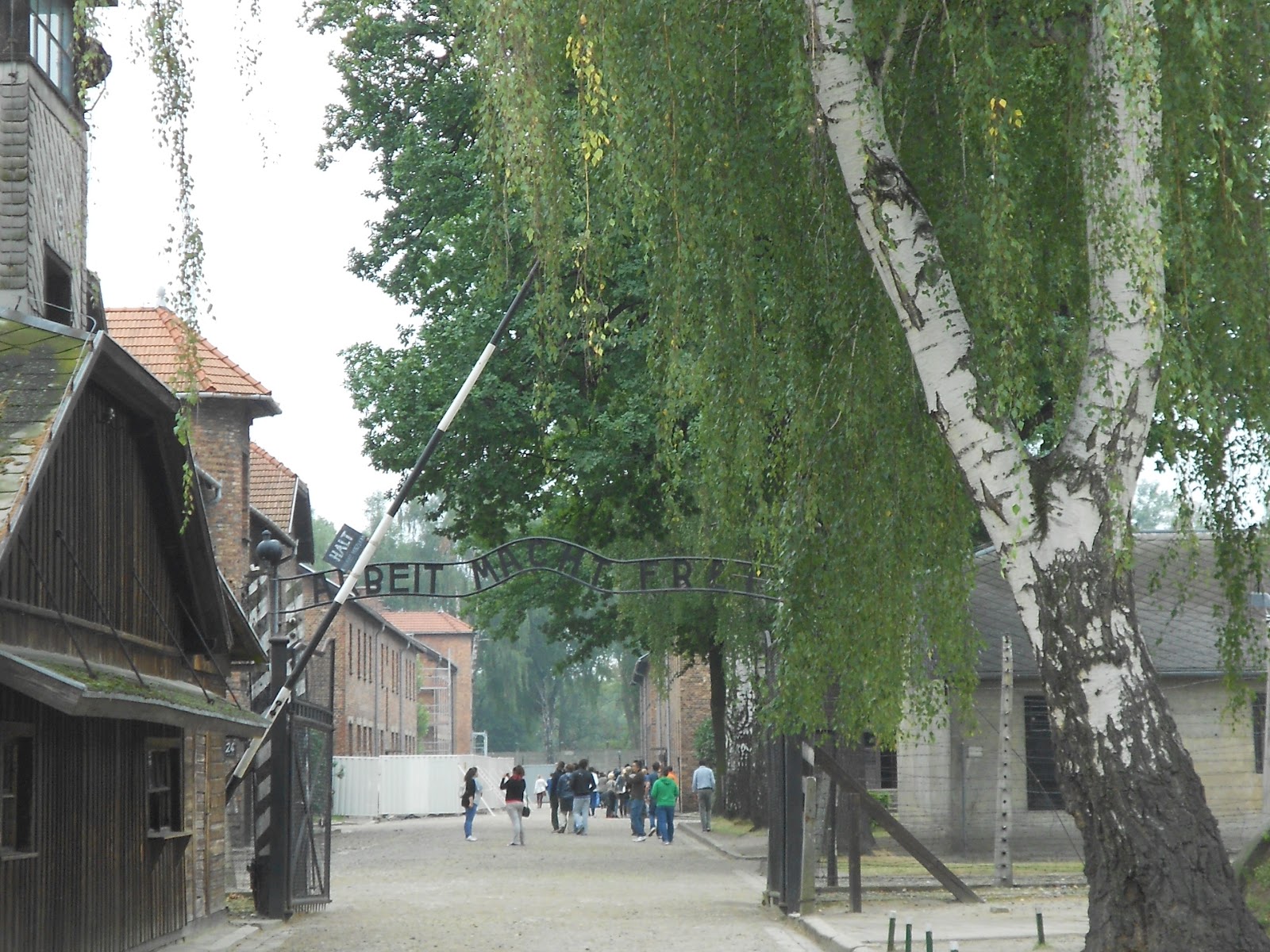
Our visit took us first to Auschwitz I, a group of 16 brick buildings surrounded by lush trees and the ubiquitous electric fence.

About to enter Auschwitz I

Once we’d passed through the gates and followed our local guide down the dusty path to the centre of the camp, it was obvious how compact the site was, not at all what I’d expected.

The buildings here were Polish army barracks prior to Nazi occupation and throughout the camp’s operation, more than 17,000 men, women and children marched under ‘work will set you free’, to the strident beat of the camp orchestra, and populated the bare floors, crowded beds, prison cells and medical wards of this, the base of the Third Reich’s Final Solution in Poland. 

Arbeit macht frei – work will set you free.

In fact, most of the inmates were not ‘local’. The camps were well-positioned for transportation from other points within Nazi Germany’s rapidly-expanding reach – places like Austria, Czechoslovakia and Romania to name just a few – and so this and the other camps became a veritable Babel, with the only common language being terror.

One display cabinet was filled with the suitcases and baskets that once held the possessions of these displaced people.

Auschwitz I was not only the base camp but also a place of significant experimentation. Genetic experiments were carried out to develop methods promoting multiple births, an essential part of Hitler’s plan to populate Eastern Europe with the Ayran Race he so admired. (During the same period, men were castrated to prevent the proliferation of undesirables.)

And the testing of the pesticide Zyklon B’s effectiveness as a human exterminant occurred here in preparation for its wider application at Birkenau.

After 2 hours walking in and out of the old barracks and even into the gas chamber where Zyklon B was first tested, all the while trying to absorb the overwhelming monstrosity of Hitler’s vision, we were given a short comfort break before boarding the coach for part two of our visit. (Believe me, paying for a pee here seemed a really small price to pay!)

Birkenau is enormous and it’s here where the largest number of people were murdered during World War II. Building (by the inmates themselves mind you) commenced in 1941 to ease congestion in the other camps but it was on such a scale that there can be no doubt that its purpose was to extinguish the lives of all who entered.


This photo was taken at the ‘sorting’ point looking back to the main entrance. This is the point where hundreds of thousands were bundled out of locked rail cars, separated from their loved ones and worldly goods, and selected to either remain in the camp or make the long march to the ‘showers’ at the back of the complex.

The ruins of two of the crematoriums have long since ceased to pose a threat but walking around the remains felt sinister – I could feel the absolute and unremitting purposeful-ness of Hitler’s Final Solution.

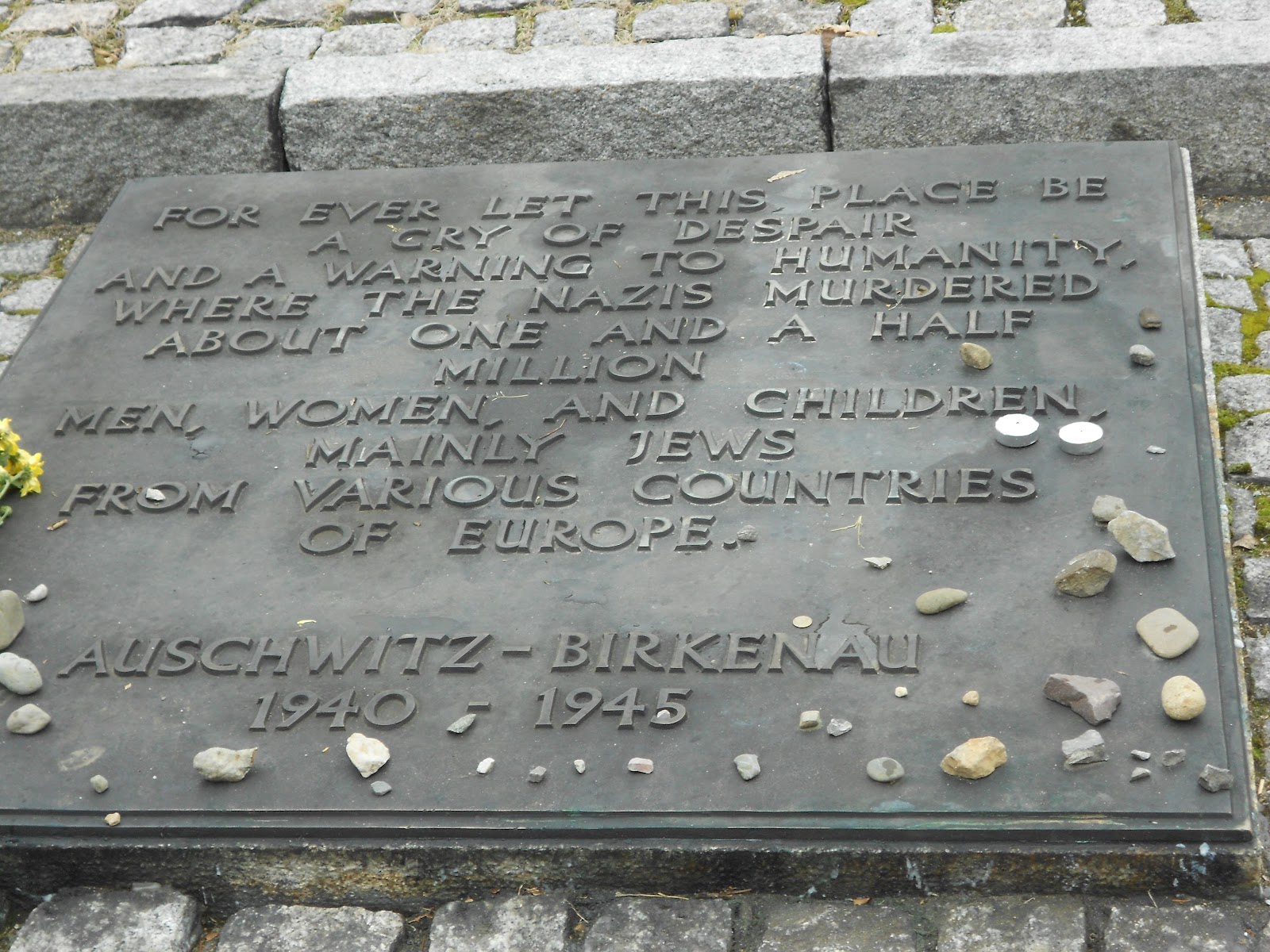
Between the two ruins lies the monument to those that died here.

‘For let this place be a cry of despair and a warning to humanity. Where the Nazis murdered about one and a half million men, women and children, mainly Jews, from the countries of Europe.’
The plaque appears 28 times along the monument, translated into every langauge spoken by the inmates of Birkenau.

The bus was quiet on the way back to Krakow and alone with my thoughts,I tried to process all that I’d seen. 

I was horrified by Auschwitz. The inhumane experiments, the displays of surrendered possessions, the inmate photos lining the walls, and the prison – with its starvation and its standing cells designed to punish those who disobeyed by punishing their comrades. I felt the sting of tears blinked away several times here.

But I was numbed by the scale of Birkenau. It’s difficult even now to find the words. I still think about standing on those train tracks, watching them disappear towards the crematorium ruins and the forest surrounding the camp, and silently wondering ‘How? How could that be?’
 
It still catches me out, filling my mind’s eye in the middle of my day-to-day when I least expect it.

Perhaps it always will.

——————————————
Other posts in the Krakow series:
It Starts With The Locals
Lightly Salted
The Dark Side 
Eat, Sleep And Be Merry

The Dark Side…

I’ve recently been to Krakow (regular Gidday-ers will already know this) and as I wandered its streets and gazed around the old town square, I thought how like Prague it felt. Right down to the bugler playing his doleful tune to all points of the compass from the tower of St Mary’s Basilica each hour.

And yet there’s something different about Krakow, a darker undertone.

In planning my trip, I had pre-booked a visit to Auschwitz-Birkenau (more on that in another post). But Krakow was invaded by the Nazis on the 1st September 1939 and remained occupied for almost the entire period of the second world war so I wanted to understand how things were closer to ‘home’. And this needed going a little further afield so on Friday morning I headed south along the banks of the Vistula River for a day exploring Podgorze and Kazimierz.

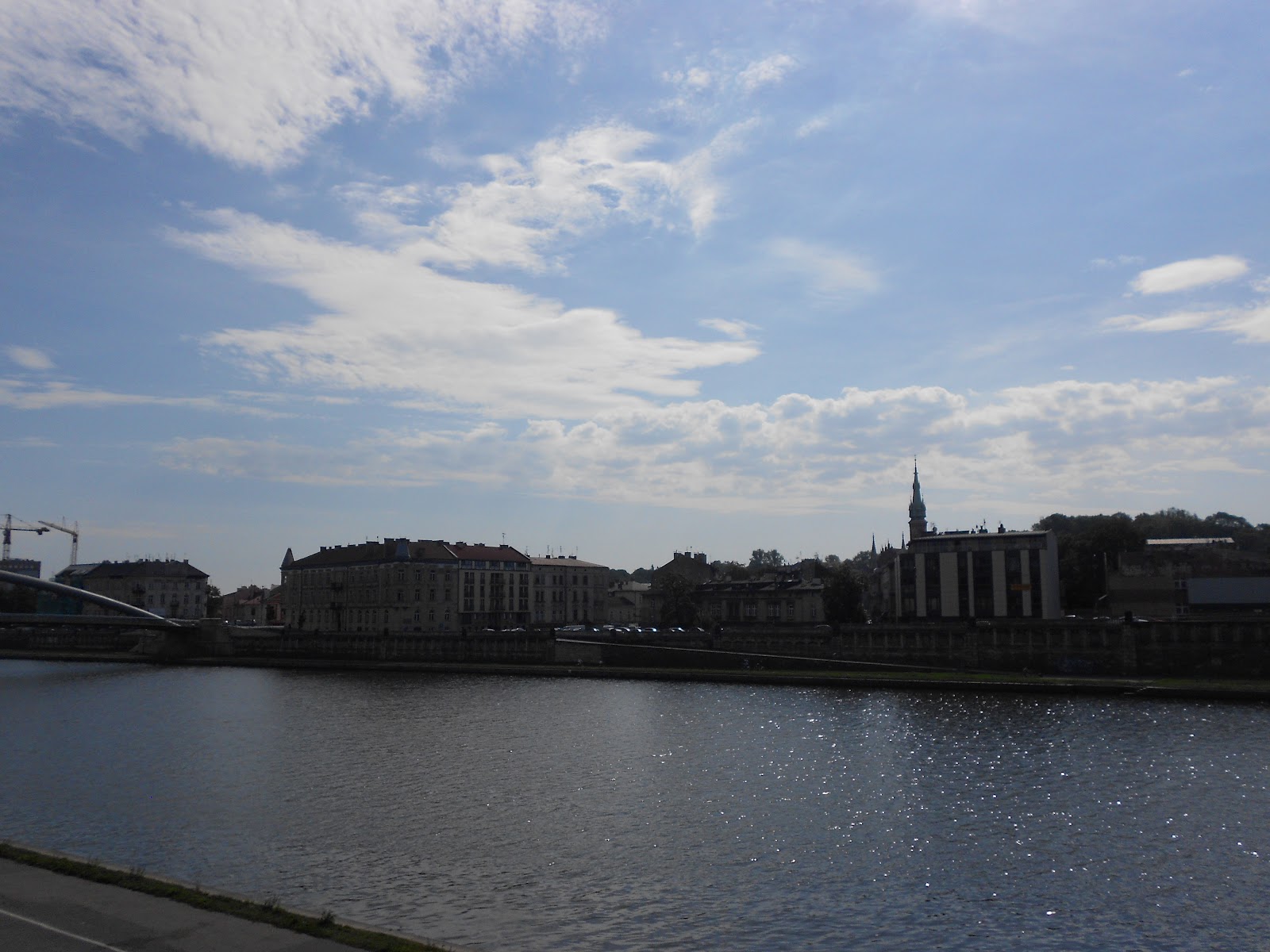
View of Podgorze across the Vistula River from Kazimierz

Let’s get one thing straight. I am not well-versed in Jewish culture and history, despite having lived in Jewish areas both in Melbourne and now here in North London. (Just to clarify – I am not Jewish.) And I don’t have a particular interest in it so I was not planning a day of traipsing through synagogues. But the Jewish population of Krakow decreased from 65,000 before the war to only 200 today and I find it extraordinary that one of our ‘species’, if you will, could become so endangered.

Podgorze was where my walk was to begin. This was where some 15,000 Jews were herded from Kazimierz across the river to live within the walls and gates of their ghetto home before being deported to concentration camps, the closest being Plaszow, a labour camp built in 1942 and then converted in 1944. I wandered through the busy streets of this now everyday suburb of Krakow, past the piece of ghetto wall, tucked between modern structures along a main road, and into Plac Bohaterow Getta with its rows of empty chairs, a tribute to the thousands of Jews who left their worldly goods behind and boarded trains there.

Part of the old ghetto wall still stands in Podgorze
Plac Zgody, which stood in the centre of the ghetto, has been renamed Plac Bohaterow Getta as a monument to’ the heroes of the ghetto’

The enamel factory of Oskar Schindler is not far from here and just a short walk across the train line brought me to 4 Lipowa Street.


The factory houses an extraordinary permanent exhibition, Krakow Under Nazi Occupation 1939-1945, which gives a fantastic insight into this short but defining period in Krakow’s history. There are lots and lots of details throughout the 28 exhibits and in some parts, it was a bit too much to digest. Nevertheless, I spent just over two hours here – there is a ‘ghetto walk’ and a fascinating display detailing the occurrences in the city in the days  right before and then during Nazi Germany’s entry into the city. If any of you are wondering about the must sees in Krakow, this should definitely be on your list.

Two moments in Krakow’s history illuminated by the sun.
(Under the rail line between Plac Bohaterow Getta and Lipowa Street) 

I began my slow and thoughtful walk back to Plac Bohaterow Getta and a short tram ride across the river, I found myself in Kazimierz, ready for a spot of lunch and a meander through this vibrant neighbourhood. There’s a different feel here – it’s industrious and dotted with craft and artists’ shops. Only two corners of the market on Plac Nowy were in operation as I walked through and I can imagine that the flea market on Saturday must have the whole square thrumming with activity. Alas, I was a day early and booked for my excursion to Auschwitz the following day.

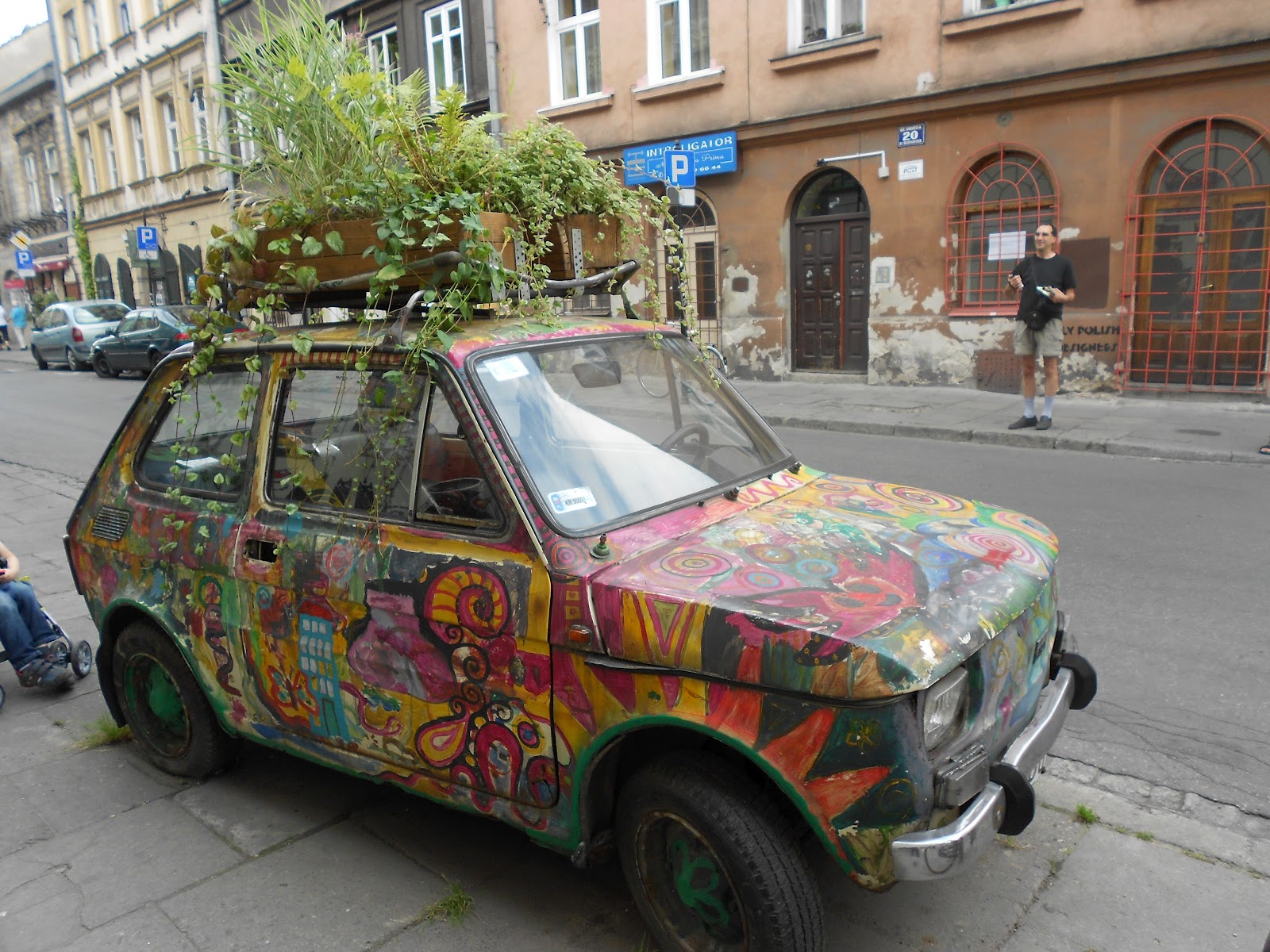
Artistic expression reigns supreme in Kazimierz

I found a spot for a late lunch. My experience of Polish food so far had been wholesome and tasty and in huge portions – Miodowe Smaki (or A Taste Of Honey) was no different – and I settled in for a while to reflect on my day.

I don’t think a visit to Krakow can really be complete without an ackowledgement, amidst the music and medieval splendor of this wonderful city, of this particular piece of its history – in essence a reflection of our own darkest hours as a human race. A history, not only recent, but one littered with horror, tragedy and shame.

My trip through Jewish Krakow had left me filled with something that even now I can’t put into words. Sombre, respectful certainly, not quite sad but there was a sense of melancholy that stayed with me for several hours afterwards (and re-emerges as I type this). It felt like this day had given a depth to my Krakow experience that I hadn’t expected. I felt like I had some sense of a people who had lived their lives in hope and peace and, in an horrific injustice, met their end at the hands of their fellow man.

And in that, I felt a little more prepared for my visit to Auschwitz-Birkenau the following day to confront the end of their story. 

——————————————–
Other posts in the Krakow series:
It Starts With The Locals
Lightly Salted
A Monstrous Vision
Eat, Sleep And Be Merry

Lightly Salted…

Poland, and particularly Krakow, is known for its historic and tragic role in Hitler’s persecution of the Jews during World War II. But what it is not so well known is its connection with something that we still use everyday…salt.

Wieliczka Salt Mine (it’s pronounced Veil-ich-ska – I had to work surprisingly hard for a couple of hours to get that right!) is about a 20 minute drive from Krakow and has been a UNESCO World Heritage site for more than 30 years.

But a little over 3 hours is all you need to get up close and personal condiment-wise.

Old miners steps about 100m below the surface

Used for the preservation of food prior to the invention of refrigeration, salt was one of the lynchpins of the Polish economy. Salt was once valued more highly than gold and the workers at the mine itself were so highly regarded that they were actually paid with it. (The word salary, comes from the Latin sal, the word for salt.)


White ‘gold’

The visit all starts with taking some steps – many many many of them (380 in fact) – down to level 1 of the mine 90m below the surface and ends 2 hours later a further 45m deeper (that’s 135m for those of you that have well and truly run out of fingers!)

In between, we walked the rock salt corridors, gaping at each new cavern, wondering at the bravery of those that worked here and breathing in the salty air. Rubbing my fingers along the walls gave me a quite literal taste of the origins of the condiment that will eventually end up on the dinner table.


Wood (rather than metal) is used everywhere to support the corridors and caverns providing a safe place or all comers

Throughout there are extraordinary natural monuments alongside man’s efforts to carve and shape the dark grey stone: tributes to Poland’s visionary forefathers (from Copernicus to Pope John Paul II) as well as its legends (St Kinga) and superstitions (the Treasure Keeper). And to top it all off each breath is therapeutic, the salt-laden environment being ideal for the treatment of asthma and other respiratory conditions. (There is actually an underground health spa for these treatments if one is so inclined to revisit.)


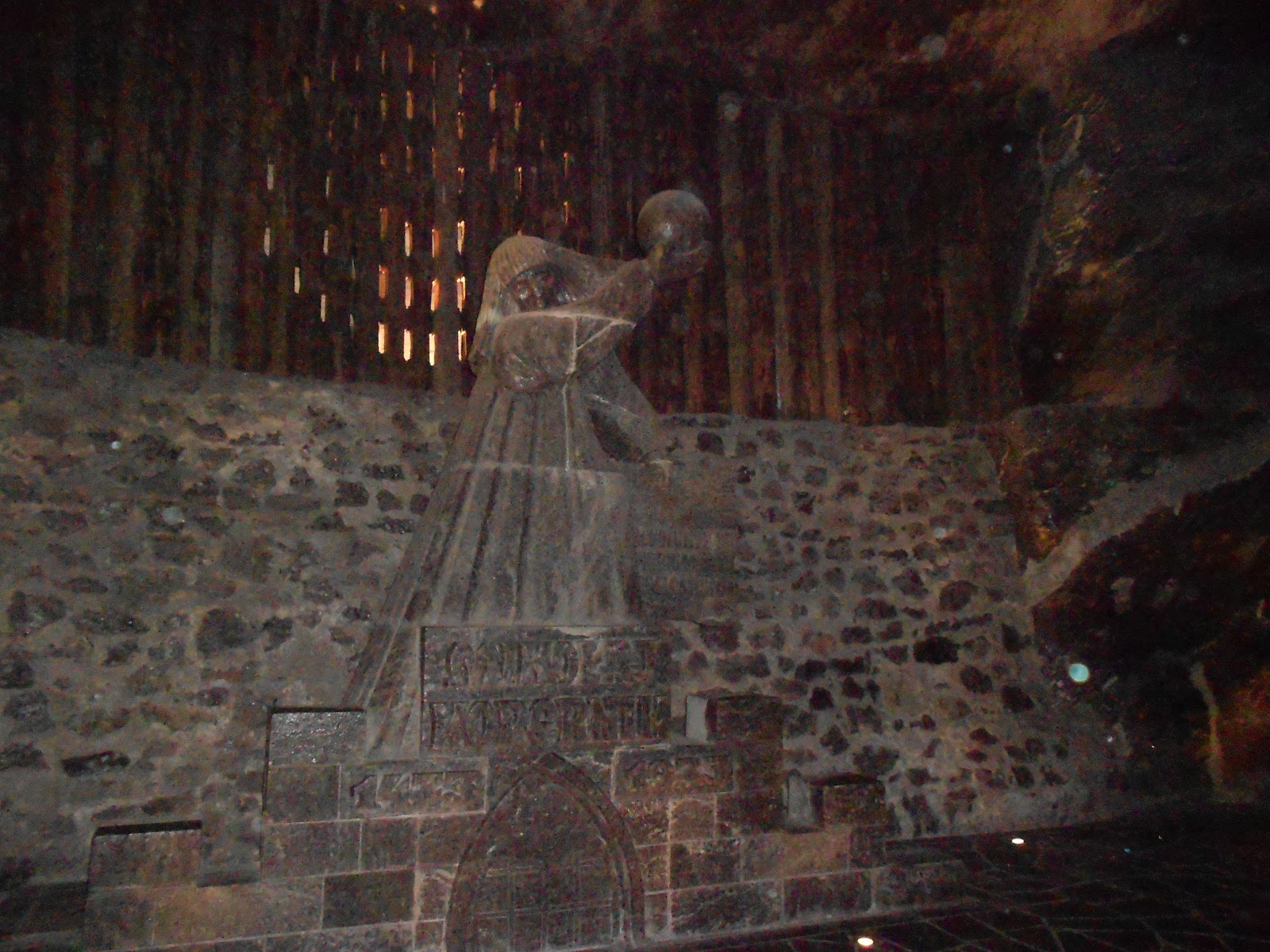
Copernicus preserved – in salt – for all eternity

Wieliczka Salt Mine has been operational for over 700 years – although commercial salt mining stopped in the 1990s, salt is still extracted from the water that dampens ceilings and walls and fills numerous underground lakes.

This underground lake is overseen by the Treasure Keeper from his alcove. Smile at him and you will be lucky, so the saying goes. (Do you think it’s a bit like going to a singles bar?)

It’s a relatively easy 2km walk through the mine with many stops to look at the various points of interest with a local guide. There are toilets and a couple of shopping opportunities along the way so one can stock up on sugar-laden snacks, caffeine fixes or a souvenir or two…and take care of the ‘essentials’. There’s also a museum on site – but the 2 hours was just the right amount of salt for this Aussie palate.

My recommendation would be to join a group tour (I was with Cracow Tours) which means avoiding all the hassle of getting yourself there and back and queue-ing up in between. My group didn’t allow time for anything other than the mine tour but you can go on your own and join a group there if you prefer to allow a little more time for other exploration.

And last but not least, you’ll be pleased to know that the return to the surface is via a fast mining lift, with 8 of your fellow men, women and children, which takes no more than a few minutes, feeling the cool salty air in your hair and on your face as you ascend back to the main entrance building.


And it’s just as well. 380 steps upwards might have proved a few steps too far!

————————————
Other posts in the Krakow series:
It Starts With The Locals
The Dark Side
A Monstrous Vision
Eat, Sleep And Be Merry

It Starts With The Locals…

As you know from my last post, I’ve just spent the last 4 days exploring the wonderful city of Krakow

As usual, I’ll be writing a few posts around my visit and down the track (once I’ve written them, that is), you’ll be able to find them by typing Krakow or Armchair Tours into the search box on Gidday’s The Good Stuff page (where it says More Fossicking? on the left hand side).

But in tribute to the friendliness of Krakow’s natives, for me today’s post must start with the locals…
 

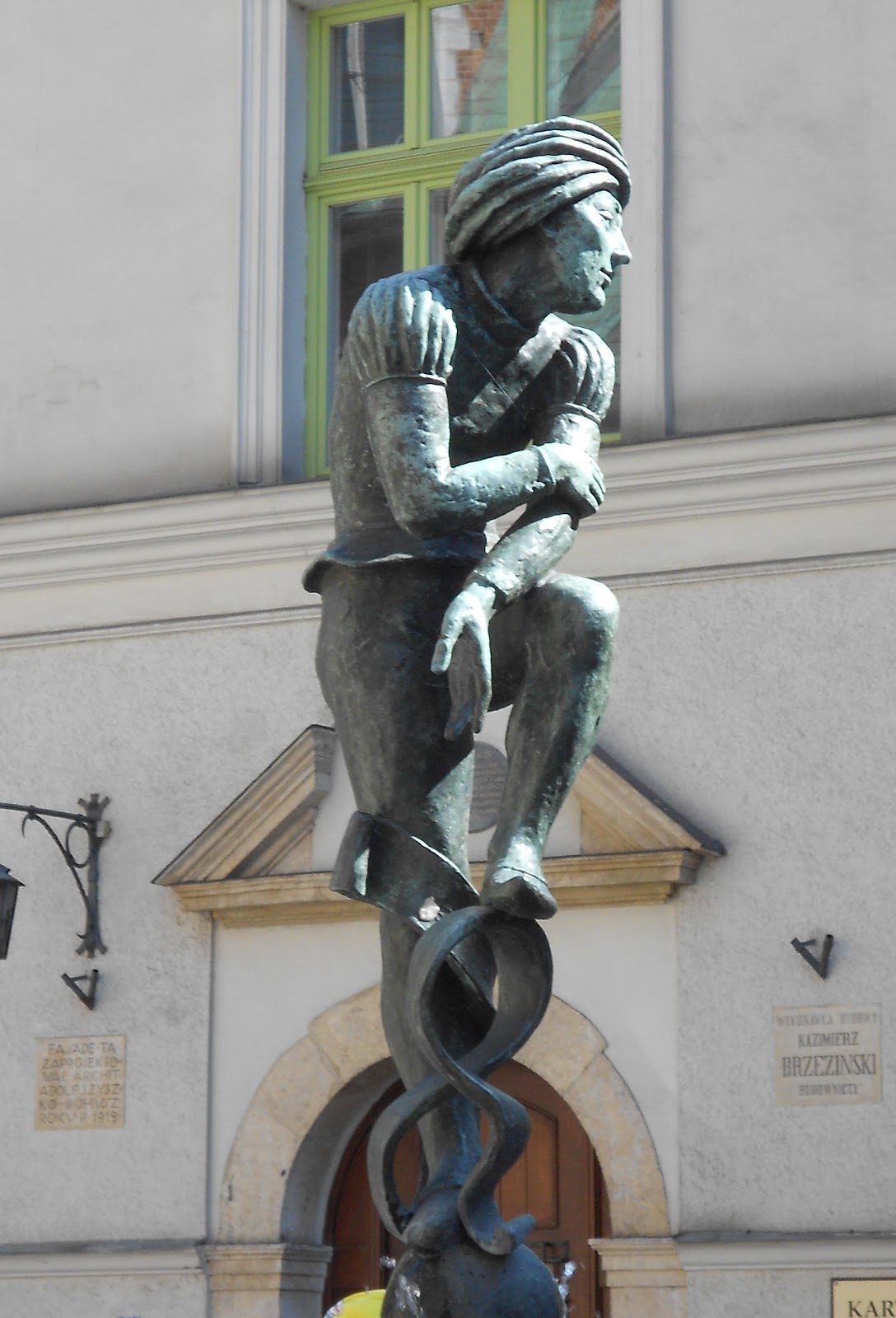
This local next to Bazylika Mariacki (St Mary’s Basilica) was keeping his eyes peeled for likely comers
As I meandered through the Old Town Square (Rynek Glowny) on Day 1 of 4, I was struck by the ‘long and short’ of this negotiation…
…but it seemed that this young fella managed to seal the deal.
As I crossed the square I saw a sign from afar…

…and nearby I found a king-like soul keeping vigil at St Mary’s Basilica.
A whole host bade me welcome at St Peter and Pauls Church
( I saw a fantastic chamber music ensemble here on my first night
 – both the music and the venue were breathtaking)
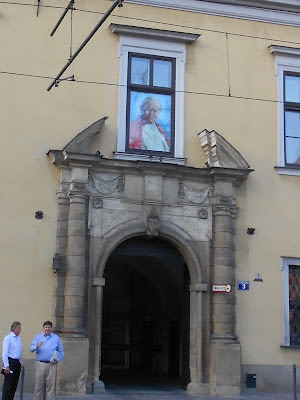
And I couldn’t leave without taking a pic of The Papal Window for Mum (who behaved like the biggest groupie I’d ever seen when we saw the man himself at St Peter’s in 2000).
Pope John Paul II made several public addresses to the people of Krakow from this window. Not only was he Archbishop of Krakow before becoming pope but did you know that he also lived through Krakow’s occupation during World War II?
Clearly opinions still run high. This ‘grafitti’ in the old Jewish Quarter of Podgorze makes a poignant point. The mass deportation of Jews in the 1940s means that an estimated 200 Jews remain in Krakow – from 65,000 pre-WWII (according to my Lonely Planet Krakow Encounter Guide).
The Legend of St Kinga (you can read it for youself by clicking on the link) – a story carved in salt at Wieliczka Salt Mine
                     
Retailing creativity extends into jewellery, ornaments, foodstuffs…
 
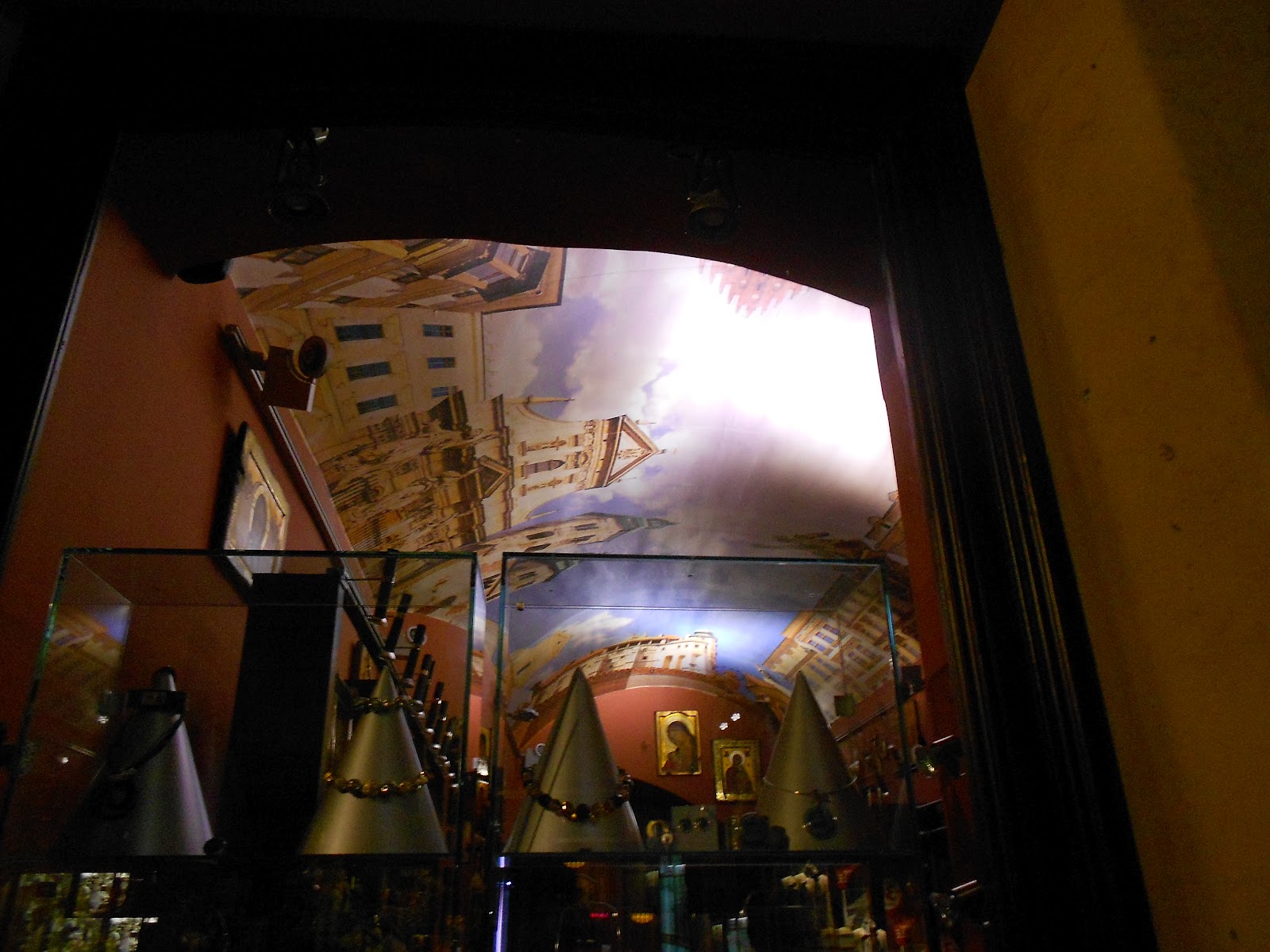
…and ceilings. Yes, that is a painted ceiling in this shop, obviously no longer the singular province of the churches here in Krakow.
In spite of my limited Polish (read none), this sign seemed to suggest that I could find a spot of liquid refreshment at this establishment
But if in doubt, I knew where I could find an off-licence…
…as it seems did Winnie the Pooh.
(Seems he translates in any language!)

Rest assured that this merely skims the surface of the fascinating and historic city – remember to keep your eyes peeled for more on Krakow soon…

——————————————
Other posts in the Krakow series…
Lightly Salted
The Dark Side
A Monstrous Vision
Eat, Sleep And Be Merry


Holy Homage…

This is post number two about my recent sojourn to Barcelona with fellow emergency handbag-ger, A. And I made a promise. 

The promise was to inspire you with a post about Antoni Gaudi’s La Sagrada Familia, Barcelona’s premier tourist destination and testament to the vision of one of the city’s greatest sons.

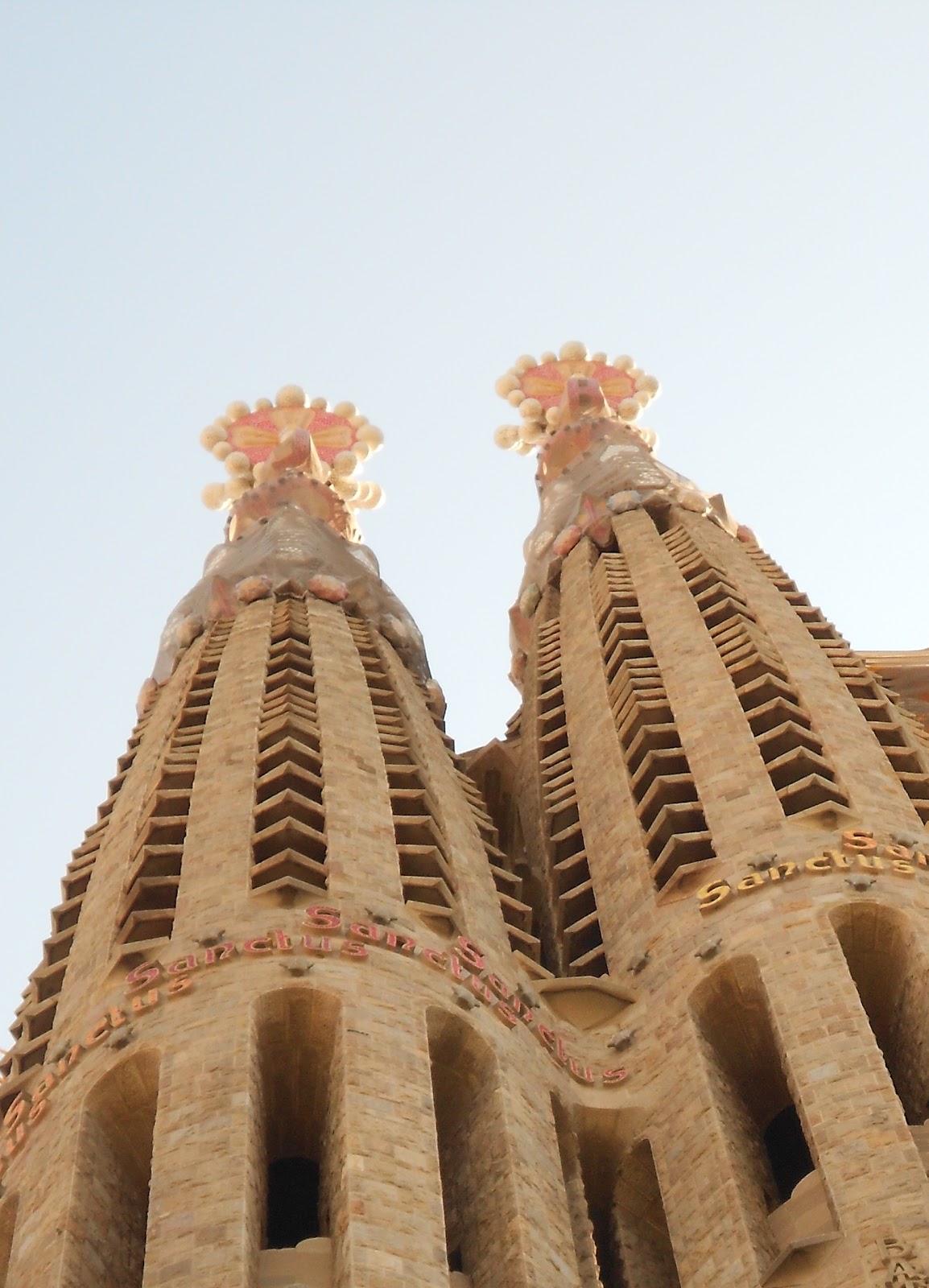
The spires of La Sagrada Familia

But now it seems like a really big promise and it’s ended up presenting something of a dilemma for me. Here’s why.

Before I went, I wasn’t really sure I would like it. The whole thing looked crude and indulgent in most of the pictures I’d seen and having visited a cathedral or several in my time, I doubted that anything could really blow me away on the church front. But like all great tourist attractions, you can’t visit a city without at least paying homage to what it deems to be the absolute best of itself.

After lining up for half an hour on Saturday morning, we finally entered at around 10am. And I was blown away…but largely by what I didn’t expect to see.

So I’m wondering whether my sharing here may actually spoil it for any of you inspired to visit for the first time. But a promise is a promise and in the interests of keeping my word, I will do my best to walk the fine line between providing you with a little inspiration and giving the complete game away. I will leave it for you to decide whether you want to stop here/look away now.

First things first. La Sagrada Familia stands in the heart of Barcelona just a 15 minute stroll away from the bustling shopping district of Passeig de Gracia (and not far from our top tapas tip from last post, Bar Mut). It is still a work in progress, begun by Gaudi in 1883 and designated for completion in 2026, a century after his death. (Anticipating that the project would outlast him, Gaudi spent the last 12 years of his life developing the plans so that work on his vision could continue after his death.)

The main entrance is via the Passion facade, which is on the opposite side of the cathedral from the Metro station and which is considerably less photographed than its famous counterpart, the Nativity facade. Make sure you get the audioguide before you start – I know they can be a bit naff but the extra few euros is really worth spending here. And finally, all of the advice says to get here early to beat the queues – also I expect to avoid standing in the fierce heat. We had a 30 minute wait – be patient, good things are to come, as the saying goes.

The ‘tour’ starts with the Passion facade, which traces the story of Christ’s judgement, crucifixion and resurrection, before inviting you to move under the wide arches of the portico and enter the cool sanctuary of the church itself.

The story of Christ’s crucifixion plays out across the Passion facade.
And this is where I gasped out loud – it literally took my breath away.
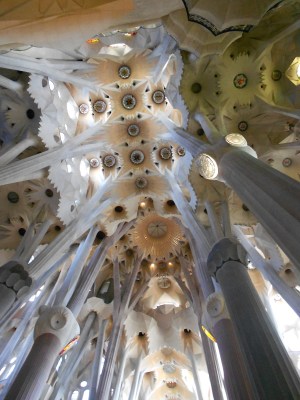
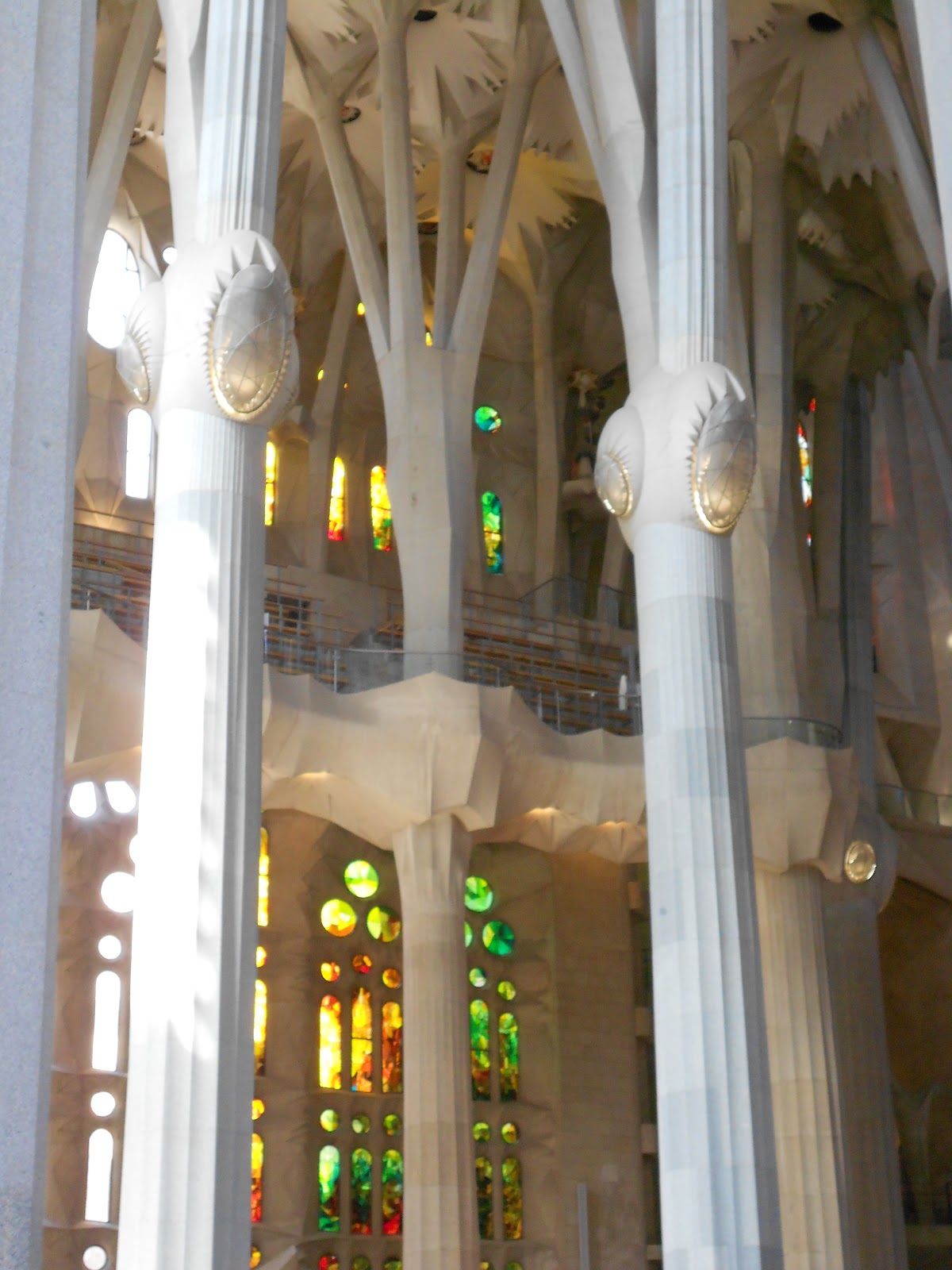
Gaudi’s vision – of capturing nature’s surreal beauty and presence – is extraordinarily delicate and bold at the same time. Imagine if you will a forest glade, dappled sunlight dripping through the canopy overhead…
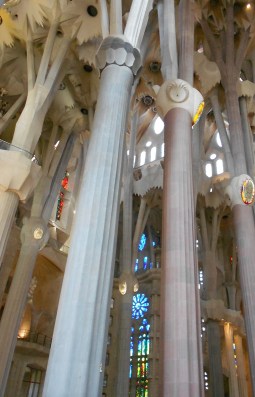
Gaudi’s forest…
…and his trees.
Natural light streaming through the stained glass creates its own pallette.
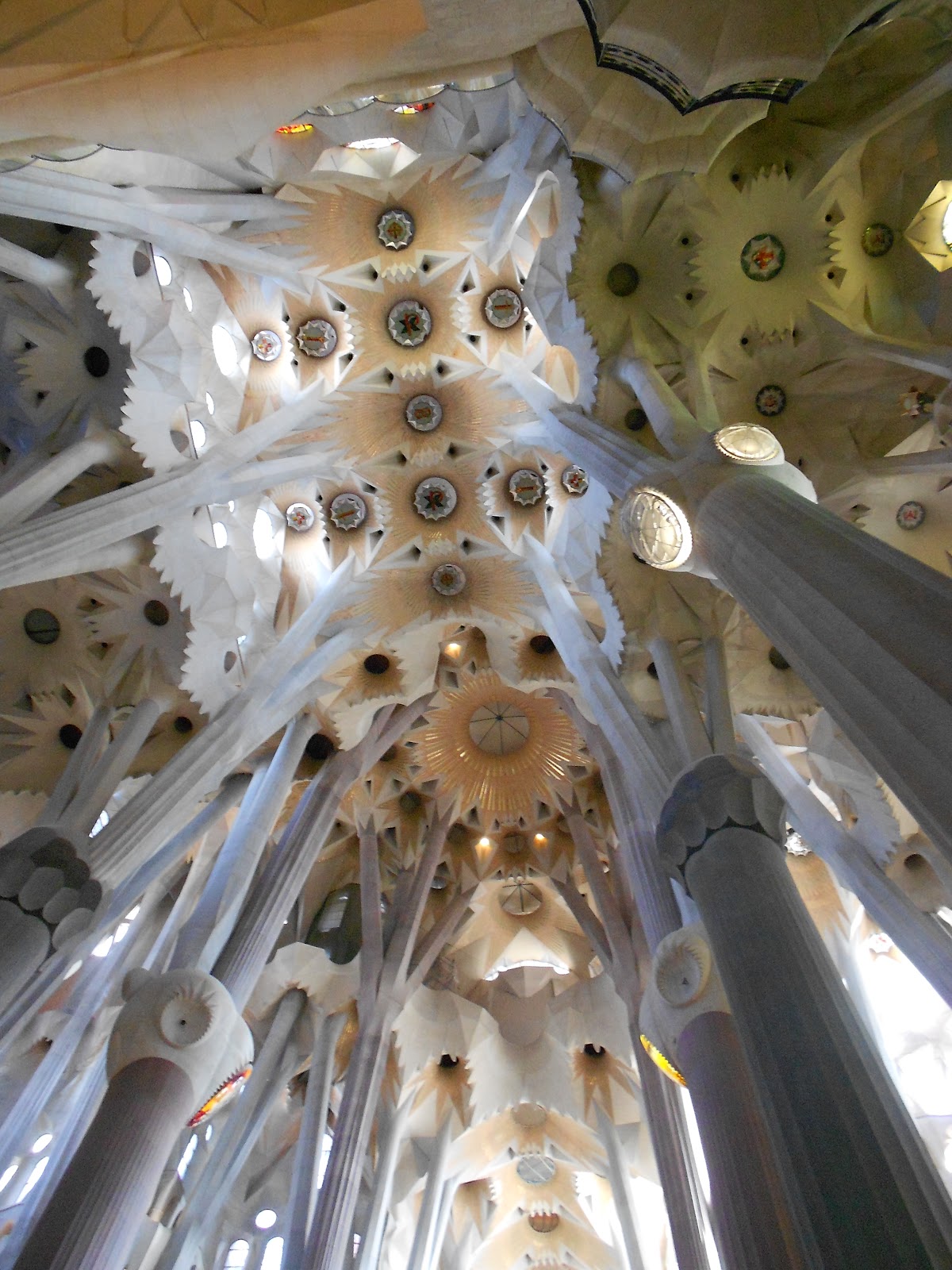
The ceiling forms an ornate and dreamlike canopy overhead…
…lit only with glorious sunlight.

(Note: I took squillions of photos, trying to capture every moment when I turned and gasped at some new aspect – it’s unbelievably difficult to do it justice.)

There’s a brief opportunity to visit the under-construction Glory facade, which is at the long end of the nave-cross, before moving outside again to see the famous Nativity facade, celebrating the birth of Jesus.

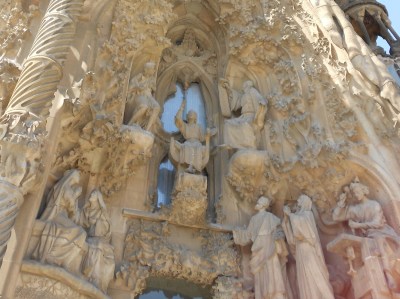
The expressive style of the ‘birth’ facade contrasts with the modern starkness of its opposite number at the entrance.
Here’s where angels herald the miracle…
…of the birth of Jesus.

The audiotour finishes by suggesting a visit to the museum and workshops underneath the church. The workshops are…well, working and aside from the history of La Sagrada Familia, you can see the actual models which are created to explore both the aesthetic and practical components of building each intricate piece of this fantastic sanctuary.
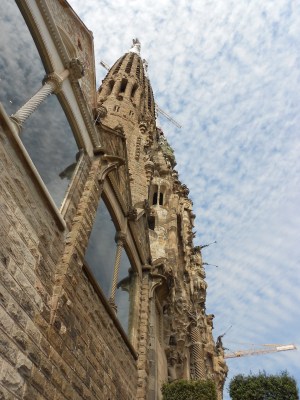

Last glimpse of the towering Nativity facade before entering the museum.

We left after a little over two hours, me with a ‘considerable number’ of photos and a flat camera battery. Both awed by the morning we’d spent.

We had an amazing weekend in Barcelona with great food, brilliant weather and some excellent sightseeing and shopping. There are many other things to do which we didn’t have time for but for me, La Sagrada Familia was the piece d’resistance. The luscious cherry atop our Catalonian sundae.

Hope I’ve managed to whet your appetite.

——————————————————
Other posts in the Barcelona series:
Brave Beauty


This post is also part of the Post Of The Month Club – August 2012
Brave beauty

Last weekend, A-used-to-be-down-the-hill and I took a little city break to Barcelona.

There was much tapas and tippling (I can highly recommend Bar Mut for tapas and Bubo for pastries), a bit of slip-slop-slapping (to protect ourselves from that hot Spanish sun), a spot of retail therapy and a whole lot of jaw-dropping ooh-ing and aah-ing at the clash of the bold and the beautiful that is so uniquely Barcelona.

Barcelona is a curious mix of leafy boulevards, intricate alleys and wide modern avenues. Its architecture moves from the classical to the bold, at times visionary while at others bordering on ugly. Gaudi’s La Sagrada Familia forms the touristic heart of this city of contradictions – and will feature in a separate post – but is by no means the be all and end all.

So this post is to what your appetite with a little scenic tour of Barcelona’s brave beauty and extraordinary visual diversity…

Apartment building La Pedrera, one of Gaudi’s many architectural wonders scattered throughout the city.
The dis-used bull ring still stands proud whilst undergoing a transformation to host activities of a more modern ilk, shopping!
At Barcelona’s Olympic Stadium, the torch provides a poignant memorial 20 years on…
…and ‘the athlete’ still points the way to the now residential Olympic Village.
Modern shapes silhouette against the blue hot sky…
…right next to more classical, and decoratively painted, architecture.
La Sagrada Familia mixes monochromatic starkness…
…with lush and glorious colour.
(More on this amazing testament to Antoni Gaudi’s vision later.)
The wide and leafy La Rambla forms the backbone of Barcelona, dividing the residential El Raval district from the buzzing Barri Gotic and La Ribera enclaves…
…while numerous small squares and parks provide a shady retreat for the locals from the heat of the day.

Packed your bags yet? If you haven’t, stay tuned for your armchair tour through Barcelona’s visionary heart…coming soon.

—————————————————
Other posts in the Barcelona series:
Holy Homage