Spring shoots

Today is the May Day Bank Holiday in the UK and after a basking in some long overdue Spring sunshine yesterday, it’s time for me to keep my word and share my last two months of gadding about (which, with Mum’s 3-week visit smack-bang in the middle, pretty much disappeared before I knew it).

There have been a few highlights of the stage-and-screen variety since February starting with a ‘goosebumps all-over’ moment as Glenn Close filled the London Coliseum with her performance of Norma Desmond in Sunset Boulevard. The BBC ran a gripping six-part adaption of John le Carre’s The Night Manager that starred Hugh Laurie – in fine and menacing form – and Tom Hiddleston which had me transfixed on Sunday nights. (For those of you who don’t know Hugh, think House and Black Adder.)

And I saw a couple of really great movies – Spotlight and Eye in the Sky, the latter being a charity screening at my local cinema, The Phoenix. In his pre-film talk, director Gavin Hood explained that the technology featured in Eye in the Sky is real and out there as we speak. Mind-blowing stuff.

There were also some things I expected to love more than I did. The Maids at Trafalgar Studios was edgy and well-acted but a little too crazy for me and Immortal Tango contained patches of thrilling Argentine Tango but was brought low by too much tinkering with the quintessential drama and passion of the dance. Based on how much I loved The Night Manager, I had another stab at reading le Carre’s novel only to remember how convoluted and unwieldy I find his writing. And reading Agatha Christie’s And Then There Were None was spoiled by knowing ‘who dunnit’, having seen it on TV earlier this year (another brilliant adaption from the Beeb).

There have been some firsts as well.

I attended my first political debate on the EU referendum at the London Palladium. It was chockers with people and points of view and while it didn’t really help me to make a more informed decision, I did leave with my view of politics and politicians intact – grandstanding and emotive argument just don’t do it for me.

However what did do it for me was Painting the Modern Garden, an exhibition featuring artists from Monet to Matisse (and many in between) on my first sortie to the Royal Academy.

royal academy (640x361)

I also visited Poole, site of the second largest natural deep-water harbour in the world (after Sydney).

sunny poole

Dorset Quay, Poole

Last but not least, April alone has meant birthdays galore. It started with my two favourite little dudes turning 3 with Mum, Seattle-A celebrating a week later. And on the 30th, my good friend of more than 15 years, Swiss-S, finally turned 40 on the same day that high school friend, Aussie-J, marked her slightly more advanced passage through life (although she’s still younger than yours truly).

And the great Bard himself, Shakespeare celebrated his birthday on April 23rd, the same day as he popped his clogs 52 years later. There’s been much ado about this and for my part, this Bard-themed week has been book-ended by  Shakespeare Live! last weekend and a Shakespeare’s London walking tour on Saturday just gone with the Museum of London.

shakespeare (360x640)

Memorial to John Heminge and Henry Condell, the two actors who published Shakespeare’s First Folio in 1623 in St Mary Aldermanbury’s Garden.

In other news, I was very excited by the Monopoly-themed loos at Marylebone Station…

monopoly loos

I had to wait for everyone to leave the loos before taking these pics so no-one thought I was being weird or creepy (she says, posting them for all the world to see.)

…my fabulous new shoes…

shoes (640x640)

…and that fact that Spring finally ‘sprang’…

spring flowers (640x360)

Delicate Spring flowers  lined my street for about two weeks before they dropped to leave leafy green boughs behind them.

And I think that’ll do. Just as well that the month ended with a 3-day weekend…but the batteries are recharged and I’m ready to go again…

…come what May.

(Geddit? I just couldn’t resist a play on words.)

The test of time

There’s a lot of change being debated in the UK at the moment. The election for next Mayor of London – aka “on ya bike, Boris” – seems to be a bit of a two horse race and the EU referendum is looming in a matter of weeks. Everyone has something to say about it, including those from many a foreign shore, and it’s dividing both nations and political parties.

At the same time some of the world’s great voices – Alan Rickman, Sir Terry Wogan (the voice of Eurovision for many years), David Bowie, Jon English, Ronnie Corbett, Victoria Wood, Prince and Phil Sayer (we hear his dulcet tones telling us to “Mind the Gap”on London’s Underground network) – have died in the first few months of 2016, leaving a swathe of public tribute in their wake.

In the midst of all of this comes the Shakespeare400 celebration.

On the 23rd April in 1616 – that’s 400 years ago – William Shakespeare shuffled off this mortal coil. He was 52 years old, a husband and a father of two daughters as well as a playwright and poet. He was a contemporary of other literary greats like Ben Jonson and Christopher Marlowe and left a legacy of 38 plays – comedies, histories and tragedies – and hundreds of lines of verse in his sonnets and long-form poems. In short, he was a man of many, many words and Shakespeare400 was designed to celebrate his contribution.

I attended a live screening of Shakespeare Live! from the RSC in Stratford-upon-Avon last night. Shakespeare is viewed by many as hard going with its tangled prose and its forsooths and makeths, but this show was fantastic. It was a mix of some of his most famous scenes – A Midsummer Night’s Dream was brought to life with much hilarity by Judi Dench as Titania and Al Murray as Puck-turned-donkey – as well as other performances that have been inspired by his works. Romeo and Juliet has spawned the likes of the musical West Side Story as well as a ballet score by Prokofiev and choreography by Kenneth MacMillan. Another Broadway musical, Kiss Me Kate, is a re-telling of The Taming of the Shrew, whilst the bloody tragedy of Macbeth has been transformed in cultures as disparate as Japan and South Africa. And we were treated to all of these and more over the two and half hours.

Hamlet is enjoying quite a resurgence in the UK with actors such as David Tennant (2008), Jude Law (2009) and Rory Kinnear (2010) as well as Maxine Peake (2014) and Benedict Cumberbatch (2015) taking on some of literature’s most famous phrases. One of the highlights of last night’s show was this year’s Hamlet, Paapa Essiedu, receiving a note on his “To be or not to be” from Australian comedian and composer, Tim Minchin…and a slew of other British acting royalty. I don’t seem to be able to embed the video code for you to watch but it is on youtube here for you to enjoy.

Anyway, the point of all of this is that William Shakespeare stopped wielding his pen four centuries ago yet his work remains prolific, whether as inspiration for other artistic expression – dance, opera, musical theatre, hip hop and the big screen (think of Baz Luhrmann’s brave and modern take on Romeo and Juliet in 1996) – or in its original form, on the stage.

Shakespeare’s work was written for everyone, from monarchs to the man on the street, and last night I left the cinema thinking how relevant and powerful his stories remain some 400 years on. Whilst current propaganda and politics may change the course of history, I wonder who in today’s pantheon of cultural expression will be as celebrated and accessible 400 years from now as this talented wordsmith from Warwickshire.

william shakespeare

Memorial plaque on the site of the original Globe Theatre in Southwark, London

Hanging out

It’s been a busy few weeks and if you’ve been reading recent posts, you’ve probably gathered that Mum has been for a visit. The last time I saw her was on my bi-annual pilgrimage Down Under in December 2014 and, being rather a long time between familial drinks, we made a plan for her to have a three week sojourn at Gidday HQ.

Over Easter we had ourselves a three-night city break in Liverpool but this was just the tip of the iceberg – for three weeks we drank coffee, saw a few sights, did a bit of shopping and cooked some meals – Mum made some old favourites from my childhood and I added a few new dishes to my repertoire (so great to have the time and opportunity to try out a new recipe on someone else). But mainly we just enjoyed hanging out together. Here are some of the highlights.

We strolled along the Thames on a cool Spring Saturday and met some friends of mine for lunch at the Design Museum.

IMAG4578 (640x360)

Mum, yours truly on the banks of The Thames

We took a short tube ride and spent a colourful couple of hours at Camden Market.

Camden April16

Left: Camden High Street is a mecca of self expression. Right: Statue of local girl Amy Winehouse

We also managed a Fab Four, post-Liverpool top up with Richard Porter’s Beatles In My Life walking tour which wound its way through John, Paul, George and Ringo’s London haunts and culminated in that crossing on Abbey Road.

IMAG4642_BURST002_COVER (640x522)

I stopped traffic but it had to be done

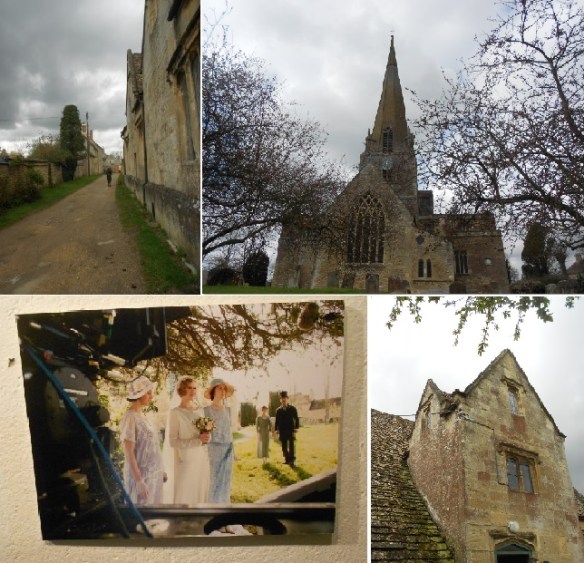
We went to see Glenn Close demonstrate some serious vocal chops as Norma Desmond in the musical Sunset Boulevard and also took a trip into the world of Downton Abbey with a visit to three of the show’s most famous filming locations…

Cogges Manor Farm (aka Yew Tree Farm) in Witney…

DA - Cogges Manor Farm

The top middle photo shows where Mary’s antics with the muddy pigs were filmed (fans will know what I mean!) while the roof seen top right is where Daisy gets a new perspective on Andy in the closing scenes of the series.

…the village of Bampton (aka Ripon in the series)…

DA - Bampton montage

The village church (top right) was the scene of many a Downton wedding whilst the hospital scenes were filmed in this old schoolhouse to the bottom right

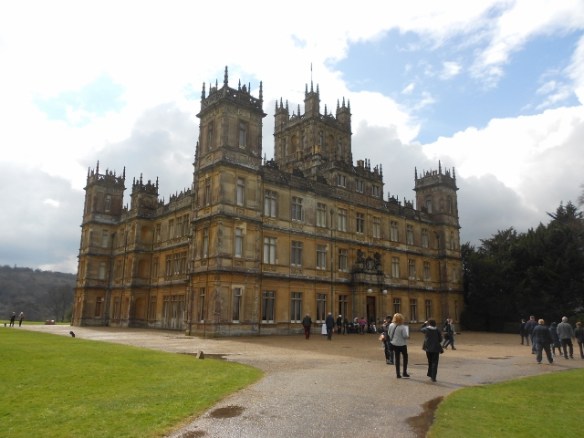
…and of course “Downton Abbey” itself, Highclere Castle.

DSCN6649 (640x480)

The castle is a family home – the family being the 8th Earl of Carnarvon, George Herbert, Lady Carnarvon and their children – and as such is only open to visitors 60 days a year. Did you know that their ancestor, the 5th Earl of Carnarvon discovered Tutankhamun‘s tomb with Howard Carter in 1922?

Then on Monday night I put Mum on a plane and that, my friends, was that. Three weeks – gone by in a flash.

It was busy and full and so fabulous to spend time with Mum. And even though it’s always tough to say goodbye, there’s only about 8 months (or 251 sleeps) to go until I arrive in Melbourne for Christmas. In the meantime, this weekend has been ‘going-out free’ and today, with the washing drying in the Spring sunshine, the patio might be beckoning…

A mosey ’round Merseyside (Liverpool #2)

The story so far…

Mum and I went to Liverpool over the Easter break. On Day 1 we did a Magical Mystery Tour, took the Ferry Across the Mersey, trawled through The Beatles Story and sweated it out at the Cavern Club. It was an excellent and very musically-themed beginning to our trip but there was much more to come. Here’s what happened next.

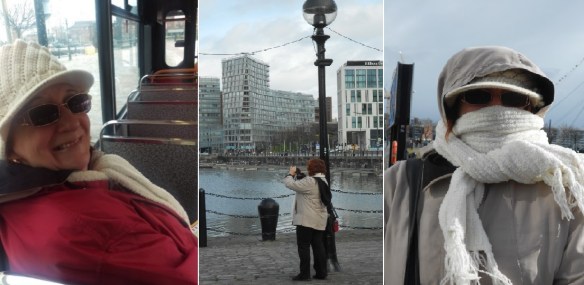
On Day 2, we started out with a City Explorer Bus Ride to orient ourselves with the other things to see and do in Liverpool. Our guide on the bus had a traditional Liverpudlian accent which Mum mentioned was sometimes hard to understand. Speaking of Mum here she is on the bus, taking photos (a common sight when one travels with my mother) and her version of rugging up against the blustery cold wind.

Mum in Liverpool

We then spent some time wandering around Albert Dock, taking more photos…

Albert Dock

Liverpool architecture

Top: The three graces of Liverpool Bottom: View from Albert Dock

…and visiting the International Slavery Museum.

Slave museum

We spent a couple of hours here. It was a great follow up to the Sugar and Slavery walking tour that I did in London in March and I must say that I left not only shocked by the legacy of the slave trade from the 15th and 16th centuries but devastated that slavery continues to prosper in places like India and Africa (just to name two).

We topped off our more leisurely day with a nanna nap back at the hotel before a fab dinner just around the corner at Jamie’s Italian (complete with a friendly waiter who had just returned from travelling in Australia).

Our final day dawned and with a mid-afternoon departure scheduled, we decided to spend our remaining time exploring on foot with a view to visiting Liverpool’s two cathedrals en route.

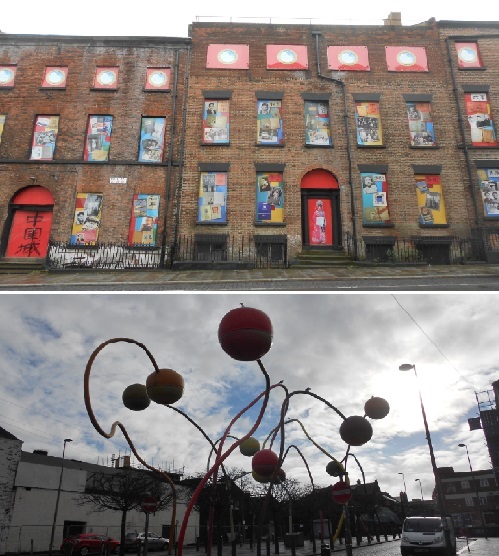
The streets behind the hotel yielded some interesting ‘art’…

Street scenes Liverpool

…but we did find our way to Chinatown…

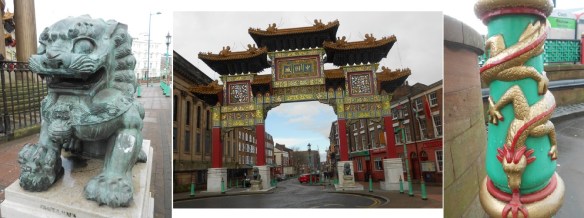
Chinatown

…before heading to our first place of worship, the gothic-inspired Liverpool Cathedral.

Liverpool Anglican Cathedral - exterior

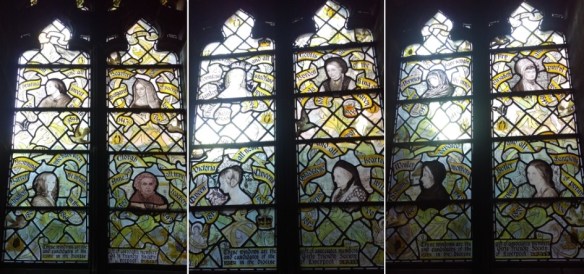
It was magnificent, full of soaring arches and stained glass. I particularly loved the intimacy and quiet of the Lady Chapel and the series of windows dedicated to some of the important women in English history…

Liverpool Anglican Cathedral - Chapel windows

After a fortifying coffee in the cathedral cafe, where we gazed out over the nave spotted with coloured light from the windows, it was time to head up Hope Street…

Suitcases

…to the Liverpool Metropolitan Cathedral.

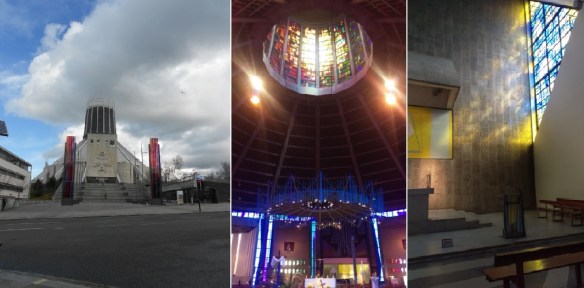
Liverpool Metropolitan Cathedral

This is the seat of the Archbishop of Liverpool and while it may not have the same traditional look as its Anglican counterpart at the other end of Hope Street, Paddy’s Wigwam (as it is also known) is Grade II listed. Originally the cathedral was to be the largest in Europe, planned to be on a par with St Peter’s Basilica in Vatican City but after several years and millions of pounds invested, only the crypt was completed and work stopped as the money dried up.

However, it was generally acknowledged that Liverpool still needed a cathedral and so Frederick Gibberd, winner of a world-wide design competition, built the existing cathedral between 1962 and 1967. He managed to do this within both the time period specified (five years) and the one million pound budget as well as preserving the crypt which is now used for all sorts of events and concerts.

After I got over my shock at its modernity, the space and light really grew on me and after wandering through the crypt as well, I left feeling more inspired by this unconventional tribute to faith than the traditional magnificence of the Anglican Cathedral at the bottom of the hill.

There was not much time left to explore so we headed back to the hotel to collect our things and made our way to Lime Street Station to catch our train back to London – just in time! But here are a few of the other places we saw on our final foray through the streets of Liverpool…

Liverpool street scenes 2

Clockwise from top left: The Everyman Theatre stands at the top end of Hope Street opposite the Metropolitan Cathedral; The Monro Gastropub in Duke Street, a former merchant’s house built in 1765, was named in honour of the first passenger service scheduled between Liverpool and New York in 1817; St Luke’s Church was built in the early 1800s and was badly damaged in the Liverpool Blitz of 1941 – the ruins are Grade II listed; the Philharmonic Pub on Hope Street, another Grade II listed building, was built for local brewer Robert Cain at the end of the 19th century.

And so that, my friends, was our Merseyside mosey. Liverpool turned out to be a great city with plenty to see and do so I hope you enjoyed the armchair tour.

Liverpool Melodies

It’s been a couple of weeks since I last posted but I have a very good reason – Mum is visiting and last weekend we spent three nights in Liverpool. (Okay that’s two reasons.)

On Saturday afternoon we set off from London’s Euston Station and arrived a mite delayed after a signal failure coming into Crewe meant a further 75 minutes was added to our journey (although a retrospective bonus is that it’s also likely to yield a 50% refund on what we paid for our tickets – yippee!). By the time we walked to our hotel and checked in, we decided that dinner and an early night was the best preparation for the busy Sunday ahead of us.

Having navigated the change to British Summer Time successfully , we turned up on time at the Anchor Courtyard at Albert Dock ready to immerse ourselves in some The Beatles history on a Magical Mystery Tour

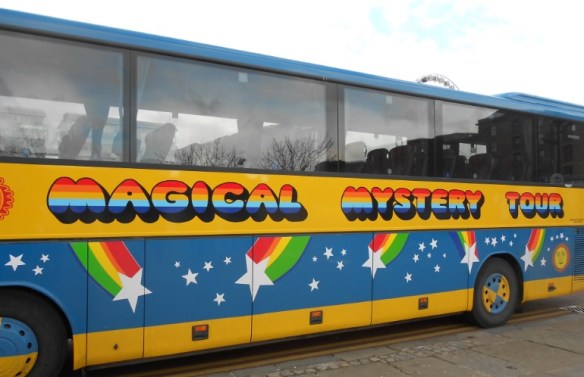
MMT Bus

The bus was hard to miss,  waiting at Albert Dock for our tour to begin.

The tour was two hours of fascinating anecdotes as the brightly coloured bus wound its way through the suburbs of Liverpool – past childhood homes, playing Fab Four classics and pausing for a few photo opportunities.

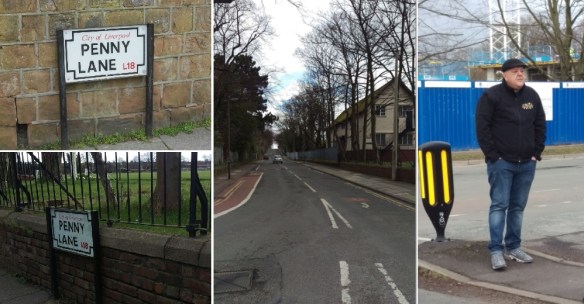
The first stop was Penny Lane, which is actually named for slave trader James Penny but more importantly was the location of the people from John Lennon and Paul McCartney’s youth that were made famous by their song of the same name – the friendly barber, the mac-less banker and the nurse selling poppies from a tray – all clustered around the bustling roundabout. We stopped at the ‘less famous’ end for our photo opp

Penny Lane

We stopped at the ‘less famous’ end of Penny Lane for our photos. On the right is our tour guide Jay Johnson, younger brother of Frankie Goes To Hollywood front man Holly Johnson.

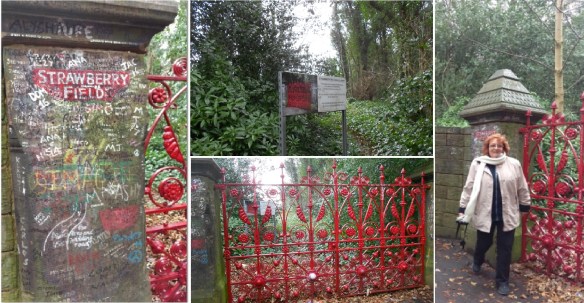
Since we are speaking of famous song locations, we also dashed off the bus pre-downpour at Strawberry Field. Lennon’s nostalgic lyrics refer to his teenage years when this site was a hostel for young girls (a lot of whom were unmarried mothers) and he would sit in the branches of a nearby tree to check them out.

Strawberry Field

Strawberry Fields Forever and a photo opportunity for Mum

Our other two photo-opp stops were the birthplace of George Harrison at 12 Arnold Grove (below left) and the family home of the McCartney clan, now a National Trust property, in Forthlin Road (below right).

Homes

But we also paused at many other places including at the end of Madryn Street in Dingle – the birthplace of Ringo Starr – and outside The Empress, the pub around the corner which featured on the front cover of Ringo’s first solo album, A Sentimental Journey. There was also a pause outside Mendips, where John Lennon lived with his Aunt Mimi from the age of five until he left in 1963, and a slow pass-by the St Peter’s church hall in Princes Street where John and Paul first met in 1957.

And throughout it all Jay kept regaling us with all sorts of stories and interesting facts and before we knew it, we were getting off the bus for the last time back in the centre of Liverpool and just down the road from the Beatles-inspired Hard Day’s Night hotel…

Hard Days Night Hotel

There’s a statue of each of the Fab Four along the front of the hotel and a shop which sells lots of memorabilia. But wait – could that be a fab fifth reflected in the sign?

After a well-earned coffee and a spot of lunch, we took a short spell from Beatle-mania to honour another part of Liverpool’s musical heritage by taking a ferry ride across the River Mersey…

Mersey Ferry

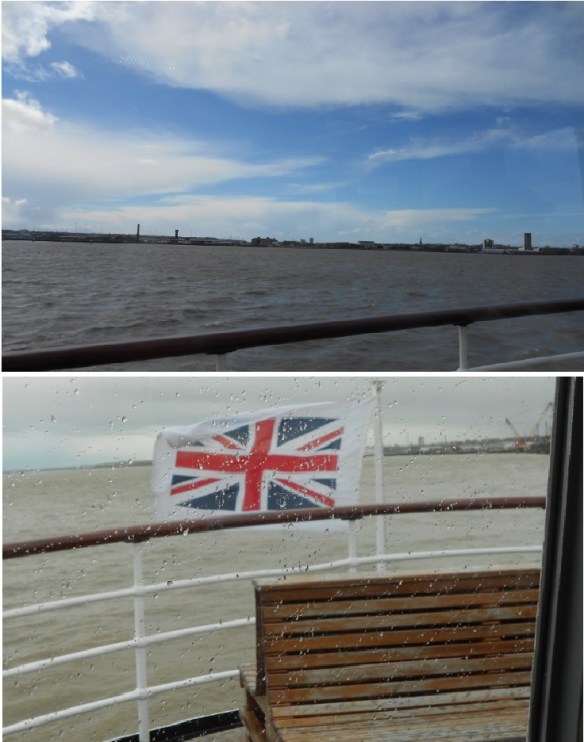
The song Ferry Cross the Mersey was made famous in 1965 by local band Gerry and the Pacemakers. Our crossing was…well let’s call it ‘brisk’- one minute bright and blue-skied then the next, drizzly and damply-grey – but definitely one of the things to ‘tick off’ during a visit here.

It was then back to the Fab Four and a visit to The Beatles Story where we spent another couple of hours poring over more stories and memorabilia…

The Beatles Story

The Beatles Story down at Albert Dock is well worth a visit. Leave yourself plenty of time, particularly if you want to listen to the audio tour and read all of the plaques and snippets along the way. And if you can, pre-book tickets to save waiting in line!

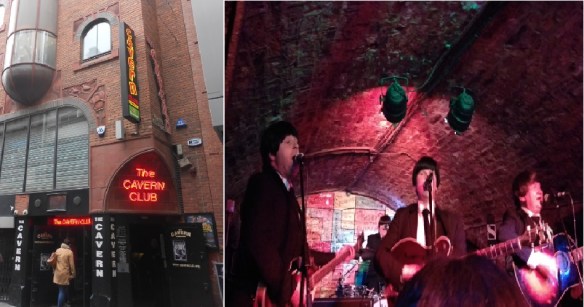
After our music-themed day, what better to cap it all off than with a visit to the Cavern Club, where John, Paul, George and Ringo played more than 290 times before they hit the big time. We saw Made in Liverpool, a fab Beatles tribute act…

Cavern Club

…before heading back to the hotel.

And that, my dear Gidday-ers, was just Day 1 of our Liverpool pilgrimage. Stay tuned for more of our Merseyside exploits – the  non-musical kind -soon…

Bitter Sweet

It’s been over a month since my last historic meander so I am pleased to report that yesterday I spent a couple of hours weaving through the City’s streets in an effort to discover more about London’s connections with slavery.

We all know it happened and movies like 12 Years a Slave and The Butler have raised the public consciousness in recent years. But these have been portrayals of slavery in America and the Caribbean. When you look at these depictions and think about the inter-continental trading relationships that underpinned this industry…

…a picture of Britain is noticeably absent.

So yesterday I met with Museum of London guide Mike (yes he of my Roman fort tour earlier this year) and along with about twenty others, embarked on Sugar and Slavery, a two hour walking tour around the key British institutions involved the slave trade.

Here’s how it went.

From our meeting point at the museum, we walked down Noble Street, pausing opposite the Goldsmith’s Company for Mike’s introduction to the slave trade, before heading down Gresham Street to Guildhall Yard.

The Guildhall Yard (site of Roman ampitheatre (640x360)

Entering Guildhall Yard from Gresham Street – the Yard is built on the site of the old Roman amphitheatre.

The guilds were organisations that represented the wide variety of trades – and as such controlled the various industries – operating in the City of London. In the 17th century, Guildhall was the central seat of justice for the guilds and many a legal battle was fought in Guildhall itself.

The Guildhall (640x360)

The Grade 1 listed Guildhall

Guildhall continues to be the administrative and ceremonial centre for the one square mile that constitutes the City of London. I remember watching Stephen Fry’s Key to the City a couple of years ago where he explored what it meant to have been awarded the ‘Freedom of the City’. He also attended a banquet here – it still seemed full of tightly-held traditions and much pomp and ceremony.

We headed out onto Lothbury Street, turned down Princes Street…

Bank of England (640x359)

The Bank of England, taken from the corner of Lothbury Street and Princes Street

…to reach Bank Junction where we stopped outside the Royal Exchange. The Threadneedle Street entrance to the bank loomed above us on one side and Mansion House, the official residence of the Mayor of the City of London stood across the traffic circle in front of us.

Mansion House (360x640)

Mansion House, official pad of the City’s Lord Mayor. No that’s not Boris Johnson – he’s the Mayor of Greater London which does not include the City. The current – and 688th – Lord Mayor of the City of London is Jeffrey Evans.

Royal Exchange (640x360)

A pause outside the Royal Exchange

The Royal Exchange, founded by Thomas Gresham in 1565, operated much like today’s stock exchange – albeit without the technology – with traders and the city’s financial pundits going at it hammer and tongs from the opening to the closing bell. However, there was a point when it was suggested that business dealings should be negotiated outside the Exchange and so the emergence of coffee houses began.

You may be wondering what this all has to do with slavery – well, everything.

Slavery underpinned the British economy and pretty much allowed rich men to get even richer. Mike told us about one such man, David Lyle, an ‘absentee’ plantation owner who was also, by all accounts, a cruel master. It is recorded that Lyle pistol-whipped one of his slaves, Jonathan Strong and left him for dead on a London street. Strong was found by Granville Sharp – one of the first campaigners in Britain for the abolition of the slave trade – who nursed Strong and offered him work.

Legal battles ensued between Sharp and Lyle (once the latter learned that Strong was alive) with the Lord Mayor eventually pronouncing that Lyle had no claim as Strong was not ‘property’. This was the very same institution who legislated that slaves on ships could be thrown overboard – like possessions – should the captain believe his crew were in danger (eg. of starving due to provisions running out) and also supported the traders’ insurance claims to redeem losses from such activities.

But I digress.

The buying and selling of slaves moved out of the Royal Exchange (officially) and into coffee shops.

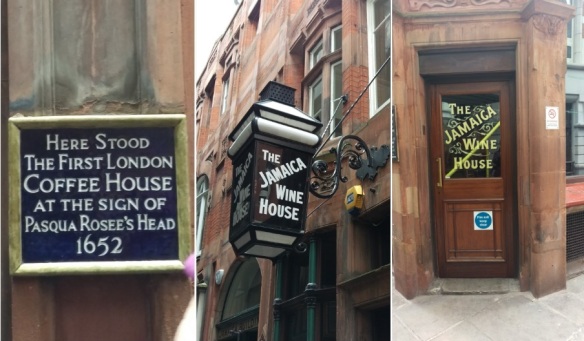
Jamaica Coffee House

The Jamaica Wine House (nee Coffee House) stands on the site of London’s first coffee house.

The importation of raw materials such as coffee and sugar flourished with this rise of informal ‘trading houses’ and a young West African could have his or her horrific fate sealed over this bitter brew sweetened with sugar.

We paused on Lombard Street near the Church of St Mary Woolnoth to hear about John Newton who, after years of trading and torturing slaves, reformed and became rector here in 1780. He gets a mention from me because along with poet William Cowper, he composed a book of hymns in the 1770s – the most famous of these ‘Olney Hymns’ was Amazing Grace…and I cannot tell you how many times I played that as a child when I started learning each of the recorder, clarinet, flute and violin.

We headed on past the Monument (that’s the one to the Great Fire of London) and down to the riverside by Old Billingsgate, Mike continuing to paint a picture of the sickness and fear that these men, women and children who’d been torn from their loved ones, faced firstly on-board the slave ships then upon their arrival, where they’d be poked and prodded like animals before being sold, and finally in being ‘seasoned‘ on the plantations of Barbados and Jamaica.

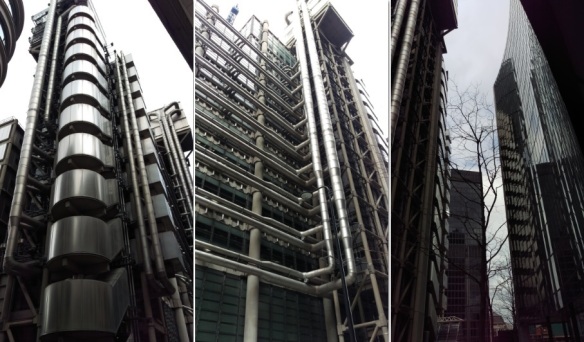
Our next to last stop was Lloyd’s of London, a towering metal edifice of power and money.

Lloyds of London

The original Lloyd’s of London was a coffee house in Lombard Street and as well as playing host to the wheeling and dealing of London’s businessmen, became known as a place where one could obtain marine insurance – much like it is today. That the slave trade was conducted across the Atlantic suggests that Lloyd’s too has its roots steeped in the horrors of human trafficking.

Just down a nearby alley stands the Gilt of Cain, a memorial to the abolition of the slave trade in 1807 that was erected in 2008. It was a fitting way to end the tour.

Gilt of Cain (360x640)

I walked thoughtfully back to the tube station, comparing what I’d seen in movies with the stories of the people who perpetrated, fought and suffered that I’d just heard. There was so little humanity and dignity in each of the different stories that Mike had shared. Some of this I recalled as I walked but in essence, it felt like a fraction of the full story.

There’s a part of me that wants to learn more. While I’ve seen 12 Years a Slave – and found it viciously confronting – somehow each tale told over the two hours of the walking tour left more of a mark. I’m travelling to Liverpool next week, the largest of the old slave trading ports and home to the International Slavery Museum so it is a perfect opportunity.

But it also feels a bit raw – I feel appalled, my belief in the human spirit dented a little so while I will make the most of the educational opportunity that Liverpool will afford, it may be a little while before I venture into anything more.

Patio sessions

It is a gloriously blue sky day here in London and I’m out on the Gidday HQ patio catching up on a spot of reading.

Sun (640x563)

Whilst Aussie-K came over for a coffee  yesterday – the day seemed too good to waste so we chatted about life’s trials and tribulations and scoffed some millionaire’s shortbread bathed in gentle sunshine – today was the first real patio session of the year. The cushions have been dusted off and placed on the chair and I have a few magazines and a bottle of water at my elbow. It’s only 10 Celsius but sheltered from the wind, it feels warmer so I’ve stretched my luminous winter legs out onto the chair in front of me.

Patio feet (360x640)

I miss my patio time over the winter months and as soon as it’s warm enough, I spend my weekend hours out here. As I read my latest issue of Intelligent Life – now with the new moniker 1843 – the washing dries in the sun, the birds twitter and squawk and the neighbour’s ginger cat ventures over to investigate.

1843 (360x640)

I love my patio. It has played host to celebrations with friends and visits from family. There have been Saturdays full of brunches, lunches and catch up coffees and many solitary Sundays spent trawling through the magazine reading that lapses a little over the winter months. I always promise myself I’ll do it during the week but I can’t help but flick open my kindle for just one more chapter of whatever happens to be my latest commuting addiction as I drop into my seat on the tube.

But most of all it’s my haven and today’s session has invigorated my mind, calmed my soul and given me a little respite from the hurly-burly of life. So I’m hoping that we may have turned the corner into the early stages of Spring and with a few more days like today, I might get on top of the reading pile…

reading (640x360)

…eventually.

February: Firsts, facts and fine things

I know. It’s almost a week into March but I promised in January to review each month’s gadding about and February has been every bit as jam-packed as January. So hold on tight and here we go…

There have been a few firsts this month. I’ve already posted about my first filling and my first visit to the British Library. I also attended my first Monash University Alumni event. It’s only taken 24 years and a move across the world to do this and I did turn up wondering what this Global Leaders Network was all about. I had a great evening hearing about the university’s plans for alumni engagement around the world and sharing expat stories with like-minded Australians. How nice it was to enjoy some straight-talking Aussie banter, the room humming with that laconic Aussie twang.

Speaking of university, I have a psychology degree from Monash so I’m really interested in the mindfulness conversation that’s happening at the moment. I saw Ruby Wax interviewed on Sunday Brunch and so went to see her show, Sane New World. Not only is she a comedian but is qualified in psychotherapy and has recently completed a Masters in Mindfulness-based Cognitive Behavioural Therapy at Oxford. Her show was a frank and funny look at our pace of life, mental illness and how our bodies – and in particular our hormones – are trying to cope. I really admire her philosophy in getting ‘off your a**e and doing the work’ – she’s set up free mental health walk-in sessions throughout the run of her shows with the aim of creating a network of walk-in centres across the UK.

February has also been a month for some of the finer things in life.

I attended a talk at the V&A Museum where Francesca Cartier Brickell, granddaughter of Jean-Jacques Cartier, took us on an enthralling journey through the Cartier family history introducing us to the three brothers – Louis, Pierre and Jacq – who started it all and their commitment to innovating whilst maintaining the essence of Cartier design. She also shared many personal anecdotes, one of these about finding the Cartier history in an old suitcase full of letters in her grandfather’s wine cellar. The many family moments she shared made this talk more intimate – less like a lecture and more like a lovely conversation albeit with more than a hundred of us in the room.

It also inspired me to visit The William and Judith Bollinger Gallery at the museum. We were herded briskly through this collection of stunning jewellery on the way to the auditorium and a couple of weeks later, I turned up early for a V&A book club evening to have a wander through. However, it transpired that the gallery was only open during the day so I killed the time I had by visiting the delightful stained glass gallery nearby and also enjoyed a meander through the just re-opened Europe galleries once book club was finished.

VA

The V&A Museum on a drizzly winter evening; killing time in stained glass

I also attended a book launch at the Institute of Directors. Peter Frankopan is director of the Centre for Byzantine Research at Oxford and over coffee and croissants he talked about his new book, The Silk Roads: A New History of the World. His contention is that we are taught about history through the lens of a very small number of countries and believes that we have a lot to learn through the stories of other cultures and regions, particularly Russia and Iran, the latter having been the wellspring for language and religion more than a thousand years ago. I left unsure as to what these regions could offer but it did make me realise how uneducated I am about these areas of the world. I’m now waiting for the paperback version of the book to come out (ever tried to read a hardback on the tube?) so that I can broaden my historic horizons.

And speaking of fine things, I also saw Ralph Fiennes in Henrik Ibsen‘s The Master Builder at The Old Vic. Being able to see actors that I’ve loved on screen performing on stage is one of the absolute joys of living in London and despite being in the vertiginous cheap seats, the power of the performance still remained. It’s the second Ibsen play I’ve seen – the first being A Doll’s House which I studied at high school – and there is something fascinating about the way he explores the roles of women and how they use their personal power in a male-dominated society.

IMAG4300 (640x360)

The view from the cheap seats at the fabulously refurbished Old Vic theatre in London

Personal power also underpinned the speaker themes at the opening session of the TED2016 conference which was live-streamed into cinemas on February 16th. Whether it was 10-year-old Ishita Katyal’s opening talk, the performance from musical phenomenon AR Rahman or Riccardo Sabatini‘s vision for personalised medicine (my favourite talk of the night), it was an inspiring and thought-provoking evening and all for the price of a cinema ticket.

February also had me moved by music. My annual pilgrimage to the Flamenco Festival at Sadler’s Wells was a testosterone-fuelled performance by brothers Farraquito and Farruco which had me on my feet at its conclusion. Over at Kings Place, the Brodsky Quartet’s performance of George Gershwin’s little-known Lullaby for Strings was exquisite.

And with all of that going on, I found some time to imbibe in a well-deserved drink

watering holes

A couple of new watering holes near Holborn Station to add to my ‘let’s meet up’ list. L: The Princess Louise  R: The Ship Tavern

So that was February, filled to the brim with firsts, facts and fine things.

Phew!

Now for March…

Finding Wonderland

It was wet and grey in London yesterday and if it hadn’t been for some existing plans I would have been perfectly happy to curl up at Gidday HQ on the comfy couch. But the British Library beckoned and so just after lunch, friend Aussie-K and I stepped out for some literary loitering.

IMAG4268 (640x360)

It was our first visit to the library. Yours truly has been here twelve years and until yesterday, had only managed a passing acquaintance last year by way of a talk at the conference centre next door. Given how much I love literature and reading, I am delighted to have ticked this visit off my London bucket list and to have moved from ‘I must’ to ‘I have’ at long last.

And what, I hear you ask, made me get off my backside and go?

Well, Wonderland of course!

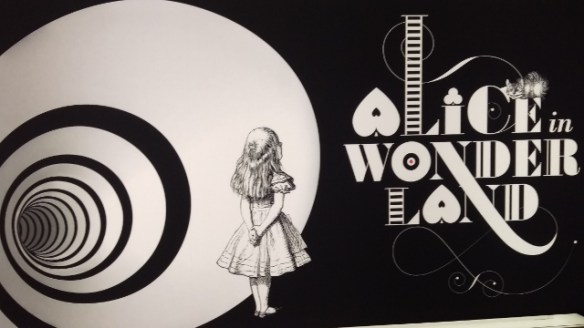
2015 was the 150th anniversary of the publication of Lewis Carroll’s Alice in Wonderland. It’s a story that’s been told in a myriad of formats and iterations over the years, its other-worldly characters and trippy plot making it the subject of much interpretation and debate. I saw Robert Douglas-Fairhurst interviewed about his biography on Carroll – The Story of Alice – last year (which I am currently reading) and the Library has been running a temporary free exhibition which closes in April. So we entered the fray and hustled – with what felt like hundreds of half-term families – along the cabinets and displays.

IMAG4270 (640x360)

The front part of the exhibit was taken up with a series of twelve (or was it thirteen?) decorated mirrors featuring quotes from Alice in Wonderland whilst in a rather cramped section at the rear, there was an opportunity to learn about the author himself, his real-life Alice (who happened to be a brunette rather than the blonde we’ve come to know and love) and see the ways in which this famous story has been communicated over the last 150 years. It was interesting – however the area was poorly-lit with little opportunity to linger and I found it difficult to read all of the information and look at the details of the books and manuscripts on display. I’m not sorry that I spent the time to shuffle through and see it but it’s just as well it was free otherwise I might have been a little put out!

It seemed a shame to leave after such a short visit and as it was still raining outside, we meandered across to the Library’s permanent exhibition, Treasures of the British Library.

Now THIS was my Wonderland and I spent quite some time poring over…

…drawings & notes from Leonardo da Vinci and Michelangelo…

…musical scores from as early as 1050 and from geniuses like Mozart, Debussy, Chopin, Beethoven, Bach (just to name a few) as well as a page of Puccini’s scribbled stage directions for his opera Madame Butterfly and a touch from the modern era, a burst of scrawled lyrics for The Beatles’ hit ‘Help’…

…pages and pages of penmanship from literary giants: 16th century greats like Shakespeare, Marlowe and Jonson, acknowledged classics like Jane Austen’s Persuasion, Charlotte Bronte’s Jane Eyre, Charles Dickens’ Nicholas Nickleby and Thomas Hardy’s Tess of the D’Urbervilles and even a little something from Ian Fleming, the man behind James Bond – who you could argue is one of the 20th century’s most iconic literary creations – and his short story, The Living Daylights…

…sacred texts, beautifully illustrated, from as early as the 4th century and from a  variety of religions including Judaism, Hinduism, Islam and Buddism…

…and one of the four Magna Carta documents dating back to 1215 which was sitting right alongside the original papal bull that annulled it just 10 weeks later.

It was absolutely awesome – in the true sense of the word – and these were just the highlights.

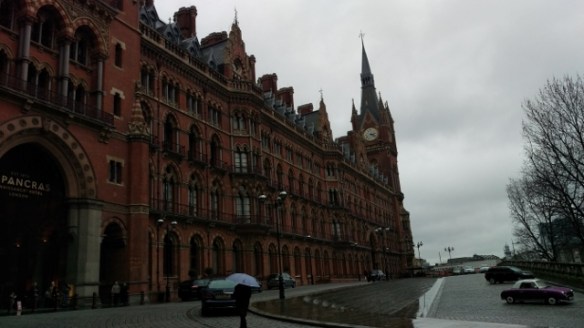
And after such a deluge of inspirational history, it was time to venture back out into the real weather, make a damp and concerted dash past St Pancras Station…

IMAG4277 (640x360)

…and around to the YumChaa Cafe in Granary Square for a warming hot chocolate and a slice of apple and apricot loaf…

IMAG4280 (360x640)

All in all, it turned out to be the perfect way to spend an inclement February afternoon in London.

The perfect tonic

Those of you who are Gidday regulars will know that I like a walking tour. I got into them in earnest last year, thinking they’re a great way to indulge my passion for history.  We were also doing the Get the World Moving challenge at work and one’s step count, and increasing it, became the currency of water cooler and photocopier conversations for about three months.

Yesterday I joined Museum of London guide Bridget and twenty committed tipplers for a damp and chilly trawl through London’s links with gin. Here’s how things went.

We began outside the Dominion Theatre on the corner of Tottenham Court Road and New Oxford Street, the site of the old Horseshoe Brewery and the great beer flood of 1814.

IMAG4196 (640x360)

Apparently a large vat of porter burst and flooded the area. With many of London’s poor living in nearby tenements and cellars – Bridget quoted 102 people living in 8 rooms – it’s remarkable that only eight people died. That six of them were at a wake brings new meaning to the saying “drowning one’s sorrows”.

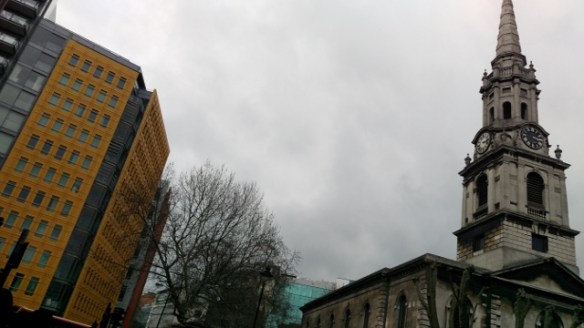
Our next stop was Denmark Street – London’s music mecca – Central St Giles (designed by Renzo Piano, the architect behind the Shard) and the church of St-Giles-in-the-field.

IMAG4205 (359x640)

IMAG4208 (640x360)

Here the enormity of gin’s impact on London really took shape. Gin, or jenever, came to London from Holland, introduced by William III who had seen its invigorating effects on his troops in the face of battle. Ever heard of the expression Dutch courage?

In any case, gin was easy to make and accessible to the poor and at one stage, every man, woman and child was consuming 500 gallons per year – that’s more than 2,270 litres if you are metric – or 6 litres per day. As such gin became the root of many social ills, some of which were illustrated by William Hogarth in his etchings below.

IMAG4216 (640x348)

Thuggery, thievery, disease, suicide and murder were all part and parcel for the gin drinker (right) while on the left, beer was being positioned as having a less deleterious effect on the health (see the better dressed fishwives at the front of the picture). The ‘powers that were’ agreed – after all, without the poor masses, who would serve them and fight their wars – and passed several Gin Acts in an effort to stem, not always successfully, gin’s rapacious tide.

We continued around the back of the church and down to Seven Dials, originally the nexus for just six streets rather than the seven of today.

IMAG4221 (360x640)

The area was laid out by MP Thomas Neale in the 1690s to maximise the space available for his housing project. He commissioned Edward Pierce to build a sundial to stand in the intersection but this was destroyed in 1773 in an effort to stop the site, which was showing the effects of the residents’ heavy gin consumption, being a meeting place for ne’er-do-wells. In the late 1980s, it was rebuilt in line with the original plans and in keeping with our Dutch association, it was Queen Beatrix of The Netherlands who attended its unveiling as part of the year-long William and Mary celebrations in 1989.

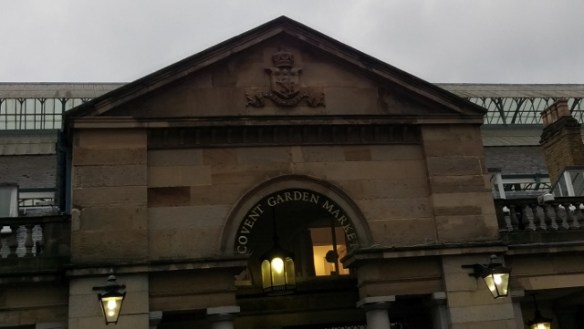
We set off down Earlham and then Neale Streets to find ourselves at Covent Garden.

IMAG4225 (640x360)

IMAG4226 (640x361)

We paused by the back entrance to the Royal Opera House to learn about Harris’s List of Covent Garden Ladies. The list was published between 1750 and the mid-1790s and detailed the attributes and services of each ‘lady’ available in Covent Garden alongside her picture – at one point, 8000 copies were in circulation.

Much business was also done under the portico of the church opposite, the site of Tom King’s coffee shop which was a place not only for coffee but for gambling and drinking as well. It was said that gentlemen emerging from their clubs could ask Tom (and later Moll King) for the services of lady from Harris’s list. A messenger would be despatched and the lady brought to the coffee shop to meet said gentleman.

We walked around the block and into Bow Street – I’ve only ever entered the Opera House from Covent Garden so I was delighted to acquaint myself with its front.

IMAG4229 (640x360)

The BAFTAs ceremony for the film awards – said to be an indicator of Oscars success – is held here every year on February 14th so there was a lot of work going on to prepare the ‘red carpet’ for tonight.

IMAG4228 (640x360)

We turned into Broad Court and paused again to hear more about Henry Fielding, his brother John and the Bow Street Magistrates Court where people like CasanovaOscar Wilde, suffragette sisters Emmeline & Christabel Pankhurst and author Jeffrey Archer have appeared.

IMAG4232 (360x640)

Henry Fielding also established England’s first police force, originally a group of just six men nicknamed the Bow Street Runners, in 1749.

The end of Broad Court brought us out onto Drury Lane, where many gin palaces emerged during the 1800s. These ‘palaces’ employed the latest inventions of the 1830s – gas lighting, silvered mirrors and paned glass windows – to create a brighter and more genial environment to enjoy a tipple although without seating, patrons drank until they could no longer stand. Literally.

Taverns (where beer was served) already had seating so watched, learned and called on the same improvements to provide a much more comfortable environment for their patrons. So the public were drawn back into the taverns and away from gin until the first half of the 1900s when in the roaring 20s and then again during World War II – when it was Churchill’s tipple of choice – gin’s public profile rose again.

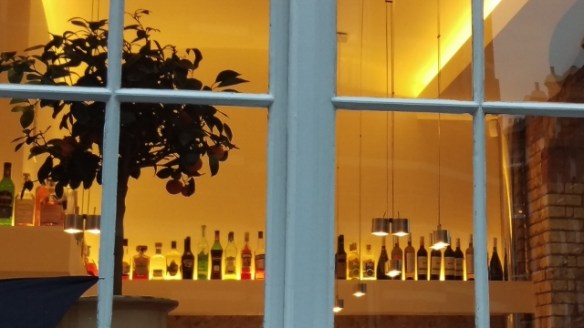
We’d been going for about an hour and half at this point and with the promise of a glass of gin at the end of the walk looming, I found my attention taken by this view through the window of restaurant Barrafina…

IMAG4238 (640x360)

…but there was still one more stop to make before our promised refreshment.

Bridget led us along Great Queen Street and up Newton Street to admire the Princess Louise…

IMAG4243 (640x360)

…and encouraged us to duck into the side door to have a quick peek at how the taverns of the 1830s (and onwards) might have looked.

While it was just a short peek, it was really beautiful and inspired me to find a reason to come back for a drink with friends.

Just as well that our final stop and gin-watering hole was not far away.

IMAG4250 (360x640)

And so our tour ended at The Ship Tavern, tucked away behind Holborn Underground Station, with a rather lush gin, grapefruit and coconut concoction.

IMAG4254 (360x640)

For those of you wishing to wander this area for yourselves, here’s a map of our route…

Mother's Ruin route

…but these streets really came to life yesterday with guide Bridget’s extraordinary knowledge and skillful storytelling, only a fraction of which I’ve shared with you here.

The museum runs a number of themed walking tours like this so if you are interested, check out the website. The next Mother’s Ruin tour looks like it’s on March 13th so if I were you, I’d get your skates on (another Dutch reference – see Hans Brinker) and book your place.

It’s bound to be the perfect tonic.