A Monstrous Vision…

After spending the day before wandering though the old Jewish areas of Krakow, I boarded a bus on a grey drizzly Saturday morning for my visit to Auschwitz-Birkenau. I wasn’t sure what to expect – of the day or of myself – and the mood was stilted, even restrained, as the coach wove through the busy traffic and out into the green and undulating Polish countryside.

Auschwitz is actually 3 camps – Auschwitz I, Auschwitz II (Birkenau) and Auschwitz III (Monowitz-Buna, a work camp built near the I.G. Farben industrial complex, which wasn’t part of this visit) – as well as a network of 45 subcamps in the surrounding area. 

Our visit took us first to Auschwitz I, a group of 16 brick buildings surrounded by lush trees and the ubiquitous electric fence.

About to enter Auschwitz I

Once we’d passed through the gates and followed our local guide down the dusty path to the centre of the camp, it was obvious how compact the site was, not at all what I’d expected.

The buildings here were Polish army barracks prior to Nazi occupation and throughout the camp’s operation, more than 17,000 men, women and children marched under ‘work will set you free’, to the strident beat of the camp orchestra, and populated the bare floors, crowded beds, prison cells and medical wards of this, the base of the Third Reich’s Final Solution in Poland. 
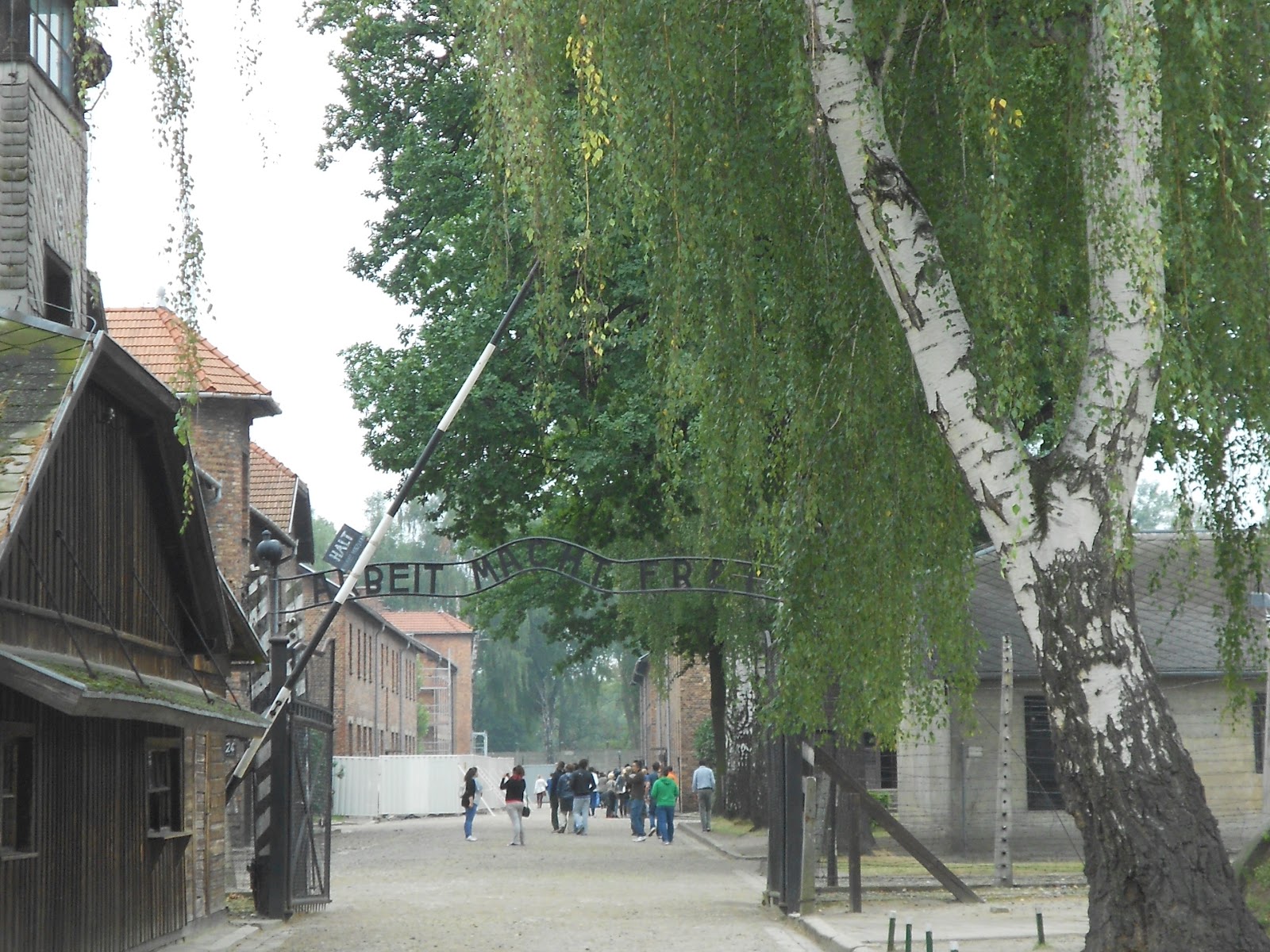
Arbeit macht frei – work will set you free.

In fact, most of the inmates were not ‘local’. The camps were well-positioned for transportation from other points within Nazi Germany’s rapidly-expanding reach – places like Austria, Czechoslovakia and Romania to name just a few – and so this and the other camps became a veritable Babel, with the only common language being terror.

One display cabinet was filled with the suitcases and baskets that once held the possessions of these displaced people.

Auschwitz I was not only the base camp but also a place of significant experimentation. Genetic experiments were carried out to develop methods promoting multiple births, an essential part of Hitler’s plan to populate Eastern Europe with the Ayran Race he so admired. (During the same period, men were castrated to prevent the proliferation of undesirables.)

And the testing of the pesticide Zyklon B’s effectiveness as a human exterminant occurred here in preparation for its wider application at Birkenau.

After 2 hours walking in and out of the old barracks and even into the gas chamber where Zyklon B was first tested, all the while trying to absorb the overwhelming monstrosity of Hitler’s vision, we were given a short comfort break before boarding the coach for part two of our visit. (Believe me, paying for a pee here seemed a really small price to pay!)

Birkenau is enormous and it’s here where the largest number of people were murdered during World War II. Building (by the inmates themselves mind you) commenced in 1941 to ease congestion in the other camps but it was on such a scale that there can be no doubt that its purpose was to extinguish the lives of all who entered.


This photo was taken at the ‘sorting’ point looking back to the main entrance. This is the point where hundreds of thousands were bundled out of locked rail cars, separated from their loved ones and worldly goods, and selected to either remain in the camp or make the long march to the ‘showers’ at the back of the complex.

The ruins of two of the crematoriums have long since ceased to pose a threat but walking around the remains felt sinister – I could feel the absolute and unremitting purposeful-ness of Hitler’s Final Solution.

Between the two ruins lies the monument to those that died here.
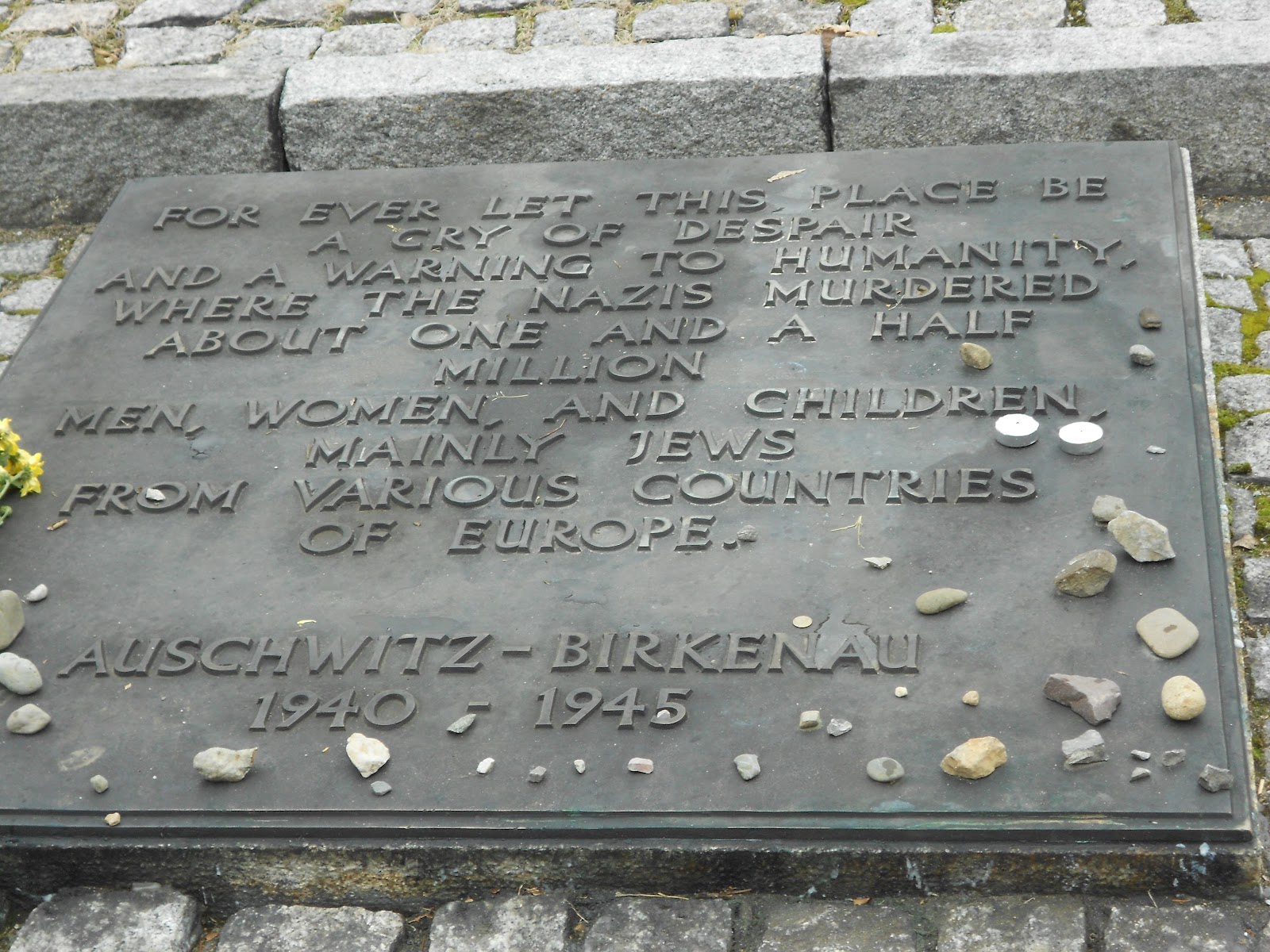
‘For let this place be a cry of despair and a warning to humanity. Where the Nazis murdered about one and a half million men, women and children, mainly Jews, from the countries of Europe.’
The plaque appears 28 times along the monument, translated into every langauge spoken by the inmates of Birkenau.

The bus was quiet on the way back to Krakow and alone with my thoughts,I tried to process all that I’d seen. 

I was horrified by Auschwitz. The inhumane experiments, the displays of surrendered possessions, the inmate photos lining the walls, and the prison – with its starvation and its standing cells designed to punish those who disobeyed by punishing their comrades. I felt the sting of tears blinked away several times here.

But I was numbed by the scale of Birkenau. It’s difficult even now to find the words. I still think about standing on those train tracks, watching them disappear towards the crematorium ruins and the forest surrounding the camp, and silently wondering ‘How? How could that be?’
 
It still catches me out, filling my mind’s eye in the middle of my day-to-day when I least expect it.

Perhaps it always will.

——————————————
Other posts in the Krakow series:
It Starts With The Locals
Lightly Salted
The Dark Side 
Eat, Sleep And Be Merry
The Dark Side…

I’ve recently been to Krakow (regular Gidday-ers will already know this) and as I wandered its streets and gazed around the old town square, I thought how like Prague it felt. Right down to the bugler playing his doleful tune to all points of the compass from the tower of St Mary’s Basilica each hour.

And yet there’s something different about Krakow, a darker undertone.

In planning my trip, I had pre-booked a visit to Auschwitz-Birkenau (more on that in another post). But Krakow was invaded by the Nazis on the 1st September 1939 and remained occupied for almost the entire period of the second world war so I wanted to understand how things were closer to ‘home’. And this needed going a little further afield so on Friday morning I headed south along the banks of the Vistula River for a day exploring Podgorze and Kazimierz.

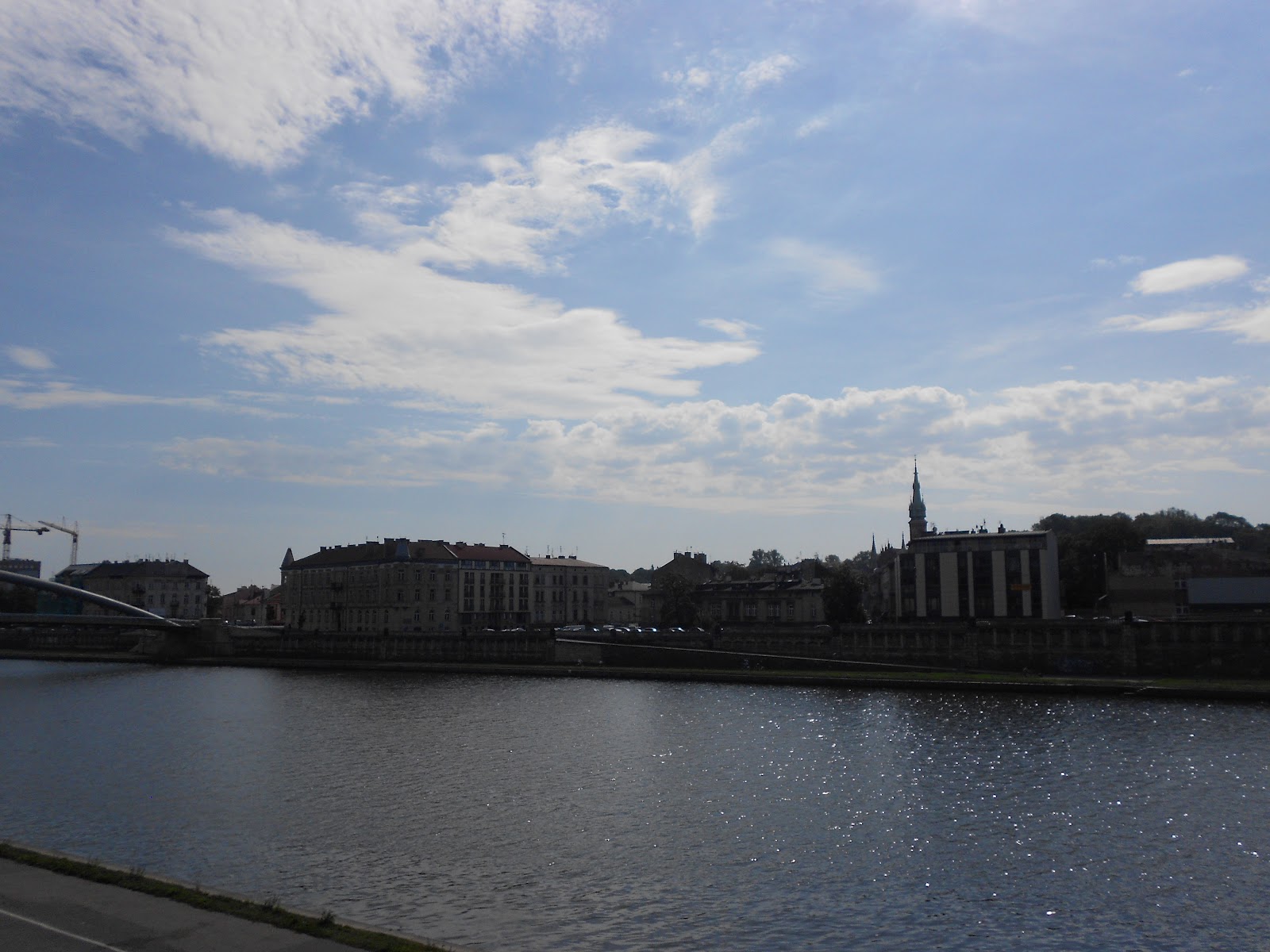
View of Podgorze across the Vistula River from Kazimierz

Let’s get one thing straight. I am not well-versed in Jewish culture and history, despite having lived in Jewish areas both in Melbourne and now here in North London. (Just to clarify – I am not Jewish.) And I don’t have a particular interest in it so I was not planning a day of traipsing through synagogues. But the Jewish population of Krakow decreased from 65,000 before the war to only 200 today and I find it extraordinary that one of our ‘species’, if you will, could become so endangered.

Podgorze was where my walk was to begin. This was where some 15,000 Jews were herded from Kazimierz across the river to live within the walls and gates of their ghetto home before being deported to concentration camps, the closest being Plaszow, a labour camp built in 1942 and then converted in 1944. I wandered through the busy streets of this now everyday suburb of Krakow, past the piece of ghetto wall, tucked between modern structures along a main road, and into Plac Bohaterow Getta with its rows of empty chairs, a tribute to the thousands of Jews who left their worldly goods behind and boarded trains there.

Part of the old ghetto wall still stands in Podgorze
Plac Zgody, which stood in the centre of the ghetto, has been renamed Plac Bohaterow Getta as a monument to’ the heroes of the ghetto’

The enamel factory of Oskar Schindler is not far from here and just a short walk across the train line brought me to 4 Lipowa Street.


The factory houses an extraordinary permanent exhibition, Krakow Under Nazi Occupation 1939-1945, which gives a fantastic insight into this short but defining period in Krakow’s history. There are lots and lots of details throughout the 28 exhibits and in some parts, it was a bit too much to digest. Nevertheless, I spent just over two hours here – there is a ‘ghetto walk’ and a fascinating display detailing the occurrences in the city in the days  right before and then during Nazi Germany’s entry into the city. If any of you are wondering about the must sees in Krakow, this should definitely be on your list.

Two moments in Krakow’s history illuminated by the sun.
(Under the rail line between Plac Bohaterow Getta and Lipowa Street) 

I began my slow and thoughtful walk back to Plac Bohaterow Getta and a short tram ride across the river, I found myself in Kazimierz, ready for a spot of lunch and a meander through this vibrant neighbourhood. There’s a different feel here – it’s industrious and dotted with craft and artists’ shops. Only two corners of the market on Plac Nowy were in operation as I walked through and I can imagine that the flea market on Saturday must have the whole square thrumming with activity. Alas, I was a day early and booked for my excursion to Auschwitz the following day.

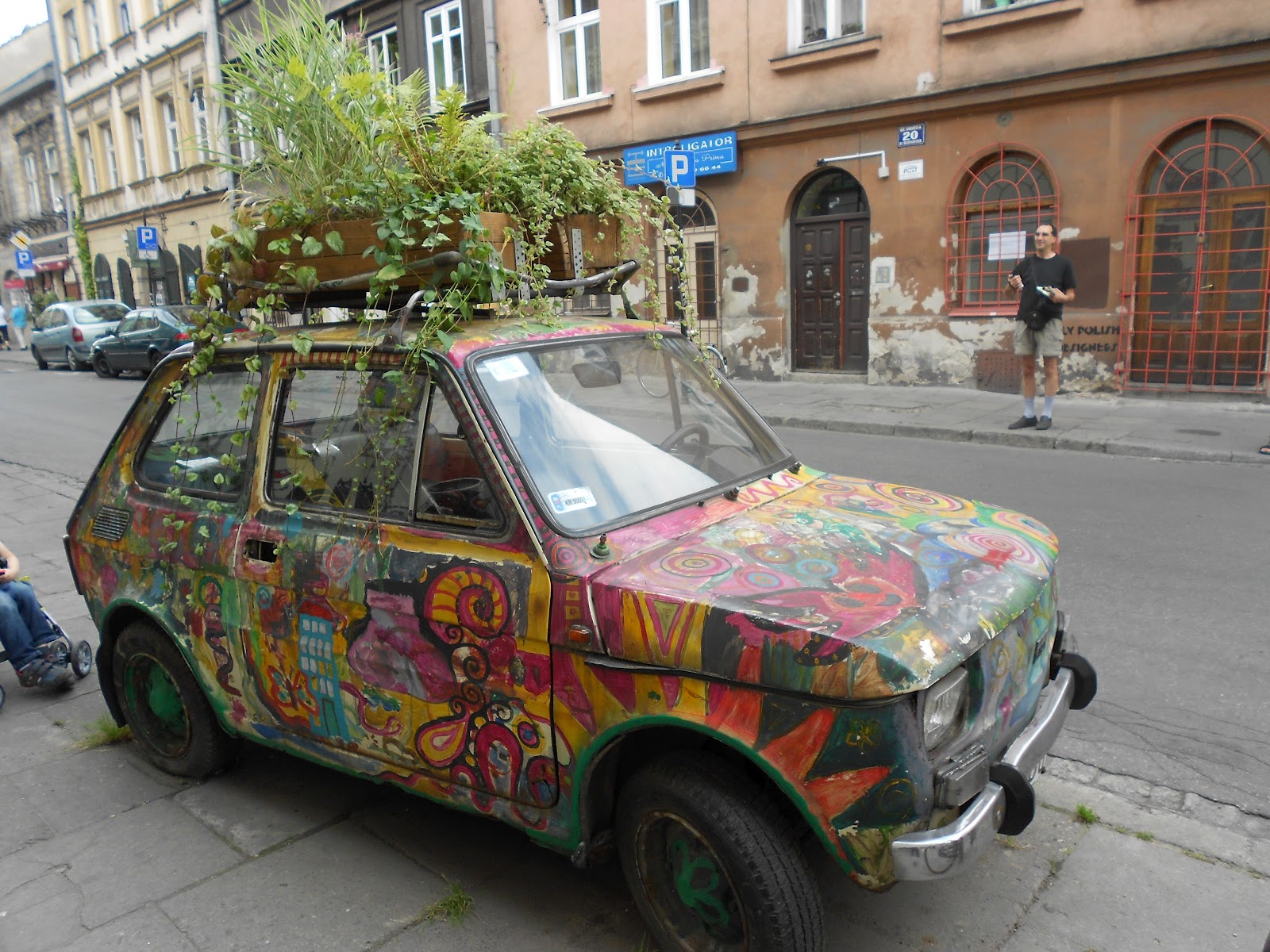
Artistic expression reigns supreme in Kazimierz

I found a spot for a late lunch. My experience of Polish food so far had been wholesome and tasty and in huge portions – Miodowe Smaki (or A Taste Of Honey) was no different – and I settled in for a while to reflect on my day.

I don’t think a visit to Krakow can really be complete without an ackowledgement, amidst the music and medieval splendor of this wonderful city, of this particular piece of its history – in essence a reflection of our own darkest hours as a human race. A history, not only recent, but one littered with horror, tragedy and shame.

My trip through Jewish Krakow had left me filled with something that even now I can’t put into words. Sombre, respectful certainly, not quite sad but there was a sense of melancholy that stayed with me for several hours afterwards (and re-emerges as I type this). It felt like this day had given a depth to my Krakow experience that I hadn’t expected. I felt like I had some sense of a people who had lived their lives in hope and peace and, in an horrific injustice, met their end at the hands of their fellow man.

And in that, I felt a little more prepared for my visit to Auschwitz-Birkenau the following day to confront the end of their story. 

——————————————–
Other posts in the Krakow series:
It Starts With The Locals
Lightly Salted
A Monstrous Vision
Eat, Sleep And Be Merry

Lightly Salted…

Poland, and particularly Krakow, is known for its historic and tragic role in Hitler’s persecution of the Jews during World War II. But what it is not so well known is its connection with something that we still use everyday…salt.

Wieliczka Salt Mine (it’s pronounced Veil-ich-ska – I had to work surprisingly hard for a couple of hours to get that right!) is about a 20 minute drive from Krakow and has been a UNESCO World Heritage site for more than 30 years.

But a little over 3 hours is all you need to get up close and personal condiment-wise.

Old miners steps about 100m below the surface

Used for the preservation of food prior to the invention of refrigeration, salt was one of the lynchpins of the Polish economy. Salt was once valued more highly than gold and the workers at the mine itself were so highly regarded that they were actually paid with it. (The word salary, comes from the Latin sal, the word for salt.)


White ‘gold’

The visit all starts with taking some steps – many many many of them (380 in fact) – down to level 1 of the mine 90m below the surface and ends 2 hours later a further 45m deeper (that’s 135m for those of you that have well and truly run out of fingers!)

In between, we walked the rock salt corridors, gaping at each new cavern, wondering at the bravery of those that worked here and breathing in the salty air. Rubbing my fingers along the walls gave me a quite literal taste of the origins of the condiment that will eventually end up on the dinner table.


Wood (rather than metal) is used everywhere to support the corridors and caverns providing a safe place or all comers

Throughout there are extraordinary natural monuments alongside man’s efforts to carve and shape the dark grey stone: tributes to Poland’s visionary forefathers (from Copernicus to Pope John Paul II) as well as its legends (St Kinga) and superstitions (the Treasure Keeper). And to top it all off each breath is therapeutic, the salt-laden environment being ideal for the treatment of asthma and other respiratory conditions. (There is actually an underground health spa for these treatments if one is so inclined to revisit.)


Copernicus preserved – in salt – for all eternity

Wieliczka Salt Mine has been operational for over 700 years – although commercial salt mining stopped in the 1990s, salt is still extracted from the water that dampens ceilings and walls and fills numerous underground lakes.

This underground lake is overseen by the Treasure Keeper from his alcove. Smile at him and you will be lucky, so the saying goes. (Do you think it’s a bit like going to a singles bar?)

It’s a relatively easy 2km walk through the mine with many stops to look at the various points of interest with a local guide. There are toilets and a couple of shopping opportunities along the way so one can stock up on sugar-laden snacks, caffeine fixes or a souvenir or two…and take care of the ‘essentials’. There’s also a museum on site – but the 2 hours was just the right amount of salt for this Aussie palate.

My recommendation would be to join a group tour (I was with Cracow Tours) which means avoiding all the hassle of getting yourself there and back and queue-ing up in between. My group didn’t allow time for anything other than the mine tour but you can go on your own and join a group there if you prefer to allow a little more time for other exploration.

And last but not least, you’ll be pleased to know that the return to the surface is via a fast mining lift, with 8 of your fellow men, women and children, which takes no more than a few minutes, feeling the cool salty air in your hair and on your face as you ascend back to the main entrance building.


And it’s just as well. 380 steps upwards might have proved a few steps too far!

————————————
Other posts in the Krakow series:
It Starts With The Locals
The Dark Side
A Monstrous Vision
Eat, Sleep And Be Merry
It Starts With The Locals…

As you know from my last post, I’ve just spent the last 4 days exploring the wonderful city of Krakow

As usual, I’ll be writing a few posts around my visit and down the track (once I’ve written them, that is), you’ll be able to find them by typing Krakow or Armchair Tours into the search box on Gidday’s The Good Stuff page (where it says More Fossicking? on the left hand side).

But in tribute to the friendliness of Krakow’s natives, for me today’s post must start with the locals…
 

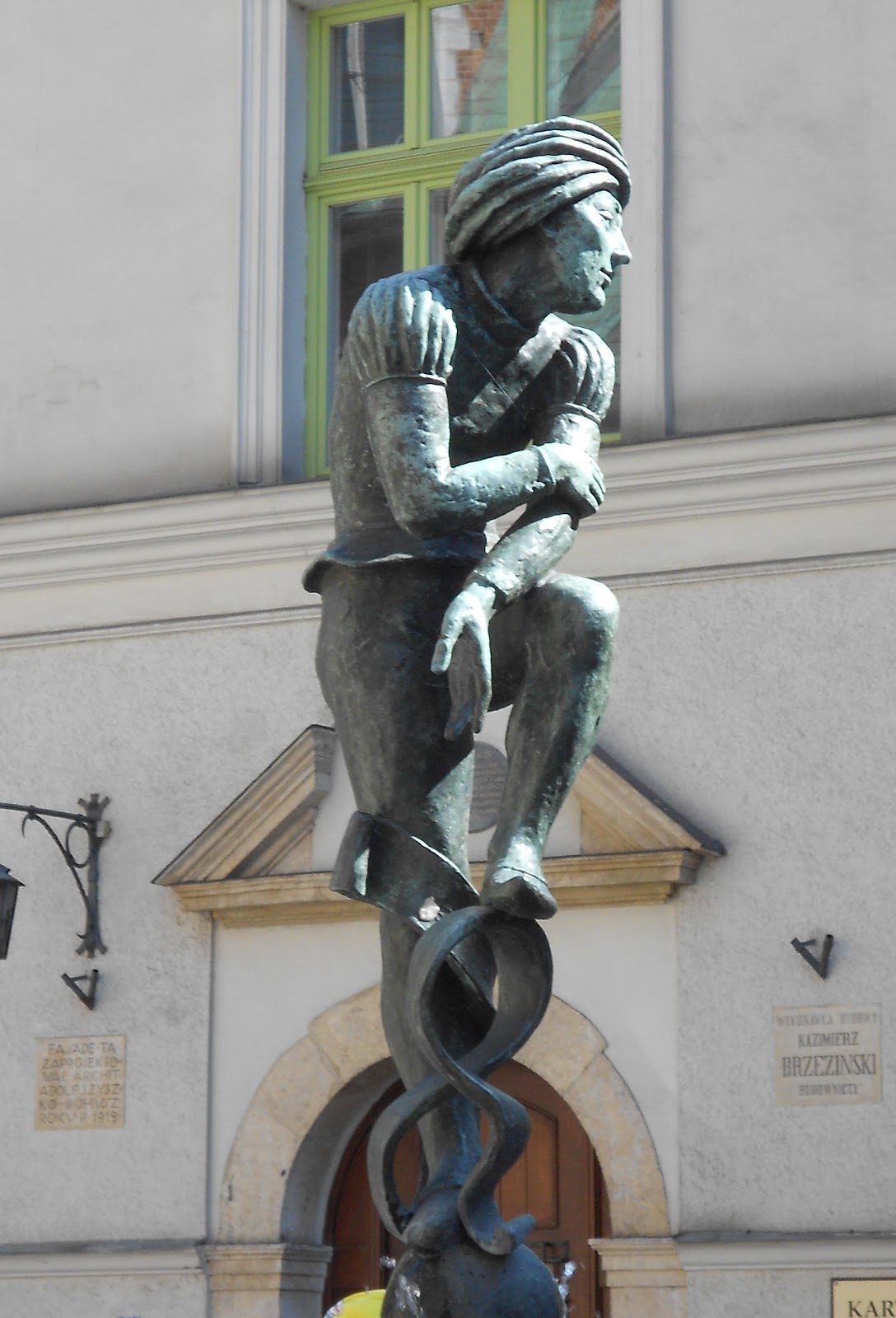
This local next to Bazylika Mariacki (St Mary’s Basilica) was keeping his eyes peeled for likely comers
As I meandered through the Old Town Square (Rynek Glowny) on Day 1 of 4, I was struck by the ‘long and short’ of this negotiation…
…but it seemed that this young fella managed to seal the deal.
As I crossed the square I saw a sign from afar…

…and nearby I found a king-like soul keeping vigil at St Mary’s Basilica.
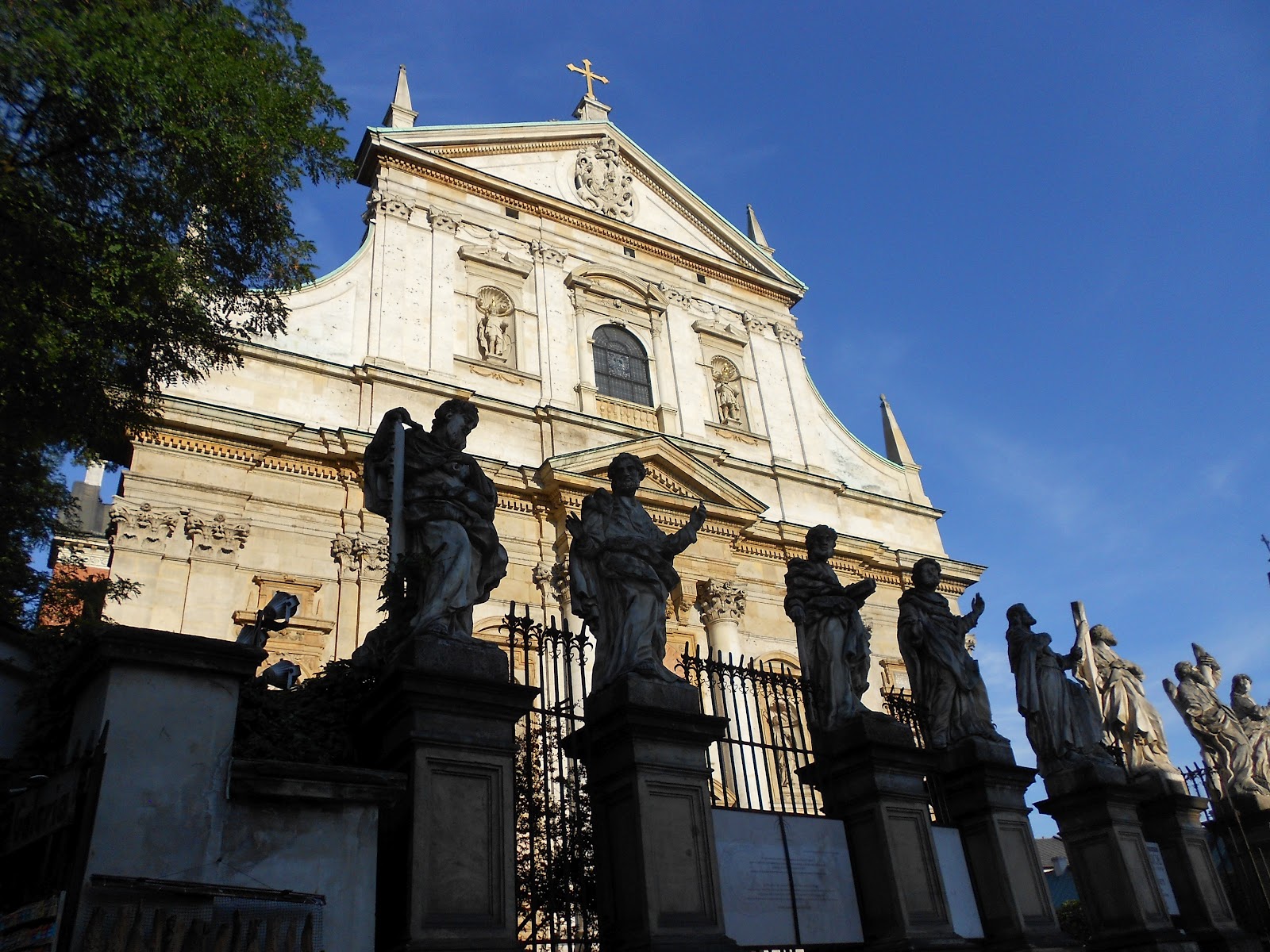
A whole host bade me welcome at St Peter and Pauls Church
( I saw a fantastic chamber music ensemble here on my first night
 – both the music and the venue were breathtaking)
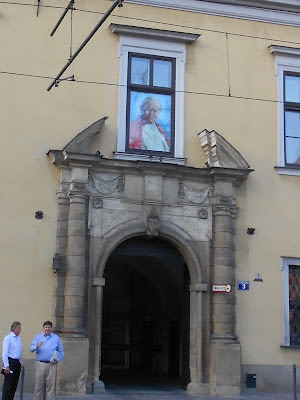
And I couldn’t leave without taking a pic of The Papal Window for Mum (who behaved like the biggest groupie I’d ever seen when we saw the man himself at St Peter’s in 2000).
Pope John Paul II made several public addresses to the people of Krakow from this window. Not only was he Archbishop of Krakow before becoming pope but did you know that he also lived through Krakow’s occupation during World War II?
Clearly opinions still run high. This ‘grafitti’ in the old Jewish Quarter of Podgorze makes a poignant point. The mass deportation of Jews in the 1940s means that an estimated 200 Jews remain in Krakow – from 65,000 pre-WWII (according to my Lonely Planet Krakow Encounter Guide).
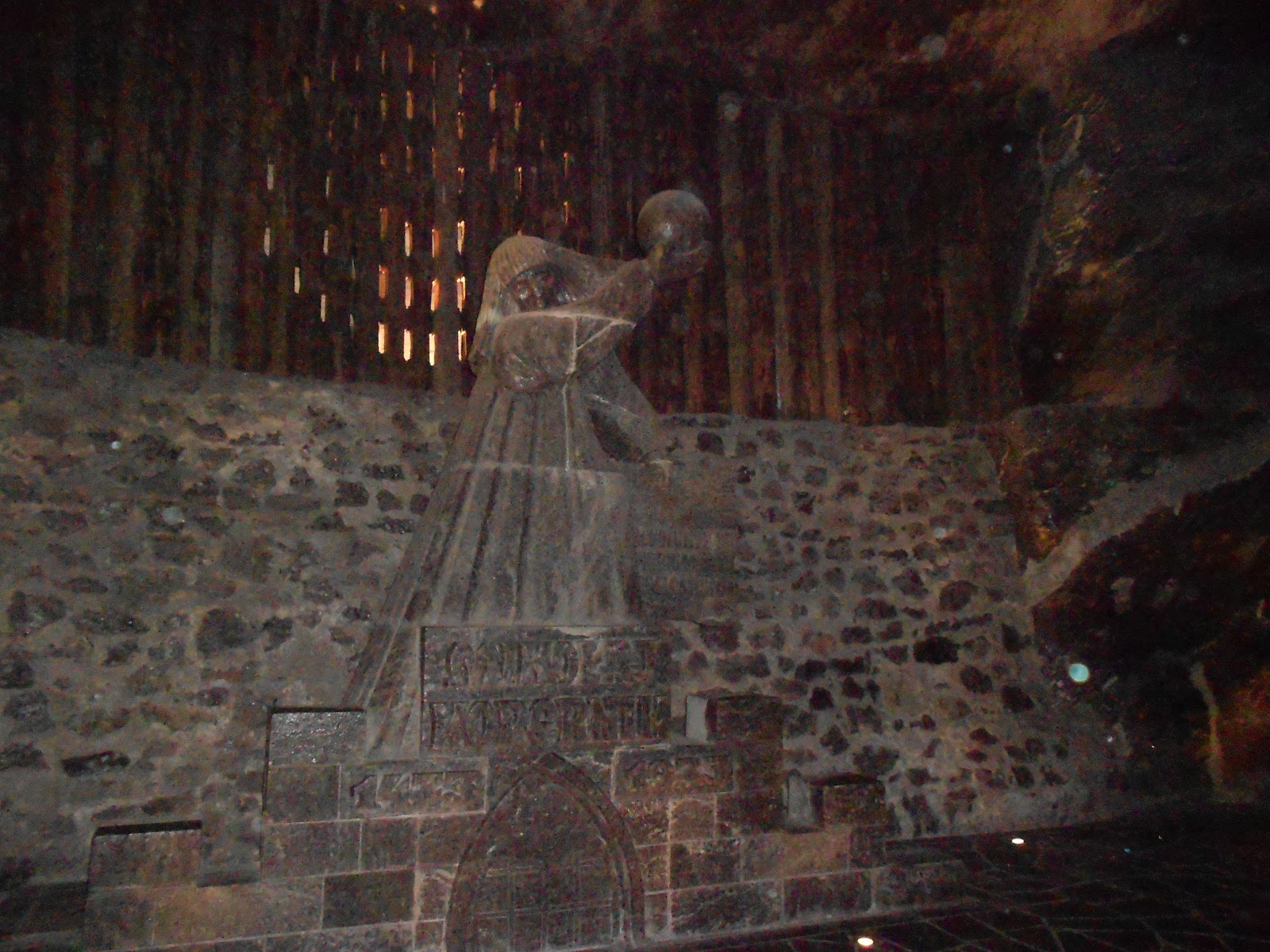
The Legend of St Kinga (you can read it for youself by clicking on the link) – a story carved in salt at Wieliczka Salt Mine
                     
Retailing creativity extends into jewellery, ornaments, foodstuffs…
 
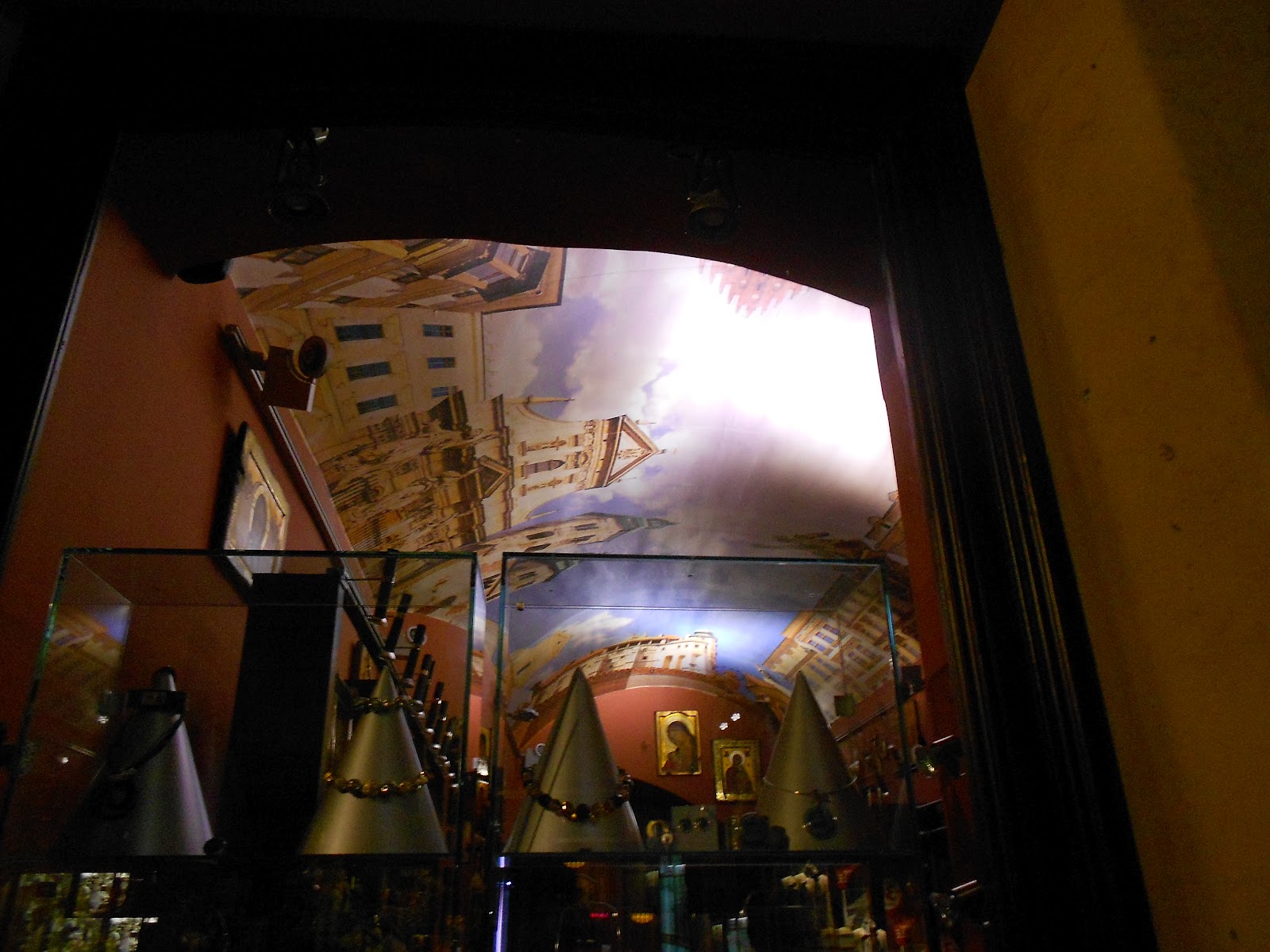
…and ceilings. Yes, that is a painted ceiling in this shop, obviously no longer the singular province of the churches here in Krakow.
In spite of my limited Polish (read none), this sign seemed to suggest that I could find a spot of liquid refreshment at this establishment
But if in doubt, I knew where I could find an off-licence…
…as it seems did Winnie the Pooh.
(Seems he translates in any language!)

Rest assured that this merely skims the surface of the fascinating and historic city – remember to keep your eyes peeled for more on Krakow soon…

——————————————
Other posts in the Krakow series…
Lightly Salted
The Dark Side
A Monstrous Vision
Eat, Sleep And Be Merry


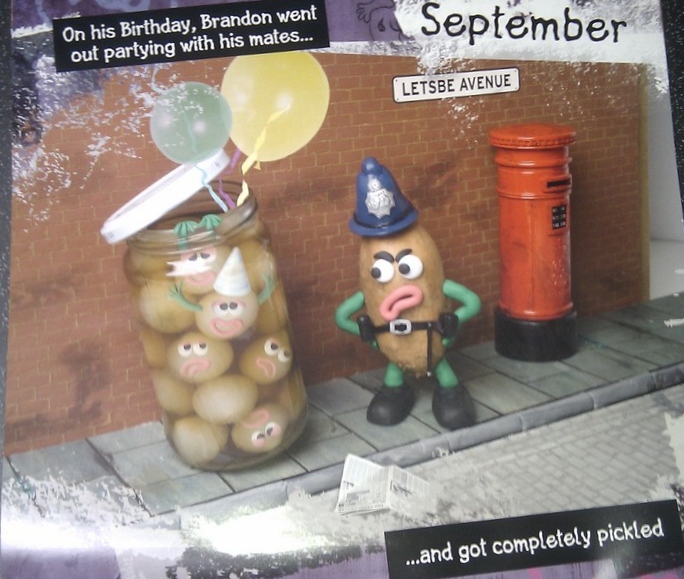
Your 2012 Five A Day…September

This month’s Five A Day pickled offer from Violent Veg seems more than a little apt given my August of foodie frolicking and wet whistling.

The month started off not so well with the only thing pickled being me as I fought the last vestiges of chickenpox with solitary cake consumption. But things picked up and soon I was off to Barcelona for a little city break with Seattle-A. A social month followed with several long overdue catchups (over drinks naturally), a sojourn at the opera, a Turkish feast (complete with some compulsory participation in the national sport of belly-dancing) and finishing with a little social DIY: painting the town multicultural and then an audit to reinforce the foundations of friendship.

So what multicultural pickling opportunities could possibly be left as we head into Autumn?

Krakow
As you read this I will be enjoying a short break in Krakow. It is higly likely that amid the history and splendor of this medieval town, I am finding a few opportunities to sample a  local beverage or two. Stay tuned for more about my exploits soon.

Seattle
This week I will be enjoying a final London fling with Seattle-A before she and hubster jet off to pastures new. And I’ll be booking my first trip to the city of Starbucks – although I expect I’ll be looking for beverages of a different kind.

France
I’ll be hearing the people sing again on a figurative visit to France as this month I have booked to see Les Miserables. I saw it for the first time when I was 17 and it remains one of my favourite musicals. There might be a tipple or two at intermission.

Fashion
So we move away from potential travels to culture of a different kind: fashion. Ballgowns to be exact. The V&A has an exhibition running, British Glamour since 1950, which features ballgowns and evening dresses galore. And what goes better with posh frocks than a spot of champers?

So that’s my pickling month planned peeps…what are you up to?

———————–
Five A Day Back catalogue

July
June
May
April
March
February
January

Commuting Gems…The Broad’s Hair

During the first part of my commute (which a 15-20 minute trip on the bus), I often use the time to scroll through my emails, clear out the superfluous and read through the balance.

Late last week I came across a forwarded funny that made me laugh out loud…and pretty much look like a dill in front of my early morning commuting brethren.

So at the risk of completely plagiarising someone-I-don’t-know’s clever story or offending someone’s religious sensibilities (you should look away now), I have decided that I should share it.

———————————————————–

In a parochial school students are taught that lying is a sin. However, Instructions also advised that using a bit of imagination was OK to express the Truth differently without lying. Below is a perfect example of those teachings:

An attractive young woman on a flight from Ireland asked the Priest beside her, ‘Father, may I ask a favour?’ ‘

‘Of course child. What may I do for you?’

‘Well, I bought my mother an expensive hair dryer for her birthday. It is unopened but well over the Customs limits and I’m afraid they’ll confiscate it. Is there any way you could carry it through customs for me? Hide it under your Robes perhaps?’


‘I would love to help you, dear, but I must warn you, I will not lie.’

‘With your honest face, Father, no one will question you.’

When they got to Customs, she let the priest go first. The official asked, ‘Father, do you have anything to declare?’

‘From the top of my head down to my waist I have nothing to declare.’

The official thought this answer strange, so asked, ‘And what do you have to declare from your waist to the floor?’

‘I have a marvellous instrument designed to be used on a woman, but which is, to date, unused.’

Roaring with laughter, the official said, ‘Go ahead, Father.

Next please!’

—————————————————–

Hope this made you laugh out loud too.

Going global

Here we are at the last bank holiday in the UK before Christmas and I am ensconced at Gidday HQ catching up on a whole lot of the must dos after a few days of fun to-dos (and not a small amount of alcohol). The washing machine is whirring in the background, the ironing pile is lurking within eye-shot – which I must address one way or the other (i.e. iron or put away in the cupboard) – the UKHot40 is playing on the telly and my water bottle is within reach.

So let’s start with Saturday: a day of short sunny bursts and bouts of torrential rain under a largely grey sky. And an evening of cocktails and mighty fine cuisine as four work friends painted the heart of London’s Soho multicultural – at a Peruvian restaurant. This is what happens when a Turk, a German, a Frenchwoman and an Aussie, all obsessed with food, get their heads together for a girl’s night out.

After a flurry of emails late on Saturday afternoon, a plan was hatched and a few hours later, four happy expat ladies were sitting at the bar in Ceviche, watching the intermittent drizzle against the window with cocktails in hand. Ceviche is new to the London restaurant scene, having only opened in February this year, and has had some terrific reviews (including one by yours truly over on Weekend Notes after our super Saturday soiree). I won’t repeat here what you’ll find elsewhere – suffice to say we left four very happy ladies. And it wasn’t just the cocktails.

Sunday morning dawned and after a kick-start of croissants, coffee and copious amounts of water – how is it that so much drinking can be so dehydrating – I was off again, this time to the Edinboro’ Castle in Camden for a farewell do.

You see, in just under two weeks time, A-used-to-be-down-the-hill will become Seattle-A. Yes, she and hubster are moving state-side to the land of the free, the home of the brave and city of highest rate of sunglasses purchases per capita in the US. They’ve bought a fabulous new pad, booked the movers and are starting their own round robin of goodbyes to old London town.

And yesterday, under the canopy of trees in the sun-dappled beer garden at the Edinboro’ Castle, was a gathering of their wonderful circle of friends. Almost ten hours of repartee and reminiscing, of howls of laughter and a little just-between-friends political incorrectness, of re-connecting and fond farewells, to wish them well in this next exciting chapter…and to book our respective berths at Palazzo Seattle.

So this weekend has been a poignant reminder of the power of my expat friendships, both old and new, and the importance of trusting my instincts in reaching out amongst the myriad of connections I make each day, week, month, year.

Saturday night heralded the start of a ‘four girls from four nations’ friendship.

And while my own personal farewell with A is still to come, Sunday was a celebration of a friendship that began just two weeks into my expat journey. That’s more than eight years of life in the UK together. Opening the pages of this next chapter in our friendship has me feeling a little sad, but excited about the possibilities that will follow for both of us.

You see we, my friends, are going global.

A Travelling Penn…

Just a couple of weeks ago I fell across the blog of an old friend.

Actually I should clarify: she’s not old. For matter neither am I. And I’m sticking to that.

Tanya and I worked together in a turbulent time of tea, tuna and tomatoes a couple of years before I left Australia. While I’ve been making hay my way here in Ol’ Blighty, she upped sticks and taught English in Korea for a while without having any local lingo under her belt (among other things). You could say she’s a baptism by fire kind of girl.

(I confess I can’t remember which bit of Korea peeps. Apologies. Tan, you’ll just have to do a proper guest post on Gidday *wink*)

Anyway, it’s called travellingpenn.

Tanya has started her blog to record her experiences as she undergoes her transformation into a emergency communicator for World Vision. We are only seven posts into the journey so far so it’s the perfect time to get in, so to speak, at the grass roots.

Her writing is warm and lovely, the tone ranges from self-deprecating to poignant (yes already – in seven posts!) And let’s face it, her job, facing one of the world’s greatest humanitarian issues – child poverty – puts her in a unique position to share, to make a difference and to enrich the lives of those with whom she has the enormous privilege to come into contact with.

As I said, she’s only seven posts in and it promises to be an extraordinary journey.

I hope you’ll share it too.

People In Glass Houses…

I am someone who loves technology.

Not in a really techno-geek, have to have the ‘latest and greatest’ kind of way.

I love the clever ways that technology provides access to new ways of day to day working, convenient shortcuts for the most mind-numbing of tasks and some fascinating and alternatives views of the world.

On top of that, I’m lucky enough to work in the kind of job that’s all about exploring new ideas so there’s not a week that goes past where I don’t find something that makes me go ‘wow’ or ‘that’s amazing’.

And recently I was reminded of a real ‘techno-wow’ moment I experienced earlier this year.

Global glass and ceramic manufacturer Corning has been beavering away to create their very own vision of the future. Each time I watch this, I feel absolutely amazed that this world, that not so long ago would have seemed completely unbelievable, could be possible in my lifetime. 

So strap yourself in, open your mind and check this out:


It’s amazing right? And before any of you starts saying it’s all a long way off, evidence suggests that the next generation – not Gen Y but the ones born in the last decade or so – are closer to this futuristic world than we think.

Watch this one year old work an iPad…and then watch her wonder why her motor skills aren’t transferable. Keep an eye on her hands as she tries to ‘activate’ the magazine…

I remember when the film Minority Report was released (only 10 years ago) – it was lauded as visionary and yet so far-fetched. But it would appear that this future is heading our way and much sooner than we think, whether we Gen X-ers and our forebears like it or not.

An unstoppable wave of change is sweeping across the world we live in.

I think I’m ready…

From The Cheap Seats…

It would appear that my first 43 years on the planet have been so bereft of cultural pursuits that, as I am wont to do after a birthday, last weekend found me looking around for a new thing(s) to experience. Two years ago it was baking, last year it was polo (the pony kind).  And this year it’s opera.

Opera has been one of the few ‘Arts’ that I have not readily subscribed too. I love classical music but the combination of singing I don’t understand and high prices has been a particular deterrent. That’s where a bit of community clever-ness came in from my lovely local The Phoenix Cinema.

Being an independent arthouse cinema, The Phoenix doesn’t need to subscribe to the wants and desires of a head office and experiments with its schedule to inspire the local community. In partnership with Glyndebourne 2012’s Opera Season, it’s running two live screenings of the performances there this weekend. Tomorrow is a double bill of two 1 Act operas from Ravel. The other – Mozart’s The Marriage of Figaro – was screened last night and that’s where I was.

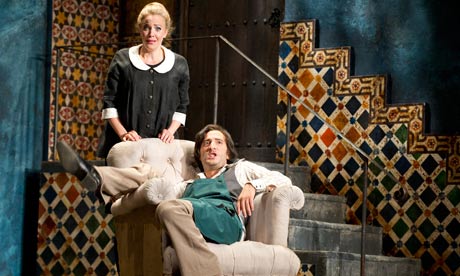
As cinema lights dimmed, the camera lit on the empty stage with its ‘Moorish Palace’ backdrop, the familiar strains of the overture began and soon the space was filled with hustle and bustle, music and colour…and a vintage red and cream Austin Healey.

Glyndebourne’s re-telling of this famous tale is set in the Seville of the swinging 60s. If you don’t know the story, it follows the trials and tribulations of Figaro and his lady love Susanna as they plan their wedding. There’s lots of hi-jinx and trickery, cross and double-cross in the tale (a bit like a Shakespearean comedy such as A Midsummer Night’s Dream or Twelfth Night) and with the aid of English subtitles, the familiarity of the music (I love Mozart’s music and it wasn’t until I sat through this that I realised how much of his musical bounty I had actually heard before) and the captivating performances, it made the whole experience a really enjoyable one – although as an opera neophyte, I could not tell you one aria from the other.

So in short, I loved it. And I paid £13.00 and was home 20 minutes after I’d left the auditorium.

I am sure that experiencing opera live, and especially in the gorgeous surrounds at Glyndebourne, is fantastic. But for someone who wasn’t sure it would all be worth it, getting a taste from the cheap seats was a perfect way to dip my proverbial toe into the water.

The other thing to say is this: I really admire Glyndebourne (and some of the other companies that will feature over the coming months) in their vision of bringing opera to the masses. While I’m a known champion of the written word (and quite frankly anything that promotes it), having access to art in all of its myriad expressions is such a wonderful opportunity and one of the things I love about living in London and more specifically, the ecclectic and fabulous Finchley.

The Marriage of Figaro actually follows on from the story in another Mozart opera, The Barber of Seville – the protagonists have grown older by the time we see them in 60s Seville and rather than lead, form backdrops (and a few barriers) to Susanna and Figaro’s impending nuptials – so you can guess what I’ll be keeping an eye out for in order to dip my other toe.

And as ever, I’m hopeful that my search will all turn out in the end – just like the marriage of Figaro and Susanna – with a joyful celebration and me drifting off into the warm and hazy night, humming a little Mozart to myself on the way home.