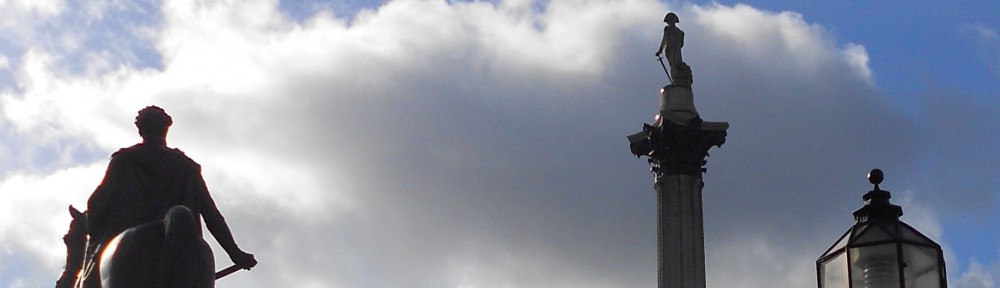
Midsummer Magic…

Today the Summer Solstice occurs and we in the Northern hemisphere will get our longest day of the year courtesy of the sun reaching its northernmost point in the sky. Stonehenge was awash with 37,000 worshippers at sunrise this morning and all manner of celebrations will take place throughout the world. 

Today also marks Midsummer in Sweden, a festival as important to the Swedes as Christmas is to me and mine. It’s a time of family and food, dancing and drinking and the Swedish contingent at work are pretty much out of contact during this holiday period.

Which brings me to a little Midsummer moment of my own, this week’s visit to Skanor med Falsterbo.
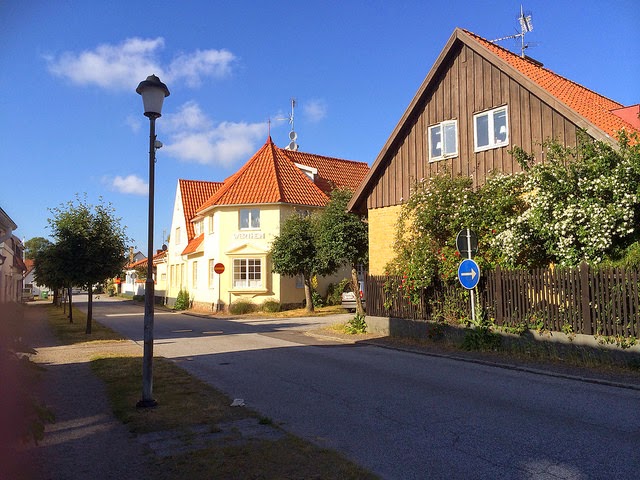

It’s actually my fourth visit to this lovely little part of Sweden. Our European division holds its mid-year sales meeting here, a nod to a time when the company (or part of it anyway) was Swedish and management would leave the conference to travel to their respective holiday homes in the area for Midsummer. In any case, it’s not your run-of-the-mill conference choice – and that’s a good thing.

Skanor med (with) Falsterbo are twin medieval towns situated 28-30kms south of Malmo on the Falsterbo peninsula. It’s a quiet place with a population of less than 7,000 and the area is filled with quaint, wonderfully kept houses and surrounded by pristine beaches and glorious stretches of sea and sky. This year we were blessed with warm mid-20s temperatures and I found a little time to take a stroll to the beach and to soak up a bit of Midsummer magic…

Like a row of quirky sentinels, tiny beach huts line the foreshore. 


Unfortunately the magic of Midsummer was not quite enough to keep Australia from departing the FIFA World Cup…in spite of this, last week still found this little Aussie more than happy with her lot.

Welcoming The World…

In my last post, I took you on an armchair tour around my pre-work weekend in Rio de Janeiro, where I climbed mountains, strolled along the beach, ambled around the lagoon and sauntered through markets and gardens. And I must say that throughout the trip, I kept thinking to myself ‘I am in Rio. Who gets to live this kind of ridiculous (in a good way) and surreal life?’ Apparently that would be me.

Standing on Arpoador with Ipanema beach stretching away behind me.

But for all its easy amiability, there’s another side to Rio: More than a million of the city’s poor live in favelas, or shanty towns. Over 900 favelas perch on the hills around Rio, hundreds of delapidated shacks clustered amongst the green slopes rising from alongside Rio’s most affluent communities.

This is a view of Copacabana from the Arpoador Fort – you can see the favela lights stretching up into the hills to the left of the lamp post.

There has been significant investment to improve conditions and reduce violence and general crime since 1994 and I am told this continues in earnest as next month’s FIFA World Cup and more particularly, the 2016 Olympic Games will focus the world’s eye on the city. A police presence has been installed in a number of favelas and construction projects like the cable car system for the Complexo do Alemeao are being designed to facilitate workers’ ability to earn a living. The cable car has also made the favela itself something of a tourist attraction (although reports of occasional outbreaks of violence and drug trafficking was enough to deter me).

The favelas have attracted many artists. The towns themselves are well known for their brightly painted shacks and are popular subjects for local painters with dozens of colourful canvasses on display in local markets.

One of a myriad of favela art collections on sale at the Feira de Artes de Ipanema 

While I didn’t visit any favelas, they were easy enough to see, one of the largest climbing the hills behind Ipanema and Copacabana whilst the Complexo do Alemao and its cable car were clearly visible from the main road leading from Barra de Tijuca to the airport. I found myself bemused by this glamorous portrayal of Rio’s slums and I wondered how many tourists pay eagerly for their ‘authentic’ souvenir, oblivious to the abject poverty and danger that these people live with every day. I felt like the proceeds should somehow go towards further improving conditions in these communities.

In any case, most of the colleagues I spoke to would never dream of venturing into one of these areas yet were complimentary of programmes to improve conditions and safety. What was also interesting was their surprise at my catching a local bus service from Cosmo Velho (near the station whose train takes you up to Christ the Redeemer) back down to Ipanema on Saturday afternoon – surprised that I actually worked out how to manage this and pleased that I felt safe enough to do it. 

That’s the thing – I felt safe. Shoulder to shoulder with locals, the bus whizzed through suburb after suburb and I felt like I saw more of the ‘real’ Rio in that 40 minute trip. And despite the lack of English speaking amongst local storekeepers and waiters, everyone was friendly and willing to help – so with the aid of a very limited ‘Lonely Planet’ vocabulary and some pretty impressive (if I do say so myself) charades, I managed to feed, water and generally navigate myself around this great city…

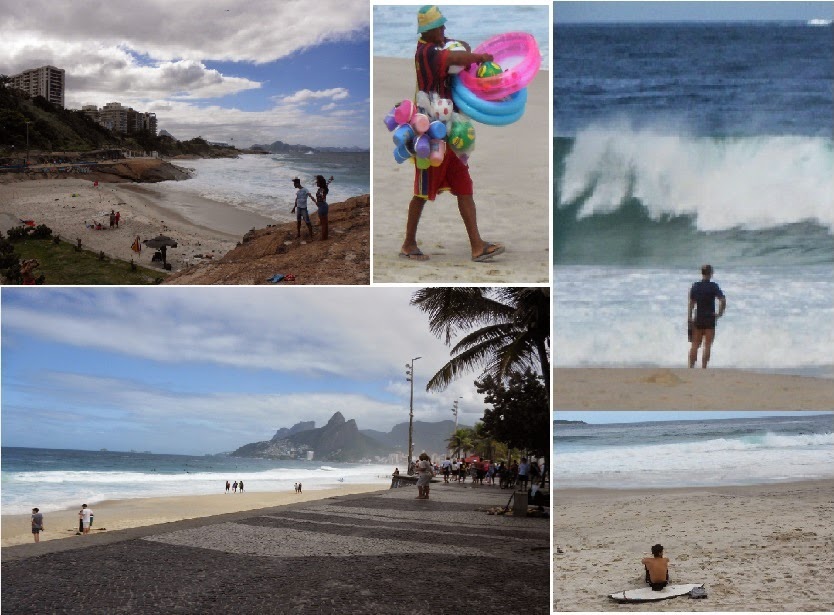
…walking along Ipanema Beach, I watched the cariocas (residents of Rio) play, at one with the sand and the sea…

Top left is Praia de Diabo (Devil’s Beach); the rest were taken on Ipanema Beach

…admiring the easy yet watchful opportunism of the local traders, whether on the beach, in the market or simply capitalising on a captive audience…

Clockwise from top left: opportunistic selling on the ride up Corcovado to Christ the Redeemer; bikinis for sale on Ipanema beach; one of the most popular drinks in Rio is coconut juice; a bit of carnival spirit at the Hippie Fair; local art on display; sarongs for sale.

…and ambling along tree-lined streets with their colourful apartment blocks, wondering who might live there.

Top row; Ipanema
Bottom row L to R: Leblon, Ipanema, Laranjeiras

Rio is a city tucked cosily around its mountainous surrounds and retains the easy intimacy of a cluster of villages rather than the hustle and bustle of a metropolis of more than 6 million people. It is surrounded by extraordinary natural beauty and spectacular scenery and the natives – or cariocas – are outdoorsy, easy-going and hugely welcoming. You might argue that I’ve only scratched the surface but I think the world will enjoy its first Olympic soujourn in South America.


Let’s hope that Rio will be able to put its best foot forward.

I Go To Rio…

Actually, I’ve been and come back – to Rio, that is. But these are the words, from the fabulous Peter Allen song, that played in my head over and over again during my visit so it seemed an appropriate title (versus the more mellow and perhaps obvious The Girl from Ipanema) for this first cursory brag about squiz at my week in Rio de Janeiro.

Yes peeps, that’s where I’ve been.

I went for work – to visit our team there (sigh…I love my job) – and I took some time last weekend to have a wander around and explore a little. I had planned to post in situ but the wifi wasn’t great for photo uploading and having only arrived back yesterday evening, I’ve only just managed to do the necessary chores and sort my photos so this post is a ‘best bits in pics’ and I will follow it up with a little more detail on a couple of specific things in posts to come. So here we go…

On Saturday morning, I got on one of these…

…to see what the man on the mountain…

Christ the Redeemer – or Cristo Redentor in the local lingo – sits atop Corcovado (the hunchback)

 …was looking at.

Windswept selfie!

 It was pretty bloody good if you ask me.

The view from the top. That’s Ipanema on the other side of the lagoon, where my weekend digs – the Ipanema Inn – were located.

I came down the mountain and explored some more…

The largo do boticario, an oasis of colour off the main road in Cosmo Velho

 …before meeting someone for a local ‘brew with a view’ in the evening.

View of Copacabana beach from the Arpoador Fort

The next day (that’s Sunday – are you keeping track?), I wandered a block from my hotel to Ipanema Beach…

…before hitting the back streets to find a little musical history…

Previously Bar Veloso, the bar Garota de Ipanema at 49 Vinicius de Moraes, is where Moraes and Tom Jobim were inspired by the 17-year-old Helo Pinheiro, the original Girl from Ipanema, to pen one of the world’s most ubiquitous tunes. 

…and local expression. 

The Hippie Fair in Ipanema (or Feira de Artes de Ipanema if you are practising your Portuguese) has a whole gamut of arts and crafts for sale as well as some local vittels if you get a bit peckish. It’s also a mecca of artistic expression for local painters – this was one of my favourites.

 Heading back towards the beach, I walked out onto Porto do Arpoador

…and then back to the hotel for a short rest before setting off for the Botanic Gardens.

I passed a pleasant couple of hours here before heading back towards the hotel, my path taking me around the lagoon.


And then it was time to enjoy a glass of wine overlooking the lights of Ipanema before packing my suitcase to move to my ‘work hotel’ in Barra de Tijuca on Monday…

View from my room on the 10th floor of the Sheraton Barra (pronounced Ba-ha)

 …and while that was the end of my personal meanderings, a very early flight to Sao Paulo Tuesday morning meant I got to see this from the taxi… 

Ipanema dawn

…as well as this…

Copacabana sunrise


…before taking this photo from the plane.

That’s Ipanema beach on the left and Copacabana beach on the right.

So if that hasn’t inspired you to google travel deals to the carnival city, I’ll leave you with the original shoulder-shimmying boy from Oz…

If that doesn’t do it, nothing will!

My backyard…B is for Brixton

Having returned from playing away in Abu Dhabi for a week, it was time to play a little closer to home again so this morning I was up and on the way to Brixton for another ‘backyard’ walking tour. 

Brixton is in South London and being most notable for the Brixton Riots in 1981, it’s an area of London that it’s fair to say has been somewhat tainted by its turbulent past. But the area is also one of those ‘up-and-coming’ parts of London as home buyers seeking lower property prices move outwards from the city while still remaining in commuting range. In fact it’s one of the things that surprised me today – how near Brixton is to central London. (I thought it was much further out!) 

Anyway our small group met at the Ritzy Cinema at 11am and headed down Coldharbour Lane to the frontline of the 1981 Riots at the intersection of Atlantic Avenue.


After a bit of background on the Riots from our guide Angela, we continued down Coldharbour Lane a little further to see Nuclear DawnThis extraordinary mural was painted by Brian Barnes and finished in 1981. It features a large skeleton swathed in the flags of nations who had nuclear weapons at the time and paints a grimly powerful portrait of politics and the Cold War during the late 70s/early 80s. 


Turning away from the mural, we faced Southwyck House – also known as Brixton’s Barrier Block – an unusual building featuring the Brutalist architectural style common of the period in which it was built. 


The Barrier Block has played a controversial role in Brixton’s history. The other side of the building features large windows and balconies and has been home to one of the world’s most famous artists, Damien Hirst. Ex Prime Minister John Major lived briefly in Brixton and his support for the demolition of the block later in his career was more than a little undermined by the fact his Planning Committee had approved its construction. Oops!

Our next stop was Brixton Village, a series of markets accessed through an entrance across Coldharbour Lane from the Nuclear Dawn mural. Fascinatingly enough, our short dash across the road was peppered with more art from the locals…

French street artist Space Invader leaves his mark at the corner of Coldharbour Lane and Atlantic Avenue.
Bee (top left) can be found at the intersection of Coldharbour Lane and Atlantic Avenue as can the image bottom right. The image top right was right near Nuclear Dawn and ‘B Our Guest’ adorns the railway bridge over Brixton Hill.
Lucy’ Casson’s Foxes and Cherries sculpture (top left) adorns the roof on the corner of Electric Lane and Electric Avenue; bottom left – collaborative mural near the intersection of Atlantic Avenue and Coldharbour Lane; right – an homage to Brixton-born David Bowie (or David Robert Jones as he was christened) painted by Australian street artist James Cochrane.

Brixton Village was traditionally a food market where the local Caribbean community would buy fresh produce, particularly specialities like ackee, plantain, yams and salt fish.

On our little tour, I got a bit of an education about Caribbean cuisine, also finding flying fish (top left) – which I saw flying several years ago on a trip to Tobago – and breadfruit (bottom left). The biggest surprise came when I was introduced to chow chow, which I knew as choko growing up in Australia! We also laughed at the ubiquity of Milo (a malted chocolate powder that we add to big glasses of milk) in both the Caribbean and Australia – how strange that such similarities exist between islands so far away from each other.

The produce stalls are far fewer and the markets have been taken over by restaurants and cafes. It was fairly quiet as we walked through but you could just imagine the little lanes buzzing with the energy and chatter of lunchtime or after work crowds.

Clockwise from top left: Traditional Caribbean fare from Fish, Wings and Tings; enjoy a tipple and nibble at Champagne and Fromage; tuck in to morsels from the sea at Etta’s Seafood Kitchen; beat the crowds for a cuppa at Federation Cafe, graced in the past by none other than Hollywood star, Will Smith.

Emerging from the markets it was a short walk down to Electric Avenue – yes the one made famous by the Eddy Grant song.

Electric Avenue, so named as it was the first market street to receive electric lighting. Bottom left: Healthy Eaters’ delivery vehicles feature the names of prominent locals.

Further down Electric Avenue, we found Brixton Speaks an installation on the wall of the Iceland store. Created by author Will Self, Brixton Speaks pays homage to the unique Caribbean patois of the area. Click here for a much better photo! This was also the site where a nail-bomb exploded in 1999 injuring 39 people.

Turning right onto Brixton Hill we walked under the railway bridges to visit our next point of interest, the Ricky Bishop Memorial TreeRicky Bishop was taken into police custody in 2001 and was later admitted to hospital with unexplained injuries. The tree serves as a poignant reminder of the still-fractious relationship between the community and the local police.

We crossed over Brixton Hill and spent about 20 minutes away from the cacophony of the high street.

Left: emergiing from Stockwell Avenue between the twin buildings of Bon Marche, London’s first purpose built department store; top right: the Grade II listed Brixton Academy which started life as the Astoria Theatre in 1929; bottom right: Trinity House on Acre Lane, Georgian architecture preserved since 1822.
Life in a leafy Brixton Square: a two bedroom (top right) will set you back at least £750,000 but you can always drown your sorrows at the Trinity Arms (bottom right).

With that we headed out onto Acre Lane and wandered back to the Ritzy Cinema. 

Nursing my hot chocolate on the tube ride home, I felt like I’d barely scratched the surface of this colourful neighbourhood, so different from my own yet discovering so many unexpected similarities in our cultures. And I mused once again at how utterly fascinating this big backyard of mine called London truly is.

Ma’a salama…

My week in Abu Dhabi is at an end and in just a few short hours I’ll be jetting back to London. My carry on bag is just waiting to be closed and I’m making the most of still having my room tonight (even though I won’t be sleeping in it) to tap out an end-of-holiday post – my goodbye to Abu Dhabi.


I sat on the restaurant terrace earlier tonight, Apple Martini in hand and desert sunset before me marvelling at how much there had been to enjoy this week despite not venturing very far afield. (I’ve limited my daily excursions to breakfast – beach – sunset with cocktail – dinner and lots of lovely reading in between.) Yet every day has been different with something new to notice, to admire, to hear, to read (the count is four and a half books – although that may be five by the time I arrive home – and two magazines)…and to drink.

Whether this could be counted as a Gidday Armchair Tour I am not so sure but in any case here’s a little homage to my time in Abu Dhabi for your enjoyment.

It was an Apple Martini tonight but there have been both a Long Island Iced Tea and a Singapore Sling in the mix too.
The view from room 703 at The Traders on morning number one – I couldn’t wait to get down to that private beach…
...and it was front and centre (with a bit of shade) for a whole six days.

During my morning meanderings I found a few interesting things to admire/marvel at…

The Sheikh Zayed Grand Mosque (didn’t visit but a lovely view!) – the several-times-daily call to prayer was hauntingly beautiful.
A shisha shack…reminded me of the hookah-smoking caterpillar in Alice in Wonderland.
A rockin’ sound system… (okay sorry about that)
…and a quirky rescue point.
And speaking of admire, what’s a beach holiday without a few sunsets…
The locals were welcoming everywhere I went but I just loved this ghost-like image in the doorway of the hotel lobby…

And last but not least, just to prove I was really there, a footprint in the sand (and clever advertising that has really left it’s mark)…

So all there is left to do is log off, close my case, pay the bill and bid Abu Dhabi a fond farewell. Hope you’ve enjoyed it vicariously even a smidgen as much as I did being here.

Ma’a salama!

A Town Called Snohomish…

I have been travelling this week and with work taking me to the US of A for a few days of meetings, I decided to add a few days more and pay a visit to Team-M in Seattle

It’s been eight months since I last saw Seattle-A and all of her boys and while I turned up ready for an intensive cuddle top up, as far as the little dudes went, well young memories are not so long it seems and it’s taken few hours before screaming and suspicious looks were replaced by a cuddle (O) and cheeky grin or two (R).

Today was crisp, cold and clear so we bundled everyone into the car and headed off to the small historic township of Snohomish. Yes, it is a real town, founded in the mid-1800s with a population of less than 10,000 people (2010 census). 

Anyway I felt the afternoon was already looking promising when we crossed paths with this Waffle Wagon on the way there…

…so as soon as we arrived it was off to the Snohomish Bakery for a spot of lunch.


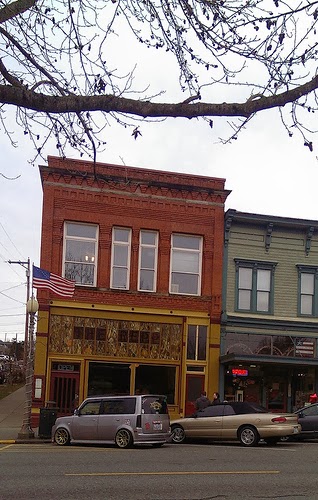
We then meandered down the main street, lined with antique shops and stores exhorting passersby to ‘buy local’. The flat-fronted buildings really gave it an old frontier town feel and I particularly liked these two.

A short stroll off the Main Street gave us a different perspective on the town, surrounded as it was by stark and beautifully pristine scenery…

...while this totem by the water presumably gave a nod to the local Native American tribe, sdoh-doh-hohsh, for whom the township was named.

And just as we were heading back to the car, we came across the Snohomish Pie Company. It would have been rude not to pop in, so we did emerging five minutes later with a bag of goodly vittels and some words of wisdom…

…and yes, yes it did. That chocolate pecan pie did indeed fix everything (including fixing a few more lifetimes on my hips!)

So that folks was my afternoon in Snohomish. Now, back to Operation Cuddles…

My Backyard… Building Blocks

Today I was reading an interesting piece on Fevered Mutterings on what constitutes ‘travel’ and the premise that we tend to think about the packing of a suitcase, backpack or even overnight bag as an activity inextricably linked to travelling. 

When I think of travel, I think of going from point A to point B (which is the definition that comes to my mind given the Transport for London website exhorts me to ‘travel by foot’ for a portion of most of my journeys) but this is not a vision that will keep me going in the depths of winter darkness. Thank goodness Mike Sowden suggested that redefining travelling as ‘venturing somewhere new’ means it is right under our noses – that ‘travel *is* our own backyard’.

And last Sunday it was my own ‘backyard’ that I ventured out into to have a gander around Old London Town. I’m not sure that under normal circumstances, I would be up for an architecturally themed stroll on a wintery Sunday morning but I enjoyed Blue Badge Guide Paula’s trek around Shardlake’s London so much last September that it was an easy and enthusiastic ‘yes’ when the flyer came through for her guided walk through Post-War City Architecture

So we started at Barbican tube station and followed Paula – and her post-war story – through the City of London. Here’s what we saw…

Standing outside Barbican station on a crisp January morning

Following the bombing raid on London on 29th December 1940, much of Greater London was flattened. But contrary to wider plans, the City took its own view of its rebuilding and commissioned architects Chamberlin, Powell and Bon to create urban villages for the working class…


The Golden Lane Estate was originally positioned outside the City boundaries until ‘re-zoning’ brought it into the fold – perhaps that explains why a 2 bedroom apartment here goes for around £680,000.
…and the more affluent inhabitants of the City.
The Barbican Estate was opened in 1969 (that makes it as old as me) and stretches over a 40 acre site. It contains more than 2,000 flats, of which a 2 bedroom version will set you back about £900,000. Oh and check out the upside looking windows top right.

We then ambled around the back of the Museum of London, took a quick peek at the Pedway System (a scheme based on raised pedestrian walkways which never really took hold) then crossed London Wall to Wood Street.

Traditional building blocks adorn the home of the City’s Police Force (yes, a separate force from that of Greater London). Standing with your back against the wall will give you a great view of the tower reflected in the building opposite.
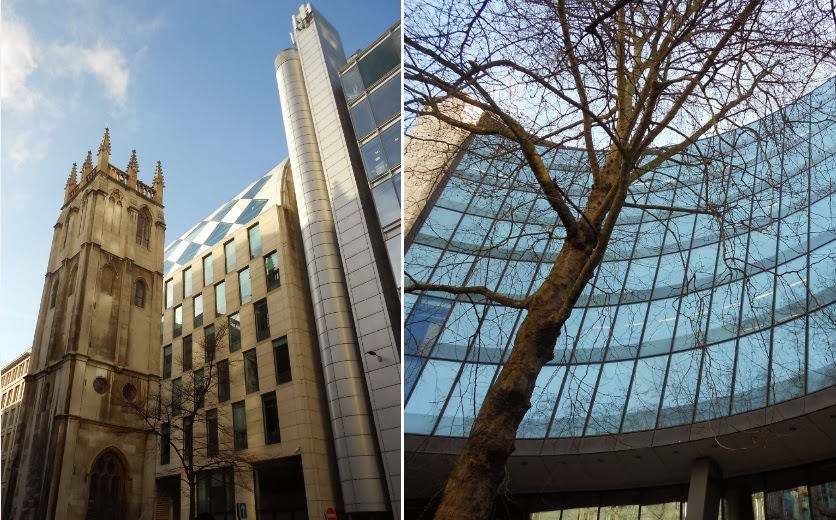
The tower of St Alban stands in the centre of the street in stark contrast to the architecture around it and here the Norman Foster designed 100 Wood Street forms a geometric backdrop to Christopher Wren’s deft touch. But walk through its checkerboard frontage and you’ll find a veritable oasis. Soaring windows angled outwards bring light into the old churchyard and provide space for the old plane tree’s leafy boughs.
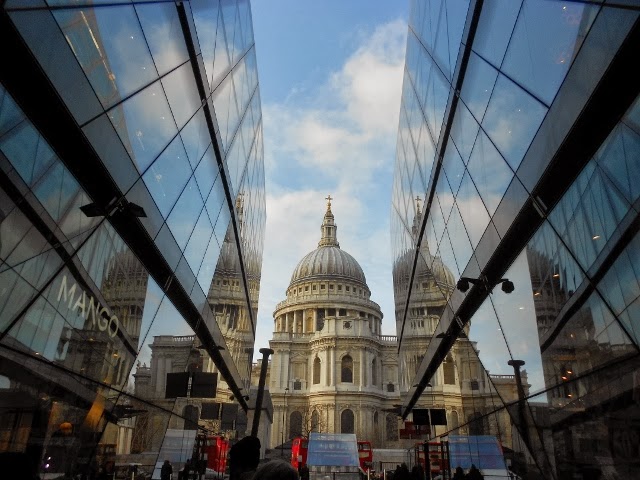
Next it was a trot down Gutter Lane to emerge on Cheapside – crossing the road, we found ourselves standing in One New Change with this rather spectacular view…
The dome of St Paul’s pierces the sky right opposite One New Change. Thirteen ‘views’ of the cathedral are protected by the London View Management Framework which prevents the construction of any buildings which may impinge on the view. There’s even a protected view from Richmond Park’s King Henry’s Mound several miles away.

We headed out of One New Change and down to Bank Junction where the architectural contrasts abounded again.


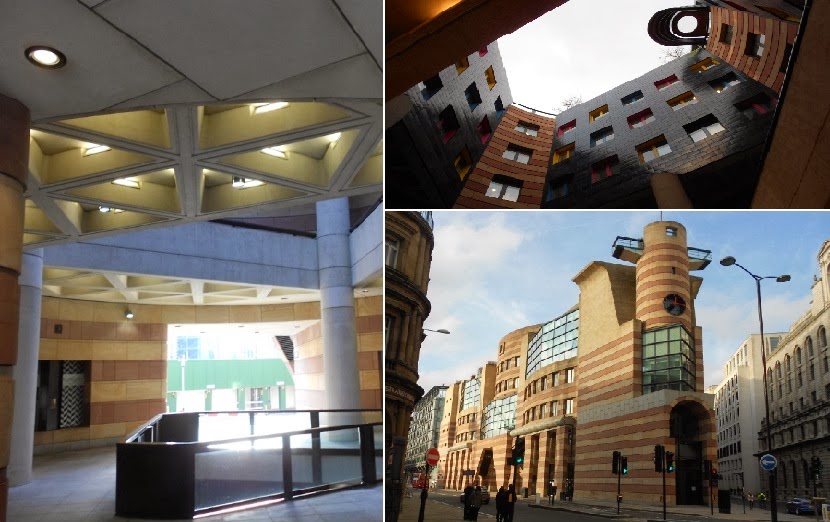
This is No 1 Poultry: the street, like those around it (Milk Street, Bread Street) named after the market produce originally sold here. The building, designed by James Stirling for Peter Palumbo, carves a ship-like post modern silhouette against the sky and has caused much outcry from those – including Prince Charles – whose more conservative sensibilities it offends.
Turning from the post-modernist perspective, we found more traditional architecture clustered around the junction with the Royal Exchange (top left) and the Bank of England (bottom left) dominating the view.

We headed up Cornhill, our guide Paula setting a brisk pace…

The Leadenhall Building (the ‘Cheesegrater’) looms above the stone buildings along Cornhill while St Michael’s doors (right) are tucked a few neat steps back from the street.

…and came to a stop on the corner of Leadenhall Street and St Mary Axe, finding ourselves both surrounded and dwarfed by edifices of steel and glass…

The famous Lloyd’s of London ‘inside out’ building (right) was designed by Richard Rogers (who also designed the Pompidou Centre in Paris with Renzo Piano) on the site of both the previous Lloyd’s building and before that, East India House. The construction style (called Bowellism) is notable for having its interiors – stairwells (spirals), restrooms – the boxes behind the piping which contain electrical and water conduits –  and air conditioning ducts easily accessible to ensure that building never need close due to any malfunction of its ‘essential’ services. This 1986 building was Grade I listed in 2011 much to the chagrin of Lloyd’s (the listing means that the building cannot be changed in any way) so the insurance company’s ‘overflow’ will be moved right across the road to…
…the Cheesegrater (official name The Leadenhall Building). Situated at 122 Leadenhall Street, this building is nearing completion and is expected to open in Spring this year.

And not to be outdone, just a stone’s throw away stands The Gherkin.

The Gherkin‘s official name is the Swiss Re Building – or that’s what previous owners Swiss Re insisted on. Another Norman Foster design and completed in 2003, 30 St Mary Axe was built on the site of the former Baltic Exchange which was damaged in a Provisional IRA bombing in 1992. I thought it seemed rather fitting that The Cheesegrater is within arms reach of The Gherkin…

And with that, it was a short walk to Bishopsgate and the end of our tour. Almost 3 hours (including what Paula likes to call a ‘warming coffee break’ at the Costa Coffee halfway point).

I strolled back towards Moorgate tube station filled with excitement at what a dynamic and fascinating city I live in. The time had flown by and I was so glad that I had dragged myself out of bed and braved the chill to explore this amazing ‘backyard’ of mine. I kept gazing around, wondering about the stories of the buildings that loomed over me and as I reached the intersection of London Wall and Moorgate again, I couldn’t help but take just one last parting shot.


The old and the new right next to each other again.

I don’t know their story. But I am sure it’s fascinating.

Postcard from Amsterdam…

With Lil Chicky back home now and me trying valiantly to get back into life’s rhythmic swing, I’ve been working through the few hundred photos I took during our adventures together. And as I have been sorting, one question has kept going around and around in my head. What do I share with you first?

It had to be our trip to Amsterdam – and it warrants a couple of posts. Firstly because it’s such a wonderfully photogenic city and secondly because it was something of a pilgrimage for the two of us – but more about that in my next post.

This was my fourth visit to Amsterdam. There is something rather special about cities built in commune with their watery roots and I cannot count the number of times we turned a corner and wielded our respective ‘piccy kits’ (mine a point-and-shoot Nikon, hers a ‘fully-optioned’, rather hefty Canon SLR) in an attempt to capture ‘a moment’. 

With the exception of the 15 minute downpour walking from the Central Station to our hotel, we were blessed with four days of gorgeous weather. Crisp blue skies meant that a shared cone of chips generously dolloped with lush, luscious mayonnaise and a plate of bitteballen were best tackled outside, the latter with a local beer in hand.

It also meant A LOT of photos. Here are just a few of my absolute favourites.

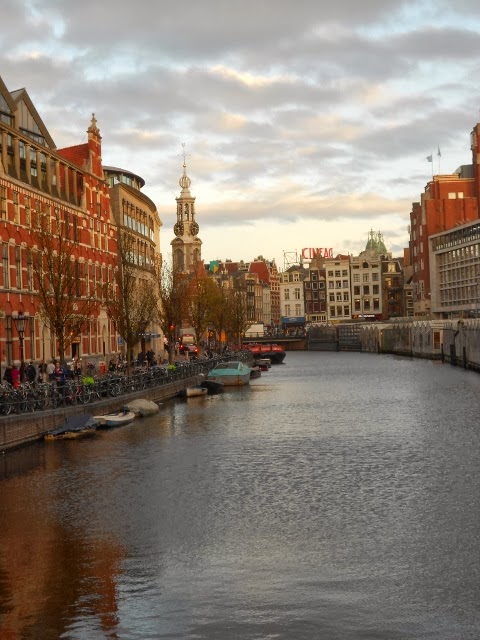
We stayed at the Hampshire Eden just near Rembrandtplein – while the square itself was literally at our back door, this was the view from the front of the hotel.

I love that this photo looks like a painting – the curve of the canal, the buildings, bikes and boats lining the banks and a spire to aspire to in the distance.
There was something rather innocent about the dappled shade on the canal wall and the friends enjoying their moment in the sun, legs dangling childishly over the edge.

Begijnhof is a beautiful oasis tucked away in the heart of Amsterdam. Blink and you’d miss not just this entrance leading off Spui (we did) but also Amsterdam’s oldest house (no 34), the 15th century Engelse Kerk (English Church – above) and the Begijnhof Chapel, a clandestine church where the Begijntjes worshipped in secret until 1795.
No trip to Amsterdam is complete without a wander through its infamous Red Light district. The scarlet-draped windows line the streets and canals around the Oude Kerk (Old Church) yet as night falls and the lights reflect off the water, it easy to forget the deals ‘being done’ and get caught up in how pretty it all looks.
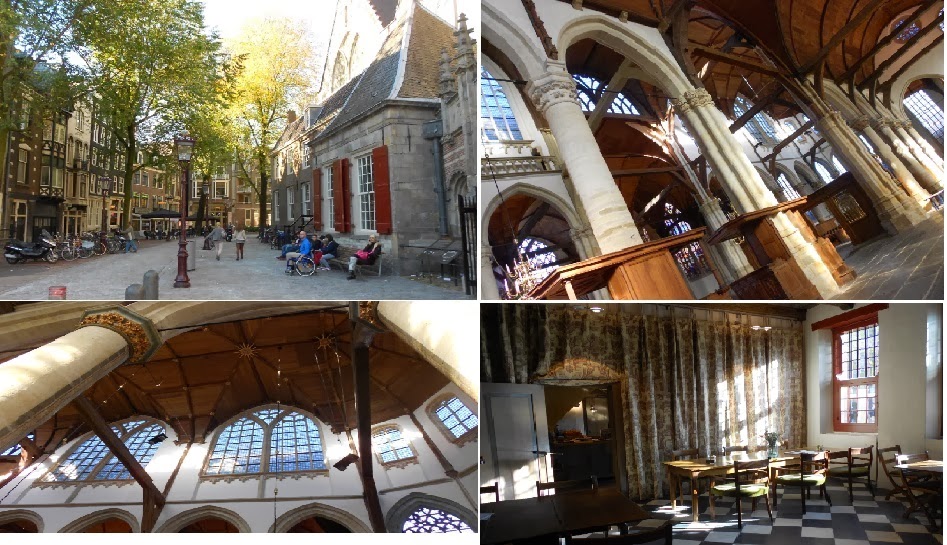
Oude Kerk itself is rather lovely in a stark kind of way. Not for it the intimate spaces or crowded decoration of many of Europe’s other places of worship. There’s a feeling of spacious calm beneath the gothic arches and when you’ve had enough, an unassuming door off the nave leads to a cosy tea room and outdoor courtyard for some quiet enjoyment and a reflective cuppa. 
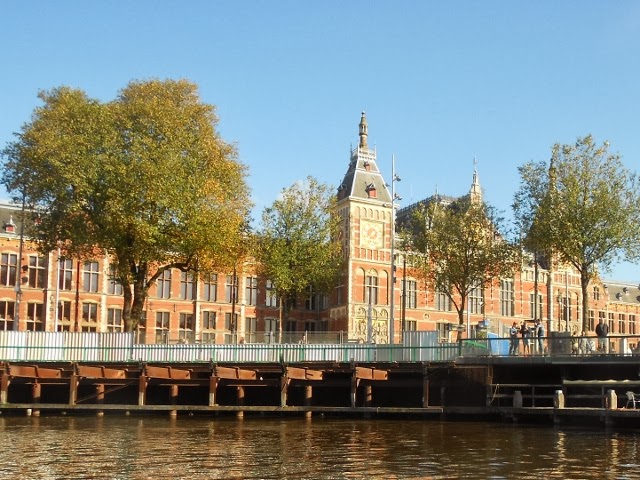
If you are visiting Amsterdam, whether coming directly by train or by plane via Schipol Airport, you are likely to come through its Central Station. Intent on your destination, it’s easy to miss the opportunity to turn around and admire the magnificent entrance to this fabulous city. True to form, we were dashing away from the station on our arrival but had the opportunity to appreciate it from our canal cruise the following day.

As our canal boat rounded a corner, the colour and light in this scene was breath-taking. I love how all the elements – the bridge, the boat, the terraced buildings and the leafy boughs of the tree – come together to create what for me is inherently Amsterdam.
Our canal cruise took us past the Magere Brug (Skinny Bridge) which was constructed in 1670 and is probably the most famous in Amsterdam. I didn’t get a great photo of that bridge but as we drifted past it and turned right, this boat-load of ‘locals’ caught my eye and while not the Magere Brug, the typically Dutch bridge in the background gave me another moment in the sun to capture.
And last but not least, our photographic journey returns us to the ‘back yard’ of our stay, Rembrandtplein. It’s a vibrant square lined with cafes, bars and restaurants and pays homage to Rembrandt van Rijn himself and his most famous painting, The Nightwatch. (Like I did last trip, you can see the real thing in the Rijksmuseum. It’s enormous!)


So here endeth the armchair tour and I hope you’ve enjoyed it even half as much as I’ve enjoyed revisiting our trip in the writing of this post. S
tay tuned for more next time, an alternative look at our sibling sojourn as a pilgrimage of ‘all things Dutch’.

Simply The ‘Est’

Well she’s here.

Lil Chicky has been ensconced at Gidday HQ since Tuesday and I’ve been out and about rather a lot showing her the sights and making the most of what’s on offer thus the lack of tap-tap-tapping.

I’ll share more fun stories and gory details later but in the meantime, I thought I’d give my lovely Gidday-ers a whirlwind tour of our exploits so far.

Are you ready?

We’ve been to…

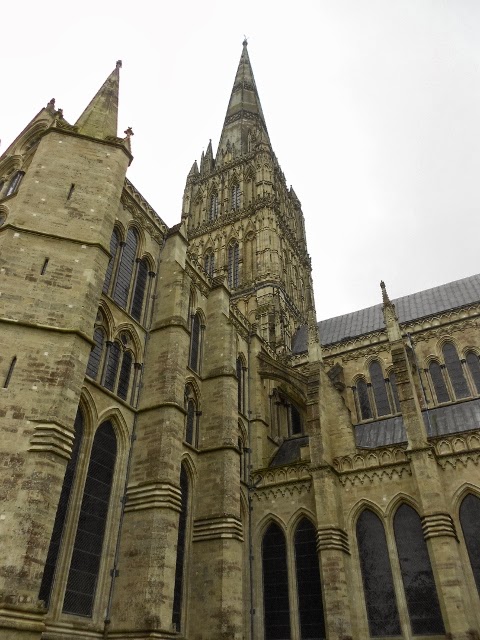
…the highest…

The highest steeple in England at Salisbury Cathedral

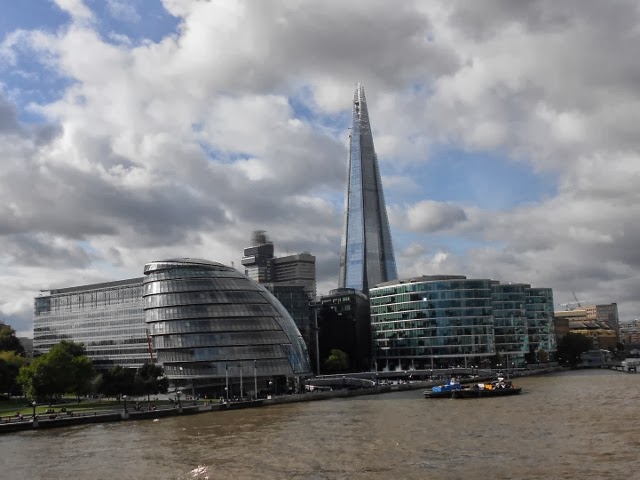
…the tallest…

Europe’s new tallest skyscraper The Shard overlooks the Thames and City Hall (the weird curved building front left)

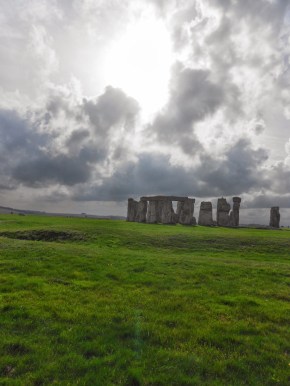
…the oldest…

5,000 years of history at Stonehenge
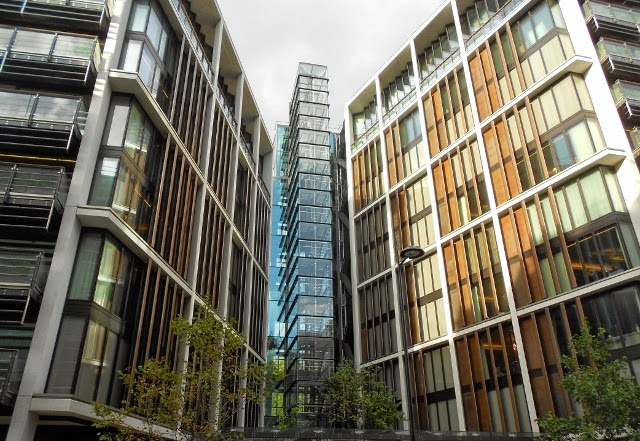
…the swankiest…

 Save your pennies for one of the most expensive apartments available in Knightsbridge

…the greenest…

Beautiful Green Park (that bright shiny object is the sun)

…the royal-est…

 The gates at Buckingham Palace

…and the longest…

The world’s longest running play, Agatha Christie’s The Mousetrap currently at St Martin’s Theatre

…as well as celebrating a certain special birthday with a glass of vino or two.

Happy birthday to Lil Chicky…40 is definitely the new 30!


Day 6 looms ahead of us. We are off into town again today so who knows what adventures, stories and photos from Chicky Tours Unlimited will make tonight’s Gidday Wine Review.

You’ll just have to wait and see…

Seattle Sojourn…

Early in June on a hot sunny morn,
while Double-A and the little dudes (recently born)
had a date with the Doc
 map in my pocket and camera in hand,
eyes peeled for the quirky, the charming, the grand,
I ventured downtown to take stock.

And here’s what I found.

 
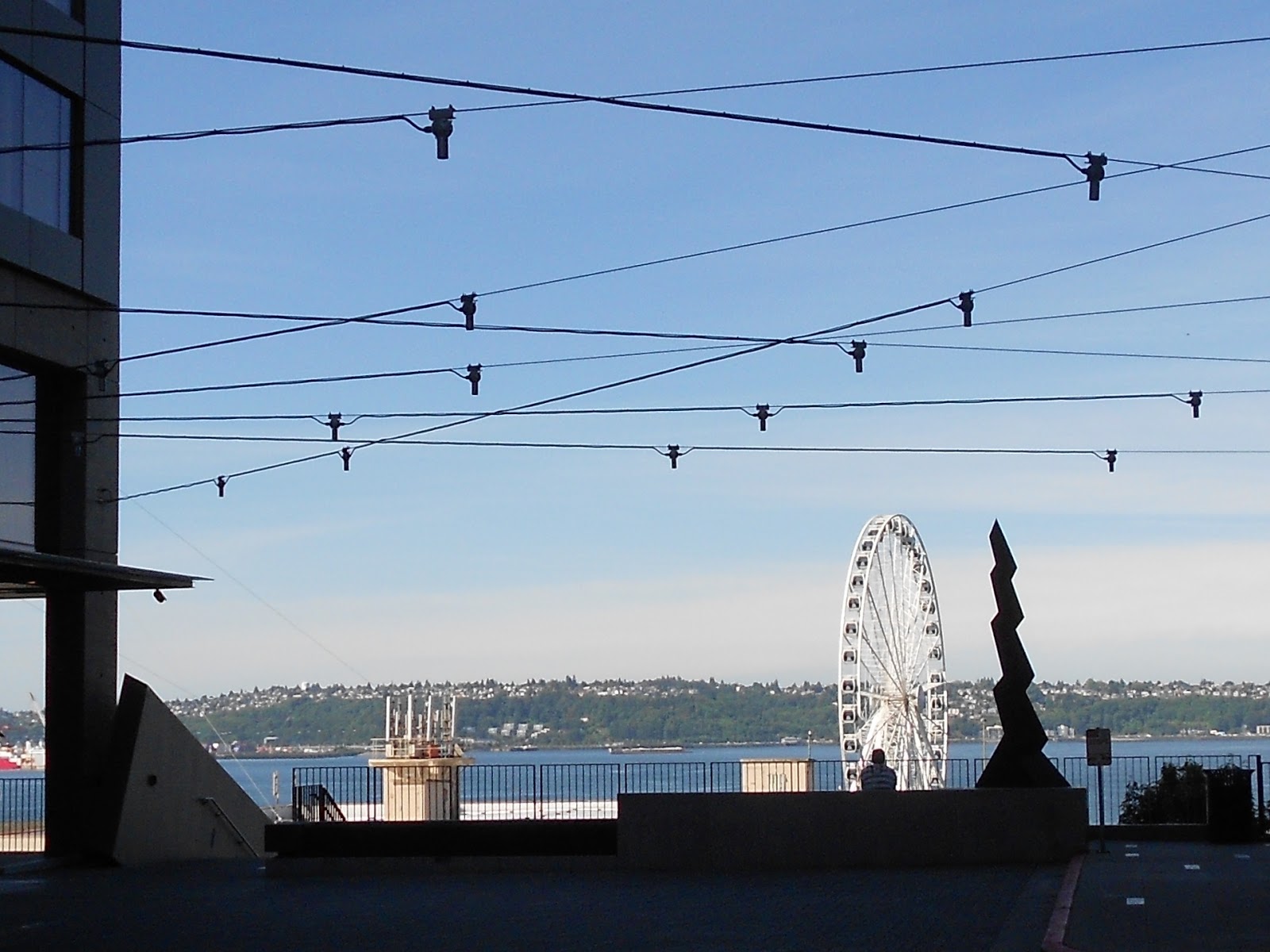
I found a Goliath who raises his arm
And brings it back down in a smooth arc of calm…
 
 
…while lightning strikes right by the bay.

A pioneer totem amid leaves green and fair
Stands strong, proud and tall in a cool shady square…
 

…while all the signs invite sweet surrender.

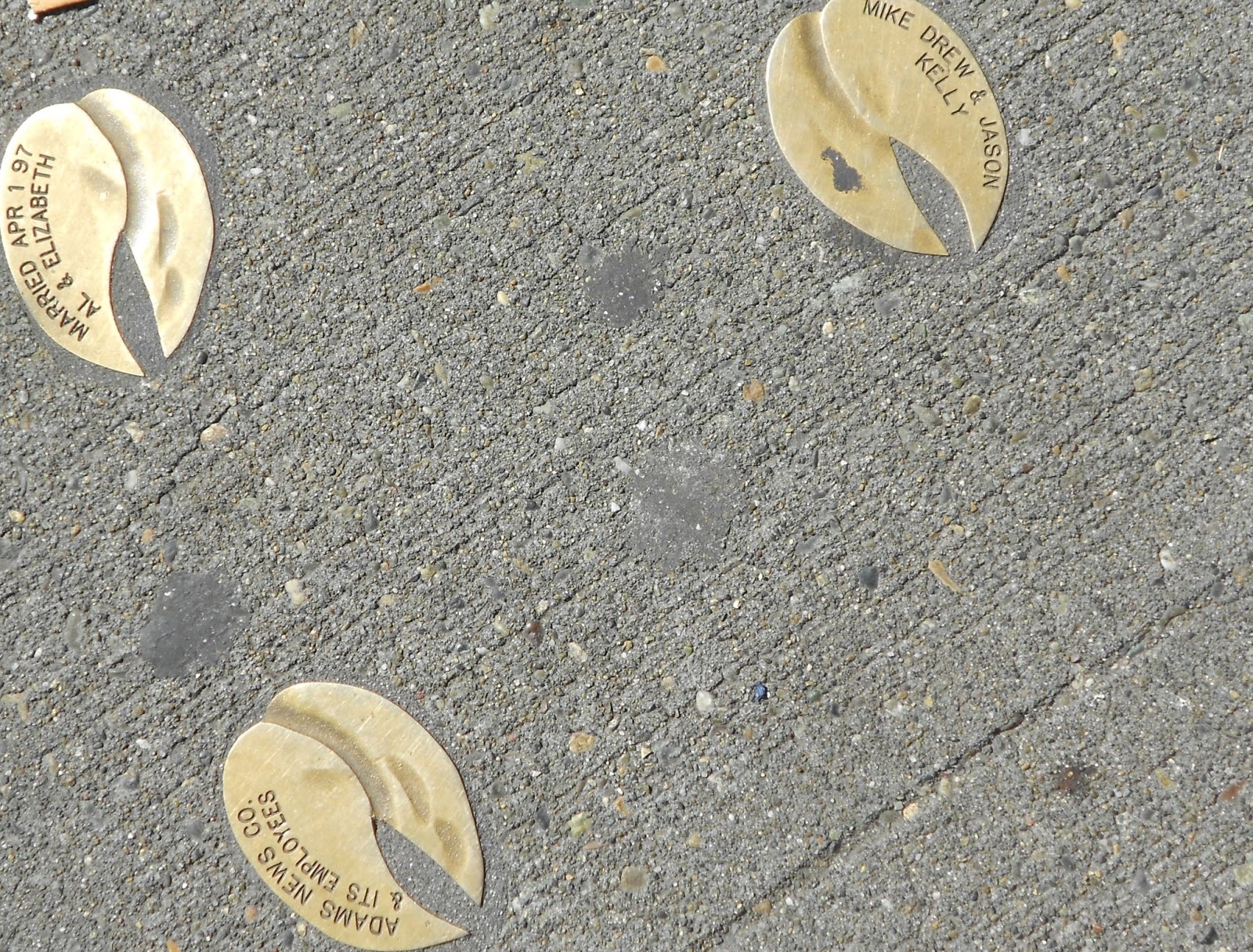
On this corner’s the site where the logs came to rest
And the wood turned to dust at the sawmill’s behest…

…while nearby beans are ground underfoot.

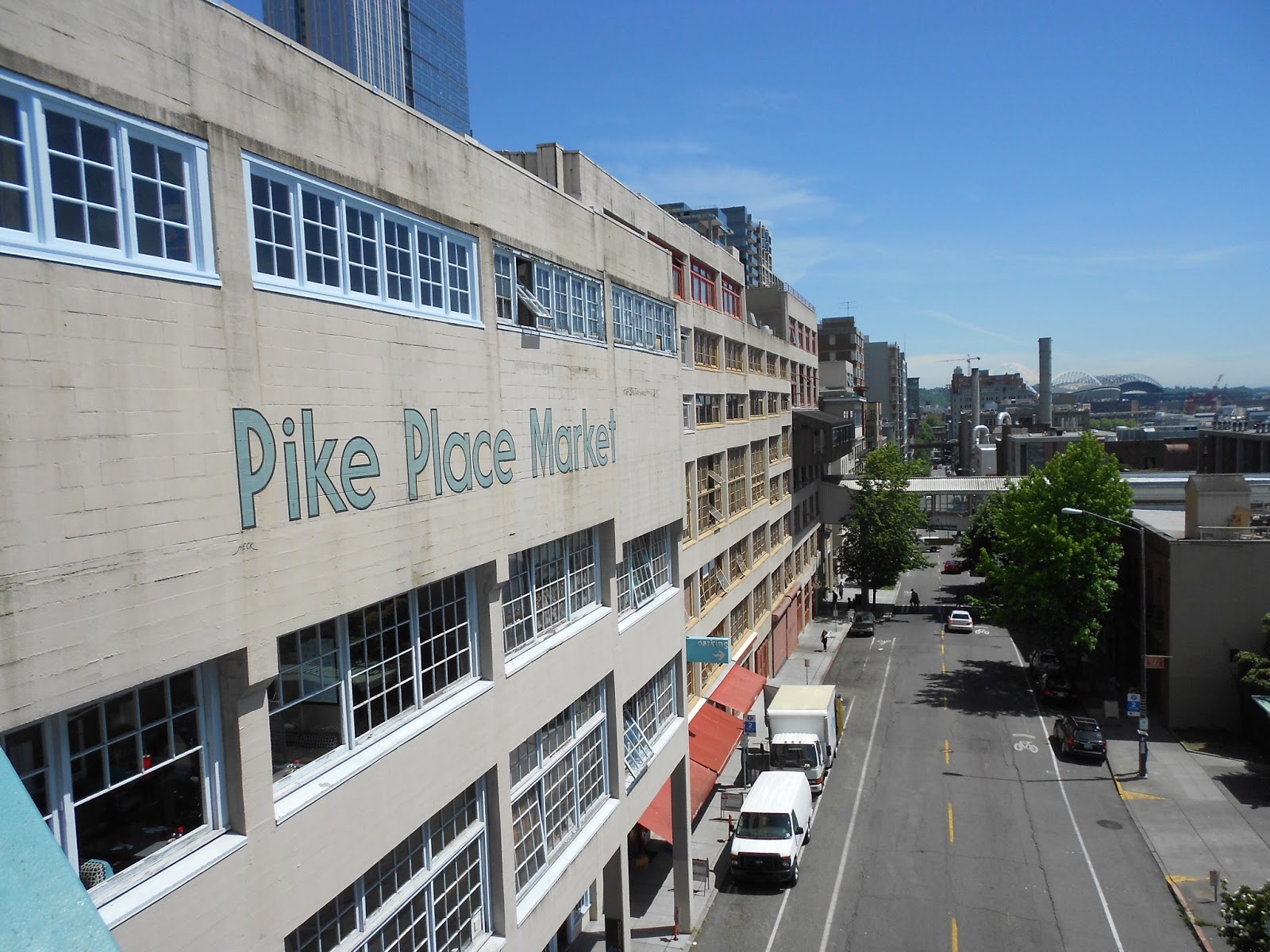
I popped out the back and turned away from the Sound.
An alternative side of an icon I found…

…yet cross-town, underground
this buried old boozer’s run dry…

 
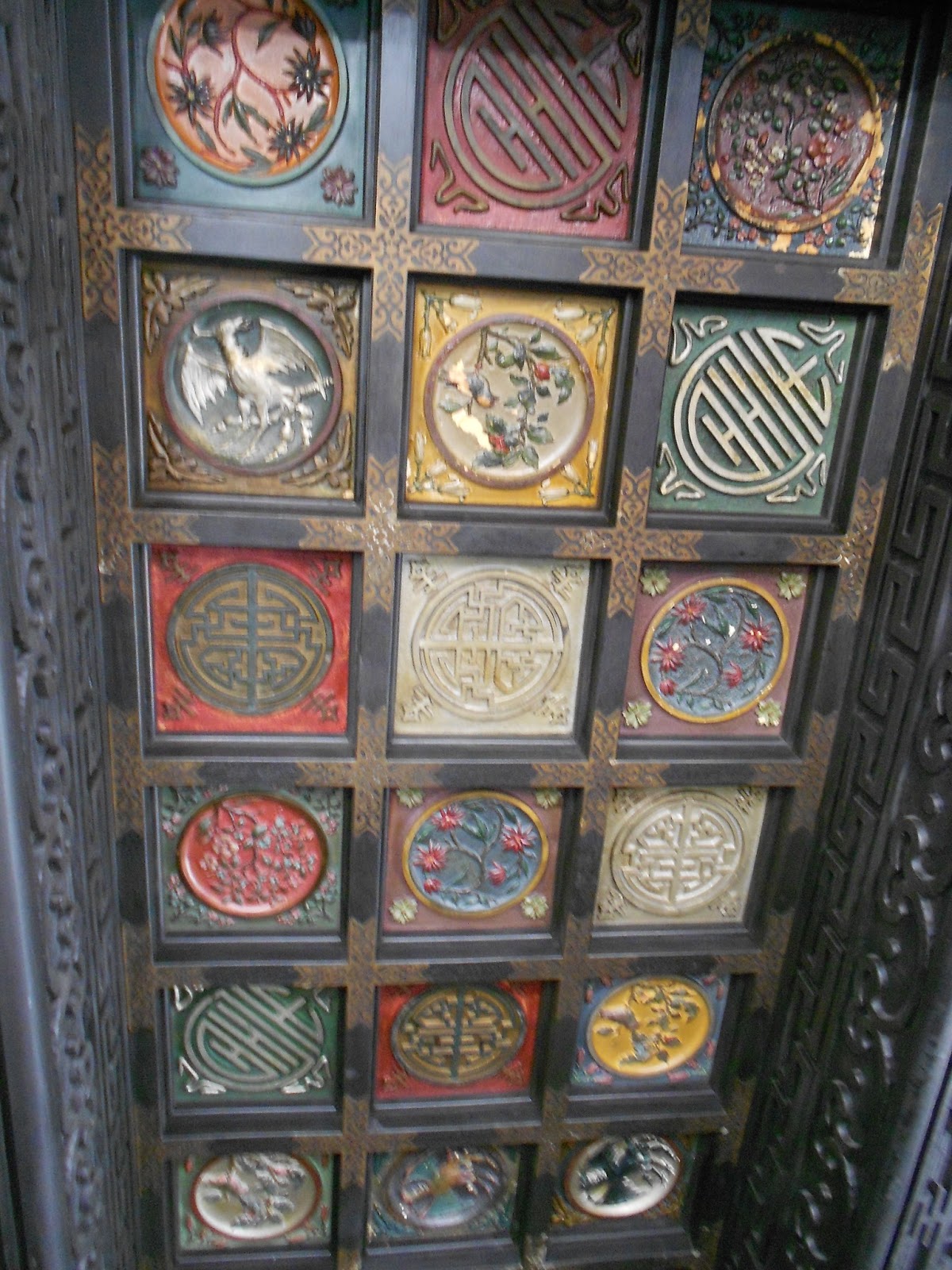
…while this ceiling adds colour 35 stories high.

So with sightseeing done and the bus due anon
I wandered back up to the place I’d begun
My nose and cheeks pink from the warm Summer sun…
 
…my first sojourn done.