Travel Broadens The Mind…Let’s Play!

I’ve been travelling of late so it’s time for another dip into BA’s business:life magazine for a few fascinating facts to top up your dinner party conversation. And in the spirit of all work and no play making for a rather dull life (as the saying goes), I thought we’d delve into the subject of play and what makes a Brit get ‘social’.
First it has to be said that the divide between work and play is ever-blurred with 1 in 3 Britons meeting most of their friends through work. I concur heartily with this generalisation, my own personal experience being that much of this friend-making occurs after work. And with one year in the life of the average Briton spent drinking in the pub, I’d suggest that if you are feeling ‘lonesome tonight’, the best advice would appear to be polish up your drinking boots.

Speaking of drinking boots, did you know that £2.5bn is spent annually by British women on uncomfortable shoes? Me neither. (Although now that Seattle-A has departed these shores, that figure may come down a bit.)

Drinking boots come in many different shapes and sizes…

Another £1bn a year is donated lost by British gamblers in slot machines – perhaps these are the same people – the 44% of Britons – who don’t consider pensions to be a source of retirement funding. Hmmm sounds to me like there’ll be no more Choo Shoes for Granny…. 

But there’s still plenty of fun to be had on the cheap  All you need to do is listen to the voice within58 mintues a week being the average time Britons have a catchy song stuck in their heads – probably from listening to the tune some ear-plugged and oblivious dude is availing everyone else of in the train carriage/bus/general vicinity. Or you could hang out down at the farm. Yes, 77% of farmers play music to their livestock – although I would not suggest getting jiggy with…well anything…while you’re down there.

And finally let me astound you with a little bit of amazing arithmetic. There are 28.5 million cars on British roads and 10 million fixed penalty notices were issued to British motorists in the last 12 months. That’s…um…*screws up face*…erm…*counts on fingers*…er…*resorts to calculator*…a little less than 1 in 3 vehicles that earned themselves a little special attention for speeding, having a broken headlight, not wearing a seatbelt (that’d be the occupants of said vehicle) or parking in the vicinity of a really confusing sign.

And if you find yourself a little short of paying, you can ask your retired parents or grandparents to release a little equity from their bricks and mortar – 31% will do it to help their nearest and dearest.

I wonder what the percentage is Down Under?

Mum? Dad?

————————————————–
Travel Broadens The Mind – Back Catalogue
…It’s A Virtual Life
…The Euro Zone
…All About The Readies
…Flights Of Fancy
…Or So They Say

Your 2012 Five A Day – October

Here we are in October and Violent Veg is paying tribute to everyone’s favourite Fright Night


But Halloween is not the only source of fear and trepidation this month.

Lil Chicky will celebrate the last birthday of her thirties in just 18 sleeps. I don’t know quite where all the years have gone and quite frankly, I’m a little perturbed that next year, my ‘baby sister’ will enter the Naughty 40’s.
 
The year is now 75% through and the shorter days on this side of the planet herald the end of British Summer Time on October 28th.

And let’s not forget in 12 weeks time, we’ll all be lying in bed listening for the rooftop patter of eight tiny reindeer…yes I’m afraid Christmas will be on us before we know it.

But in the words of Usman B. Asif:

‘Fear is a darkroom where negatives develop.’


So fear not and let’s face the month ahead with an anticipation about what unexpected curiosities and delights it might bring.
 
And I hope this month’s Halloween thrills don’t prove too hair-raising for you.

———————–
Five A Day Back catalogue

September

July
June
May
April
March
February
January

Musical Memories…

This month has been a busy one but over the last fortnight, I’ve managed to squeeze in a few musical meanders down memory lane.

Inspired by my recent dip into Krakow’s musical smorgasbord, the opportunity to experience a little more of the same at the end of a quick tube ride into London seemed too good to be true. But there’s nothing to lose so my first foray was a visit to the King’s Place Festival on September 15th to see Sacconi Quartet.

The four members of this string quartet met at The Royal College of Music and discovered a shared vision for bringing chamber music alive for a new generation. Their first program at the festival, Sacconi Sound Bites, featured five of their favourites, each introduced by one of the four, while the second – Bartok’s Third Quartet: What’s Under The Bonnet? – was led by violinist Ben Hancox, who explained the musical language behind this ‘contemporary piece’ before the quartet played it from start to finish. Sacconi Quartet’s passion oozed from every pore whether they were playing or speaking about the pieces and it was a thoroughly enjoyable few hours. I reviewed it on Weekend Notes so if you want to know more, click here.

A few days later I took a trip down a very particular musical memory lane.

26 years ago I sat in a darkened Dress Circle on the other side of the world and fell in love. And as I sat in London’s Queen’s Theatre and the first notes began, I knew. Les Miserables, without a doubt, remains the best musical ever.

Waiting for the show to start

I love the complexity and grit in the story, the intricacy of characterisation, particularly beyond the leads (just when you think you’ve seen the last of characters like Gavroche and the Thernadiers, they appear again) and the music. Oh how I love the music: On My Own, One Day More, Lovely Ladies, Bring Him Home, Master Of The House, Do You Hear The People Sing. Every note made my skin bristle and my heart fill. I left the theatre uplifted…and sang the songs in my head all the way home (and for many days after).

And then last weekend I ventured to Hackney Picturehouse to see The Eye Of The Storm, part of FilmFest Australia’s final weekend. There’s a tone and cadence that I think is unique to Australian films – understated, almost everyday, with an intense undercurrent. This story follows brother (Geoffrey Rush), sister (Judy Davis) and mother (Charlotte Rampling) as they engage in a fierce and often unspoken battle with their past.

Geoffrey Rush plays Basil in The Eye Of The Storm Image Source: IMDb
There’s a scene of aftermath in the movie which I found really poignant, the swirling music and windswept scene taking me back to my childhood. (I lived in Far North Queensland for 18 months as a child). Long story short – it’s a brilliant film and if you get the opportunity to see it, don’t miss it.

So that’s three fantastic outings and three opportunities for me to do a little nostalgic wandering.

I love living in London!

Some Observations on Mid Life…

I wrote last week about my penchant for the peculiar…well this week I have come across something that I cannot bear to be true.

It just dropped right into my Inbox and before long, Iconoculture’s latest Observation had me shaking my head in vigorous denial.

You see, Kathryn Milner has reported that instead of a girls’ night out, some Australian women are dressing up and drinking tea.

Excuse me, I think not. Who are these women? After all, this is the land of quintessential casual – the Ugg, the barbie and thongs of more than just the foot variety.

The Havianas Thong Challenge – an Australia Day institution in the making

Kathryn has also supplied a definition of high tea: ‘a light meal served before 5pm’.

Well, I think that source is questionable. EVERYONE knows that a high tea is no light meal. It’s like saying a marathon is a gentle stroll in the park. And tea? A ‘high tea’ not really complete without a spot of champers…is it?

And finally, here’s the sting in the tail – the ‘lifestages’ that this trend most appeals to.

I may have left Young Adult-hood behind a few years ago but let me tell you right now, this Aussie sheila is no ‘Midlifer’!

So to provide a more balanced view of an ‘Australian in midlife’ crisis, I offer in evidence:

this…

Cupcakes and Champers – it’s Lush!

and this…

A Commuting Gem

and especially this…

The Rides

So let me sum up by saying that this little black duck is not quite ready for Iconoculture’s version of Mid-Life…

…so just ahead is where it shall stay!

Now where are my slippers?

Last of the Summer Wine?

It’s a rainy Sunday here at Gidday HQ.


I can hear the occasional car swish by on the wet street outside and this morning my feet slipped easily into my fleecy purple slippers, my toes sighing in toasty relief.

There are no shouts from next door’s football-playing children today, confined to indoor pursuits by the inclement weather. 

And earlier this week, I bemoaned my lack of an ‘extra layer’ as I stood on the platform at West Hampstead station and felt the chill in the air through my jacket.

Autumn has arrived in earnest this week with its chill-blue skies and brisk damp air.

But this year, it has crept up on us all.

The trees have not heralded Autumn’s arrival with their usual fiery display of foilage, confused (it has been said) by the ‘poor summer’ and an on-again-off-again burst of warm sunshine around the August Bank Holiday weekend. 

Last of the Summer wine?

It has tiptoed quietly in, behind darker mornings and shorter evenings, allowing us to stick our proverbial heads in the sand and pretend.

But in the dark of each workday morning this week, I have found myself automatically reaching for my ‘cosier’ dressing gown, where it has hung patiently all Summer, behind the bedroom door.

And after Monday’s invigorating reminder, my Autumnal work coat was brushed down, readied to commence its Fall 2012 season on Tuesday. And I wore tights to work.

Most years, we accept the transition from English Summer to Autumn’s embrace with a little moaning and a stiff upper lip. (After all, how else can one start a conversation with a Brit if one is not up on the mildly depressing vagaries of the weather?)

But if you listen closely, there is still a hopeful whisper of an Indian Summer, another burst of sunshine and warmth before the nights close in and mornings become crunchy with frost for good. 

So in spite of the Autumn chill, I shall leave a few lighter items in the corner of my wardrobe, still within reach yet just outside the more immediate array of cardies, polo necks and mid-season jackets that I suspect will be needed in the coming weeks.

And socks. Yes, I think socks will become a constant at Gidday HQ from now on as well.


New Tesco socks – ready to go


So could someone please explain to me why I spent an hour yesterday painting my toe-nails?

Who’s The Daddy?

I’ve mentioned before that my day job means that I come across some pretty interesting, inspiring and often entrepreneurial ideas. Sometimes this happens during my commute, other times they just drop into my Inbox at work, waiting patiently until I take a moment to convert the un-reads to the reads.


I seem to be drawn to the diverse and unusual. Like there’s an inbuilt radar for the out of the ordinary, A curiosity for the quirky so to speak. So maybe the job happened as a result of this – like nails to a magnet. The universe provides or something like that.

Anyhow, for a few years I have been subscribing to a fab e-newsletter from springwise.com which provides a daily three-pronged fix for my innovation itch. Springwise uses its global network of some 15,000 Springspotters to find the clever, the quirky and the downright random.

And earlier this month I saw something that made me laugh out loud.


Photo credit: springwise.com

It’s a roving Paternity Test!

Apparently you swab on the spot and Bob’s your uncle…or maybe even your Dad!

What will they think of next?

(Actually, I’m not sure I want to know…)

Many Ways With Words…

This week the Man Booker Prize shortlist for 2012 was announced, the winner to be announced on October 16th.

Of the six authors, I have heard of only one, Hilary Mantel, having read Wolf Hall last year (see #31 in 2011 in The Book Nook).

This also means I have actually read a Man Booker Prize Winner (Wolf Hall won in 2009) although now I look back through the Man Booker archive, I have also read other winners like Yann Martel’s Life of Pi (2002), Michael Ondaatje’s The English Patient (1992) and have the 1982 winner Schindler’s Ark by Thomas Keneally ready to go on Audrey.

But what does it really all mean? How can a small and select group of people decide what story shall be the best that 2012 has to offer?

I’ve read 42 this year and Robert Harris’ Fatherland (#17) and Gregory David Roberts’ Shantaram (#1) stand tall in Gidday’s list of cracking reads so far. Neither of these are recent books (Fatherland was written 20 years ago, Shantaram in 2003) nor do they appear anywhere in the Man Booker archives.

Sir Peter Stothard, the chairman of this year’s panel of Man Booker Prize judges, contributed a thought-provoking piece in yesterday’s The Times which made me stop and think about our relationship with literature.

This year, the judging panel will have read 145 works of fiction (some 2-3 times) in the months leading up to October 16th when the winner is announced. That’s 102 more than I have read so far this year.

(Where does one find time for this I wonder? Does judging become a full-time job that you wrap around another lesser for a time full time job?)

Stothard claims that this year’s shortlist showcases some of our greatest prose-writers. He also says that he’s learnt to speak up for literary criticism, an act in itself which requires work and technique and an ability to argue critically the merits – or otherwise – of a particular book. Which, he says, is not the same as reading for leisure.

He has also embraced ‘Kindle love’ whilst still advocating both printed books and the opportunities that bookshops and catalogues provide to explore material outside the domain of the publishing houses. He implores novellists to write novels first as opposed to writing novels for big screen adaption. And with his literary journalist hat on, admits a guilty preference for writing, from time to time, about subjects and themes rather than about a book itself.

Great writing liberates us all, he says. Expect to be resisted and keep an open mind.

But consider that it’s not a fomulaic argument he poses.

Perhaps great writing is a meeting of story and subtext – the author’s story and your own subtext – and the magic that occurs when new worlds are opened up and the story shapes us, even ever so slightly, though its tone and texture and sense of possibility. I felt the rhythmic intensity of Roberts’ Indian slums, the calculated humanity in Harris’ post war world and the cycle of hope and despair in the tiny boat tossing on the sea in Martel’s Life of Pi.

Their story and my subtext: could that be the literary equivalent of a match made in Heaven?

In any case, his article has prompted me to check out the Shortlist for myself – here they are in case you’ve been inspired too:

Narcoplis by Jeet Thayli
Bringing Up the Bodies by Hilary Mantel
The Garden of Evening Mists by Tan Twan Eng
The Lighthouse by Alison Moore
Swimming Home by Deborah Levy
Umbrella by Will Self

I figure if over 700 books (across five judges) have been read this year to give me this shortlist, the least I can do is give them a whirl!

This post is also part of Post of the Month Club – September 2012

Eat, Sleep and Be Merry…

Over the last couple of posts, I have shared quite a sombre side of my Krakow experience. And it is true that the dark period in Krakow’s past is an essential part of understanding its character and place as an historic and cultural centre of Eastern Europe.

But Krakow is also filled with a sense of warmth and joyful spirit. The people are friendly. Its medieval history is stamped indelibly in its glorious architecture, cobbled streets and picturesque plazas. It has a wonderful – and accessible – music scene, delicious food and a rich spiritual lineage as a main centre for Catholicism in Europe.

For my part, it would be a shame to let a dark past overshadow your armchair tour of this beautiful and soulful city. I had such a great time that it would be remiss of me not to encourage you to visit. And what better way to wrap everything up than by giving you a list of my favourite bits and a few recommendations to boot. So here goes…

Eat
Generally food is tasty, filling and good value and the best local tipples are beer and vodka. (The Poles are not hugely into wine, but this market is growing.) Suffice to say I ate and drank well.

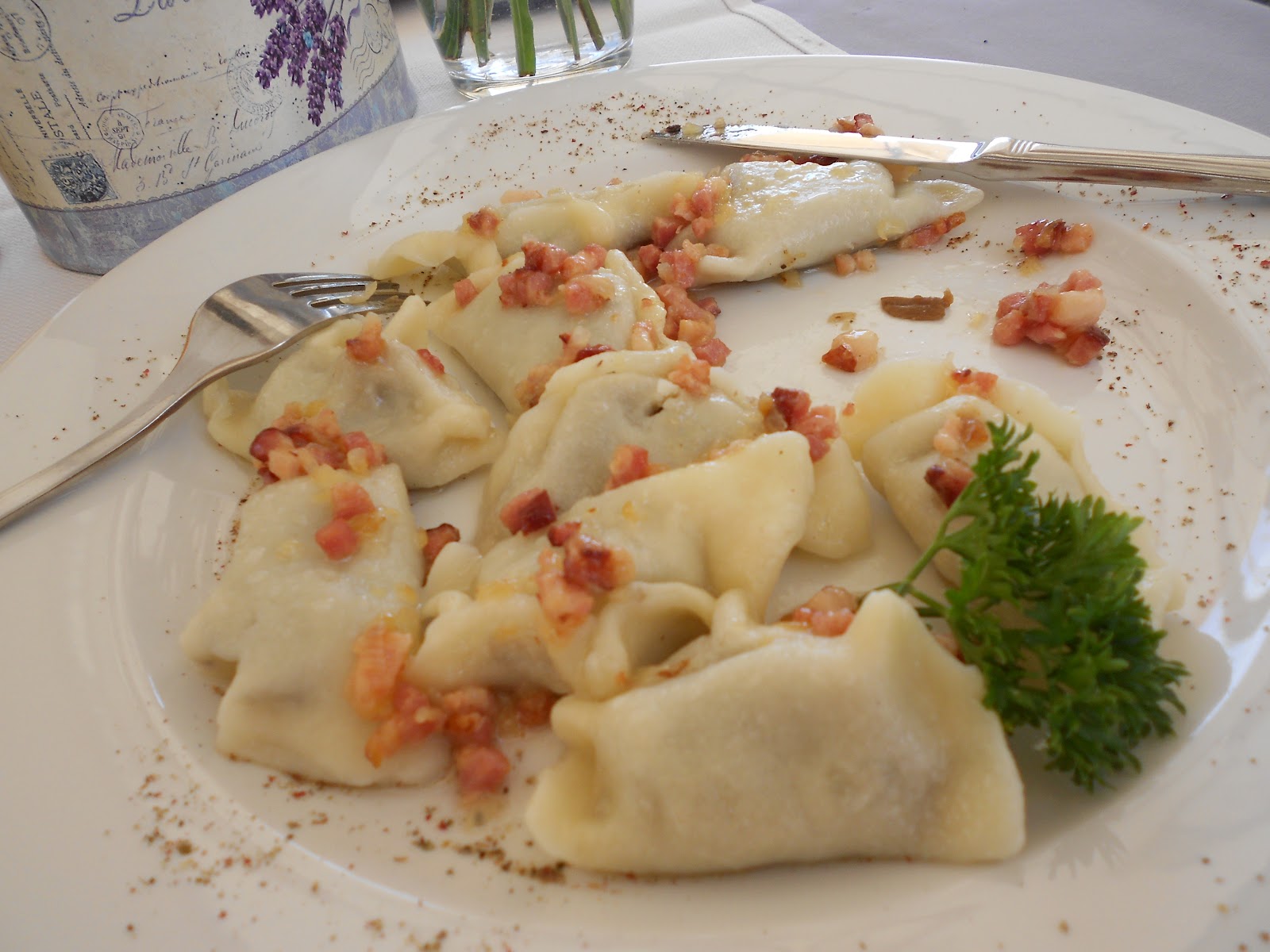
I tried both pierogi and borscht for the first time on this trip – with great success I must say. And my top dining out tip? Miod Malina (translates to Honey Raspberry) a short walk from Rynek Glowny towards Wawel Castle. I sat outside and enjoyed a glass of wine and three delicious courses to the strains of a classical string duet…for about £20.

My first pierogi (dumplings) – sitting looking over the hustle and bustle of the main square on Day 1 – were filled with a delicious mix of cabbage and mushroom. My second helping was on Night 2 (at Miod Malina) – a scrumptious blueberry version served with soured cream. Sigh…I ‘heart’ pierogi!

Sleep
Spacious, cheerful and unbelievable value – that’s Hotel Benefis. This small 4 storey hotel sits across the river from the main hubbub of Krakow but it’s only a 15 minute walk to Rynek Glowny. I had a large 4th floor room with a balcony and a view of the spires of the Wawel Cathedral, Main Square Tower and Mariacka Basilica for slightly less than the price I paid for a box-size room in Rome. Oh and the staff are great.

Hotel Benefis –  highly recommended!

Be Merry
Without a doubt, music be the food of Krakow and play on it did from the bugler’s haunting hejnal from the tower of Mariacka Basilica each hour, an impromptu choir outside the Church of St Adalbert in Rynek Glowny and any number of concert options for a bargain price. You may sniff at the leaflet bearers and their nightly programs as ‘tourist-y’ but for the equivalent of about £12, it is possible to enjoy a healthy dose of the remarkable talent available in this incredibly musical city. Here’s just two:

Day 1: Chamber music at the Church of St Peter and Paul
The Thursday billing was Classical and Film Music so there was the well-known – Mozart, and Vivaldi, Over The Rainbow and Schlinder’s List – and some new discoveries for me. As I sat in that glorious church, the haunting notes of Morricone’s Once Upon A Time In America filling the nave, I felt moved and incredibly blessed to be there.

The Church of St Peter & Paul

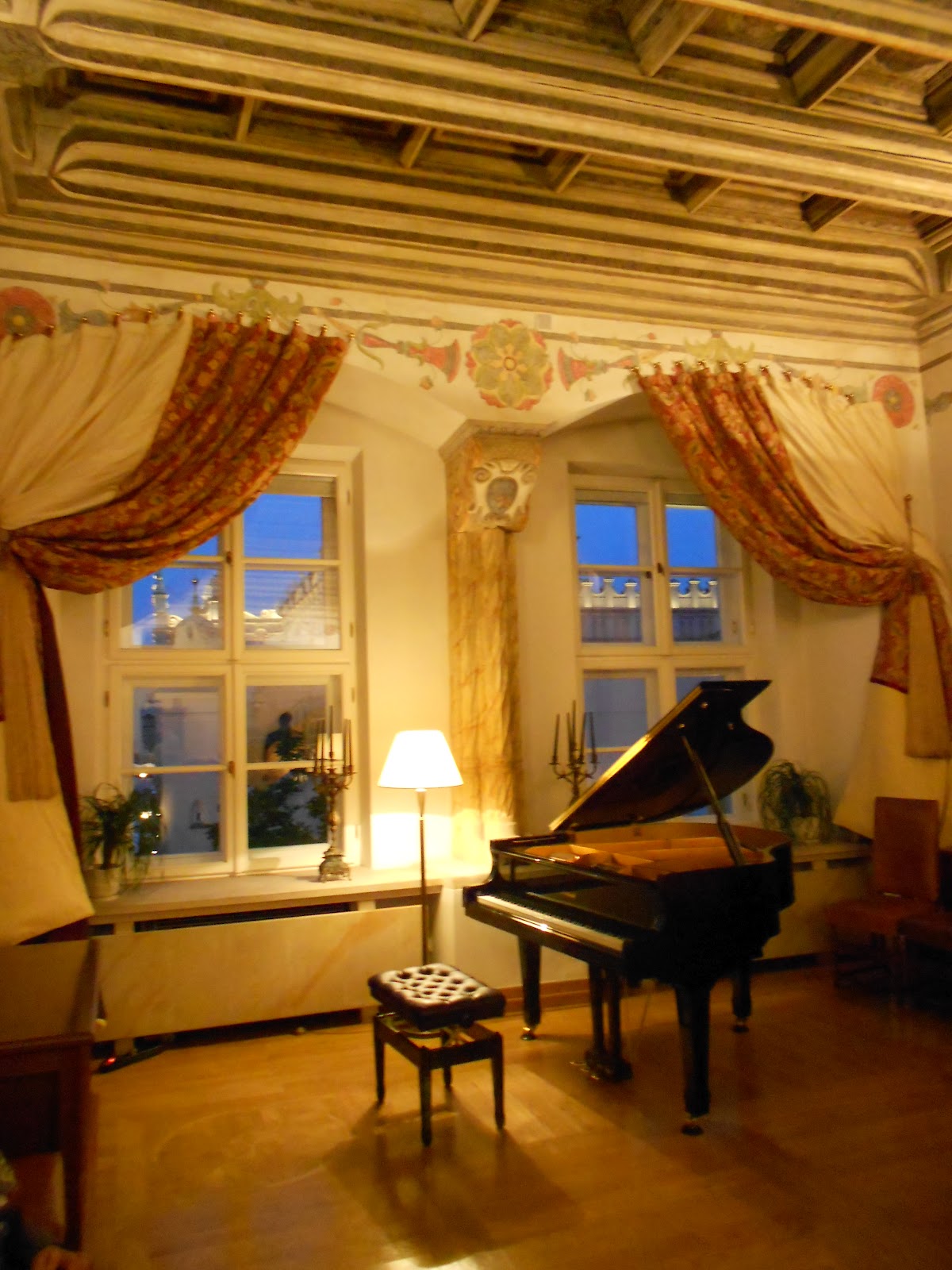
Day 3: Chopin at Bonerowski Palace
Chopin is one of Krakow’s most famous sons and every night you’ll find concerts throughout the city featuring his music. The deft fingers of Pawel Kubica introduced me to my first Chopin on a sparkling Saturday evening that had been left refreshed by the day’s rain.

The salon at Bonerowski Palace

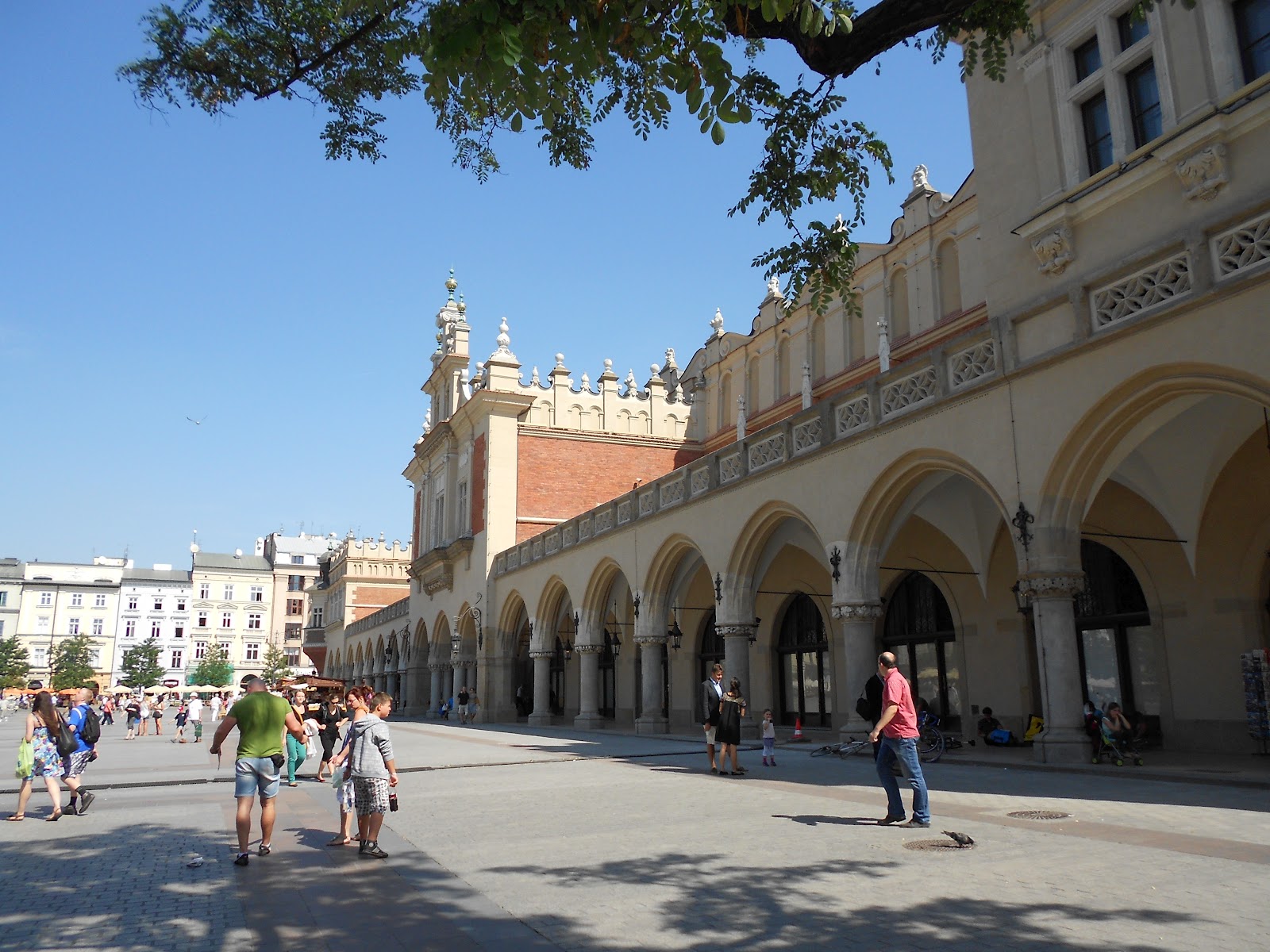
Aside from music, there are many other treats in store if you get yourself to this delightful city. Mariacka Basilica, with its uneven towers soaring above Rynek Glowny, is glorious inside and lush with intricate detail. Rynek Underground is a fascinating museum located under the Cloth Hall in the Main Square which traces the archaelogical history of Krakow. And make sure you wander past The Papal Window and give a nod to Poland’s other favourite son, Karol Wojtyla, who moved to Krakow to attend university, joined the underground seminary during the occupation and rose through the ranks of the Catholic church to be elected its 264th pope, John Paul II, in 1978.
 

The Cloth Hall in Rynek Glowny. There’s a market inside but its real treasure lies underneath.

So that’s it. Four days in Krakow filled with amazing and moving experiences that I’ve done my best to share with you through this series.

I hope you’ve been inspired to visit.
————————-
Other posts in the Krakow series
It Starts With The Locals
Lightly Salted
The Dark Side
A Monstrous Vision

A Monstrous Vision…

After spending the day before wandering though the old Jewish areas of Krakow, I boarded a bus on a grey drizzly Saturday morning for my visit to Auschwitz-Birkenau. I wasn’t sure what to expect – of the day or of myself – and the mood was stilted, even restrained, as the coach wove through the busy traffic and out into the green and undulating Polish countryside.

Auschwitz is actually 3 camps – Auschwitz I, Auschwitz II (Birkenau) and Auschwitz III (Monowitz-Buna, a work camp built near the I.G. Farben industrial complex, which wasn’t part of this visit) – as well as a network of 45 subcamps in the surrounding area. 

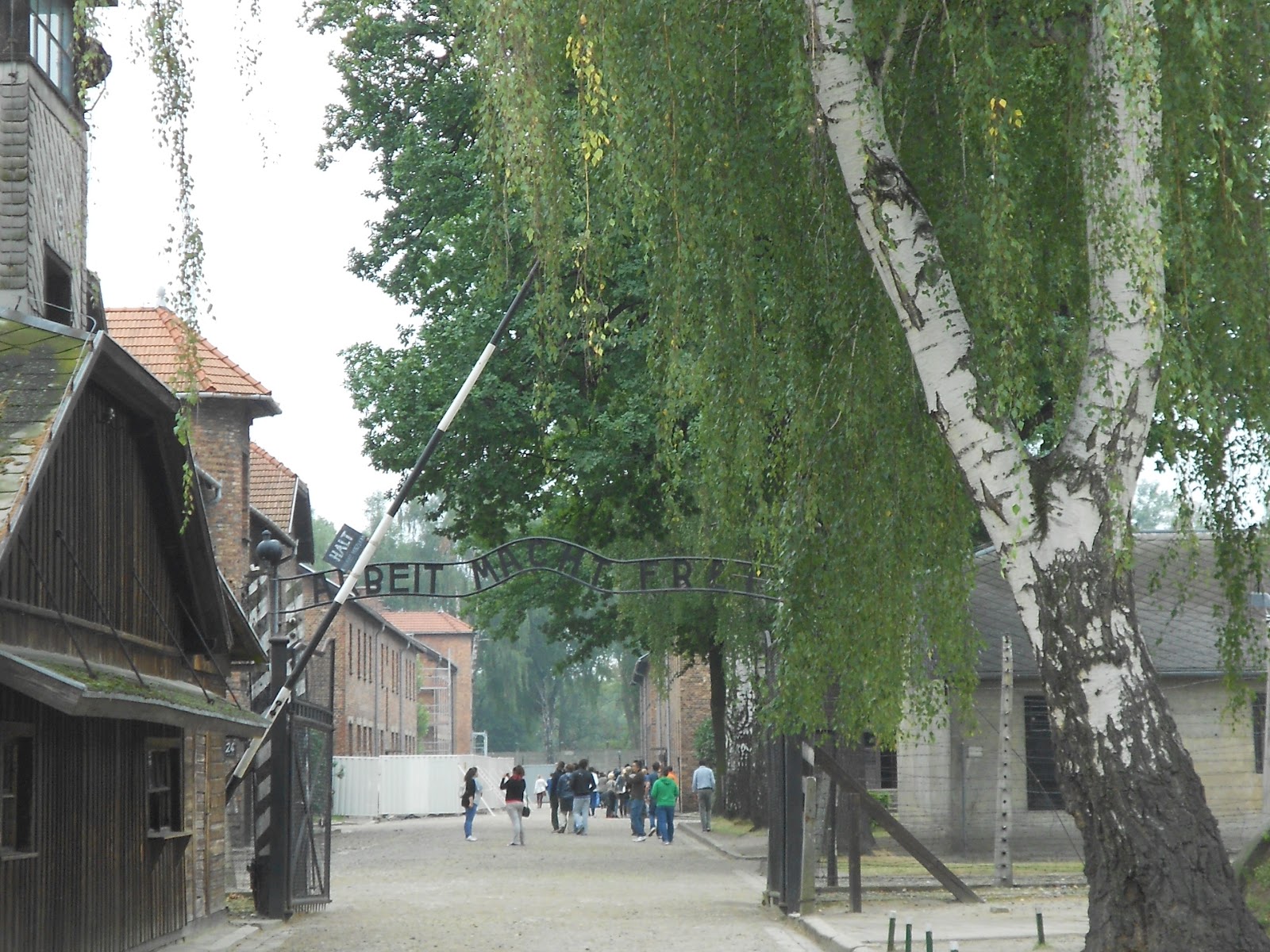
Our visit took us first to Auschwitz I, a group of 16 brick buildings surrounded by lush trees and the ubiquitous electric fence.

About to enter Auschwitz I

Once we’d passed through the gates and followed our local guide down the dusty path to the centre of the camp, it was obvious how compact the site was, not at all what I’d expected.

The buildings here were Polish army barracks prior to Nazi occupation and throughout the camp’s operation, more than 17,000 men, women and children marched under ‘work will set you free’, to the strident beat of the camp orchestra, and populated the bare floors, crowded beds, prison cells and medical wards of this, the base of the Third Reich’s Final Solution in Poland. 

Arbeit macht frei – work will set you free.

In fact, most of the inmates were not ‘local’. The camps were well-positioned for transportation from other points within Nazi Germany’s rapidly-expanding reach – places like Austria, Czechoslovakia and Romania to name just a few – and so this and the other camps became a veritable Babel, with the only common language being terror.

One display cabinet was filled with the suitcases and baskets that once held the possessions of these displaced people.

Auschwitz I was not only the base camp but also a place of significant experimentation. Genetic experiments were carried out to develop methods promoting multiple births, an essential part of Hitler’s plan to populate Eastern Europe with the Ayran Race he so admired. (During the same period, men were castrated to prevent the proliferation of undesirables.)

And the testing of the pesticide Zyklon B’s effectiveness as a human exterminant occurred here in preparation for its wider application at Birkenau.

After 2 hours walking in and out of the old barracks and even into the gas chamber where Zyklon B was first tested, all the while trying to absorb the overwhelming monstrosity of Hitler’s vision, we were given a short comfort break before boarding the coach for part two of our visit. (Believe me, paying for a pee here seemed a really small price to pay!)

Birkenau is enormous and it’s here where the largest number of people were murdered during World War II. Building (by the inmates themselves mind you) commenced in 1941 to ease congestion in the other camps but it was on such a scale that there can be no doubt that its purpose was to extinguish the lives of all who entered.


This photo was taken at the ‘sorting’ point looking back to the main entrance. This is the point where hundreds of thousands were bundled out of locked rail cars, separated from their loved ones and worldly goods, and selected to either remain in the camp or make the long march to the ‘showers’ at the back of the complex.

The ruins of two of the crematoriums have long since ceased to pose a threat but walking around the remains felt sinister – I could feel the absolute and unremitting purposeful-ness of Hitler’s Final Solution.

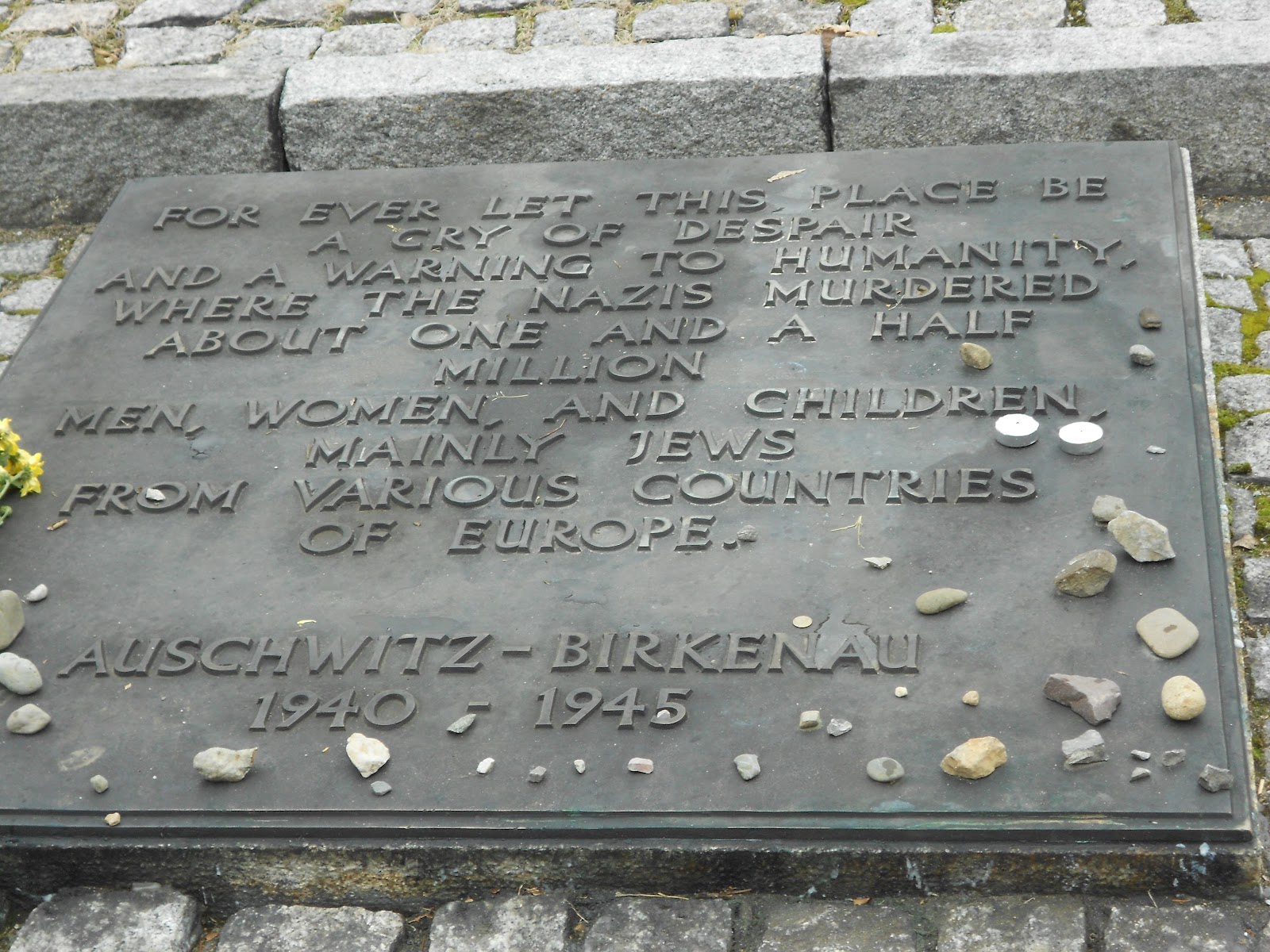
Between the two ruins lies the monument to those that died here.

‘For let this place be a cry of despair and a warning to humanity. Where the Nazis murdered about one and a half million men, women and children, mainly Jews, from the countries of Europe.’
The plaque appears 28 times along the monument, translated into every langauge spoken by the inmates of Birkenau.

The bus was quiet on the way back to Krakow and alone with my thoughts,I tried to process all that I’d seen. 

I was horrified by Auschwitz. The inhumane experiments, the displays of surrendered possessions, the inmate photos lining the walls, and the prison – with its starvation and its standing cells designed to punish those who disobeyed by punishing their comrades. I felt the sting of tears blinked away several times here.

But I was numbed by the scale of Birkenau. It’s difficult even now to find the words. I still think about standing on those train tracks, watching them disappear towards the crematorium ruins and the forest surrounding the camp, and silently wondering ‘How? How could that be?’
 
It still catches me out, filling my mind’s eye in the middle of my day-to-day when I least expect it.

Perhaps it always will.

——————————————
Other posts in the Krakow series:
It Starts With The Locals
Lightly Salted
The Dark Side 
Eat, Sleep And Be Merry

The Dark Side…

I’ve recently been to Krakow (regular Gidday-ers will already know this) and as I wandered its streets and gazed around the old town square, I thought how like Prague it felt. Right down to the bugler playing his doleful tune to all points of the compass from the tower of St Mary’s Basilica each hour.

And yet there’s something different about Krakow, a darker undertone.

In planning my trip, I had pre-booked a visit to Auschwitz-Birkenau (more on that in another post). But Krakow was invaded by the Nazis on the 1st September 1939 and remained occupied for almost the entire period of the second world war so I wanted to understand how things were closer to ‘home’. And this needed going a little further afield so on Friday morning I headed south along the banks of the Vistula River for a day exploring Podgorze and Kazimierz.

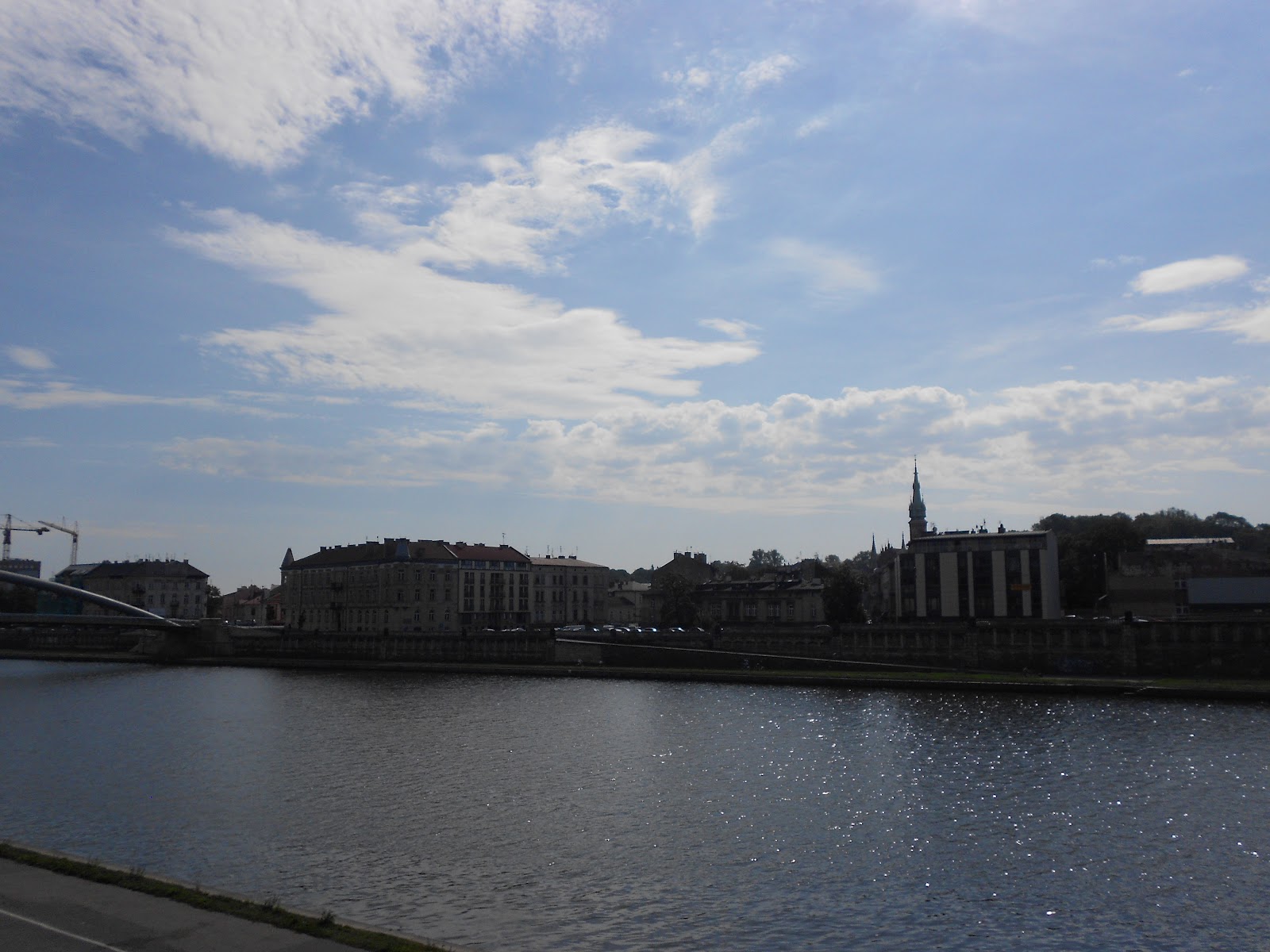
View of Podgorze across the Vistula River from Kazimierz

Let’s get one thing straight. I am not well-versed in Jewish culture and history, despite having lived in Jewish areas both in Melbourne and now here in North London. (Just to clarify – I am not Jewish.) And I don’t have a particular interest in it so I was not planning a day of traipsing through synagogues. But the Jewish population of Krakow decreased from 65,000 before the war to only 200 today and I find it extraordinary that one of our ‘species’, if you will, could become so endangered.

Podgorze was where my walk was to begin. This was where some 15,000 Jews were herded from Kazimierz across the river to live within the walls and gates of their ghetto home before being deported to concentration camps, the closest being Plaszow, a labour camp built in 1942 and then converted in 1944. I wandered through the busy streets of this now everyday suburb of Krakow, past the piece of ghetto wall, tucked between modern structures along a main road, and into Plac Bohaterow Getta with its rows of empty chairs, a tribute to the thousands of Jews who left their worldly goods behind and boarded trains there.

Part of the old ghetto wall still stands in Podgorze
Plac Zgody, which stood in the centre of the ghetto, has been renamed Plac Bohaterow Getta as a monument to’ the heroes of the ghetto’

The enamel factory of Oskar Schindler is not far from here and just a short walk across the train line brought me to 4 Lipowa Street.


The factory houses an extraordinary permanent exhibition, Krakow Under Nazi Occupation 1939-1945, which gives a fantastic insight into this short but defining period in Krakow’s history. There are lots and lots of details throughout the 28 exhibits and in some parts, it was a bit too much to digest. Nevertheless, I spent just over two hours here – there is a ‘ghetto walk’ and a fascinating display detailing the occurrences in the city in the days  right before and then during Nazi Germany’s entry into the city. If any of you are wondering about the must sees in Krakow, this should definitely be on your list.

Two moments in Krakow’s history illuminated by the sun.
(Under the rail line between Plac Bohaterow Getta and Lipowa Street) 

I began my slow and thoughtful walk back to Plac Bohaterow Getta and a short tram ride across the river, I found myself in Kazimierz, ready for a spot of lunch and a meander through this vibrant neighbourhood. There’s a different feel here – it’s industrious and dotted with craft and artists’ shops. Only two corners of the market on Plac Nowy were in operation as I walked through and I can imagine that the flea market on Saturday must have the whole square thrumming with activity. Alas, I was a day early and booked for my excursion to Auschwitz the following day.

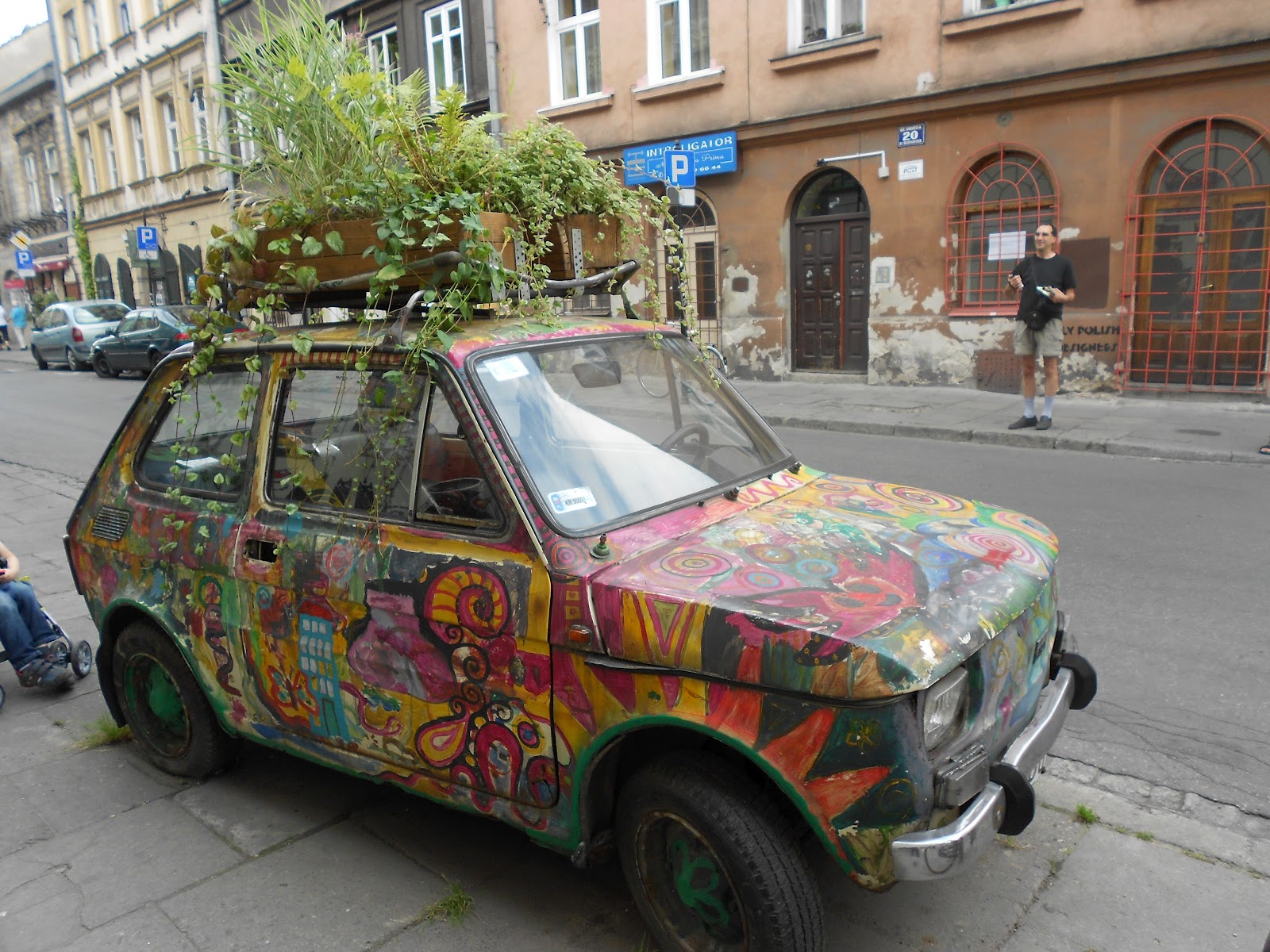
Artistic expression reigns supreme in Kazimierz

I found a spot for a late lunch. My experience of Polish food so far had been wholesome and tasty and in huge portions – Miodowe Smaki (or A Taste Of Honey) was no different – and I settled in for a while to reflect on my day.

I don’t think a visit to Krakow can really be complete without an ackowledgement, amidst the music and medieval splendor of this wonderful city, of this particular piece of its history – in essence a reflection of our own darkest hours as a human race. A history, not only recent, but one littered with horror, tragedy and shame.

My trip through Jewish Krakow had left me filled with something that even now I can’t put into words. Sombre, respectful certainly, not quite sad but there was a sense of melancholy that stayed with me for several hours afterwards (and re-emerges as I type this). It felt like this day had given a depth to my Krakow experience that I hadn’t expected. I felt like I had some sense of a people who had lived their lives in hope and peace and, in an horrific injustice, met their end at the hands of their fellow man.

And in that, I felt a little more prepared for my visit to Auschwitz-Birkenau the following day to confront the end of their story. 

——————————————–
Other posts in the Krakow series:
It Starts With The Locals
Lightly Salted
A Monstrous Vision
Eat, Sleep And Be Merry