Some Observations on Mid Life…

I wrote last week about my penchant for the peculiar…well this week I have come across something that I cannot bear to be true.

It just dropped right into my Inbox and before long, Iconoculture’s latest Observation had me shaking my head in vigorous denial.

You see, Kathryn Milner has reported that instead of a girls’ night out, some Australian women are dressing up and drinking tea.

Excuse me, I think not. Who are these women? After all, this is the land of quintessential casual – the Ugg, the barbie and thongs of more than just the foot variety.

The Havianas Thong Challenge – an Australia Day institution in the making

Kathryn has also supplied a definition of high tea: ‘a light meal served before 5pm’.

Well, I think that source is questionable. EVERYONE knows that a high tea is no light meal. It’s like saying a marathon is a gentle stroll in the park. And tea? A ‘high tea’ not really complete without a spot of champers…is it?

And finally, here’s the sting in the tail – the ‘lifestages’ that this trend most appeals to.

I may have left Young Adult-hood behind a few years ago but let me tell you right now, this Aussie sheila is no ‘Midlifer’!

So to provide a more balanced view of an ‘Australian in midlife’ crisis, I offer in evidence:

this…

Cupcakes and Champers – it’s Lush!

and this…

A Commuting Gem

and especially this…

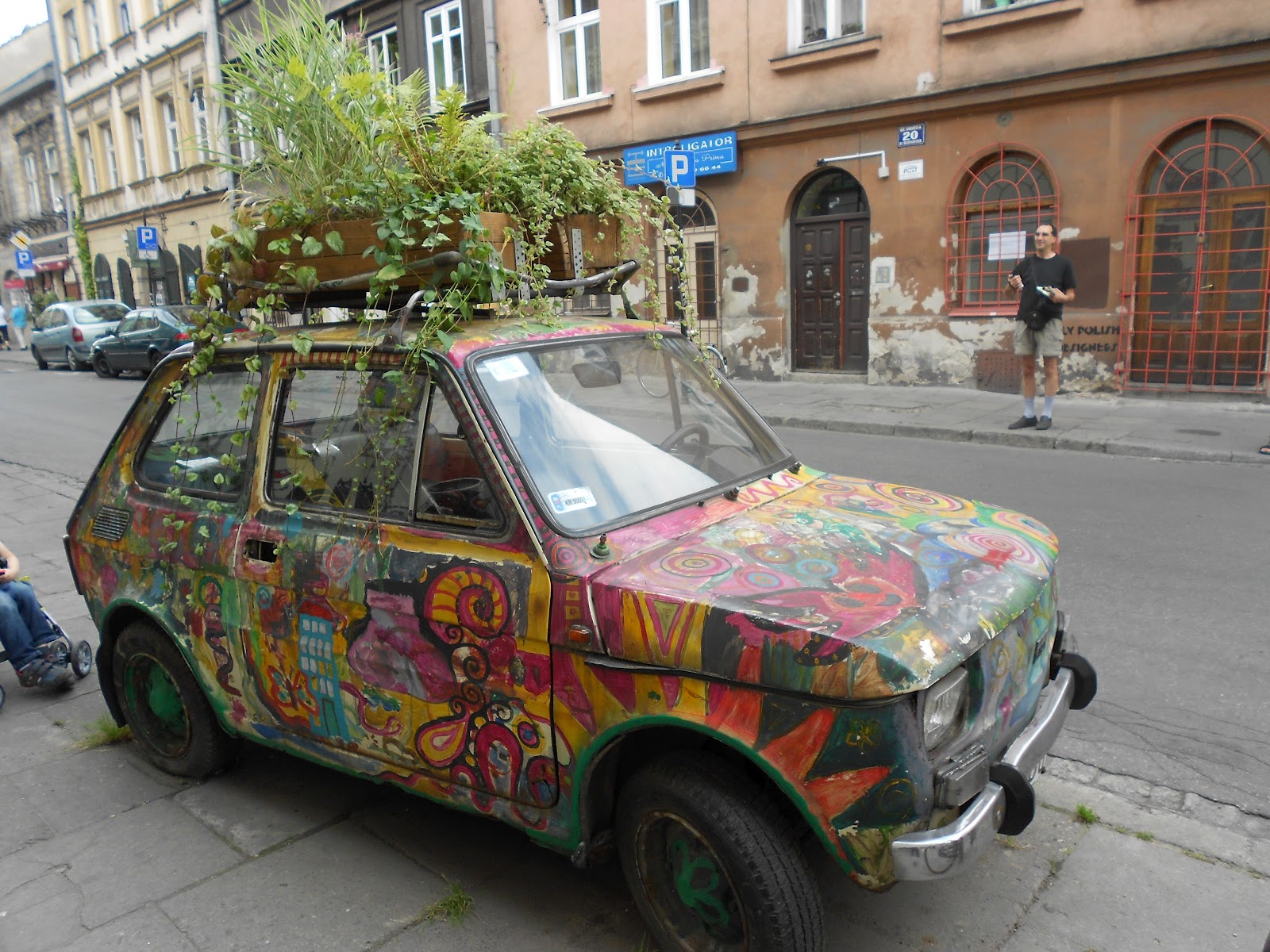
The Rides

So let me sum up by saying that this little black duck is not quite ready for Iconoculture’s version of Mid-Life…

…so just ahead is where it shall stay!

Now where are my slippers?

Many Ways With Words…

This week the Man Booker Prize shortlist for 2012 was announced, the winner to be announced on October 16th.

Of the six authors, I have heard of only one, Hilary Mantel, having read Wolf Hall last year (see #31 in 2011 in The Book Nook).

This also means I have actually read a Man Booker Prize Winner (Wolf Hall won in 2009) although now I look back through the Man Booker archive, I have also read other winners like Yann Martel’s Life of Pi (2002), Michael Ondaatje’s The English Patient (1992) and have the 1982 winner Schindler’s Ark by Thomas Keneally ready to go on Audrey.

But what does it really all mean? How can a small and select group of people decide what story shall be the best that 2012 has to offer?

I’ve read 42 this year and Robert Harris’ Fatherland (#17) and Gregory David Roberts’ Shantaram (#1) stand tall in Gidday’s list of cracking reads so far. Neither of these are recent books (Fatherland was written 20 years ago, Shantaram in 2003) nor do they appear anywhere in the Man Booker archives.

Sir Peter Stothard, the chairman of this year’s panel of Man Booker Prize judges, contributed a thought-provoking piece in yesterday’s The Times which made me stop and think about our relationship with literature.

This year, the judging panel will have read 145 works of fiction (some 2-3 times) in the months leading up to October 16th when the winner is announced. That’s 102 more than I have read so far this year.

(Where does one find time for this I wonder? Does judging become a full-time job that you wrap around another lesser for a time full time job?)

Stothard claims that this year’s shortlist showcases some of our greatest prose-writers. He also says that he’s learnt to speak up for literary criticism, an act in itself which requires work and technique and an ability to argue critically the merits – or otherwise – of a particular book. Which, he says, is not the same as reading for leisure.

He has also embraced ‘Kindle love’ whilst still advocating both printed books and the opportunities that bookshops and catalogues provide to explore material outside the domain of the publishing houses. He implores novellists to write novels first as opposed to writing novels for big screen adaption. And with his literary journalist hat on, admits a guilty preference for writing, from time to time, about subjects and themes rather than about a book itself.

Great writing liberates us all, he says. Expect to be resisted and keep an open mind.

But consider that it’s not a fomulaic argument he poses.

Perhaps great writing is a meeting of story and subtext – the author’s story and your own subtext – and the magic that occurs when new worlds are opened up and the story shapes us, even ever so slightly, though its tone and texture and sense of possibility. I felt the rhythmic intensity of Roberts’ Indian slums, the calculated humanity in Harris’ post war world and the cycle of hope and despair in the tiny boat tossing on the sea in Martel’s Life of Pi.

Their story and my subtext: could that be the literary equivalent of a match made in Heaven?

In any case, his article has prompted me to check out the Shortlist for myself – here they are in case you’ve been inspired too:

Narcoplis by Jeet Thayli
Bringing Up the Bodies by Hilary Mantel
The Garden of Evening Mists by Tan Twan Eng
The Lighthouse by Alison Moore
Swimming Home by Deborah Levy
Umbrella by Will Self

I figure if over 700 books (across five judges) have been read this year to give me this shortlist, the least I can do is give them a whirl!

This post is also part of Post of the Month Club – September 2012
The Dark Side…

I’ve recently been to Krakow (regular Gidday-ers will already know this) and as I wandered its streets and gazed around the old town square, I thought how like Prague it felt. Right down to the bugler playing his doleful tune to all points of the compass from the tower of St Mary’s Basilica each hour.

And yet there’s something different about Krakow, a darker undertone.

In planning my trip, I had pre-booked a visit to Auschwitz-Birkenau (more on that in another post). But Krakow was invaded by the Nazis on the 1st September 1939 and remained occupied for almost the entire period of the second world war so I wanted to understand how things were closer to ‘home’. And this needed going a little further afield so on Friday morning I headed south along the banks of the Vistula River for a day exploring Podgorze and Kazimierz.

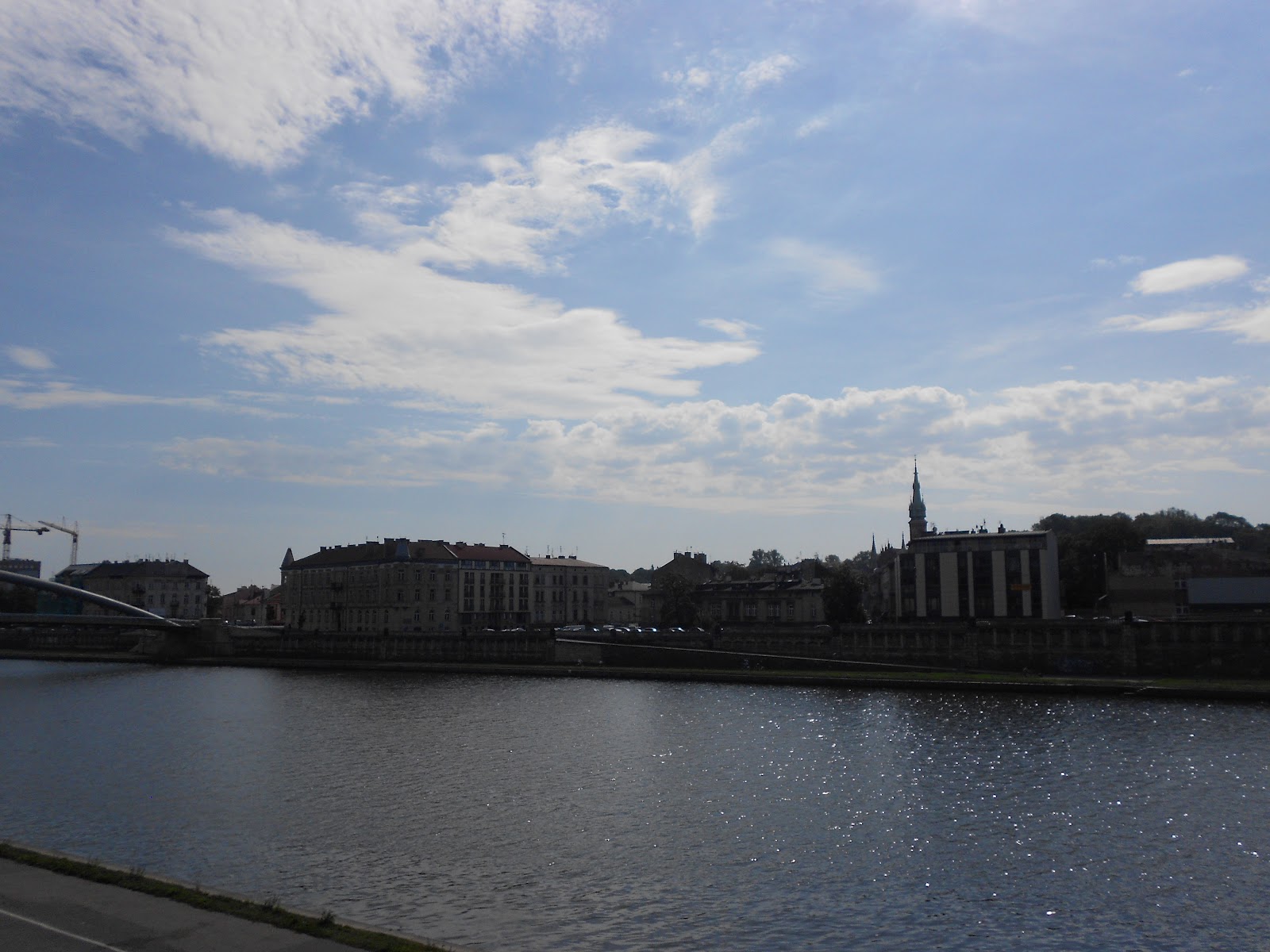
View of Podgorze across the Vistula River from Kazimierz

Let’s get one thing straight. I am not well-versed in Jewish culture and history, despite having lived in Jewish areas both in Melbourne and now here in North London. (Just to clarify – I am not Jewish.) And I don’t have a particular interest in it so I was not planning a day of traipsing through synagogues. But the Jewish population of Krakow decreased from 65,000 before the war to only 200 today and I find it extraordinary that one of our ‘species’, if you will, could become so endangered.

Podgorze was where my walk was to begin. This was where some 15,000 Jews were herded from Kazimierz across the river to live within the walls and gates of their ghetto home before being deported to concentration camps, the closest being Plaszow, a labour camp built in 1942 and then converted in 1944. I wandered through the busy streets of this now everyday suburb of Krakow, past the piece of ghetto wall, tucked between modern structures along a main road, and into Plac Bohaterow Getta with its rows of empty chairs, a tribute to the thousands of Jews who left their worldly goods behind and boarded trains there.

Part of the old ghetto wall still stands in Podgorze
Plac Zgody, which stood in the centre of the ghetto, has been renamed Plac Bohaterow Getta as a monument to’ the heroes of the ghetto’

The enamel factory of Oskar Schindler is not far from here and just a short walk across the train line brought me to 4 Lipowa Street.


The factory houses an extraordinary permanent exhibition, Krakow Under Nazi Occupation 1939-1945, which gives a fantastic insight into this short but defining period in Krakow’s history. There are lots and lots of details throughout the 28 exhibits and in some parts, it was a bit too much to digest. Nevertheless, I spent just over two hours here – there is a ‘ghetto walk’ and a fascinating display detailing the occurrences in the city in the days  right before and then during Nazi Germany’s entry into the city. If any of you are wondering about the must sees in Krakow, this should definitely be on your list.

Two moments in Krakow’s history illuminated by the sun.
(Under the rail line between Plac Bohaterow Getta and Lipowa Street) 

I began my slow and thoughtful walk back to Plac Bohaterow Getta and a short tram ride across the river, I found myself in Kazimierz, ready for a spot of lunch and a meander through this vibrant neighbourhood. There’s a different feel here – it’s industrious and dotted with craft and artists’ shops. Only two corners of the market on Plac Nowy were in operation as I walked through and I can imagine that the flea market on Saturday must have the whole square thrumming with activity. Alas, I was a day early and booked for my excursion to Auschwitz the following day.

Artistic expression reigns supreme in Kazimierz

I found a spot for a late lunch. My experience of Polish food so far had been wholesome and tasty and in huge portions – Miodowe Smaki (or A Taste Of Honey) was no different – and I settled in for a while to reflect on my day.

I don’t think a visit to Krakow can really be complete without an ackowledgement, amidst the music and medieval splendor of this wonderful city, of this particular piece of its history – in essence a reflection of our own darkest hours as a human race. A history, not only recent, but one littered with horror, tragedy and shame.

My trip through Jewish Krakow had left me filled with something that even now I can’t put into words. Sombre, respectful certainly, not quite sad but there was a sense of melancholy that stayed with me for several hours afterwards (and re-emerges as I type this). It felt like this day had given a depth to my Krakow experience that I hadn’t expected. I felt like I had some sense of a people who had lived their lives in hope and peace and, in an horrific injustice, met their end at the hands of their fellow man.

And in that, I felt a little more prepared for my visit to Auschwitz-Birkenau the following day to confront the end of their story. 

——————————————–
Other posts in the Krakow series:
It Starts With The Locals
Lightly Salted
A Monstrous Vision
Eat, Sleep And Be Merry

A+ For Creativity…

In previous posts I have been known to bemoan the less than extraordinary output managed by today’s educational systems. Whether they be the formal or informal, academic or the University of Life, it has seemed that perhaps something has gone awry and that we are not preparing the current – or for that matter future – generations as we should…and I use the term ‘we’ loosely to mean society in general.

As far as I can see, there’s something of a dichotomy going on at the moment.

There’s the over-arching drive to get that all-important (and increasingly expensive) university place, although it doesn’t always seem to be pursued as a heart-felt vocational calling but rather as an experience or a rite of passage before entering the ‘big bad world’.

And then there’s a worship of role models who come sans academia – the self-made men made Lords, the single-minded stars of the sporting arena, and those in the pages of the weeklies who seem to be celebrated for…well…being.

So where does education fit in? How do we line up the roles that society has created with an education system at odds with fulfilling them? And what happens to those that fall somewhere in between talent and narcissism?

Just when you thought that this post was turning into another rant on the state of the world, I want to take a pause to share a demonstration of the very mismatch I speak of.

The following is a selection of exam questions and answers provided by one particular student:

Q In which Battle did Napoleon die?
A His last one

Q What is the main reason for divorce?
A Marriage

Q If you threw a red stone into the Blue Sea, what would it become?
A Simply a wet stone

Q If it took eight men 10 hours to build a wall, how long would it take four men?
A No time at all. The wall was already built.

Q How can you drop a raw egg onto a concrete floor without cracking it?
A Any way you want because a concrete floor is very hard to crack.

The teacher obviously saw the funny side and noted A+ for creativity…and the student failed the test.

So whether you’ve chuckled at their chutzpah or despaired at their defiance, the question remains: how do we engage this clearly clever mind in contributing something valuable, meaningful, worthwhile to the world at large?

———————————————-
Now just before you race off to ply sons, daughters, nieces, nephews, grandkids and/or the neighbours’ offspring with a raft of serious and thought-provoking questions on the matter, in the spirit of true narcissism and self-absorption, I must remind you that there are only 7 sleeps to go until Society’s Celebration of little ol’ moi is upon us. Not many shopping days left peeps…are you ready?

Commuting Gems…Recycling’s Foot Soldiers

Sometimes inspiration come from the most unlikely places.

Tucked into my seat on the train earlier this week, flicking through The Metro with the patter of raindrops on the window in the background, I came across this…

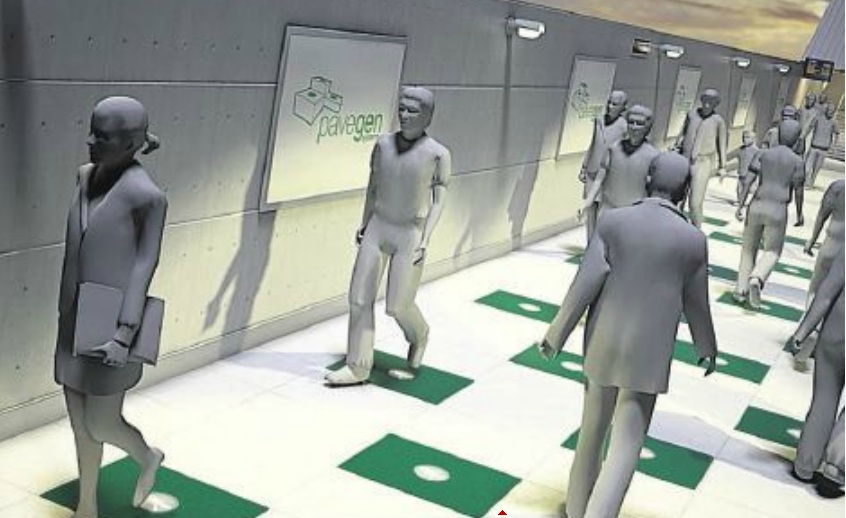
No it’s not a version of MJ’s Bille Jean video souped up for the cyber generation. It’s actually the latest and greatest in the harvesting of natural energy sources.

Pavegen is the brainchild of Laurence Kemball-Cook, a young British entrepreneur who has combined a recycled rubber and polymer mix with a hybrid kinetic energy-harvesting system. Stepping onto the ’tile’ generates between 5 and 8 joules of electricity – a small percentage of this is used to the light the tile while the majority is either stored in a battery or powers the surrounding area.

It might sound like small potatoes but Kemball-Cook took a Pavegen dancefloor to Bestival last year where the grooves of 50,000 festival-goers charged 1,000 mobile phones. They have been installed (Pavegen that is, not the festival-goers) permanently at a school and more recently at Westfield Stratford City.

It’s extraordinary and exciting stuff. Imagine…our ‘energy output’ collected and tranformed into a unique – and boundless when you think about it – source of electricity. 

Brings a whole new meaning to the term recycling, doesn’t it?

The Games People Play…

Not long ago, I succumbed to the hype and read Suzanne Collins’ The Hunger Games. The brief review I’d read of the movie release did enough to convince me that it was a premise I’d find interesting: the human condition and how far we are prepared to stretch our own moral truths to survive and, indeed, thrive.

And it was a great story, gritty and fast-paced. In fact, so absorbed was I that I forgot that the protagonist is only 16 years old. Her story is riveting as she grows to face an adult world of expectation well beyond her own experience in the impoverished District 12. 

But here’s what struck me most – the concept of the game.

The game is something that has grown to become part of our landscape with all the gadgets a heart might desire to make imagined worlds come to life. I remember the original Dungeons and Dragons and in my twenties, I got completely hooked on Riven and Myst thanks to a boyfriend of the time. Then life took me away from gaming until about eight years ago when a close association with a couple of teenagers (and another rather older “adolescent”) introduced me to The Sims, Runescape and World of Warcraft. And haven’t games all come a long way – so life-like. So real that the imagined and real worlds blur. And a player’s highest praise is that they can lose themselves and escape from reality.
Like all of those spectators in The Hunger Games.

But it’s not the first time I’ve found myself wondering about games of the people kind. As I read Collins’ tale, I was taken back over 20 years to another book, William Golding’s Lord of the Flies. This tale follows a group of English school boys deserted on an island, their attempts at creating their own society to survive and the savage power plays that lead to  not only the deaths of Simon and Piggy, but also the “young gentlemen’s” rules by which they had always played.

At the end of the book, the boys are rescued but in reading those final pages, I couldn’t help wondering whether it had all been part of some big experiment by the adults. And in re-reading the book again after The Hunger Games, the parallels between the two “themes” seemed even more obvious – what does the veneer of society actually hide?

To my mind The Hunger Games reads like Lords of the Flies sexed up for the World of Warcraft generation. But maybe I’m reading too much into it. What do you think?

Do you think the games we play reveal something of the way we would like our future to be or more about our “deep, dark past”?

The Very Best of British …

There are times in this expat life of mine that I discover something that I think is so random and nonsensical that there is nothing for it but to shake my head and laugh.

This week, I learnt about Premium Bonds.

Premium (or lottery) bonds were introduced by Harold MacMillan in 1956 as part of the government’s National Savings and Investment Scheme. This is how they work:

1. You pay some hard earned cashola for a bond. You can sell this back to the government, at your request, at the original price you paid. No more. No less.

2. The government pays a return on the bond but not to you. Instead it goes into a central prize fund.

3. A monthly lottery distributes premiums to those bond-holders whose numbers are selected randomly.

4. The machine that generates these random numbers is called ERNIE. I kid you not.  It’s acronym of Electronic Random Number Indicator Equipment.

5. Your chances of winning (according to the Premium Bond Probability Indicator on moneysavingexpert.com) are as follows:

Hold £100 over a year = 3.28% chance of winning anything

Hold £1,000 over a year = 28.3% chance of winning anything

Hold £10,000 over a year = 96.4% chance of winning anything

6. The anything you could win ranges from £25 to £1,000,000. But you should know that in November 2011, 99.75089525% of the prizes made available were £100 or less. Just to be precise. I wouldn’t want any rounding up or down of the decimals to mis-represent the opportunity here.

After all, what could be a sounder investment choice than essentially putting a down payment on a whole lot of future lotto tickets?

But really, who am I to quibble about such things: apparently one in three Britons invest in them.

All I have to say is “The very best of British to them!”

One In A Million…

A week or so ago I was flicking through the Metro newspaper on the train to work when a headline caught my eye – The Science Of Falling In Love. Apparently there are more than 15 million singletons in the UK (or there were on the 29th March at any rate). I had no idea I was part of such a large contingent.

While the article turned out to be a glorified advertorial for dating site, e-harmony, I was mildly horrified at the statistic that 4 in 5 people lie about their age, weight and height online. Not that they lie – although while not surprised, I do find that a little perturbing – but that they feel they must in order to attract a partner.

Has our online world really forced us down such a shallow path? I mean I love a flattering profile pic as much as the next person but to lie about the essentials seems a little counter-productive. Doesn’t it all come out in the wash if things go well?

And I do mean the wash. Let’s talk about Spanx for a minute. For those of you who have been living under a rock don’t know, Spanx is a brand of body shaping undergarment – control pants or fixit knickers if you will – that boost the butts, trim the thighs and nip the waists of women (and some men) the world over. By all accounts these garments can reduce you by up to a dress size. (Blokes reading this should substitute whatever the equivalent for yourselves is here.) It seems that humankind seeks to emulate some idealistic form – whatever that may be – that will give us the best chance of attracting a mate. 

Whether that be for one night only or for many nights to come, my point is this. Eventually it comes off, leaving what you previously squeezed into some fairly uncomfortable underwear, out there in all its glory.

There’s knowing how to make the best of what you’ve got – I’m a pear-shaped, short-legged sheila so let’s just say skinny jeans are not my best friend – but this body shaping stuff is supremely uncomfortable. The pragmatic side of me also wonders whether this means that we need a wardrobe in two sizes – under control and out of control.

So where is the line? I could go on for ages here – there’s makeup, body treatments (from fake tan to cosmetic enhancement), hair extensions and even the humble WonderBra – and I’ve tried a few. But in considering singledom from my view of the world as a participant in the marketing profession (yes there’s another little snippet about me for you), is there a whiff of caveat emptor in today’s dating landscape? How far should one go to attract attention before the advertising becomes misleading and deceptive?

I’m told it’s just a numbers game and you’ve got to be ‘in it to win it’. But is it really…

…or is it possible to employ a little creative license, get lucky and beat the odds?

If It Takes A Village, Where Are The Villagers?

I watched a television show this week that made me cringe. Not in a small, mildly disconcerting way but in a what-the-hell-followed-by-outrage kind of way.

Gok Wan is back on the trail of positive body image again, this time with his show The Naked Truth which explores the issues surrounding teen body image in our society.


Source: pinterest

I like Gok and have enjoyed his other shows but to be honest, I was not sure about what appeared to be a bit of bubblegum psychology so when I chose to invest an hour of my time in this versus Holby City, The Fixer, The Exit List and Cowboy Builders, I was prepared to be a bit disappointed. 

(Actually having just read this list back, I do know why I chose it but I digress.)

Of the three stories featured, it was Paige’s that made me see red. A gorgeous, slender 15 year old so obsessed by looking like the airbrushed photos online that she photoshops pictures of herself. The thinner thighs of websites like thinspiration (although having looked at the site, there are plenty of  ‘healthy’ pictures too) and seeing a ‘gap’ between the tops of her legs were her holy grail and while their visit to see a real life fashion shoot (and the digital manipulation involved afterwards) seemed to do the trick, it disturbed me to think how this beautiful girl had arrived at these conclusions in the first place.


Source: pinterest

Gok’s also out promoting his 1-hour Body Confidence sessions to the education community and while I whole-heartedly agree that this is an important investment in the self-esteem of our future generation, I wonder – aside from it being one hour in a whole year – how this can ever be enough. 

It seems to me that the current obsession with style over substance and the appeal of easy-celebrity has led to a loss of meaning in contributing to community and being proud of your work. Images in the media are insidious and further efforts to promote healthy bodies and un-touched pictures can only help. But doesn’t the key to all of this start at home?

Back in September last year, Chris Lloyds’ Wallbook Weekly Why Children Fail inspired a bit of a Gidday rant on a similar theme. If parents really are at their wit’s end in knowing how to deal with this, then shouldn’t part of the investment pie be directed here too? But then who decides what to ‘teach’ and how to ‘measure’ the outcome is a thorny issue at best. 

In response to my post back in September, some of my followers of the parental variety mentioned their strong belief that ‘it takes a village to raise a child’. For me, a village starts with a sense of community. And the prevailing community for our teens is the online one.

Source: pinterest

Last year’s riots in London shocked the world capturing image after image of violence and arrogant entitlement. But what it also showed was the power of social media.

So does the answer (or at least part of the solution) lie here?

The Dating Game…

Source: pinterest

As a single lass whose broken heart has been carefully glued back together over the last year or so, I am starting to notice more and more avenues  available for me to meet my next conquest, the man of my dreams, a fella.

Being quite an open-minded sort, in the past I have ogled the online options, given the introduction agency scene a whirl and speed-dated (the rapid, not drug-induced, kind) with assistance of locks and keys. No, not like that – that would be another type of blog entirely. It’s actually quite harmless fun, until you realise you are – at 34 – the oldest in the room by a long way. And that was 8 years ago.

Today I read about a new method for the time-poor and travel-rich. Those clever pragmatists over at KLM have developed Meet and Seat which allows you to choose your on-board neighbours based on LinkedIn and Facebook profiles. They say it is an ideal opportunity for ‘networking’ but some pundits suggest it will be used more for matchmaking, whether that be between long term relationship seekers or those looking for the more abridged variety. I will use it to avoid crying babies and large, smelly people.

There’s been a ground swell of news and opinion about purposeful singledom too. Each week, I read Hannah Betts’ ‘Things You Only Know If You’re Single’ column in The Times Magazine (which you will have to pay to read for yourself thanks to bad Uncle Rupert). Last week’s was ‘…that one should forget dating sites in favour of realism.’ Nuff said on that score. She also writes stuff for The Telegraph which I fall over intermittently and which you can read online for free.

And just prior to Christmas, Elizabeth Tannen shared her thoughts on the whole scene over at The Huffington Post in Five Excuses For Being Single  By the way, Elizabeth has written a fab post called ‘Letting Your Silly Out’ on her own blog but I digress…again.

So this led me to think about dating. My approach in the past has been underpinned by the philosophy that if you open your eyes/mind, ‘the universe provides’. But I’ve also read things which suggest we should treat finding a partner in the same way as finding a job. Know your ‘audience’, targeted selection, tailor your ‘CV’. It just doesn’t seem to have that joyous and romantic ring to it, does it? Nor does it sound fun.

My theory is that life happens the way it happens and if we remain open along the way, we stand a chance in spite of the pitfalls.

But I’m not quite sure what you would put on this CV.

My last relationship began as a friendship with my next door neighbour and, if I exclude the last couple of months, went on for five and a half very happy years. I’ve met others through common interests (there were a few of these during my ballroom dancing days), chance encounters at bus stops and all sorts of liaisons in between. There have been the short and sweets, the long and lingerings, the quick fizzers – and then the gaps in between where I get to immerse myself in all the things I love to do without any of the negotiation or compromise.

And there, in that unequivocal indulgence of all the things I love, lies the rub…

Source: pinterest
The defence rests.