Lisbon: A big day out

The story so far: Lil Chicky and I managed a six day rendezvous in Lisbon at the beginning of October. We ate, walked, did a little shopping and took squillions of photos – here’s another installment of our adventures.

After a couple of days squeezing a whole lot of value out of our 48 hour HOHO (Hop On Hop Off) bus ticket, we decided to venture farther afield and let someone else take the reins. Cue Andre from Portuguese for a Day tours who collected us from our apartment on a bright blue-sky Monday morning and drove us to the mountain village of Sintra.

For those of you who don’t know, Sintra is a UNESCO Cultural Landscape site set amidst the cool woodlands on Serra de Sintra about a 30-40 minute drive from Lisbon. It’s the site of many royal summer palaces featuring a range of architectures and this makes Sintra a really delightful and interesting day out of Lisbon’s hurly burly.

This was Lil Chicky’s first trip so she wanted to see and learn ‘lots’ whilst I went to Sintra as part of a tour back in 2002 – our then group spent time at the National Palace of Queluz but got very little time in Sintra itself so I was keen to see something different and take a little time to relax. With Andre’s help, we got all of that and more.

After a pleasant drive, full of getting-to-know-you chat as well as discussion about the area and the day ahead, we found ourselves on a shaded winding road, climbing up the mountain through Sintra itself and onto the Parque da Pena.

The park is absolutely huge and you could spend at least a day exploring all of its nooks and crannies but our focus was the spectacular Pena Palace. This summer palace was built for Dom Ferdinand II, consort of the young Queen Maria II (and cousin to Prince Albert who married England’s Queen Victoria) and is situated over the remains of a Hieronymite monastery found on the site in the 15th century.

There’s 15 minute steep-ish uphill walk to get to the palace but it’s absolutely worth it – we walked all over it and also around it, getting some fantastic views from the ramparts.

pena-panoramas

These panoramas were taken on my phone on the way up. Inspiring, yes but I found myself wondering throughout the visit – and since – how on earth could I represent the wonderful-ness of this place.

pena-palace-montage-2

L to R: View of the entrance archway from the ramparts; beautiful blue and white tiles cover this part of the building; I captured this quiet moment on the way into the palace itself.

pena-palace-montage-1

There’s an absolute cornucopia of amazing colour and texture around every corner.
view-from-pena-palace-arches640x467

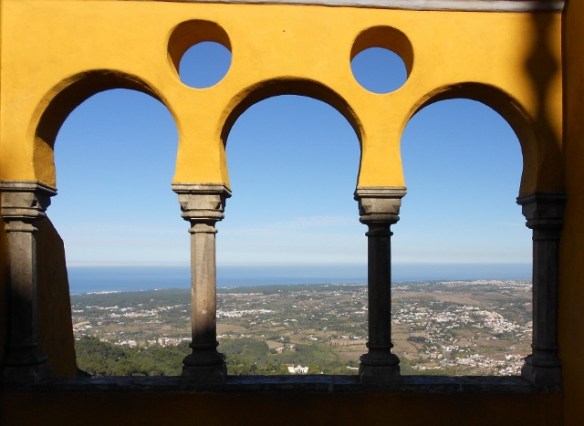
There were stunning views from everywhere but I especially loved this view of the coast through the Moorish arches.

Wandering around outside the palace is included in the park entrance fee but we also paid a few extra euros to go inside.

pena-interiors-montage

The palace interior was a bit crowded and warranted a bit more time than we had but was full of delicate detail, reflecting Ferdinand’s interest in the arts. But all of these trinkets take an awful lot of dusting…

We met Andre back at the entrance after 90 minutes and as we drove back towards Sintra, we had a chat about what to do next. But it was as we drove past Quinta da Regaleira and heard Andre’s stories about the eccentric millionaire with masonic connections who had it built in the early 1900’s that we were sold. So it was back out of the car and with map in hand, we spent an hour exploring the symbols of religion and the occult scattered amidst the web of shaded paths.
quinta-tunnels

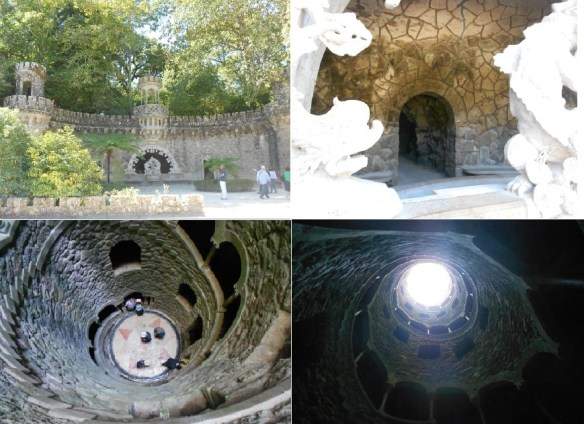
Andre had told us about the network of secret tunnels and the Initiatic Well so we headed towards the Portal of the Guardians (top left) and entered the tunnel (top right). After a short walk we emerged at the Initiatic Well (bottom left) then climbed down the narrow spiral stairs to capture the view from the bottom (bottom right).

quinta-montage

A further wander around the gardens yielded a view of the country house, or quinta (top left), many towers and turrets nestled amidst the trees (top middle and right), the lake of the waterfall (bottom right) and a grand mosaic fountain near Leda’s Grotto (bottom left).

quinta-church

Before we headed back to meet Andre, we visited the tiny chapel nestled under the trees not far from the quinta itself.

We were feeling pretty hungry after this visit so Andre took us to a great place in Sintra called Adega das Caves where we sat outside and enjoyed a beer and some local fare – my cod fritters were delicious!
sintra-main-st

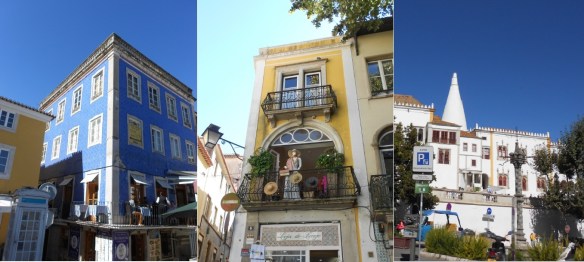
L to R: The blue tiles of the post office building – you can see the Adega das Caves entrance under the balcony; an interesting merchandising display overlooking our lunch position; driving past the Sintra National Palace.

Before leaving for the drive back to Lisbon, we stopped at Piriquita to stock up on Sintra’s claim to pastry fame (and Andre’s favourite Portuguese pastry) – the pillow-y travesseiro – so we had a little something sweet for the three of us on the way back. (I did not get any photos but there are great descriptions/photos provided in a blog post by Leigh and Lucy from their visit back in 2013.)

We started the meandering drive back to Lisbon along the coast, stopping first at Cabo da Roca.

cabo-da-roca-montage

Cabo da Roca is the western-most point of mainland Europe and lines up very nicely with New York on the other side of the Atlantic Ocean. We stretched our legs, took some photos…and had a giggle at some of the tour groups milling around.
tour-bus-at-cabo-da-roca

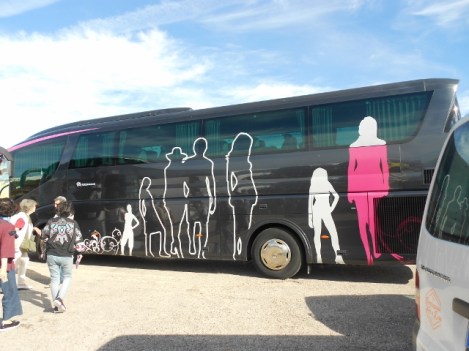
Probably entirely innocent but it did look a bit like a bus for Hugh Hefner’s Playboy Bunnies

And then it was back into the car for the drive past the beaches of Guincho and Estoril, and a 20 minutes leg stretch in Cascais before heading to one of Andre’s old haunts to enjoy a quiet moment watching the waves and savouring our travesseiros.

(As we drove in, we surprised an older couple necking in their car much to their embarrassment. Andre had told us he used to come here and drink with his mates so this was a great opportunity to tease him about what else he might have gotten up to.)

And with that the day was done and less than an hour later, we were deposited back at our apartment tired, windswept and absolutely thrilled with our Big Day Out.

me-kaz-andre-at-copa-da-roca

Andre from Portuguese for a Day Tours with his two happy customers at Cabo da Roca

Andre (and partner Filipa) are two enterprising locals running small group tours that showcase the country they love. Andre’s passion and knowledge was evident from the start and we had plenty of opportunities to shape the day as we wanted as well as relying on Andre’s recommendations about what we might enjoy. For me, it was a lovely way to revisit this area and enjoy a little local cameradie. I know Lil Chicky would join me in strongly recommending that you give them a try vs some of the larger operators offering similar tours in the area.

But don’t just take our word for it – you can also see what others thought here and if you fancy finding out more, here’s a link to the Portuguese for a Day Tours website.

And don’t forget to stay tuned for more from Chicky Tours Unlimited’s adventures in Lisbon – there’s more coming soon…once I sort more of my photos.

When a foodie goes to Lisbon

When you live so far away from loved ones, the opportunities to come together are precious and rare so when my sister told me she had to be in Europe for work/a conference for a couple of weeks, we decided to rendezvous in Lisbon for six days of sibling fun. This kind of jet-setting would have completely impressed me before I embarked on expat life – we found ourselves explaining our across-the-globe holiday planning a lot during the trip (our accents prompt a fair bit of inquiry) – and I had to keep reminding myself that it was actually ME in the story versus someone else.

Anyway Lisbon was fabulous. We had wonderful weather in the mid to high 20’s (Celsius), and we were never short of something to do, see, wander around or eat and drink. It’s a tough task to pick one post’s worth of highlights for you to peruse. So there’ll be a few posts in the series as I try and draw out the best of what was an amazing week.

My first post in an armchair tours series is not usually about food but quite frankly, I keep thinking about it and it’s like I can’t write about anything else until I scratch my foodie itch. So loosen your belts peeps, here goes…

Having never been to Lisbon before, one of of Lil Chicky’s most important introductions was to Pasteis de Nata – Portuguese custard tarts. This is a complete departure from what Australians think of as a custard tart. A pastel de nata is a small bite (well about three bites really) of flaky pastry filled with a rich buttery eggy custard. Our first one of the trip was at Confeitaria Nacional on the corner of Praça da Figueira.

pasteis-de-nata-1

It went down a treat – so much so that we made it our mission to try a custard tart from a different place each day and nominate ‘the best’ at the end.

Lisbon is a hilly place and this, combined with an average of six to seven kilometers of walking each day, meant we found plenty of reasons to stop and refuel wherever we were.

assorted-vittels

L to R: Delicious gelati (she had raspberry, I had passionfruit) at Gelateria Portuguesa just around the corner from the entrance to the Castel de Sao Jorge; caffeine kept us going and the Portuguese make pretty good coffee; our first Caipirinha was sipped from the rooftop bar at The Mundial on Martim Moniz with excellent views across to the castle.

Most evenings, we either wandered down to the food huts on Martim Moniz or grabbed some snack-type vittels and wine from the supermarket at the bottom of our building. We did try the Time Out Market on Sunday night with mixed results – Chicky’s meal was delicious but I was served cold, stringy and partially-cooked fries with my fish which the vendor refused to swap (that’s how we do it, I was told). Luckily the wine was good and Chicky found some freshly-made churros to ease my disappointment.

A few nights later we thought we should try some traditional cuisine. On the recommendation of a local, we snaffled an outdoor table at Cervejaria A Lota in Restauradores and to the cacophony of a strident spruiking battle between a couple of the restaurants in the street, we enjoyed a(nother) Portuguese red wine, grilled sardines and a mixed bill of mains.

a-lota

Far right: My delicious fish and rice ‘stew’ (monkfish, shrimps, clams served with rice in a tomato and herb broth) is in the foreground. Chicky got adventurous and went for the wild boar (in the background) which she said was okay – game-y and quite salty.

Our final day was one abridged by departures (Chicky to her conference hotel and me back to London) so we booked a foodie walking tour with Culinary Backstreets. We spent several hours with Celia (our guide) and a Brazilian couple (just off the plane from Sao Paulo) learning about and tasting Portuguese food. It started with a wander around the Time Out Market (it’s also called the Mercado da Ribeiro) with Celia explaining the elements of traditional Portuguese cooking and introducing us to a few familiar and unfamiliar ingredients…

mercado-di-ribeiro

…before settling us at a table for our first eating and drinking of the tour – some ‘toasties’ filled with local ingredients, a platter of fresh figs and amazing sheep’s milk cheese and a glass of Vinho Verde.

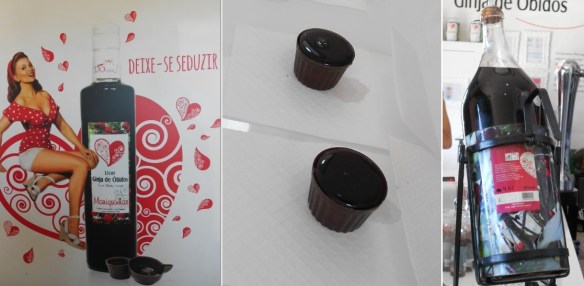
Next we moved to a little store next to the market selling Ginja, a Portuguese digestif made from sour cherries. Celia explained that one way of serving it was to sip it from a dark chocolate cup followed by eating said chocolate cup. Oh well, when in Rome Lisbon and all that…

ginja

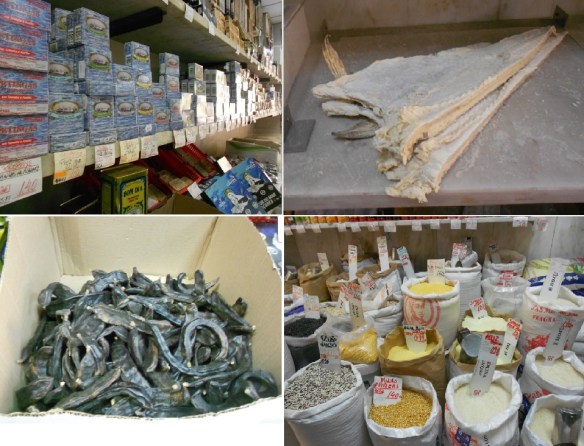
Next it was a short walk to visit to a traditional grocery store where we were introduced to a number of ingredients essential to Portuguese cuisine. We also tried muxuma, a dried and cured tuna that tasted a lot like bacon to me. Quite delicious!

grocery-shopping

Clockwise from top left: Tinned fish is everywhere and there are so many brands; dried and salted cod or bacalhau which is soaked for at least a day before using it in any of a variety of dishes; pulses and grains are a big part of the Portuguese diet; carob pods.

Our next stop was the Cantina das Freiras which is linked to a charity dedicated to helping women in trouble. We entered a nondescript building in Chiado, took the elevator up and walked through the dining hall to be greeted by an amazing view of the Christo Rei across the River Tagus. We had a brief stop here to enjoy a cold glass of gazpacho and a home-made cod fritter in the sunshine.

charity-begins-with-a-view

Our next stop was for lunch at Restaurante Vicente at the bottom end of Rua das Flores. We had an array of Portuguese dishes to try along with a(nother) bottle of red wine. I loved the delicate flavours in the octopus salad and I think everyone nominated the tempura green beans as a favourite.

We were pretty full by this time but Celia promised us that the walk up the hill to our final stop – for pasteis de nata – would be worth it. So off we waddled.

We made an unscheduled stop on the way at By The Wine – about halfway up Rua das Flores – for a cheeky glass of Portuguese muscat. Celia explained that this was not normally on the tour but as Chicky and I had originally booked for the tour on the Sunday evening prior and the guide had cancelled due to illness, this was by way of an apology from Culinary Backstreets. Apologise away I say!

muscat-by-the-bar-lisbon

Top: The arched ceiling is lined with over 3,000 bottles Bottom: Gloriously golden muscat – when in Rome Lisbon…oh wait, I already said that…

Then we arrived. A tiny door led us off the bustling Largo de Camões into a narrow shop with a very special window into heaven…

manteigaria

Manteigaria fabrica de pasteis de nata make only Portuguese custard tarts and we stood at the window watching the staff cut the dough, form the bases, make and pour the custard and pop those little cups of delicious-ness in the oven….whilst sipping espresso and munching on the best pasteis de nata of our trip – by far! Celia said something about them using butter whilst most use margarine…but I barely heard and have already recommended this place to a number of people since I’ve been back in London including a colleague who is married to a Portuguese fella. She gave me a few recommendations before the trip and it gave me great joy to return the favour – she’s keen to check out this paragon to pasteis for herself when she’s there for Christmas with the family.

And with that (and before I exploded), the tour ended so we got some final recommendations from Celia (anyone been to Taberna do Mercado in London?), hugged good-bye and poured ourselves into a cab for the dash back to the hotel/airport.

So in summary, Lisbon is a foodie paradise. No matter whether you stick to a budget, embark on a culinary discovery tour or lash out at the top end (the latter I didn’t not experience directly but I overheard some people enthusing about this on the flight back), you could do a lot worse (and I have) travelling throughout Europe. And don’t worry about all of those pastries for breakfast/lunch/with coffee, you’ll definitely burn some calories walking around…and up…and down.

I’ve included some links below to help you with your foodie planning (don’t say I didn’t warn you) and I’ll be back with more of our Lisbon adventures soon.

——————————————————–

Our rooftop Caipirinha was at The Mundial, Praca de Martim Moniz

Our pasteis de nata trail: (from least to most favourite):

You’ll find information on our Lisbon Eats walking tour at https://culinarybackstreets.com/

47: Some ups and downs

Since my last post, I’ve had a birthday – number 47 to be exact. As is my usual birthday habit, I decided to take a long weekend and explore somewhere new – the last few years I’ve been to Stockholm, Ghent, and Barcelona. This year, another adventure beckoned.

I have known Swiss-S for about 15 years – we worked together in Melbourne and have ridden the rollercoaster of expat life in London at overlapping points in time. A couple of years ago, I watched him exchange I-do’s with Prosecco-G in a small Belgian village and now they live in Geneva with rescue dog, R. At his 40th birthday drinks do earlier this year (Swiss-S that is, not R), we agreed to ‘make a plan’ so at a dark and excruciatingly early hour last Saturday, I boarded a plane for Geneva. Here’s how things went down.

After a quick trip from the airport on the Swiss-ly efficient and air-conditioned train (it’s about the only air-conditioned thing in Geneva), we had a hello ‘coffee and chat’ before Swiss-S and I wandered down to the lake.

DSCN6661 (640x479)

An aaaw-dorable local family takes a dip

Next we headed to the Old Town where we climbed the 150-odd steps to enjoy the views from the South Tower of St Peter’s Cathedral…

IMAG5044 (640x360)

View from the South Tower, St Peter’s Cathedral, Geneva

…and then climbed down and back up the North Tower to make sure we hadn’t missed anything.

We also visited the archaeological exhibition beneath the cathedral – I know it’s not for everyone but I’m fascinated by old stones and stuff.

IMAG5061 (640x360)

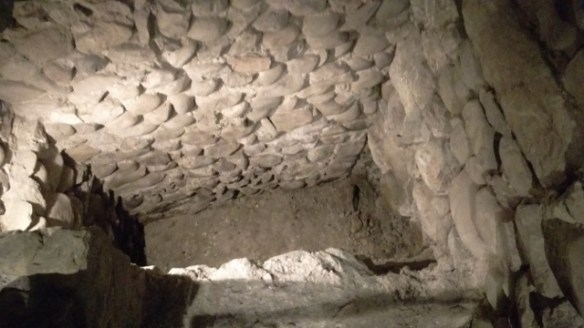
Old monk’s cell beneath St Peter’s Cathedral, Geneva – must have been a small monk.

After such exertion, it was time for a pick-me-up so we headed to a rooftop bar to check out the view again before heading further around the lake to pay homage to the Jet d’Eau with a dash along the old stone pier beneath its spray.

IMAG5071 (360x640)

Evening number one started out with a drinks cruise on the lake, a very pleasant way to enjoy the warm weather, clean air and magnificent views. Each ticket included two drinks and at first, we got a bit excited when we saw that cocktails were included.

IMAG5074 (640x360)

They may look harmless (as well as cheap) but after one, we realised that these were pure alcohol (there was no mixer included in that one glass!). Sensible Swiss-S purchased a bottle of something soft with our second round so we didn’t end up pie-eyed on pouches. It probably goes without saying that we were really ready for dinner by the time we disembarked.

Day two took an international turn with a trip into France to Chamonix. Our first order of business was a trip up, up, up the mountain (two cable cars and an elevator) to Aiguille du Midi to admire the panoramic views of Mont Blanc.

This is a picture of the information board showing the view from the lookout…

IMAG5097 (640x360)

…and this is what we saw.

IMAG5098 (640x360)

‘Limited’ visibility – don’t worry, we were warned when we bought our tickets.

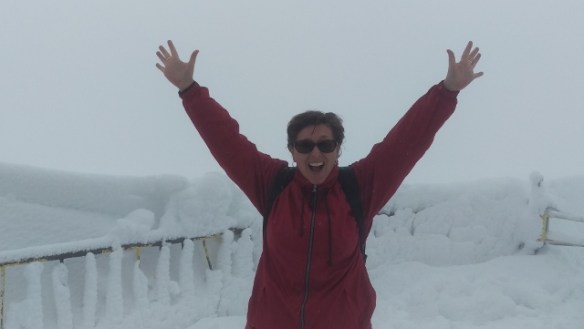
Nevertheless, we rejoiced in the snow…

IMAG5083 (640x361)

It was actually snowing as we stood there – but it had to be done.

…stepped out into the void…

IMAG5105 (360x640)

You can just make out the cliff face beneath our feet. It must be super freaky when you can see everything below.

…and had a rather pleasant lunch at the highest restaurant in Europe.

In the afternoon we took the train up another mountain to see the glacier and visit the ice cave

Did I mention that there are 430 steps down to the ice caves? Oh yes, and that means 430 steps back up. After yesterday’s cathedral climb and a morning at altitude, we were completely done in when we finished here – a crepe and coffee pick-me-up was essential before the 90 minute drive home. Lucky for us we also found one of Prosecco-G’s mixed CDs to keep us entertained on the road.

Evening number two proved rather festive with a boozy barbecue at the apartment. And at midnight, my big day arrived with a ‘happy birthday’ and a few surprises from my fabulous hosts.

After all the food, fresh air and alcohol, it will probably come as no surprise to you that I slept very well that night.

August 1st is Switzerland’s National Day (nice of them to do this for my birthday, wouldn’t you say?) and with a festive feeling still in the air, we all piled into Prosecco-G’s Beetle and headed to a local winery for brunch. I had raclette (among other things) – it was delicious!

The afternoon was spent driving around the area, admiring the scenery and making the most of the warm sunny weather.

IMAG5174 (640x360)

IMAG5179 (640x360)

Once back in town again, it was an ice-cream by the lake with Swiss-S and R to cap off a chokkas weekend. Then there was just enough time to pack, freshen up and head to the airport.

So that was my sensational Swiss celebration – full of fresh air, glorious scenery and plenty of laughs and good times with my fabulous friends. Not a bad way to birthday, I’d say.

Wonder what I’ll get up to next year?

A mosey ’round Merseyside (Liverpool #2)

The story so far…

Mum and I went to Liverpool over the Easter break. On Day 1 we did a Magical Mystery Tour, took the Ferry Across the Mersey, trawled through The Beatles Story and sweated it out at the Cavern Club. It was an excellent and very musically-themed beginning to our trip but there was much more to come. Here’s what happened next.

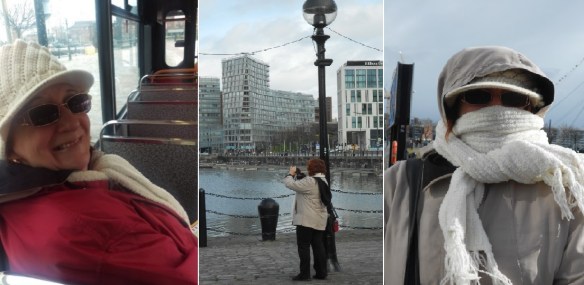
On Day 2, we started out with a City Explorer Bus Ride to orient ourselves with the other things to see and do in Liverpool. Our guide on the bus had a traditional Liverpudlian accent which Mum mentioned was sometimes hard to understand. Speaking of Mum here she is on the bus, taking photos (a common sight when one travels with my mother) and her version of rugging up against the blustery cold wind.

Mum in Liverpool

We then spent some time wandering around Albert Dock, taking more photos…

Albert Dock

Liverpool architecture

Top: The three graces of Liverpool Bottom: View from Albert Dock

…and visiting the International Slavery Museum.

Slave museum

We spent a couple of hours here. It was a great follow up to the Sugar and Slavery walking tour that I did in London in March and I must say that I left not only shocked by the legacy of the slave trade from the 15th and 16th centuries but devastated that slavery continues to prosper in places like India and Africa (just to name two).

We topped off our more leisurely day with a nanna nap back at the hotel before a fab dinner just around the corner at Jamie’s Italian (complete with a friendly waiter who had just returned from travelling in Australia).

Our final day dawned and with a mid-afternoon departure scheduled, we decided to spend our remaining time exploring on foot with a view to visiting Liverpool’s two cathedrals en route.

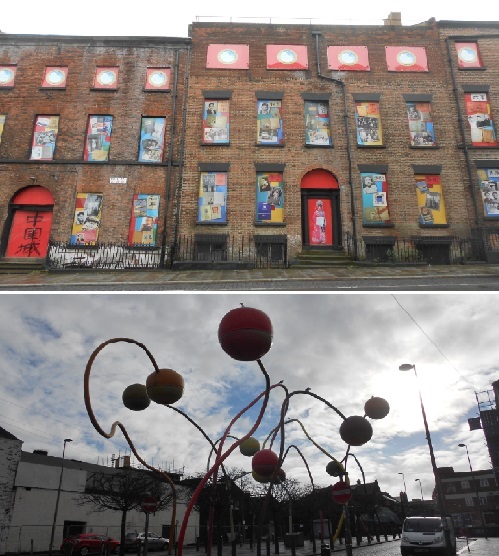
The streets behind the hotel yielded some interesting ‘art’…

Street scenes Liverpool

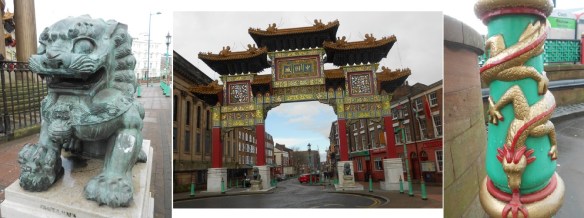
…but we did find our way to Chinatown…

Chinatown

…before heading to our first place of worship, the gothic-inspired Liverpool Cathedral.

Liverpool Anglican Cathedral - exterior

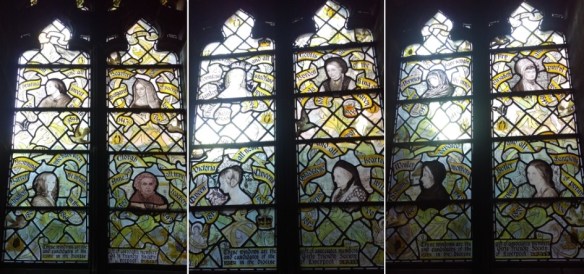
It was magnificent, full of soaring arches and stained glass. I particularly loved the intimacy and quiet of the Lady Chapel and the series of windows dedicated to some of the important women in English history…

Liverpool Anglican Cathedral - Chapel windows

After a fortifying coffee in the cathedral cafe, where we gazed out over the nave spotted with coloured light from the windows, it was time to head up Hope Street…

Suitcases

…to the Liverpool Metropolitan Cathedral.

Liverpool Metropolitan Cathedral

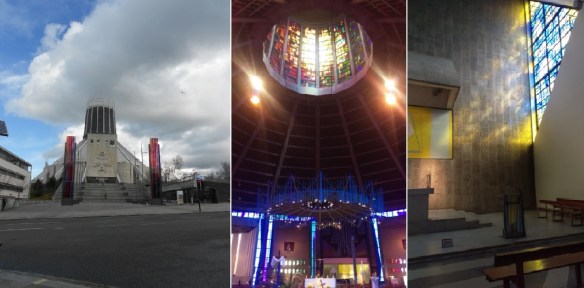
This is the seat of the Archbishop of Liverpool and while it may not have the same traditional look as its Anglican counterpart at the other end of Hope Street, Paddy’s Wigwam (as it is also known) is Grade II listed. Originally the cathedral was to be the largest in Europe, planned to be on a par with St Peter’s Basilica in Vatican City but after several years and millions of pounds invested, only the crypt was completed and work stopped as the money dried up.

However, it was generally acknowledged that Liverpool still needed a cathedral and so Frederick Gibberd, winner of a world-wide design competition, built the existing cathedral between 1962 and 1967. He managed to do this within both the time period specified (five years) and the one million pound budget as well as preserving the crypt which is now used for all sorts of events and concerts.

After I got over my shock at its modernity, the space and light really grew on me and after wandering through the crypt as well, I left feeling more inspired by this unconventional tribute to faith than the traditional magnificence of the Anglican Cathedral at the bottom of the hill.

There was not much time left to explore so we headed back to the hotel to collect our things and made our way to Lime Street Station to catch our train back to London – just in time! But here are a few of the other places we saw on our final foray through the streets of Liverpool…

Liverpool street scenes 2

Clockwise from top left: The Everyman Theatre stands at the top end of Hope Street opposite the Metropolitan Cathedral; The Monro Gastropub in Duke Street, a former merchant’s house built in 1765, was named in honour of the first passenger service scheduled between Liverpool and New York in 1817; St Luke’s Church was built in the early 1800s and was badly damaged in the Liverpool Blitz of 1941 – the ruins are Grade II listed; the Philharmonic Pub on Hope Street, another Grade II listed building, was built for local brewer Robert Cain at the end of the 19th century.

And so that, my friends, was our Merseyside mosey. Liverpool turned out to be a great city with plenty to see and do so I hope you enjoyed the armchair tour.

Liverpool Melodies

It’s been a couple of weeks since I last posted but I have a very good reason – Mum is visiting and last weekend we spent three nights in Liverpool. (Okay that’s two reasons.)

On Saturday afternoon we set off from London’s Euston Station and arrived a mite delayed after a signal failure coming into Crewe meant a further 75 minutes was added to our journey (although a retrospective bonus is that it’s also likely to yield a 50% refund on what we paid for our tickets – yippee!). By the time we walked to our hotel and checked in, we decided that dinner and an early night was the best preparation for the busy Sunday ahead of us.

Having navigated the change to British Summer Time successfully , we turned up on time at the Anchor Courtyard at Albert Dock ready to immerse ourselves in some The Beatles history on a Magical Mystery Tour

MMT Bus

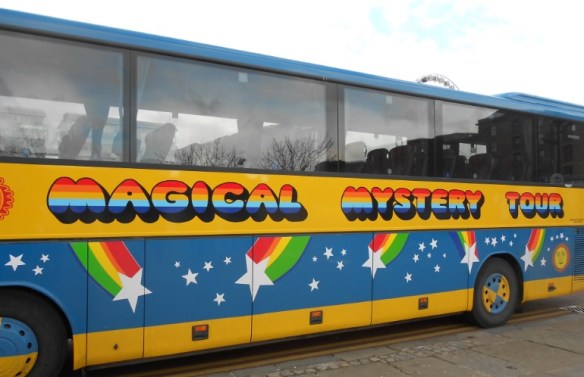
The bus was hard to miss,  waiting at Albert Dock for our tour to begin.

The tour was two hours of fascinating anecdotes as the brightly coloured bus wound its way through the suburbs of Liverpool – past childhood homes, playing Fab Four classics and pausing for a few photo opportunities.

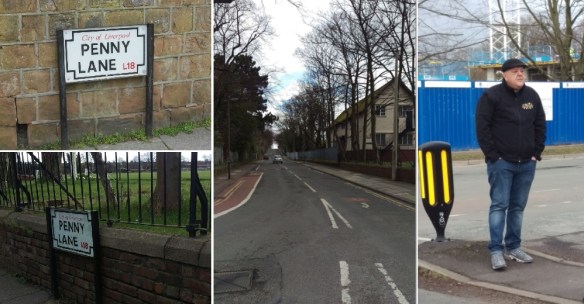
The first stop was Penny Lane, which is actually named for slave trader James Penny but more importantly was the location of the people from John Lennon and Paul McCartney’s youth that were made famous by their song of the same name – the friendly barber, the mac-less banker and the nurse selling poppies from a tray – all clustered around the bustling roundabout. We stopped at the ‘less famous’ end for our photo opp

Penny Lane

We stopped at the ‘less famous’ end of Penny Lane for our photos. On the right is our tour guide Jay Johnson, younger brother of Frankie Goes To Hollywood front man Holly Johnson.

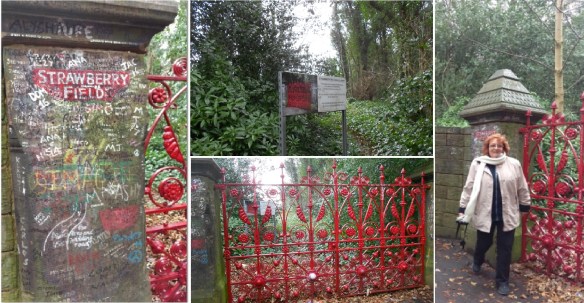
Since we are speaking of famous song locations, we also dashed off the bus pre-downpour at Strawberry Field. Lennon’s nostalgic lyrics refer to his teenage years when this site was a hostel for young girls (a lot of whom were unmarried mothers) and he would sit in the branches of a nearby tree to check them out.

Strawberry Field

Strawberry Fields Forever and a photo opportunity for Mum

Our other two photo-opp stops were the birthplace of George Harrison at 12 Arnold Grove (below left) and the family home of the McCartney clan, now a National Trust property, in Forthlin Road (below right).

Homes

But we also paused at many other places including at the end of Madryn Street in Dingle – the birthplace of Ringo Starr – and outside The Empress, the pub around the corner which featured on the front cover of Ringo’s first solo album, A Sentimental Journey. There was also a pause outside Mendips, where John Lennon lived with his Aunt Mimi from the age of five until he left in 1963, and a slow pass-by the St Peter’s church hall in Princes Street where John and Paul first met in 1957.

And throughout it all Jay kept regaling us with all sorts of stories and interesting facts and before we knew it, we were getting off the bus for the last time back in the centre of Liverpool and just down the road from the Beatles-inspired Hard Day’s Night hotel…

Hard Days Night Hotel

There’s a statue of each of the Fab Four along the front of the hotel and a shop which sells lots of memorabilia. But wait – could that be a fab fifth reflected in the sign?

After a well-earned coffee and a spot of lunch, we took a short spell from Beatle-mania to honour another part of Liverpool’s musical heritage by taking a ferry ride across the River Mersey…

Mersey Ferry

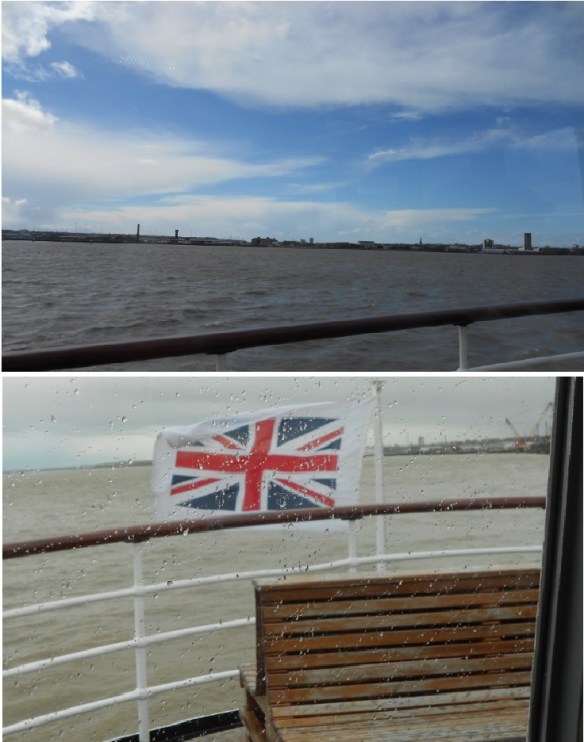
The song Ferry Cross the Mersey was made famous in 1965 by local band Gerry and the Pacemakers. Our crossing was…well let’s call it ‘brisk’- one minute bright and blue-skied then the next, drizzly and damply-grey – but definitely one of the things to ‘tick off’ during a visit here.

It was then back to the Fab Four and a visit to The Beatles Story where we spent another couple of hours poring over more stories and memorabilia…

The Beatles Story

The Beatles Story down at Albert Dock is well worth a visit. Leave yourself plenty of time, particularly if you want to listen to the audio tour and read all of the plaques and snippets along the way. And if you can, pre-book tickets to save waiting in line!

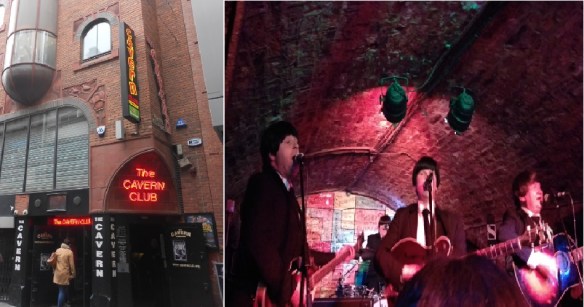
After our music-themed day, what better to cap it all off than with a visit to the Cavern Club, where John, Paul, George and Ringo played more than 290 times before they hit the big time. We saw Made in Liverpool, a fab Beatles tribute act…

Cavern Club

…before heading back to the hotel.

And that, my dear Gidday-ers, was just Day 1 of our Liverpool pilgrimage. Stay tuned for more of our Merseyside exploits – the  non-musical kind -soon…

A productive day

I was woken by a veritable cacophony of birdsong.

I rolled over, still dim with sleep, the fissure of light along the curtain hem announcing that a new day had dawned. I squinted at the dial of my watch. 6.30am. I pulled the covers back up over my shoulders against the chill of the room, the air conditioner humming smugly in the background.

Fifty minutes later, I opened the curtains…

IMAG3693

…to greet my first full day in Mauritius.

——————————————-

After some travel disruption and a later than expected arrival on Sunday, I had just enough time for a gentle stroll along the beach and a cheeky cocktail at the beach bar before my first Mauritian sunset – watched with the sand between my toes of course. What a sunset it was…

IMAG3699

An early night (there was a very real danger of yours truly falling asleep in her dinner) meant that despite the early hour, on Monday I was up and ready for a productive day.

I met the holiday rep, agreed my pickup time for the return journey to the airport and got some tips on how to get the best value from my all inclusive package.

I booked dinners in three of the resort‘s five restaurants. Last night it was a 5 course traditional Mauritian meal with 8 other hotel guests and I have dinner at the beach restaurant on Wednesday and then the Asian fusion restaurant on Friday to go. The substantial buffet will just have to do on the other nights. *Sigh*

I also booked myself a visit to the hotel spa for a little pre-dinner pampering tonight.

And I lay by the pool and read a book. Yes, a whole book. Bliss.

IMAG3703

Then it was time to start the cycle again with cocktail number two.

Now I call that a productive day and with a few notable exceptions – it will be the beach today instead of the pool – this is how it will be for seven whole days.

Now if you’ll excuse me I have another book to choose…

4 days in Stockholm: Changing the world

DSCN6077 (640x479)

This is the Nobel Museum, housed in the old Stock Exchange building right in the shadow of Storkyrkan‘s baroque steeple. It is right in the heart of Gamla Stan, looking out over the cobbles of Stortorget just a short walk up the dappled lanes from Vasterlangaarten. In the bright morning light of my last day in Stockholm, it stood still in the quiet of the square, understated with hardly a hint of the inspiration within.

I entered the cool dark hall, the gentle flow of past laureates above my head and glowing pillars forming a gentle arc around the atrium to honour this year’s winners. Come November they will join the parade of banners overhead to be replaced with a new batch of those deemed to have made the most significant difference over the last twelve months.

The original ideas man

Alfred Nobel was born in Sweden in 1833 and had a well-travelled life. He spoke four languages even as a child and throughout his adult life, spent his time most notably in St Petersberg, Stockholm and Paris. He was a descendant of Swedish scientist Olaus Rudbeck and it would appear that invention flowed down the bloodline with Nobel’s father, Immanuel being the inventor of modern plywood and an alumunus of the Royal Swedish Institute of Technology. Alfred himself had a mind that constantly sought solutions and he had 350 international patents awarded in his lifetime, the most famous of these inventions being dynamite (1867), gelignite (1875) and the predecessor to cordite, ballistite (1887).

Nobel+dynamite

His legacy is twofold. He built an international business empire with interests as far-reaching as Australia, Japan and North and South America as well as closer to home in Europe and Russia and it lives on in numerous companies world-wide. (Heard of chemicals giant Akzo Nobel?) Needless to say, Alfred Nobel left a considerable estate upon his death in 1896.

The Nobel Prize was defined and instructed through Alfred Nobel’s last will and testament. His vast fortune was to be held in secure investments and used to fund five prizes each year celebrating…

“…those who, through the preceding year, shall have conferred the greatest benefit upon mankind.”

The five prizes, in areas that held the most fascination and interest for Nobel, were to be awarded by the institutions he held in the greatest esteem. The Nobel Prizes for Physics and Chemistry were to be conferred by The Swedish Academy of Sciences, the Nobel Prize for Physiology or medical works by the Karolinska Institute in Stockholm, the Nobel Prize for Literature by the Swedish Academy and the Nobel Peace Prize by the Norwegian Storting.

However these organisations were unaware of Nobel’s final wishes and it took the creation of the Nobel Foundation and a further five years before the first prize was awarded in 1901. In 1969, a sixth prize was awarded – the Sveriges Riksbank Prize in Economic Sciences in Memory of Alfred Nobel – but while conferred by the Swedish Academy of Sciences at the same ceremony as the other prizes, it is funded by Sweden’s central bank and is not deemed a Nobel prize.

Nobel endeavours

I wandered from room to room, watching interviews and footage of just a small number of prize winners. Between 1901 and 2014, 567 prizes have been awarded to 889 laureates who, in leaving their particular legacy, have allowed mankind to continue to fashion its future. The soft click overhead heralds the breathy release of a prize winner’s banner on the cableway –  each glides noiselessly around the ceiling of the exhibition hall before joining the others again. It’s an ingenious way to make sure that every laureate can be honoured here yet with plenty of space for those still to come. A video installation, shrouded in diaphanous white folds, explores the future with 19 laureates – what is their hope? – and the importance of passing something on.

Exploring ideas has laid foundation after foundation for the discoveries of today and underpins our society’s progress and it is an awesome thing – that one man’s passion for ideas and his belief in human creativity more than one hundred years ago lives on in celebrating those who exemplify his credo in their work, their commitment and in the people who inspire them. My two and a half hours here left me feeling humbled and moved by people’s extraordinary-ness and I emerged from the cool semi-lit hall into the afternoon sun quiet and contemplative.

I sat in an outdoor cafe, reading the small booklet about Alfred Nobel that I’d purchased on my way out and as I finished and moved to close the back cover, I noticed the words that lay below the image of that legendary golden medal:

IMAG3204 (557x640)

The Nobel Museum – ideas changing the world

Long may it continue, I thought.

Long may it continue.

4 days in Stockholm: Photo tour

My recent city break to Stockholm has resulted in plenty of amazing photos. It is always a difficult thing, choosing the best to share without me clogging up your respective internet pipes. Many pictures evoke quite vivid memories of the moment itself which, while having special significance to me, may be lost on those who have not been.
So in creating this photo tour, my hope is for you to enjoy some breathtaking views of this beautiful city.

If it inspires anything more, that’ll be a bonus.

Symbols

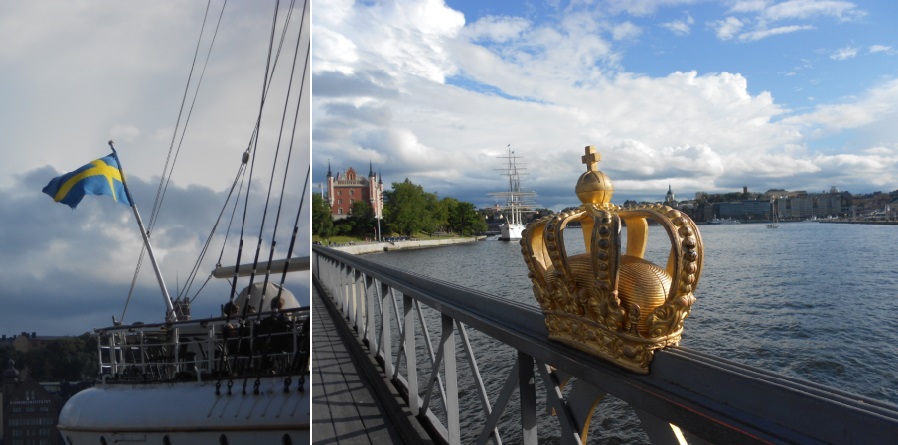
Left: On the way to Djurgarden  Right: Crossing the bridge from BlasieHolmen to Skeppsholmen

Royal palaces

Top: Kungliga Slottet (The Royal Palace) in Gamla Stan Bottom: Palace of Drottningholm on Lake Malaren

Admin

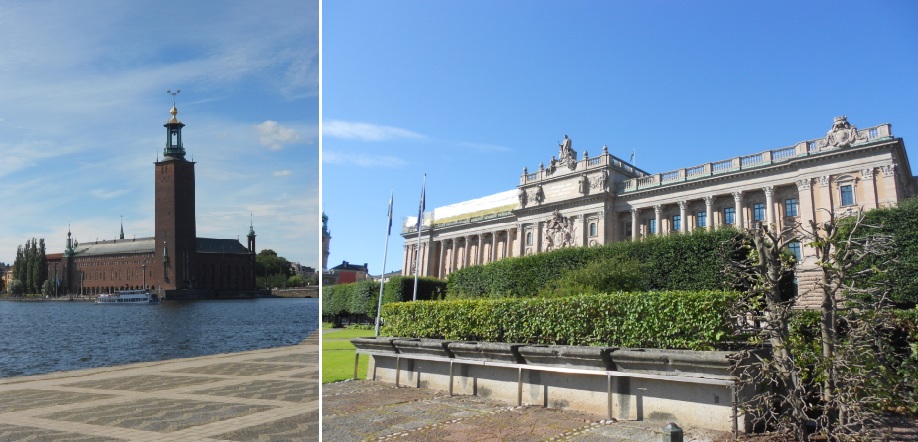
Left: Stadshuset (City Hall), Kungsholmen  Right: Riksdagshuset (Parliament Building), Gamla Stan

Bikes

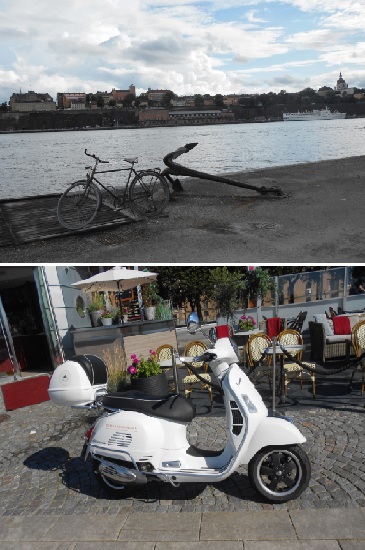
Top: From Kastellholmen  Bottom: Waterfront between Blasieholmen and Djurgarden

Boats

Left: Old boat moorings, Skeppsholmen   Right: Skeppsholmen Church and moored freighter, af Chapman – built in 1888 and serving as a youth hostel since 1949

Rooftops

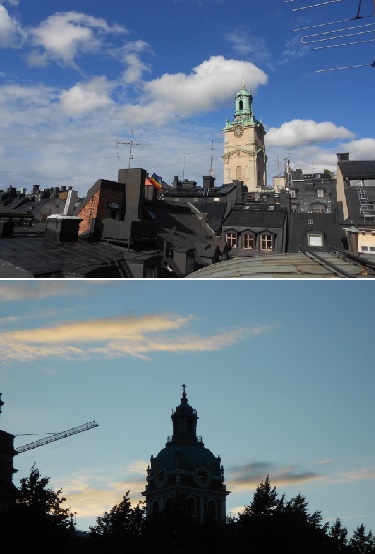
Top: View of Stokyrkan (Stockholm Cathedral) from the rooftop deck at the Lord Nelson Hotel, Gamla Stan   Bottom: Adolf Fredik Kyrka, Norrmalm

Streets

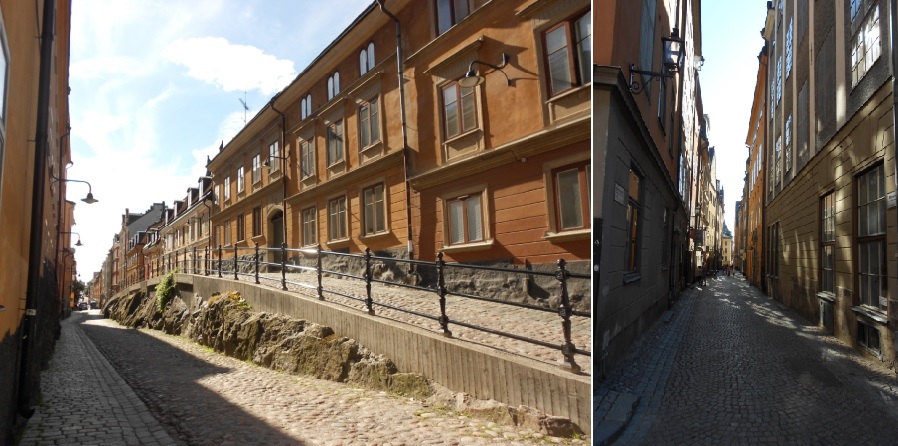
Left: Hilly streets in Sodermalm   Right: Dappled lanes in Gamla Stan

Colour

Left: View of Riksbron from Norrbro   Right: Jacobs Kyrka, consecrated in 1643, Norrmalm

View from Sodermalm

View of Gamla Stan from Monteliusvagen, Sodermalm

4 days in Stockholm: Celebrating me

Earlier this month, I spent 4 days welcoming a new city to the Gidday repertoire, Stockholm. It was also my birthday so you could say that my Stockholm city break was essentially a big fat Happy Birthday to me.  And after my arrival and check-in in the heart of Stockholm’s Old Town (Gamla Stan) and some wandering and a canal cruise to get my bearings the afternoon prior, said birthday dawned bright and sunny and the delights of Djurgarden were beckoning.

After an invigorating 40 minute stroll from Gamla Stan along the water’s edge, my first official stop was the Vasa Museum. Everyone I mentioned my upcoming trip to recommended this and so at 10am on a Saturday, I joined the unexpectedly short queue and walked into the museum to see this…

Vasa 3 (640x480)

Yes, it’s so big I could not fit it all into the camera frame. I had another go later with my phone…

Vasa 1 (640x360)

The good ship Vasa is a warship that was built in the 1600s. It was the largest ship ever built at the time, able to carry 64 cannons (over 2 decks) and 450 people, and was commissioned by King Gustav II Adolf to bolster his aggressive campaign to bring the Baltic region to Sweden’s heel. If this was not through force then the sheer awe/terror inspired by the Vasa’s size and splendor was intended to intimidate his enemies into submission. The ship set sail from Stockholm Harbour on 10th August 1628…and capsized just off the southern tip of Djurgarden, a voyage of about 1300m.

Just to put this into perspective, I swim further than that – 1600m – each ‘dip‘.

Our animated guide Stefano explained it all very clearly. While the ship had been built to be taller (and more intimidating) than any before, its width had remained the same and when combined with 2 levels of open and fully loaded gun ports, all it took was a ‘puff’ of wind to send it toppling over. This is the view of the stern looking up from the water line – yes the water line, not from the bottom of the ship – I couldn’t fit all of that in.

Vasa 2 (360x640)

So Sweden’s most glorious and expensive PR campaign of the age sat at the bottom of Stockholm Harbour for more than 330 years before its rediscovery (in 1956), salvage and conservation. The museum was opened in 1990, less than a nautical mile from the site of the disaster.

This museum is definitely one of my Stockholm highlights. There’s loads to see and do from the numerous viewing platform levels around the reconstructed Vasa itself (98% original), videos of the salvage and conservation as well as free guided tours and visits to the recreated gun deck and showcases of items retrieved during the salvage operation. It was also my first decent wi-fi access since my arrival so whilst watching the salvage film in the auditorium, my phone was inundated with a veritable deluge of lovely birthday wishes (and thanks to those of you who sent them).

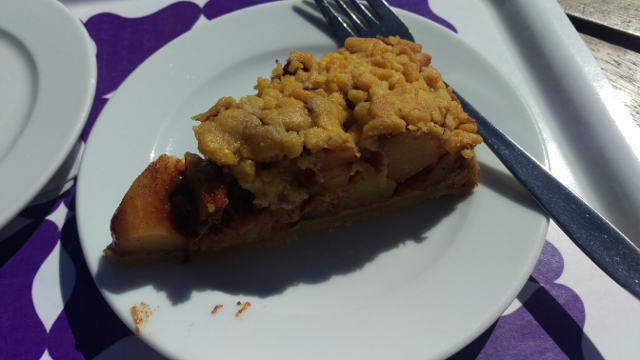
After 2 and a half hours, I emerged into the warm sunshine to meander a little further along Djurgarden’s main drag in search of sustenance (including some pretty delicious Swedish apple cake)…

Cake (640x360)

…and a blast from my past: Benny, BjornFrida and Agnetha – ABBA!

ABBA montage

You could make The ABBA Museum quite an interactive experience if you like that sort of thing. You can record yourself belting out an ABBA tune in the sound booth or make your own music video. You can even sit in the ABBA Arrival helicopter  or perform on the ABBA stage alongside Benny, Frida, Bjorn and Agnetha.

For the record, this wasn’t what what I was up for. Instead I spent a couple of nostalgic hours here, listening to the myriad of interviews with the band themselves and to all of the songs I sang along to as a child (as well as the questionable-sounding results of a couple of young fans in the non-sound-proof sound booth). It was great fun and really fantastic to see the important part that ABBA’s Australian record label, RCA, played in building their fan base and huge success Down Under.

With a few more hours of daylight still ahead of me, I decided to venture a little further along the road to visit Skansen.

Skansen montage

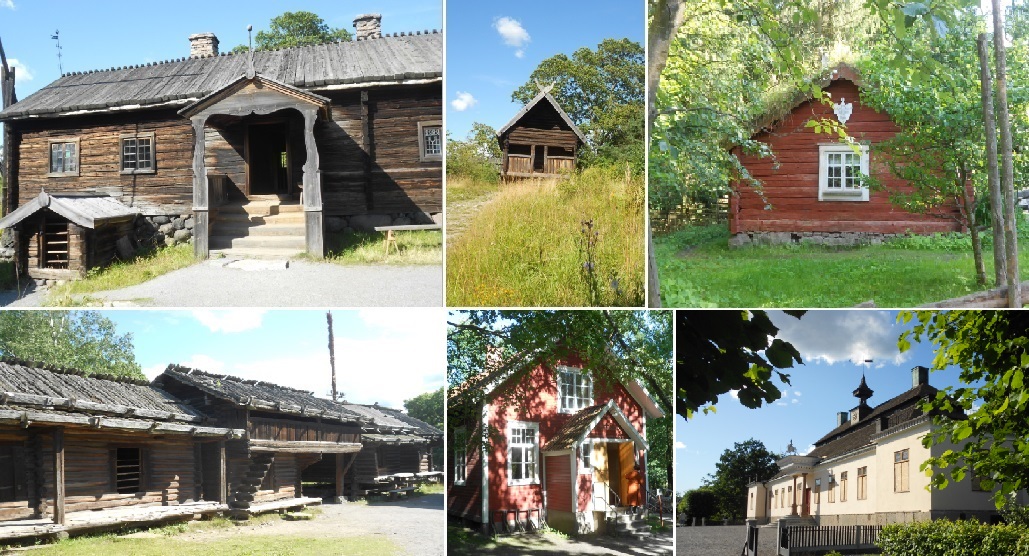
Skansen is in open-air museum and zoo that has been in operation since 1891. It combines history – 150 buildings from different eras from all over Sweden have been re-assembled here…

Skansen Buildings montage

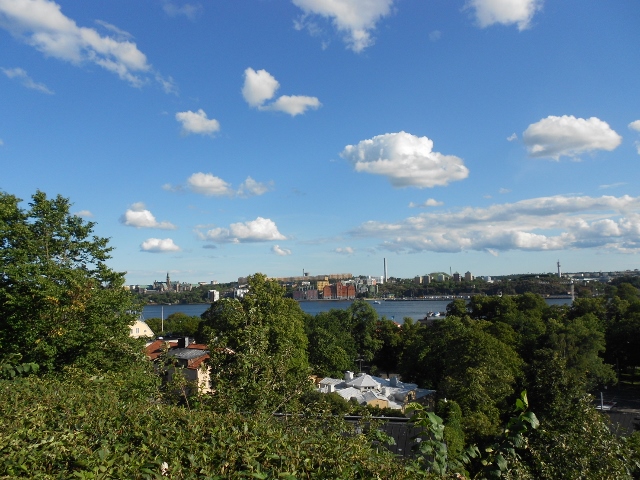
…with fantastic views…

Skansen view 1 (640x480)

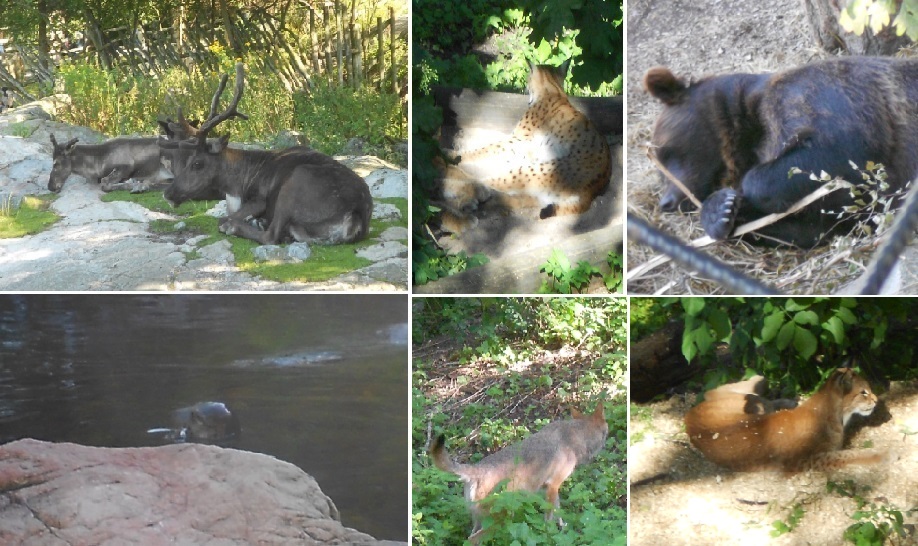
…and an opportunity to play ‘Spot the [insert relevant animal]’…

Skansen animal montage

After a few hours of wandering around Skansen’s 75 acres and a celebratory ice- cream (after all, it was my birthday) it was time to head back to the hotel and put my feet up for an hour or two before heading out again for dinner.

Bistro Pastis, a tiny French affair, is tucked away on a cobbled street running down from Stortorget in Gamla Stan and in spite of it being a busy Saturday night, I managed to nab a table outside. The food was absolutely delicious – a warm beetroot and goats cheese salad followed by a fillet of shark (my first) in a champagne sauce – and all washed down with a divine glass of bordeaux. And as the Swedish twilight stretched well into the evening, spending a relaxed dinner enjoying both the view and the gentle flirting from my lovely waiter was the perfect way to end a day designed to mark the beginning of yet another year.

Happy birthday to me and may the year ahead be filled with many more moments like this!

—————————————————-

Entry fees (in case you are interested!)

Vasa Museum – 130 SEK

ABBA Museum – 255 SEK

Skansen – 170 SEK

And 2 courses, wine and coffee at Bistro Pastis came to 389 SEK. This was after the 25% discount my waiter offered because ‘he was so busy and I had to keep waiting’ (And he didn’t even know it was my birthday!) This girl’s still got it….

Victorian vista – part two

A quick recap – I went to Seattle to visit my friend, we decided to nip up to Victoria (the one in Canada) on the clipper and spent our first afternoon wandering around Butchart Gardens and eating ice-cream. We then returned to our hotel for a little rest and reconnoitre while contemplating this view…

From the Inn at Laurel Point

We had a great dinner that evening at 10 Acres Bistro, a local bar and bistro where the menu is based on what’s available from the farm, the 10 acres of the name, on the Saanich Peninsula. The portions were huge and delicious and it was just as well we had a 20 minute stagger back to the hotel to help digest it all.

But this was just the beginning.

The morning dawned, cool and blue-skied and it was time to tackle our second culinary milestone: breakfast at Blue Fox Cafe.

Blue Fox Cafe

This had consistent rave reviews wherever we looked and we were not disappointed – it was fresh and scrumptious both in the decor and the dishes. We made our way through a couple of enormous plates (almost), picked at the fattest slab of French toast we’d ever seen (smothered with gorgeous local maple syrup of course) and chatted with a local couple at the next table who had been coming to the Blue Fox for years. (We found ourselves at the effect of many conversations with locals that started with ‘oh I just love your accent’ over the two days.)

This was by far the best meal of the trip (the others were fabulous so this is high praise indeed) and I would absolutely recommend you getting yourself there – apparently it’s crazy busy on the weekend but at 10.30-ish on a Wednesday morning, we only had a ten minute wait.

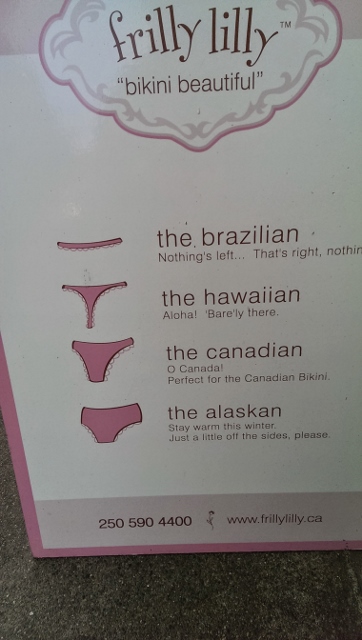
Absolutely stuffed, we headed back towards the harbour, stopping along the way to a) buy a loaf of the honey, apple and raisin bread to take home (it came with my omelette and we both fell in love with it – disappointingly we were informed that it was only made on Friday’s…sob!) and b) check out some of the local beauty services on offer.

Frilly Lily

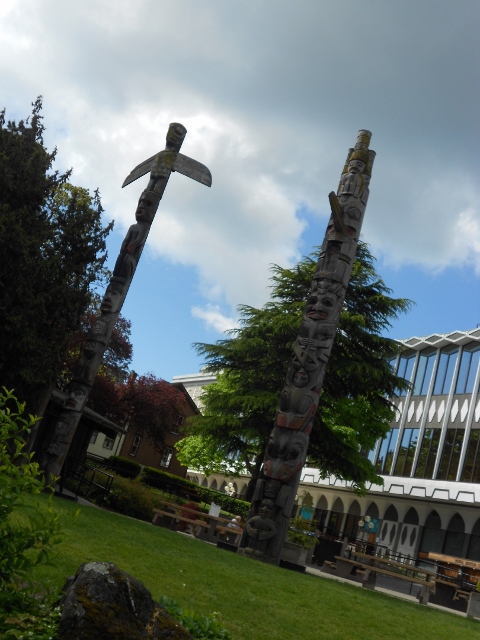
Our next stop was the Royal BC Museum (or Royal Museum of British Colombia)…

Museum of BC

…where we spent a couple of hours wandering around the myriad of exhibits on Natural History…

woolly mammoth

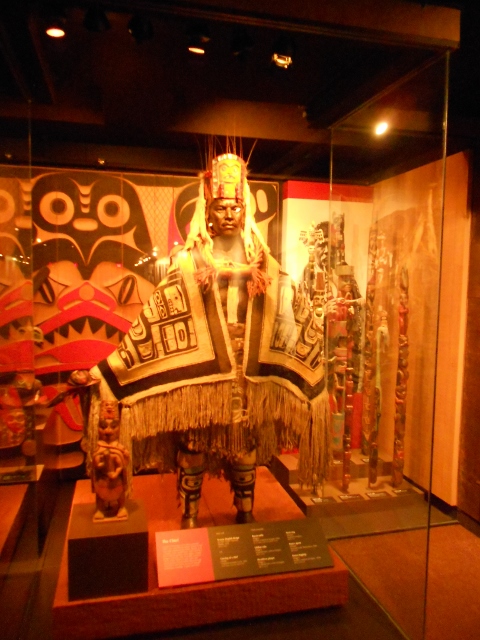
…and Human History.

Native fashion

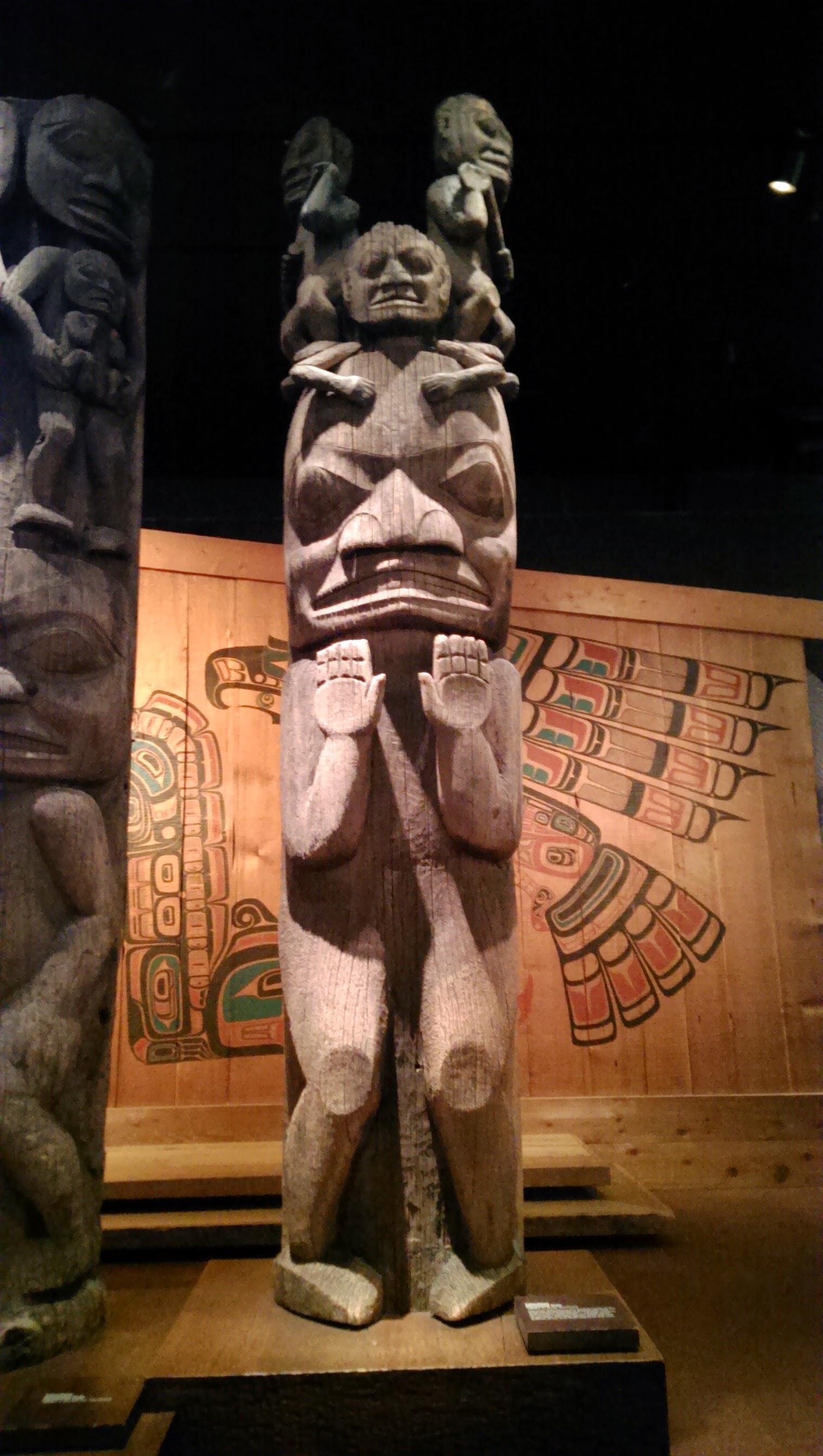
Totem

Human History

To coin a local turn of phrase, this was awesome. The exhibits were really interactive and atmospheric and it seemed that around every corner there was a new way to immerse ourselves/learn something. Since our return, a lot of people I’ve spoken to have a) admitted that they did not visit it and b) recommended the Legislature Building tour but we were both so thrilled with our visit that I haven’t yet felt that we should have spent either less time there or spent it somewhere else.

Next it was time for some general wandering to admire the sights.

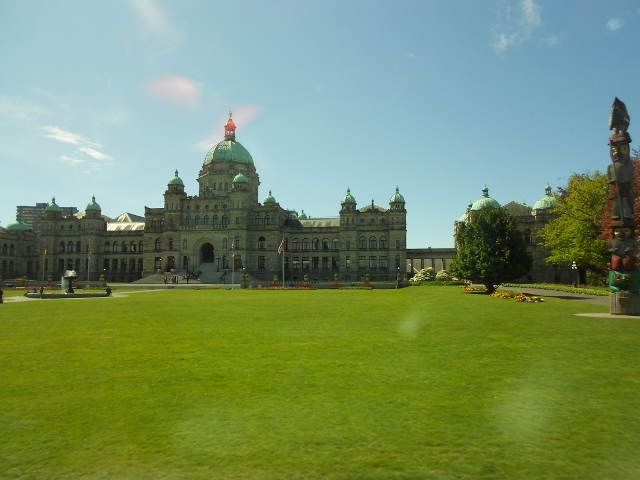
Said Legislature Building…

The Empress overlooking the harbour. The most famous hotel in Victoria and advertised purveyor of excellent afternoon teas. We did not stop as we had other foodie pursuits in our sights.

The Empress

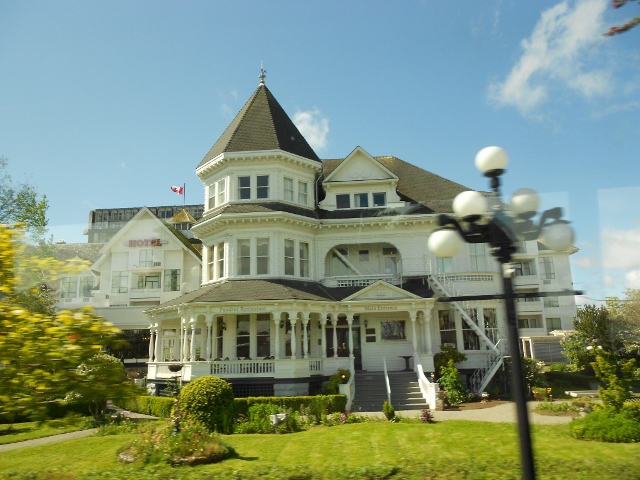
There was traditional architecture galore along the harbourside walk to our hotel – this guest house was my favourite.

Victorian architectureAlong the waterfront stands a statue of Captain James Cook – yes the same one that foundered on Endeavour Reef off the NE coast of Australia in 1770. Clearly not put off, Cook continued his explorations and in 1778, was looking for the entry to the North West Passage when he stumbled across Victoria Harbour. (This guy really got around.) It took another 65 years for the Hudson’s Bay Company to build their fort on this site in 1843.

This mini Empire State Building also stands on the waterfront but atop the Tourism Bureau…for the life of me I cannot remember its significance but the photo does confirm that we were blessed with gorgeously sunny almost-t-shirt weather.

A mini Empire State Buiding

We also indulged in a spot of shopping and added shoes, little dude apparel and for Seattle-A, a selection from local chocolatier of note, Rogers.

Chocoholics Heaven at Rogers

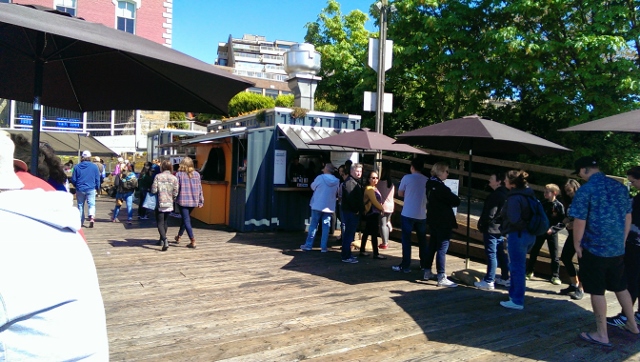
With the afternoon advancing, it was time to tackle foodie milestone number three, a spot of fish and chips at Red Fish Blue Fish (a spot of Dr Seuss always adds a little something to a day). At 3pm, the wait was about 25 minutes so Seattle-A held the line…

The lunch line at 3pm

…while yours truly snagged a couple of seats with a view.

Harbour view from lunch stop at Red Fish Blue Fish

Needless to say we made short work of things – falling-apart fish, lightly battered pickles (a Pacific North West specialty), crunchy golden chips – and washed it all down with a craft brewed ginger ale from Sparkmouth.

Post scrummy fish and chips carnage

So with our last supper under our belts, it was time to loosen things a notch, collect our bags from the hotel and head to the clipper terminal for the trip back to Seattle.

Time to go home

We had such a great time together, enjoying both the discovery of somewhere new and blazing a culinary trail together and in pulling together these two trip posts, I was reminded – somewhat appropriately – of this quote from Seuss’ One Fish Two Fish Red Fish Blue Fish which seemed to sum up our northern adventure…

Dr Seuss Today was fun.And that, my friends, was that!

————————————————————-

Helpful website if you are visiting:  http://www.tourismvictoria.com/

Things to do/restaurant sections were great reference points for us. That it all links through to Tripadvisor also means that you can see what people really thought and it was the Tripadvisor rating that drove us to choose the Royal BC Museum over everything else.