The Dark Side…

I’ve recently been to Krakow (regular Gidday-ers will already know this) and as I wandered its streets and gazed around the old town square, I thought how like Prague it felt. Right down to the bugler playing his doleful tune to all points of the compass from the tower of St Mary’s Basilica each hour.

And yet there’s something different about Krakow, a darker undertone.

In planning my trip, I had pre-booked a visit to Auschwitz-Birkenau (more on that in another post). But Krakow was invaded by the Nazis on the 1st September 1939 and remained occupied for almost the entire period of the second world war so I wanted to understand how things were closer to ‘home’. And this needed going a little further afield so on Friday morning I headed south along the banks of the Vistula River for a day exploring Podgorze and Kazimierz.
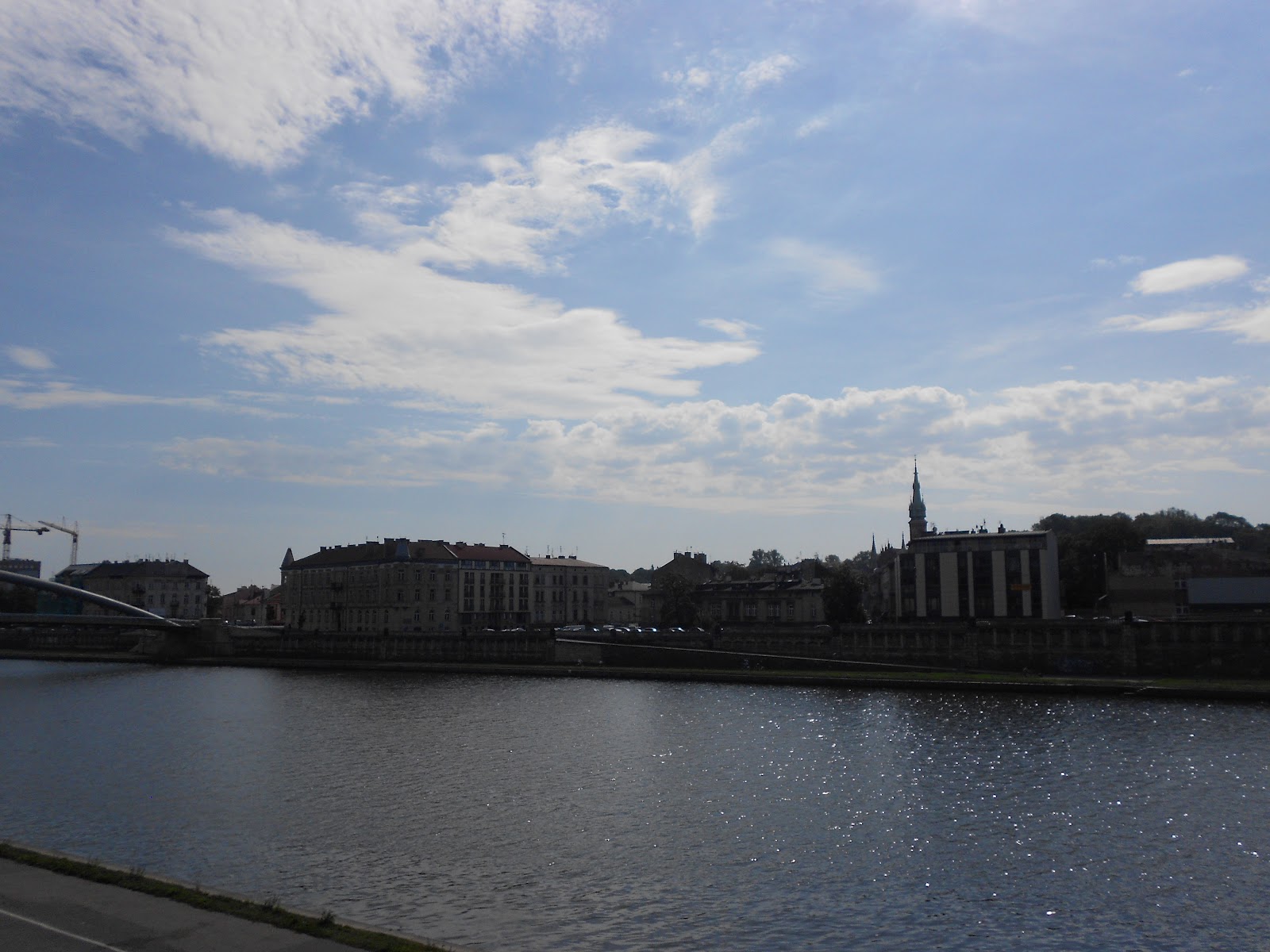
View of Podgorze across the Vistula River from Kazimierz

Let’s get one thing straight. I am not well-versed in Jewish culture and history, despite having lived in Jewish areas both in Melbourne and now here in North London. (Just to clarify – I am not Jewish.) And I don’t have a particular interest in it so I was not planning a day of traipsing through synagogues. But the Jewish population of Krakow decreased from 65,000 before the war to only 200 today and I find it extraordinary that one of our ‘species’, if you will, could become so endangered.

Podgorze was where my walk was to begin. This was where some 15,000 Jews were herded from Kazimierz across the river to live within the walls and gates of their ghetto home before being deported to concentration camps, the closest being Plaszow, a labour camp built in 1942 and then converted in 1944. I wandered through the busy streets of this now everyday suburb of Krakow, past the piece of ghetto wall, tucked between modern structures along a main road, and into Plac Bohaterow Getta with its rows of empty chairs, a tribute to the thousands of Jews who left their worldly goods behind and boarded trains there.

Part of the old ghetto wall still stands in Podgorze
Plac Zgody, which stood in the centre of the ghetto, has been renamed Plac Bohaterow Getta as a monument to’ the heroes of the ghetto’

The enamel factory of Oskar Schindler is not far from here and just a short walk across the train line brought me to 4 Lipowa Street.


The factory houses an extraordinary permanent exhibition, Krakow Under Nazi Occupation 1939-1945, which gives a fantastic insight into this short but defining period in Krakow’s history. There are lots and lots of details throughout the 28 exhibits and in some parts, it was a bit too much to digest. Nevertheless, I spent just over two hours here – there is a ‘ghetto walk’ and a fascinating display detailing the occurrences in the city in the days  right before and then during Nazi Germany’s entry into the city. If any of you are wondering about the must sees in Krakow, this should definitely be on your list.

Two moments in Krakow’s history illuminated by the sun.
(Under the rail line between Plac Bohaterow Getta and Lipowa Street) 

I began my slow and thoughtful walk back to Plac Bohaterow Getta and a short tram ride across the river, I found myself in Kazimierz, ready for a spot of lunch and a meander through this vibrant neighbourhood. There’s a different feel here – it’s industrious and dotted with craft and artists’ shops. Only two corners of the market on Plac Nowy were in operation as I walked through and I can imagine that the flea market on Saturday must have the whole square thrumming with activity. Alas, I was a day early and booked for my excursion to Auschwitz the following day.
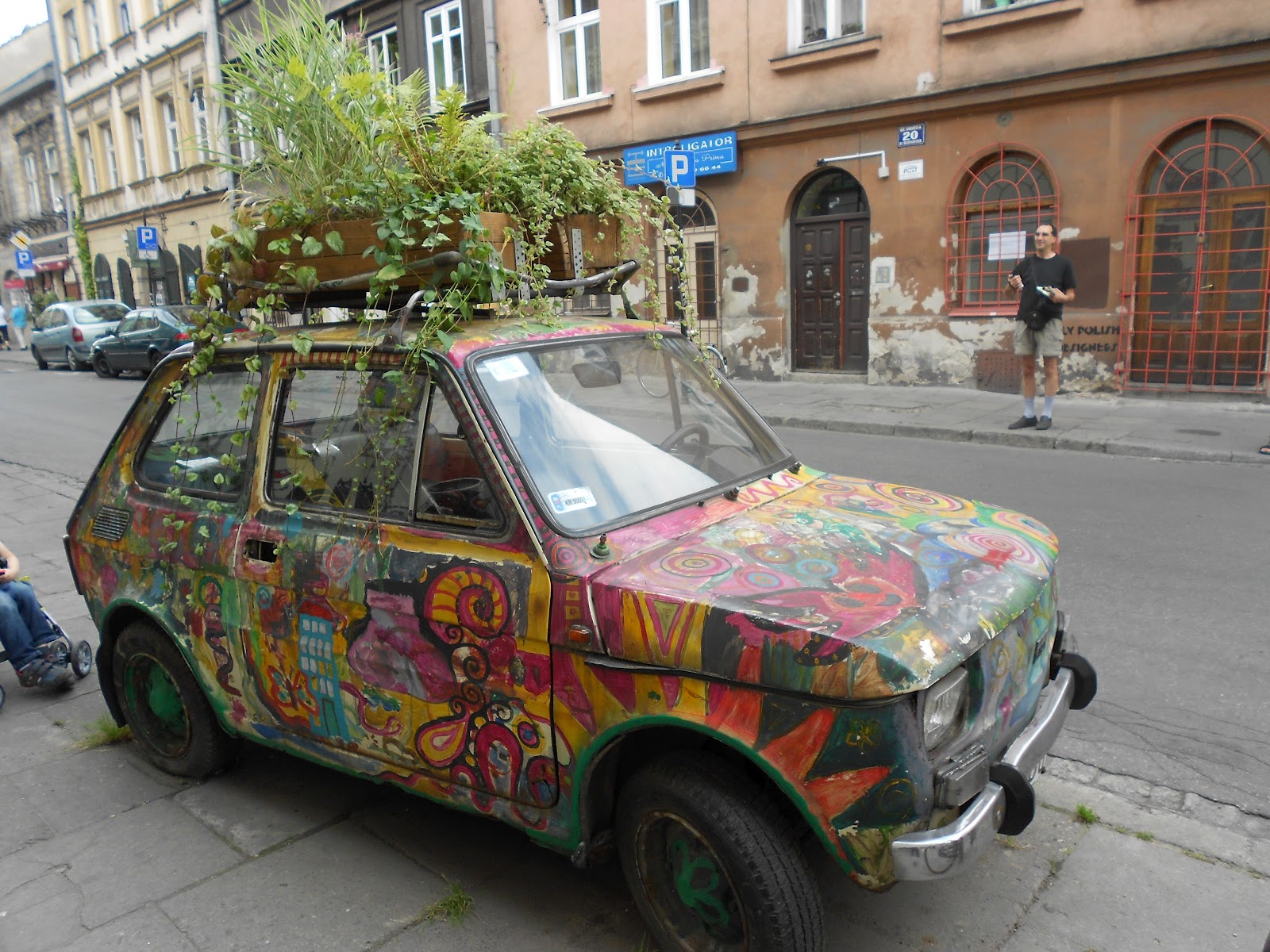
Artistic expression reigns supreme in Kazimierz

I found a spot for a late lunch. My experience of Polish food so far had been wholesome and tasty and in huge portions – Miodowe Smaki (or A Taste Of Honey) was no different – and I settled in for a while to reflect on my day.

I don’t think a visit to Krakow can really be complete without an ackowledgement, amidst the music and medieval splendor of this wonderful city, of this particular piece of its history – in essence a reflection of our own darkest hours as a human race. A history, not only recent, but one littered with horror, tragedy and shame.

My trip through Jewish Krakow had left me filled with something that even now I can’t put into words. Sombre, respectful certainly, not quite sad but there was a sense of melancholy that stayed with me for several hours afterwards (and re-emerges as I type this). It felt like this day had given a depth to my Krakow experience that I hadn’t expected. I felt like I had some sense of a people who had lived their lives in hope and peace and, in an horrific injustice, met their end at the hands of their fellow man.

And in that, I felt a little more prepared for my visit to Auschwitz-Birkenau the following day to confront the end of their story. 

——————————————–
Other posts in the Krakow series:
It Starts With The Locals
Lightly Salted
A Monstrous Vision
Eat, Sleep And Be Merry

Lightly Salted…

Poland, and particularly Krakow, is known for its historic and tragic role in Hitler’s persecution of the Jews during World War II. But what it is not so well known is its connection with something that we still use everyday…salt.

Wieliczka Salt Mine (it’s pronounced Veil-ich-ska – I had to work surprisingly hard for a couple of hours to get that right!) is about a 20 minute drive from Krakow and has been a UNESCO World Heritage site for more than 30 years.

But a little over 3 hours is all you need to get up close and personal condiment-wise.

Old miners steps about 100m below the surface

Used for the preservation of food prior to the invention of refrigeration, salt was one of the lynchpins of the Polish economy. Salt was once valued more highly than gold and the workers at the mine itself were so highly regarded that they were actually paid with it. (The word salary, comes from the Latin sal, the word for salt.)


White ‘gold’

The visit all starts with taking some steps – many many many of them (380 in fact) – down to level 1 of the mine 90m below the surface and ends 2 hours later a further 45m deeper (that’s 135m for those of you that have well and truly run out of fingers!)

In between, we walked the rock salt corridors, gaping at each new cavern, wondering at the bravery of those that worked here and breathing in the salty air. Rubbing my fingers along the walls gave me a quite literal taste of the origins of the condiment that will eventually end up on the dinner table.


Wood (rather than metal) is used everywhere to support the corridors and caverns providing a safe place or all comers

Throughout there are extraordinary natural monuments alongside man’s efforts to carve and shape the dark grey stone: tributes to Poland’s visionary forefathers (from Copernicus to Pope John Paul II) as well as its legends (St Kinga) and superstitions (the Treasure Keeper). And to top it all off each breath is therapeutic, the salt-laden environment being ideal for the treatment of asthma and other respiratory conditions. (There is actually an underground health spa for these treatments if one is so inclined to revisit.)


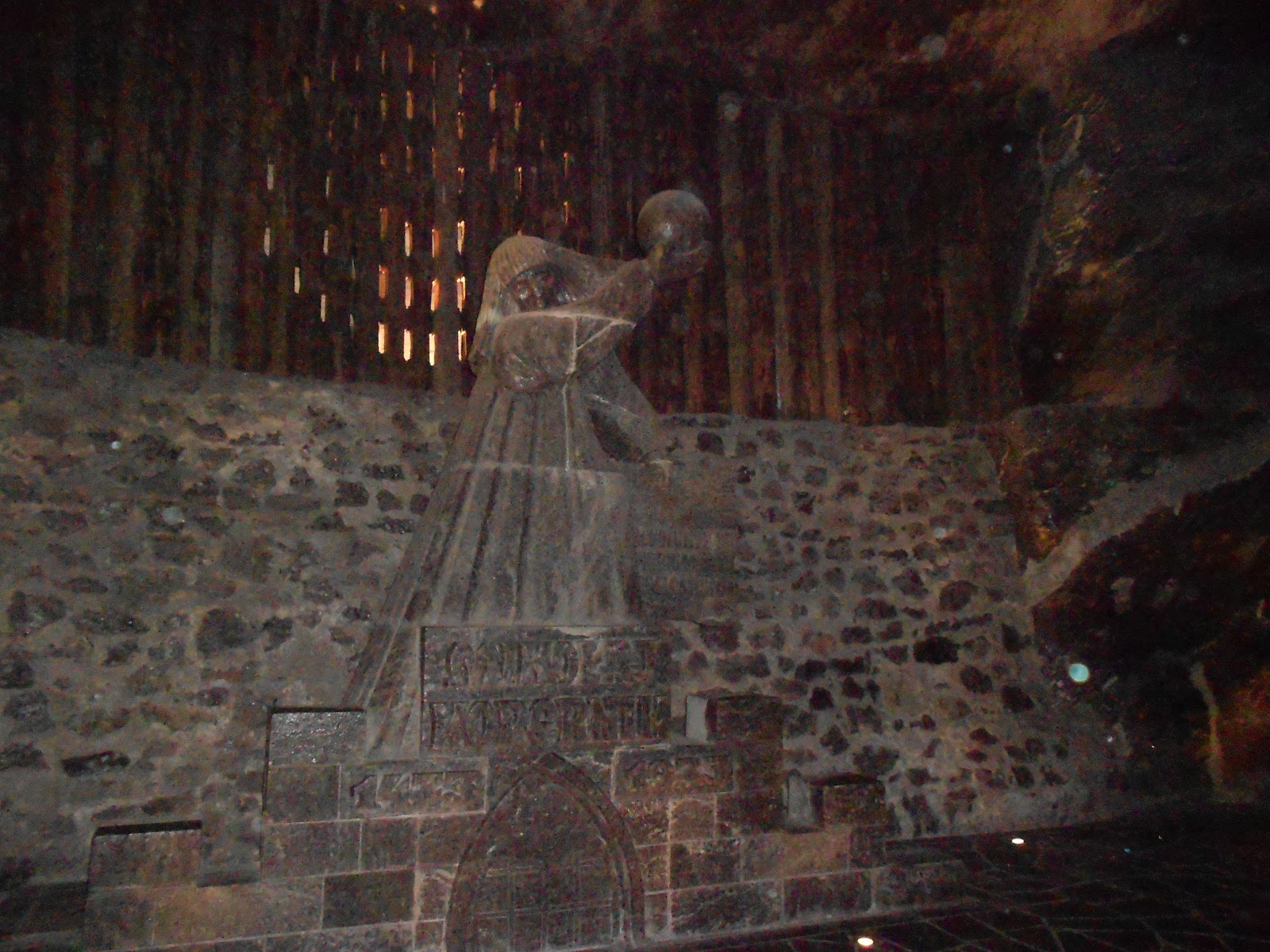
Copernicus preserved – in salt – for all eternity

Wieliczka Salt Mine has been operational for over 700 years – although commercial salt mining stopped in the 1990s, salt is still extracted from the water that dampens ceilings and walls and fills numerous underground lakes.

This underground lake is overseen by the Treasure Keeper from his alcove. Smile at him and you will be lucky, so the saying goes. (Do you think it’s a bit like going to a singles bar?)

It’s a relatively easy 2km walk through the mine with many stops to look at the various points of interest with a local guide. There are toilets and a couple of shopping opportunities along the way so one can stock up on sugar-laden snacks, caffeine fixes or a souvenir or two…and take care of the ‘essentials’. There’s also a museum on site – but the 2 hours was just the right amount of salt for this Aussie palate.

My recommendation would be to join a group tour (I was with Cracow Tours) which means avoiding all the hassle of getting yourself there and back and queue-ing up in between. My group didn’t allow time for anything other than the mine tour but you can go on your own and join a group there if you prefer to allow a little more time for other exploration.

And last but not least, you’ll be pleased to know that the return to the surface is via a fast mining lift, with 8 of your fellow men, women and children, which takes no more than a few minutes, feeling the cool salty air in your hair and on your face as you ascend back to the main entrance building.


And it’s just as well. 380 steps upwards might have proved a few steps too far!

————————————
Other posts in the Krakow series:
It Starts With The Locals
The Dark Side
A Monstrous Vision
Eat, Sleep And Be Merry

It Starts With The Locals…

As you know from my last post, I’ve just spent the last 4 days exploring the wonderful city of Krakow

As usual, I’ll be writing a few posts around my visit and down the track (once I’ve written them, that is), you’ll be able to find them by typing Krakow or Armchair Tours into the search box on Gidday’s The Good Stuff page (where it says More Fossicking? on the left hand side).

But in tribute to the friendliness of Krakow’s natives, for me today’s post must start with the locals…
 

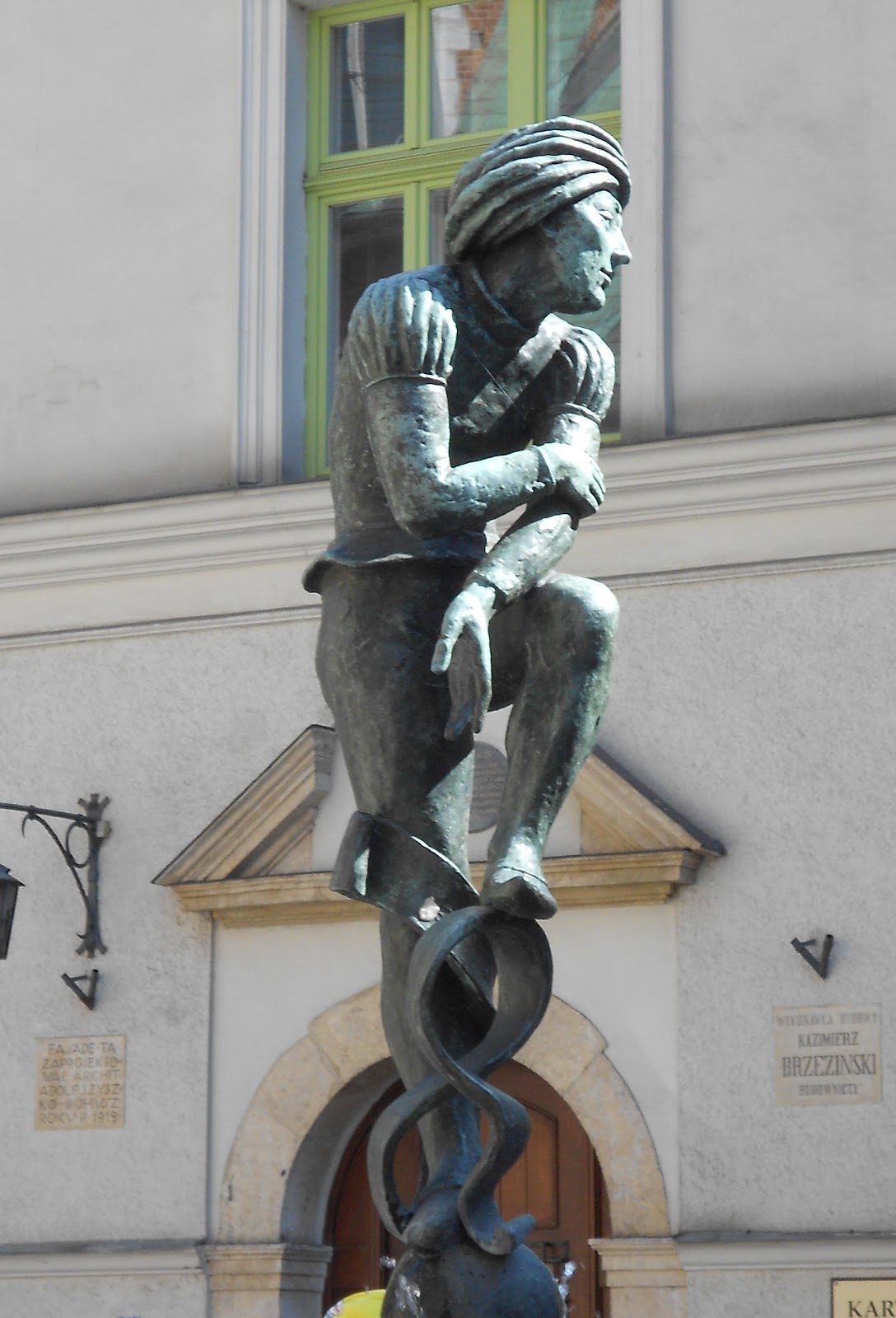
This local next to Bazylika Mariacki (St Mary’s Basilica) was keeping his eyes peeled for likely comers
As I meandered through the Old Town Square (Rynek Glowny) on Day 1 of 4, I was struck by the ‘long and short’ of this negotiation…
…but it seemed that this young fella managed to seal the deal.
As I crossed the square I saw a sign from afar…

…and nearby I found a king-like soul keeping vigil at St Mary’s Basilica.
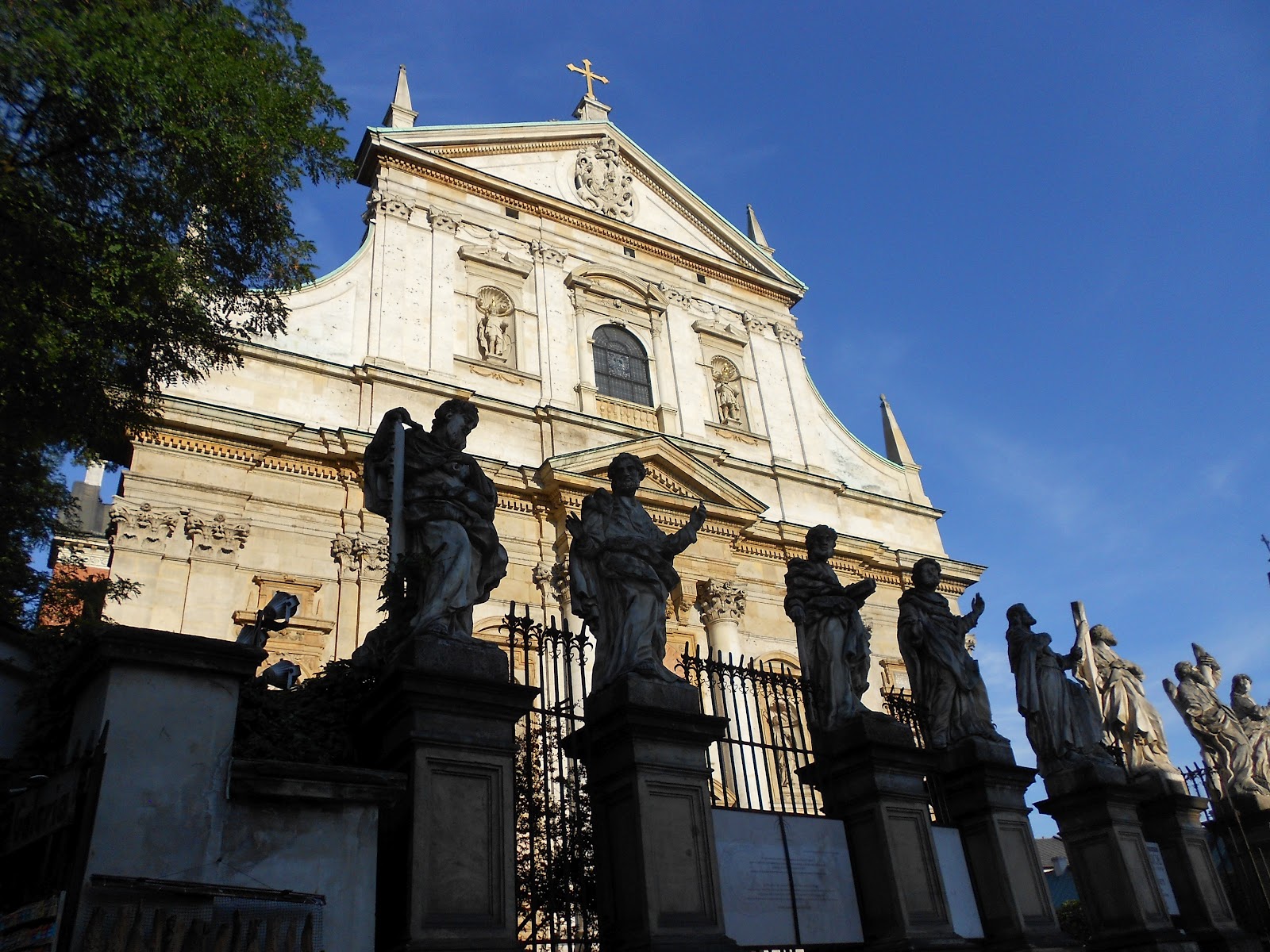
A whole host bade me welcome at St Peter and Pauls Church
( I saw a fantastic chamber music ensemble here on my first night
 – both the music and the venue were breathtaking)
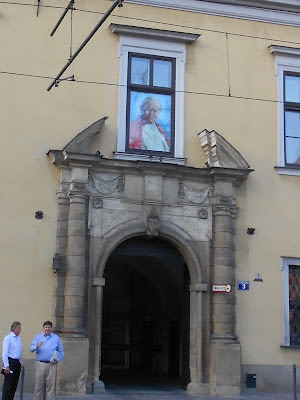
And I couldn’t leave without taking a pic of The Papal Window for Mum (who behaved like the biggest groupie I’d ever seen when we saw the man himself at St Peter’s in 2000).
Pope John Paul II made several public addresses to the people of Krakow from this window. Not only was he Archbishop of Krakow before becoming pope but did you know that he also lived through Krakow’s occupation during World War II?
Clearly opinions still run high. This ‘grafitti’ in the old Jewish Quarter of Podgorze makes a poignant point. The mass deportation of Jews in the 1940s means that an estimated 200 Jews remain in Krakow – from 65,000 pre-WWII (according to my Lonely Planet Krakow Encounter Guide).
The Legend of St Kinga (you can read it for youself by clicking on the link) – a story carved in salt at Wieliczka Salt Mine
                     
Retailing creativity extends into jewellery, ornaments, foodstuffs…
 
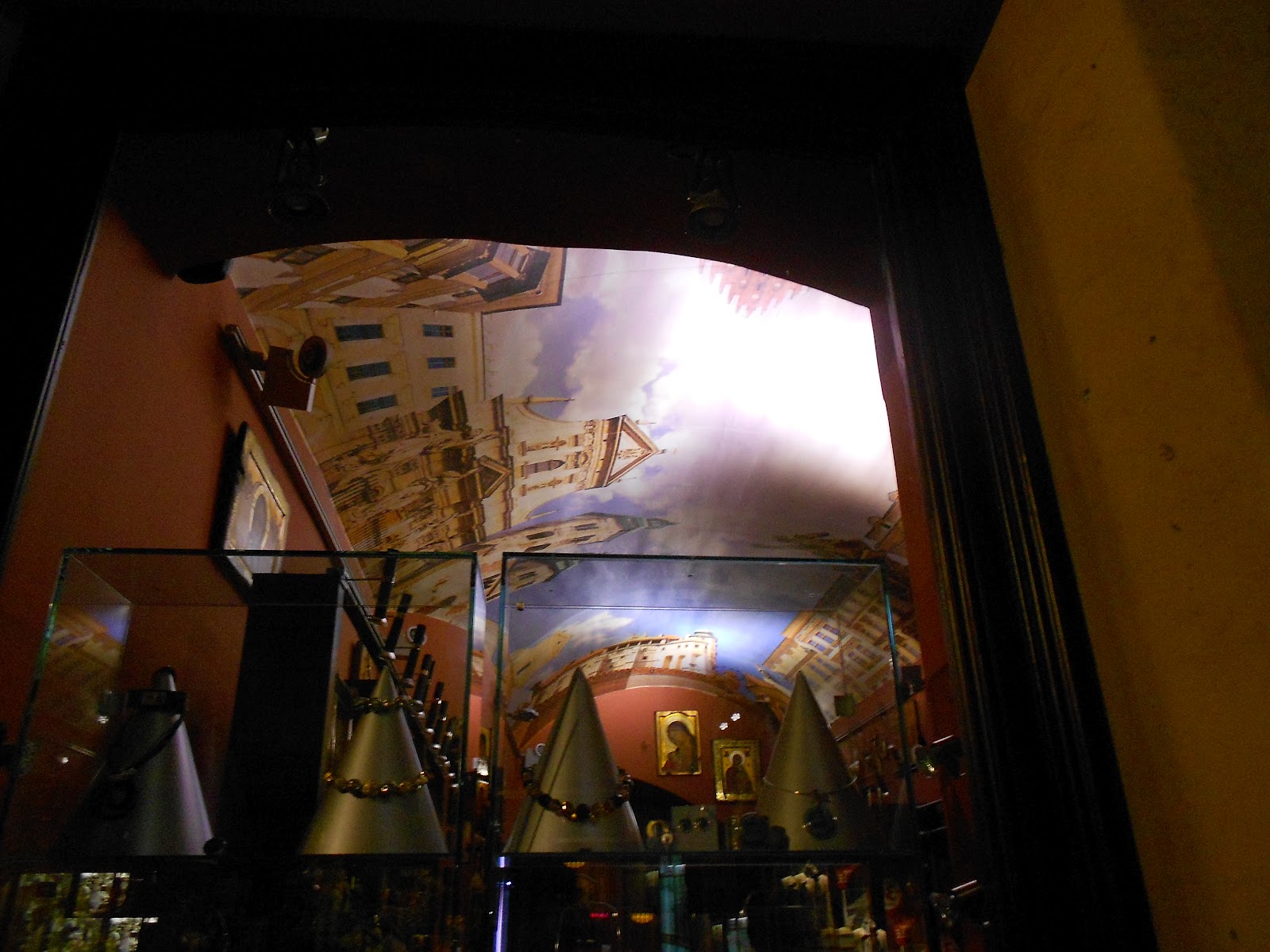
…and ceilings. Yes, that is a painted ceiling in this shop, obviously no longer the singular province of the churches here in Krakow.
In spite of my limited Polish (read none), this sign seemed to suggest that I could find a spot of liquid refreshment at this establishment
But if in doubt, I knew where I could find an off-licence…
…as it seems did Winnie the Pooh.
(Seems he translates in any language!)

Rest assured that this merely skims the surface of the fascinating and historic city – remember to keep your eyes peeled for more on Krakow soon…

——————————————
Other posts in the Krakow series…
Lightly Salted
The Dark Side
A Monstrous Vision
Eat, Sleep And Be Merry


Going global

Here we are at the last bank holiday in the UK before Christmas and I am ensconced at Gidday HQ catching up on a whole lot of the must dos after a few days of fun to-dos (and not a small amount of alcohol). The washing machine is whirring in the background, the ironing pile is lurking within eye-shot – which I must address one way or the other (i.e. iron or put away in the cupboard) – the UKHot40 is playing on the telly and my water bottle is within reach.

So let’s start with Saturday: a day of short sunny bursts and bouts of torrential rain under a largely grey sky. And an evening of cocktails and mighty fine cuisine as four work friends painted the heart of London’s Soho multicultural – at a Peruvian restaurant. This is what happens when a Turk, a German, a Frenchwoman and an Aussie, all obsessed with food, get their heads together for a girl’s night out.

After a flurry of emails late on Saturday afternoon, a plan was hatched and a few hours later, four happy expat ladies were sitting at the bar in Ceviche, watching the intermittent drizzle against the window with cocktails in hand. Ceviche is new to the London restaurant scene, having only opened in February this year, and has had some terrific reviews (including one by yours truly over on Weekend Notes after our super Saturday soiree). I won’t repeat here what you’ll find elsewhere – suffice to say we left four very happy ladies. And it wasn’t just the cocktails.

Sunday morning dawned and after a kick-start of croissants, coffee and copious amounts of water – how is it that so much drinking can be so dehydrating – I was off again, this time to the Edinboro’ Castle in Camden for a farewell do.

You see, in just under two weeks time, A-used-to-be-down-the-hill will become Seattle-A. Yes, she and hubster are moving state-side to the land of the free, the home of the brave and city of highest rate of sunglasses purchases per capita in the US. They’ve bought a fabulous new pad, booked the movers and are starting their own round robin of goodbyes to old London town.

And yesterday, under the canopy of trees in the sun-dappled beer garden at the Edinboro’ Castle, was a gathering of their wonderful circle of friends. Almost ten hours of repartee and reminiscing, of howls of laughter and a little just-between-friends political incorrectness, of re-connecting and fond farewells, to wish them well in this next exciting chapter…and to book our respective berths at Palazzo Seattle.

So this weekend has been a poignant reminder of the power of my expat friendships, both old and new, and the importance of trusting my instincts in reaching out amongst the myriad of connections I make each day, week, month, year.

Saturday night heralded the start of a ‘four girls from four nations’ friendship.

And while my own personal farewell with A is still to come, Sunday was a celebration of a friendship that began just two weeks into my expat journey. That’s more than eight years of life in the UK together. Opening the pages of this next chapter in our friendship has me feeling a little sad, but excited about the possibilities that will follow for both of us.

You see we, my friends, are going global.

A Travelling Penn…

Just a couple of weeks ago I fell across the blog of an old friend.

Actually I should clarify: she’s not old. For matter neither am I. And I’m sticking to that.

Tanya and I worked together in a turbulent time of tea, tuna and tomatoes a couple of years before I left Australia. While I’ve been making hay my way here in Ol’ Blighty, she upped sticks and taught English in Korea for a while without having any local lingo under her belt (among other things). You could say she’s a baptism by fire kind of girl.

(I confess I can’t remember which bit of Korea peeps. Apologies. Tan, you’ll just have to do a proper guest post on Gidday *wink*)

Anyway, it’s called travellingpenn.

Tanya has started her blog to record her experiences as she undergoes her transformation into a emergency communicator for World Vision. We are only seven posts into the journey so far so it’s the perfect time to get in, so to speak, at the grass roots.

Her writing is warm and lovely, the tone ranges from self-deprecating to poignant (yes already – in seven posts!) And let’s face it, her job, facing one of the world’s greatest humanitarian issues – child poverty – puts her in a unique position to share, to make a difference and to enrich the lives of those with whom she has the enormous privilege to come into contact with.

As I said, she’s only seven posts in and it promises to be an extraordinary journey.

I hope you’ll share it too.

Holy Homage…

This is post number two about my recent sojourn to Barcelona with fellow emergency handbag-ger, A. And I made a promise. 

The promise was to inspire you with a post about Antoni Gaudi’s La Sagrada Familia, Barcelona’s premier tourist destination and testament to the vision of one of the city’s greatest sons.

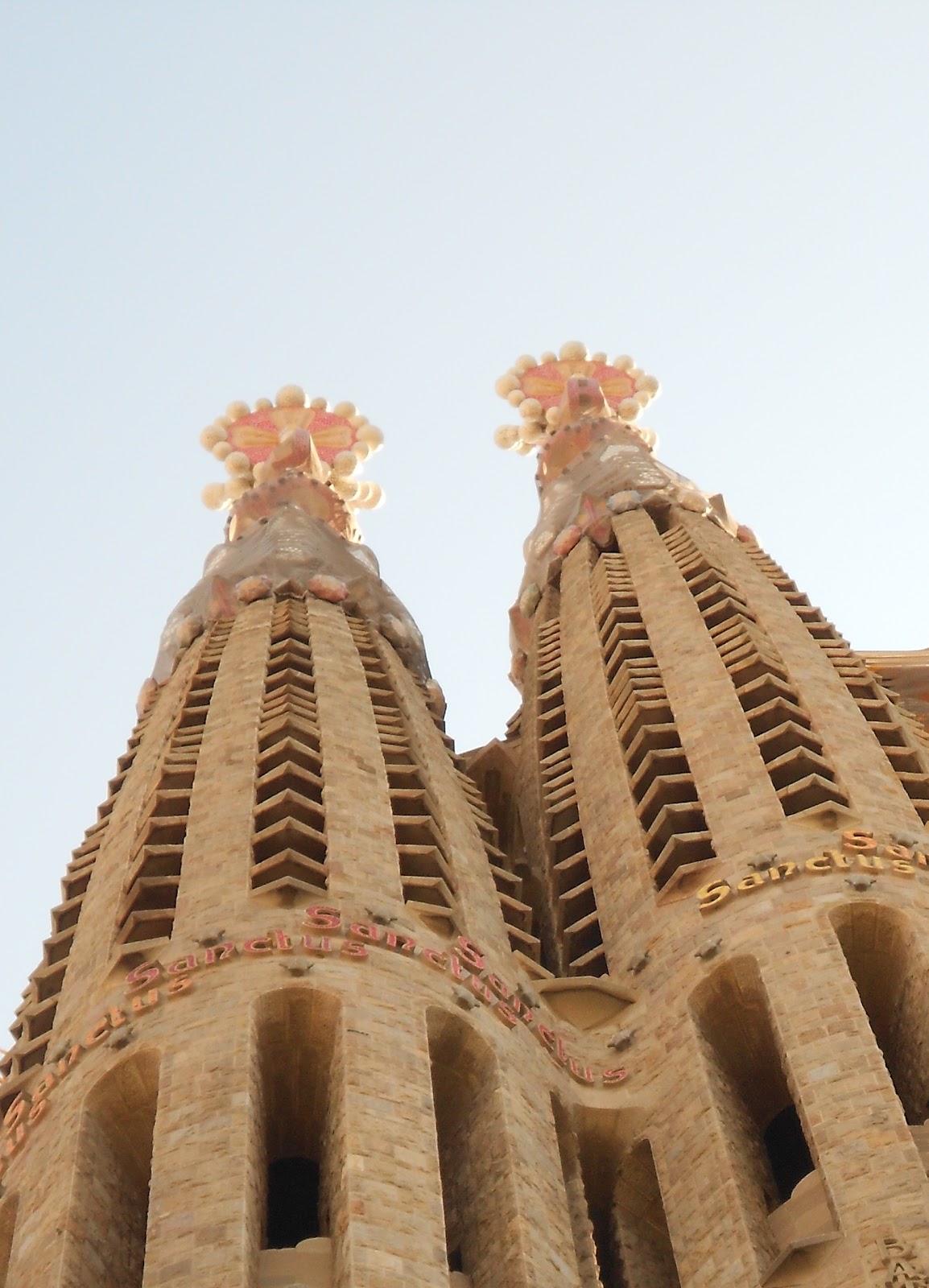
The spires of La Sagrada Familia

But now it seems like a really big promise and it’s ended up presenting something of a dilemma for me. Here’s why.

Before I went, I wasn’t really sure I would like it. The whole thing looked crude and indulgent in most of the pictures I’d seen and having visited a cathedral or several in my time, I doubted that anything could really blow me away on the church front. But like all great tourist attractions, you can’t visit a city without at least paying homage to what it deems to be the absolute best of itself.

After lining up for half an hour on Saturday morning, we finally entered at around 10am. And I was blown away…but largely by what I didn’t expect to see.

So I’m wondering whether my sharing here may actually spoil it for any of you inspired to visit for the first time. But a promise is a promise and in the interests of keeping my word, I will do my best to walk the fine line between providing you with a little inspiration and giving the complete game away. I will leave it for you to decide whether you want to stop here/look away now.

First things first. La Sagrada Familia stands in the heart of Barcelona just a 15 minute stroll away from the bustling shopping district of Passeig de Gracia (and not far from our top tapas tip from last post, Bar Mut). It is still a work in progress, begun by Gaudi in 1883 and designated for completion in 2026, a century after his death. (Anticipating that the project would outlast him, Gaudi spent the last 12 years of his life developing the plans so that work on his vision could continue after his death.)

The main entrance is via the Passion facade, which is on the opposite side of the cathedral from the Metro station and which is considerably less photographed than its famous counterpart, the Nativity facade. Make sure you get the audioguide before you start – I know they can be a bit naff but the extra few euros is really worth spending here. And finally, all of the advice says to get here early to beat the queues – also I expect to avoid standing in the fierce heat. We had a 30 minute wait – be patient, good things are to come, as the saying goes.

The ‘tour’ starts with the Passion facade, which traces the story of Christ’s judgement, crucifixion and resurrection, before inviting you to move under the wide arches of the portico and enter the cool sanctuary of the church itself.

The story of Christ’s crucifixion plays out across the Passion facade.
And this is where I gasped out loud – it literally took my breath away.
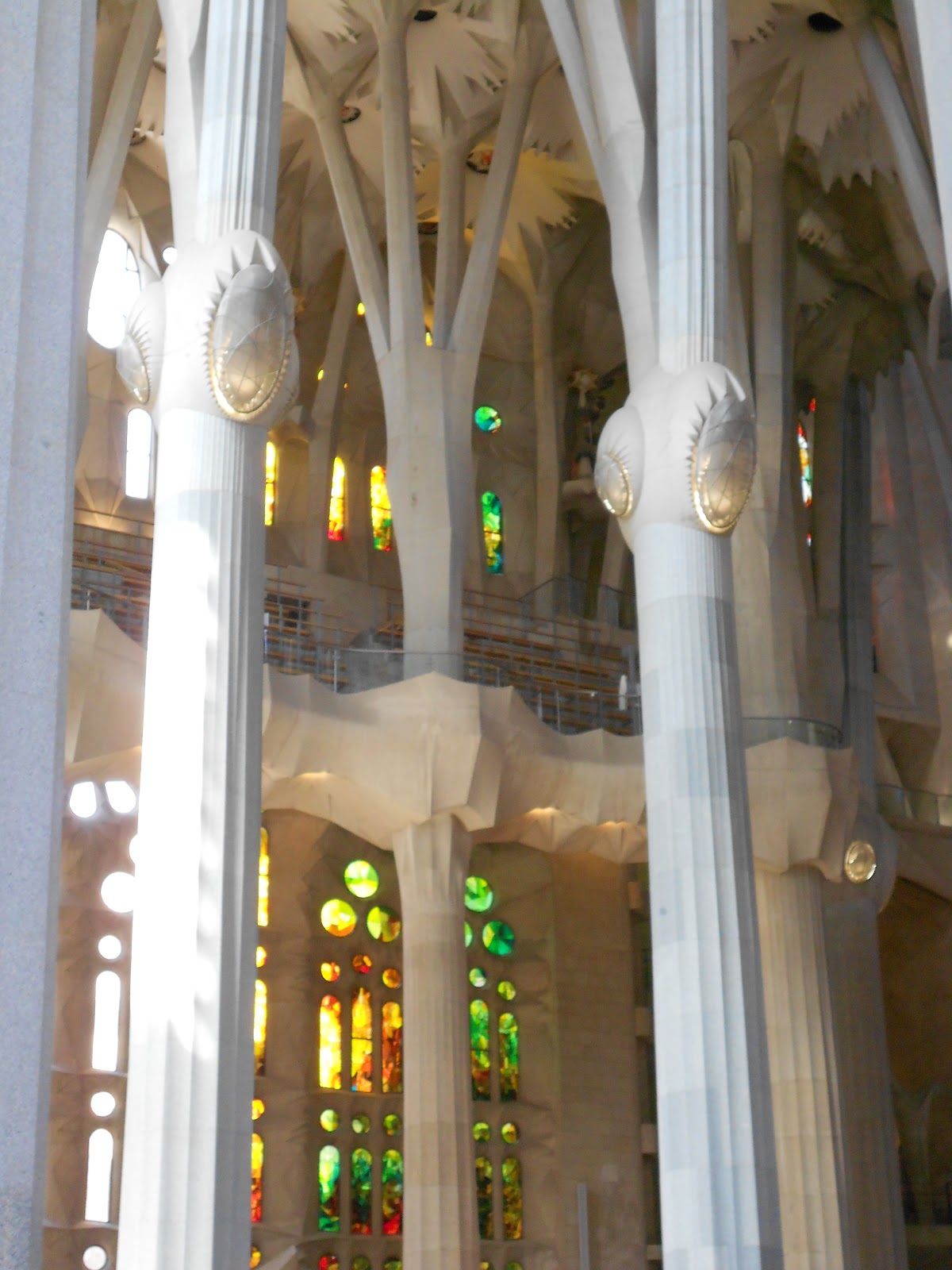
Gaudi’s vision – of capturing nature’s surreal beauty and presence – is extraordinarily delicate and bold at the same time. Imagine if you will a forest glade, dappled sunlight dripping through the canopy overhead…

Gaudi’s forest…
…and his trees.
Natural light streaming through the stained glass creates its own pallette.
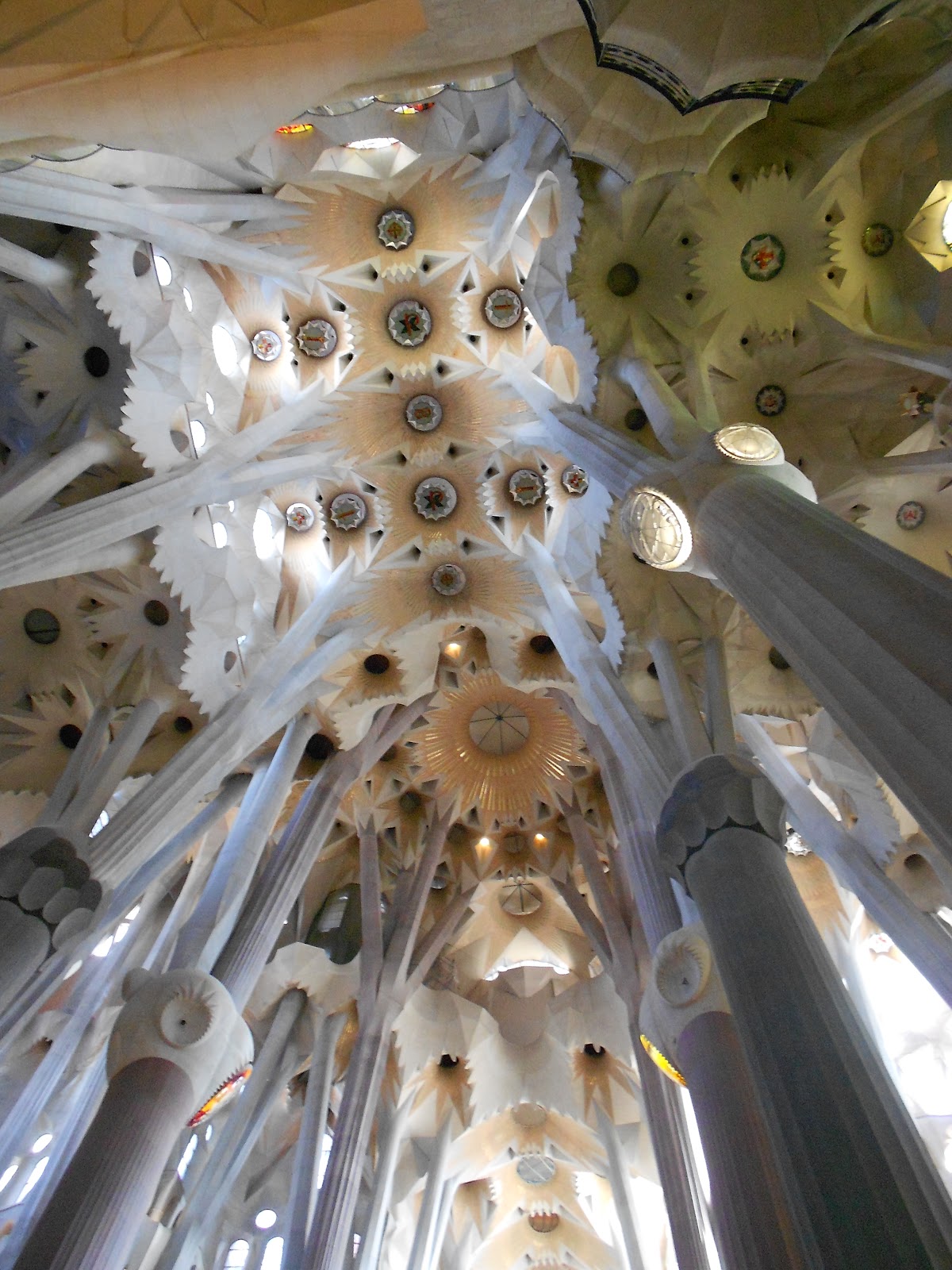
The ceiling forms an ornate and dreamlike canopy overhead…
…lit only with glorious sunlight.

(Note: I took squillions of photos, trying to capture every moment when I turned and gasped at some new aspect – it’s unbelievably difficult to do it justice.)

There’s a brief opportunity to visit the under-construction Glory facade, which is at the long end of the nave-cross, before moving outside again to see the famous Nativity facade, celebrating the birth of Jesus.

The expressive style of the ‘birth’ facade contrasts with the modern starkness of its opposite number at the entrance.
Here’s where angels herald the miracle…
…of the birth of Jesus.

The audiotour finishes by suggesting a visit to the museum and workshops underneath the church. The workshops are…well, working and aside from the history of La Sagrada Familia, you can see the actual models which are created to explore both the aesthetic and practical components of building each intricate piece of this fantastic sanctuary.


Last glimpse of the towering Nativity facade before entering the museum.

We left after a little over two hours, me with a ‘considerable number’ of photos and a flat camera battery. Both awed by the morning we’d spent.

We had an amazing weekend in Barcelona with great food, brilliant weather and some excellent sightseeing and shopping. There are many other things to do which we didn’t have time for but for me, La Sagrada Familia was the piece d’resistance. The luscious cherry atop our Catalonian sundae.

Hope I’ve managed to whet your appetite.

——————————————————
Other posts in the Barcelona series:
Brave Beauty


This post is also part of the Post Of The Month Club – August 2012

Brave beauty

Last weekend, A-used-to-be-down-the-hill and I took a little city break to Barcelona.

There was much tapas and tippling (I can highly recommend Bar Mut for tapas and Bubo for pastries), a bit of slip-slop-slapping (to protect ourselves from that hot Spanish sun), a spot of retail therapy and a whole lot of jaw-dropping ooh-ing and aah-ing at the clash of the bold and the beautiful that is so uniquely Barcelona.

Barcelona is a curious mix of leafy boulevards, intricate alleys and wide modern avenues. Its architecture moves from the classical to the bold, at times visionary while at others bordering on ugly. Gaudi’s La Sagrada Familia forms the touristic heart of this city of contradictions – and will feature in a separate post – but is by no means the be all and end all.

So this post is to what your appetite with a little scenic tour of Barcelona’s brave beauty and extraordinary visual diversity…

Apartment building La Pedrera, one of Gaudi’s many architectural wonders scattered throughout the city.
The dis-used bull ring still stands proud whilst undergoing a transformation to host activities of a more modern ilk, shopping!
At Barcelona’s Olympic Stadium, the torch provides a poignant memorial 20 years on…
…and ‘the athlete’ still points the way to the now residential Olympic Village.
Modern shapes silhouette against the blue hot sky…
…right next to more classical, and decoratively painted, architecture.
La Sagrada Familia mixes monochromatic starkness…
…with lush and glorious colour.
(More on this amazing testament to Antoni Gaudi’s vision later.)
The wide and leafy La Rambla forms the backbone of Barcelona, dividing the residential El Raval district from the buzzing Barri Gotic and La Ribera enclaves…
…while numerous small squares and parks provide a shady retreat for the locals from the heat of the day.

Packed your bags yet? If you haven’t, stay tuned for your armchair tour through Barcelona’s visionary heart…coming soon.

—————————————————
Other posts in the Barcelona series:
Holy Homage

A Happy Little (expat) Vegemite…

There is some exciting news at Gidday HQ today.

My fellow expat afficionados over at The Displaced Nation asked me to write a bit of a travel yarn about my recent trip to The Eternal City and it’s now live over there for your enjoyment.

If you can possibly bear to read one more thing about my Roman Holiday, you can meander over by clicking here.

While you are there, you might also like to have a little fossick around. I can confess to a particular addiction to the It’s Fiction series, Libby’s Life….

I am one chuffed expat!

ps…if you haven’t been keeping up with my travels of late (and shame on you if this is the case), here’s the Rome series for you:

The Gods of Rock…
A Holy Trinity…
All Roads…

All Roads…

Rome has long been the centre of Christianity and art and as such, has attracted many pilgrims, artists and travellers – with myself falling into the latter category. The saying goes all roads lead to Rome and it is with this in mind that I thought we’d take a little walking tour around the Eternal City.

Founded as a small village of mud huts in the 8th century BC, Rome rose to be all-powerful by the 1st century BC as it expanded beyond Italy into Spain, Greece and North Africa. After a decline during the Middle Ages the city rallied, bringing some of the greatest Renaissance and Baroque artists to the world’s attention before becoming capital of the unified Italy in 1870.

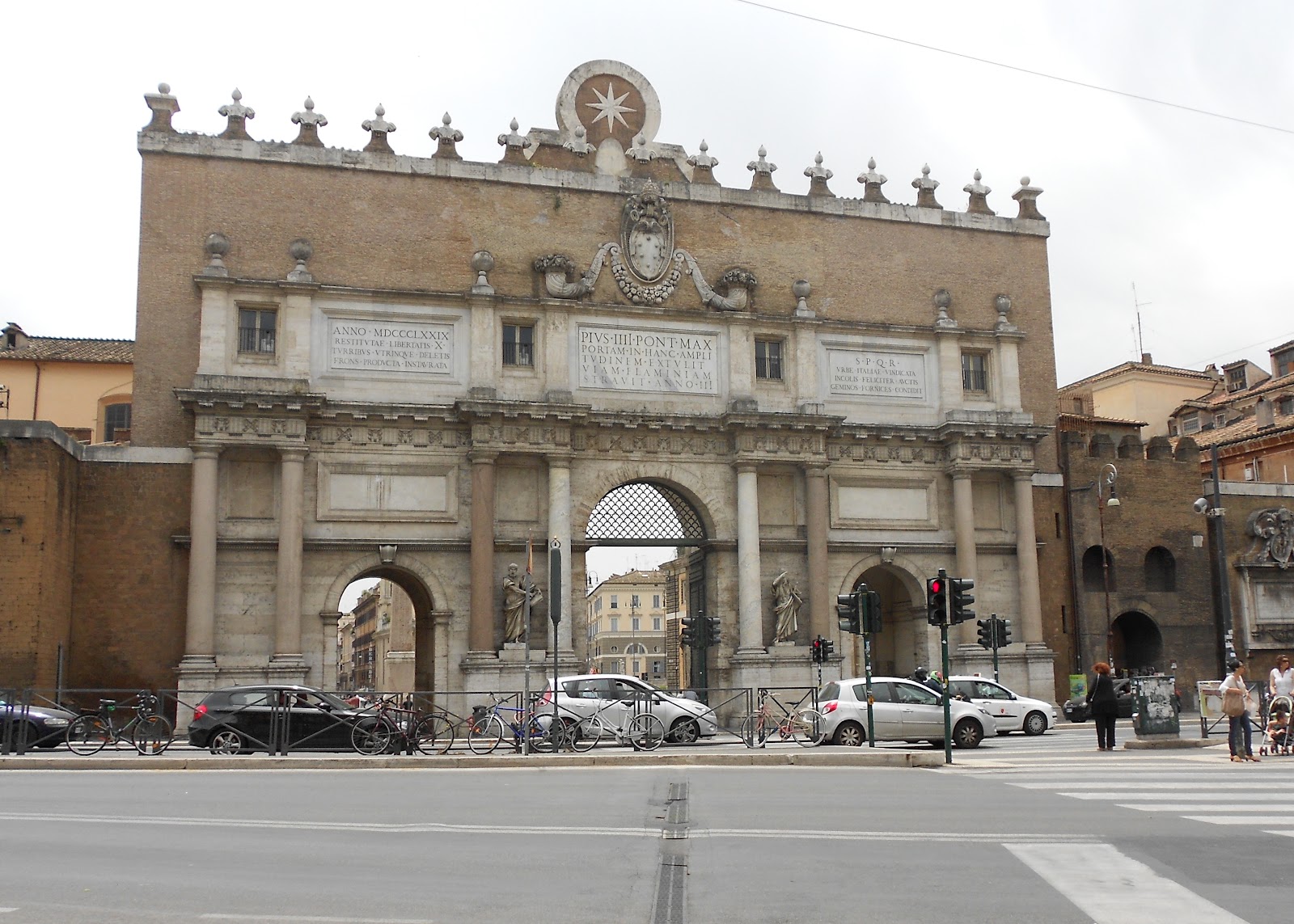
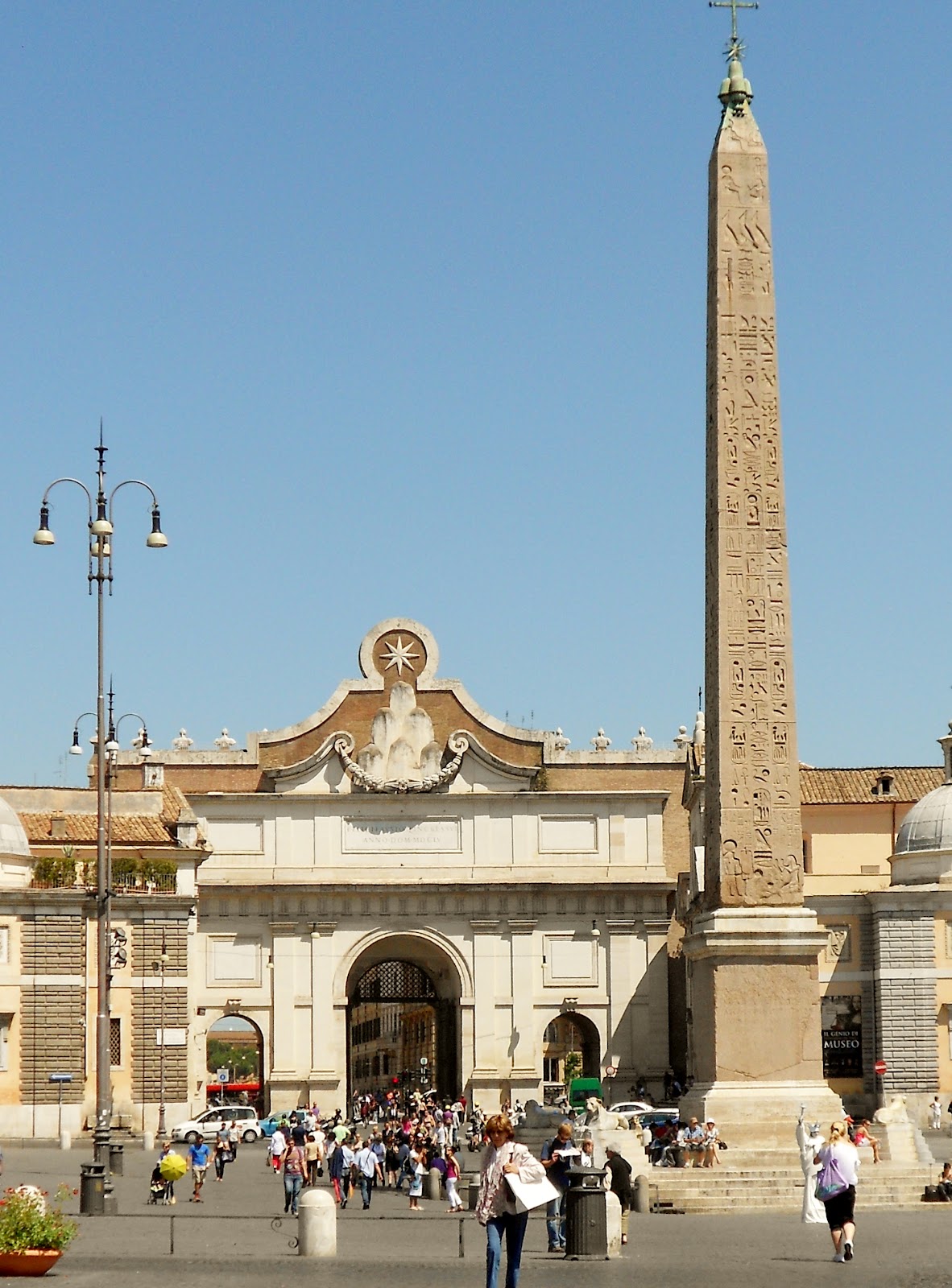
So let’s start at the Porte del Popolo, the point where the main route from the Adriatic Coast, the Via Flaminia, enters Rome…

View of the Porte del Popolo from the Metro exit (and my pizza-eating perspective) on the other side of the Via Flaminia

Three main thoroughfares lead from the other side of the Piazza – the Via Ripetta meaning small pier, the Via Del Corso in the centre and the Via Del Babuino which goes straight to the Piazza di Spagna. These were instrumental in managing the flow of pilgrims through the city so let’s have little wander down each one.

The Via Ripetta takes us to the banks of the Tiber River and crossing at the Ponte Sant’Angelo follows the same route to St Peter’s Basilica that the original pilgims took. But today the magnificent Castel Sant’Angelo dominates our view.


A guardian on the Porte Sant’Angelo with the fortress (and mausoleum of the Emperor Hadrian) in the background

The Castel Sant’Angelo has been a safe house for Popes for centuries with the Passetto (or Vatican Corridor) providing an escape route to the nearby fortress. In fact, it proved rather handy for Clement VII who used it to flee from the Vatican in 1527 to evade capture during the Sack of Rome.

View from the terrace of the Castel Sant’Angelo over St Mark’s Bastion and the Vatican Corridor with the dome of St Peter’s in the background.

 Let’s walk back across the river and wander a little further.

Smart cars, smart parking on the Lungotevere.

After 15 minutes or so we reach the Isola Tiberina, an island in the middle of the Tiber  River which separates the Angelo and Trastavere areas of Rome. The Ponte Fabricio provides pedestrian access to the island from the Angelo side (where we are) and the Ponte Cestia provides access from/to the other side of the river.

The Ponte Fabricio onto the Isola Tiberina

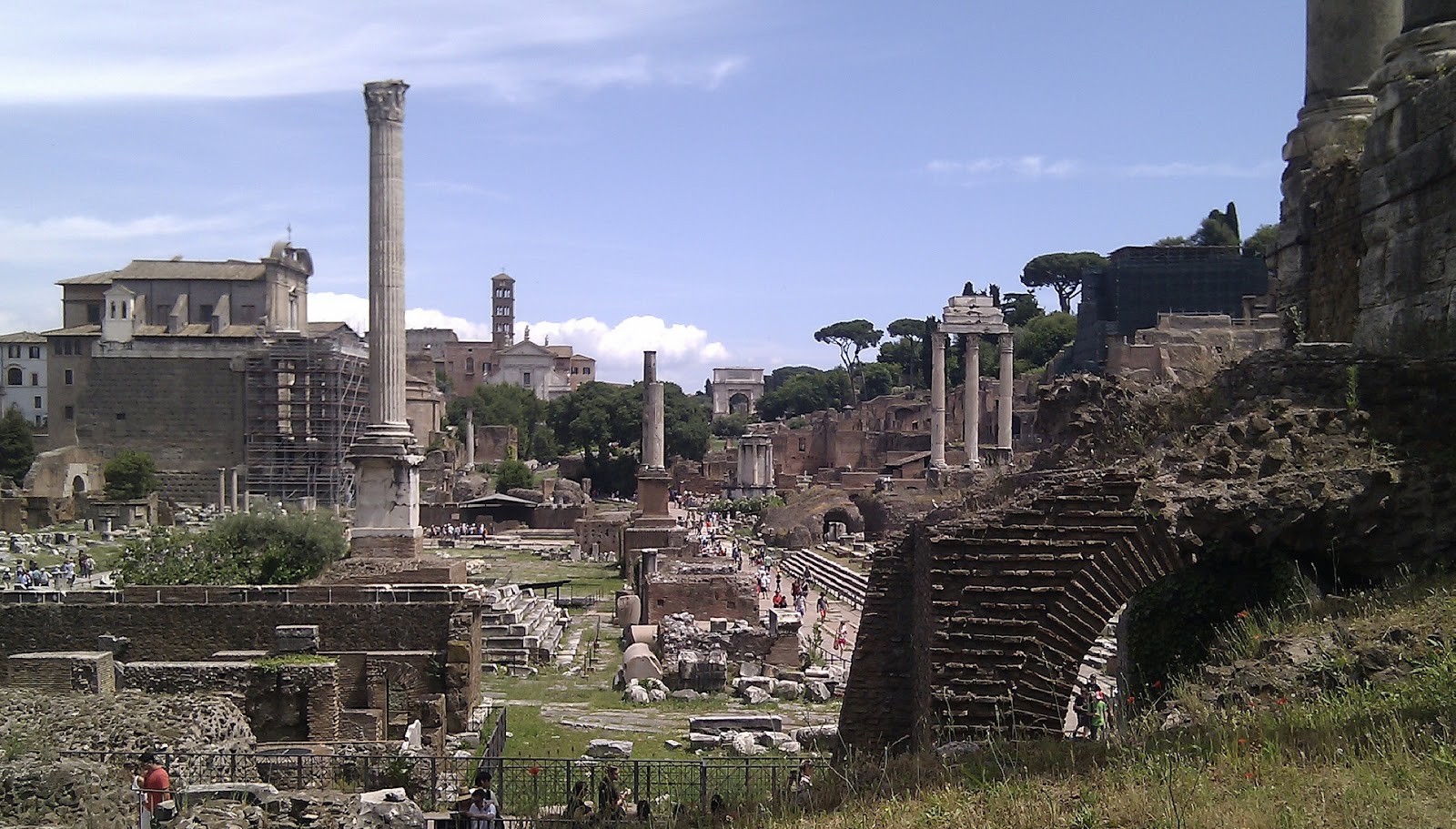
It’s now just a hop, step and jump to the Forum, an amazing complex of temples, government buildings, houses and monuments – or what’s left of them anyway. The Via Sacra was one of the most important roads in Rome leading from the Arch of Titus in the east down to the Arch of Septimius Severus in the west.

The view from the west end of the Forum down the Via Sacra (the Sacred Way)

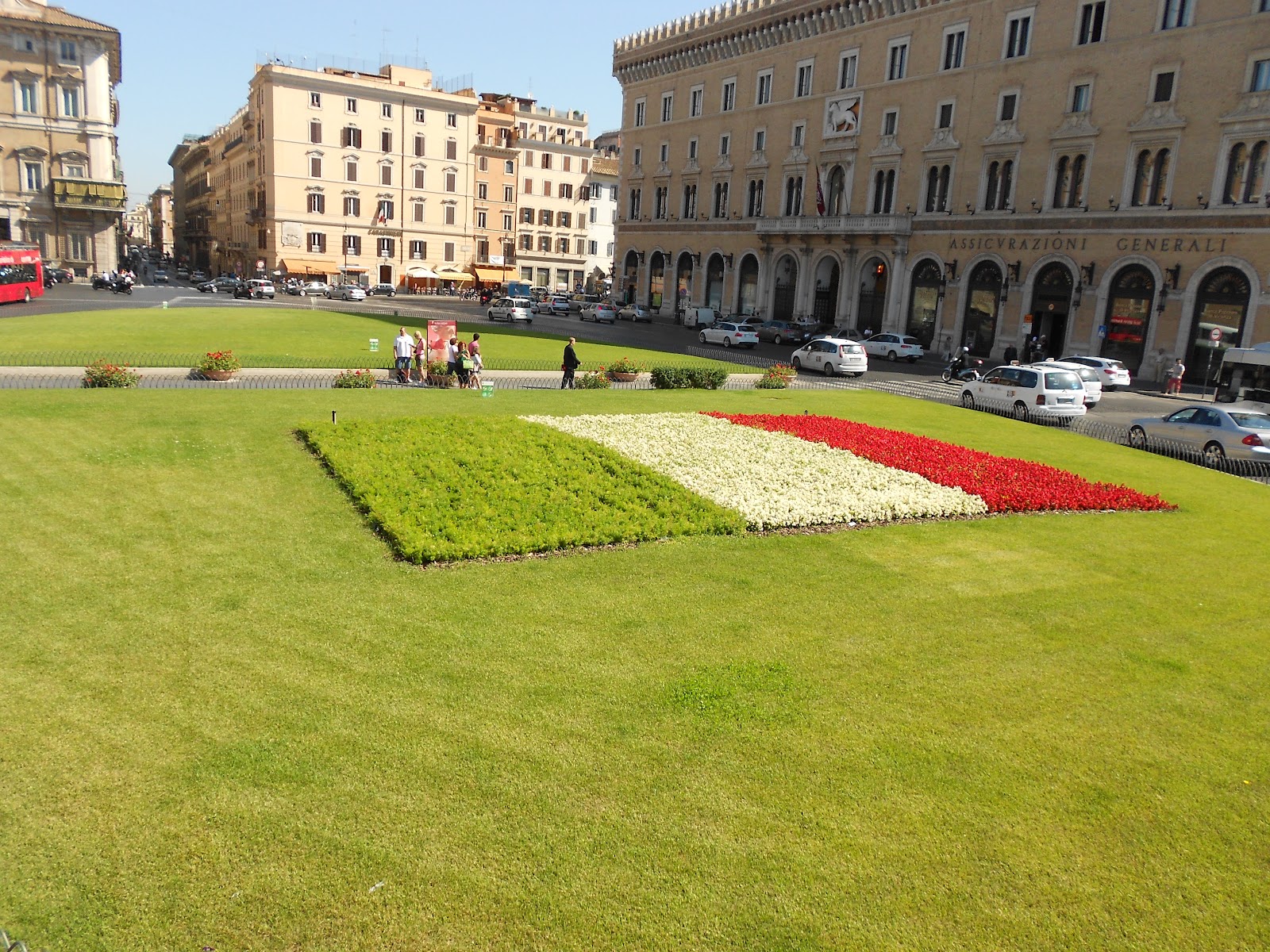
A short walk along the Via dei Fori Imperiali later, we are back at the Piazza Venezia and the bottom of the Via Del Corso. The Piazza lies next to Trajan’s market and column but is dominated by the national monument to Vittorio Emanuele II.

The monument to Vittorio Emanuele II, the first king of unified Italy…
…overlooks a rather patriotic floral arrangement in the Piazza.

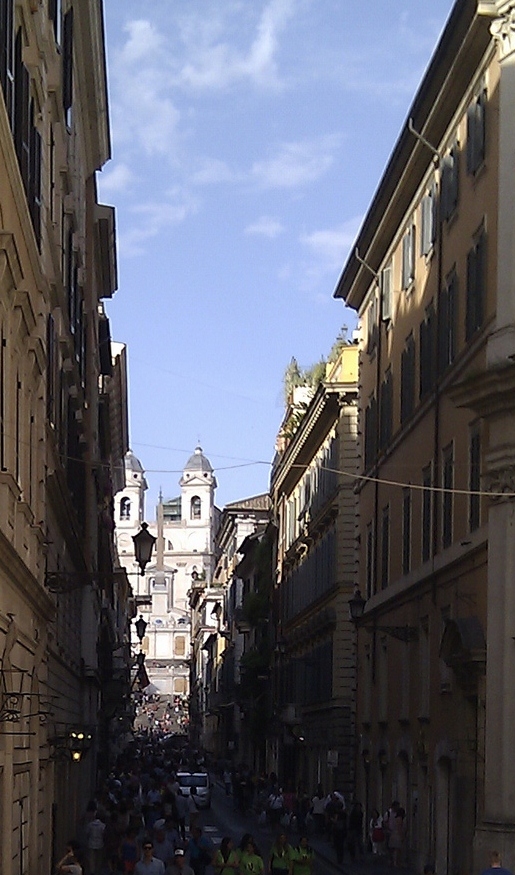
Setting off north west along the Via Del Corso, we’re heading back towards the Piazza del Popolo but we’ve got a detour to make before we get there. Turning right into the Via Condotti, the Trinite dei Monti looms at the end of the narrow street, overlooking the Piazza di Spagna and the famous Spanish Steps.

Named for the conduit that carried water to the Baths of Agrippa near the Pantheon, the Via Condotti is THE shopping street in Rome and great for a spot of wistful browsing (although we might need to save a few pennies if we want to make a purchase)…

… before stopping to rest our weary legs in the Piazza di Spagna itself.

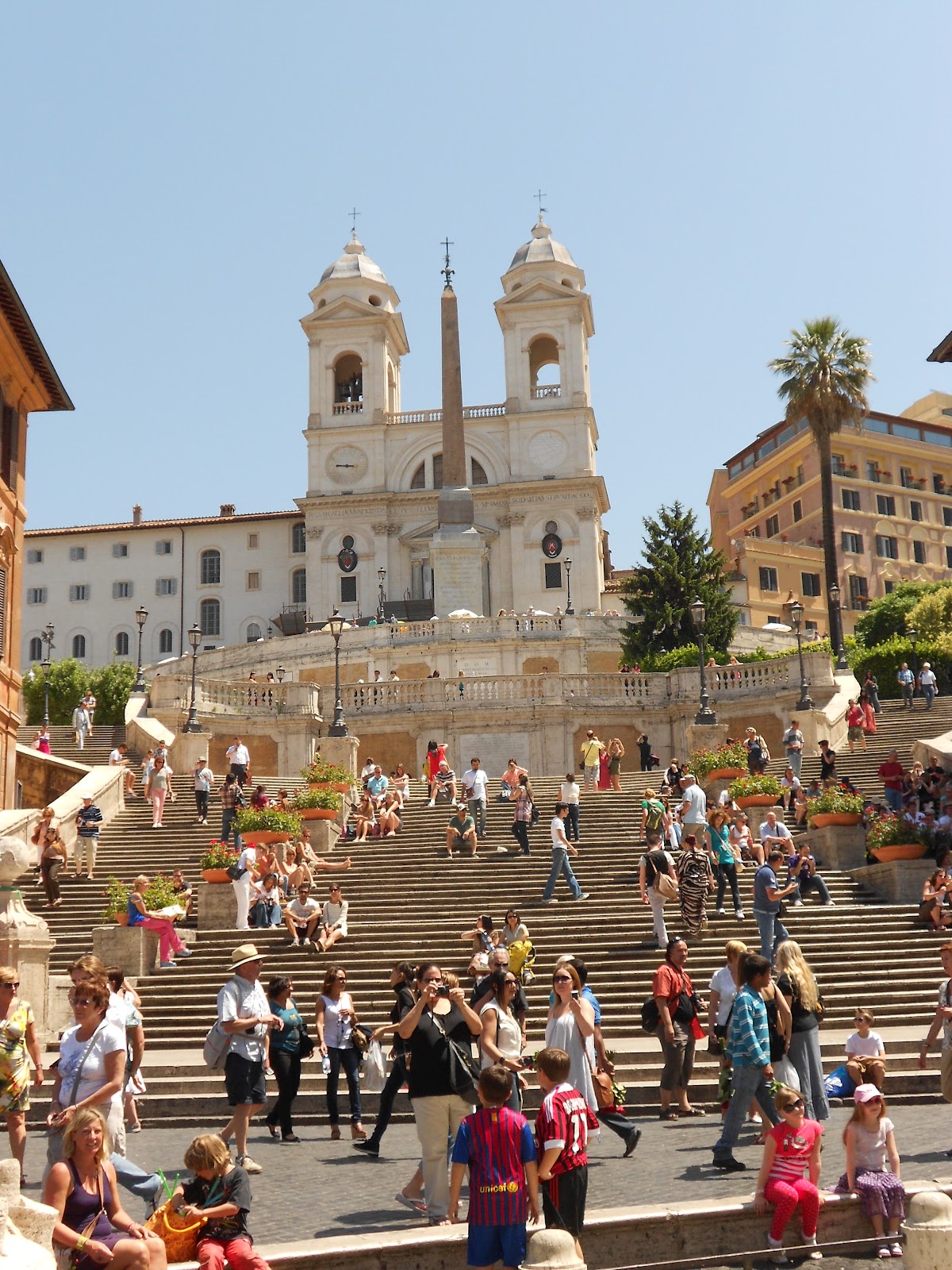
The Spanish Steps, a popular spot to laze in the sunshine. But there is to be no shouting, squalling or singing – there’s a sign that says so. That’s Amore!

Rested, we now continue from the north west corner of the Piazza along the Via del Babuino until we arrive back at the Piazza del Popolo and the route out to the Via Flaminia, the Porte del Popolo.

The obelisk in the Piazza del Popolo is over 3,000 years old and was brought to Rome by Augustus to adorn the Circus Maximus. It was erected here in 1589 by Pope Sixtus V.

The Piazza has a chequered past with all manner of gruesome events having come to pass in this neat and ordered space. Like public executions, with some of the condemned being hammered to death by repeated blows to the temples (the last criminal was executed in this way in 1826) and riderless horse races where stimulants, nail-studded belts and fireworks were employed to ‘encourage’ a faster pace from the participants.

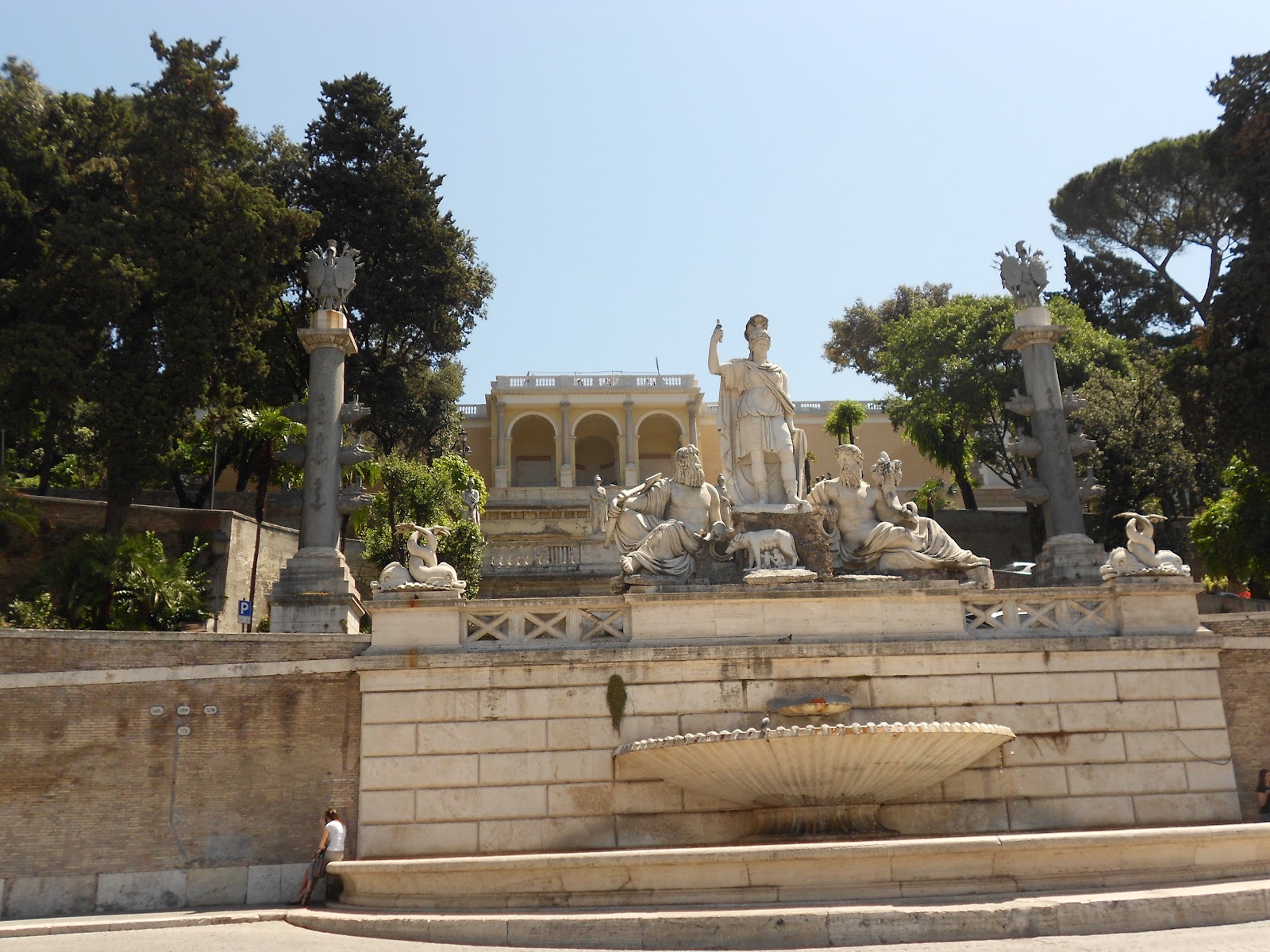
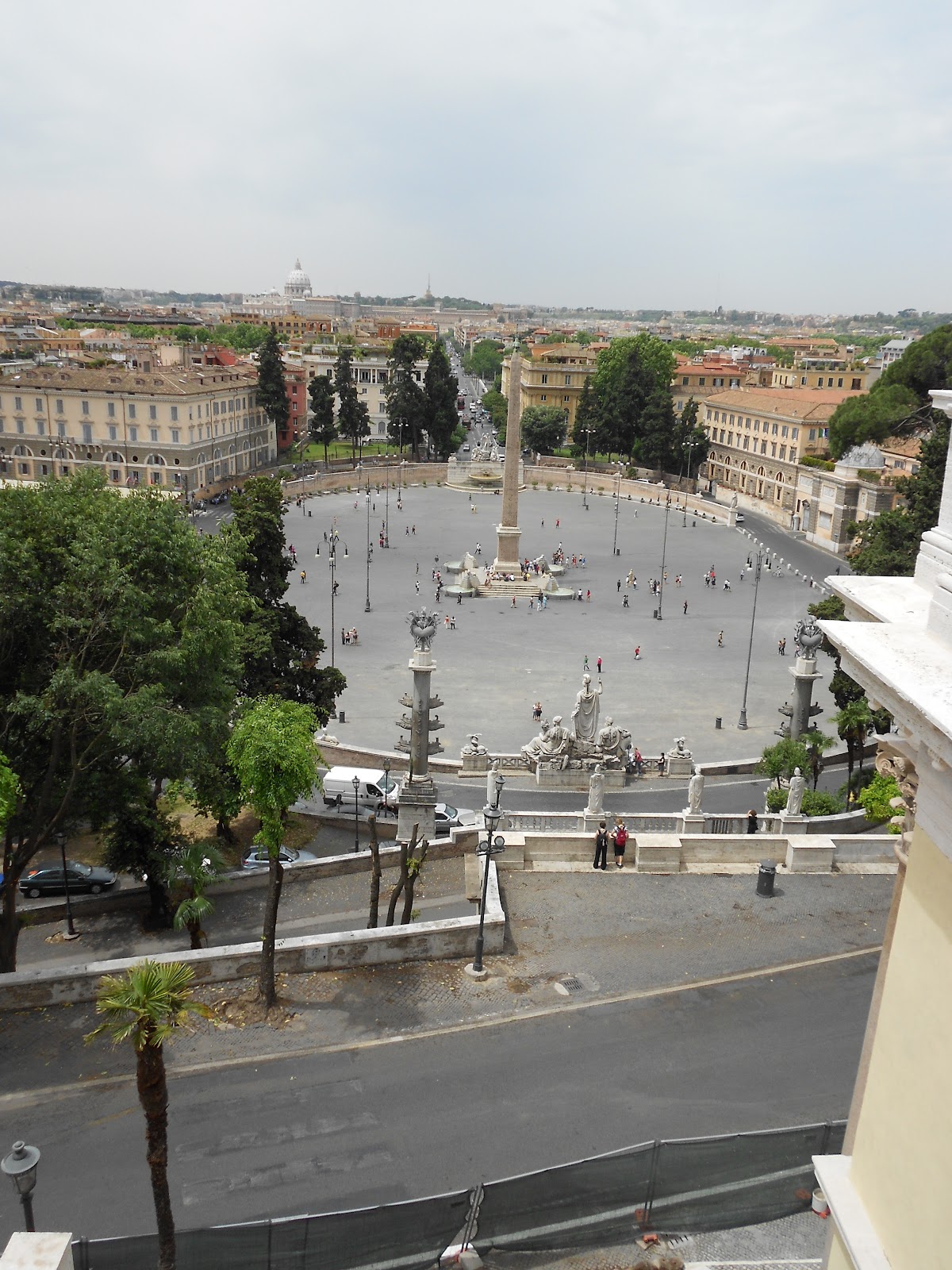
But enough of all this barbaric talk. Up to the right of the Piazza lies the Pincio Gardens, a place of green tranquility…and more great views over the roof tops of Rome. We’ll need to pace ourselves though – the walk is steep.

The view from the bottom…
…and from the top…

Turning around we face the Pincio Gardens and a short stroll through the trees brings us to the old and the new sitting comfortably side by side.

The Viale del Muro Torto, the ‘injured wall’.

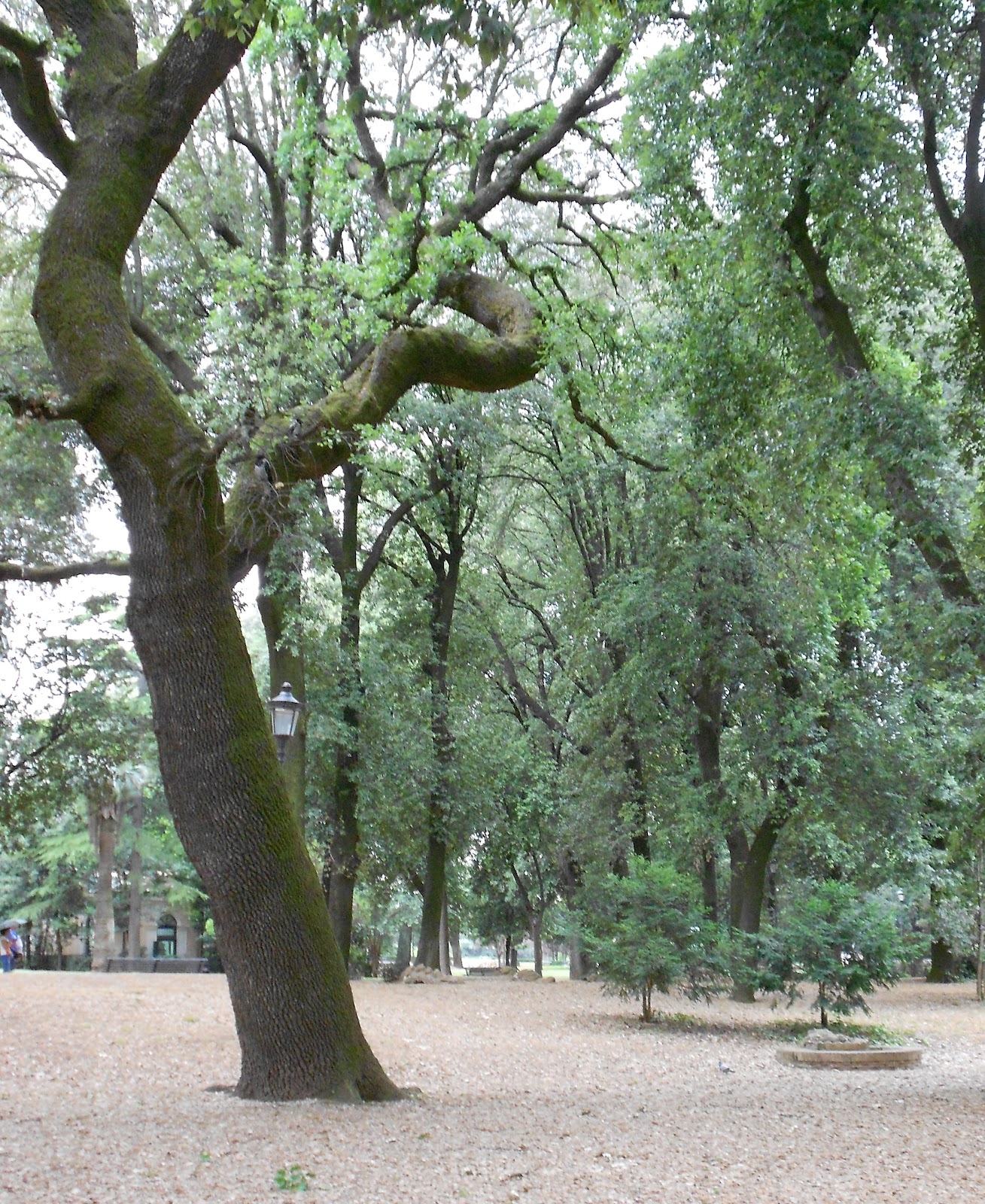
Our final wander takes us through the lush woodland around the Villa Borghese…

Rome’s second heart perhaps?
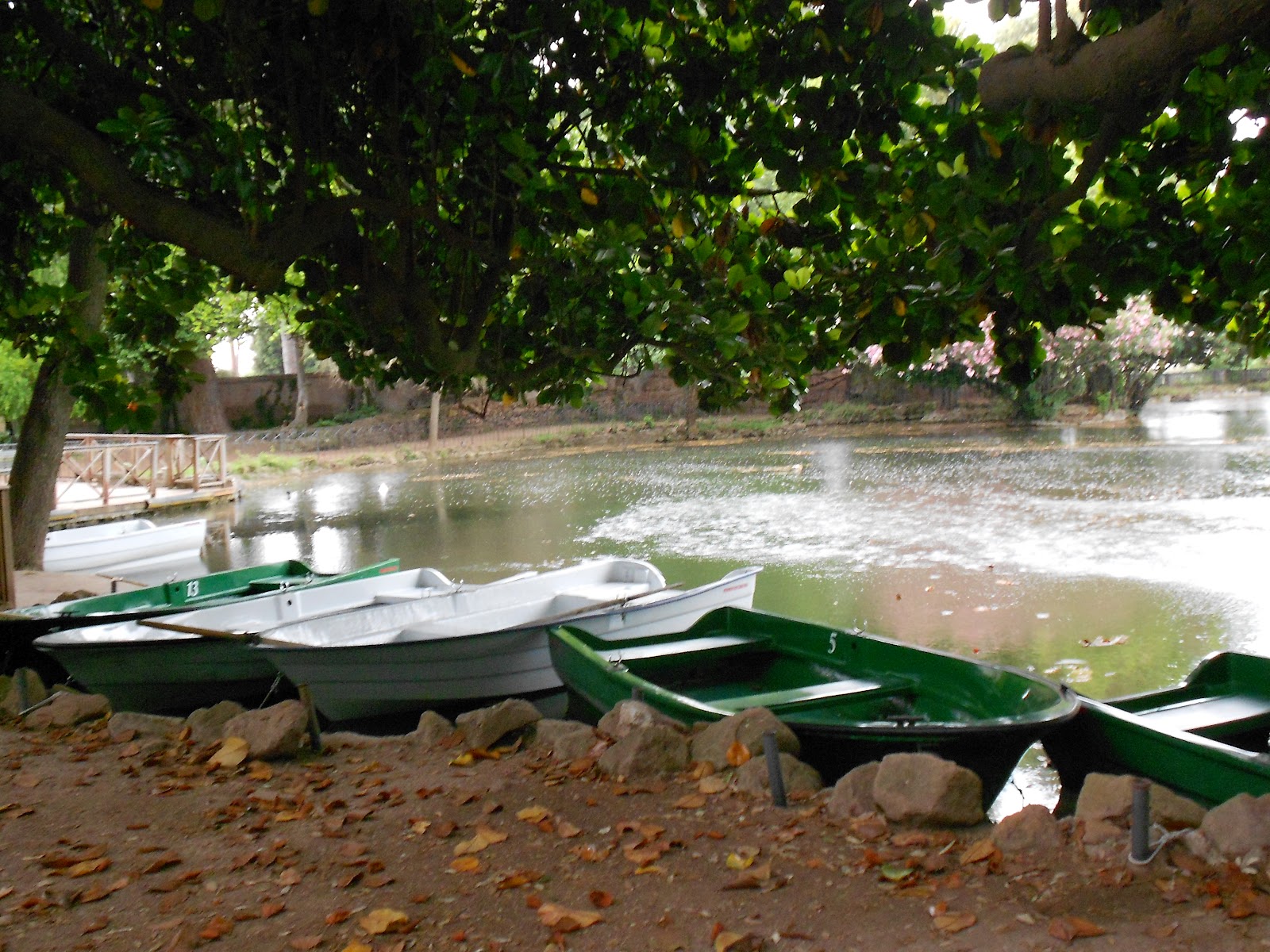
If we go down to the woods today…
…a boating we may go.

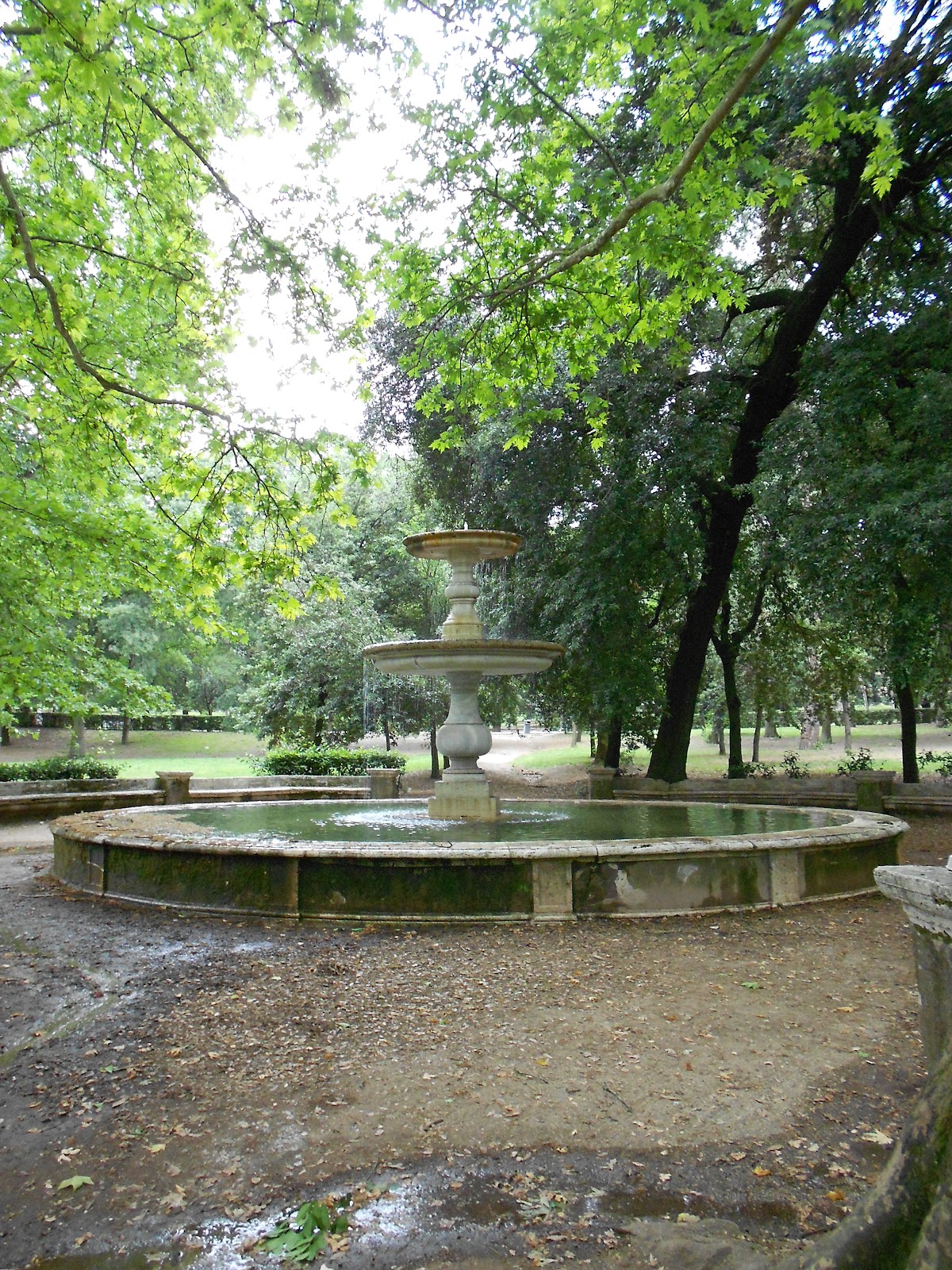
…a peaceful place for us to stop a while.


Take a deep breath in and feel the rain-fresh air fill your lungs. Breathe out and listen to the sound of the water running into the fountain.

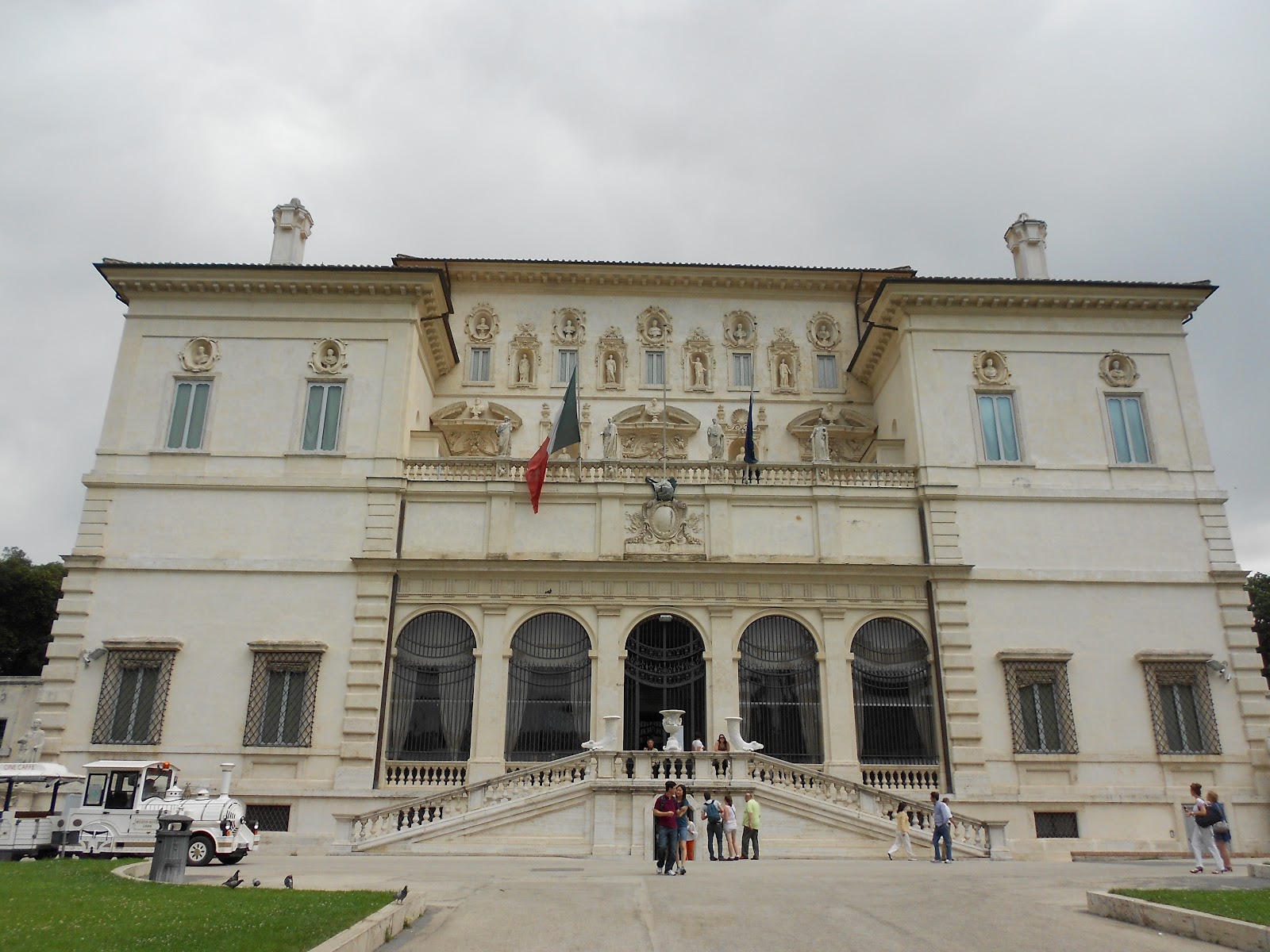
Before we leave the park, let’s pause for a few minutes and admire the Villa itself…

Built in 1605 for Cardinal Sciopone Borghese, favourite nephew of Pope Paul V, the villa now houses the private Borghese collection of sculptures and paintings but you need to book to see it.

…before heading back to the hotel.

And so, dear Gidday-ers, here endeth today’s tour.

Have you booked your ticket yet?

A Holy Trinity…

Rome is chock full of churches. Every corner you turn there’s another one, beckoning you into its cool, placid interior. So a trip to the Eternal City would be incomplete without a few worshipful visits – and, given the number of ‘working’ churches – more than 900 according to wikipedia – probably unavoidable. And as they say, when in Rome…

Firstly let me say that I did the Vatican Museums and St Peter’s all those years ago on my first visit so I had already deemed a visit there unnecessary. And while I visited more, the three featured here sum up the impact of my religious experiences during the 4 days.

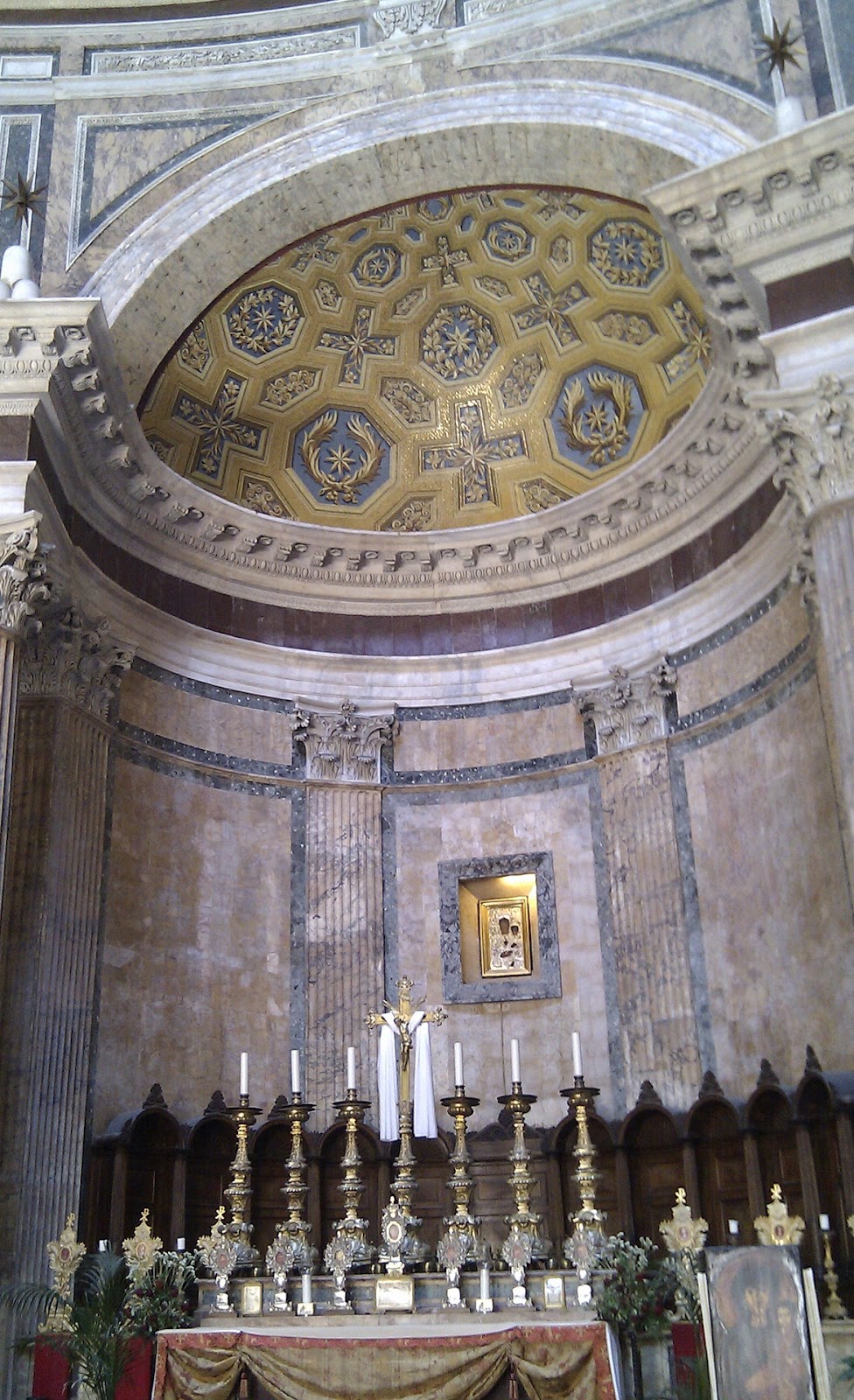
I’ll start with the Pantheon which stands proudly facing the Piazza della Rotunda. From the outside, it looked like all the pictures I’d seen in books and while not top of my ‘must cross Rome to see’ list, I was there, the day was warm and its shaded portico beckoned.

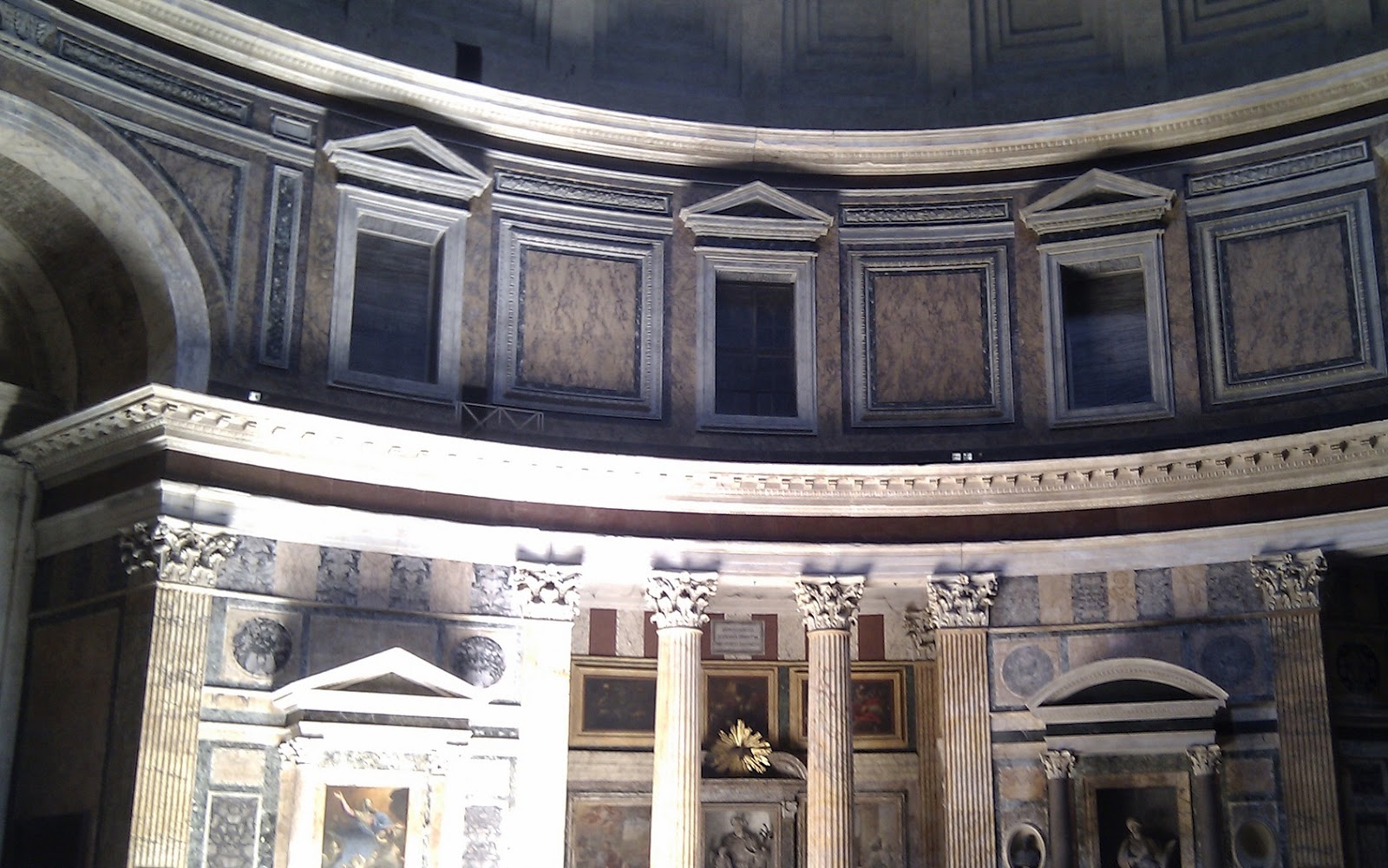
Nothing prepared me for the interior.

The domed ceiling is absolutely huge with the central ocular being the only source of light in the church 


The decorative friezes, ceilings and alcoves are fantastically well-preserved and I could only stare (mouth slightly open) at the awe-inspiring surroundings that Hadrian’s Romans built to worship their gods.
This is the tomb of Raphael (Sanzio), the Renaissance architect and artist who was a younger contemporary of Michelangelo and created many great works throughout Rome during his life.

I emerged again into the bright sunlight, feeling the heat on my skin after the cool under the Pantheon’s great dome. After a quick peek at Tazza D’Oro (famed for its coffee but lacking appeal for little ol’ moi with a line of customers extending out the door) and a watering stop at the fountain (you can drink the water from the majority of Rome’s fountains so my water bottle had a real workout), I continued my south-bound meander towards Gesu (more on this further on).

My next stop was completely unplanned and brought on largely by a desire to get out of the heat. (A girl has to pace herself you know – I’m not used to all this 30C plus weather any more and I had a whole 4 days of it to look forward to.) Santa Maria sopra Minerva dates from the 13th century and was built over the ruins of the Temple of Minerva. The piazza is marked by an unusual inhabitant…

This elephant and obelisk sculpture was originally created to grace the Piazza Barberini. The elephant, an ancient symbol of intelligence and piety, was sculpted onto Bernini’s obelisk by Ercole Ferrata

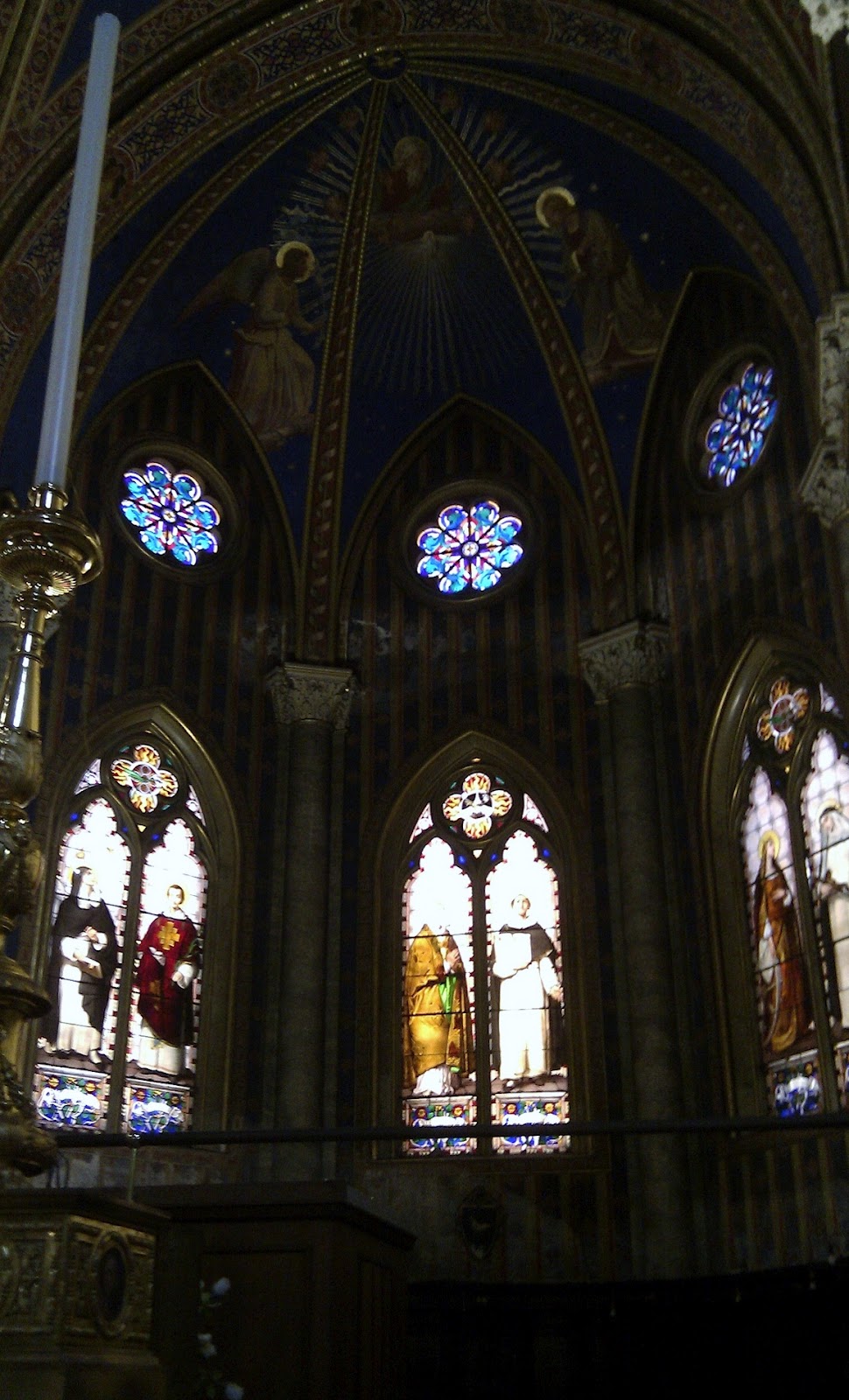
Once inside, the mix of Gothic architecture and Renaissance and Baroque styles is stunning. The cornflower blue of the vaulted ceilings didn’t come out so well in my photos but I’ve includes some other faves here for you.

I loved the simplicity of this stained glass after the intricacy of the painted walls and domes…
…and that it reflected on the walls in all sorts of places.
This is carved in stone, While I get a bit bored looking at a lot of sculpture, I am always fascinated by the movement that can be created from something so inordinately inanimate.

I left to brave the heat again, quietly delighted at my unexpected moment of enchantment here. I set off southwards again, my destination this time being Gesu. Unfortunately, I arrived during closing hours so I returned the next day after re-checking with my trusty Eyewitness Travel Guide that this was worth making the diversion to the same area again.

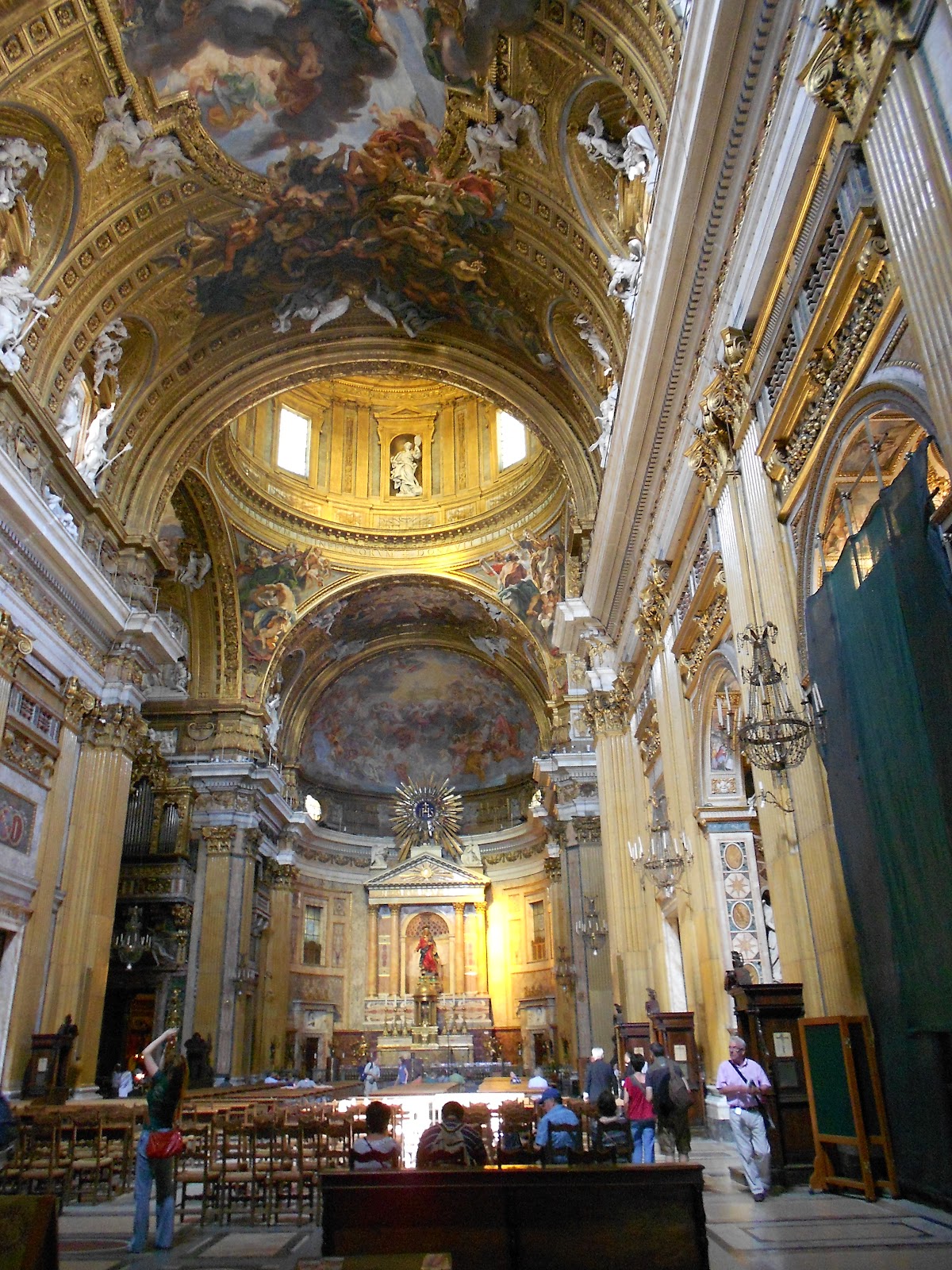
It was. Just check out the photos below.

Just so you know what to look for on the outside…

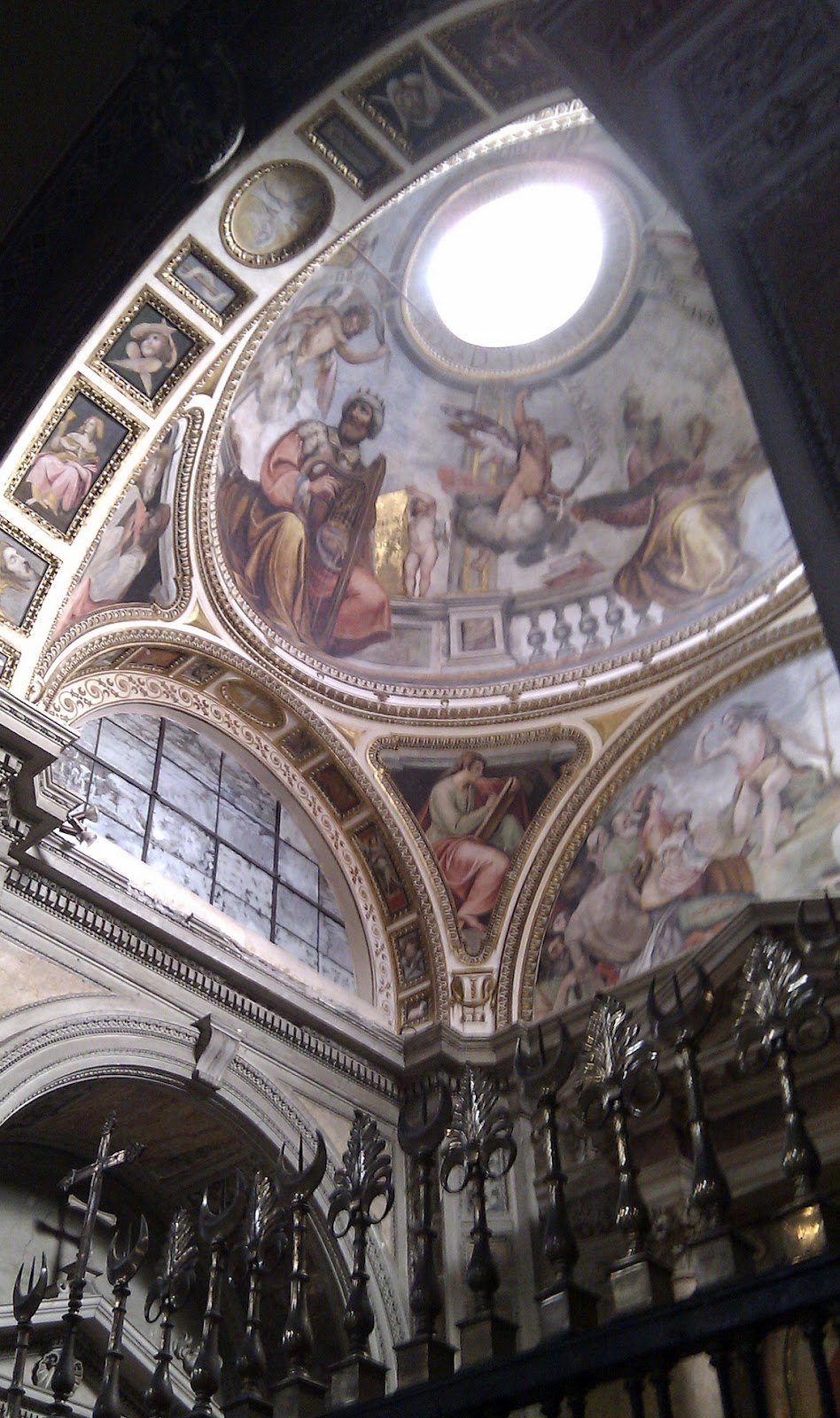
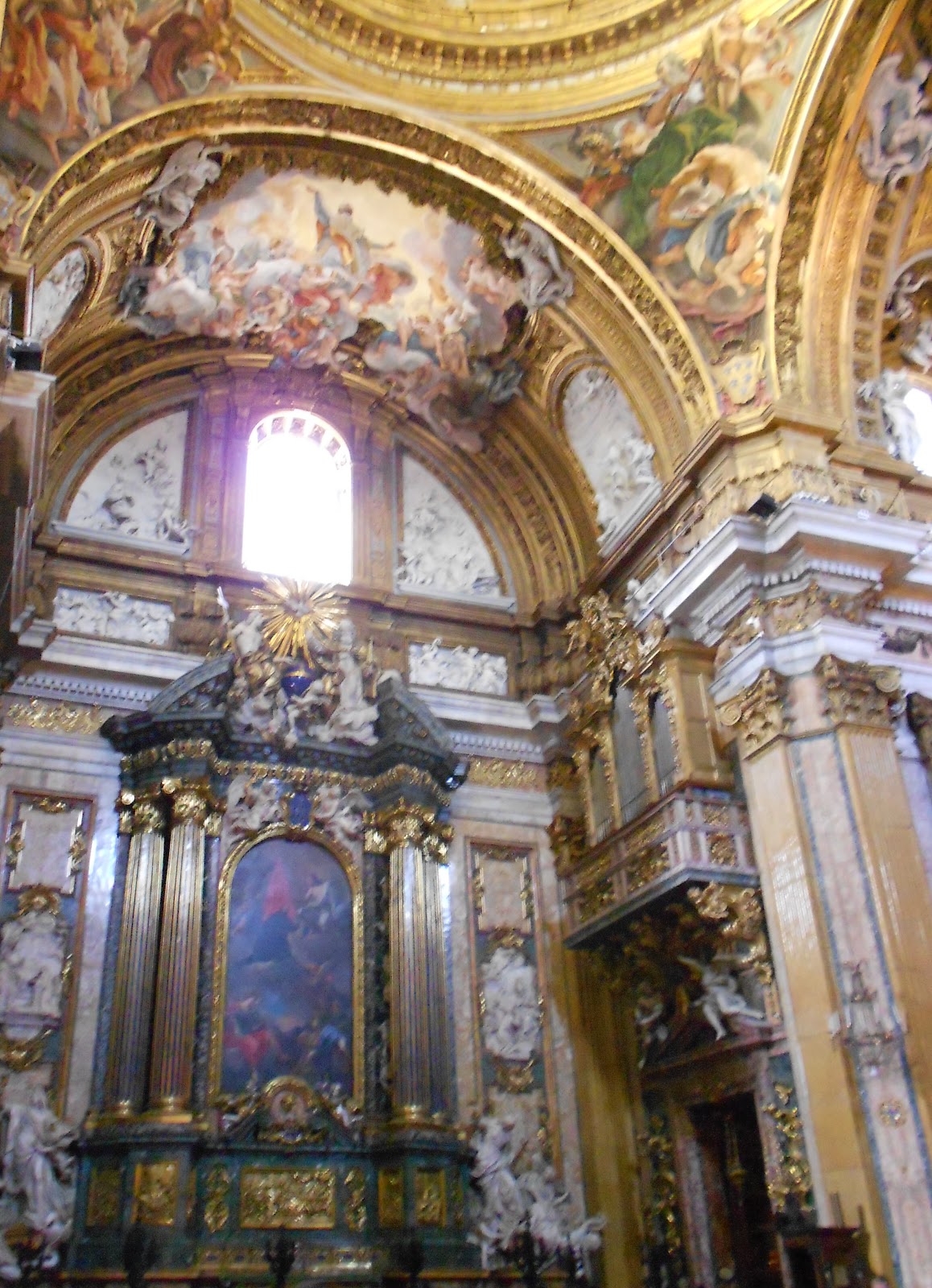
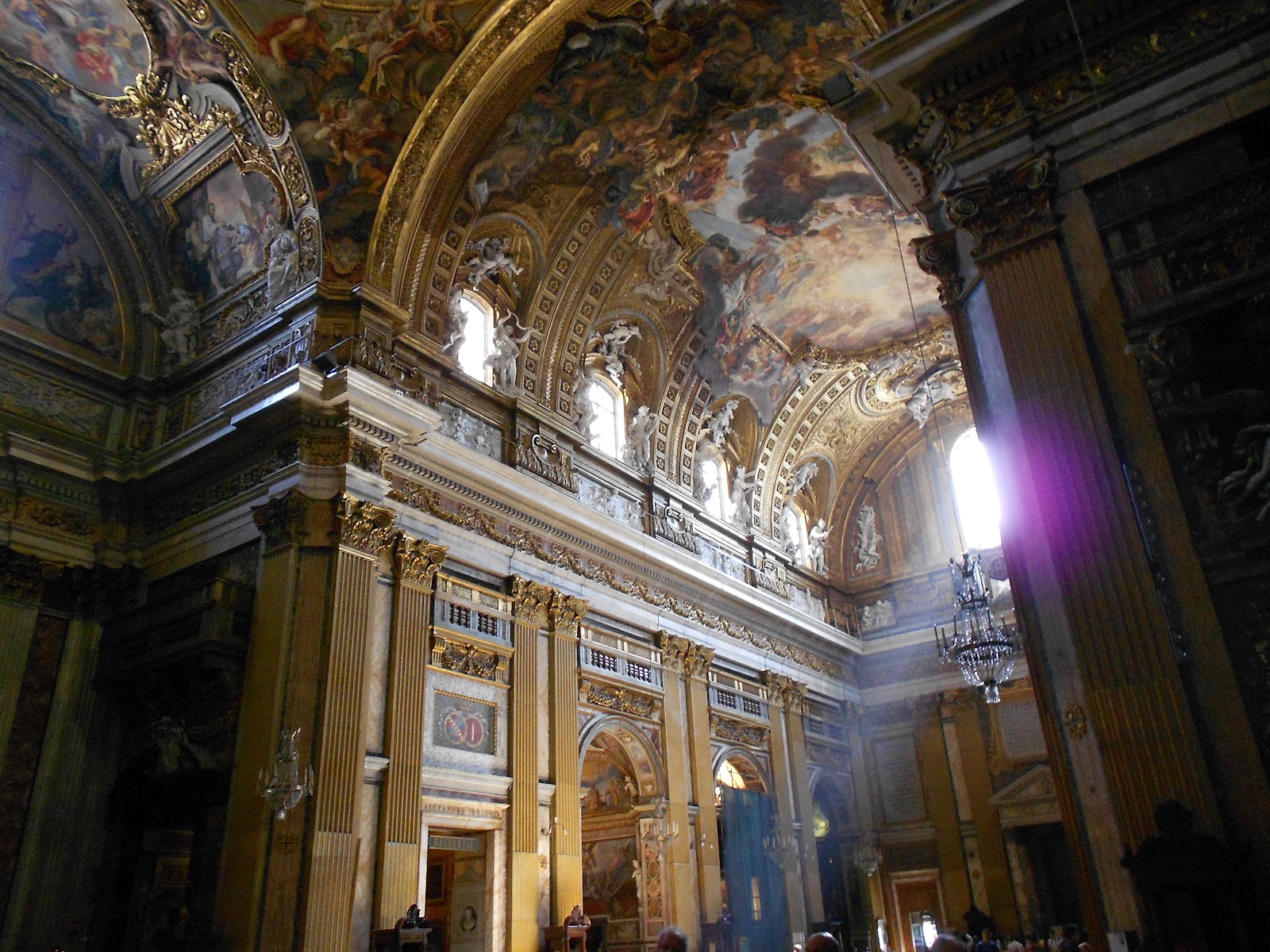
I was completely overwhelmed. This really is a beautiful church and anyone coming to Rome must visit (but make sure you don’t turn up between 1.30-4.00pm). I could have taken many more photos but actually spent time sitting, moved, by what I felt around me. It was a poignant and quite spiritual experience just being there.

I remember feeling overwhelmed by the detailed magnificence of the Sistine Chapel when I visited in 2000 but for me, there was a spirituality, albeit different, in all three of these beautiful churches that the Sistine Chapel didn’t have.

The Pantheon for its glorious space and simplicity.

Santa Maria sopra Minerva for the sense of discovery and enchantment.

And Gesu for its breathtaking colour and artistry – and for touching my soul.