All Roads…

Rome has long been the centre of Christianity and art and as such, has attracted many pilgrims, artists and travellers – with myself falling into the latter category. The saying goes all roads lead to Rome and it is with this in mind that I thought we’d take a little walking tour around the Eternal City.

Founded as a small village of mud huts in the 8th century BC, Rome rose to be all-powerful by the 1st century BC as it expanded beyond Italy into Spain, Greece and North Africa. After a decline during the Middle Ages the city rallied, bringing some of the greatest Renaissance and Baroque artists to the world’s attention before becoming capital of the unified Italy in 1870.

So let’s start at the Porte del Popolo, the point where the main route from the Adriatic Coast, the Via Flaminia, enters Rome…
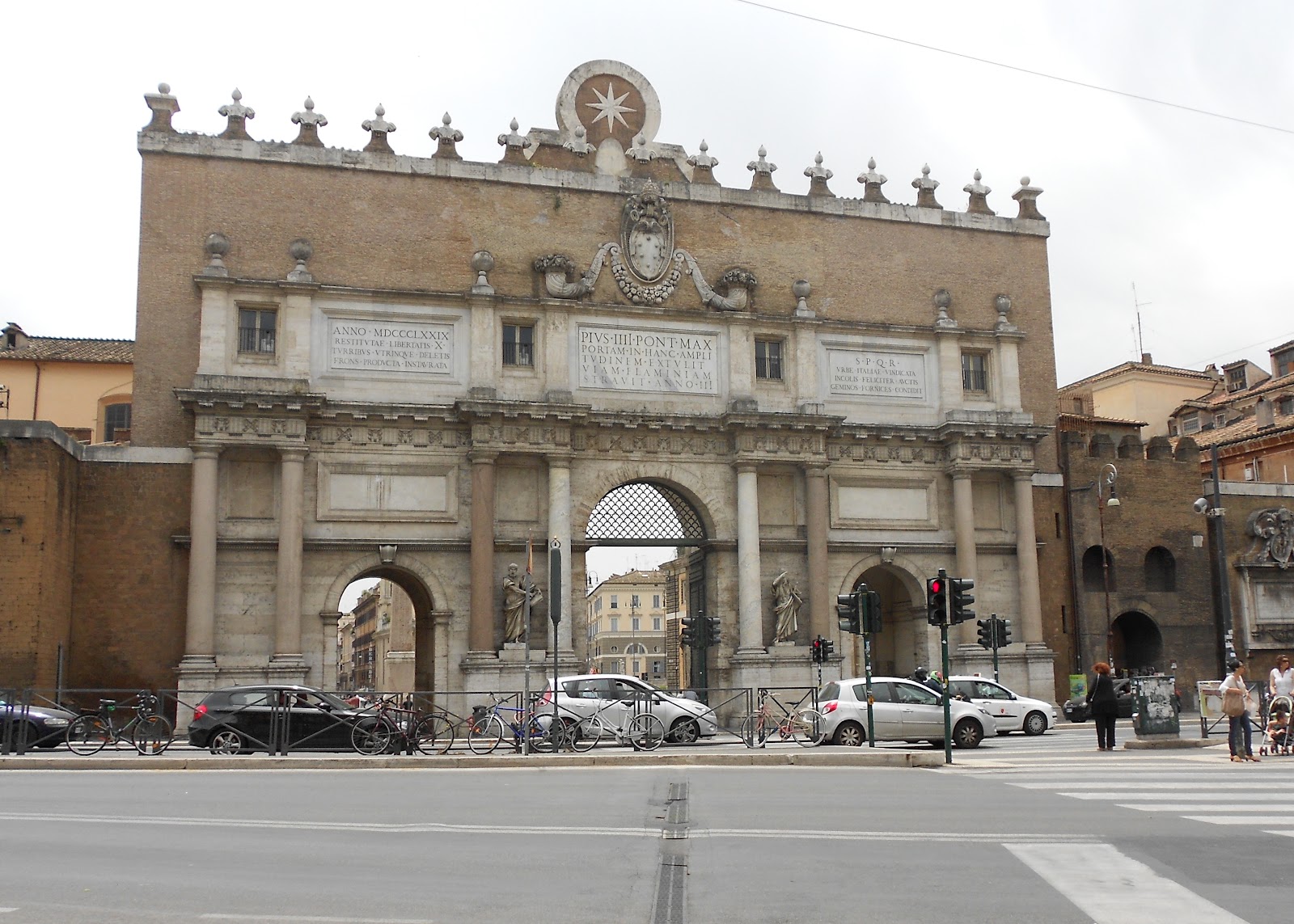
View of the Porte del Popolo from the Metro exit (and my pizza-eating perspective) on the other side of the Via Flaminia

Three main thoroughfares lead from the other side of the Piazza – the Via Ripetta meaning small pier, the Via Del Corso in the centre and the Via Del Babuino which goes straight to the Piazza di Spagna. These were instrumental in managing the flow of pilgrims through the city so let’s have little wander down each one.

The Via Ripetta takes us to the banks of the Tiber River and crossing at the Ponte Sant’Angelo follows the same route to St Peter’s Basilica that the original pilgims took. But today the magnificent Castel Sant’Angelo dominates our view.


A guardian on the Porte Sant’Angelo with the fortress (and mausoleum of the Emperor Hadrian) in the background

The Castel Sant’Angelo has been a safe house for Popes for centuries with the Passetto (or Vatican Corridor) providing an escape route to the nearby fortress. In fact, it proved rather handy for Clement VII who used it to flee from the Vatican in 1527 to evade capture during the Sack of Rome.

View from the terrace of the Castel Sant’Angelo over St Mark’s Bastion and the Vatican Corridor with the dome of St Peter’s in the background.

 Let’s walk back across the river and wander a little further.

Smart cars, smart parking on the Lungotevere.

After 15 minutes or so we reach the Isola Tiberina, an island in the middle of the Tiber  River which separates the Angelo and Trastavere areas of Rome. The Ponte Fabricio provides pedestrian access to the island from the Angelo side (where we are) and the Ponte Cestia provides access from/to the other side of the river.

The Ponte Fabricio onto the Isola Tiberina

It’s now just a hop, step and jump to the Forum, an amazing complex of temples, government buildings, houses and monuments – or what’s left of them anyway. The Via Sacra was one of the most important roads in Rome leading from the Arch of Titus in the east down to the Arch of Septimius Severus in the west.
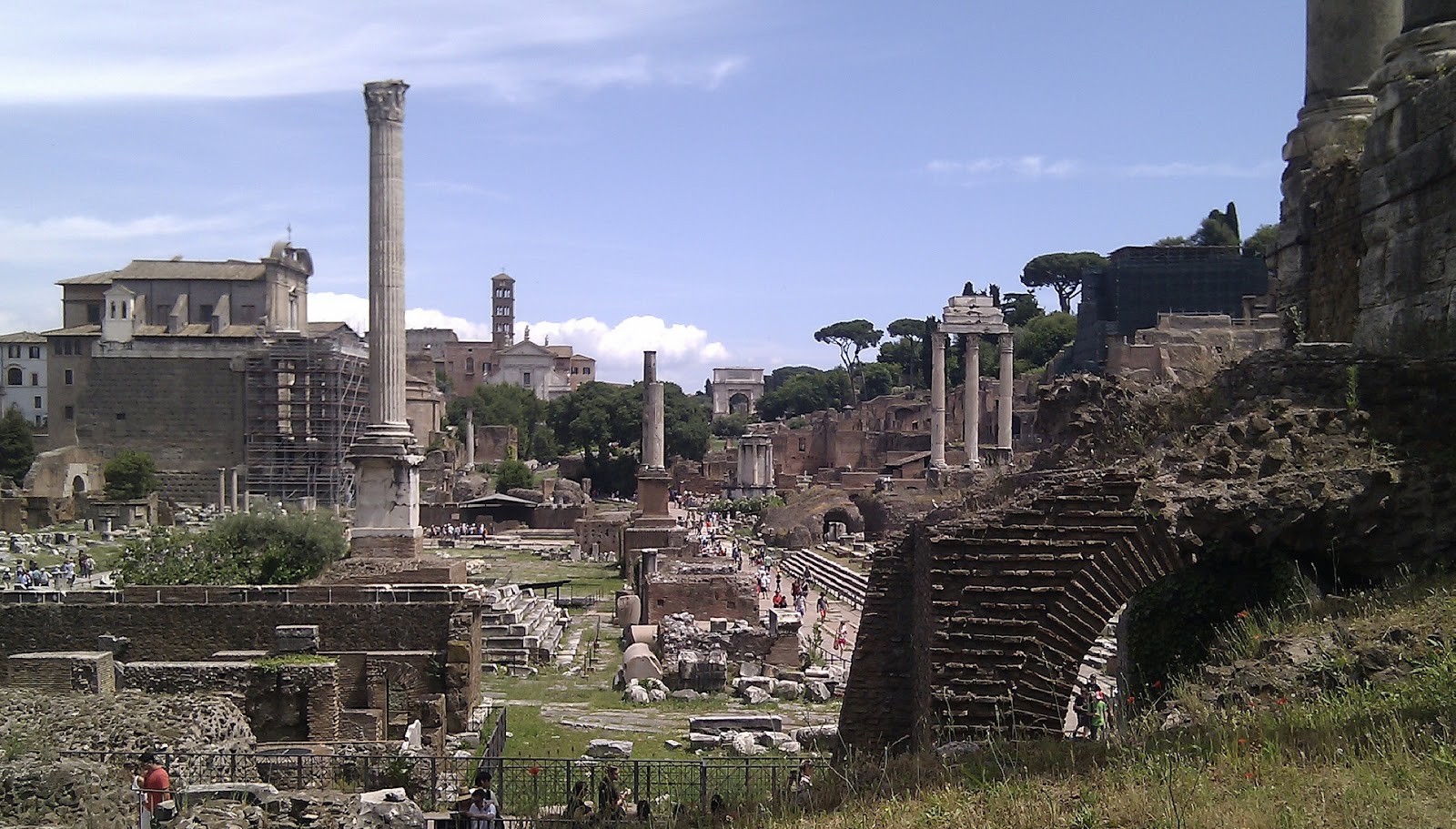
The view from the west end of the Forum down the Via Sacra (the Sacred Way)

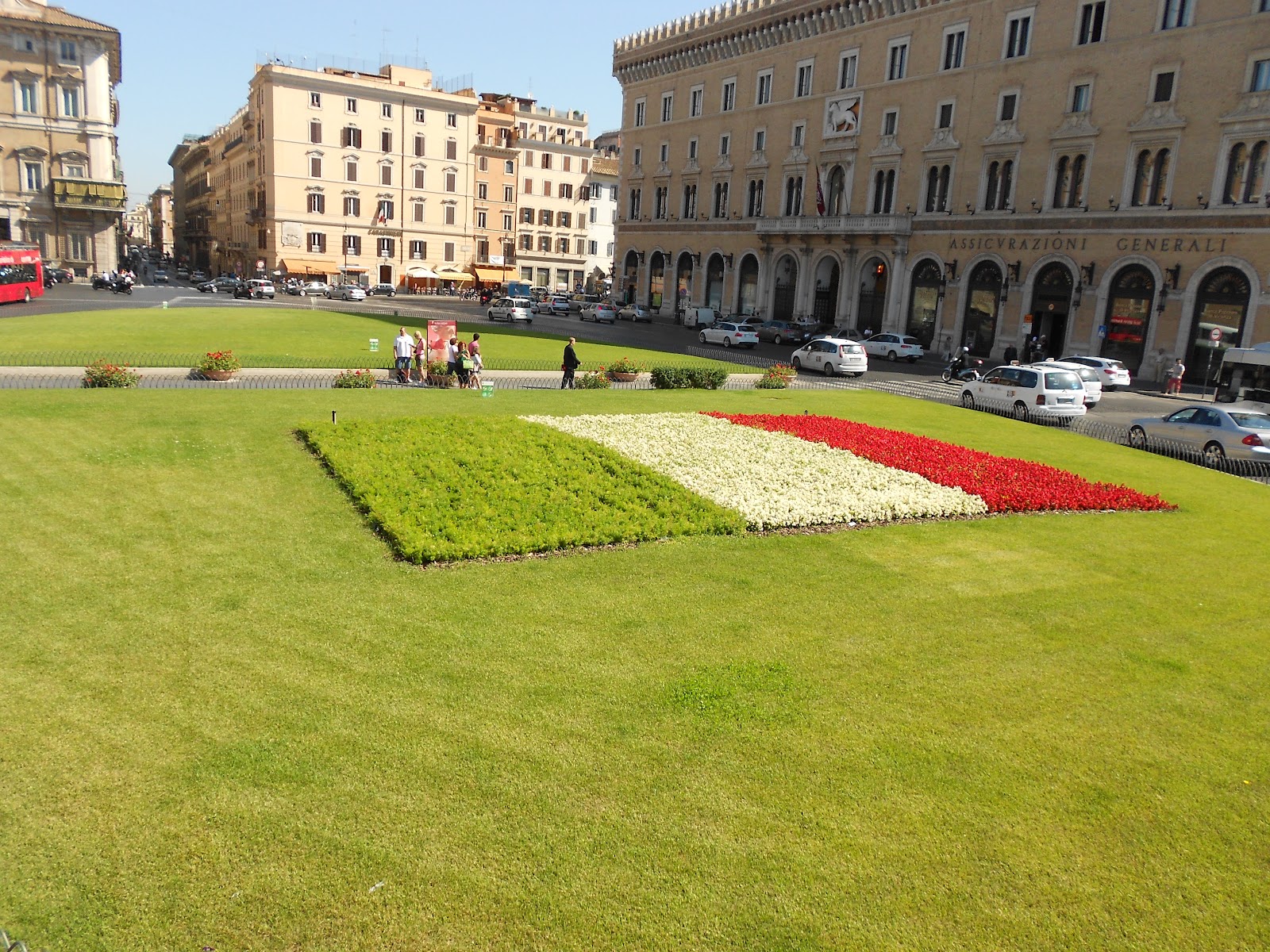
A short walk along the Via dei Fori Imperiali later, we are back at the Piazza Venezia and the bottom of the Via Del Corso. The Piazza lies next to Trajan’s market and column but is dominated by the national monument to Vittorio Emanuele II.

The monument to Vittorio Emanuele II, the first king of unified Italy…
…overlooks a rather patriotic floral arrangement in the Piazza.

Setting off north west along the Via Del Corso, we’re heading back towards the Piazza del Popolo but we’ve got a detour to make before we get there. Turning right into the Via Condotti, the Trinite dei Monti looms at the end of the narrow street, overlooking the Piazza di Spagna and the famous Spanish Steps.
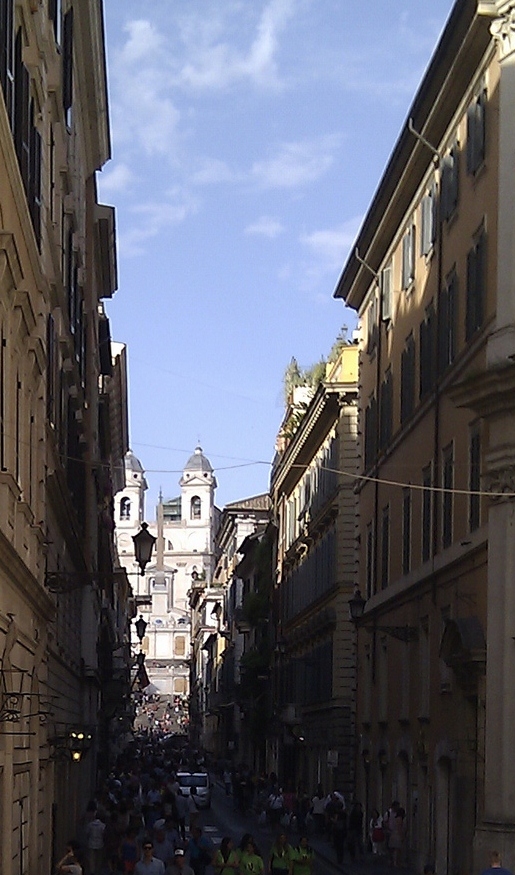
Named for the conduit that carried water to the Baths of Agrippa near the Pantheon, the Via Condotti is THE shopping street in Rome and great for a spot of wistful browsing (although we might need to save a few pennies if we want to make a purchase)…
… before stopping to rest our weary legs in the Piazza di Spagna itself.
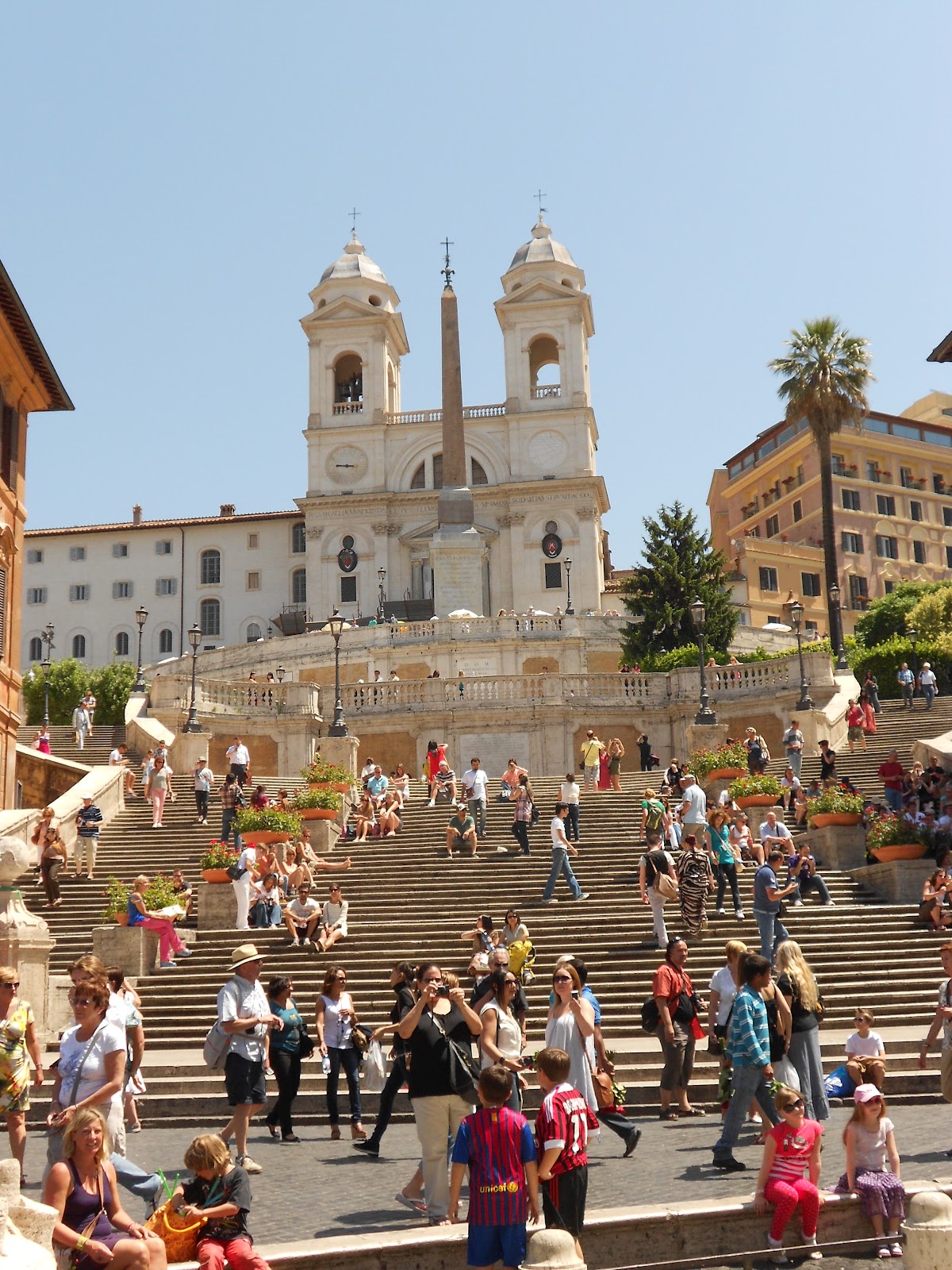
The Spanish Steps, a popular spot to laze in the sunshine. But there is to be no shouting, squalling or singing – there’s a sign that says so. That’s Amore!

Rested, we now continue from the north west corner of the Piazza along the Via del Babuino until we arrive back at the Piazza del Popolo and the route out to the Via Flaminia, the Porte del Popolo.
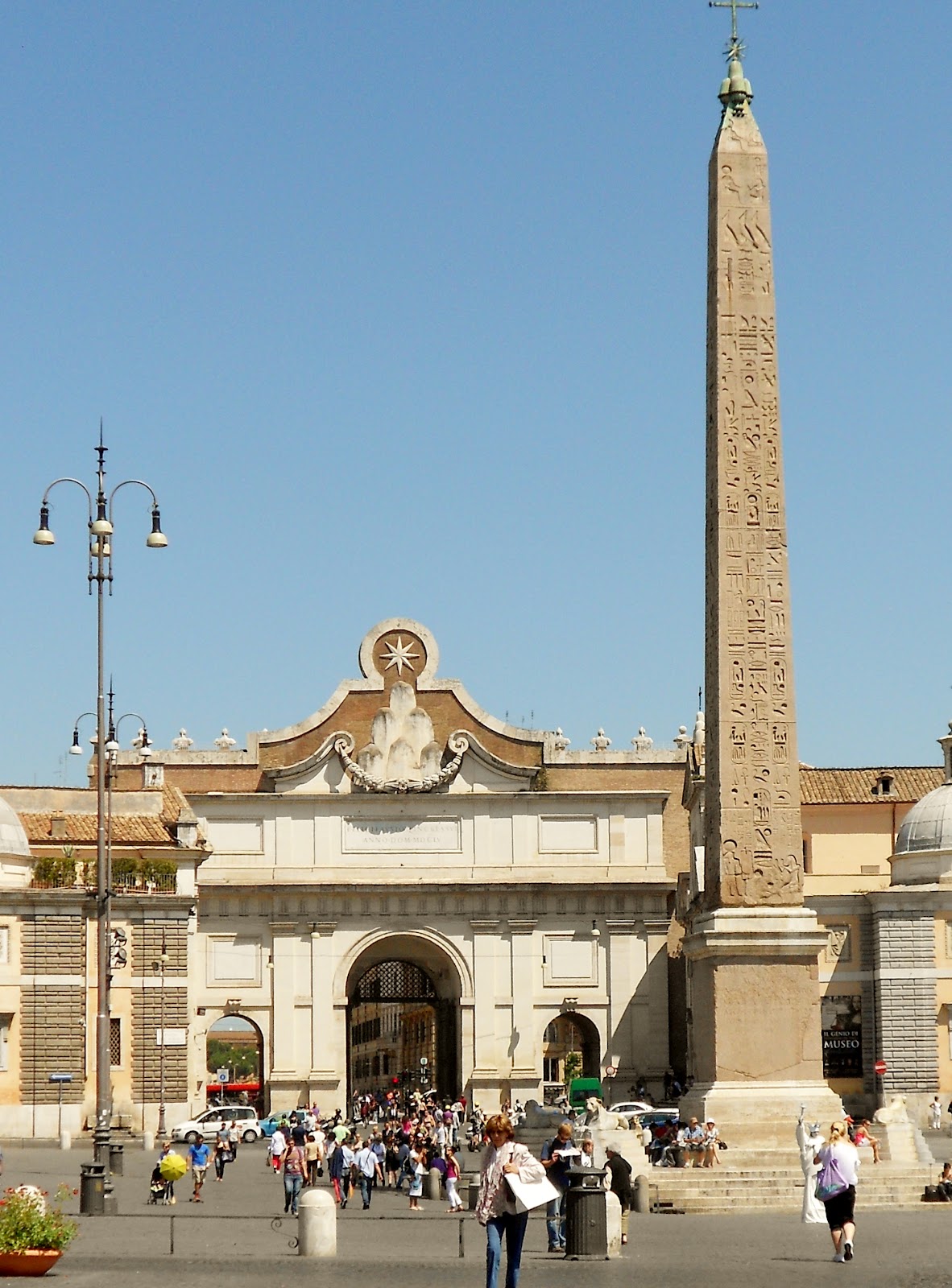
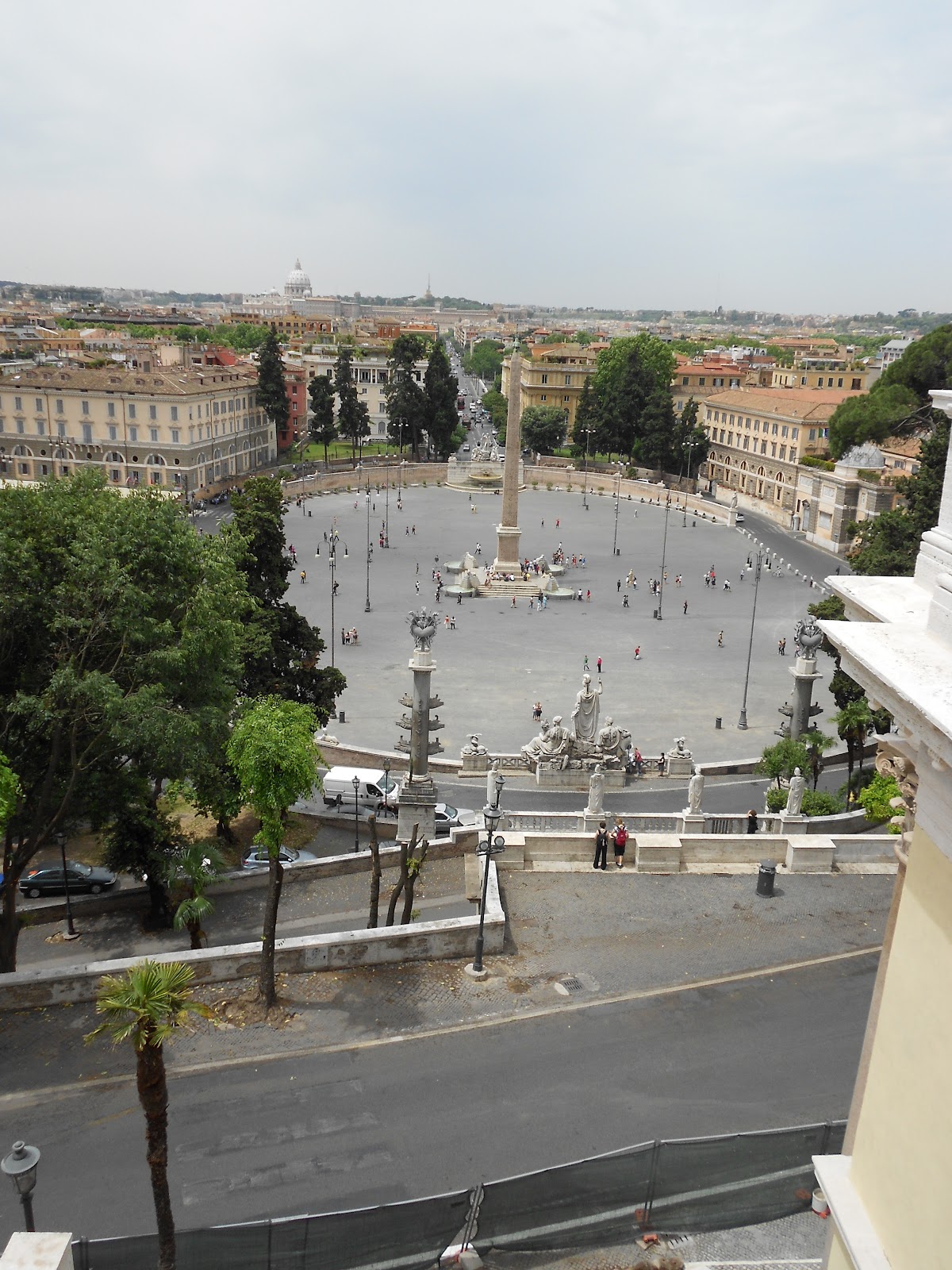
The obelisk in the Piazza del Popolo is over 3,000 years old and was brought to Rome by Augustus to adorn the Circus Maximus. It was erected here in 1589 by Pope Sixtus V.

The Piazza has a chequered past with all manner of gruesome events having come to pass in this neat and ordered space. Like public executions, with some of the condemned being hammered to death by repeated blows to the temples (the last criminal was executed in this way in 1826) and riderless horse races where stimulants, nail-studded belts and fireworks were employed to ‘encourage’ a faster pace from the participants.

But enough of all this barbaric talk. Up to the right of the Piazza lies the Pincio Gardens, a place of green tranquility…and more great views over the roof tops of Rome. We’ll need to pace ourselves though – the walk is steep.
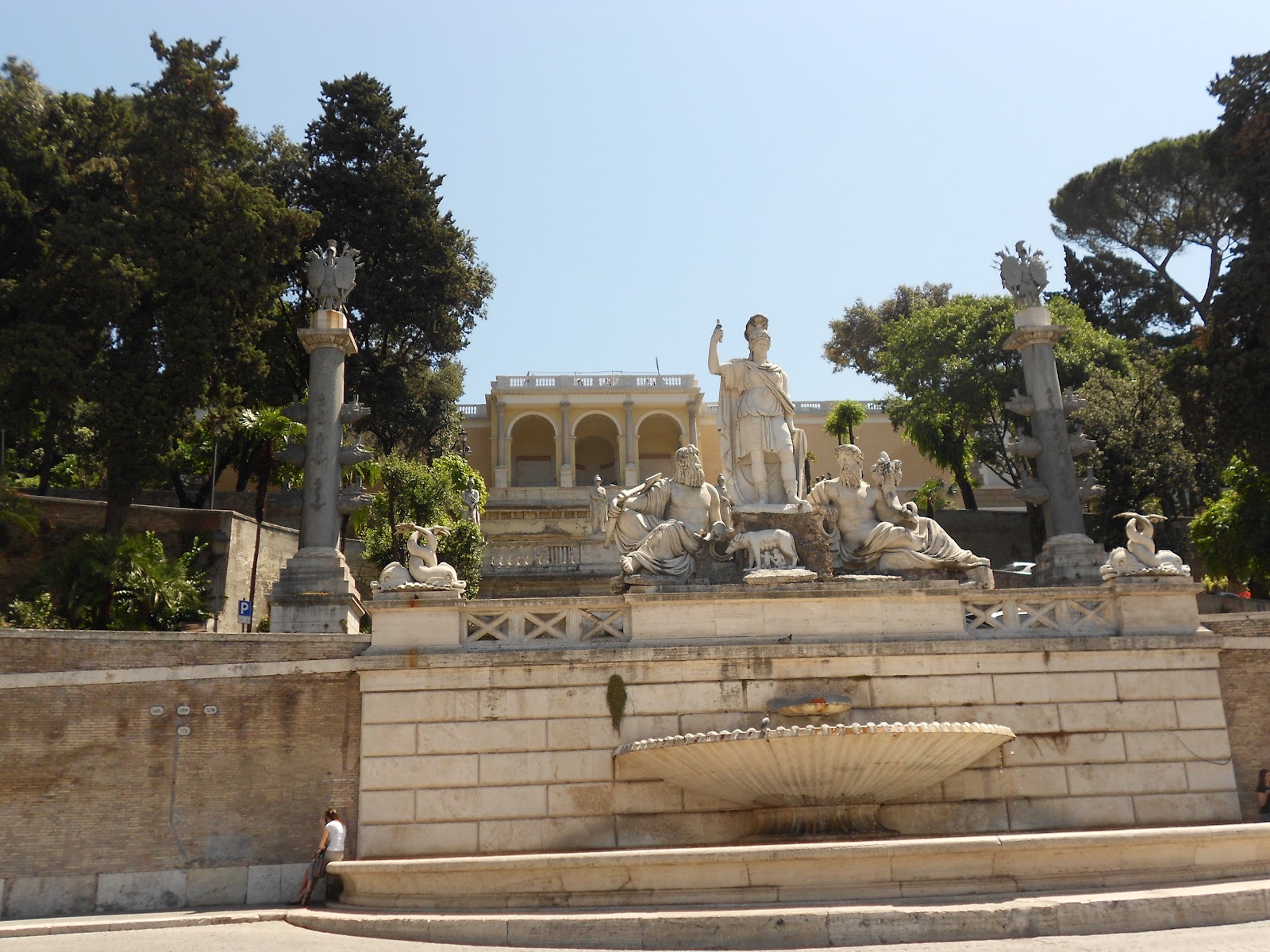
The view from the bottom…
…and from the top…

Turning around we face the Pincio Gardens and a short stroll through the trees brings us to the old and the new sitting comfortably side by side.

The Viale del Muro Torto, the ‘injured wall’.

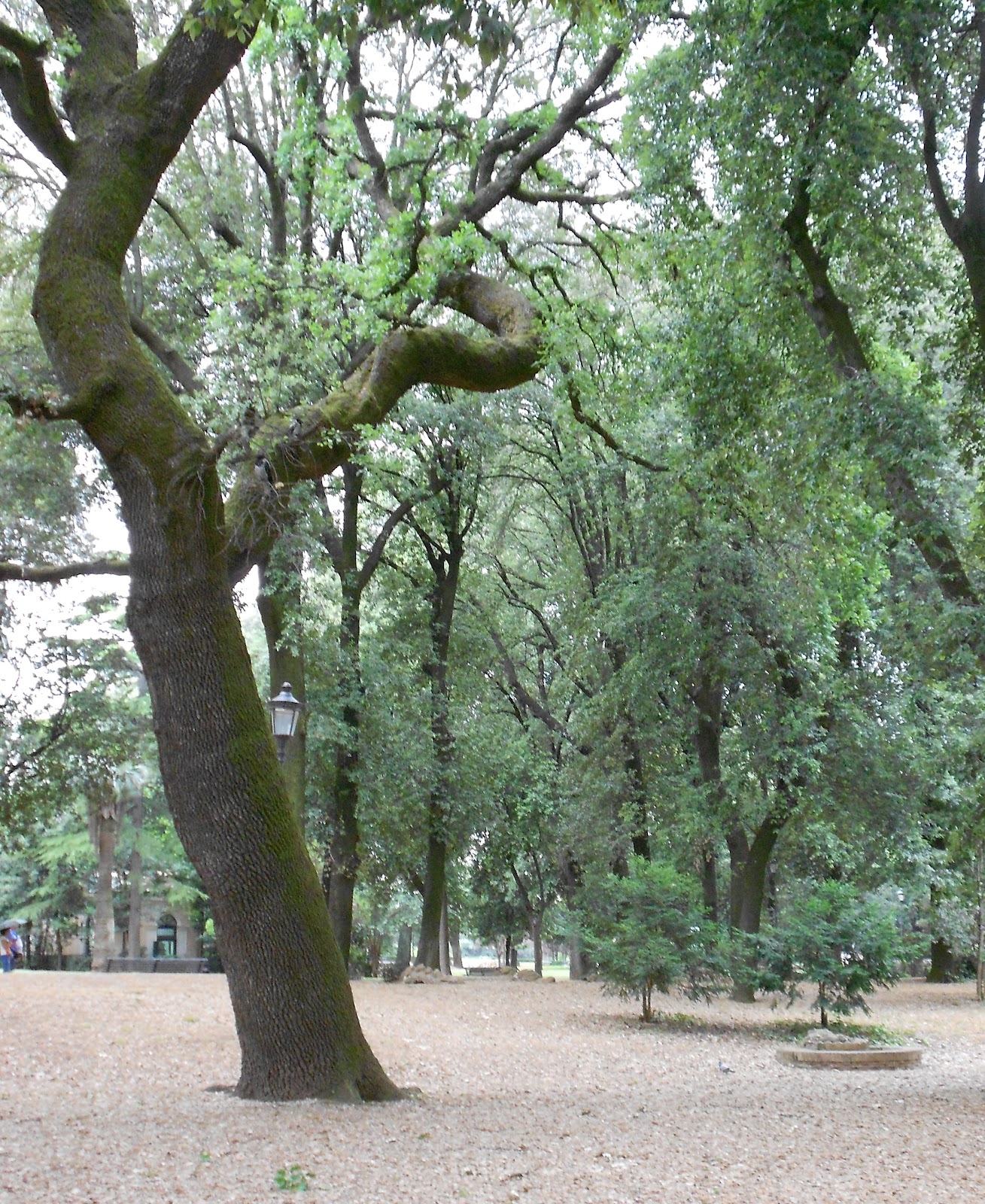
Our final wander takes us through the lush woodland around the Villa Borghese…

Rome’s second heart perhaps?
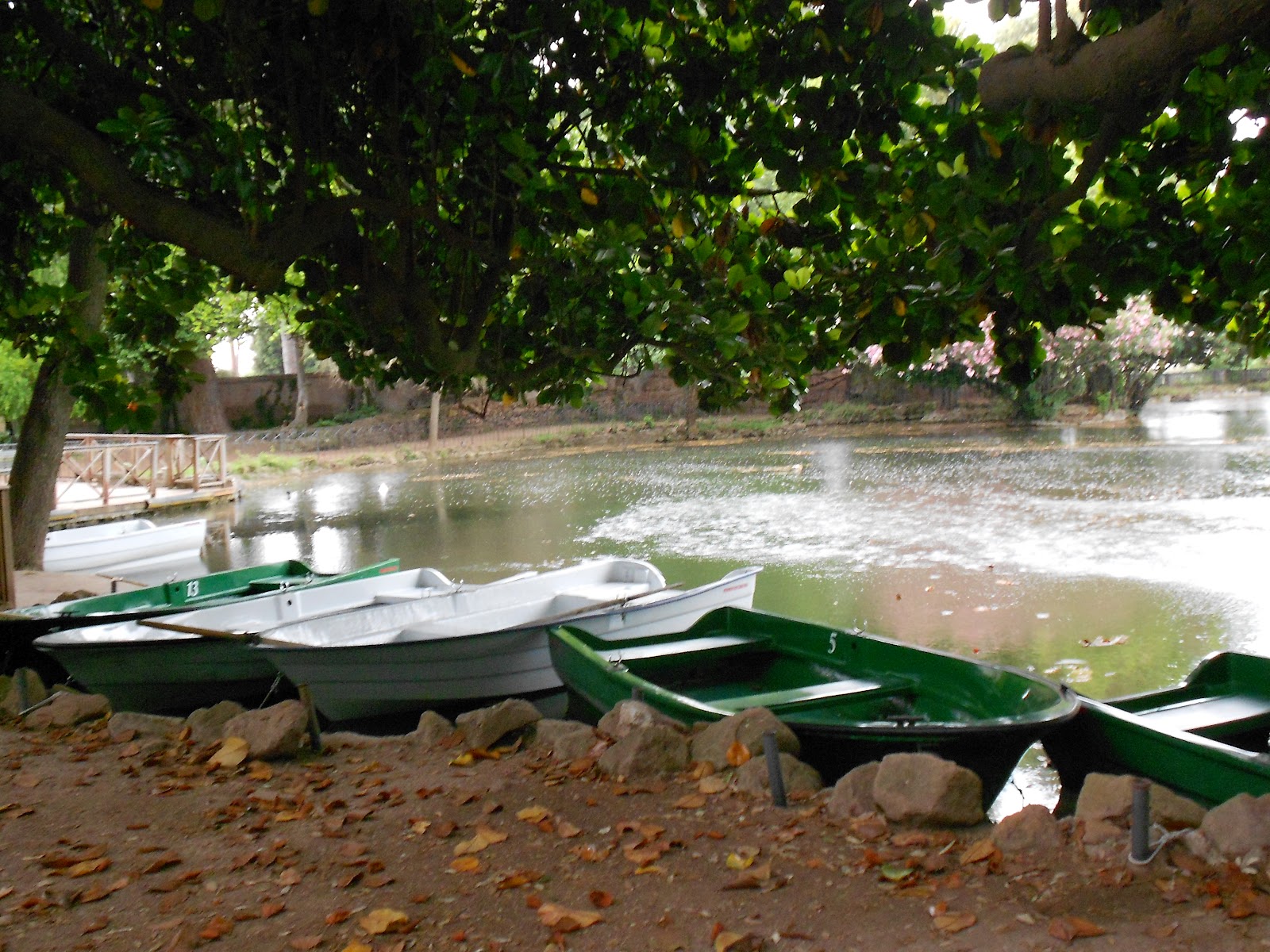
If we go down to the woods today…
…a boating we may go.

…a peaceful place for us to stop a while.
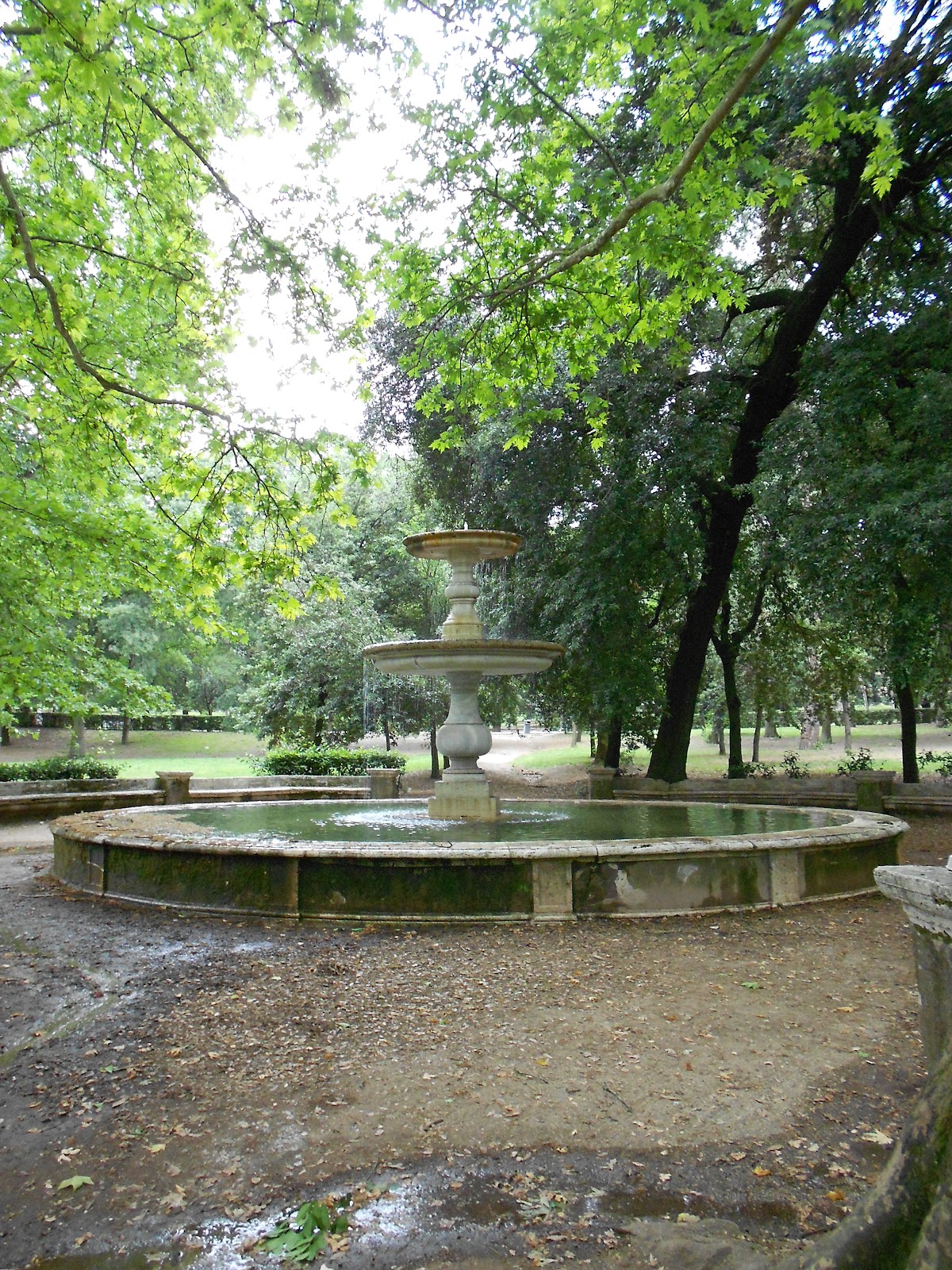

Take a deep breath in and feel the rain-fresh air fill your lungs. Breathe out and listen to the sound of the water running into the fountain.

Before we leave the park, let’s pause for a few minutes and admire the Villa itself…
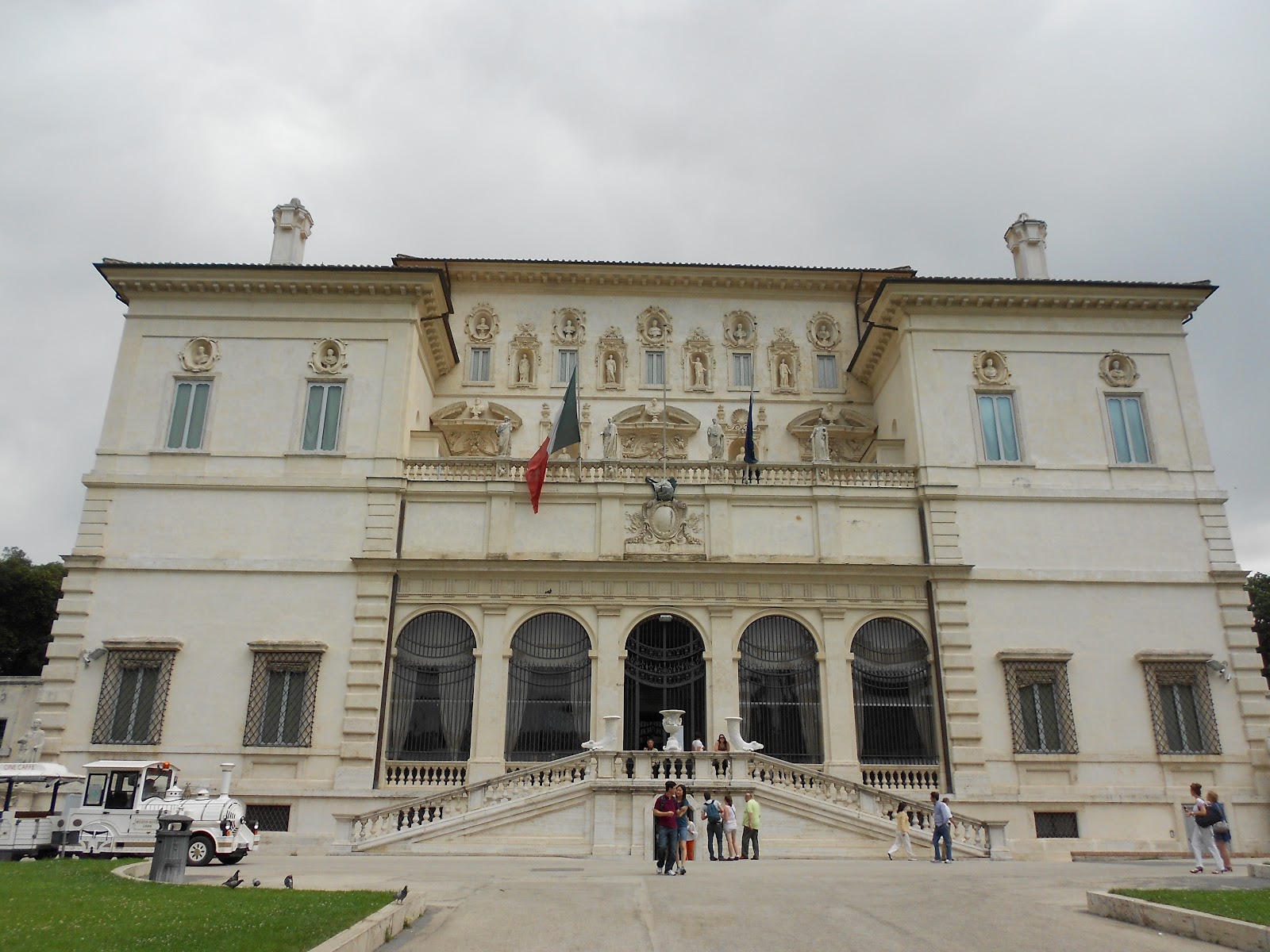
Built in 1605 for Cardinal Sciopone Borghese, favourite nephew of Pope Paul V, the villa now houses the private Borghese collection of sculptures and paintings but you need to book to see it.

…before heading back to the hotel.

And so, dear Gidday-ers, here endeth today’s tour.

Have you booked your ticket yet?

A Holy Trinity…

Rome is chock full of churches. Every corner you turn there’s another one, beckoning you into its cool, placid interior. So a trip to the Eternal City would be incomplete without a few worshipful visits – and, given the number of ‘working’ churches – more than 900 according to wikipedia – probably unavoidable. And as they say, when in Rome…

Firstly let me say that I did the Vatican Museums and St Peter’s all those years ago on my first visit so I had already deemed a visit there unnecessary. And while I visited more, the three featured here sum up the impact of my religious experiences during the 4 days.

I’ll start with the Pantheon which stands proudly facing the Piazza della Rotunda. From the outside, it looked like all the pictures I’d seen in books and while not top of my ‘must cross Rome to see’ list, I was there, the day was warm and its shaded portico beckoned.

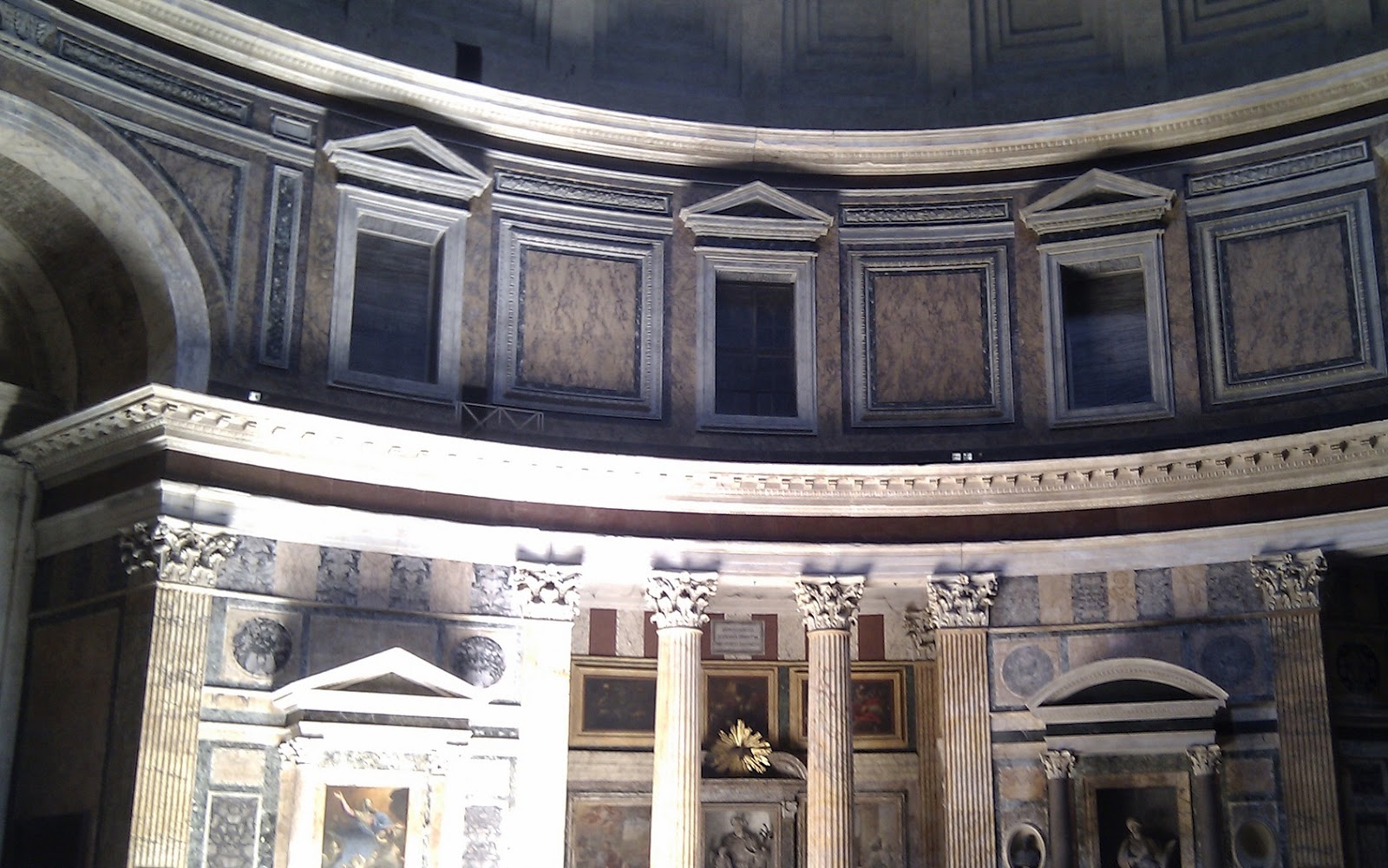
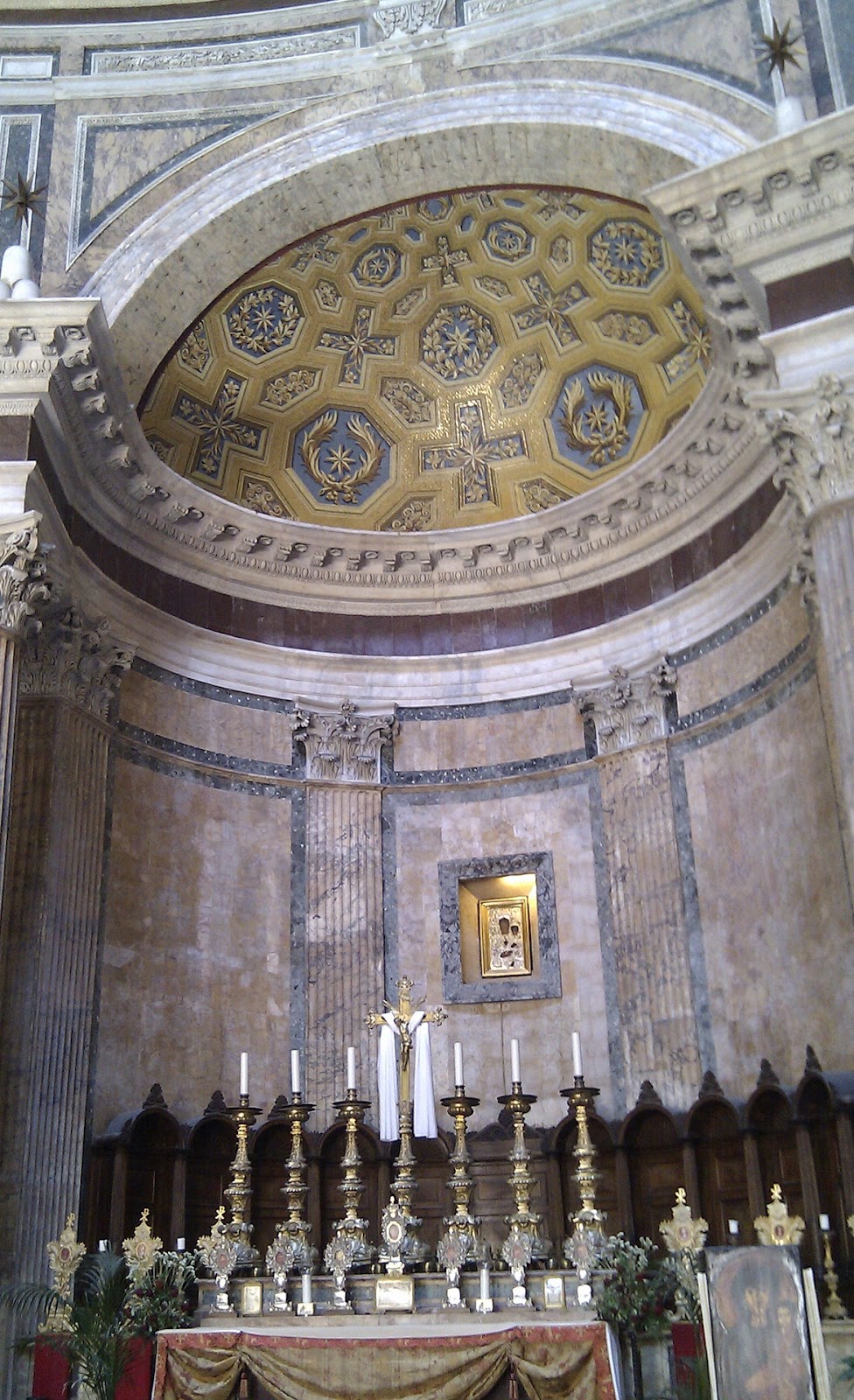
Nothing prepared me for the interior.

The domed ceiling is absolutely huge with the central ocular being the only source of light in the church 


The decorative friezes, ceilings and alcoves are fantastically well-preserved and I could only stare (mouth slightly open) at the awe-inspiring surroundings that Hadrian’s Romans built to worship their gods.
This is the tomb of Raphael (Sanzio), the Renaissance architect and artist who was a younger contemporary of Michelangelo and created many great works throughout Rome during his life.

I emerged again into the bright sunlight, feeling the heat on my skin after the cool under the Pantheon’s great dome. After a quick peek at Tazza D’Oro (famed for its coffee but lacking appeal for little ol’ moi with a line of customers extending out the door) and a watering stop at the fountain (you can drink the water from the majority of Rome’s fountains so my water bottle had a real workout), I continued my south-bound meander towards Gesu (more on this further on).

My next stop was completely unplanned and brought on largely by a desire to get out of the heat. (A girl has to pace herself you know – I’m not used to all this 30C plus weather any more and I had a whole 4 days of it to look forward to.) Santa Maria sopra Minerva dates from the 13th century and was built over the ruins of the Temple of Minerva. The piazza is marked by an unusual inhabitant…

This elephant and obelisk sculpture was originally created to grace the Piazza Barberini. The elephant, an ancient symbol of intelligence and piety, was sculpted onto Bernini’s obelisk by Ercole Ferrata

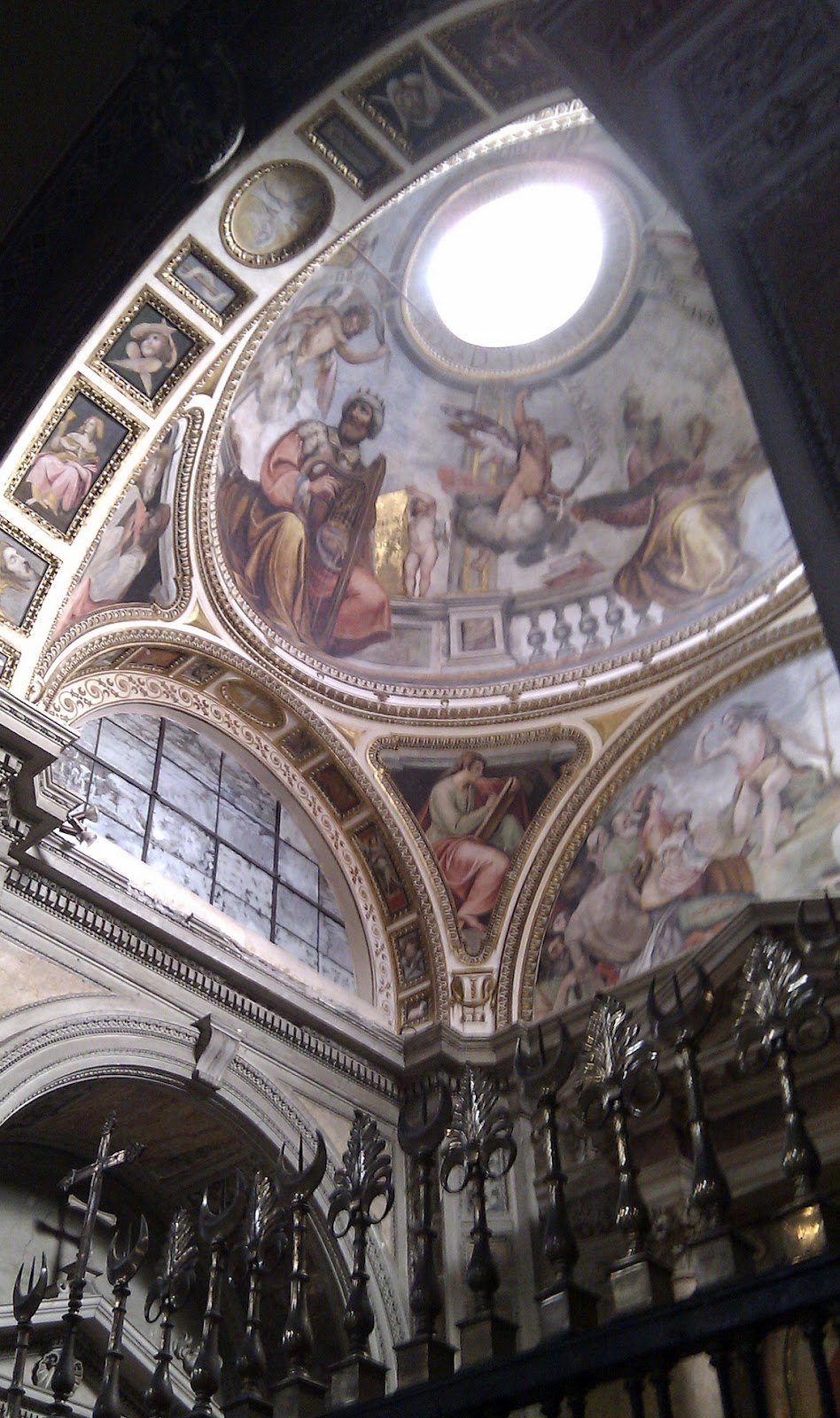
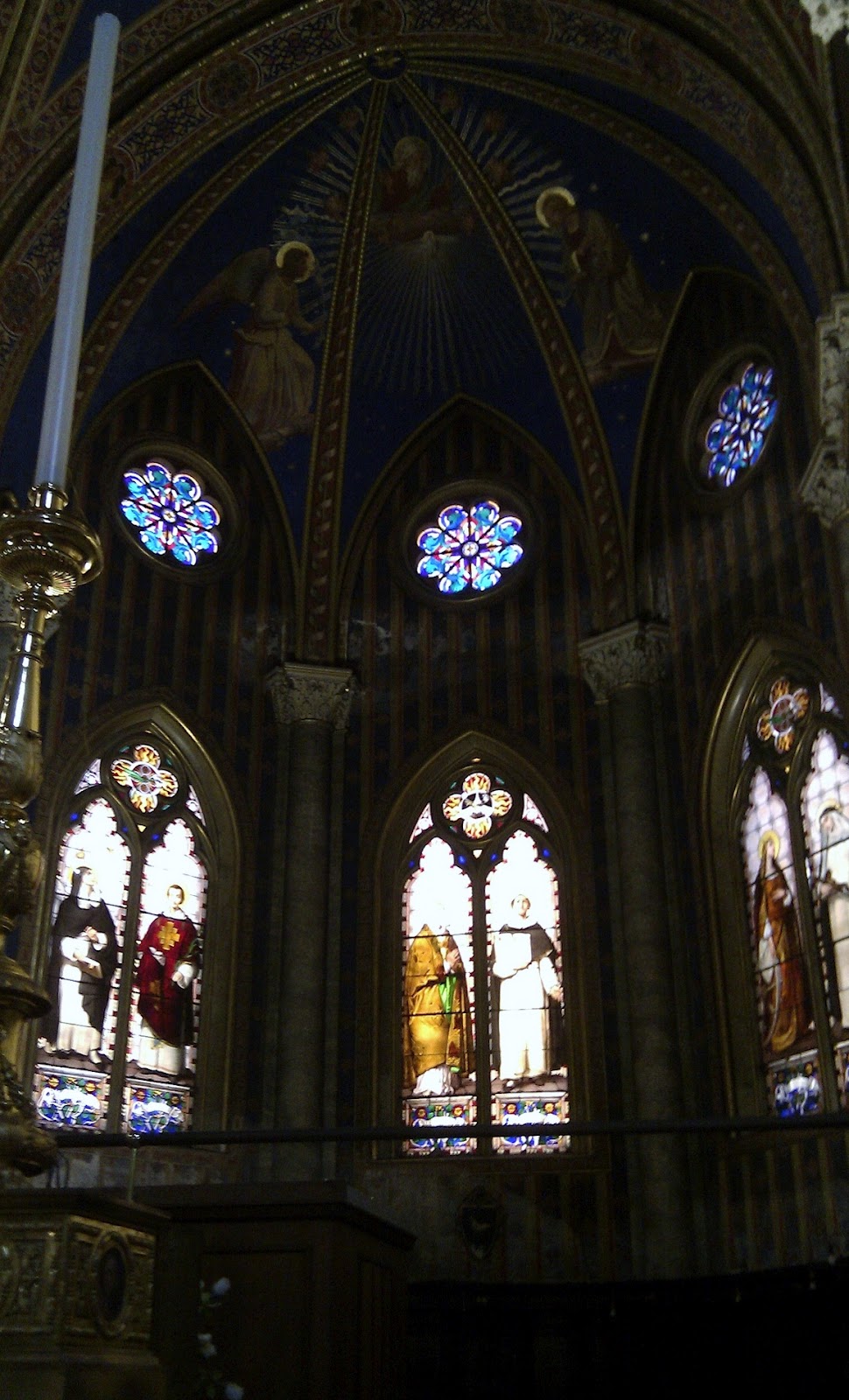
Once inside, the mix of Gothic architecture and Renaissance and Baroque styles is stunning. The cornflower blue of the vaulted ceilings didn’t come out so well in my photos but I’ve includes some other faves here for you.

I loved the simplicity of this stained glass after the intricacy of the painted walls and domes…
…and that it reflected on the walls in all sorts of places.
This is carved in stone, While I get a bit bored looking at a lot of sculpture, I am always fascinated by the movement that can be created from something so inordinately inanimate.

I left to brave the heat again, quietly delighted at my unexpected moment of enchantment here. I set off southwards again, my destination this time being Gesu. Unfortunately, I arrived during closing hours so I returned the next day after re-checking with my trusty Eyewitness Travel Guide that this was worth making the diversion to the same area again.

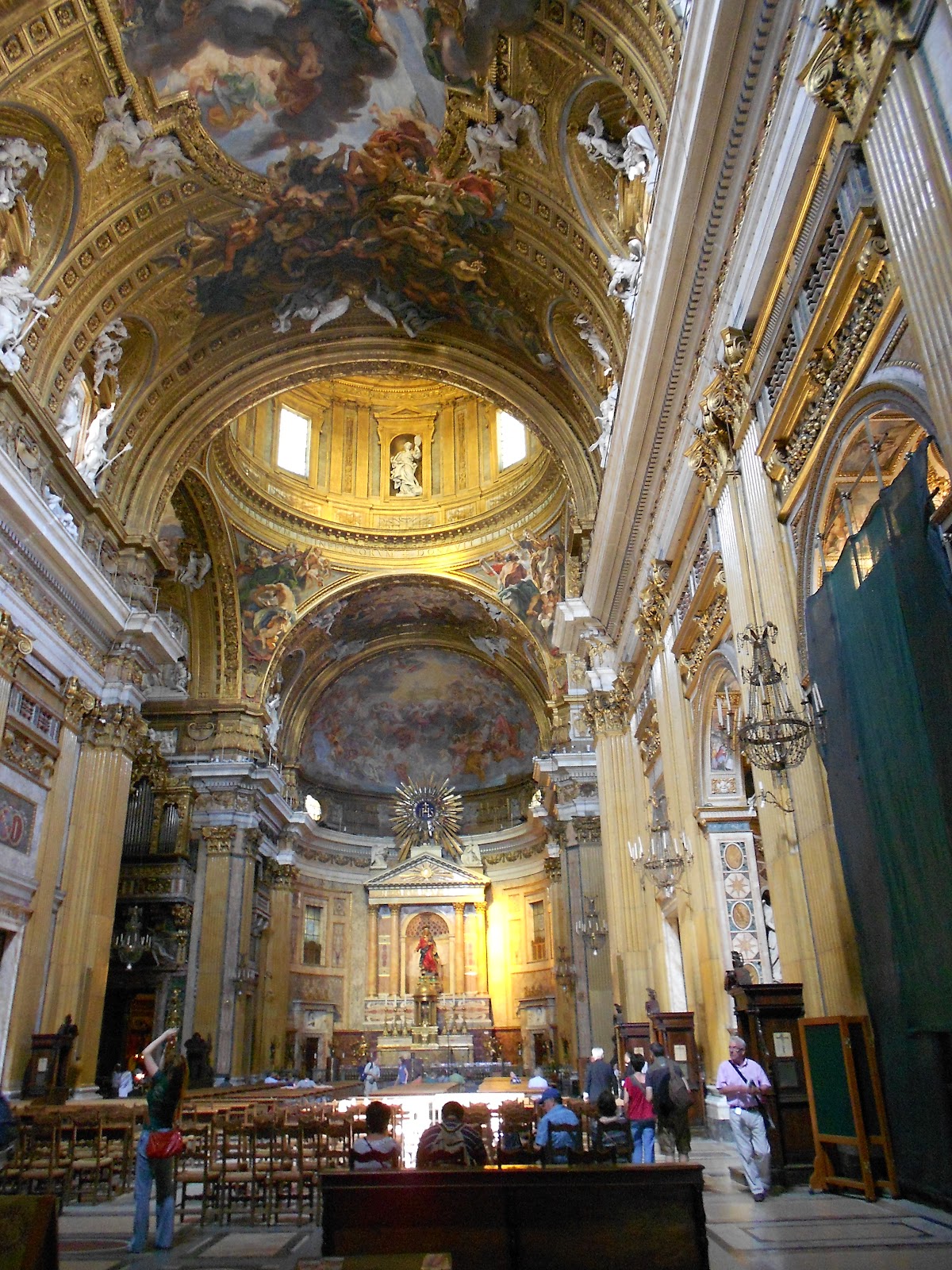
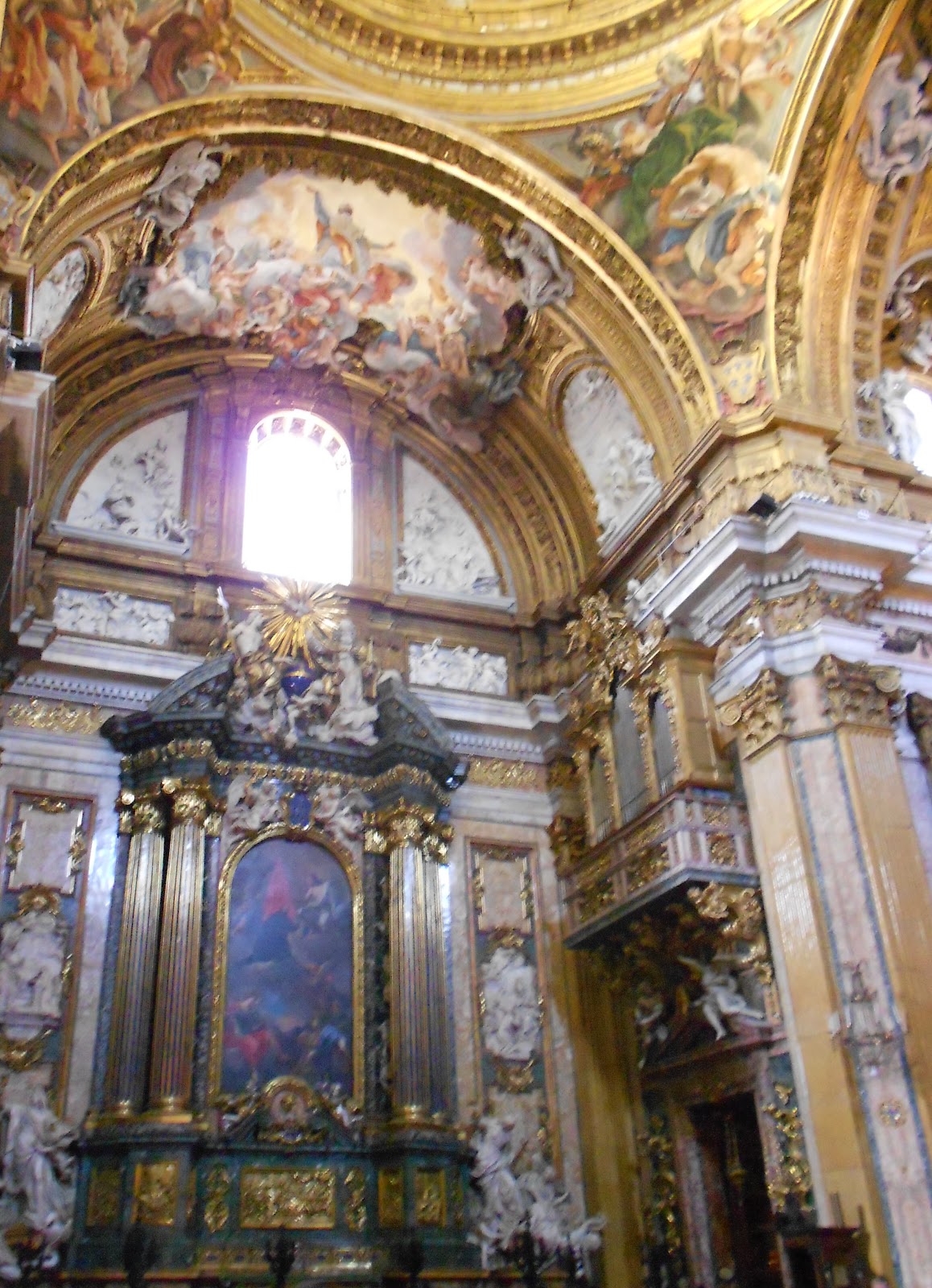
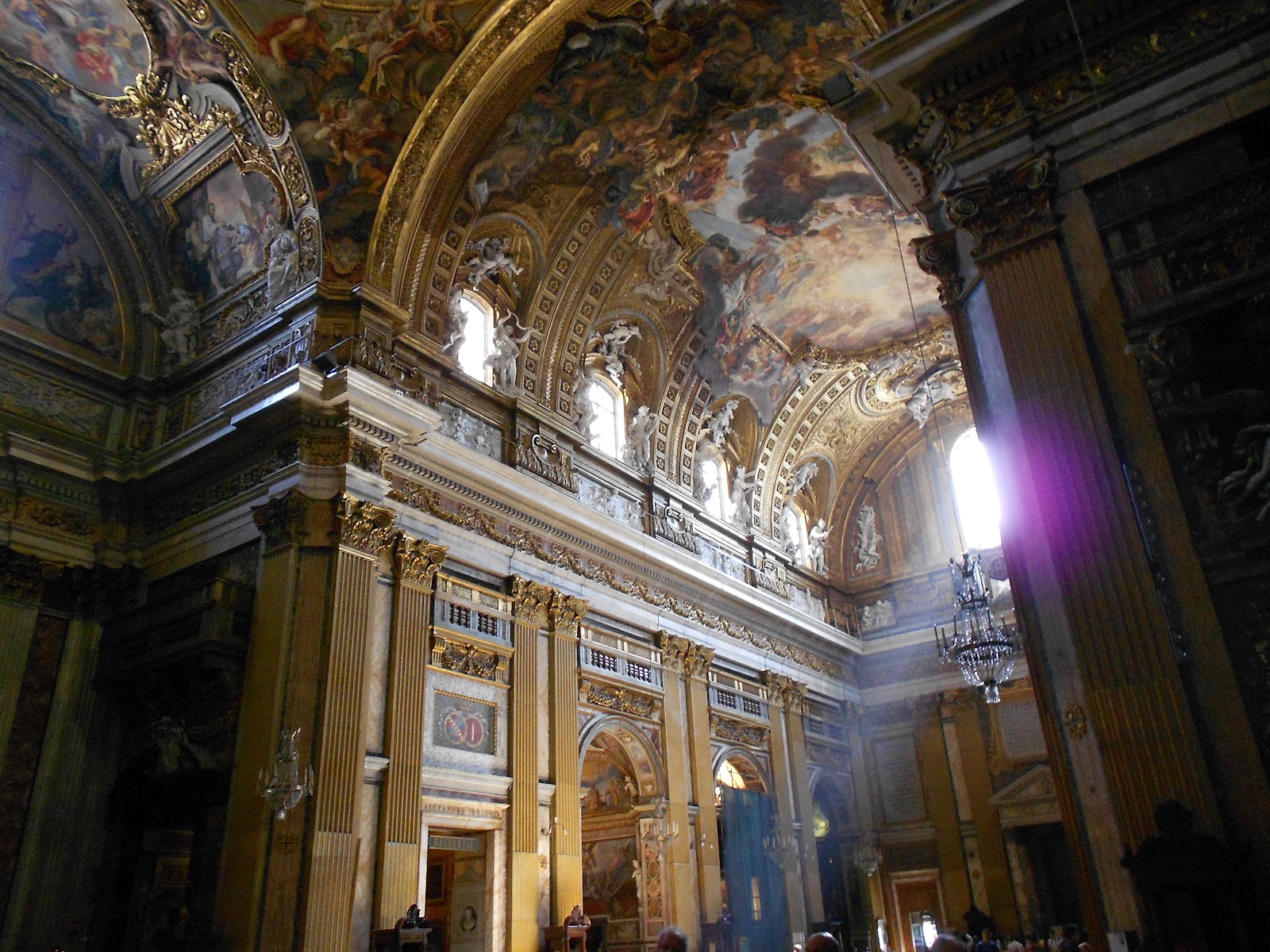
It was. Just check out the photos below.

Just so you know what to look for on the outside…

I was completely overwhelmed. This really is a beautiful church and anyone coming to Rome must visit (but make sure you don’t turn up between 1.30-4.00pm). I could have taken many more photos but actually spent time sitting, moved, by what I felt around me. It was a poignant and quite spiritual experience just being there.

I remember feeling overwhelmed by the detailed magnificence of the Sistine Chapel when I visited in 2000 but for me, there was a spirituality, albeit different, in all three of these beautiful churches that the Sistine Chapel didn’t have.

The Pantheon for its glorious space and simplicity.

Santa Maria sopra Minerva for the sense of discovery and enchantment.

And Gesu for its breathtaking colour and artistry – and for touching my soul.

The Gods of Rock…

So when last I posted, I was more than a little overwhelmed by my recent trip to The Eternal City. In 4 days I managed to cram what feels like a million little memories – and over 400 photos – into all of the nooks and crannies of my brain.

But I think I have started to make a little sense of it all and a few curious themes have emerged that, with the help of my trusty guidebook, I will use to share my Roman holiday with you.

The theme of this post is gods. Rock gods. Gods made of rock, that is. They are everywhere…but as usual, there’s a wry twist (my brain does work in some strange ways) so hope you enjoy the views in more ways the one.


The God of Shopping:
The Emperor Trajan built Trajan’s Markets, a ‘visionary’ complex of 150 shops and offices, around 100AD just near the Forum. It sold everything from imported silks and spices to fresh fish, fruit and flowers and was considered one of the Wonders of the Classical World. (There’s hope for Westfield yet.) I wonder what sorts of things the Romans spent their TrajanCard points on? 
The God of Vertiginous Places
The Archangel Michael stands atop the Castel Sant’Angelo, the place that bears his name. (Let me tell you it’s high up there but the view is worth it.) He also pays tribute to the legendary appearance of the real archangel over the fortress in the 6th century which allegedly marked the end of a rather nasty plague. Despite being made of bronze, he is a god who definitely rocks.


The God of Cutting Off One’s Nose…
He stands in the Courtyard of Honour at the Castel Sant’Angelo. It looks like he began life as a mere statue and in a fit of jealous pique, stuck some questionable wings on his back, aspiring to the greatness of the one upstairs – the Archangel Michael, that is. This diva strop probably cost him the top spot on the terrace and he is now relegated to merely overseeing the courtyard (and the entrance  the current Cupid and Psyche exhibition).
The Gods of Rock (n Roll)
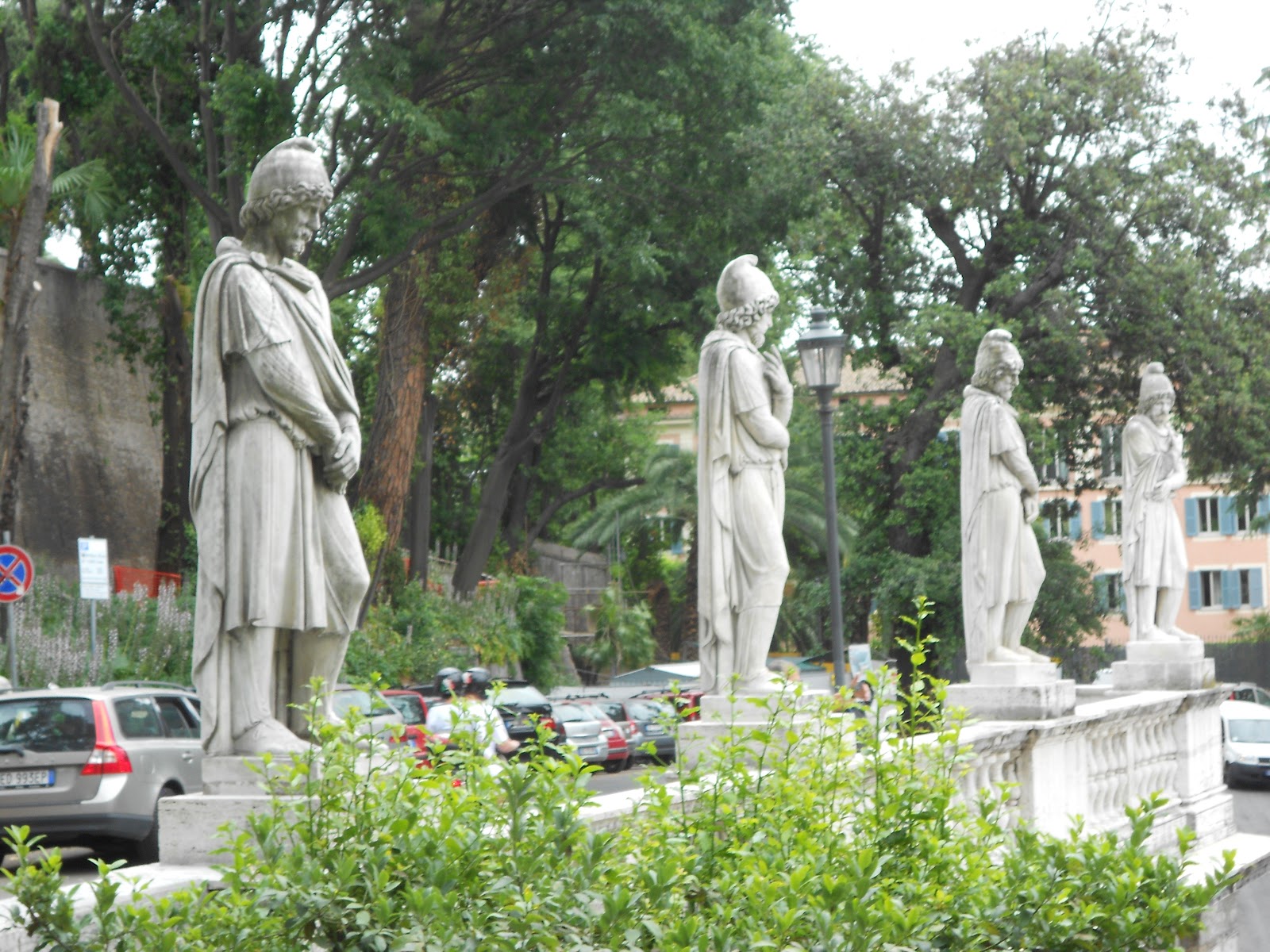
Located at the Pincio Gardens end of the Piazza del Popolo, this foursome overlook ‘The People’s Square’ which was the main entrance into Rome for the pilgrims. The Piazza, described by wikipedia as an ‘oval square'(?), was the site of public executions for centuries. Hope no-one ‘lost their head’ over this fab four.
The God of Useless Gifts
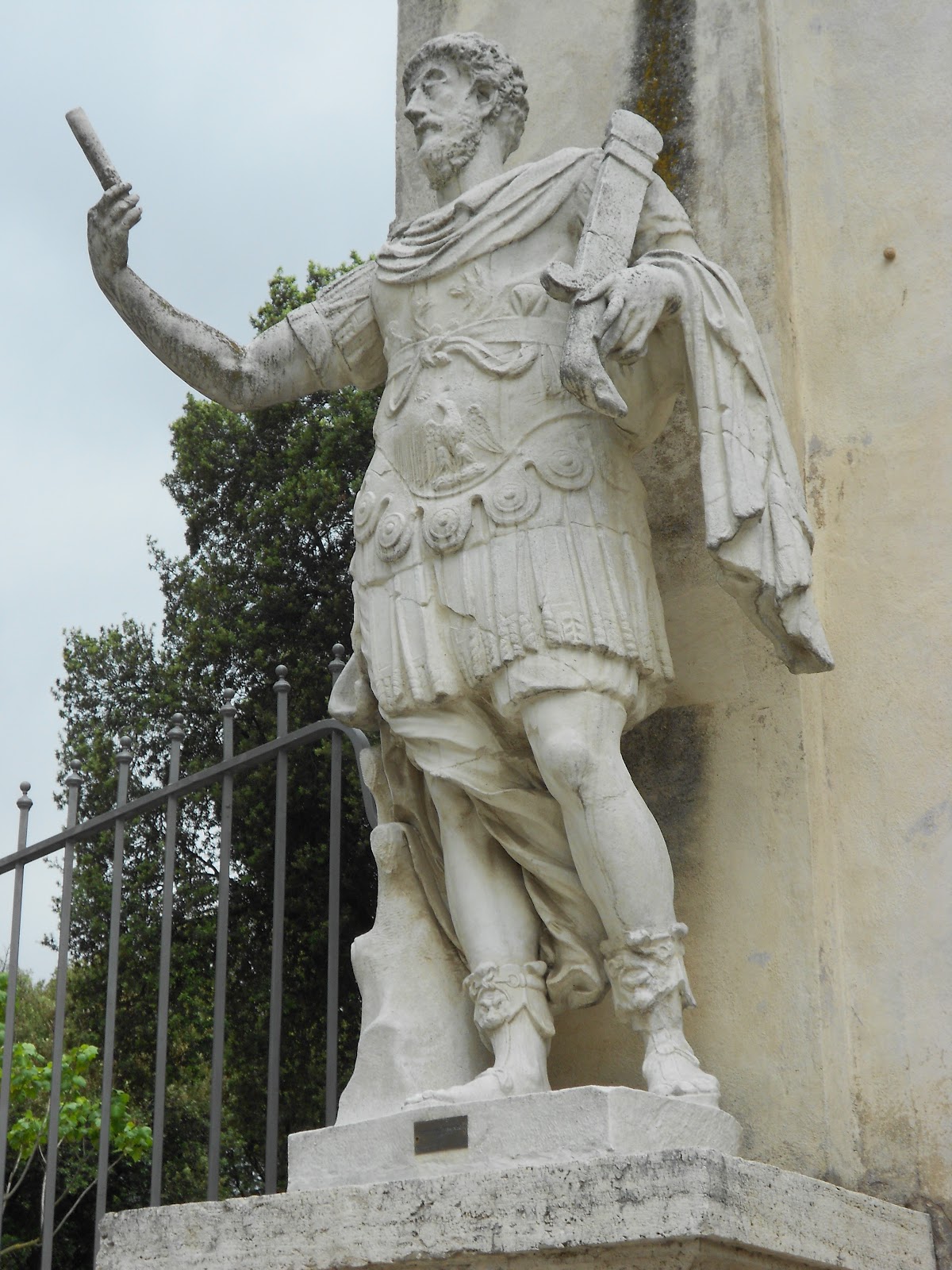
This statue is probably a testament to something quite serious and memorable but I thought he looked liked my sister and I do when extracting our annual Christmas crap tat from the toe of the stocking. Like ‘really? What on earth am i going to do with this?’ (Love you Mum)
The God of Hide and Seek
This cupid peeks over the edge of the Santa Francesca Romano at the eastern end of The Forum. It beats getting lost trying to find your way through all those basilicas and temples and such – he’d have a nice clear view down the Via Sacra from that vantage point.

The God of Being Underfoot
I think this one’s a King but I was in the process of being asked to leave Santa Maria del Popolo as they were closing. This was poor planning on my part. I thought I had visited this church earlier in my trip but on checking my trusty Eyewitness Travel Guide, discovered that I had lit a candle in Santa Maria di Miracoli on the opposite side of the piazza instead. So I dropped in, unplanned, on my last morning after wandering down from the Pincio Gardens and it was a very quick and sneaky snap on the way past the man speaking Italian at me as if I understood. I felt (and ‘this’ was) in no uncertain terms, underfoot.

The God of Wishful Thinking
We’ve all heard of the Trevi Fountain – it’s one of the most popular places the tourists go and I braved the hordes on my first night  – that’s why you get the strange yellow lighting in this photo. The Fountain was built in the 18th Century to mark the place where the Aqua Virgo aqueduct ended and features the god Neptune and 2 Tritones. Legend has it that throwing a coin in the Trevi will guarantee a return to the Eternal City – it worked for me last trip so I added another to the pile glistening beneath the surface.
The God of Stealth
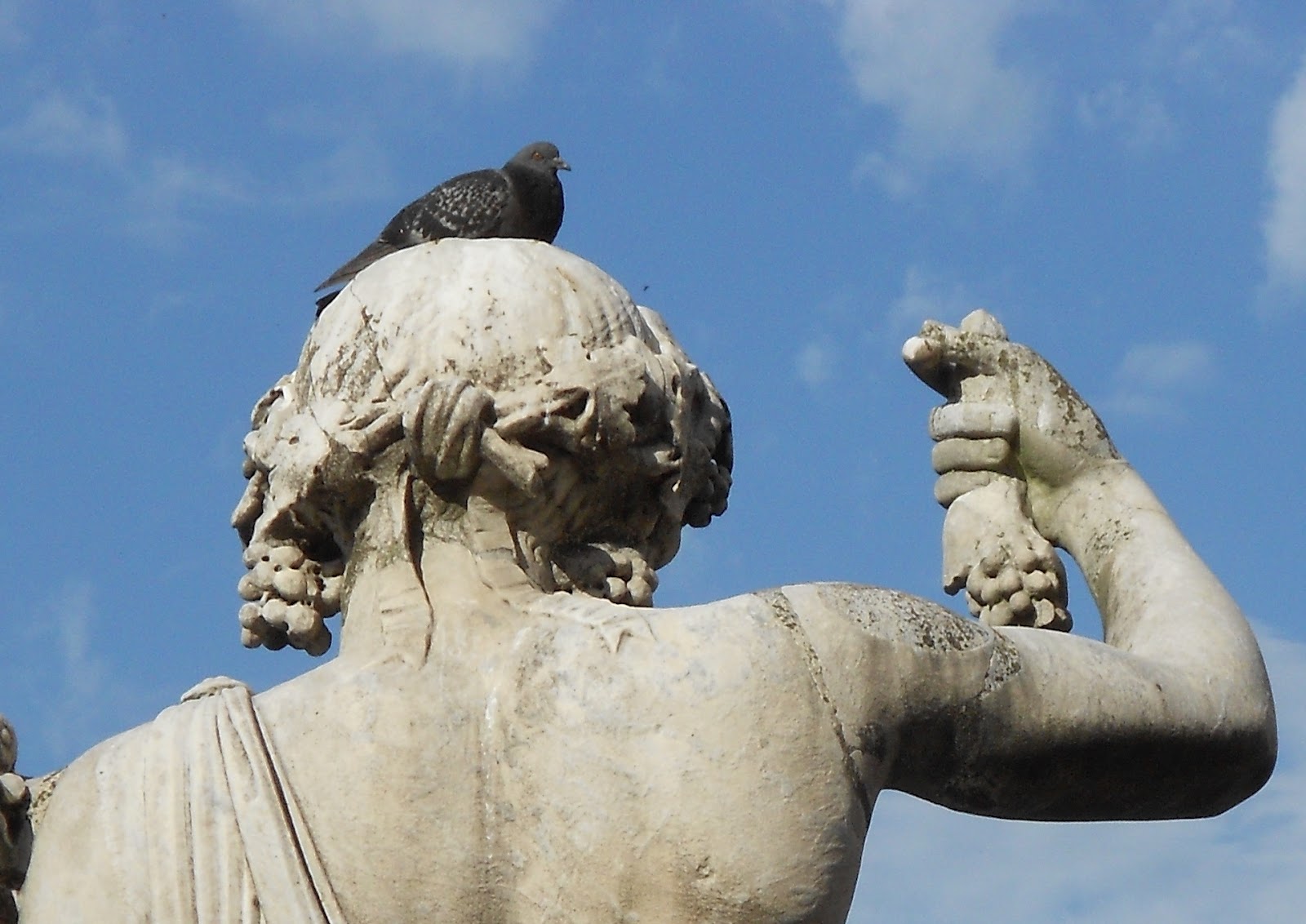
I couldn’t help but take a photo from the top of the open-top bus as we whizzed past the Piazza del Popolo and down the Via Ripetta. Check out this cheeky critter angling for some of those grapes. Little does he know they have a heart of stone. Oh well…pigeons will be pigeons.

So there’s your first peek around Rome’s Rock Royalty. If you enjoyed this armchair tour, you might like to stay tuned for more of my irreverent ramblings, coming soon to a browser near you…

Passage of Time…

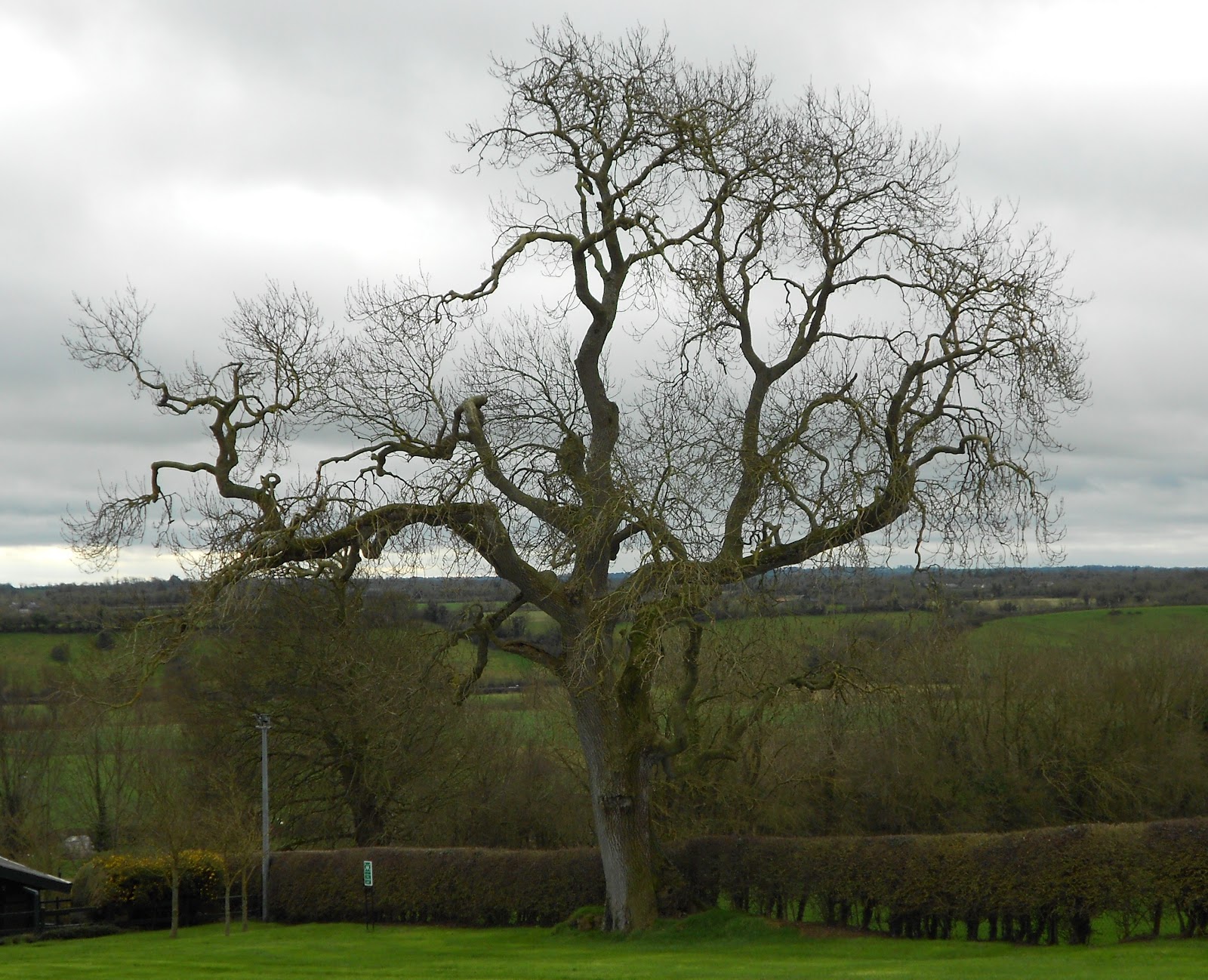
One of my most inspiring moments during my recent trip to Dublin occurred at Newgrange in the Boyne Valley. Mum had been disappointed to miss this last time she visited, so this was on the ‘must do’ list for our soujourn in the Emerald Isle. It was awesome – and I mean that in the original sense of the word.

Newgrange is a 45 minute drive north of Dublin and is part of a complex of 40 passage tombs located in the Boyne Valley. It was built approximately 5,000 years ago, pre-dating the Great Pyramids of Giza and, along with neighbouring passage tombs Knowth and Dowth, has been designated a World Heritage Site by UNESCO.


Most famously, Newgrange is recognised for its importance in relation to the Winter Solstice. On the 21st December each year, the rising sun sends shafts of light through the roofbox above the main entrance, the light creeping forward in a point shaped by the walls of the passage to illuminate the sacred chamber at the end before receding for another year. Even more fascinating is that this ritual is mirrored at Dowth at sunset on the same day.

The illuminated passage at Newgrange. Source: http://www.newgrange.com

It is difficult to imagine just how these were built. Much like the more famous temples of ancient Egypt and Britain’s own Stonehenge, there is continued fascination surrounding their positioning and enduring construction methods as well as the role that these monuments played in the life of Stone Age communities.

Evidence has been found of farming in the area as early as 3800 BC but it appears that the main construction of Newgrange commenced in 3300 BC. It is suggested that Newgrange was built to the shape of the ridge and the original ground plan laid out first with both the entrance stone and back stone placed along with the stone at the back of the main chamber as markers.
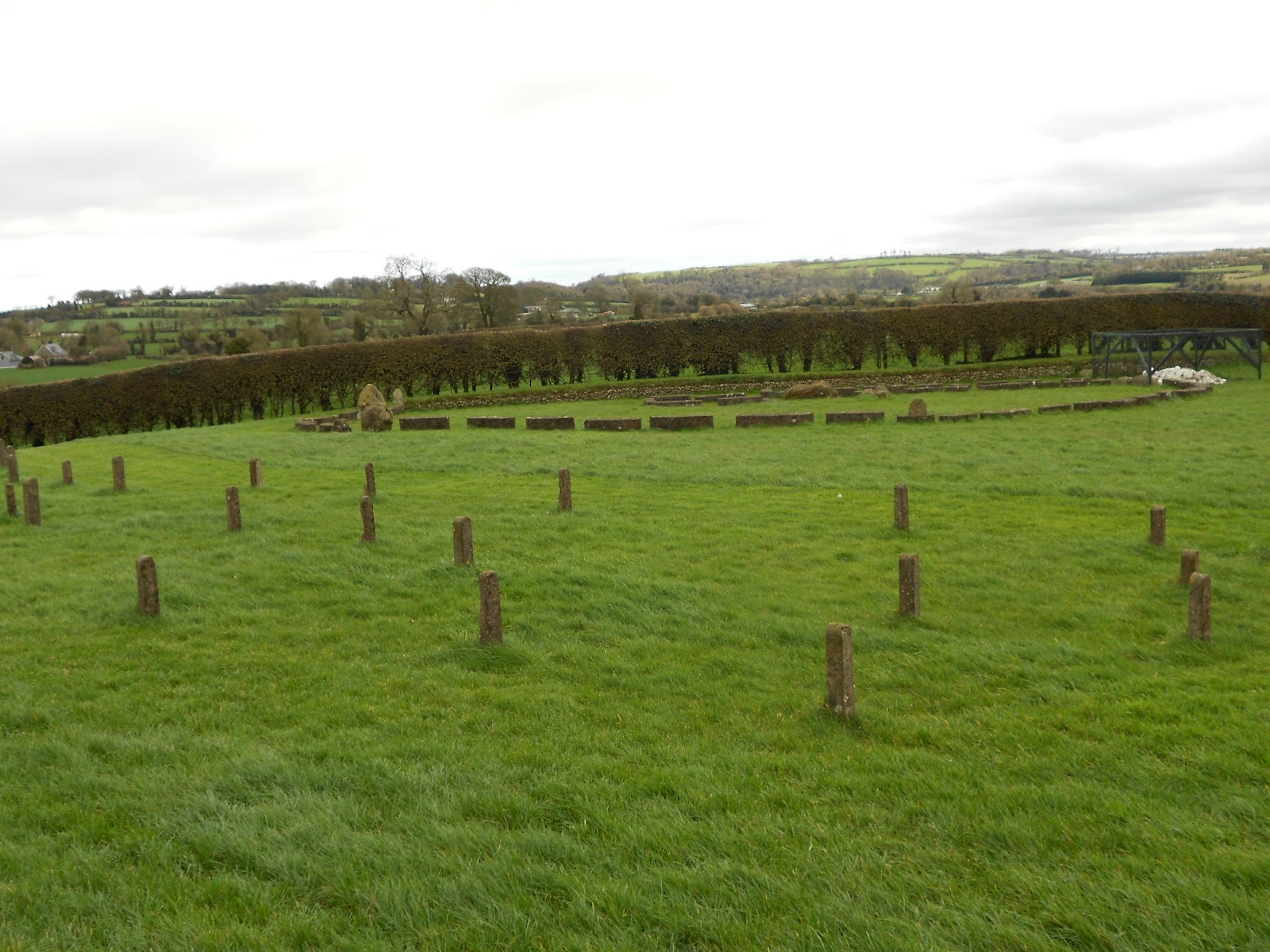
From about 3000 BC, Newgrange took its final shape. This model shows 4 smaller passage tombs built, some before and some afterwards, in line with Newgrange.
After the final blocking stone was placed, the focus moved to external monuments from 2800 BC for a period of 600 years.
Access to Newgrange is a 4 minute trip by bus from the Visitor Centre and only available with a guide so we booked our places and spent an hour completely amazed….
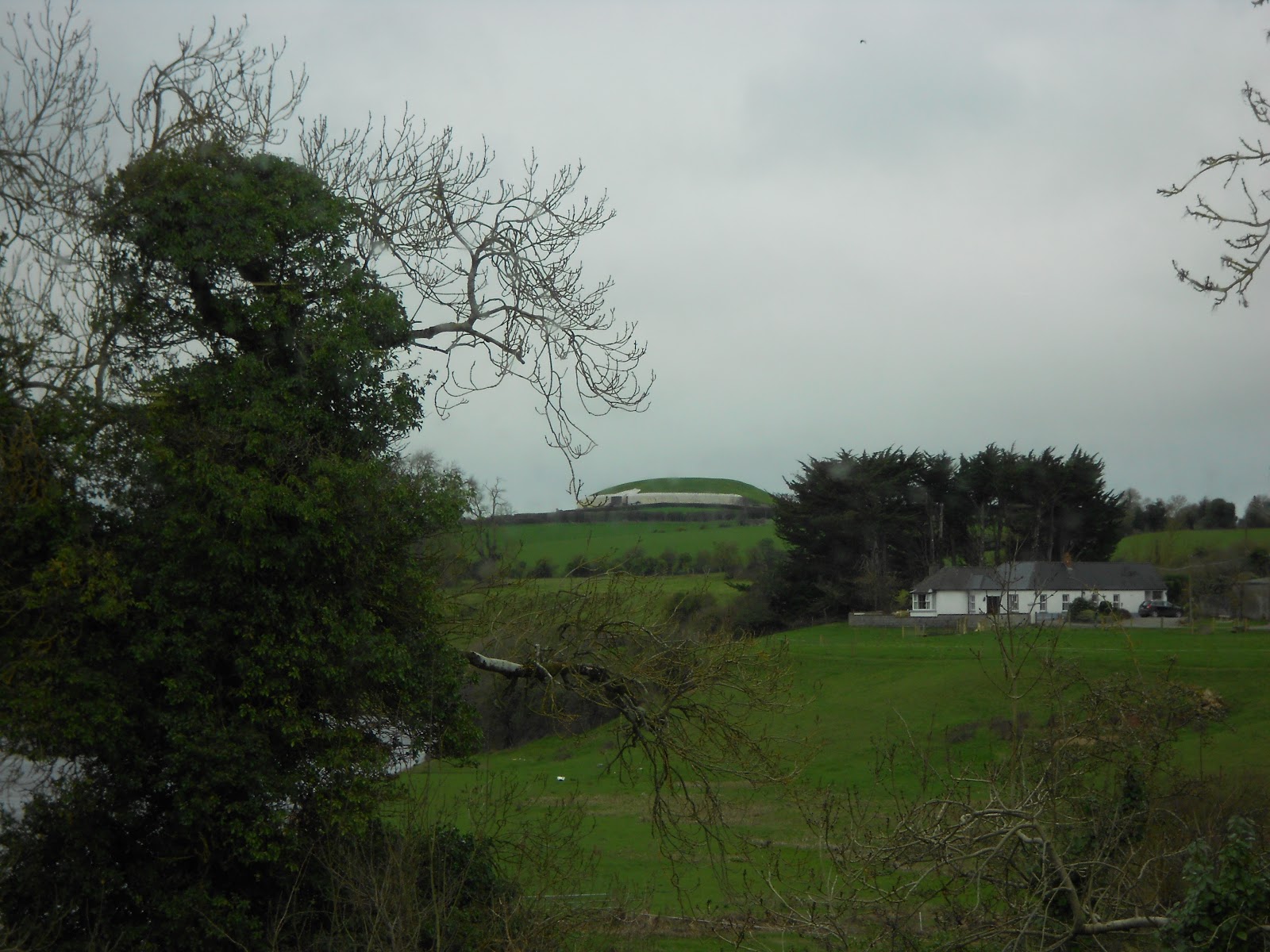
Newgrange from the Bru na Boinne Visitor Centre
Newgrange is surrounded by stone markers, the significance of which remains a mystery.
Going inside the tomb was completely amazing and included a short ‘re-enactment’ of the Solstice experience. To think that we stood under a 5,000 year old corbelled stone ceiling that no light or water has ever penetrated. Awe-inspring stuff.

There are a number of highly decorated stones at Newgrange both inside and outside the monument. Many show the triple spiral which has featured in carvings as far back as those of the Australian Aborigines 40,000 years ago.
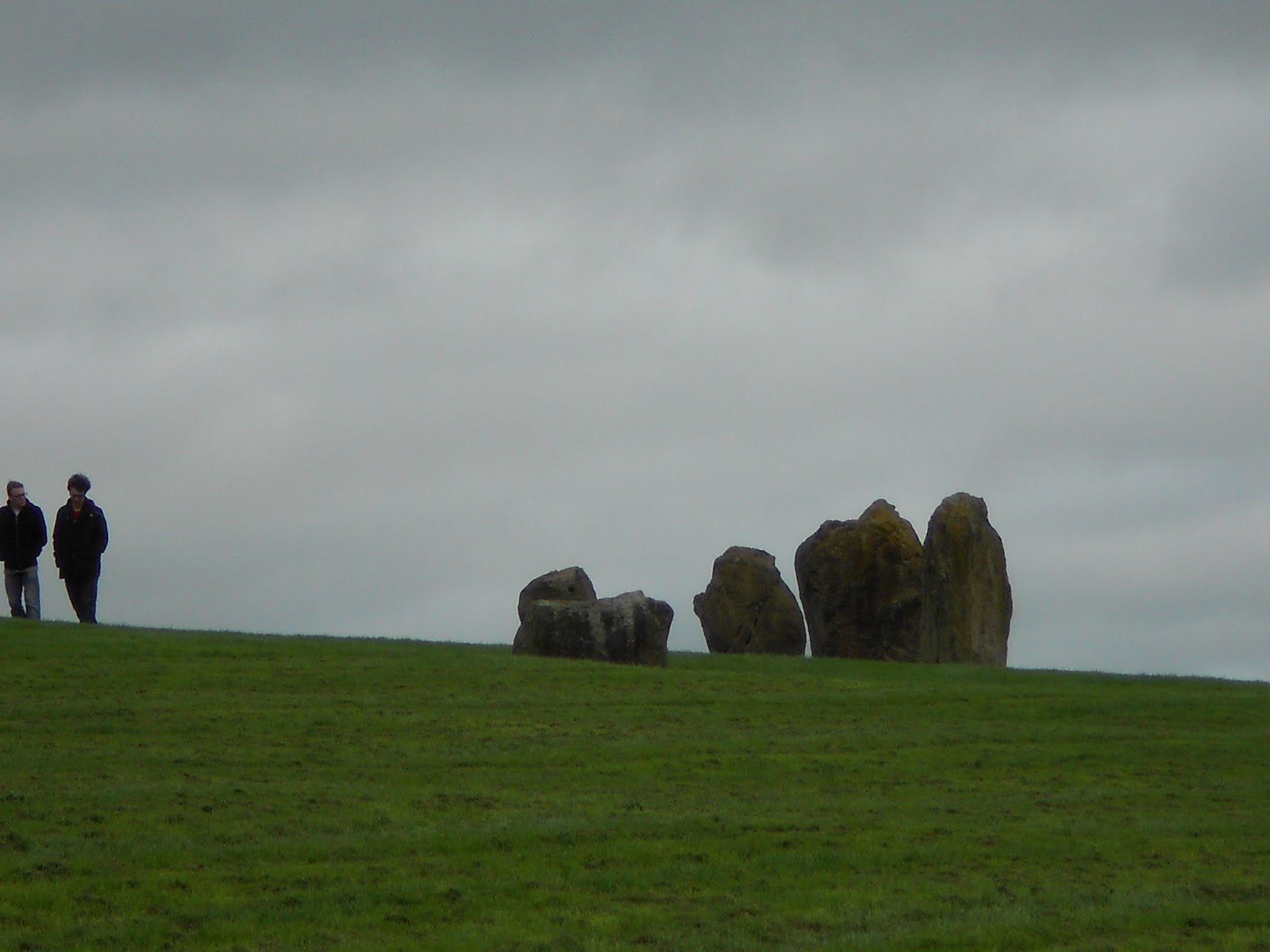
The views from the entrance of Newgrange across the Boyne Valley are spectacular. Most of our visit was beneath sunny blue skies but this moment of cloud gave it something of a portentous feel.
These photos do not come close to doing it justice but how do you capture a sense of history and atmosphere like that? All I can say is that this was my trip highlight, my enchanted moment so to speak. In fact I was so inspired that I entered the lottery to attend this year’s Winter Solstice at Newgrange so keep your fingers crossed for me! 
Oh and I get to take ‘a friend’….any takers?
———————————————-
Interested in finding out more about Newgrange and the passage tombs of the Boyne Valley? Check out http://www.knowth.com/bru-na-boinne.htm

Colour And Character…

So this is the first Dublin post. But it’s probably not what you expected. There’s no Guinness, no leprechauns, no national heros, no river dancing.

To be honest, I wondered what to post about. While I enjoyed Dublin, I didn’t really have that moment of enchantment, that second that, as I round some corner and go wow, makes me want to return. But as I went through my photos, I realised that I’d managed to capture an unexpected aspect of Dublin’s colour and character…so eyes up people, here we go…

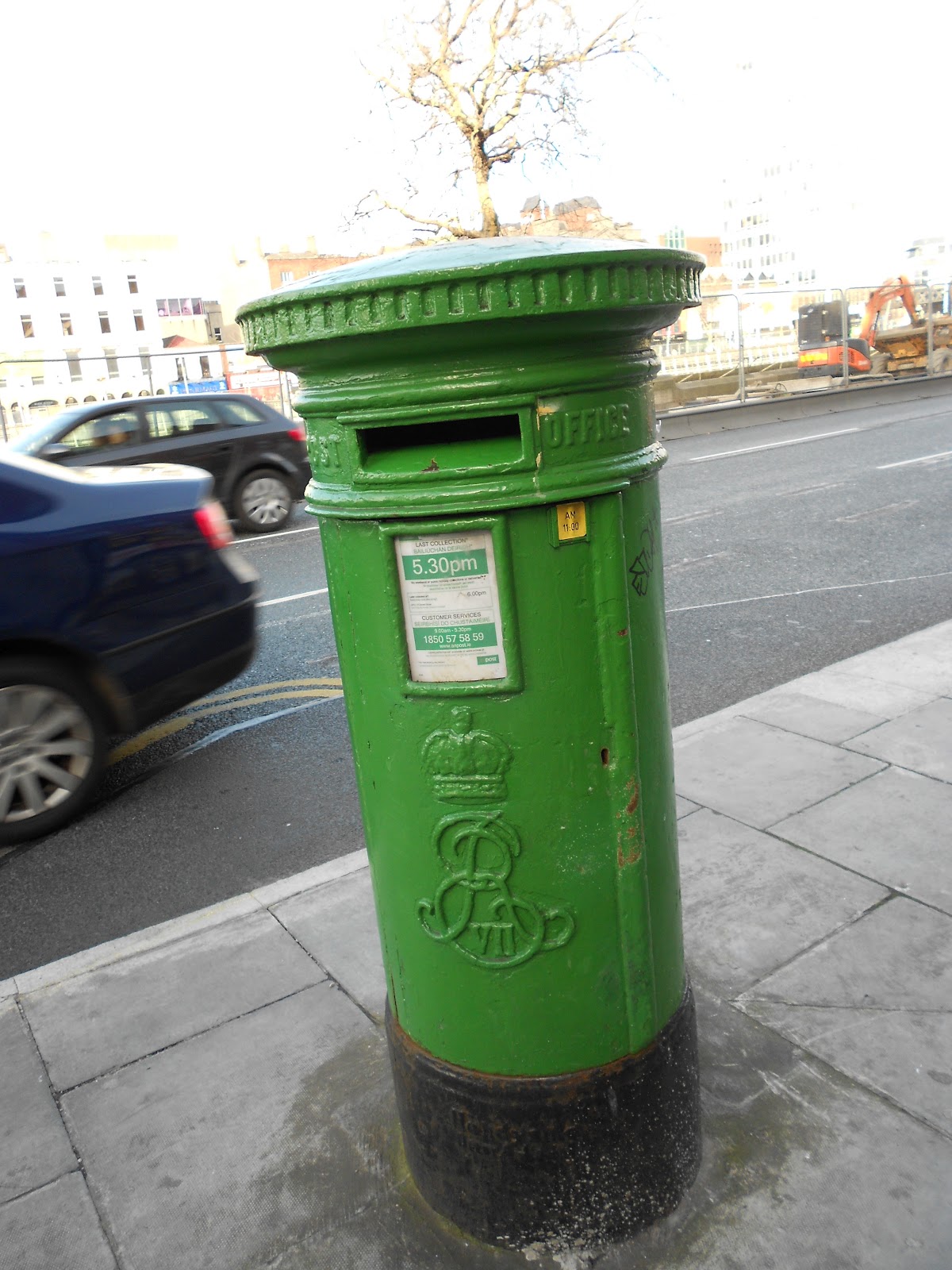
The post boxes are green…

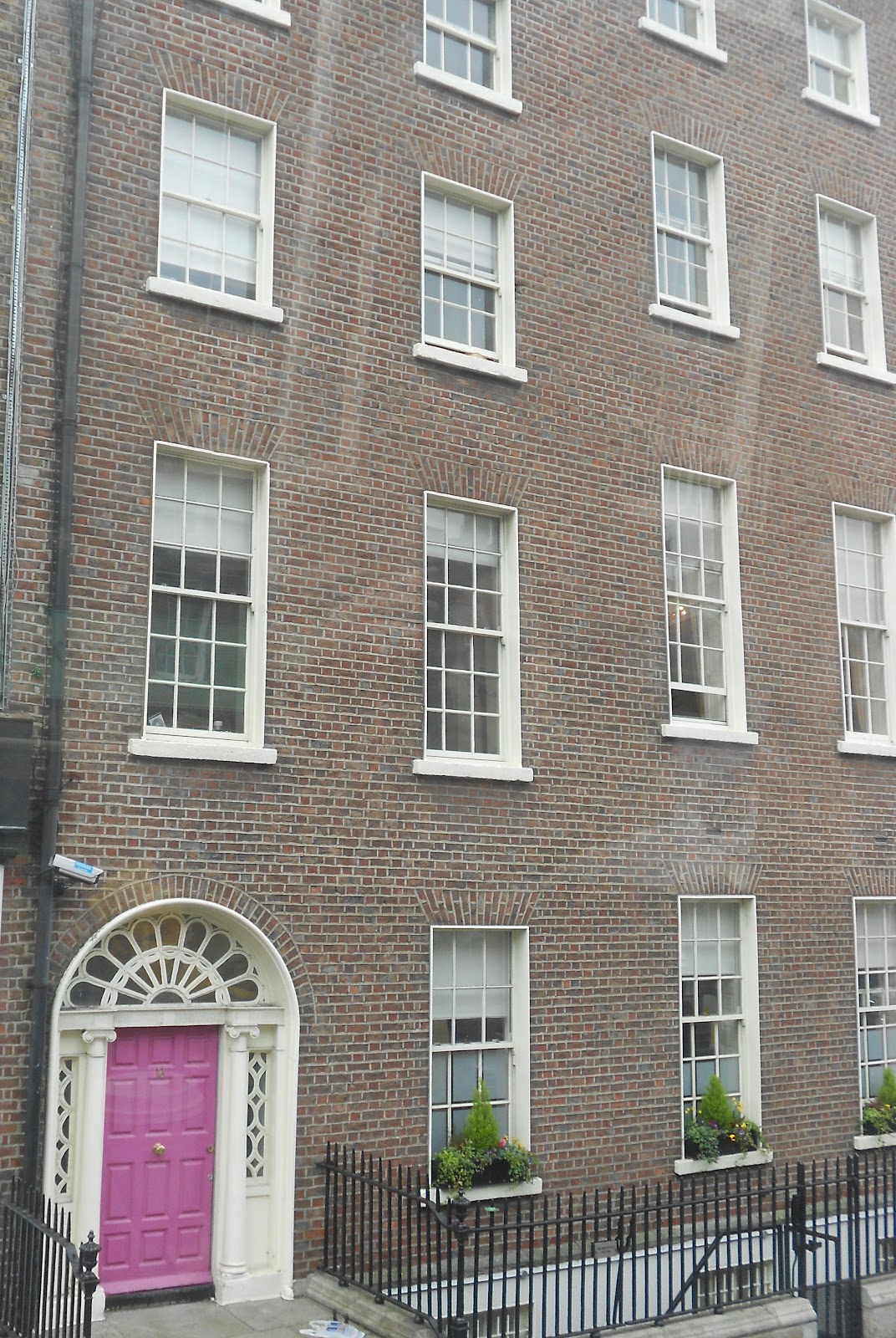
…as are the doors.

But the doors are also pink…

…and red…

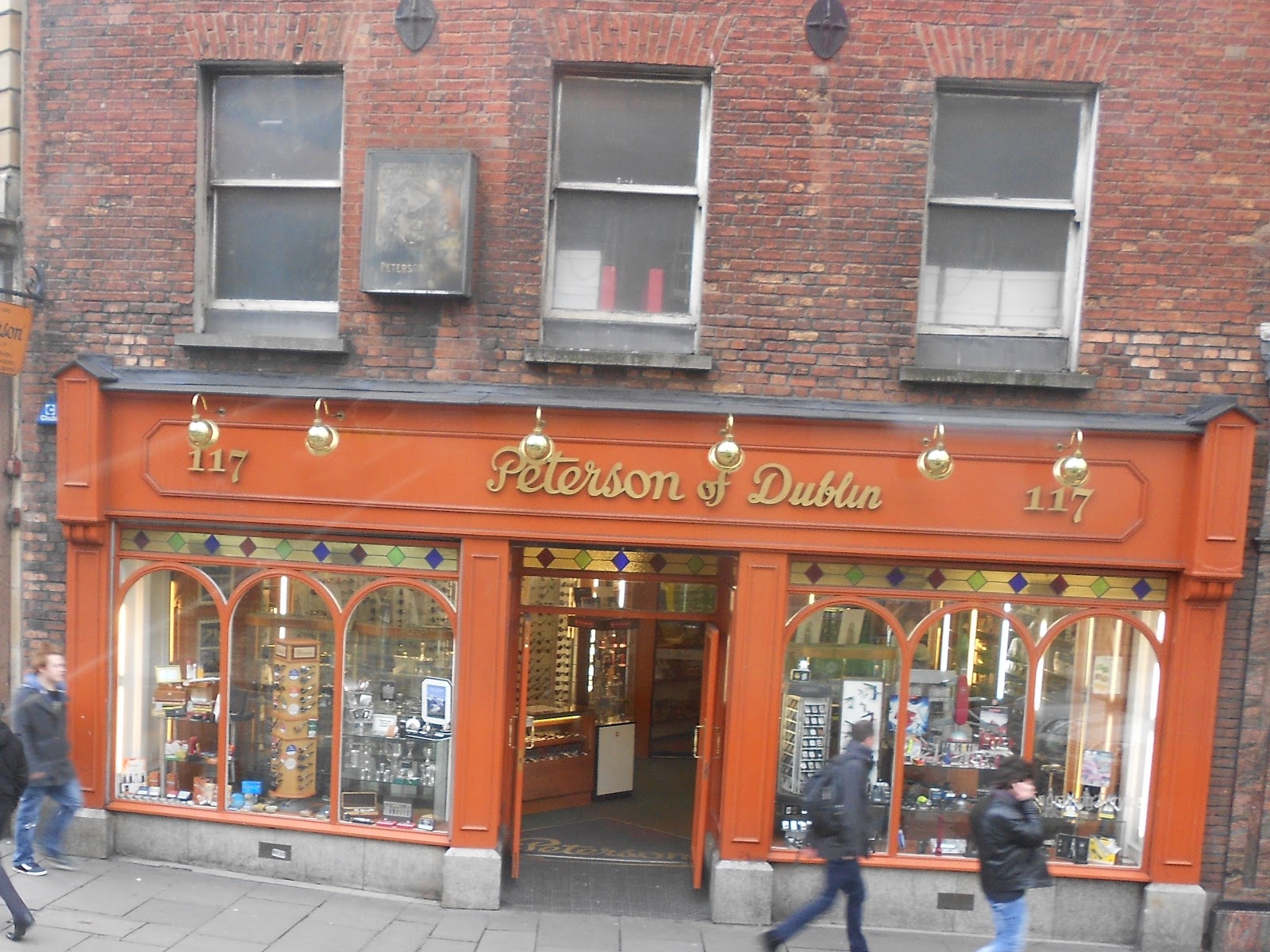
…and even orange!

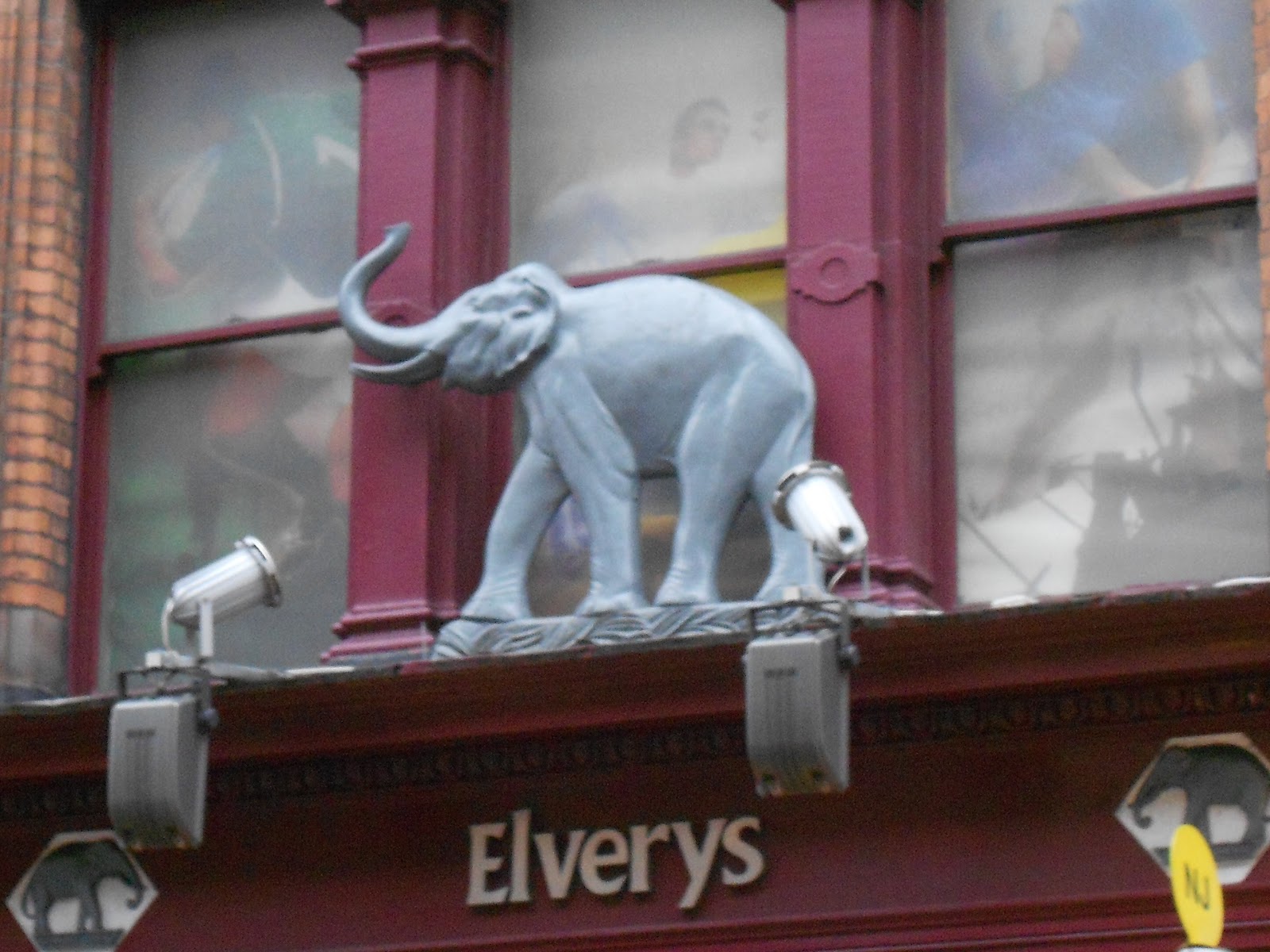
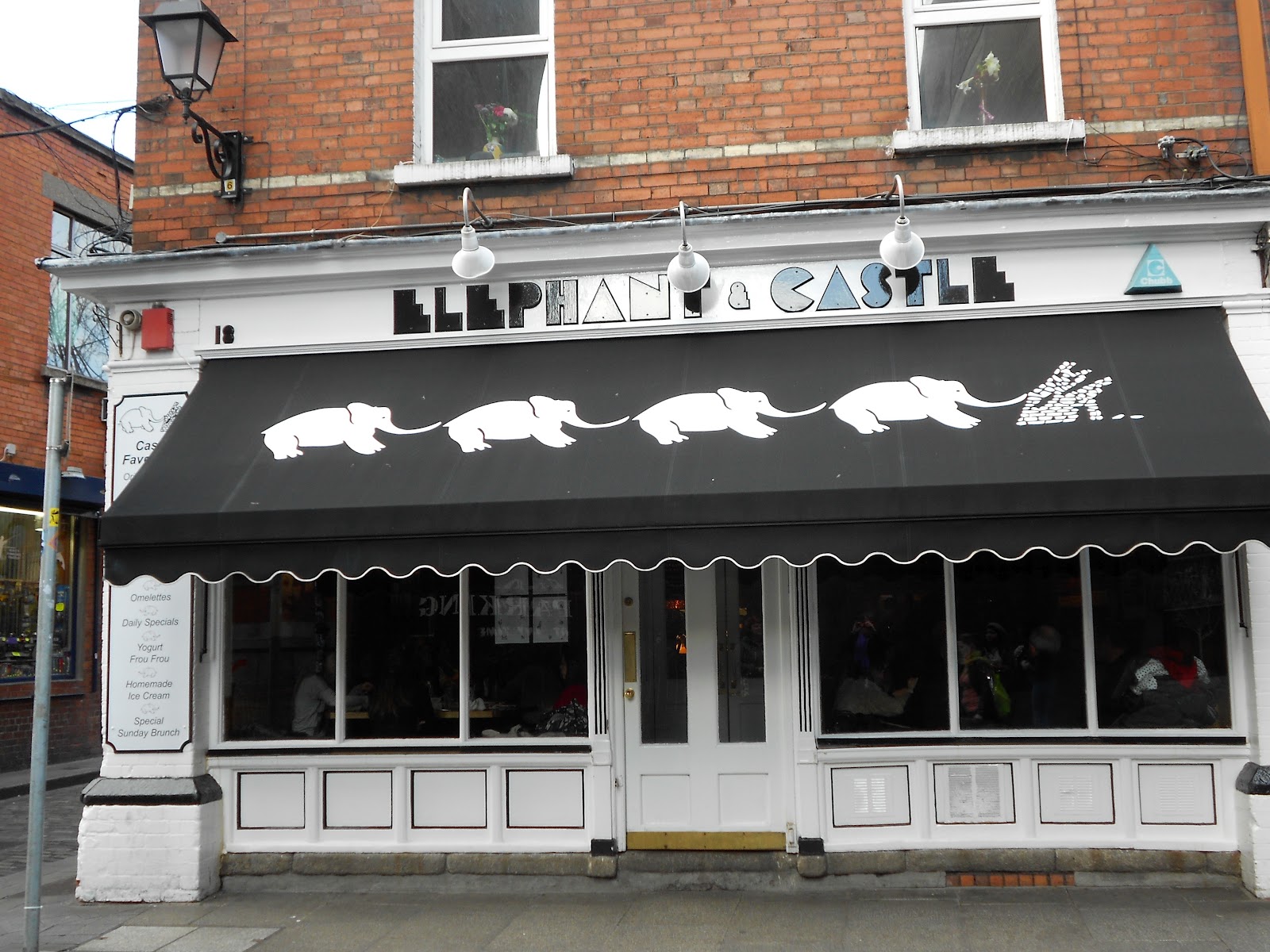
There were elephants (no trip is complete without a nod to the original blog of The Displaced Nation‘s ML Awanohara – Seen The Elephant)…

…plenty of watering holes…

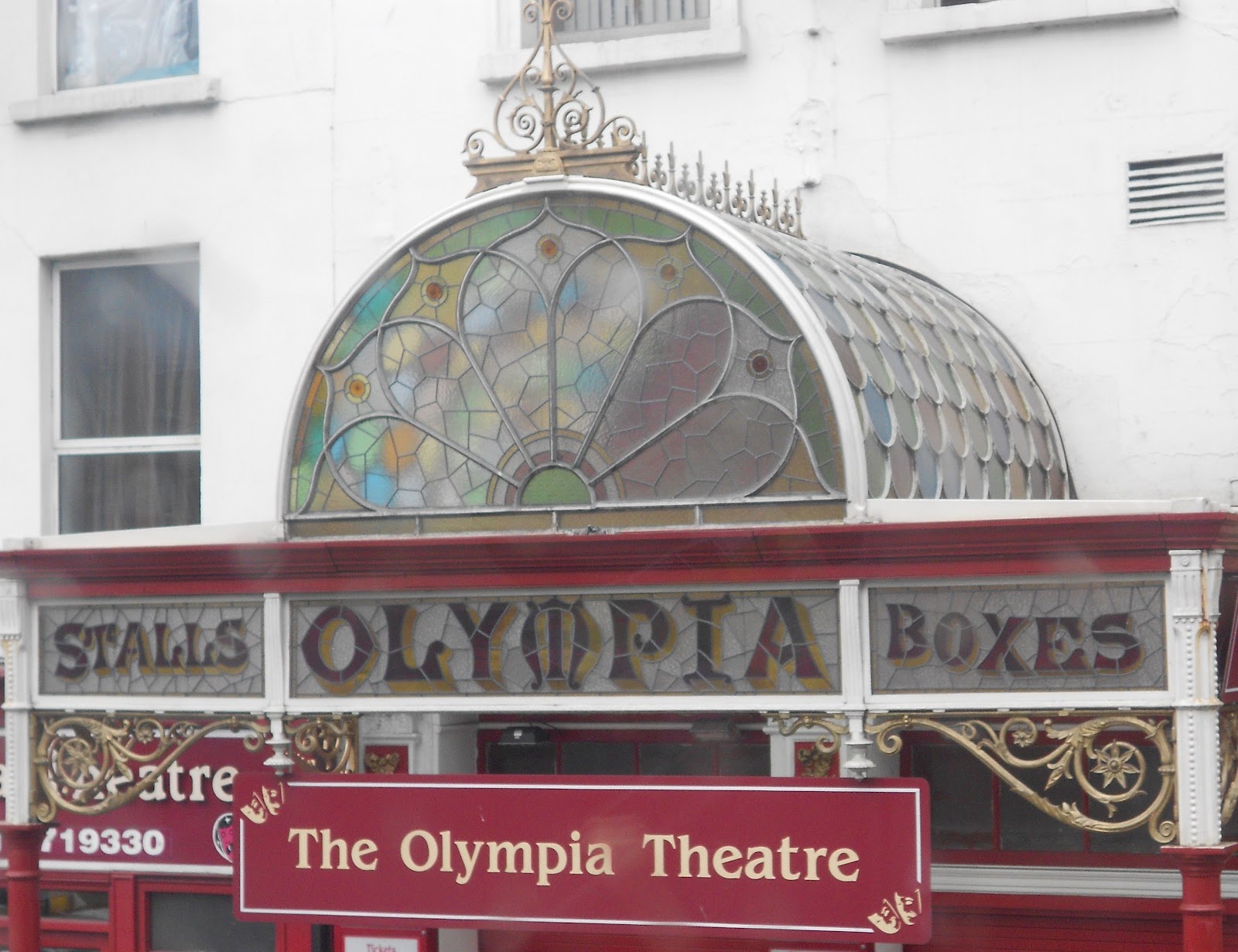
…and a little bit of culture.

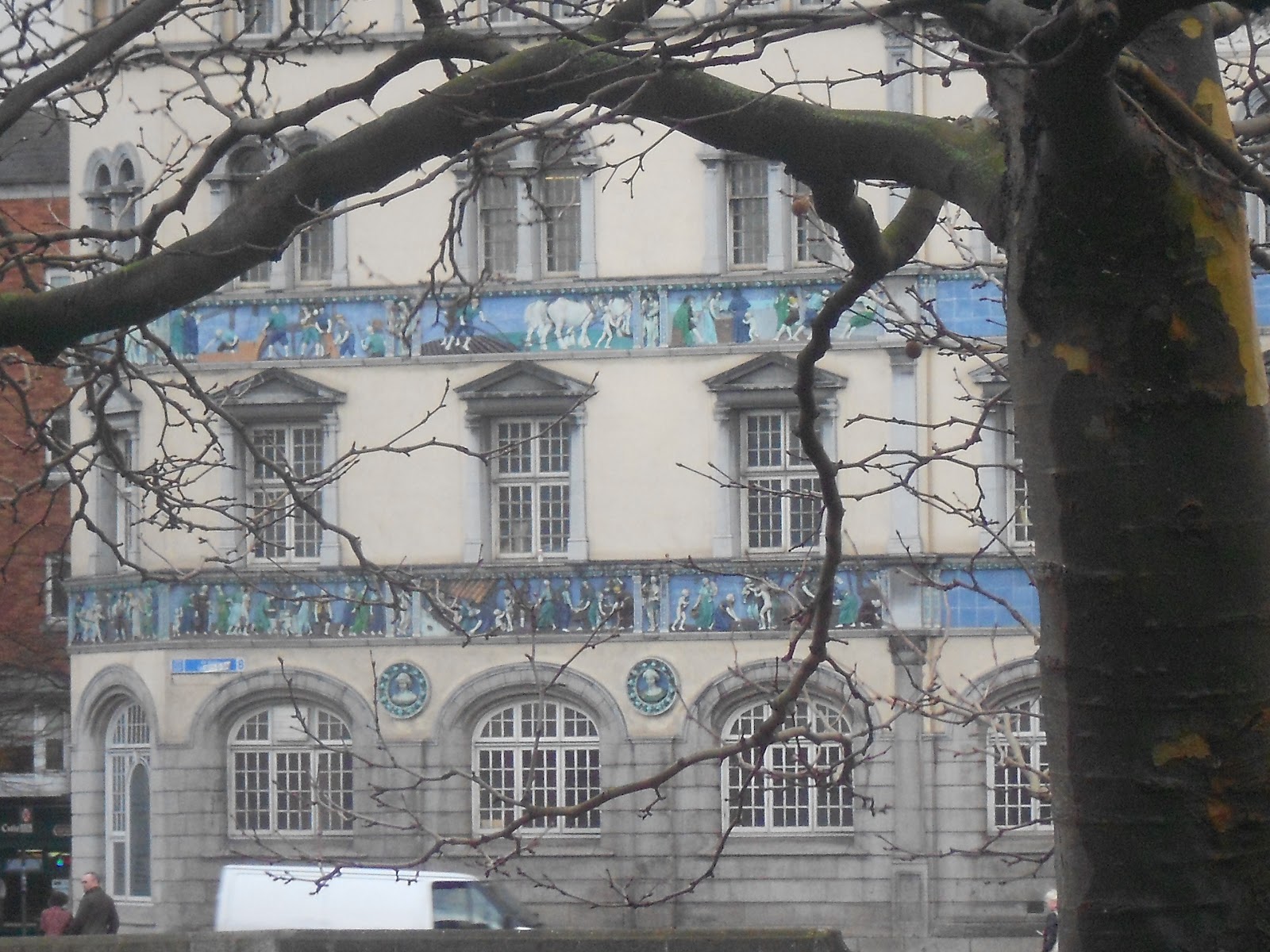
These Dubliners do like to paint stuff all over their walls whether it’s a telling a story…

…a nod to generations past…

…or a promise to clean up their act.

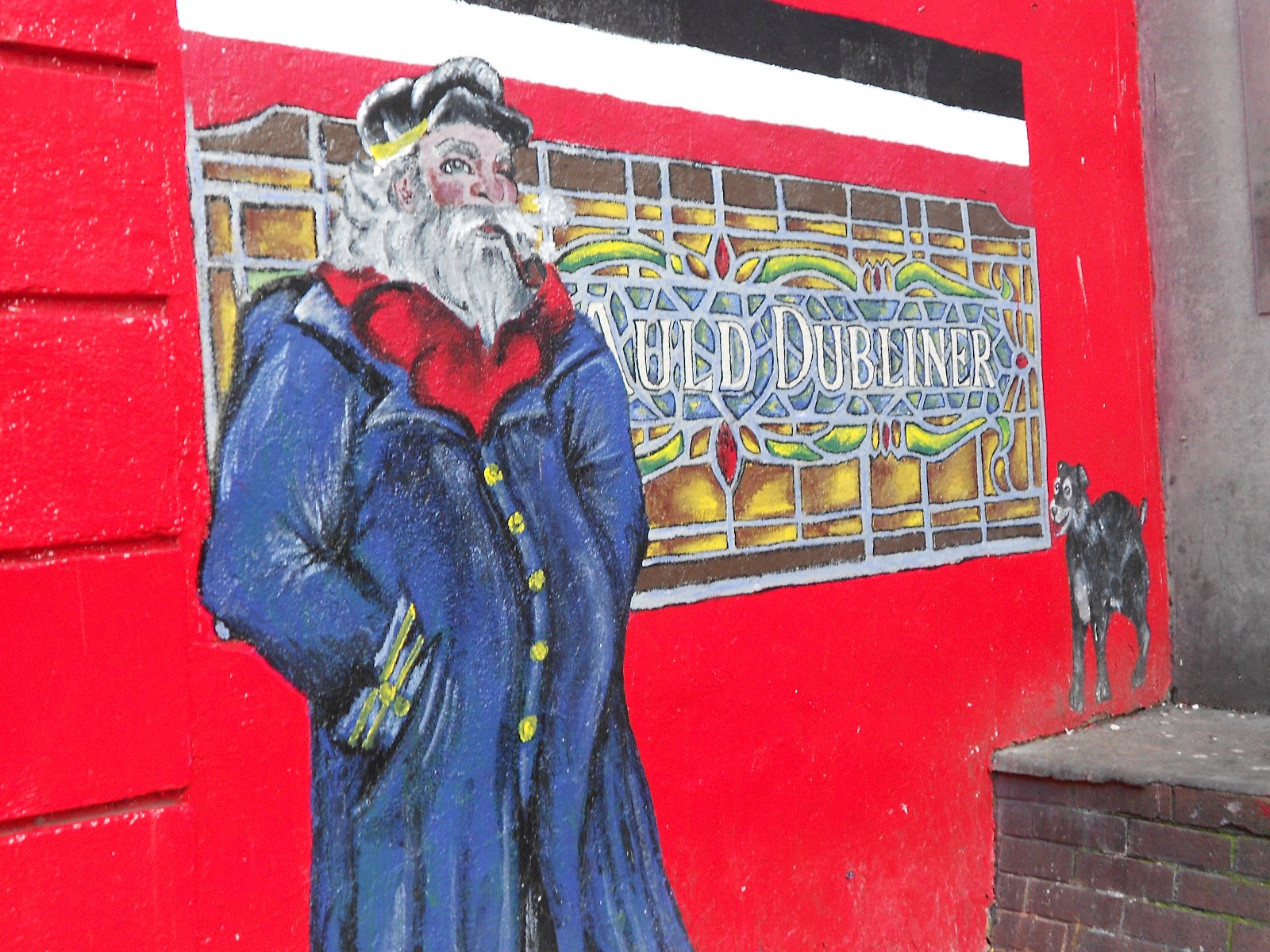
Sometimes it gets a little abstract…

…or like pieces of a puzzle.

But as we were on the go for four whole days…

…it was great to find a spot to rest at last…

…under the swaying palm.

The Beginning Of Time…

As regular readers of Gidday From The UK will know, I have just played host to my lovely Mum at Gidday HQ. Having visitors of the family kind stay in ‘your space’, I’ve always felt that it’s important to sprinkle the intensity of trying to cram 18 months apart into 10 days with a jaunty outing or two. Which brings me to Greenwich.

After stuffing ourselves severely the day before (see the Departures post for a snippet of our High Tea exploits), what was called for was an outing full of fresh air, fascinating facts and fab photo opportunities. So we headed out into a clear, crisp Sunday to explore the delights of South East London. Having never been there before, I seriously underestimated how much there is to actually see and do in Greenwich. There’s the Royal Naval College, the Maritime Museum and Greenwich Village just to name a few. But Greenwich is most famous for its status as the beginning (and end come to think of it) of time and so, like good little tourists, it was to the Royal Observatory we went.

Yep, there is it. On the top of the hill. A meander through Greenwich Park followed by a steep, short yet concentrated walk upwards.

The Royal Observatory was founded by Charles II in 1675 who decided to build an observatory in Greenwich Park, his own royal back yard so to speak. The ability for early sailors to safely navigate the high seas once out of sight of land was extremely limited and while a comprehensive understanding of the skies was seen to offer a solution, the conundrum of time was inextricably linked. And in defining one’s position east or west, the important question of ‘from where?’ has left us with the Prime Meridian and Greenwich Mean Time.

John Flamsteed was appointed Astronomer Royal and every night for 40 years he used a telescope and clock to record the movement and altitude of stars across the meridian line. After a disaster at sea in 1707, more reliable means of finding longitude at sea were sought and it was Yorkshire carpenter turned clockmaker John Harrison who solved the problem almost 60 years later. (His four timekeepers are on display and in full working order!) On his 1768-71 voyage to explore the South Pacific, then Lt. James Cook (yes, the dude that came a cropper on the reef off the coast of what is now Far North Queensland Australia in 1770) became the first to successfully test this new method of finding longitude at sea and he continued to test emerging methods on two further voyages until 1779.

The meridian line shifted four times (across the now Prime Meridian Courtyard) as each new Astronomer Royal took advantage of the increasing accuracy available. And finally in 1884, the Greenwich Meridian was awarded the prize of Longitude 0º by 41 delegates from 25 countries, making it the Prime Meridian of the World. Makes it sound like a super-hero doesn’t it?

The Prime Meridian Marker at the Royal Observatory Greenwich.
I had to be quick to get this before the next in the very long line positioned themselves for a happy snap.

So that’s enough of the history stuff for now. Suffice to say we spent all afternoon wandering around the Observatory and finished with a stint at The Peter Harrison Planetarium to see ‘Secrets of the Stars’ before some coffee and cake overlooking the park. Here’s how it went…

There’s a spectacular view of Canary Wharf (L) and the O2 (R) from the Observatory hill.
This is just one part of the 40ft long telescope that William Herschel, famous for the discovery of Uranus in 1781, had built but rarely used. Boys and their toys eh?
Flamsteed House was built by Christopher Wren for the first Astronomer Royal, John Flamsteed. The red ball was known as the Time Ball and every day at 1pm, the ball would fall, allowing all around to set their timepieces. Those who may have been partaking of a few too many and missed this daily ‘missive’ were deemed to be ‘not on the ball’. 
Told with great enthusiasm in the Prime Meridian Courtyard, we learnt about the beginning of ‘time’ itself.
Mum though she should check out the Prime Meridian laser, just be sure.
And here it is. The beginning and end of time. It lights up at night but it’s a little underwhelming for something so renowned isn’t it?
We wandered around the galleries for a while and there’s some amazing stuff – like John Harrison’s 4 timekeepers – but it’s really difficult to get a good photo. So you get this quirky display of telecommunication through ‘the ages’. I probably shouldn’t admit that I remember them all!
The Peter Harrison Planetarium, home to the winners’ gallery for the Astronomy Photographer of the Year and our tryst with Patrick Stewart, he of Star Trek fame and narrator of ‘Secrets of the Stars’. This is also home to the oldest thing from my Departures post – a piece of Gibeon meteorite some 4.5 billion – yes that’s with a ‘b’ – years old.
Finally it’s time for coffee and cake but boy it was chilly!

As closing time approached, we reluctantly shifted from our glorious vantage point…

…headed back down the hill and across the park to the bus stop. I must admit that, in the face of the trek back to North London after so long on my feet, the little voice in my head was groaning a little with each step I took. A little ‘beam me up Scotty!’ would not have gone astray.

So that was Greenwich peeps. The beginning and end of time immemorial. And definitely worth a visit with so much more to do than we managed in an afternoon.

Postcard from Valencia…Ole!

Hola peeps! 
This week I have been in Valencia. And this being my first trip, I decided to Armchair Tour you around what I got up to. You should note, however, that this does not mean I did the tourist trail thing – if you are planning a little Spanish sojourn of your own to the region and want to read up more, you should click here.
First things first: Valencia is home to the mighty paella, a rice dish cooked over an open flame in a large pan of the same name. We tend to consider paella as the country’s national dish but in Spain, paella is a regional dish from Valencia. Ask a Valencian and they will tell you that there is only one paella – made from white rice, green vegetables, meat (rabbit, duck, chicken), land snails, beans and seasoning, and nothing else. All others are  pretenders: ‘seafood’ paella is not paella at all, but rather rice with vegetables and seafood.
Traditional paella – apparently all other comers are frauds and should be referred to as ‘rice with…’ .

Oh and yes, I had some – it was delicious!

So now we’ve cleared that up, let’s move on to activities of the meandering kind.

Evening in Spain begins quite late and most nights, we were starving meeting for dinner at 9pm. On our second night, our Regional Director was keen to show us something of his original hometown so we wandered through Valencia’s city centre with a few stops along the way. This is largely how it went:

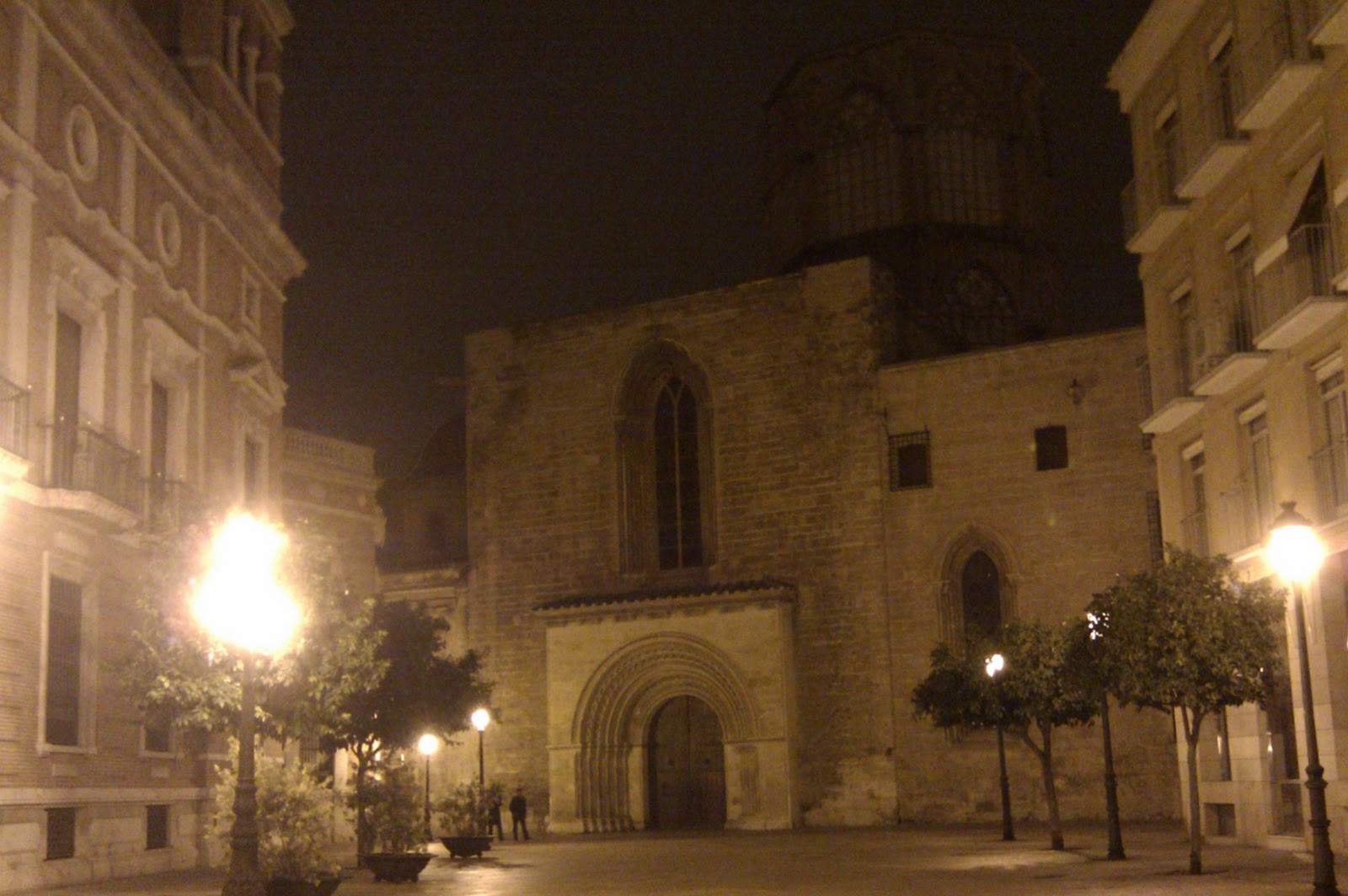
So much gorgeous architecture in Valencia
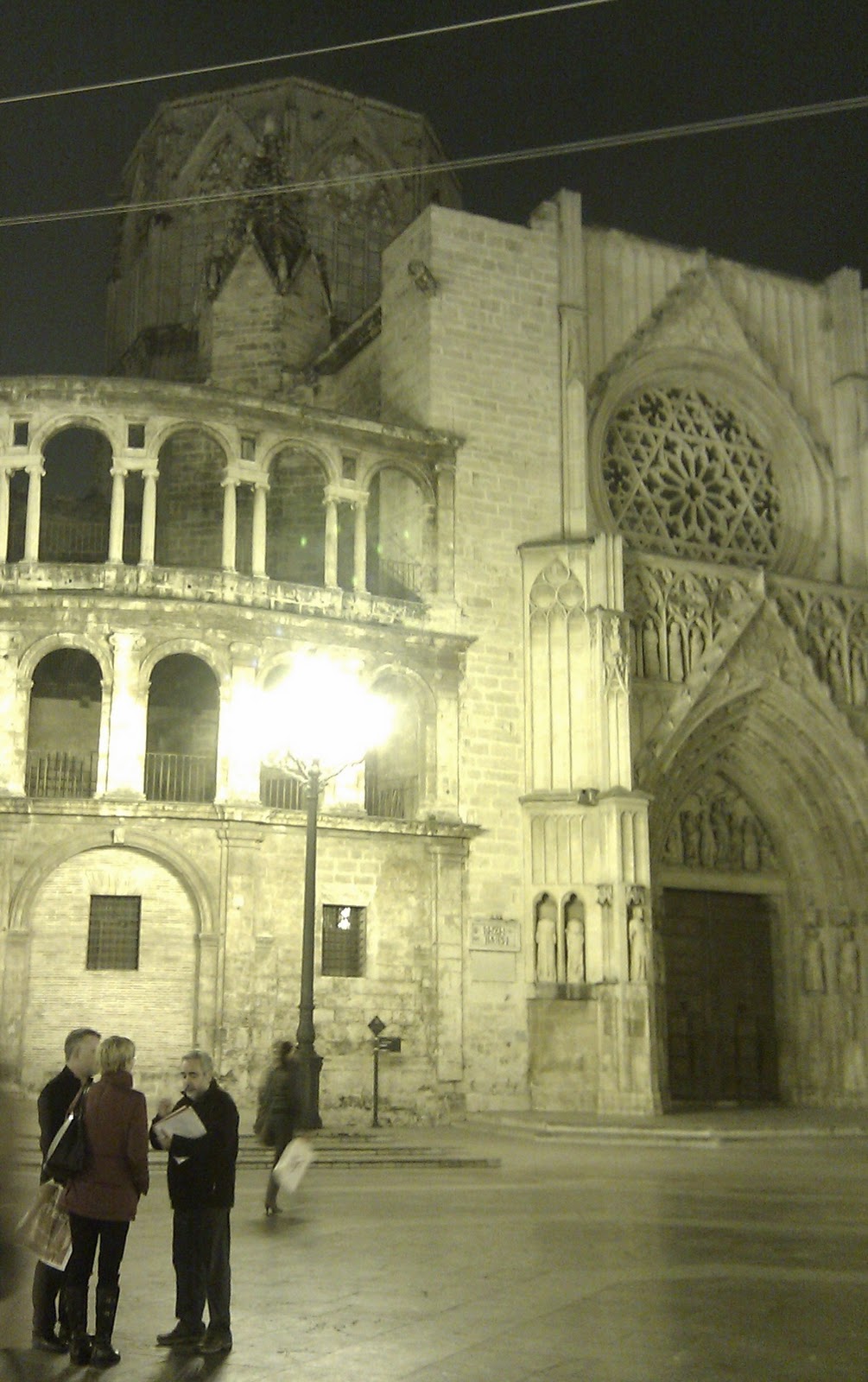
The Tower and La Catedral
La Catedral
Gothic architecture at La Catedral
(In case you were wondering, I really liked the Cathedral)
Still walking – quite thirsty work!
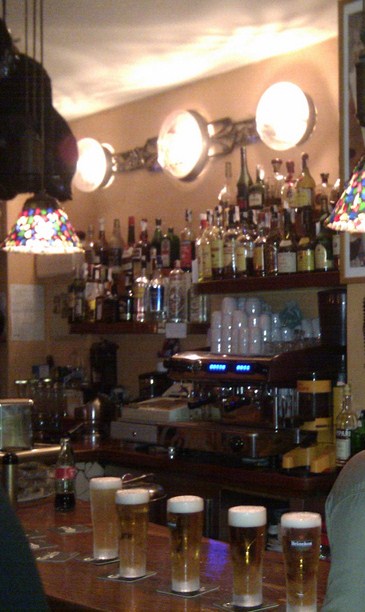
So we stopped here for a beer…bottoms up!
Another lovely street scene, but by now we were wondering when we were going to get to eat
Our dinner destination at last – where we ate, drank and be’d merry
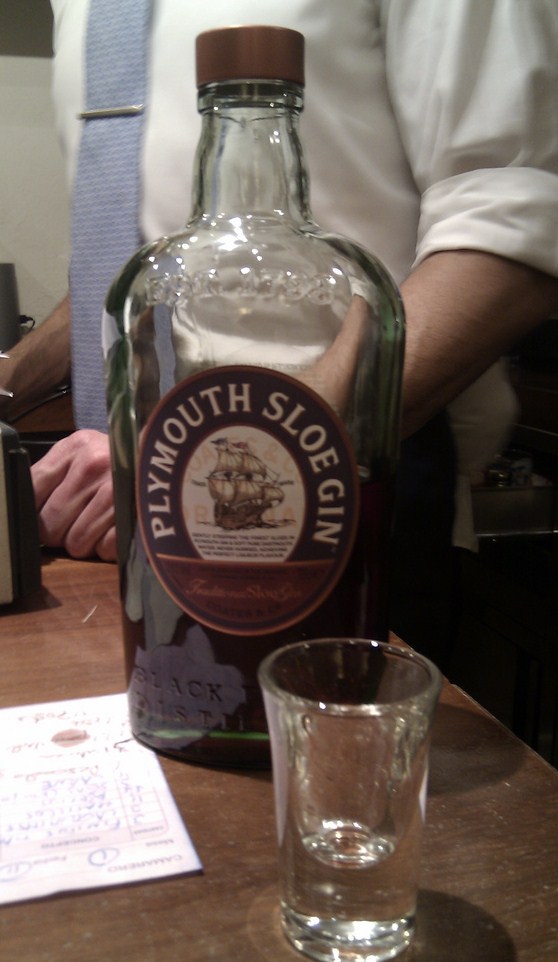
Gin is a HUGE deal in Spain with a good bar stocking somewhere between 20-30 different varieties. Knowing my prediliction for the stuff, said Regional Manager introduced me to his friend, The Owner, who gave us a tipple of his ‘best’!
Absolutely stuffed with good food and wine, we waddled along more streets in search of a calorie-burning nightcap…
…which we found here as well as a bit of a boogie-on-down.
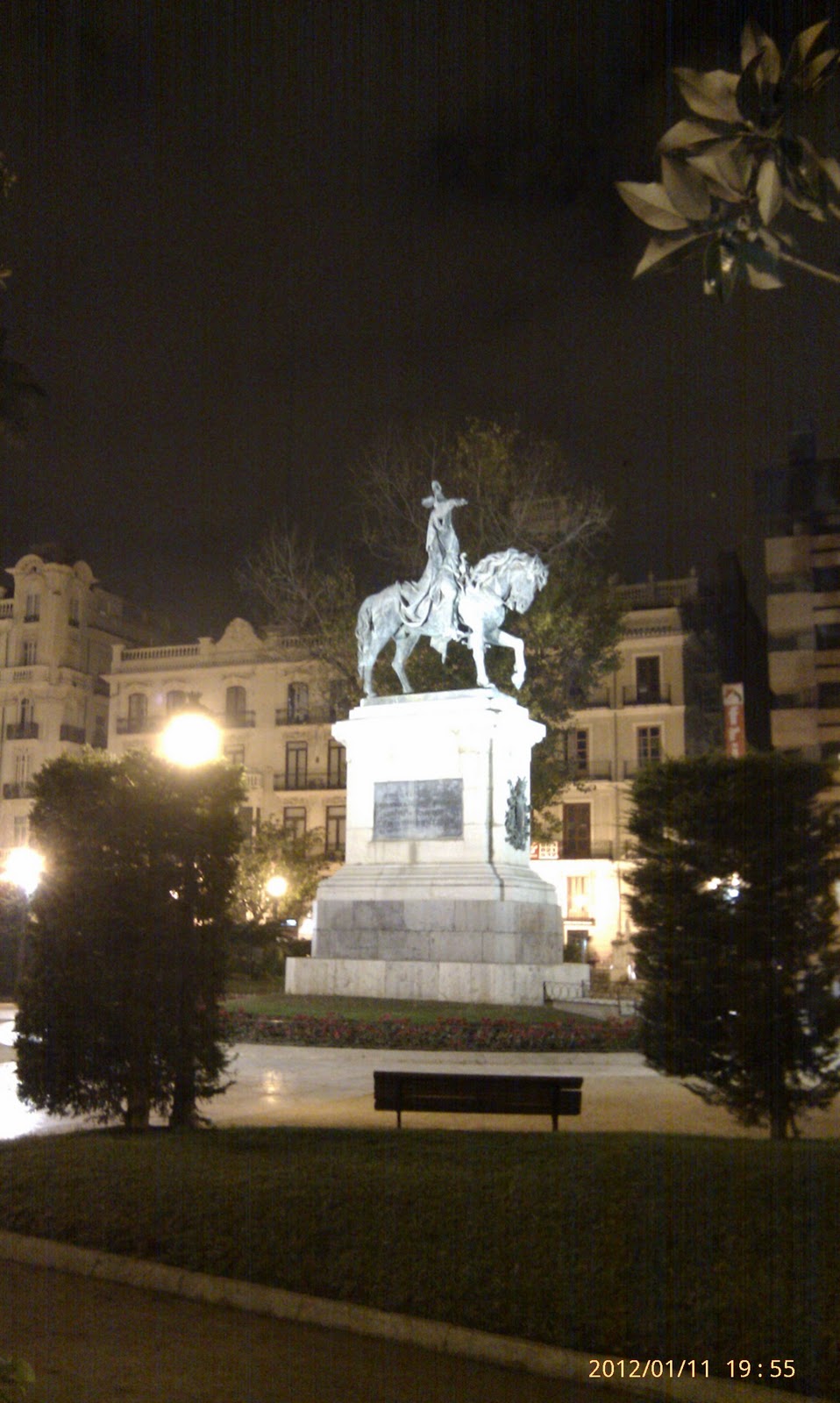
Walking back to the hotel later on, we passed this monument. I  could not for the life of me find out who it was, despite passing it 4 times throughout the 2 and a half day trip – but it remained an inspiration in spite of its anonymity…
Yes, it’s a blurry pic but I was really ‘giving it some welly’ and the lass behind the lens had been with us all night. Nuff said!

So that was the night before but the armchair tour doesn’t stop here. After our meeting was finished, we had some time before our flights back to…well, wherever home was for us all so it was Valencia’s sunny skies that beckoned – and a rather unique lunch venue.

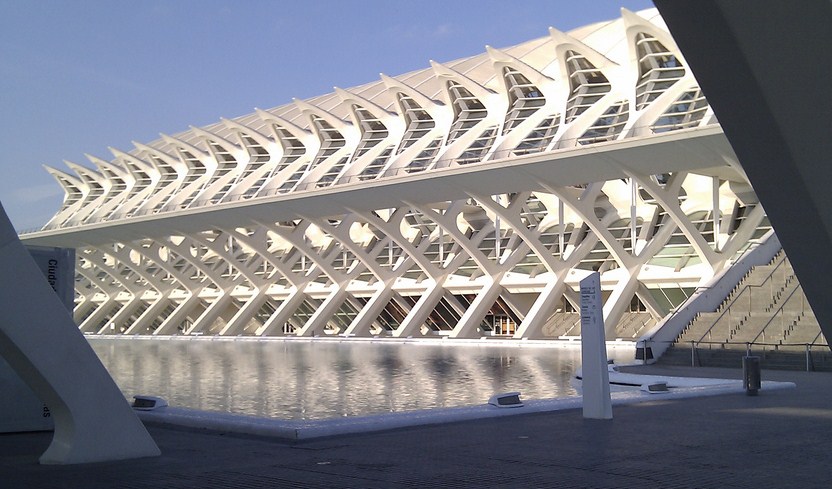
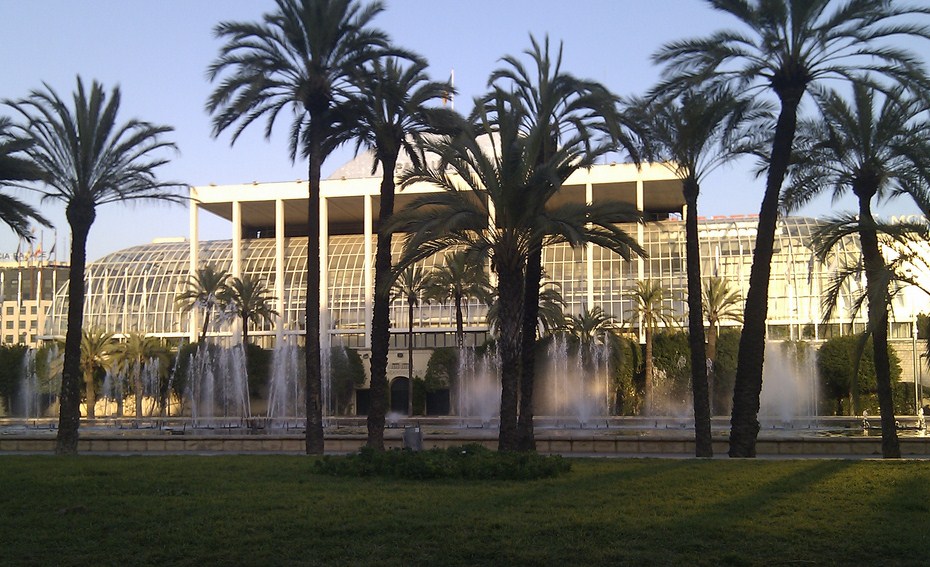
The City of Arts and Sciences is a collection of five areas created in the dry river bed of the diverted River Turia. The work began in 1996 under the stewardship of architect and local-lad-made-good, Santiago Calatrava, and is very modern compared with the city tour of the night before. There is the Opera House and Performing Arts Centre, the Prince Felipe Museum of Sciences, L’Hemisferic – containing an IMAX cinema, planetarium and laserium, the gardens and walkway, and L’Oceanografic which is a bit like an open air Sea World.

Sunny Valencian skies over the City of Arts and Sciences
The Opera House – looks a little familiar to me?
The Prince Felipe Museum of Science was designed to emulate the skeleton of a whale.
View standing on traffic island in the middle of the Pont del Grau
View of the Prince Felipe Musem of Sciences, L’Hemisferic and the Opera House (or El Palau de les Arts Reina Sofía)
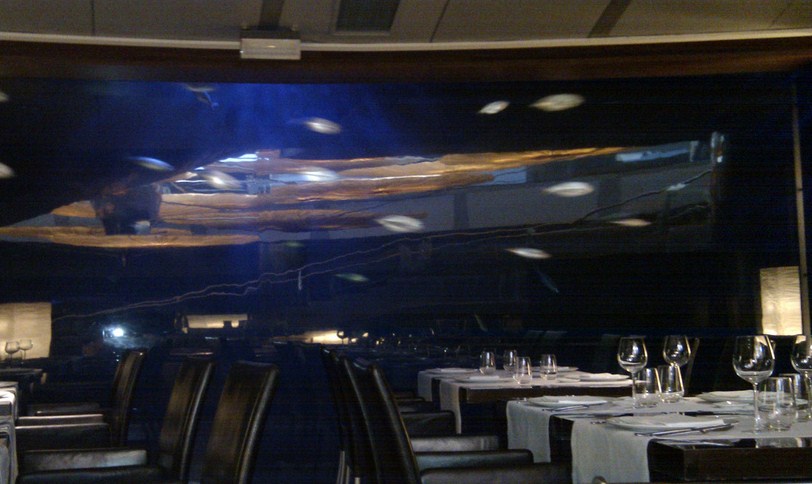
Restaurante Submarino at L’Oceanografic, our venue for lunch
Surrounded by the local wildlife. I’ll have one of those and two of those…
Submarino Bar – amazingly cool lighting…looks like anenomes
And after lunch it was a 40 minute stroll back to the hotel along the old river bed for me
Amazing what they can create from a dry old riverbed, isn’t it?

So it was with regret that I waved good bye to that glorious, glorious sunshine, returned to the hotel and prepared to catch my plane home. But not before I had discovered that London’s main man had found a little inspiration of his own here too…

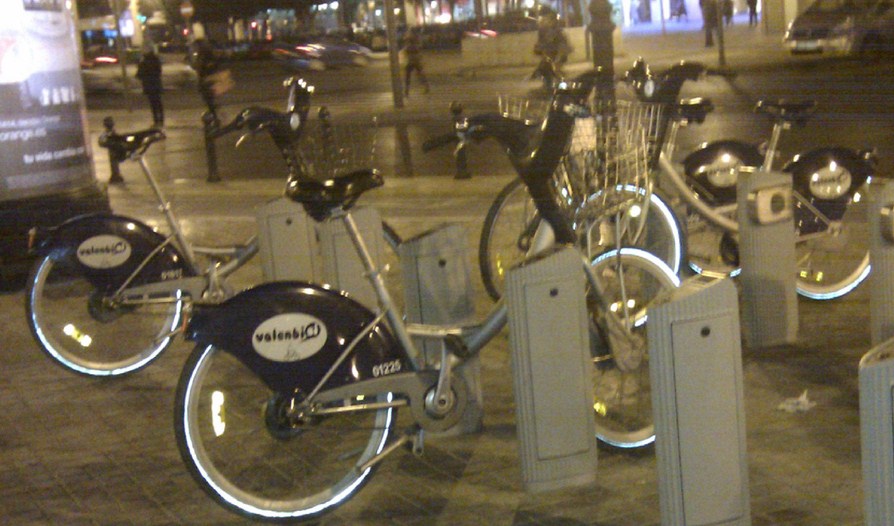
Valencia’s very own Boris bikes!

Did I say at all that I love my job?

No?

Well I do!

Destination…Museum of London

So yesterday I told you all about the journey, leaving you with the adage that the getting there is often just as fabulous as the destination.

This is the post about the Destination.

I arrived at the Museum of London, eagerly anticipating a couple of free hours of strolling through time. The Museum is laid out in chronological order and is quite interactive with fewer than usual items of the ‘do not touch’ variety. Prior to entering the permanent exhibition there’s also a display called London and the Olympics which celebrates the Games already held in London (1908 and 1948) as well as the 2012 preparations.

The journey starts with an exploration of the region from 450,000 BC before London was…well London. The locations of significant archaeological finds are also showcased – places like the site of the current Heathrow Airport – as well the work along the shores of the Thames where FROG volunteers from Thames Discovery continue to catalogue new finds to assist in preserving London’s rich history.

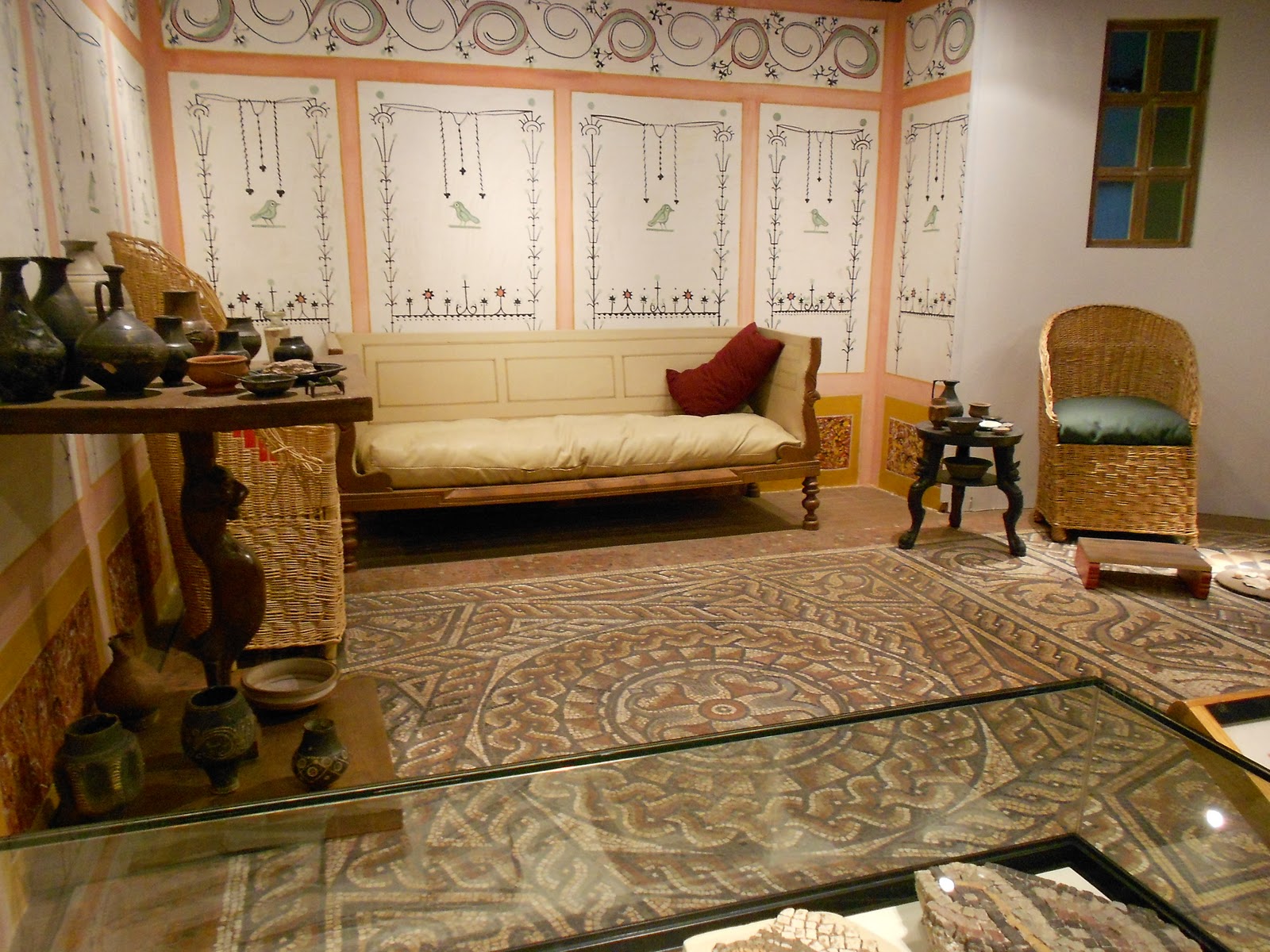
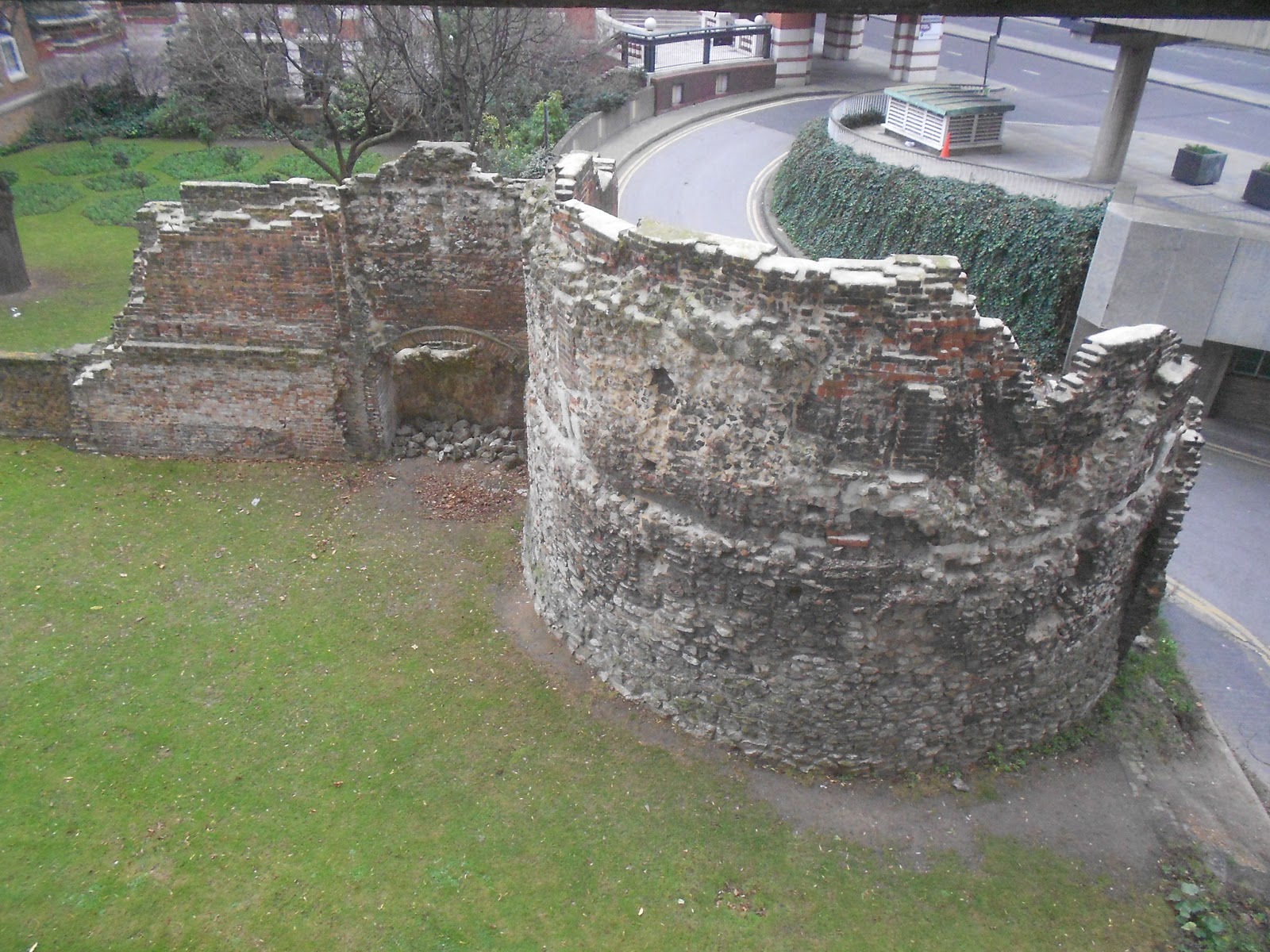
From 50 to 410 AD, the Romans built, defended and rebuilt Londonium – there are some great displays of homes, shops, food and the opportunity to peek at the defensive City wall from another perspective.

Traditional Roman dining room
Roman Wall from the Roman Gallery of the museum

We then move to Medieval London and the galleries which showcase the period from 410 through to 1558 AD covering Viking raids and the emergence of Anglo-Saxon power right up to the early Tudor years. This gallery also shows much of the religious development of London and features a model of the original St Paul’s Cathedral.

The original St Paul’s Cathedral

The next gallery take us on the path of London’s devastation through civil war, the plague and fire. I was fascinated by the survival of London at the end of this period in spite of the loss of between one third and one half of the population to the Black Death, followed by the loss of some 13,000 homes (but only 9 lives) in the Great Fire of 1666 the following year. It took London 50 years to rebuild including Christopher Wren’s reconstruction of St Paul’s Cathedral as we know it today.

I followed the arrows downstairs to the next set of exhibitions entitled Modern London: Expanding City.

A main feature of this gallery is the recreated Pleasure Gardens which allow you to wander, sit and watch the cinematic story of the time unfold on the screens around you. The hats on display were…interesting. It must have taken incredible posture to manage these with any grace and dignity.

Pleasure Garden fashion – can you see the ship hat on the left of the picture?
Pleasure Garden – a (t)horny affair!

Just down the ramp from the Pleasure Gardens there was an arcade walk to celebrate the Victorian era.

The Victorian Walk celebrates the era of expansion 
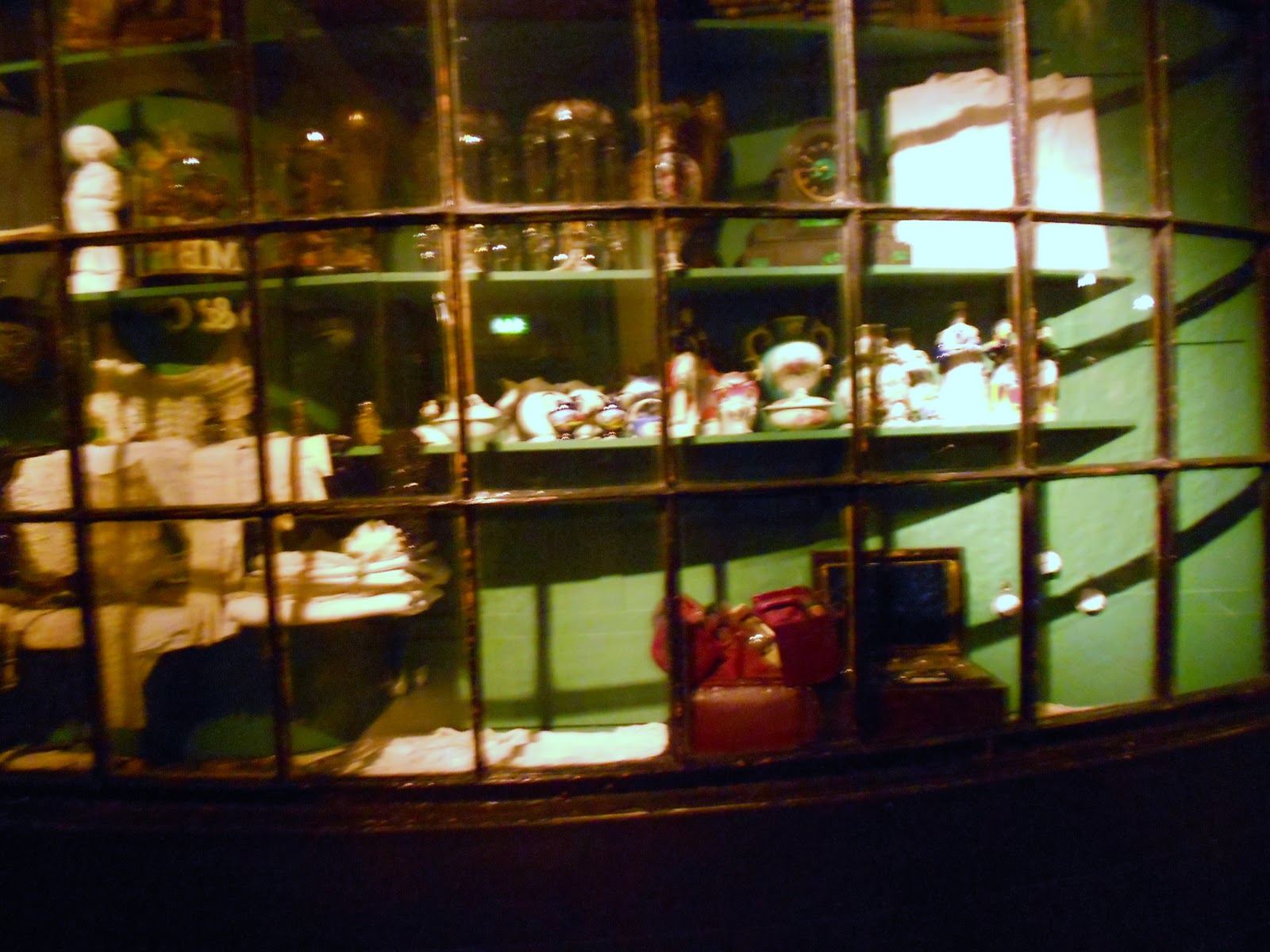
Trinkets for sale – The Victorian Walk

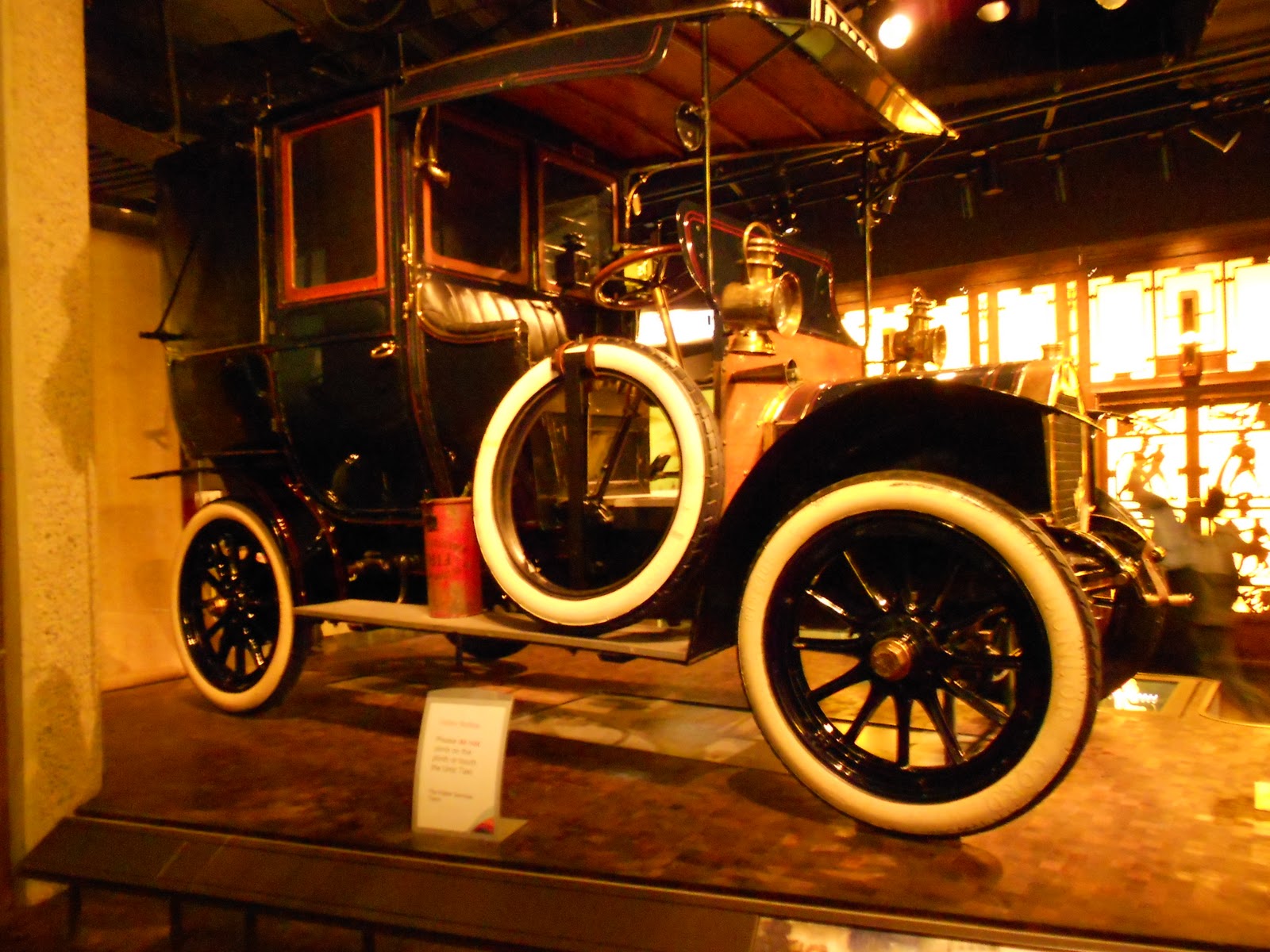
Next we move into the late 19th and early 20th centuries in Modern London: People’s City. The class divide is brought to life by an interactive version of Charles Booth’s map of poverty in London which sits opposite a vintage motor display, a recreation of the entrance to the Savoy Hotel and panelling from the Selfridges lift which was installed in 1928.

Vintage ‘white walls’ representing People’s City
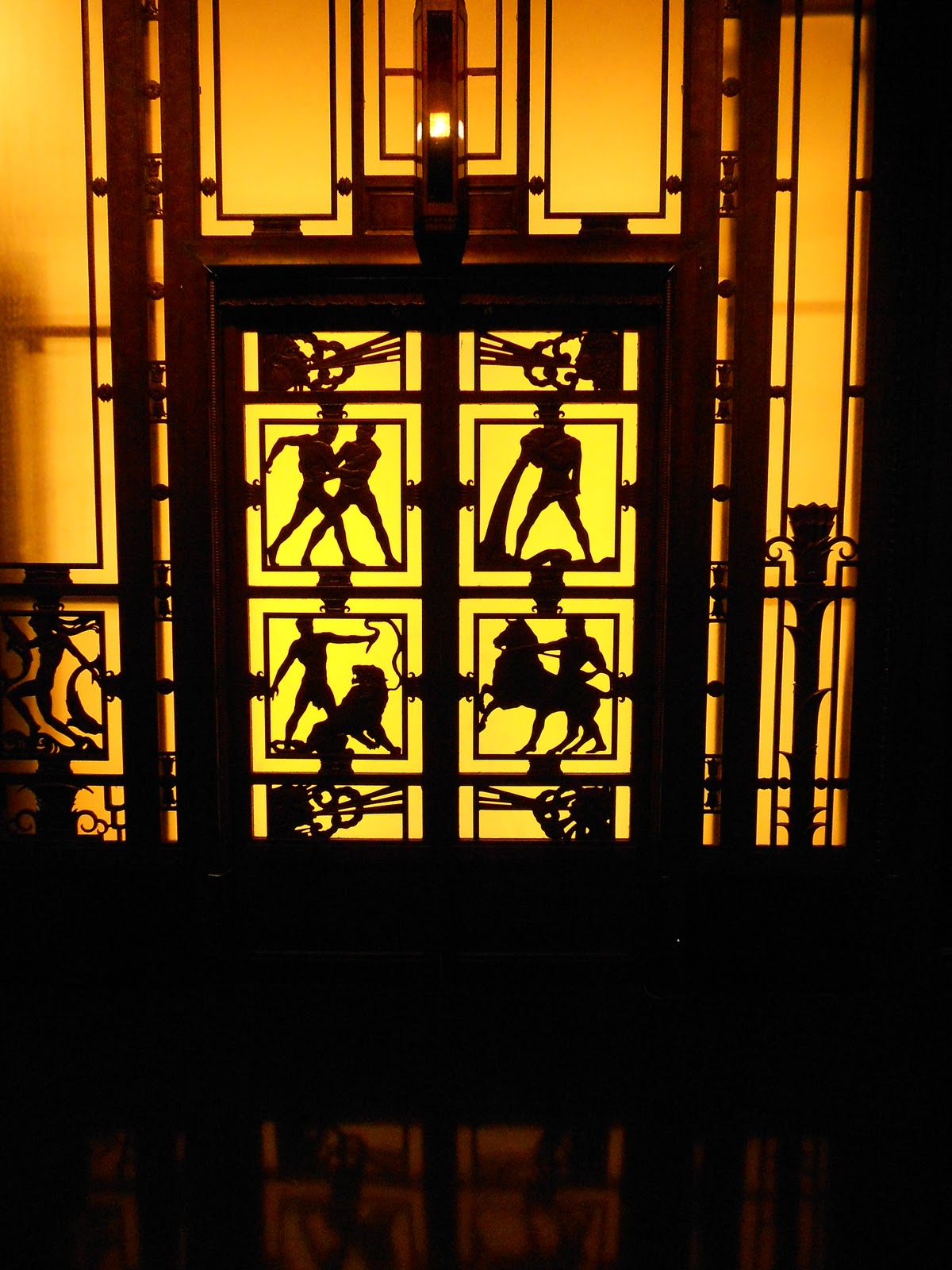
Japanese panelling in the Savoy Hotel recreation

The Selfridges Lift
But did you know that Harrods installed the first escalator in 1898?
Smelling salts were on hand to revive passengers from the ride.

The final step in time is Modern London: World City which takes us from pre WWII London, through the fab 50s and swinging 60s right up to today.  This was a busy gallery so I was frustrated in my attempts to take pictures and despite cases filled with fashion, music and even a real life Vesper, I managed this one only.

My one and only tribute to Modern London: World City

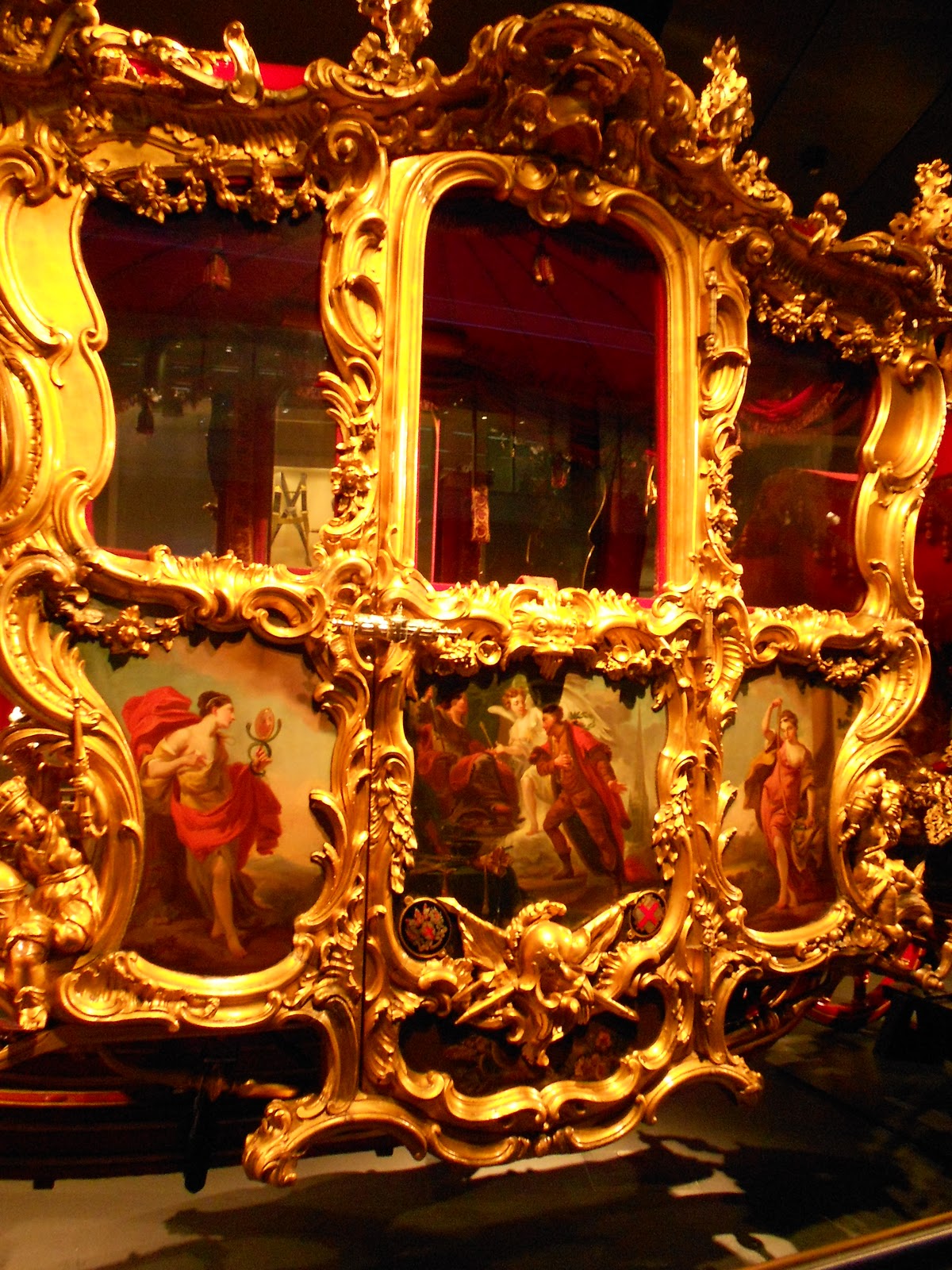
There’s a room off to the side of this exhibition called the City Gallery which contains the Lord Mayor of London’s official coach which leaves the gallery each November (since 1757) for the Lord Mayor’s Show.

The Lord Mayor’s Coach, first commissioned in 1757
Amazingly preserved after more than 250 years

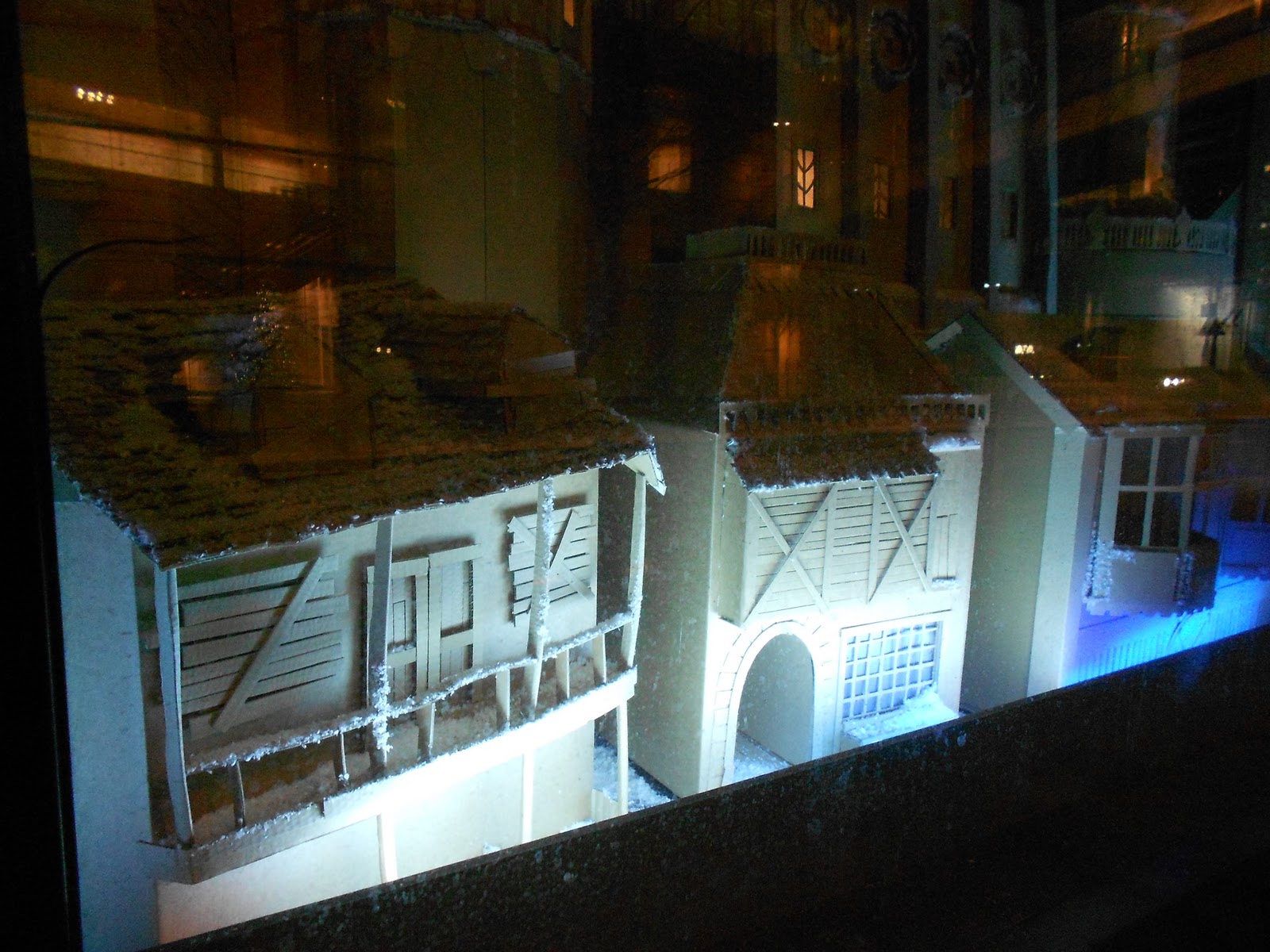
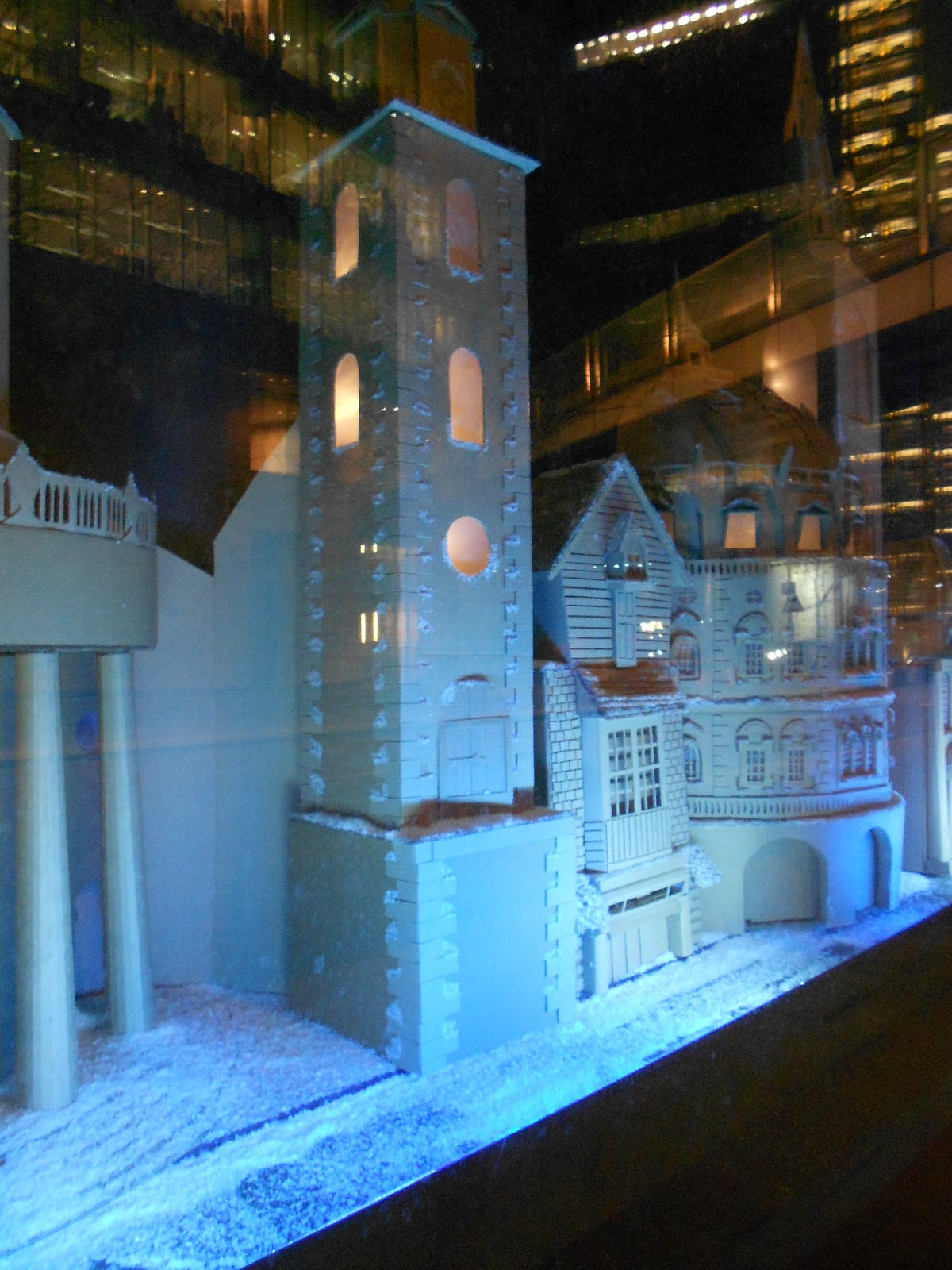
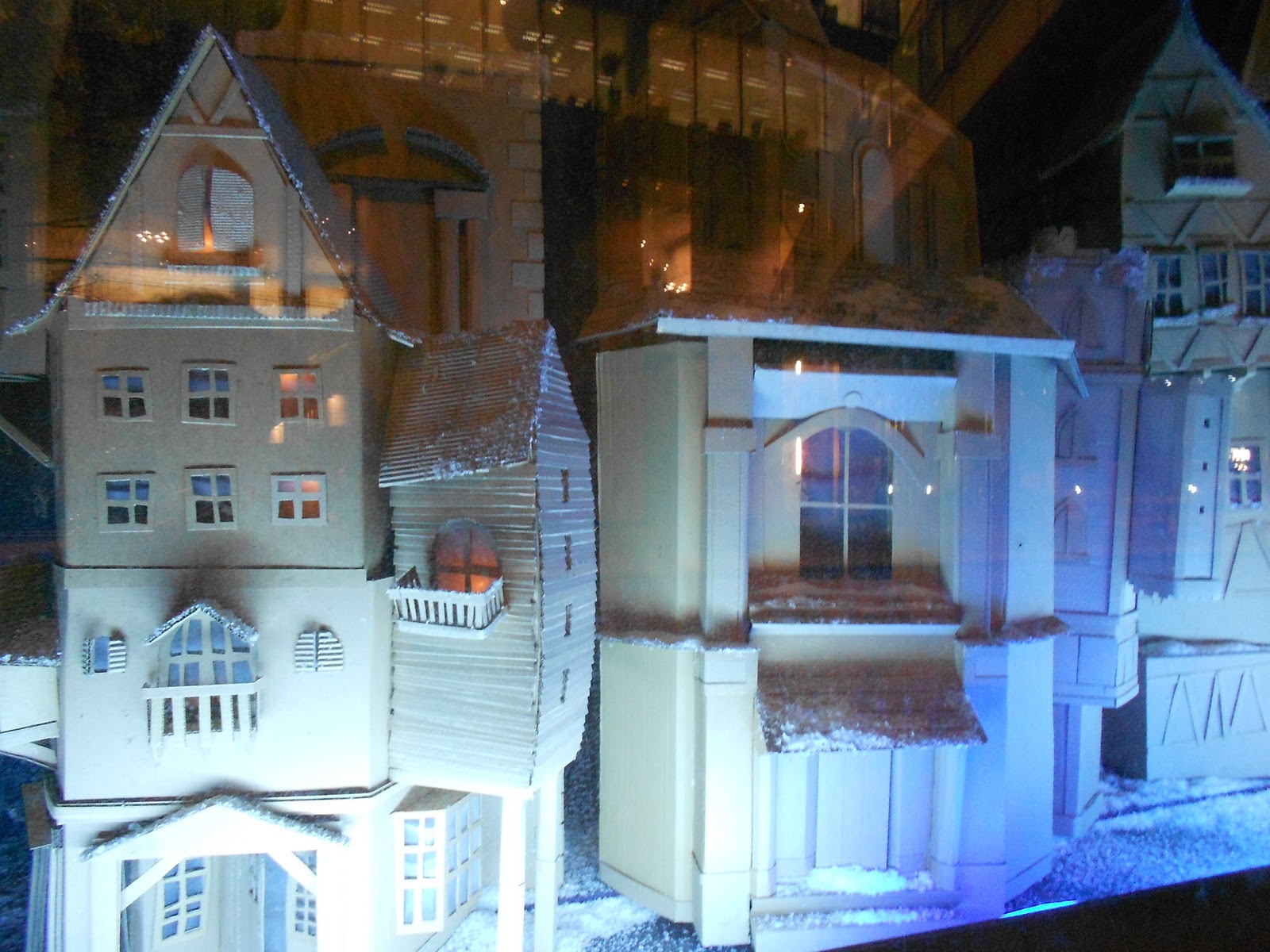
So after two and a half hours I emerged into the dark evening thinking ‘well that was that’ – only to find a special installation in the windows outside.

The London Cityscape by Simon Crostin was commissioned by the Museum of London to commemorate the 2012 bicentennary celebrations of Charles Dickens in conjunction with the Museum’s exhibition, Dickens and London, running until June 10, 2012.

I wandered slowly back to Moorgate along the raised walkways around St Alphages, still snapping away (as my previous post will attest to). And as I finally sat, homeward-bound, on the top deck of the bus, I marvelled at the fascinating snippets I’d learnt about London’s chequered past and felt a quiet contentment at my big day out and the historic city that I’ve chosen as my home.

Your Armchair Tour Of…London Wall

First things first – you might be wondering about the title of the post. It’s not meant to suggest that I have been an armchair traveller – as you know I like to get out and about and see what there is to see. But I’ve had a few people leave comments or send messages that, in reading some of my wanderlust-themed posts (Nuremberg and Prague to cite a couple), it’s like they get to visit without leaving their armchair. This is another one of those posts. If you are not in the mood for a meander, you should read something else.

This week’s small lull between the festivities of Christmas and the euphoria of New Year’s Eve means that Londoners aplenty have availed themselves of the opportunity for rest and relaxation (or a little sale shopping but I digress). Which means that the actual City of London is pretty deserted at this time of year – a  golden opportunity to mosey around free from the usual tyranny of the booted and suited.

My ultimate destination was the Museum of London, a museum I have not visited since I first ‘got off the boat’ in 2004, and one of my favourites. But the empty streets tempted me and I spent a little time meandering, fascinated, along London Wall.

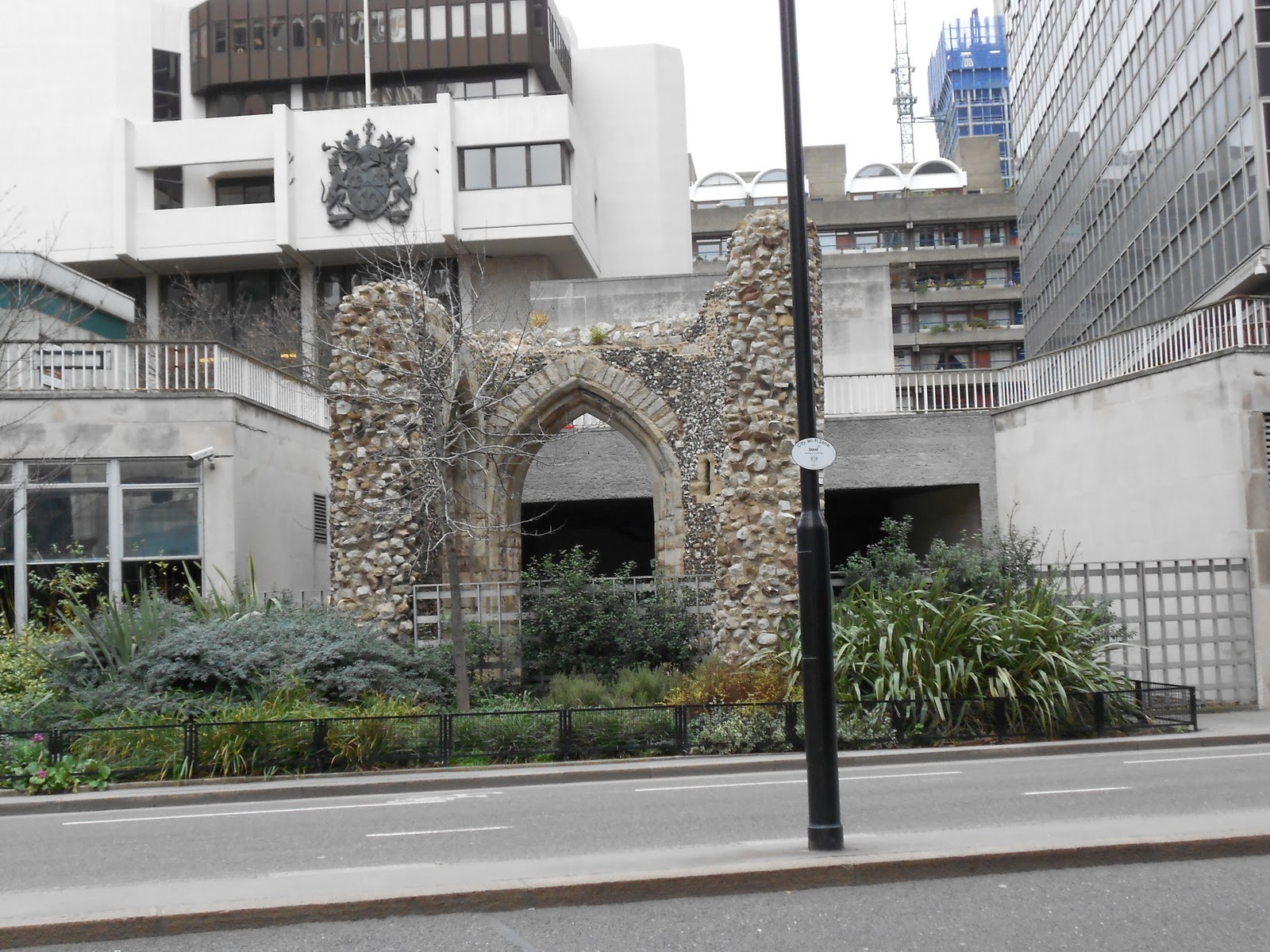
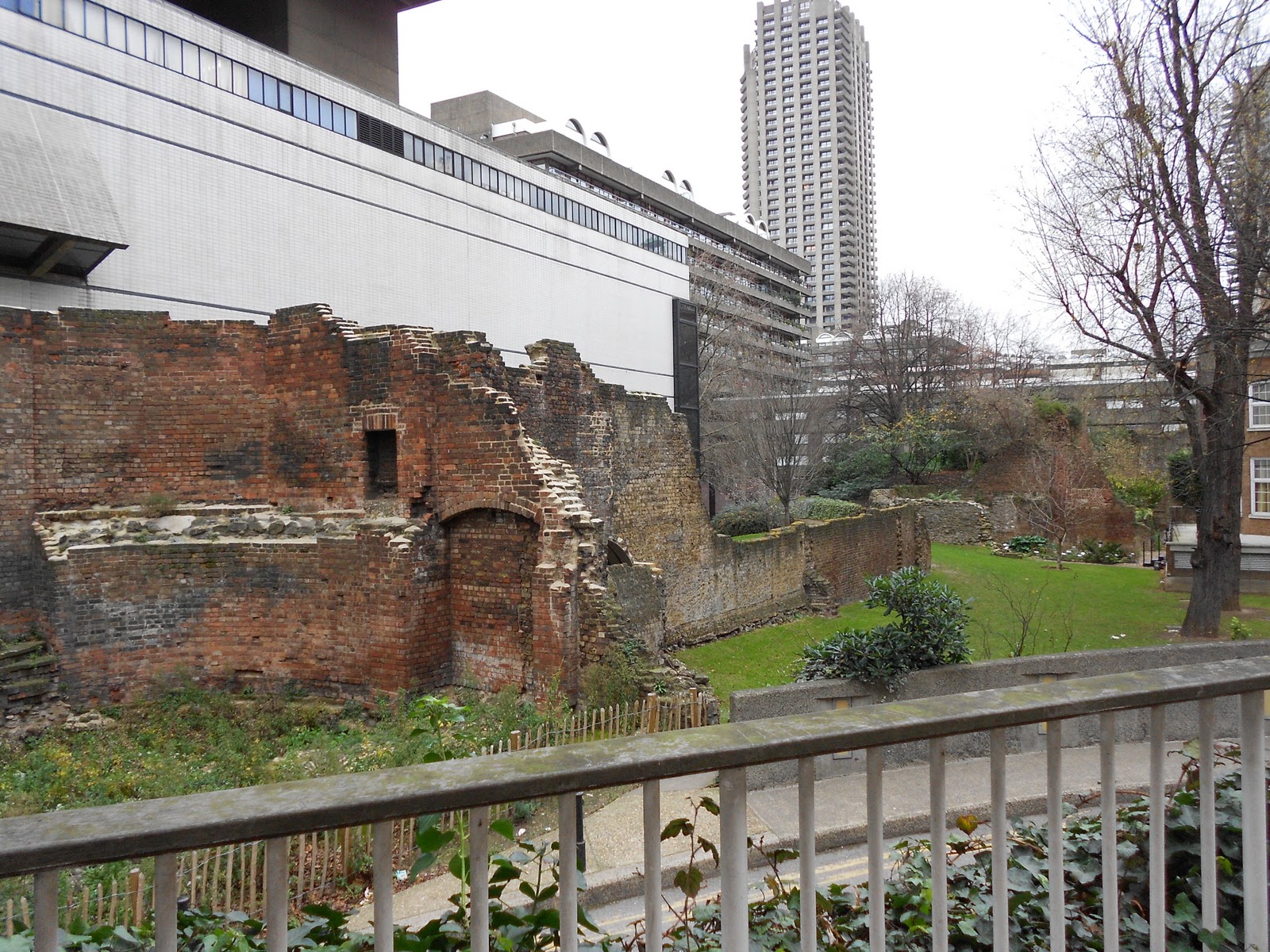
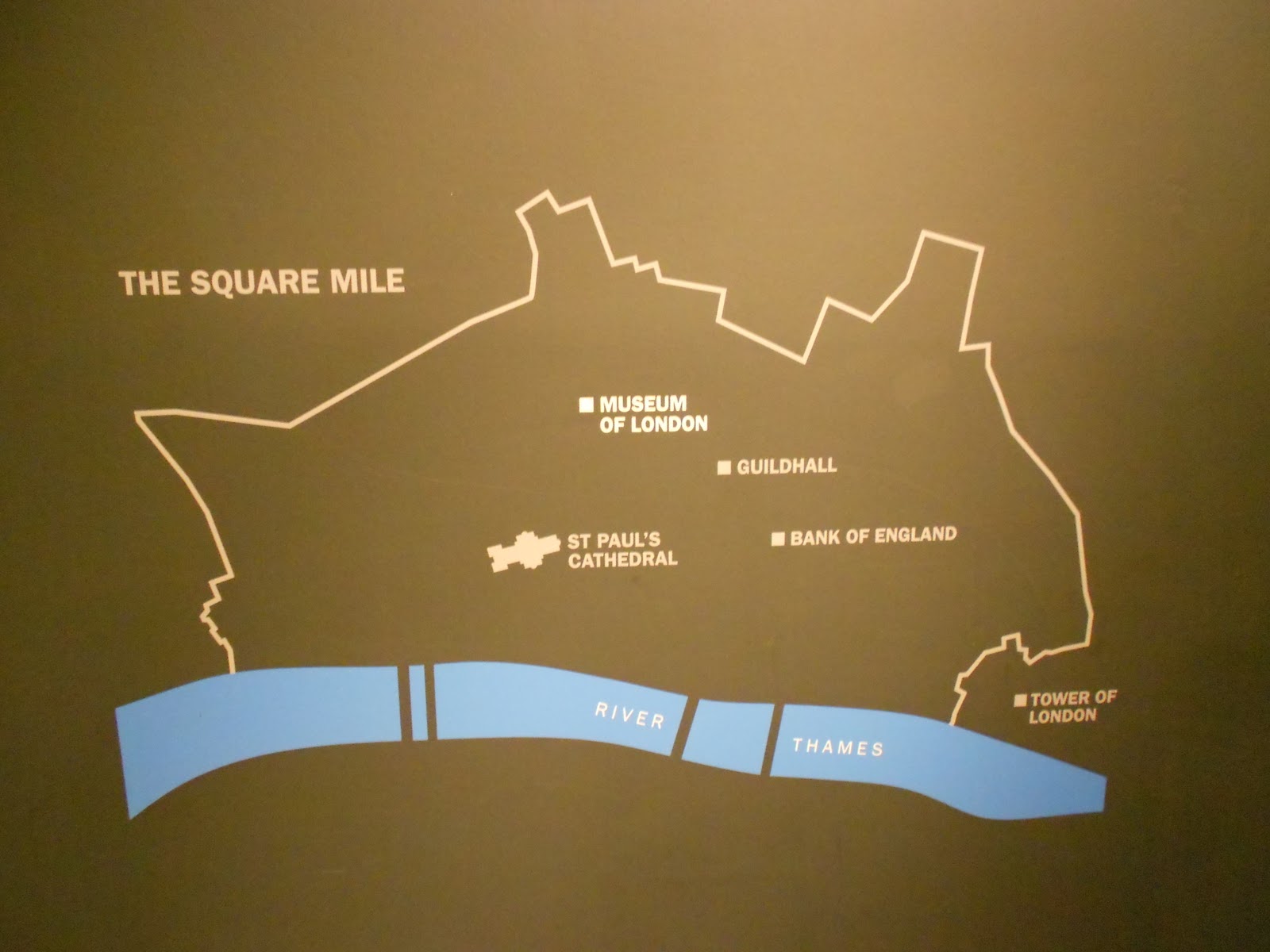
London Wall is a street that runs through the City of London (also known as the Square Mile) that is located along the course of the first defensive wall that the Romans built around the beginning of the 3rd century AD.

On a quiet, traffic free day, it is easy to take photos and absorb a little of the atmosphere of London’s Roman past:

Restored Roman arches along London Wall

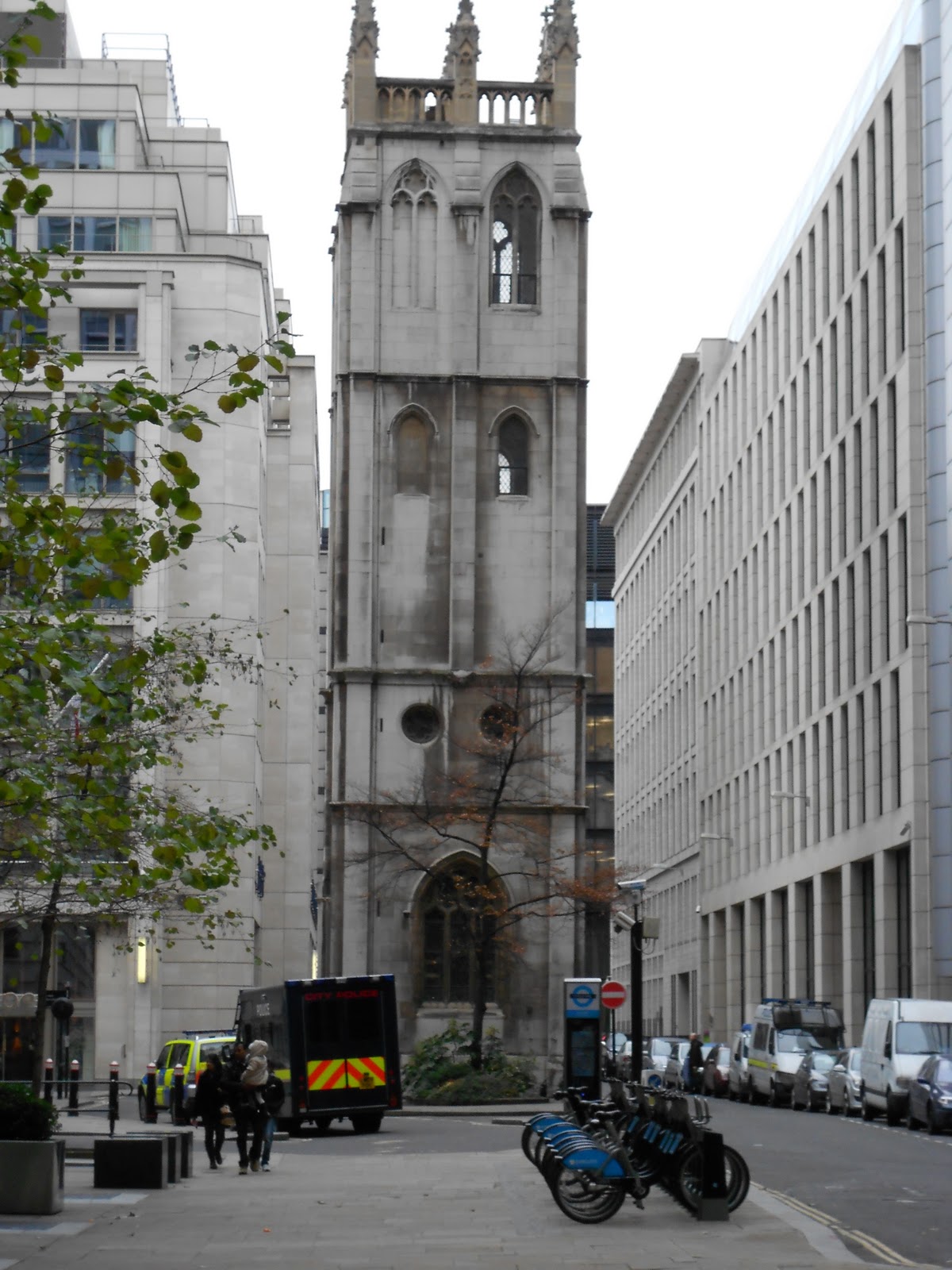
All that is left of the church of St Alban in Wood Street.
Remember my visit to St Albans early in December?

A blast of modernity right amongst the history
Walkway along the remains of the preserved wall
The old and the new – why I love London
Deserted City streets on December 27th – no festive cheer here!
Ruins on the other side of London Wall (the street) – they’re everywhere!
So I took this and then turned around…
…to see this. Looks a bit like a gigantic Meccano set to me.

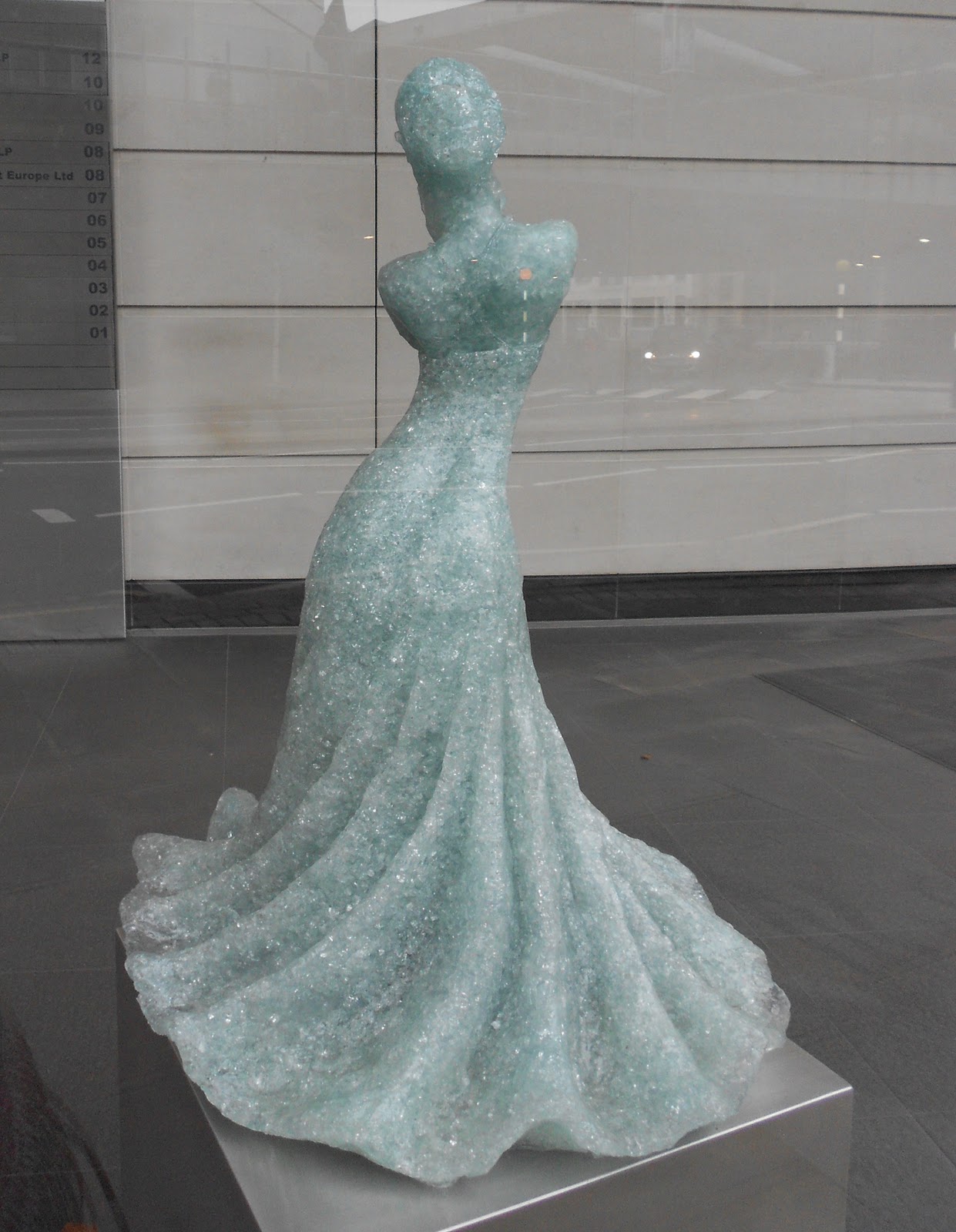
Grace and elegance as I passed a random window

London’s Square Mile

At this point I had wandered right along to the Museum and so disappeared indoors for at least a couple of hours… 

…and when I emerged at about 4.30pm, the day had dipped its lights in deference to the night. As it does here in London during December..and November…and January.

So this is what happened walking back to Moorgate:

Remember the Meccano building? Looks quite cool at night.
And those Roman arches? Them and my shadow
Finally, a touch of Christmas on the corner of London Wall and Moorgate
No significance other than it seemed like a good idea to take a pic.
Some rather fetching glasswork across the road – missed this during the daylight hours
The Dragon and St George’s Cross, guarding the City of London

And so with London’s guardian of the realm at my back it was time to board the bus and take my weary legs and aching feet back up north to my cosy flat and a hot bath. But not before a final snap from the bus stop…

 …of largest licorice allsort I’ve ever seen!

We are so busy rushing to the destination sometimes we often forget that the getting there can be just as fabulous. In case you’re wondering, this is where I went:

So much to see in such a short walk.

And here endeth the tour.