Around The Globe…

You know I love London. And you know I love a walking tour. So you may not be surprised that last Sunday I was up and out early-ish to join one. 

This is my third walking tour with Blue Badge guide Paula Cooze, the first being a wander through the City in Shardlake’s Shoes last September and the second exploring the City’s architecture from the Barbican to Bishopsgate in January this year. This time there was a wander around the globe to look forward to…Shakespeare’s Globe that is…so I trundled tube-style down to London Bridge Station and ambled over to our meeting point at the theatre. This is what followed…

You are right. This is not the Globe theatre but it’s right outside The Anchor pub on the river bank. As I was waiting for the appointed start time to approach, I found myself quite taken by this quaint, quasi-seaside scene with The Shard looming in the background.

This is the Globe theatre built in 1997 after the first was destroyed by fire in 1613 and the second pulled down in 1644 (after being shut down by the Puritans in 1642). 


It is said to be a faithful reproduction of the original – while no plans were ever available to study, local archaeological sites have revealed clues which have been used to make this version as authentic as possible.  

This is the original site of the theatre: Old Theatre Court in Park Street, about 230m away from the current replica. You can pay close to £2,000/month to live in a 71 square metre, one bedroom apartment here.


Speaking of money, the rebuilding of Shakespeare’s Globe would not have been possible without Sam Wanamaker, an American actor and director who set up the Shakespeare Globe Trust in 1970 to rebuild the theatre. The contributions of those who made this possible are celebrated in the paving stones in the theatre courtyard whilst the candlelit theatre that opened next door last year – the Sam Wanamaker Playhouse – honours the man himself.

Clockwise from top left:  Prunella Scales (Sybil Fawlty in Fawlty Towers); Nigel Hawthorne (Sir Humphrey Appleby in Yes Minister); Zoe Wanamaker (My Family, Harry Potter and the Sorcerer’s Stone and Agatha Christie Poirot series as Ariadne Oliver)

Our next stop was the former site of the Anchor Brewery further along Park Street.


Built in 1616 by James Monger, the brewery grew to be the largest in the world in the early nineteenth century. After a succession of owners and a merge with Courage in 1955, the brewery itself was pulled down in 1981 to be be replaced by council estate housing (top right). 

The Anchor Tavern (bottom right) still stands in its Bankside location nearby and history marks this site as having had a public house on it for 800 years. Aside from some reputedly excellent fish and chips, it has played host to Tom Cruise and Ving Rhames in the closing scenes of the movie, Mission Impossible.  And if you turn around and look across the river, you’ll see just why Samuel Pepys wrote of sitting at ‘this alehouse’ watching the great fire of London…

The golden orb of the Monument stands amidst the geometry of the modern city. Laying the column down brings the tip to the site of the bakery in Pudding Lane where the Great Fire of London began in 1666.

Around the corner and though the arch we walked to stop outside The Clink.

Left – Clink Prison Museum;
Right – a Dickensian view from the corner of Redcross Way and Park St.

The Clink was a notorious prison in London and operated from twelfth century through to 1780. It was part of the estate of the Bishop of Winchester (you can see the remains of his palace a little further down the lane) and originally housed prisoners who held views opposing those of the clergy. Profiteering was rife amongst the wardens who sold food and ‘better’ lodgings to those who would pay and to facilitate this industry, prisoners were released to beg during the day and earn ‘their keep’ at night. It later became a debtors prison – thus the reference to Dickens’ tale of Little Dorrit above. It is now the site of The Clink Prison Museum so you can still pay for the privilege of a visit.

At the end of Clink Street, past the remains of Winchester Palace, stands the replica of Frances Drake’s Golden Hinde.


I have blogged about both the palace and the ship before so if you’d like some Gidday witterings on these, you can click here. What I really want to share with you is the legend of Mary Overie (Mary over the river).

Long before there were any bridges to get you across the Thames, ferryman John Overs made his fortune by monopolising the shipment of cargo and people from river bank to river bank. Being incredibly tight-fisted, he had refused to pay the dowry for his daughter Mary to be married to the man she loved. In fact he decided that if he pretended to be dead for the day, his family and servants would mourn and their fasting would save him the cost of food. Wrapped in a burial shroud and lying silently in a coffin, he was dismayed to find that instead of going to plan, his servants were delighted by his demise and celebrated by unlocking and helping themselves to the pantry. Finally he could lie still no more and arose ready to admonish his staff – but one such servant, thinking him to be a ghost, struck him over the head with an oar and killed him.

Mary wrote to her beloved that they were free to marry but tragedy struck when his horse stumbled and threw him en route to her, killing him. Mary refused all other offers and instead formed the priory of St Mary Overie where she lived until her death. 

Always something new for me to learn on Paula’s tours.

Anyway, on to the next stop just around the corner – Southwark Cathedral.


Some have placed the foundations of the building as far back as 606 but the more commonly held view is that it has been in existence since the conversion of Wessex in 886. The site has undergone many iterations over the centuries with the photo to the right showing the different levels of pavements and thoroughfares (as well as a coffin). Southwark Cathedral was even named in the Domesday Book of 1086. 

We dived into Borough market next, ghostly quiet without the hustle and bustle of its Wednesday-to-Saturday trading. 

As we emerged from the labyrinth of empty stalls, we came across yet another famous Globe but from the modern era.

This is, in fact, the window of Bridget Jones, (yes she of the diary) from which she peers out into the snowy night in the final scenes of the film to see Mark Darcy striding away. Yes it’s true. The movie was on a few days after this walk so I checked it out for myself.

Leaving the market behind us, we walked down Southwark Street past the Hops Exchange…


…and crossed into Redcross Way to our next stop, the Crossbones Graveyard.

This site started out as a medieval burial ground for the area’s prostitutes and by the 18th century had become a paupers’ graveyard which was then closed in 1853. There were excavations on this site during the 1990s, carried out as part of the extensions to the Jubilee Underground line which unearthed the bones of the dead in 148 graves. The local community in campaigning to create a permanent memorial garden, continues to add to the poignant memorial created along the fence and holds a memorial vigil at the gates at dusk on the 23rd of each month.

Turning back we crossed back over Southwark Street and rejoined Park Street, coming to our penultimate stop…


This plaque shows two draymen beating Julius Jacob von Haynau, an Austrian general who was well-known for his brutality in suppressing insurrection. This particular incident happened following several narrow escapes of mob violence when von Haynau was High Command of Hungary, with the two men setting upon him during his visit to the Barclay and Perkins Brewery (previously the Anchor brewery). Let’s just say that the protagonists were very much lauded for their ‘chivalric’ pursuit of justice in the realm.

And then we wandered around the corner to find ourselves back at The Anchor and the end of our tour. It was such an interesting two hours, full of fun stories and historical titbits that, despite having explored this area before, I did not know about – and you know how I like discovering London like this. The really amazing thing is that when I look back on where we walked, it wasn’t a large area and I was left in awe of how historically rich this city is. 


So if this inspires you and you’d like to know more, visit Paula’s website –www.crossingthecity.co.uk – and find out where next she might take us.

But I have first ‘dibs’ okay?
Hanging A Right…

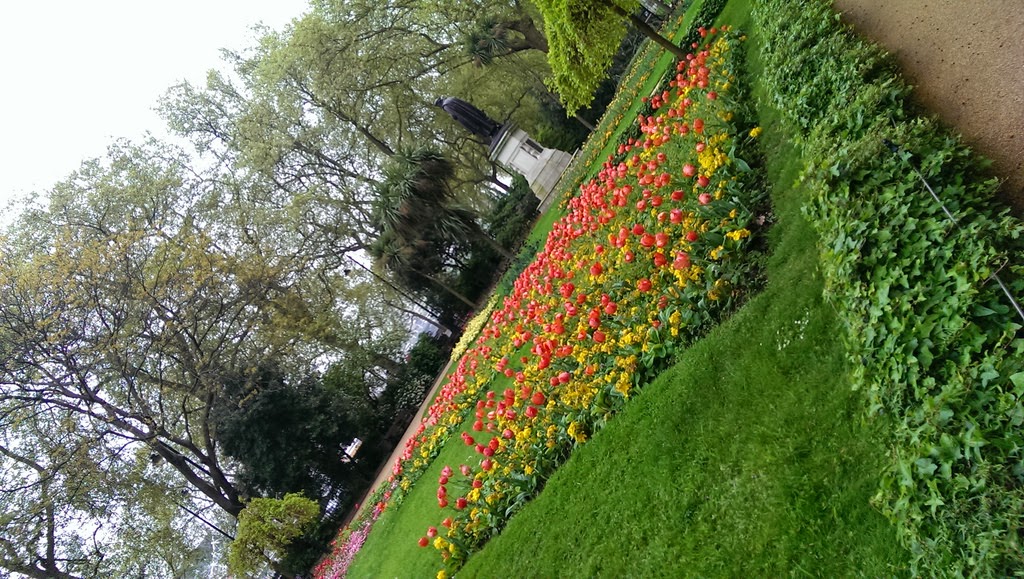
I am lucky enough to work right near Westminster Abbey and the Houses of Parliament and my morning walk to work from Charing Cross Station takes me along the bottom corner of Trafalgar Square and straight down Whitehall, past 10 Downing Street and through Parliament Square. With so many beautiful buildings and breathtakingly famous views, I am constantly whipping out my phone to capture a moment that makes me catch my breath and say ‘Wow!’. But this morning I turned right out of the station exit and discovered an entirely different source of snap-happy inspiration, Whitehall Garden

The Garden forms part of Christopher Wren‘s original vision of a continuous series of public gardens along the river bank back in 1666 – Whitehall Garden is one of four gardens and stretches along Victoria Embankment from the Golden Jubilee Bridge towards Westminster Bridge. It was laid out in 1875 along the river side of Whitehall Palace (which to this day still contains the Banqueting House with its exquisite Rubenesque ceiling). 

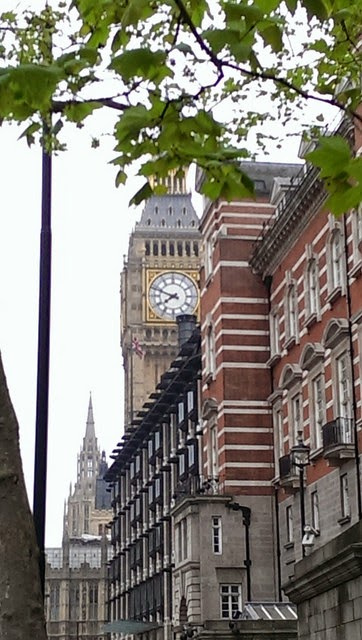
Compared with the hustle and bustle of Whitehall, the lush green landscape before me offered a more serene and contemplative space than usual for the last leg of my commute. With today being ANZAC Day, it also seemed appropriate that my decision to beat a different path to the office took me past the RAF Memorial. And I loved the opportunity to finish off my commute with a different perspective of Big Ben…

I didn’t expect to find so much that was interesting along the way, expecting a spot of vague strolling but upon crossing Northumberland Avenue, having a Monopoly moment and entering the garden, I stumbled across a fabulous little piece of history.


These are Queen Mary’s Steps and were discovered in 1939. They were built by Wren in 1691 as part of a riverside terrace for Queen Mary II in front of the original Whitehall Palace (one of Henry VIII pads) and the curving steps provided access from her Royal Apartments to the State Barge. *snap snap*

But the serenity of the gardens (and more ‘peaceful picture’ opportunities) beckoned…


And soon I was turning right and crossing into Parliament Square beneath the gothic gilded clock tower.

I do love this city…what a great way to start a Friday…and all because I had a whim to hang a right.

Literary London…

For those of you who keep an eye on my literary forays – whether through The Book Nook or on Good Reads – you’ll know that my Year in Books has gotten off to somewhat of a prolific start. Having set my yearly target at 54 books (that’s one a week then bumped up to match last year’s tally), I am already reading #24. That’s right – three shy of the halfway mark and only 25% of the year gone. 

So I was walking up to North Finchley last week and noticed this street poster for CityRead London.


Intrigued I came home, googled and found out about this wonderful initiative.

Launched in 2012, CityRead London is an annual literary festival held in April each year which is designed to have us read a little something about London…together. Then throughout the month, the book is brought to life with literary events and talks in borough libraries all over the capital. This year it’s Louisa Young’s My Dear, I Wanted To Tell You, a love story set during the first World War. Released early in 2011, this book was short-listed for the Wellcome Prize, the Costa Novel Award and The National Book Awards that same year.

There has been a plethora of authors eager to showcase London and all of its charms over the centuries (think back to Charles Dickens in the 1800s who actually wrote part of Martin Chuzzlewit just up the road here in Finchley). So the choice must have been a challenging one with so much to choose from but for all its accolades, I had not heard of Young or this particular book.

I love reading about this wonderful city: its history, its place in the modern world or simply as a backdrop to a cracking story. One of my very favourite books of the last few years is John Lanchester’s Capital so with all of this London literary love in mind, I have Amazon One-Click-ed Young’s war tale to Audrey‘s lovely e-pages. 

What an inspired and clever way to promote reading (and to get me to download yet another book to my kindle this week).

My backyard…B is for Brixton

Having returned from playing away in Abu Dhabi for a week, it was time to play a little closer to home again so this morning I was up and on the way to Brixton for another ‘backyard’ walking tour. 

Brixton is in South London and being most notable for the Brixton Riots in 1981, it’s an area of London that it’s fair to say has been somewhat tainted by its turbulent past. But the area is also one of those ‘up-and-coming’ parts of London as home buyers seeking lower property prices move outwards from the city while still remaining in commuting range. In fact it’s one of the things that surprised me today – how near Brixton is to central London. (I thought it was much further out!) 

Anyway our small group met at the Ritzy Cinema at 11am and headed down Coldharbour Lane to the frontline of the 1981 Riots at the intersection of Atlantic Avenue.


After a bit of background on the Riots from our guide Angela, we continued down Coldharbour Lane a little further to see Nuclear DawnThis extraordinary mural was painted by Brian Barnes and finished in 1981. It features a large skeleton swathed in the flags of nations who had nuclear weapons at the time and paints a grimly powerful portrait of politics and the Cold War during the late 70s/early 80s. 


Turning away from the mural, we faced Southwyck House – also known as Brixton’s Barrier Block – an unusual building featuring the Brutalist architectural style common of the period in which it was built. 


The Barrier Block has played a controversial role in Brixton’s history. The other side of the building features large windows and balconies and has been home to one of the world’s most famous artists, Damien Hirst. Ex Prime Minister John Major lived briefly in Brixton and his support for the demolition of the block later in his career was more than a little undermined by the fact his Planning Committee had approved its construction. Oops!

Our next stop was Brixton Village, a series of markets accessed through an entrance across Coldharbour Lane from the Nuclear Dawn mural. Fascinatingly enough, our short dash across the road was peppered with more art from the locals…

French street artist Space Invader leaves his mark at the corner of Coldharbour Lane and Atlantic Avenue.
Bee (top left) can be found at the intersection of Coldharbour Lane and Atlantic Avenue as can the image bottom right. The image top right was right near Nuclear Dawn and ‘B Our Guest’ adorns the railway bridge over Brixton Hill.
Lucy’ Casson’s Foxes and Cherries sculpture (top left) adorns the roof on the corner of Electric Lane and Electric Avenue; bottom left – collaborative mural near the intersection of Atlantic Avenue and Coldharbour Lane; right – an homage to Brixton-born David Bowie (or David Robert Jones as he was christened) painted by Australian street artist James Cochrane.

Brixton Village was traditionally a food market where the local Caribbean community would buy fresh produce, particularly specialities like ackee, plantain, yams and salt fish.

On our little tour, I got a bit of an education about Caribbean cuisine, also finding flying fish (top left) – which I saw flying several years ago on a trip to Tobago – and breadfruit (bottom left). The biggest surprise came when I was introduced to chow chow, which I knew as choko growing up in Australia! We also laughed at the ubiquity of Milo (a malted chocolate powder that we add to big glasses of milk) in both the Caribbean and Australia – how strange that such similarities exist between islands so far away from each other.

The produce stalls are far fewer and the markets have been taken over by restaurants and cafes. It was fairly quiet as we walked through but you could just imagine the little lanes buzzing with the energy and chatter of lunchtime or after work crowds.

Clockwise from top left: Traditional Caribbean fare from Fish, Wings and Tings; enjoy a tipple and nibble at Champagne and Fromage; tuck in to morsels from the sea at Etta’s Seafood Kitchen; beat the crowds for a cuppa at Federation Cafe, graced in the past by none other than Hollywood star, Will Smith.

Emerging from the markets it was a short walk down to Electric Avenue – yes the one made famous by the Eddy Grant song.

Electric Avenue, so named as it was the first market street to receive electric lighting. Bottom left: Healthy Eaters’ delivery vehicles feature the names of prominent locals.

Further down Electric Avenue, we found Brixton Speaks an installation on the wall of the Iceland store. Created by author Will Self, Brixton Speaks pays homage to the unique Caribbean patois of the area. Click here for a much better photo! This was also the site where a nail-bomb exploded in 1999 injuring 39 people.

Turning right onto Brixton Hill we walked under the railway bridges to visit our next point of interest, the Ricky Bishop Memorial TreeRicky Bishop was taken into police custody in 2001 and was later admitted to hospital with unexplained injuries. The tree serves as a poignant reminder of the still-fractious relationship between the community and the local police.

We crossed over Brixton Hill and spent about 20 minutes away from the cacophony of the high street.

Left: emergiing from Stockwell Avenue between the twin buildings of Bon Marche, London’s first purpose built department store; top right: the Grade II listed Brixton Academy which started life as the Astoria Theatre in 1929; bottom right: Trinity House on Acre Lane, Georgian architecture preserved since 1822.
Life in a leafy Brixton Square: a two bedroom (top right) will set you back at least £750,000 but you can always drown your sorrows at the Trinity Arms (bottom right).

With that we headed out onto Acre Lane and wandered back to the Ritzy Cinema. 

Nursing my hot chocolate on the tube ride home, I felt like I’d barely scratched the surface of this colourful neighbourhood, so different from my own yet discovering so many unexpected similarities in our cultures. And I mused once again at how utterly fascinating this big backyard of mine called London truly is.

A daring adventure

Ten years ago today I arrived at Heathrow Airport. I had two large suitcases and a visa in my passport. There was no-one to meet me (he was late). So I sat in the large grey Arrivals Hall, jetlagged and scared and certain that this – whatever ‘this’ was – was what was next for me.

How ever much pre-work and planning could have helped me in my new and daring adventure we’ll never know because I had leapt. Leapt straight out into the wilderness, albeit an English-speaking one, with not much more than two months elapsing since my decision to pack up and go. I remember thinking to myself, ‘little ol’ me against the world. What will I do if he doesn’t show?’

Well he did, but not for long.

So I picked myself up and built a life. And as with all daring adventures, it is never a straight trajectory. Each time I thought I was within reach of that magical brass ring (the great job and happy living situation being the two early contenders for this honour), it contrived to slide away, slipping through my fingers to shatter cruelly before me or disappearing into the ether leaving me wondering whether I had ever been close to it in the first place.

But there’s more to life than brass rings.

So I snatched moments for careful consideration. Joyful ones, sad ones, frustrated ones, peaceful ones, excited ones and lonely ones. Scrutinised each one to find the clues to happiness, success, contentment and power in this new and daring adventure.

I took chances and bottomed out. Made friends, unmade them again and kept the ones that mattered. Thrust myself into the thick of local life both past and present and grew to love my new hometown. Took steps forward – many of them small and unplanned – and some large ones back. Struggled with why I wanted to be here when it was just so damned hard. Laughed and cried and celebrated. Lost the love of my life and got the job of my dreams.

In ten years I built an extraordinary life.

And when I walk down Whitehall to work each morning, with Admiral Nelson at my back and Big Ben peering over the rooftops ahead and beckoning me towards the office, little ol’ me says quietly to herself, ‘look what I did’.

And smiles.

My Backyard… Building Blocks

Today I was reading an interesting piece on Fevered Mutterings on what constitutes ‘travel’ and the premise that we tend to think about the packing of a suitcase, backpack or even overnight bag as an activity inextricably linked to travelling. 

When I think of travel, I think of going from point A to point B (which is the definition that comes to my mind given the Transport for London website exhorts me to ‘travel by foot’ for a portion of most of my journeys) but this is not a vision that will keep me going in the depths of winter darkness. Thank goodness Mike Sowden suggested that redefining travelling as ‘venturing somewhere new’ means it is right under our noses – that ‘travel *is* our own backyard’.

And last Sunday it was my own ‘backyard’ that I ventured out into to have a gander around Old London Town. I’m not sure that under normal circumstances, I would be up for an architecturally themed stroll on a wintery Sunday morning but I enjoyed Blue Badge Guide Paula’s trek around Shardlake’s London so much last September that it was an easy and enthusiastic ‘yes’ when the flyer came through for her guided walk through Post-War City Architecture

So we started at Barbican tube station and followed Paula – and her post-war story – through the City of London. Here’s what we saw…

Standing outside Barbican station on a crisp January morning

Following the bombing raid on London on 29th December 1940, much of Greater London was flattened. But contrary to wider plans, the City took its own view of its rebuilding and commissioned architects Chamberlin, Powell and Bon to create urban villages for the working class…


The Golden Lane Estate was originally positioned outside the City boundaries until ‘re-zoning’ brought it into the fold – perhaps that explains why a 2 bedroom apartment here goes for around £680,000.
…and the more affluent inhabitants of the City.
The Barbican Estate was opened in 1969 (that makes it as old as me) and stretches over a 40 acre site. It contains more than 2,000 flats, of which a 2 bedroom version will set you back about £900,000. Oh and check out the upside looking windows top right.

We then ambled around the back of the Museum of London, took a quick peek at the Pedway System (a scheme based on raised pedestrian walkways which never really took hold) then crossed London Wall to Wood Street.

Traditional building blocks adorn the home of the City’s Police Force (yes, a separate force from that of Greater London). Standing with your back against the wall will give you a great view of the tower reflected in the building opposite.
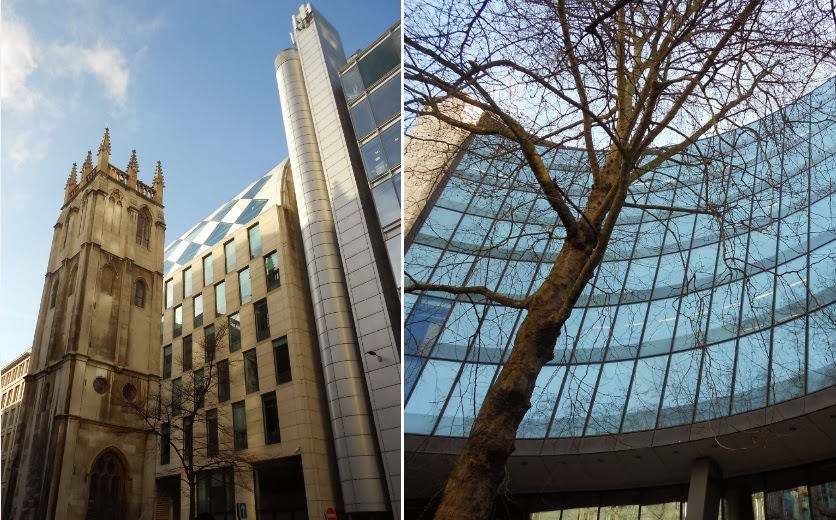
The tower of St Alban stands in the centre of the street in stark contrast to the architecture around it and here the Norman Foster designed 100 Wood Street forms a geometric backdrop to Christopher Wren’s deft touch. But walk through its checkerboard frontage and you’ll find a veritable oasis. Soaring windows angled outwards bring light into the old churchyard and provide space for the old plane tree’s leafy boughs.
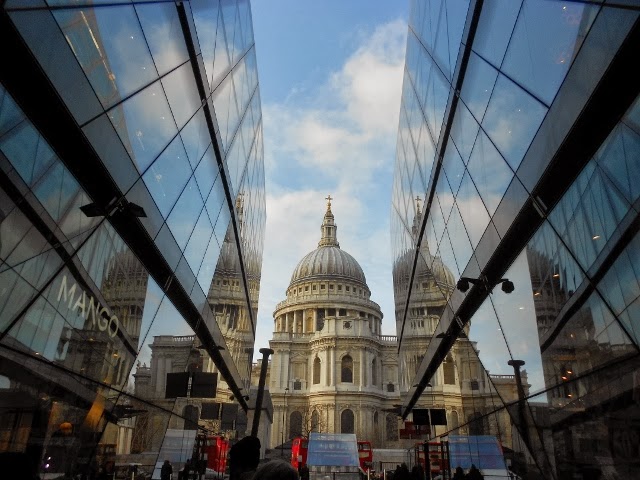
Next it was a trot down Gutter Lane to emerge on Cheapside – crossing the road, we found ourselves standing in One New Change with this rather spectacular view…
The dome of St Paul’s pierces the sky right opposite One New Change. Thirteen ‘views’ of the cathedral are protected by the London View Management Framework which prevents the construction of any buildings which may impinge on the view. There’s even a protected view from Richmond Park’s King Henry’s Mound several miles away.

We headed out of One New Change and down to Bank Junction where the architectural contrasts abounded again.


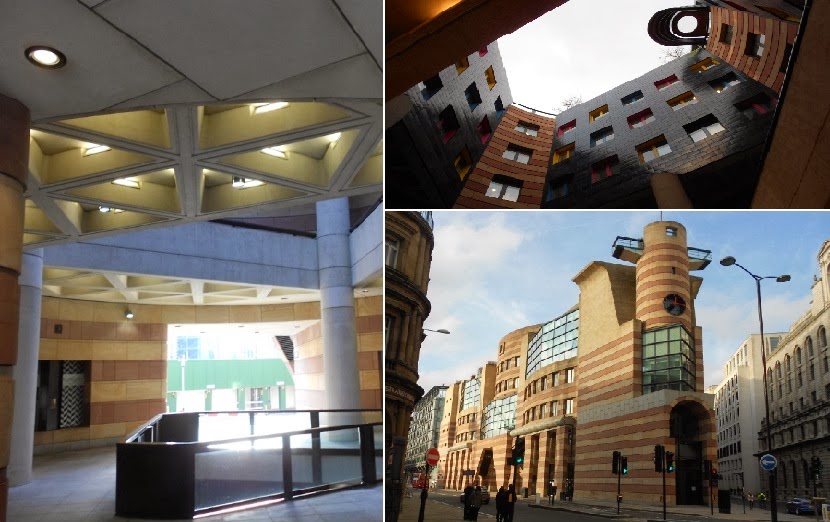
This is No 1 Poultry: the street, like those around it (Milk Street, Bread Street) named after the market produce originally sold here. The building, designed by James Stirling for Peter Palumbo, carves a ship-like post modern silhouette against the sky and has caused much outcry from those – including Prince Charles – whose more conservative sensibilities it offends.
Turning from the post-modernist perspective, we found more traditional architecture clustered around the junction with the Royal Exchange (top left) and the Bank of England (bottom left) dominating the view.

We headed up Cornhill, our guide Paula setting a brisk pace…

The Leadenhall Building (the ‘Cheesegrater’) looms above the stone buildings along Cornhill while St Michael’s doors (right) are tucked a few neat steps back from the street.

…and came to a stop on the corner of Leadenhall Street and St Mary Axe, finding ourselves both surrounded and dwarfed by edifices of steel and glass…

The famous Lloyd’s of London ‘inside out’ building (right) was designed by Richard Rogers (who also designed the Pompidou Centre in Paris with Renzo Piano) on the site of both the previous Lloyd’s building and before that, East India House. The construction style (called Bowellism) is notable for having its interiors – stairwells (spirals), restrooms – the boxes behind the piping which contain electrical and water conduits –  and air conditioning ducts easily accessible to ensure that building never need close due to any malfunction of its ‘essential’ services. This 1986 building was Grade I listed in 2011 much to the chagrin of Lloyd’s (the listing means that the building cannot be changed in any way) so the insurance company’s ‘overflow’ will be moved right across the road to…
…the Cheesegrater (official name The Leadenhall Building). Situated at 122 Leadenhall Street, this building is nearing completion and is expected to open in Spring this year.

And not to be outdone, just a stone’s throw away stands The Gherkin.

The Gherkin‘s official name is the Swiss Re Building – or that’s what previous owners Swiss Re insisted on. Another Norman Foster design and completed in 2003, 30 St Mary Axe was built on the site of the former Baltic Exchange which was damaged in a Provisional IRA bombing in 1992. I thought it seemed rather fitting that The Cheesegrater is within arms reach of The Gherkin…

And with that, it was a short walk to Bishopsgate and the end of our tour. Almost 3 hours (including what Paula likes to call a ‘warming coffee break’ at the Costa Coffee halfway point).

I strolled back towards Moorgate tube station filled with excitement at what a dynamic and fascinating city I live in. The time had flown by and I was so glad that I had dragged myself out of bed and braved the chill to explore this amazing ‘backyard’ of mine. I kept gazing around, wondering about the stories of the buildings that loomed over me and as I reached the intersection of London Wall and Moorgate again, I couldn’t help but take just one last parting shot.


The old and the new right next to each other again.

I don’t know their story. But I am sure it’s fascinating.

Bourne again

I’ve been enjoying a little staycation for this ‘week between’ Christmas and the start of the New Year. It’s been a week of pottering about at Gidday HQ: literary lie-ins (aka indulgent reading in bed until somewhere around 10am), comfy couch sessions and bouts of cleaning with a few dips into some local delights – a trip to the Phoenix Cinema to see Gone With The Wind (all 4 hours of it – at last) and a fab girly catch up over cocktails & lunch at Skylon – in between.

After a couple of brisk, blue-sky days, the weather is wet and a bit dismal today so amid continued bursts of cleaning up, I’m aiming to tick a few more movies off the I-haven’t-seen-it-yet list with Gentlemen Prefer Blondes already under my belt this morning.

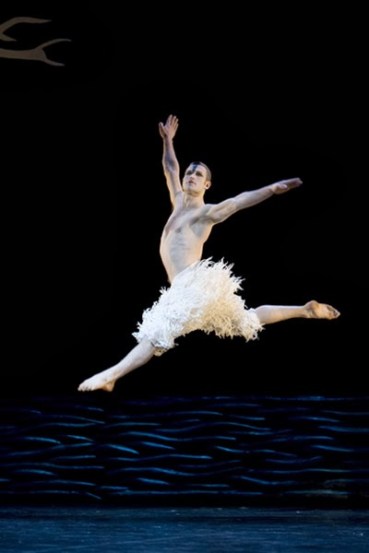
Speaking of ticking things off my list, I want to tell you about my Boxing Day. You see, I went to Sadler’s Wells to see Matthew Bourne’s Swan Lake as a Christmas present to myself. Yes peeps, Happy Christmas to me.

I first saw Matthew Bourne‘s work in July last year. Play Without Words left me thrilled and awestruck and his take on Sleeping Beauty was clever and fun and brilliant. His Swan Lake, which premiered in 1995 with an all-male ‘swan ensemble’, has something of a reputation. So even though my previous experiences of Swan Lake had left me bored and wondering what the point was, I took my seat just before 2.30pm feeling quite excited.

The first familiar notes of Tchaikovsky’s score swelled from the orchestra pit soon after, the curtain rose and I was riveted.

It was theatrical and dramatic and witty, filled with light and shadow and the most extraordinary dancing I’ve ever seen. And for the first time I really felt the story. It was visceral – I could feel the fear and liberation in the prince, the reined-in majesty of his mother and the sycophantic expectation of his subjects. But most of all I felt the magnetism and menace of the swans. Their flapping fury, their drooping necks and piercing eyes, the muscular ebb and flow of sweeping, swooping limbs that were, it seemed, inseparable from the music.

Images sourced from http://www.sadlerswells.com

It was an amazing show and for me, it was if Tchaikovsky’s powerful score had finally met its match in the powerful movement on the stage. I felt incredibly emotional and as the cast took their final curtain call, I was on my feet applauding furiously.

Thinking back, I can still feel the moment that the final note evaporated into the air and the curtain fell. The slight prickling of my skin, the full feeling welling in my chest and the profound sense of being touched by something extraordinary.


Throwing Some Shapes..

Ten sleeps to go until Christmas Day…

…and today I was off for a bit of festive lunching at The Chop House at Butlers Wharf. The Chop House is nestled just under the south eastern ramparts of Tower Bridge and an easy 15 minute stroll from London Bridge tube station. Needless to say I left home in plenty of time for a little pre-lunch strolling – and you just never know when travel plans may go awry.

My ‘extra’ time quickly disappeared as I admired this relatively unknown – to me anyway – part of London. And I couldn’t help but whip out the smartphone and record its moody shape-shifting for posterity this post.

It all looked a bit un-auspicious when I first got there…


…but lovely little shops and cafes lined the cobbled laneways and taking a smart left turn led me to The Galleria…


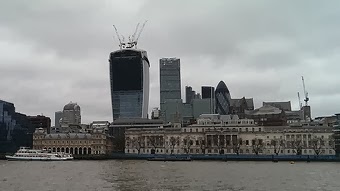
…whose exit on to the river brought the City’s growing mix of modern shapes above the old sharply into focus.


Looking right, the White Tower of the Tower of London (left) and Tower Bridge beckoned despite the damp and dreary skies…


…while at my back, this strange tree-like shape took my fancy amidst the stark winter branches that surrounded it.


Sometimes a new position brings a whole new perspective and standing outside the More Riverside complex with The Shard looming in the background was an opportunity to see London’s urban face, washed shiny by the rain…


..while the controversial City Hall beckoned further along the river bank.


And no Thames-side meandering would be complete without the magnificent Tower Bridge. It didn’t seem to matter how many times I have seen it or how many photographs I’ve taken before, my hand moved automatically to my pocket to take just a few more… 


So it would seem that I’m not the only one throwing some shapes this festive season.

Only ten sleeps to go…

you should be dancin’…yeah.

Commuting Gems…The Garden Bridge

A few weeks ago I was reading Time Out magazine on the tube ride home when I was inspired by the latest campaign to have the support of the fabulous Joanna Lumley, The Garden Bridge project.

Image Source: arup.co.uk

The Garden Bridge is set to be London’s first green pedestrian walkway stretching across the Thames between Southbank and Covent Garden on the north side of the river. The project has been commissioned by TfL (Transport for London) as part of their vision to create a pedestrian river crossing – the aim is to complete this rural corridor by 2017.

Image Source: arup.co.uk

Thomas Heatherwick is the creative genius behind this verdant proposal. He’s the one who designed that spectacular 204 petal Olympic Cauldron for London 2012 and has also designed a new-style ‘London bus’ some of which hit the streets earlier the same year. He envisages a peaceful and rejuvenating precinct for the nation’s capital, one which reflects the beauty of each of the seasons and creates opportunities for commuters to linger and take a breath in the hustle and bustle of their day. 

Image Source: arup.co.uk

Can you imagine what an amazing legacy that would be? I feel quite inspired by such commitment to quality of life and the philosophy of green living.

There’s currently a public consultation about the Garden Bridge project which can be found here. So if you feel inspired and have something you’d like to say about it, you have until the 20th December (2013) to register your views.

There’s also a rumour that the bridge would feature a Christmas tree during the festive season.

I’m in…where do I sign?

Composers, Canalboats And Christmas Cheer…

What with lots of changes, challenges and general excitement over the last few months I’ve been a little lax in my pottering about London (note I do not include my recent tourist-ing with Lil Chicky in this – that was by no stretch ‘pottering’) and today it was a combination of music and markets that had my full attention. Having been in Chicago for work this week (and slept the morning away yesterday ‘in recovery’), today saw me up, about and out the door for a little culture and some festive cheer. 

First stop (well after the tube ride and the large soy cappuccino purchase at Caffe Nero) was Kings Place for Bach Unwrapped, a one hour concert featuring the work of JS Bach, his protege JG Goldberg, and his son, CPE Bach. For those of you in the know about these things, today’s Trio Sonatas programme consisted of:

Trio in G for flute and violin
Trio in C for two violins (collaboration with Goldberg)
Trio in D Minor for two violins (collaboration with his son)
Trio Sonata from Musical Offering

(For those of you who know nothing about these things, the violin, cello and harpsichord were joined by another violin for the second and third pieces and a flute for the first and the fourth.)

Apparently the last piece, Musical Offering was borne of the composer’s meeting with Frederick The Great in 1747 – the King challenged Bach to improvise over a theme he had written and while Bach rose to the immediate challenge, on returning home he composed Musical Offering and despatched it to King Frederick. The programme note claimed that Musical Offering has been dazzling musicians with its brilliance ever since.

While I don’t know very much about classical music, I find it incredibly moving and very easy to lose myself in the ebb and flow of the music so after an enjoyable hour, I wandered out and headed back to Kings Cross Station in a leisurely snap-happy stroll. 

Despite my having been there several times, I had never actually walked out the back of Kings Place before today – lo and behold there’s a rather lovely deck which overlooks Regent’s Canal…


…and the stroll back to the station along the canal was quite pretty too.


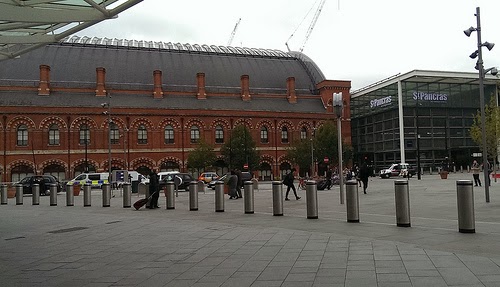
The area around Kings Cross and St Pancras Stations has been undergoing a major redevelopment since 2008 and in the midst of the construction site, there’s quite a pleasant walkway – dotted with titbits about the area’s history – which connects the stations to Regent’s Canal. This is the view coming back from the canal, the spire of the Grade I listed St Pancras International station building standing tall above the ‘debris’.

The forecourt between Kings Cross and St Pancras stations.

The second half of my Sunday foray was spent wandering along the Southbank Christmas Market. There is something deliciously festive about this market. The decorated stalls stretched along the riverside path from The London Eye to the National Theatre with stallholders plugging their wares (hand made gifts and eclectic arts and crafts feature heavily), tempting passersby with a fresh waffle, a little glühwein or perhaps some kind of German sausage concoction.

Nearly there – this glimpse of Big Ben framed by the railway bridge caught my eye from Concert Hall Walk on the way to Southbank.
This ‘urban’ paint job decorated the entrance at the back of Royal Festival Hall. 
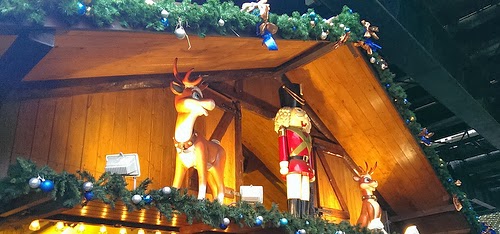
Traditional festive cheer above one stall…
…faced off against Scrooge on another.
German sausage concoction? Enough said…

The twinkling lights, the smell of roasted chestnuts…I just love it. Even the nip in the air as I snuggled deeper into my coat, hat and scarf was a reminder of the merriment to come…in just 31 sleeps.

Needless to say I’ve started my Christmas shopping…