Frocks, Flicks And Champers…

This morning I wrapped myself up against the cold and stepped out into the crisp Autumn air to meet friend J for a few hours of glam gambolling at the V&A. The day was bright and it all started with a coffee in the sun before we wandered around the block to the museum in time for the first fabulous instalment of our day, Ballgowns.
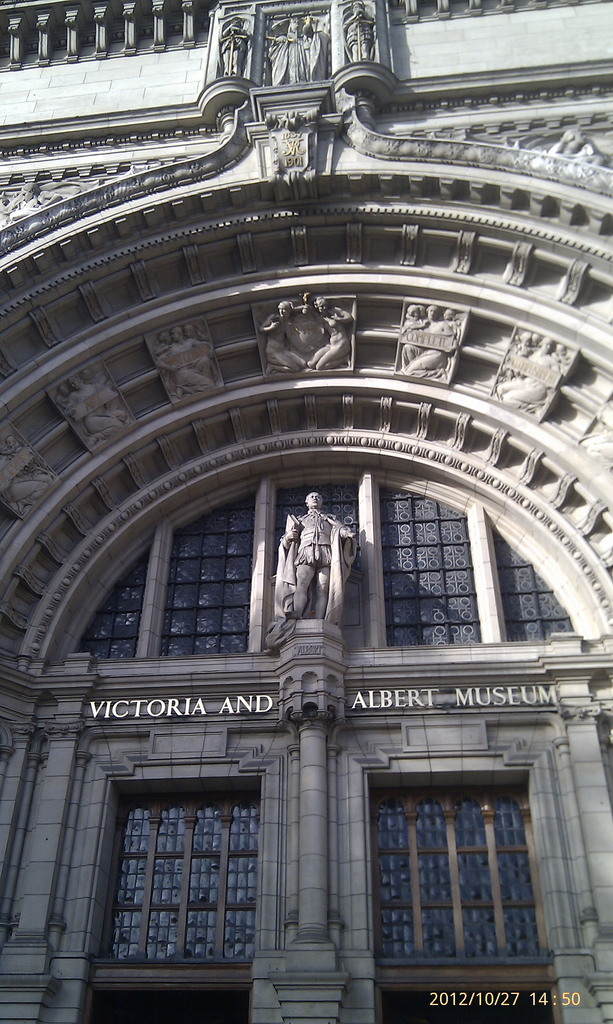

The exhibition runs over two floors and displays ballgowns from the 1950s right through to the modern day. There were royal rags made by Norman Hartnell and Catherine Walker (remember Princess Diana’s ‘Elvis dress’?) right through to celebrity stunners worn by the likes of Helen Mirren, Sandra Bullock and Liz Hurley. There were even gowns made from everyday items like aluminium foil and plastic.

The ‘Elvis Dress’

So after ooh-ing and aah-ing and eew-ing (yes there were some of those too – I am not a fan of Zandra Rhodes or Vivienne Westwood) for about 45 minutes, it was time for a quick break before venturing into the V&A’s newest exhibit, Hollywood Costumes.

(It opened only last week – we are just SO up with the latest you know *wink*)

The three halls – Deconstruction, Dialogue and Finale – contained over 100 original costumes from the last century of Hollywood films. There was the iconic, the heroic and the historic – Star Wars and Superman, The Birds and Breakfast at Tiffany’s, Elizabeth and The Iron Lady. We saw Indy, Arnie, Rocky and Neo as well as the yellow track suit from Kill Bill, the white halterneck from The Seven Year Itch, the green velvet ‘curtain’ dress from Gone With The Wind and the ruby slippers from The Wizard of Oz.

Dorothy Gale’s gingham dress and ruby slippers, worn by Judy Garland in 1939, are one of the last exhibits. You know you are not done until you see these.

Speaking of wizardry, the behind-the-scenes notes along the way gave a really intriguing insight into the development of character through costume as the art of costume design morphed from stand out to understated and back again before our very eyes. And after almost two hours of wandering down celluloid lane, I can tell you that David Prowse (Darth Vader) is really tall, Robert de Niro is an absolute chameleon and you should definitely book yourself a ticket to this before it closes in January 2013.

After almost three hours of glam, it was time for a little refreshment so it was off to The Pelham (near South Kensington Station) for a spot of my sort of tea, the champers kind.

There was a cosy fire, a glass of champagne and plenty of sandwiches, scones and cakes to enjoy as we chatted about what a great time we’d had at the exhibitions and stretched our aching feet towards the warmth of the hearth.
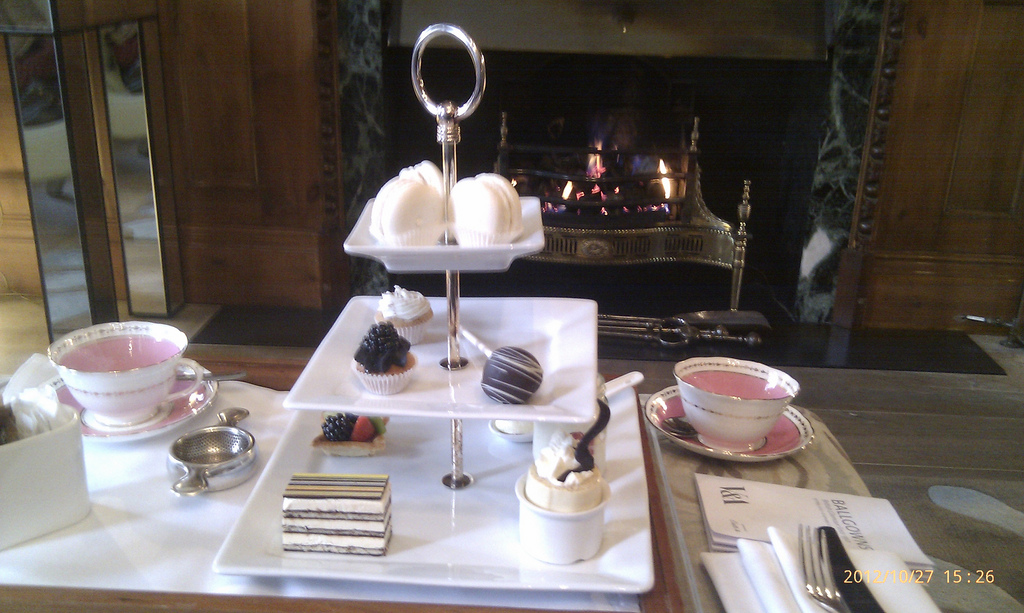
Post champers cakes at The Pelham. The raspberry macaroons were uh-maaayzing!

(There may also have been a slightly congratulatory tone as we appreciated the brilliance of pre-booking our (timed) V&A tickets instead of dealing with scrum of people who had a three hour wait in front of them. Well done us!)

And so that was our spectacular showbiz Saturday, a perfect way to chase away those looming winter blues and celebrate that sacred triad of all things glam – frocks, flicks and champers.

Cheers!

Oh What A Night…

How could a post about the fabulous Jersey Boys be called anything else? It was a night to remember indeed.

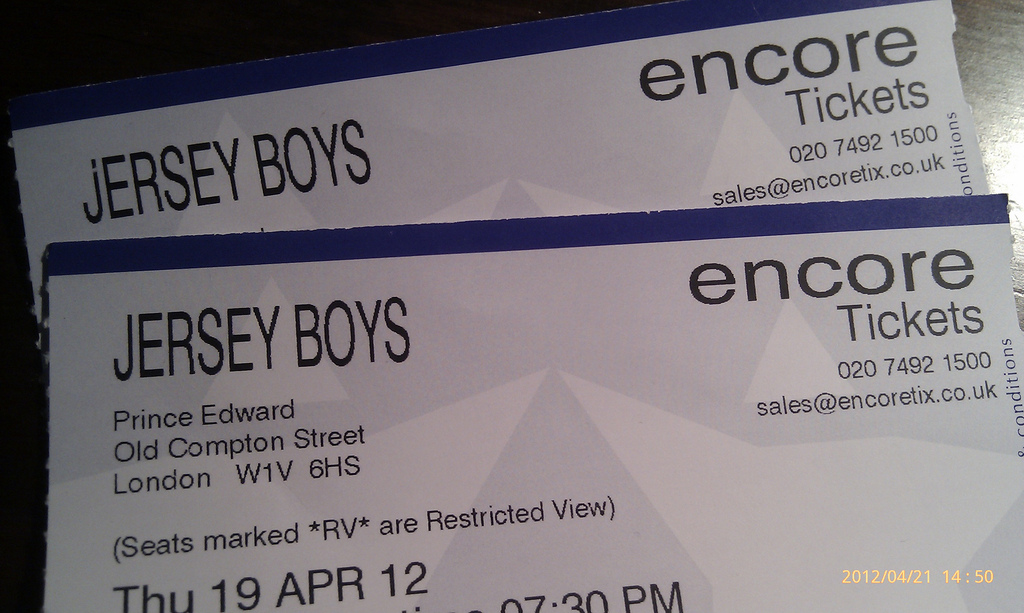
To celebrate A-use-to-be-down-the-hill’s birthday a couple of weeks ago, I decided to spring for a girlie night at the theatre. Jersey Boys has had such great reviews during its London run and you never know when these things are going to finish or get all expensive so I grabbed a couple of tickets and off we went.

Fuelled by a couple of glasses of wine over dinner beforehand, we climbed the stairs to the Grand Circle of the Prince Edward Theatre, squashed any vertiginous tendancies and squeezed into our seats to be greeted by a bird’s eye view of the entire stage. Then the music started and we were away.

I’d heard of the Four Seasons and Frankie Valli – although I did get him a little confused with Ritchie Valens before the show began (it’s sometimes good to feel too young to know these things for sure) – but with the first note, I realised that I knew every song. Some of the time I remembered the later cover versions – I particularly remember bopping along to The Spinners’ version of Workin’ My Way Back To You Babe in 1979 – but classics like Big Girls Don’t Cry and Walk Like A Man featuring Valli’s trademark falsetto are still as great now as they ever were.

The show charts the story of The Four Seasons, the struggle to hit the big time, the genius of Bob Gaudio’s writing and Valli’s extraordinary range, the personal tragedies and the ups and downs of life on the road. As Valli (Ryan Molloy on London’s stage) points out, as the bad times always pass, so do the good ones.

This is a fantastic, feel good musical. The cast is great, the show moves swiftly and the music of the era runs its nostalgic fingers through slicked back hair and many great memories. And quite frankly I defy anyone not to let a little tune burst forth on the walk back to the tube. 

Oh wait…I think that was just us…

Tour of Duty…Gunners Style

For those of you who’ve been following Gidday for at least this year, you may remember I told you about my first sortie into the world of English football, in particular my visit to see Arsenal play Aston Villa at Emirates Stadium in the 4th round of the FA Cup. Arsenal won and I managed to have a jolly good time so it was thumbs up all the way round.

Well would you believe that I’ve been back already? After 8 years in London, I have managed to grace the Gunners home turf with my presence twice in 2 months but this time it was from an entirely different angle. I did The Stadium Tour.

As part of a Charity Dinner I was attending at the end of March, the tour was offered for those wishing to turn up early and get a sneaky peek behind the scenes of one of London’s newest football stadiums.

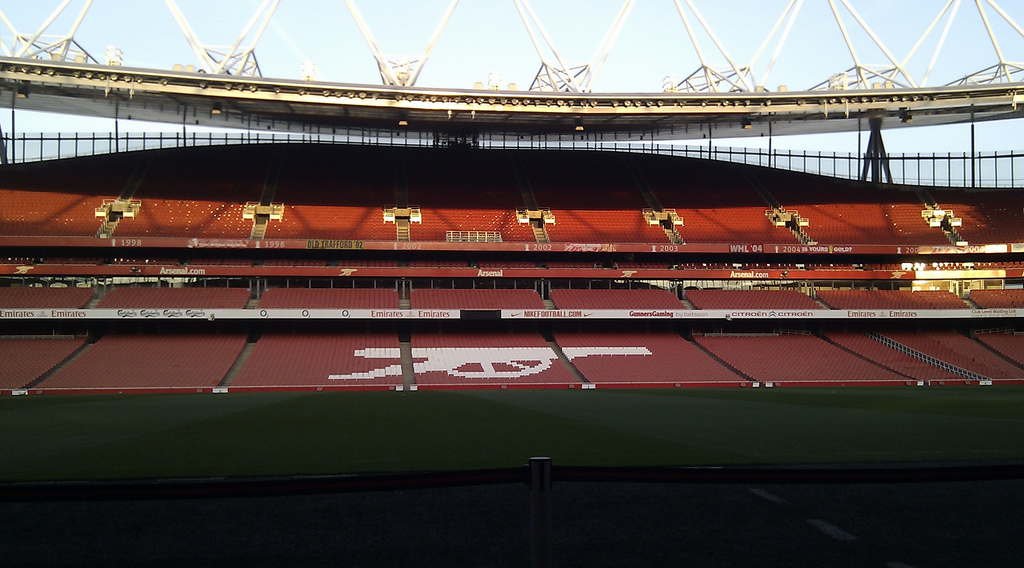
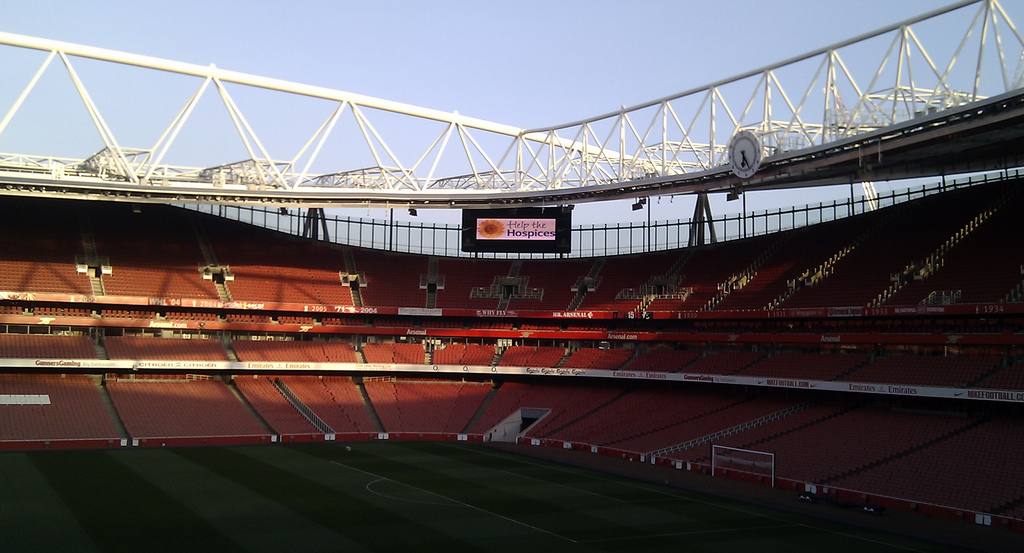
We headed out from the function area in all our finery and followed our guide, Colin, to the other side of the stadium. Here’s the view from the expensive seats:

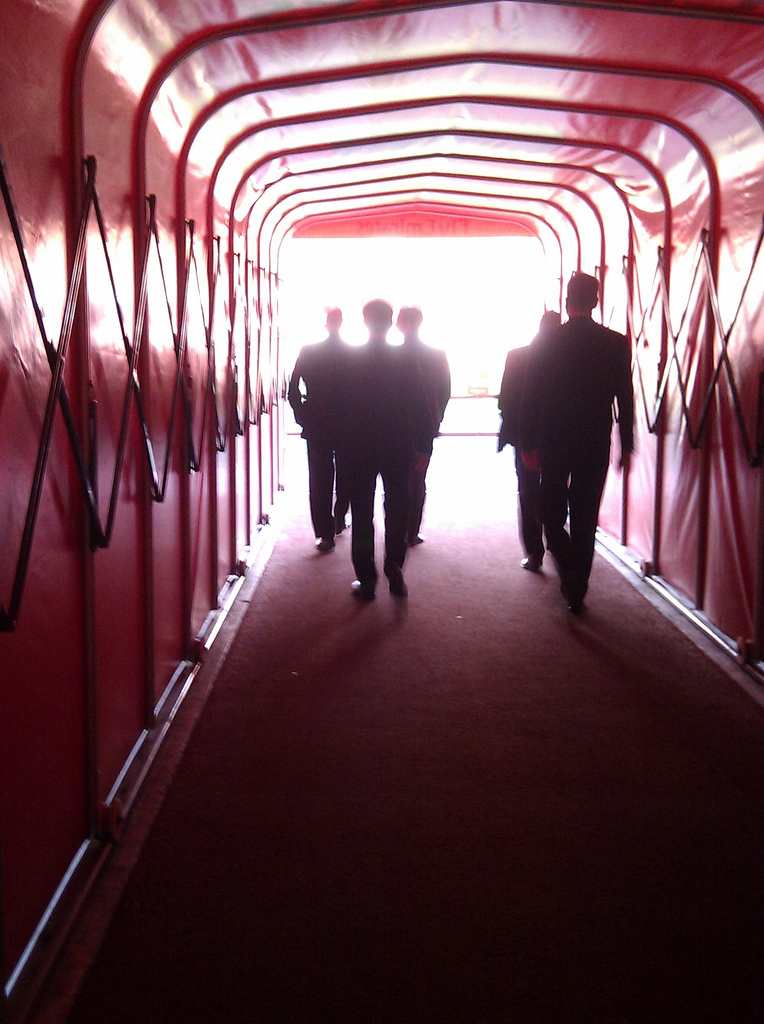
We didn’t hang around here though – it was off to have a gander at the Players’ Entrance.

Interestingly, the players get hit smack bang with a big red wall the moment they arrive, just in case there’s any doubt what they are here for.

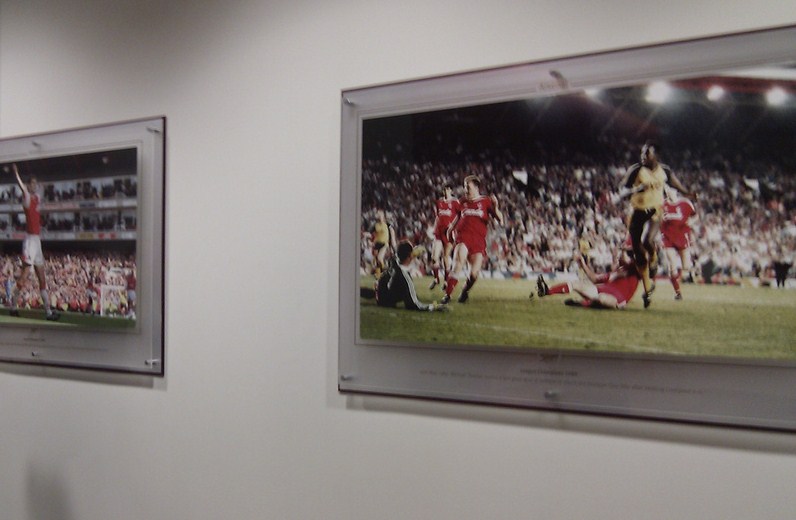
There are also some photos of…well…blokes playing football (don’t ask me who they were)…

…and also a time capsule placed in 2004 when the stadium was officially named.

Colin then took us to the Players’ Change Rooms where we all got a little feng-shui’ed.

This is where the players change (obviously) and where Arsene Wenger briefs the team. The room is a horse-shoe shape (apparently corners are not great for Feng Shui) with every player considered equal. All sit in their allotted places every time: the defenders sit together, the strikers together and so on. The goalkeeper always sits closest to the entrance/exit and the Captain occupies the middle of the horseshoe’s curve (see Van Persie’s shirt in the picture above).

The middle table is low so that all players can see each other easily when seated. Colin is not a tall fella and as you can see, it only came to waist-height on him. (Sorry if you are reading this Colin.)

We then had a sneaky peak at the Away Change Rooms. Funnily enough, the room is rectangular and you might like to check out the height of the table…

Before we knew it we were heading out to the pitch…

…and into the dugout.

Citroen sponsor this area so the seats are specially designed…and very comfortable.

Arsene sits in that front row seat on the right. I happened to sit there without any prior knowledge of this fact (power attracts power maybe? I’ll bet all the Gunners fans on the tour were gutted I got pole position) so I thought I should let you know what the Wenger view was like…

I know. It doesn’t look that much different compared with the view from the expensive seats higher up.

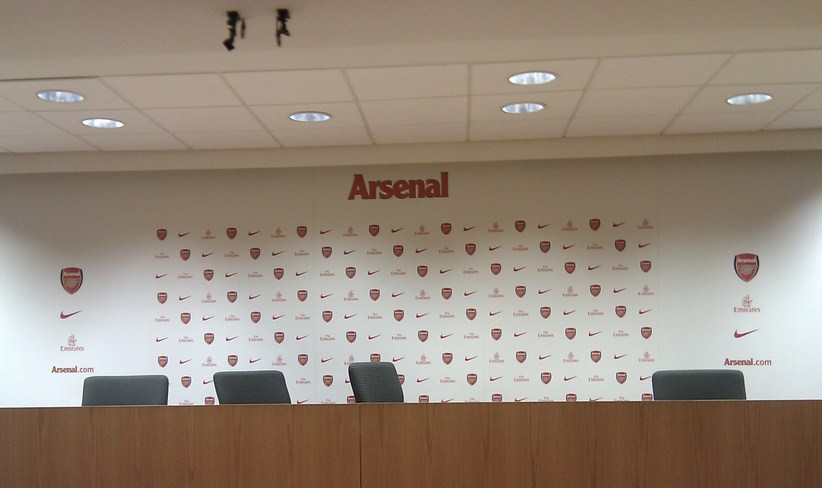
Anyhow, we were making good time and the next tour group from our do was gaining fast so we managed to squeeze in a visit to the Press Conference room.

The Away Team Manager always gets the first gig after the match here. 25 minutes then he’s off and Wenger takes the chair for 25 minutes. It’s the Press Officer’s job to make sure there’s no over-running.

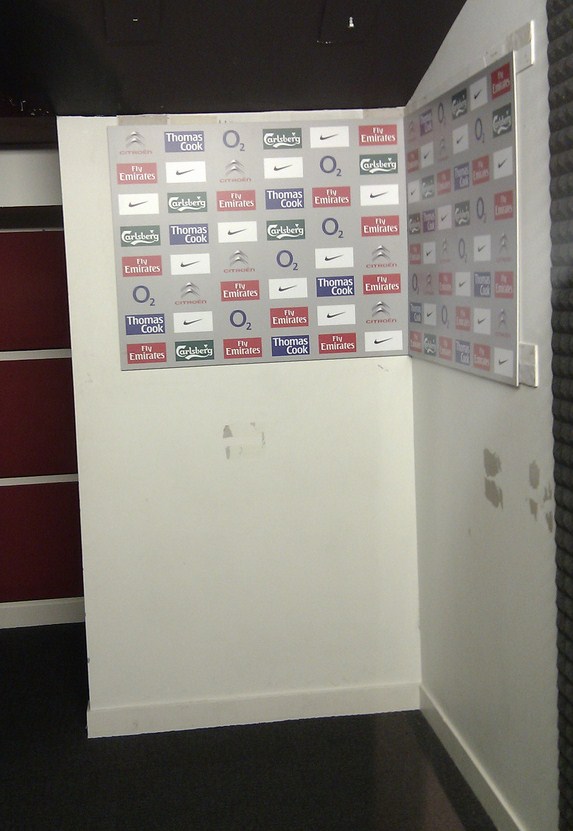
In the neighbouring corridor there are a number of rooms used by radio and TV channels for post-match interviews. You know when you see a player interviewed in front of a wall with all of the sponsors names on it? Well that’s all it is…

…a wall!

Champagne o’clock was nigh and not wanting to risk the wrath of his thirsty guests, Colin led us back around the stadium to finish the tour. I know the photos start to look the same but I just had to take one more cheeky snap.

You can actually take an audio guided tour of the Stadium yourself rather than wait for an invite aligned to a posh function like I managed. You can also combine it with a visit to the Museum (which I didn’t get to see so you’ll be one up on me!)

I have to admit that it will never have the awesome magnificence of the MCG – they are just enormous shoes to fill. And I’m not a follower of English football (as we have established in my earlier post). But given that it’s an intrinsic part of England’s sporting culture, it was fantastic to feel the ‘passion of the game’ brought to life for the second time this year in Arsenal’s hallowed halls.

Destination…Museum of London

So yesterday I told you all about the journey, leaving you with the adage that the getting there is often just as fabulous as the destination.

This is the post about the Destination.

I arrived at the Museum of London, eagerly anticipating a couple of free hours of strolling through time. The Museum is laid out in chronological order and is quite interactive with fewer than usual items of the ‘do not touch’ variety. Prior to entering the permanent exhibition there’s also a display called London and the Olympics which celebrates the Games already held in London (1908 and 1948) as well as the 2012 preparations.

The journey starts with an exploration of the region from 450,000 BC before London was…well London. The locations of significant archaeological finds are also showcased – places like the site of the current Heathrow Airport – as well the work along the shores of the Thames where FROG volunteers from Thames Discovery continue to catalogue new finds to assist in preserving London’s rich history.

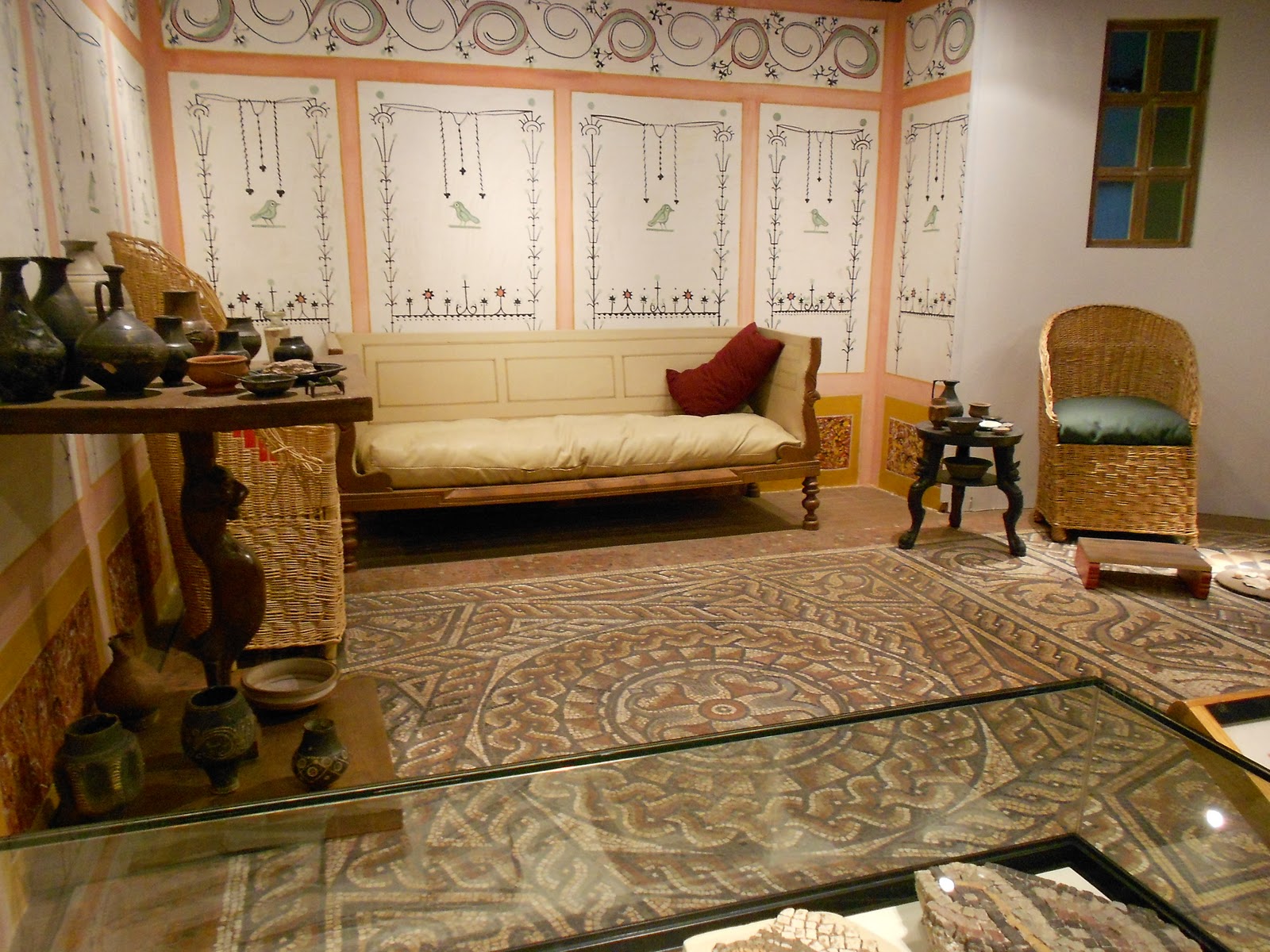
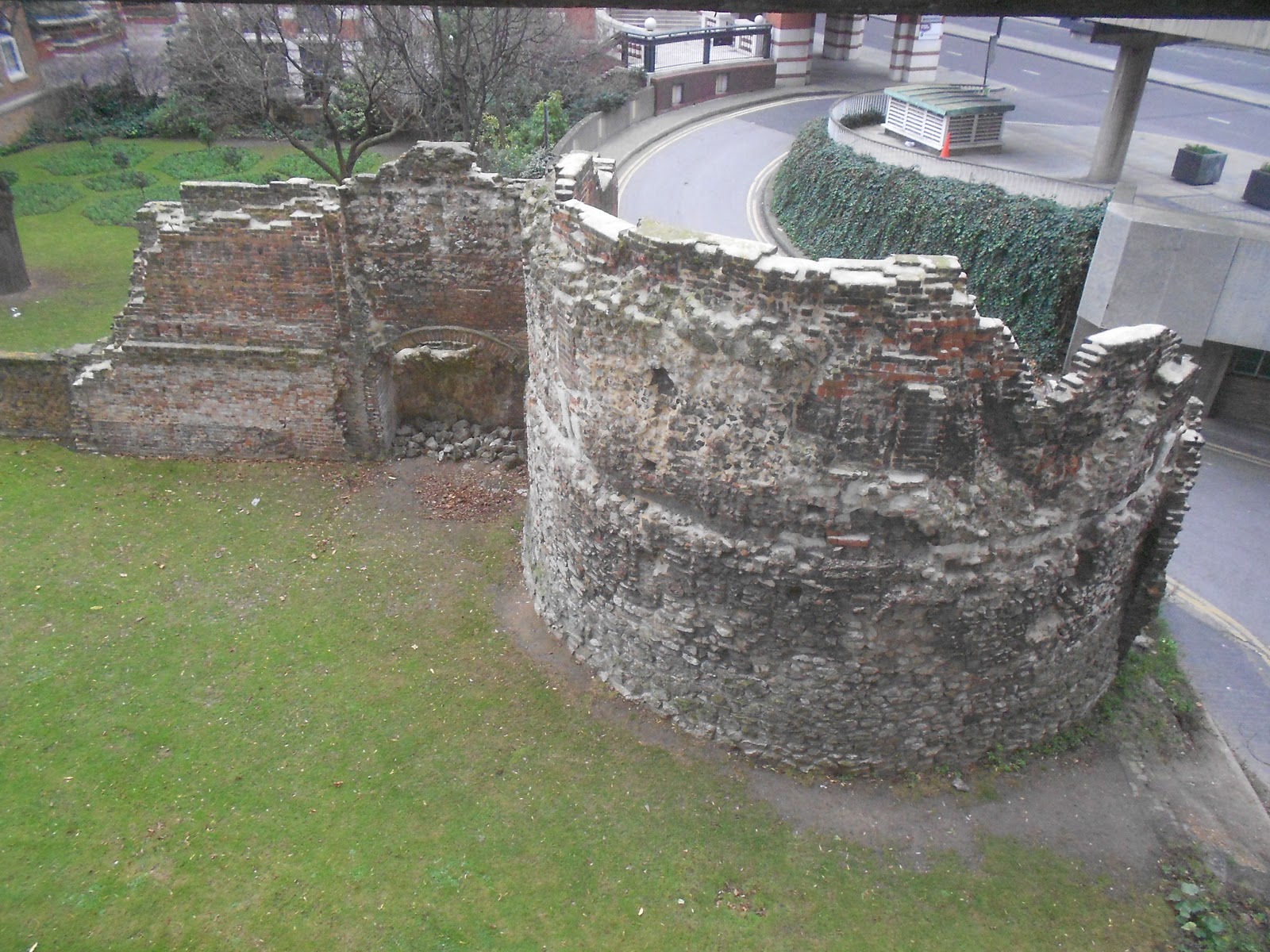
From 50 to 410 AD, the Romans built, defended and rebuilt Londonium – there are some great displays of homes, shops, food and the opportunity to peek at the defensive City wall from another perspective.

Traditional Roman dining room
Roman Wall from the Roman Gallery of the museum

We then move to Medieval London and the galleries which showcase the period from 410 through to 1558 AD covering Viking raids and the emergence of Anglo-Saxon power right up to the early Tudor years. This gallery also shows much of the religious development of London and features a model of the original St Paul’s Cathedral.

The original St Paul’s Cathedral

The next gallery take us on the path of London’s devastation through civil war, the plague and fire. I was fascinated by the survival of London at the end of this period in spite of the loss of between one third and one half of the population to the Black Death, followed by the loss of some 13,000 homes (but only 9 lives) in the Great Fire of 1666 the following year. It took London 50 years to rebuild including Christopher Wren’s reconstruction of St Paul’s Cathedral as we know it today.

I followed the arrows downstairs to the next set of exhibitions entitled Modern London: Expanding City.

A main feature of this gallery is the recreated Pleasure Gardens which allow you to wander, sit and watch the cinematic story of the time unfold on the screens around you. The hats on display were…interesting. It must have taken incredible posture to manage these with any grace and dignity.

Pleasure Garden fashion – can you see the ship hat on the left of the picture?
Pleasure Garden – a (t)horny affair!

Just down the ramp from the Pleasure Gardens there was an arcade walk to celebrate the Victorian era.

The Victorian Walk celebrates the era of expansion 
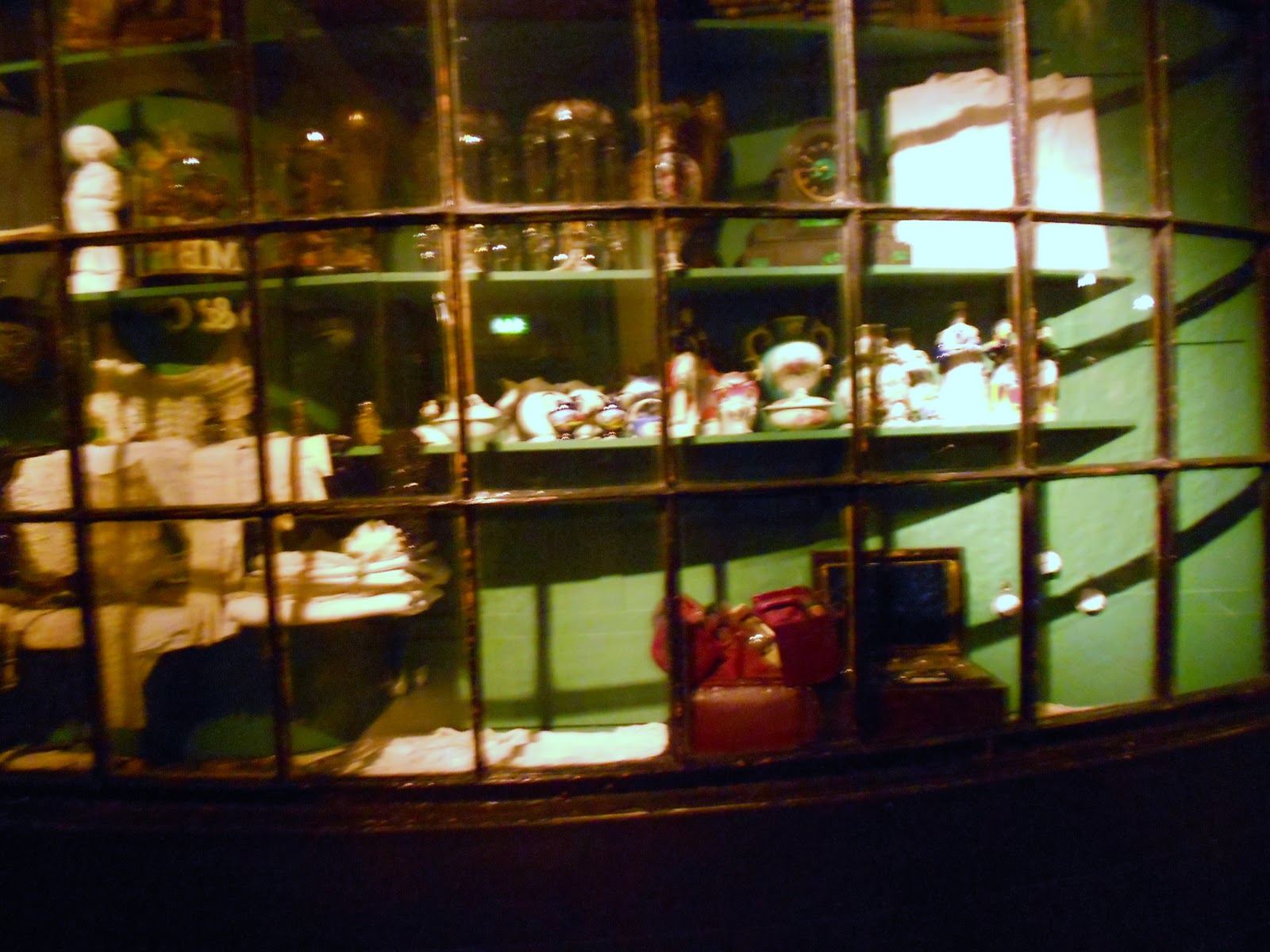
Trinkets for sale – The Victorian Walk

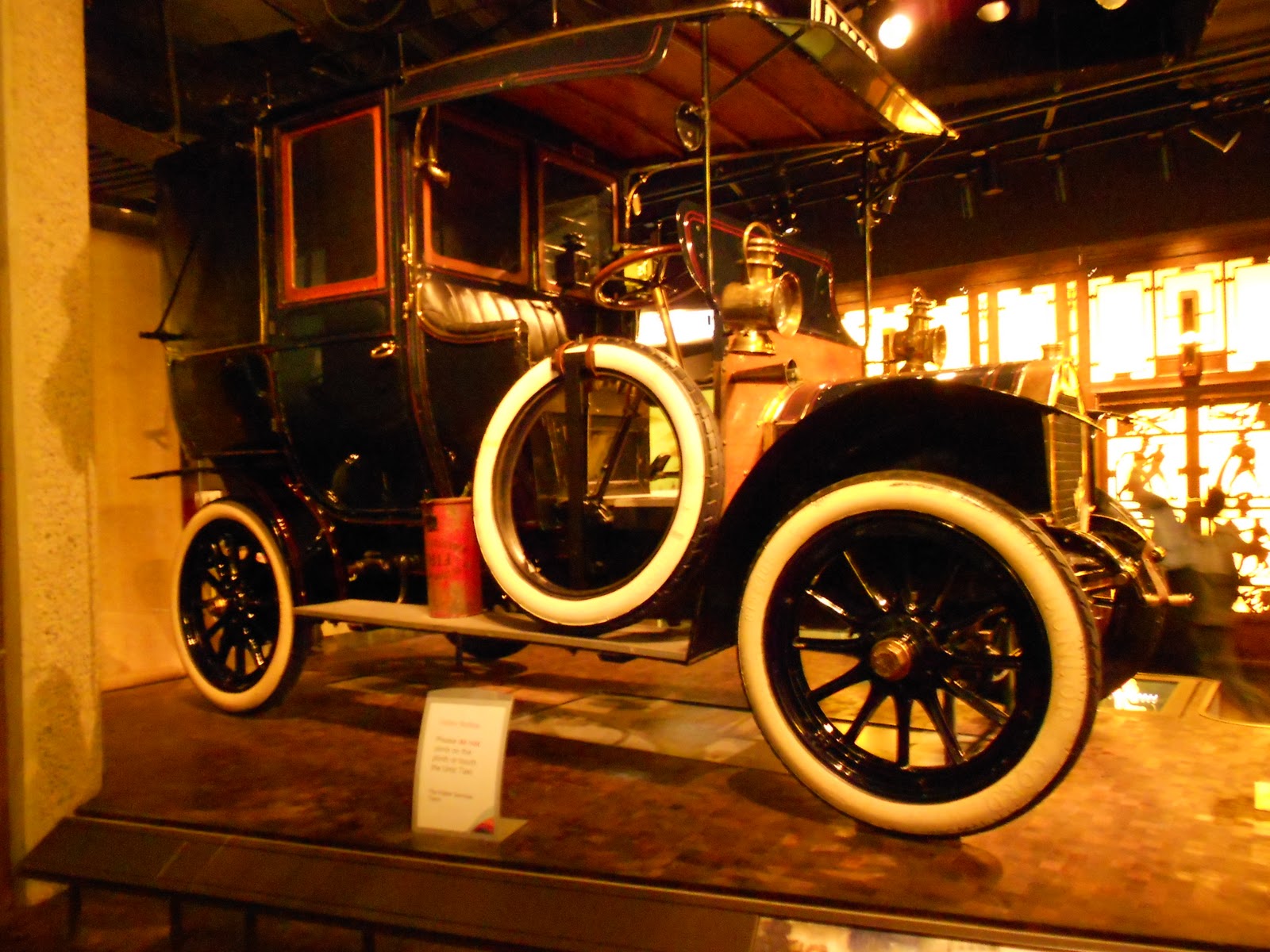
Next we move into the late 19th and early 20th centuries in Modern London: People’s City. The class divide is brought to life by an interactive version of Charles Booth’s map of poverty in London which sits opposite a vintage motor display, a recreation of the entrance to the Savoy Hotel and panelling from the Selfridges lift which was installed in 1928.

Vintage ‘white walls’ representing People’s City
Japanese panelling in the Savoy Hotel recreation

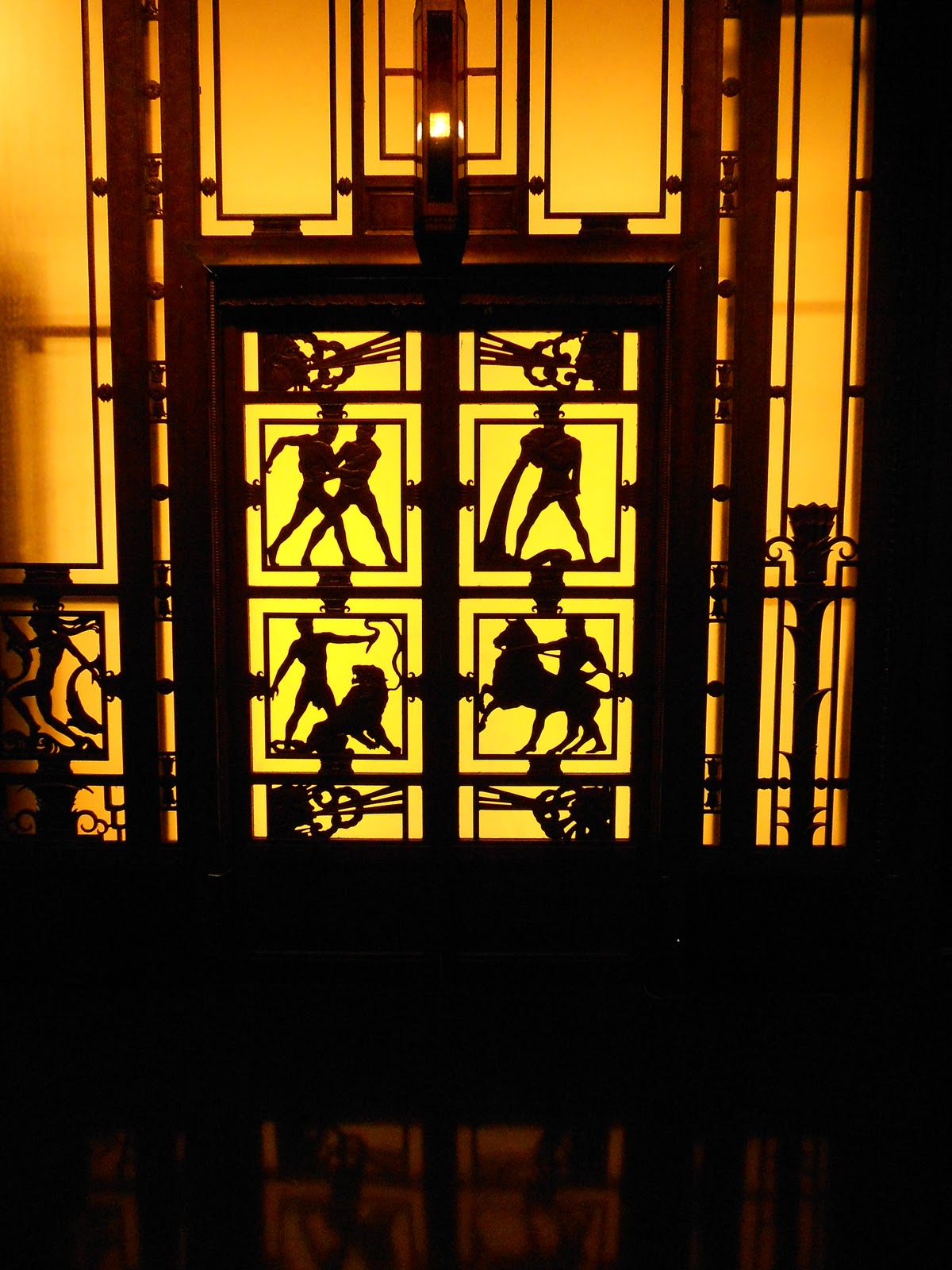
The Selfridges Lift
But did you know that Harrods installed the first escalator in 1898?
Smelling salts were on hand to revive passengers from the ride.

The final step in time is Modern London: World City which takes us from pre WWII London, through the fab 50s and swinging 60s right up to today.  This was a busy gallery so I was frustrated in my attempts to take pictures and despite cases filled with fashion, music and even a real life Vesper, I managed this one only.

My one and only tribute to Modern London: World City

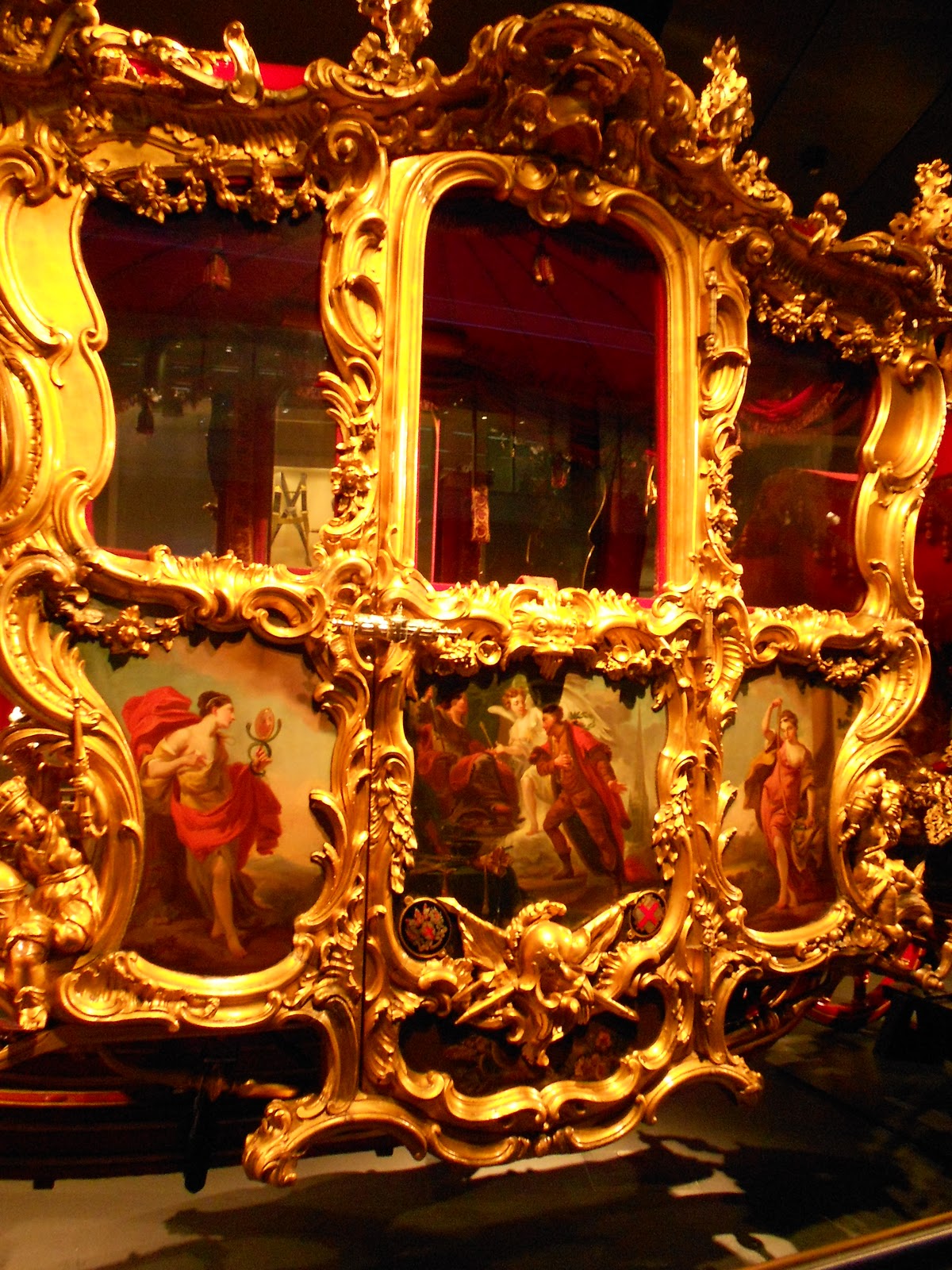
There’s a room off to the side of this exhibition called the City Gallery which contains the Lord Mayor of London’s official coach which leaves the gallery each November (since 1757) for the Lord Mayor’s Show.

The Lord Mayor’s Coach, first commissioned in 1757
Amazingly preserved after more than 250 years

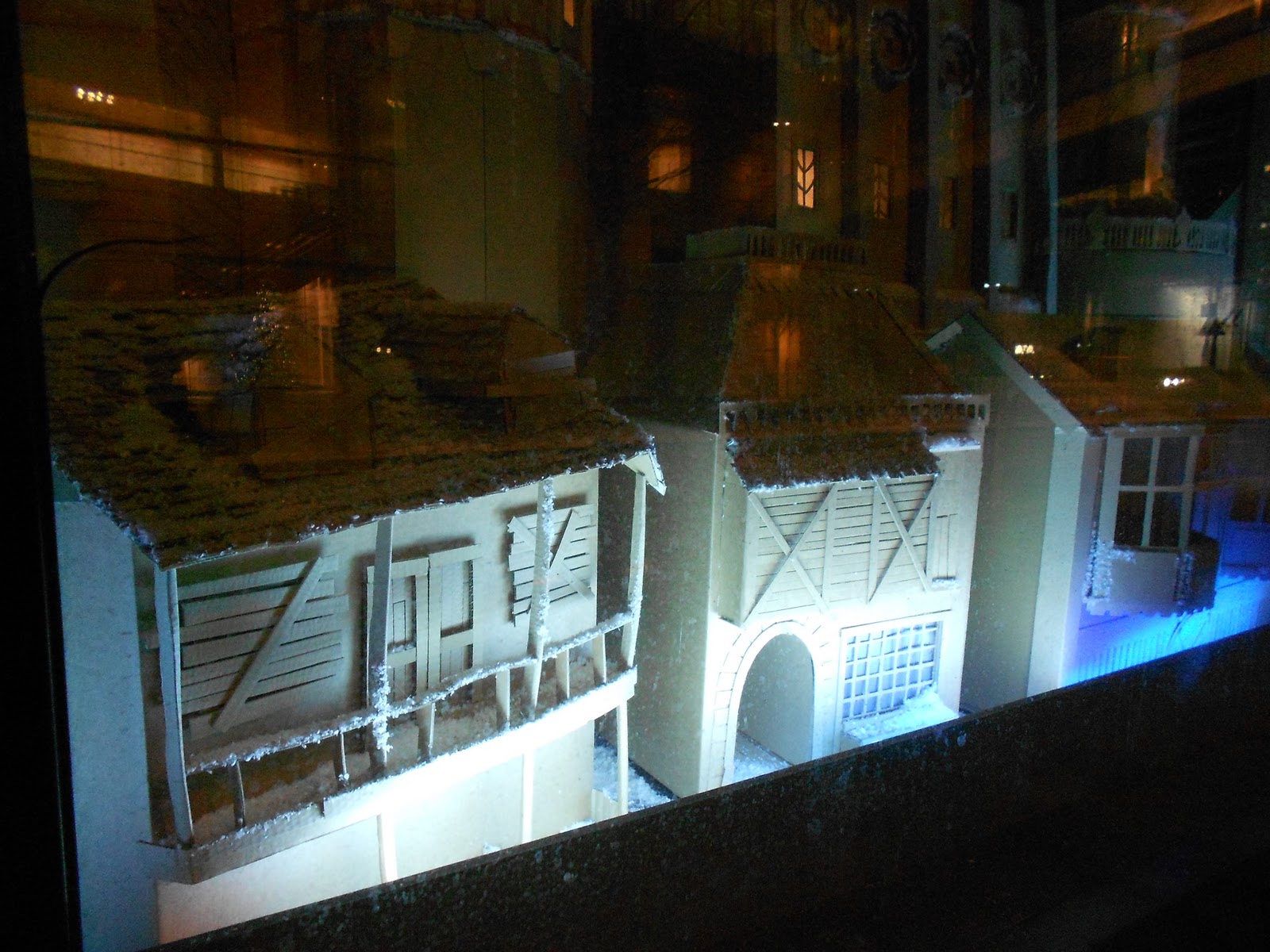
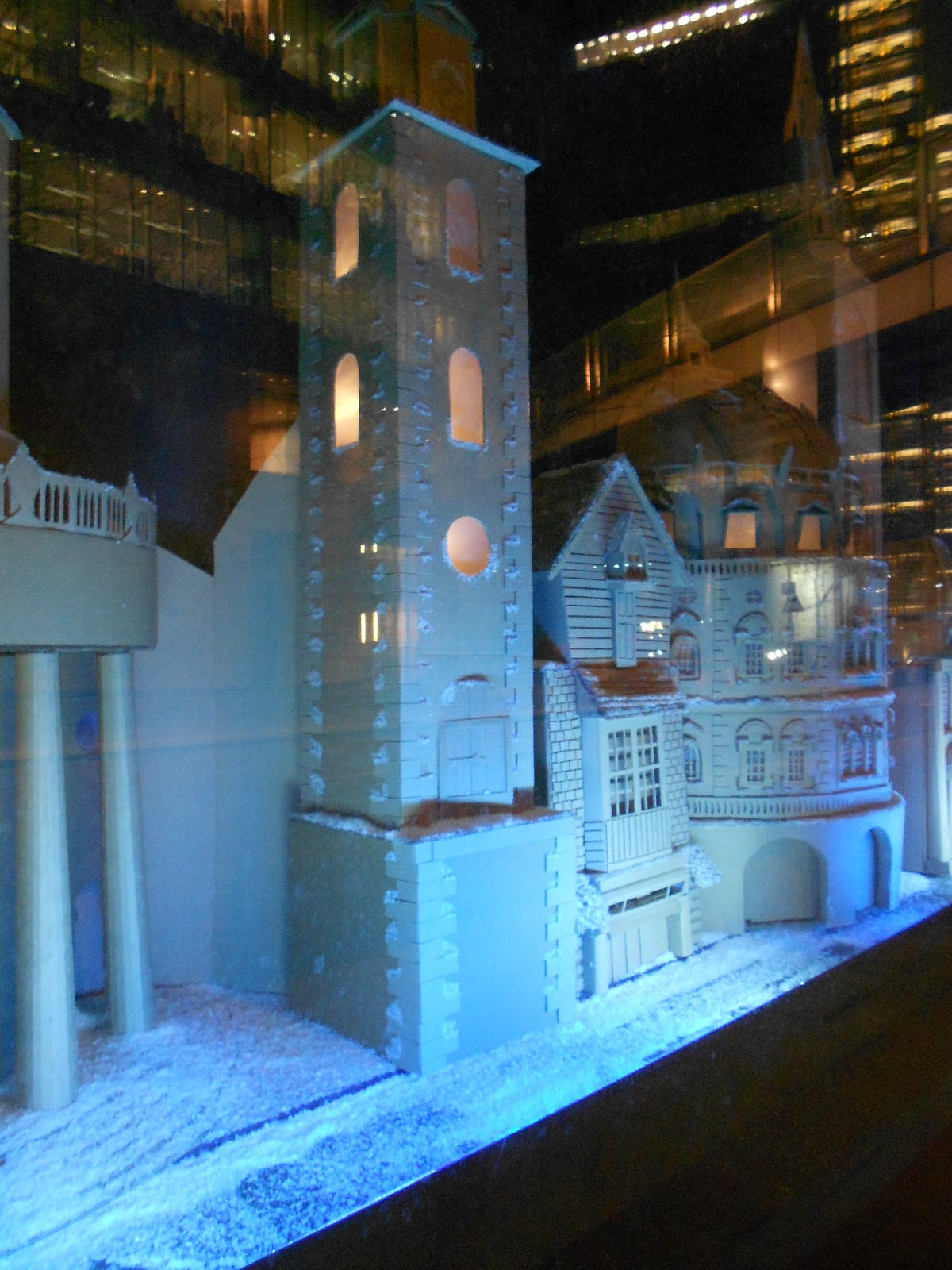
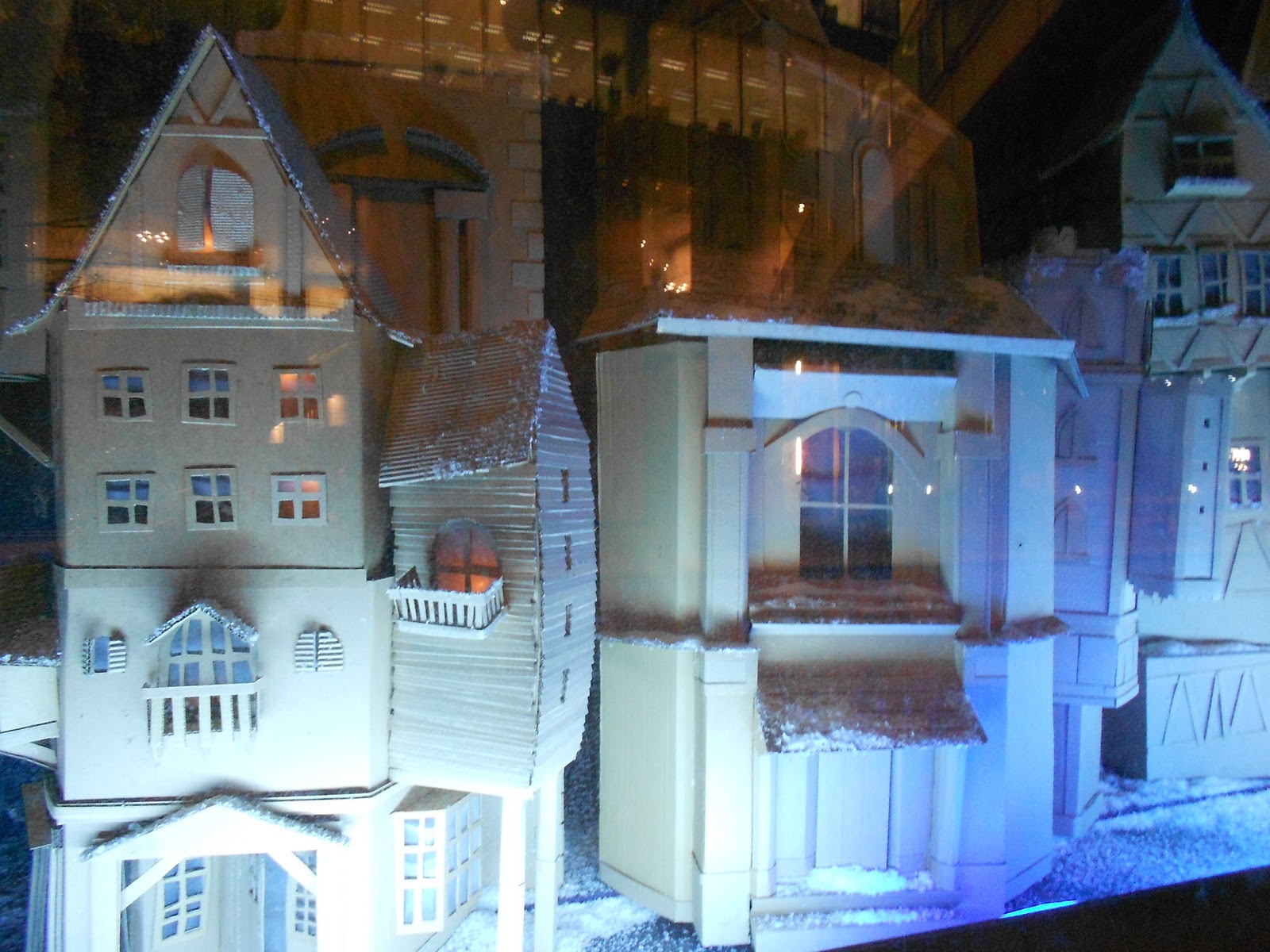
So after two and a half hours I emerged into the dark evening thinking ‘well that was that’ – only to find a special installation in the windows outside.

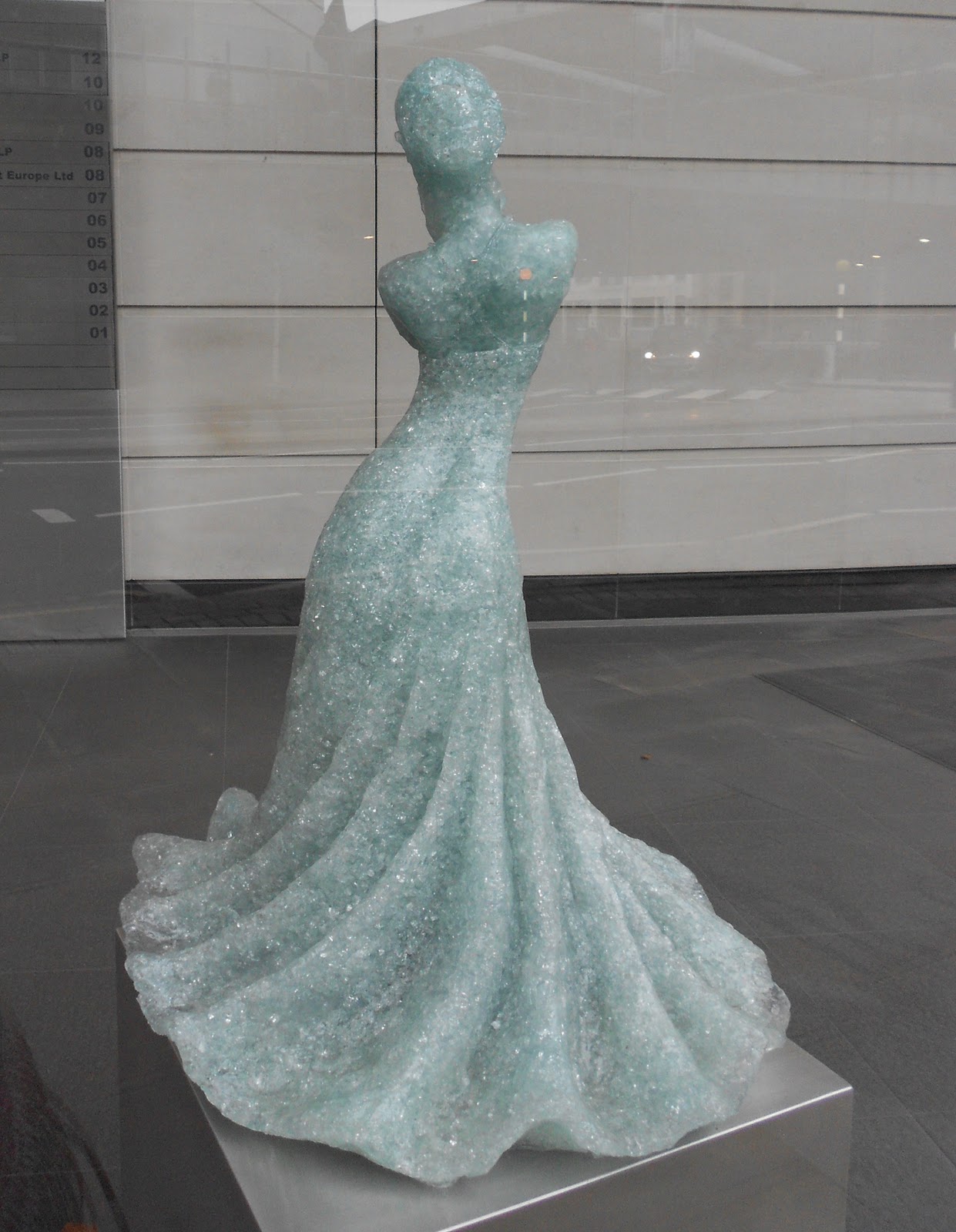
The London Cityscape by Simon Crostin was commissioned by the Museum of London to commemorate the 2012 bicentennary celebrations of Charles Dickens in conjunction with the Museum’s exhibition, Dickens and London, running until June 10, 2012.

I wandered slowly back to Moorgate along the raised walkways around St Alphages, still snapping away (as my previous post will attest to). And as I finally sat, homeward-bound, on the top deck of the bus, I marvelled at the fascinating snippets I’d learnt about London’s chequered past and felt a quiet contentment at my big day out and the historic city that I’ve chosen as my home.

Your Armchair Tour Of…London Wall

First things first – you might be wondering about the title of the post. It’s not meant to suggest that I have been an armchair traveller – as you know I like to get out and about and see what there is to see. But I’ve had a few people leave comments or send messages that, in reading some of my wanderlust-themed posts (Nuremberg and Prague to cite a couple), it’s like they get to visit without leaving their armchair. This is another one of those posts. If you are not in the mood for a meander, you should read something else.

This week’s small lull between the festivities of Christmas and the euphoria of New Year’s Eve means that Londoners aplenty have availed themselves of the opportunity for rest and relaxation (or a little sale shopping but I digress). Which means that the actual City of London is pretty deserted at this time of year – a  golden opportunity to mosey around free from the usual tyranny of the booted and suited.

My ultimate destination was the Museum of London, a museum I have not visited since I first ‘got off the boat’ in 2004, and one of my favourites. But the empty streets tempted me and I spent a little time meandering, fascinated, along London Wall.

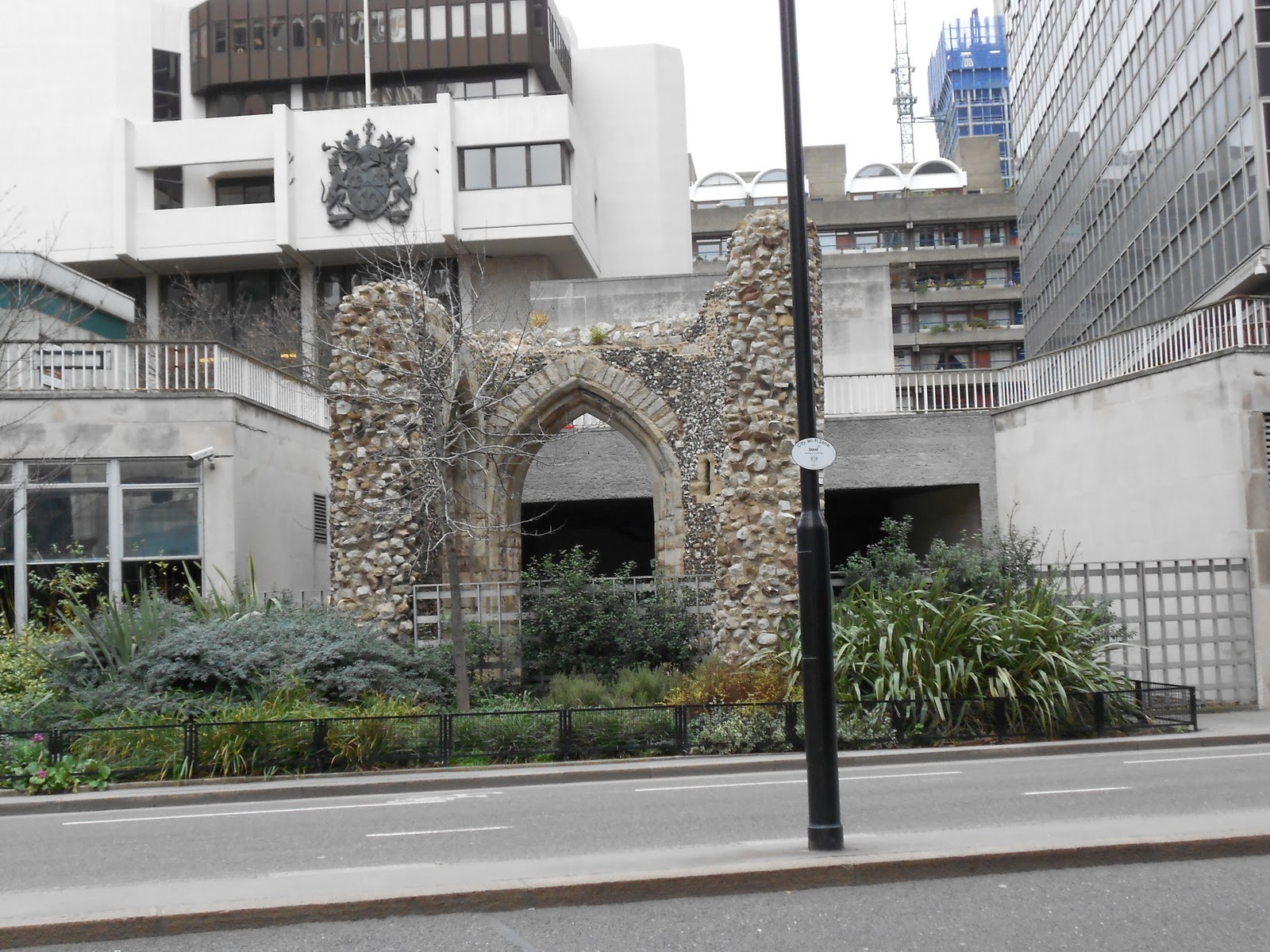
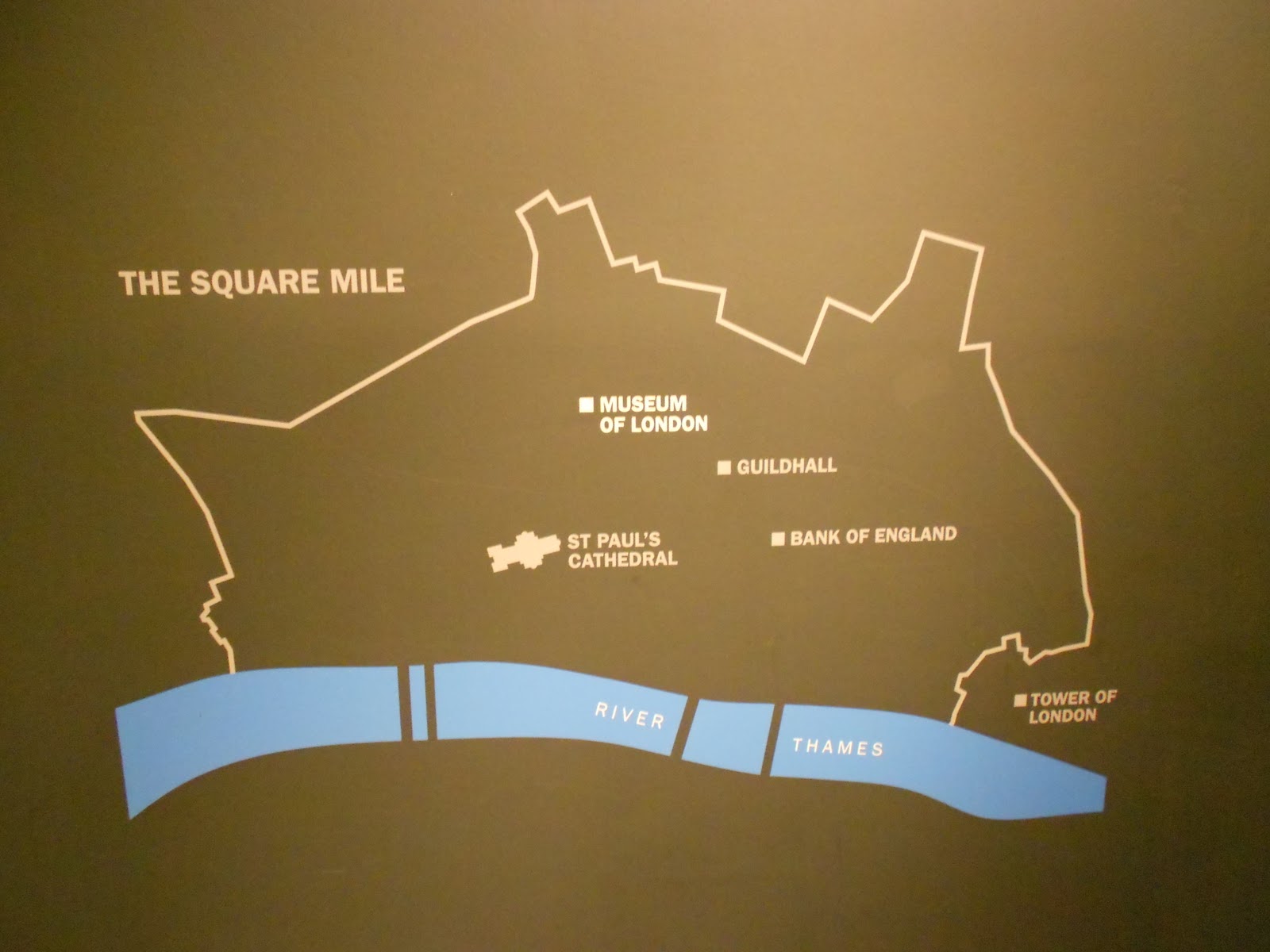
London Wall is a street that runs through the City of London (also known as the Square Mile) that is located along the course of the first defensive wall that the Romans built around the beginning of the 3rd century AD.

On a quiet, traffic free day, it is easy to take photos and absorb a little of the atmosphere of London’s Roman past:

Restored Roman arches along London Wall

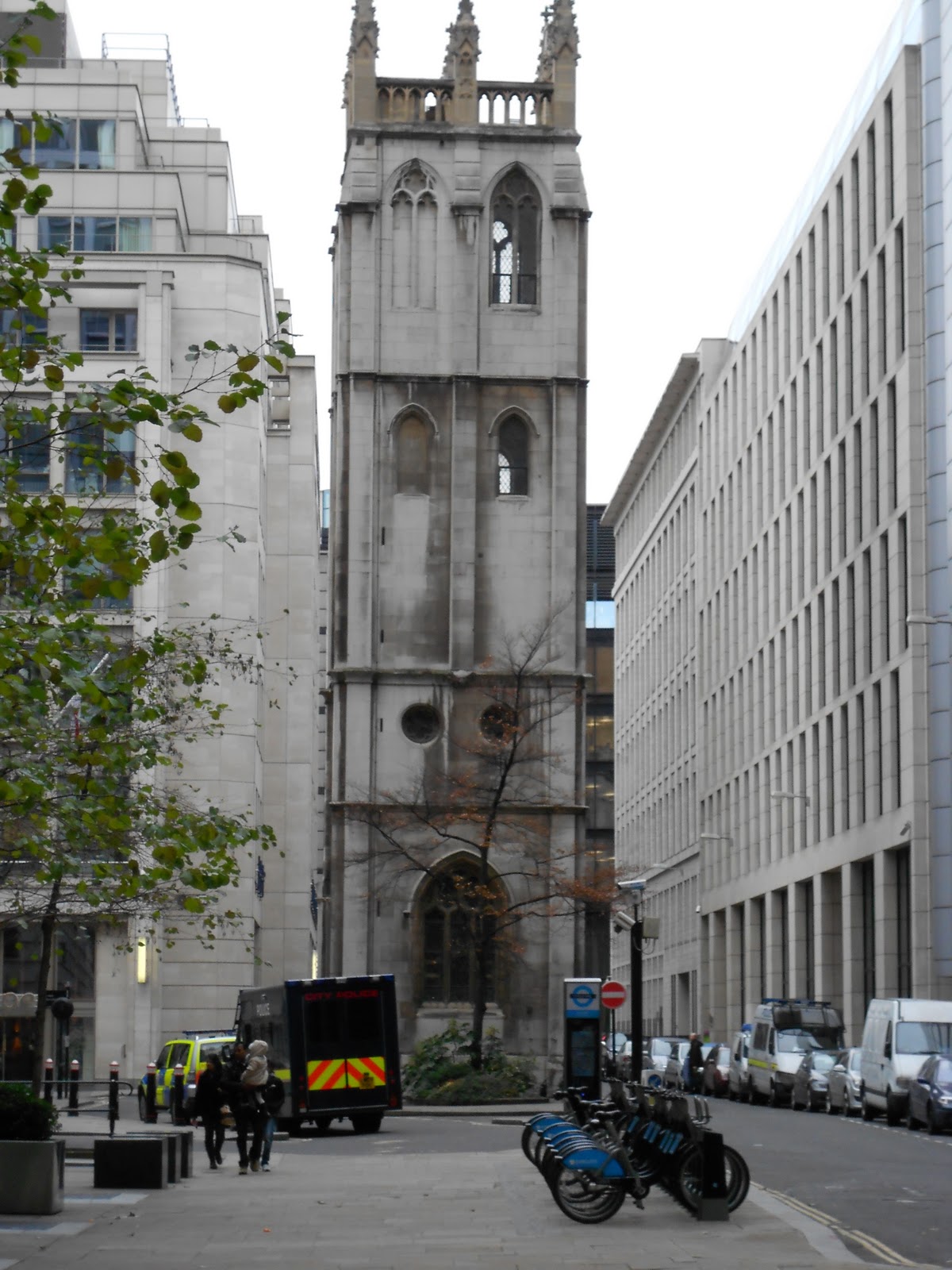
All that is left of the church of St Alban in Wood Street.
Remember my visit to St Albans early in December?

A blast of modernity right amongst the history
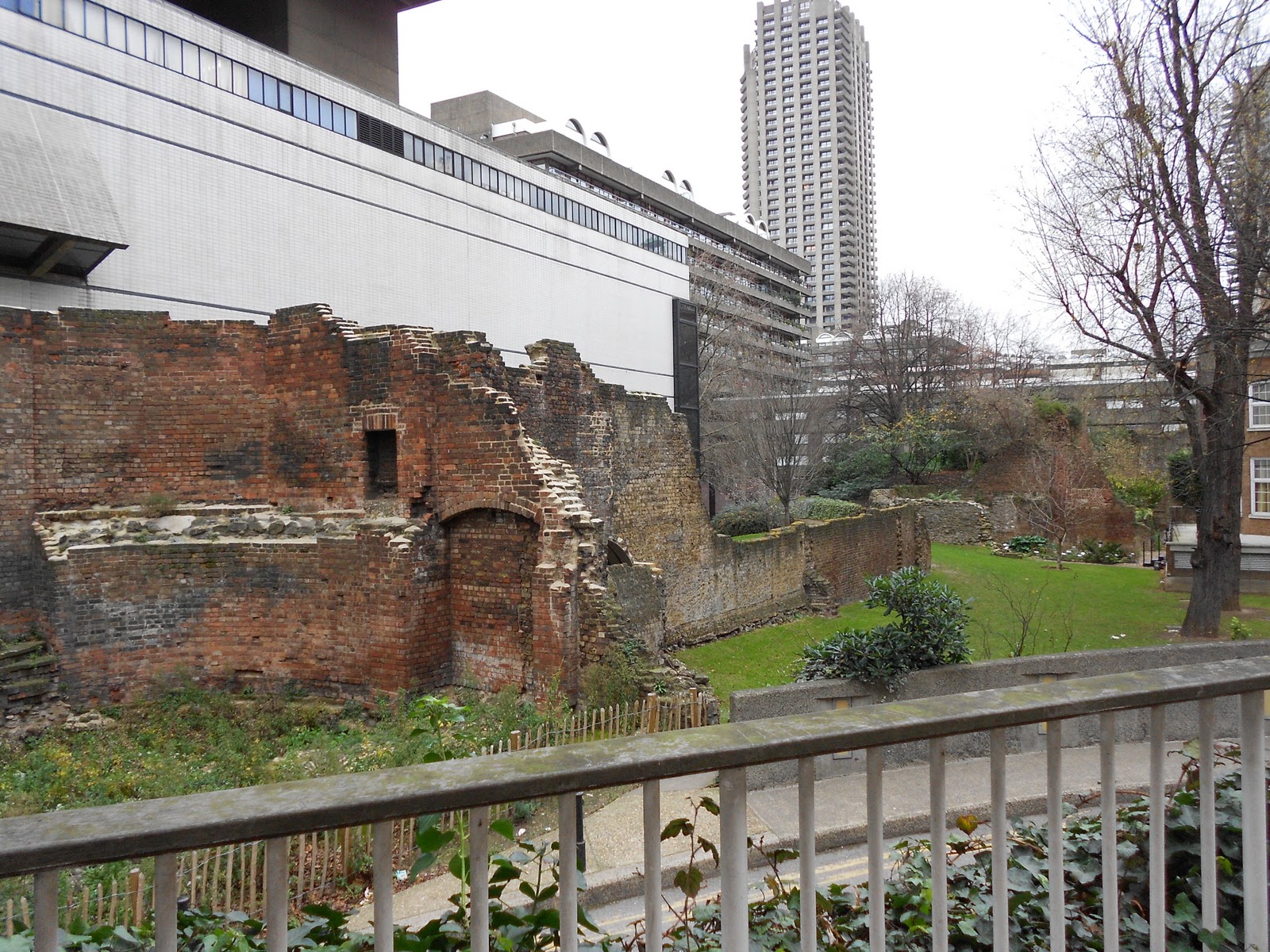
Walkway along the remains of the preserved wall
The old and the new – why I love London
Deserted City streets on December 27th – no festive cheer here!
Ruins on the other side of London Wall (the street) – they’re everywhere!
So I took this and then turned around…
…to see this. Looks a bit like a gigantic Meccano set to me.

Grace and elegance as I passed a random window

London’s Square Mile

At this point I had wandered right along to the Museum and so disappeared indoors for at least a couple of hours… 

…and when I emerged at about 4.30pm, the day had dipped its lights in deference to the night. As it does here in London during December..and November…and January.

So this is what happened walking back to Moorgate:

Remember the Meccano building? Looks quite cool at night.
And those Roman arches? Them and my shadow
Finally, a touch of Christmas on the corner of London Wall and Moorgate
No significance other than it seemed like a good idea to take a pic.
Some rather fetching glasswork across the road – missed this during the daylight hours
The Dragon and St George’s Cross, guarding the City of London

And so with London’s guardian of the realm at my back it was time to board the bus and take my weary legs and aching feet back up north to my cosy flat and a hot bath. But not before a final snap from the bus stop…

 …of largest licorice allsort I’ve ever seen!

We are so busy rushing to the destination sometimes we often forget that the getting there can be just as fabulous. In case you’re wondering, this is where I went:

So much to see in such a short walk.

And here endeth the tour.

Death and the Maiden: A study in vengeance

As a result of another Metro offer (I do love a deal!), I was off to a matinee at the theatre this week to see Death and the Maiden. Not the opera – although there is a reference to the music of Schubert, thus the name. This is the play written by Ariel Dorfman in 1990. The theme is judgement – human rights butting up against vengeance to challenge what we think is fair and just.


Paulina Salas is a former political prisoner who has been the victim of torture and rape. The play is set 15 years later when she and her human rights lawyer husband Gerardo are living a quiet life by the sea. On the particular night of the play, Gerardo has a flat tyre on the way home and is helped by a passing stranger who then visits their home later that evening. Paulina becomes convinced that he is the sadistic Dr Miranda, the instrument of her rape and torture all those years ago.

The play centres around Paulina’s absolute conviction, and her desire for vengeance contrasts starkly with her husband’s belief in ‘the human rights process’ he has been fighting for all his life. In the midst of all of this, we are left to wonder about Dr Miranda – is he or isn’t he?

This is Thandie Newton‘s West End debut and she grips the audience with her impassioned portrayal of the slightly crazed Paulina (and is more than ably supported by Anthony Calf as Dr Miranda and Tom Goodman-Hill as her husband Gerardo). The play raises challenging issues throughout: how certain can we ever be of innocence/guilt and the single-mindedness of a victim’s belief in the release revenge will bring as well as the broader themes of penitence, forgiveness and above all, justice – what is it and how far is too far to achieve it.

This is a powerful and thought-provoking piece of theatre that poses more questions than it answers in the end.

I think you should go.


Verulamian By Any Other Name..

Last Friday night I stayed in St Albans after our work Christmas Party and the following morning, my hostess with the most-ess took me on a little guided tour of this bustling market town 22 miles north of London.


St Albans Coat of Arms

St Albans started life as an Iron Age town called Verlamion (meaning settlement above the marsh) and following conquest by the Romans in 43 AD, was renamed Verulamian and grew to become the second largest town in Roman-occupied Britain (after Londinium of course). Sometime around 250 AD, the pagan-converted-to-Christian Alban was executed for his beliefs. Actually he was beheaded – there was nothing new about Henry VIII’s predeliction for offing heads. He was later named a saint (the first British Christian martyr) and a shrine built over the site of his execution following the adoption of Christianity into the Roman empire by the Emperor Constantine. And so St Albans was born.

Market Place, St Albans

Saturday is market day in St Albans so it was first a wander amongst the stalls lining Market Place.

Before long, we turned into a covered alleyway, much like the Block and Royal arcades in Melbourne, and emerged to see the Church and Abbey of St Alban basking in the wintery sunshine.

Source: allaboutstalbans.co.uk

A reverent stroll around inside revealed an awe-inspiring array of history, architecture and restoration works – if you click here, Robin from St Albans Blog has taken some magnificent photos of the interior.

Ye Olde Fighting Cocks
Source: Wikipedia

We emerged back into the winter sunshine and set out down the park towards our lunch destination, the oldest pub in Britain, Ye Olde Fighting Cocks.

It started life as a pigeon house near the Abbey before being dismantled and rebuilt in its current location as The Round House. The foundations of this building date from about 793 AD and in 1800, it was renamed to reflect the popularity of its main attraction, cockfighting – that is until it was banned in 849 AD. There’s even a glass case containing a large black cockerel above the door as you enter the low-beamed dining room. (For the record, I had a butternut squash and swiss chard bake which was really delicious and perfect for such a chilly winter’s day.)

Source: allaboutstalbans.co.uk

With the magnificent Verulamian Park just across the bridge (over the River Ver), we took a brisk and chilly stroll around the part-frozen lake and climbed the hill to view the hypocaust and mosaic. The building looks a little like a toilet block from afar so if it hadn’t been for my local guide, I may never have bothered with this.

By this time, I needed to head back for the train (silly old me had booked a Sainbury home delivery for 4pm thinking I would be home in plenty of time instead of playing tourist in St Albans). So up the hill we trudged again, this time through the Monastery Tower (which has been a prison in its life amongst many other things), back into town, past the Clock Tower (erected by the town to symbolise its independence from the church, including the setting of its own curfew) and parted ways with me off to the train station for the trip back to London, feeling very satisfied with my impromptu day out into one of England’s most important historic towns.