Men of imagination

I’ve had an extra couple of days off to extend my Easter into a 6-day break and it’s been a lovely mix of lolling about at home and getting out and about to explore more of this amazing city.  As some of you know, the Museum of London is a favourite of mine but this time I went to wander through the Sherlock Holmes exhibition (which finishes on the 12th of April – how did I nearly miss this?)

icons of Holmes

Detective Sherlock Holmes featured in the 4 novels and the 56 short stories of Sir Arthur Conan Doyle. Conan Doyle trained as a physician in Edinburgh in the late 1800s and also started writing during this period. He had limited success until the publication of Holmes’ first outing in A Study in Scarlet in 1886 with the sequel, A Sign of Four, published in 1890 while Conan Doyle was studying opthalmology in Vienna. He then wrote The Adventures of Sherlock Holmes and The Memoirs of Sherlock Holmes, each comprised of 12 short stories and elevating Conan Doyle to being one of the best-paid authors of the time.

But Conan Doyle was unhappy with the time ‘taken away’ from more serious writing pursuits and in 1893 wrote The Final Problem, plunging Holmes and Professor Moriarty to their deaths at Reichenbach Falls. But Holmes had taken such a firm hold in people’s minds that in response to public outcry, Conan Doyle resurrected his popular protagonist in 1901’s The Hound of the Baskervilles and continued to scribe his consulting detective’s adventures until 1927.

It is worth remembering that Holmes is a man of imagination – the imagination of Sir Arthur Conan Doyle. Conan Doyle created a quirky, impatient and sometimes unlikable character who loved the gossip columns and yet was in equal parts enthusiastic and dismissive of society and its pretensions; who could wax lyrical on criminal method and motivation yet exhibited such anti-social behaviour that at times, you might question how Holmes could have any insight into people at all. I wonder whether there was something in Conan Doyle’s interest in freemasonry and mysticism that brought an extra potency to his complex and quite frankly addictive protagonist.

Anyway, I love these stories and although I have not read them all, I have seen many of the TV adaptations starring the marvelous Jeremy Brett. So it was with Brett’s brooding portrayal in mind that I entered through the bookcase and spent just over 90 minutes wandering though both memories and memorabilia.

the bookcase

It was fabulous and I am now reading The Adventures of  Sherlock Holmes again.

Then yesterday I went to visit Churchill’s War Rooms. I’ve been meaning to do this for years and so I battled the Easter holiday hordes trundling along Whitehall and descended the steps beneath King Charles Street to the museum below. This underground labyrinth contains both the original War Rooms – left as if someone simply turned the lights off in 1945 and closed the door behind them, leaving everything just as it was – and the Churchill Museum, which covers this charismatic man’s entire life.

Like Holmes, Winston Churchill was a strong and opinionated character who fell in and out of the affections of his public. He was a committed politician and stood for office several times in his constituency and for the office of Prime Minister. He also wrote from the age of 21 to supplement his income and was awarded the Nobel Prize for Literature in 1953.

I feel devoutly thankful to have been born fond of writing. Churchill, Authors’ Club, London, 17 Feb. 1908

Had World War II not broken out Churchill may have been written off as a failure. Despite early popularity as a war correspondent and his escape from capture during the Boer War, he lost his position as First Lord of the Admiralty following the Gallipoli campaign and his opposition to home rule in India and support of the abdication of Edward VIII throughout the 1930s did nothing to restore his reputation. It was during this period that Churchill raised his concerns regarding the activities of Hitler and continued to warn against the dangers of appeasing such a man. His warnings went unheeded not only because of Churchill’s reputation as a war-monger but also due to Britain’s aversion to embarking on another ‘bloody’ war.

But circumstances conspired to create the right place and time and Churchill captured the public’s imagination by demonstrating his great passion for his country in his speeches – the words he wrote and then delivered into history:

We shall fight on the beaches, we shall fight on the landing grounds, we shall fight in the fields and in the streets, we shall fight in the hills; we shall never surrender, Churchill to the House of Commons, 4 Jun. 1940

There were many other speeches which stirred the nation and in fact the world, and Churchill went on to lead his country both during and for some periods after the war and to continue writing the pages of history until his death in 1955.

I consider that it will be found much better by all parties to leave the past to history, especially as I propose to write that history myself.  Churchill, speech to the House of Commons, 27th Nov. 1914

That two such iconic British characters can cross the divide between fact and fiction is quite extraordinary to me. While we will never know Sherlock Holmes (because he’s not actually a real person), the visit to the War Rooms made me wonder how much of the real man – Churchill – is about the ‘facts of the matter’ versus being inspired by the imagination.

Churchill campaign poster

How do we ever know where the facts end and fiction begins?
On transformation

It’s been busy on the extra-curricular front lately and I’ve experienced such an extraordinary trio of events that it’s actually taken me a while to shape all of the amazing stuff I’ve seen and heard into something more than a rambling discourse.

Let me start at the beginning.

I love Flamenco. I’ve loved it ever since the moment I first set eyes on it in Seville in 2002. I love it deeply and passionately, like the spirit of the dance itself. And a little over two weeks ago I was in the audience for Flamenco Gala, the event that marked the opening of the London Flamenco Festival.

It was an hour and 45 minutes of pure transformation. Each piece was filled with its own essential character: intense sensuality, sartorial elegance, youthful impertinence. (And that was just the three ‘leading’ men.) There were no stage sets and no props, each performance needing only the cast of dancers, musicians and singers to capture its essence and cast it out into the audience. I reached out to grab it and never wanted them to stop.

These people transformed Sadlers Wells with their passion and fierce charm, drawing us in and holding us in their thrall until the very last compás. As the last note faded, the theatre filled with woops and bravos and cheering and my arms ached from clapping for so hard and so long. It was utterly thrilling (and may have had something to do with my insomnia that night).

The following week I went hear Thomas Heatherwick speak on surprise, ingenuity and transformation. This is the man who has hit the headlines here in London with his new London bus design and who alongside Joanna Lumley, has been inspired to transform Londoners’ relationship with the Thames through the Garden Bridge proposal. He is also the man who, during London’s 2012 Olympic Games, transformed the Opening Ceremony: an extraordinary moment in Olympic history that showed how the true spirit of the Games – a coming together of 204 nations in a single endeavour – could be epitomised in the lighting of the flame.

He has been doing many other things and for just over 2 hours, talked passionately about transforming our urban environments through a unique blend of redefining the brief and solving ‘the problem’. I didn’t love every project he showed us but I had a strong opinion on each and for me, that’s what sets this catalogue of innovative design ahead of the rest.

And then last Sunday I went to see an interview with novelist and academic Howard Jacobson. I’ve never read any of his books but I had read articles he’d been quoted in and was curious to hear what he had to say. His new book J, imagines a dystopian future where many ‘Js’ are banned – no jokes, no jazz and no Jews.

The discussion became less about the story itself (excellent, no spoilers!) and more about ideologies and the human need for argument to keep such ideologies alive. Being Jewish himself (the interview was part of Jewish Book Week), he particularly talked about the notion of Christian/Jewish argument being at the source of each of these ideologies and that without one, perhaps the other would not exist. He posed the question that if the opposing view just disappeared and there was no need to defend a position, would an ideology simply run out of steam? I thought about that all the way home.

The theme that has so enchanted me about these three events has been their ability to transform, whether in bringing a passionate past to life, a striking twist to an urban landscape or a thought-provoking version of a possible future. I love that these experiences stimulate my imagination and for days afterwards, I felt inspired creative and somehow emboldened in my day to day endeavours.

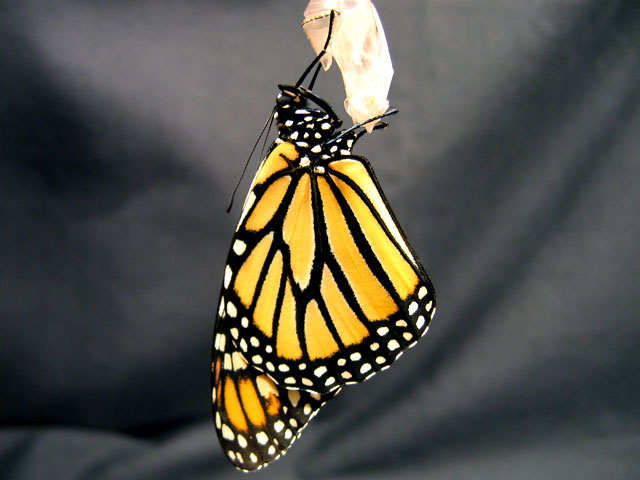
And it seems to me that these people and others like them – who keep exploring the what ifs about our world – are the ones who, with every step, design or idea will inspire us to break out of our comfortable cocoons and strive for new horizons.

monarch-butterfly

A Single Story…

I had the enormous privilege of seeing Chimimanda Ngozi Adichie speak about her latest novel last week. I knew nothing about her except that she was Nigerian and that she had written a book I’d loved (Americanah 2014 #29 in The Book Nook). I left the event 90 minutes later inspired and wanting to know more.

Today I watched Chimimanda’s TED talk, The Danger of a Single StoryThroughout she talks about how limiting and how damaging a single story or viewpoint about a person can be, that it creates stereotypes that while not necessarily incorrect, are more often than not incomplete. That a single story creates presumption rather than openness, a potential wall of prejudice in our relationships with one another as human beings. She told of her own single stories, blown apart by having the opportunity to see things from a different perspective and also of the single stories about herself, experienced through the eyes of others.

It made me think more about single stories and one of the most extreme and damaging of all time – the Nazi ‘story’ about the Jews. Scary stuff.

It also made me think about the single stories about me: each twist of my kaleidescope reveals a potential single story – laconic Aussie, 40-something woman, single lady, career woman, Dutch pragmatist just to name a few. Even so, the whole is so much more than just the sum of all of these.

Then there are my single stories about others and I began thinking about how this starts with our parents. We see them as Mum and Dad and then they become ‘people’ as we get more and more perspective about them. How my Dad went from the person I thought was my biggest critic to someone who was more proud of me than I ever knew. How my Mum continues to be one of the strongest and most inspiring women I know, rising to every challenge and finding strength of purpose again and again in making a difference. 

I was even thinking beyond people to my original single story about London and how every discovery I make about it both enriches my experience of living here and deepens my love for this amazing city. 

It made me think about my reading of Americanah as my first dip into ‘Nigeria’ and how much I loved it and took the story to heart. And how this was my single story until I saw Chimimanda speak both on Thursday night and today on her TED talk. 

And as I only read it three weeks ago, it made me think (not for the first time) that life has the ability to transform when you read.

So that’s my story, and I’m sticking to it.

Many Ways With Words…

This week the Man Booker Prize shortlist for 2012 was announced, the winner to be announced on October 16th.

Of the six authors, I have heard of only one, Hilary Mantel, having read Wolf Hall last year (see #31 in 2011 in The Book Nook).

This also means I have actually read a Man Booker Prize Winner (Wolf Hall won in 2009) although now I look back through the Man Booker archive, I have also read other winners like Yann Martel’s Life of Pi (2002), Michael Ondaatje’s The English Patient (1992) and have the 1982 winner Schindler’s Ark by Thomas Keneally ready to go on Audrey.

But what does it really all mean? How can a small and select group of people decide what story shall be the best that 2012 has to offer?

I’ve read 42 this year and Robert Harris’ Fatherland (#17) and Gregory David Roberts’ Shantaram (#1) stand tall in Gidday’s list of cracking reads so far. Neither of these are recent books (Fatherland was written 20 years ago, Shantaram in 2003) nor do they appear anywhere in the Man Booker archives.

Sir Peter Stothard, the chairman of this year’s panel of Man Booker Prize judges, contributed a thought-provoking piece in yesterday’s The Times which made me stop and think about our relationship with literature.

This year, the judging panel will have read 145 works of fiction (some 2-3 times) in the months leading up to October 16th when the winner is announced. That’s 102 more than I have read so far this year.

(Where does one find time for this I wonder? Does judging become a full-time job that you wrap around another lesser for a time full time job?)

Stothard claims that this year’s shortlist showcases some of our greatest prose-writers. He also says that he’s learnt to speak up for literary criticism, an act in itself which requires work and technique and an ability to argue critically the merits – or otherwise – of a particular book. Which, he says, is not the same as reading for leisure.

He has also embraced ‘Kindle love’ whilst still advocating both printed books and the opportunities that bookshops and catalogues provide to explore material outside the domain of the publishing houses. He implores novellists to write novels first as opposed to writing novels for big screen adaption. And with his literary journalist hat on, admits a guilty preference for writing, from time to time, about subjects and themes rather than about a book itself.

Great writing liberates us all, he says. Expect to be resisted and keep an open mind.

But consider that it’s not a fomulaic argument he poses.

Perhaps great writing is a meeting of story and subtext – the author’s story and your own subtext – and the magic that occurs when new worlds are opened up and the story shapes us, even ever so slightly, though its tone and texture and sense of possibility. I felt the rhythmic intensity of Roberts’ Indian slums, the calculated humanity in Harris’ post war world and the cycle of hope and despair in the tiny boat tossing on the sea in Martel’s Life of Pi.

Their story and my subtext: could that be the literary equivalent of a match made in Heaven?

In any case, his article has prompted me to check out the Shortlist for myself – here they are in case you’ve been inspired too:

Narcoplis by Jeet Thayli
Bringing Up the Bodies by Hilary Mantel
The Garden of Evening Mists by Tan Twan Eng
The Lighthouse by Alison Moore
Swimming Home by Deborah Levy
Umbrella by Will Self

I figure if over 700 books (across five judges) have been read this year to give me this shortlist, the least I can do is give them a whirl!

This post is also part of Post of the Month Club – September 2012

The Games People Play…

Not long ago, I succumbed to the hype and read Suzanne Collins’ The Hunger Games. The brief review I’d read of the movie release did enough to convince me that it was a premise I’d find interesting: the human condition and how far we are prepared to stretch our own moral truths to survive and, indeed, thrive.

And it was a great story, gritty and fast-paced. In fact, so absorbed was I that I forgot that the protagonist is only 16 years old. Her story is riveting as she grows to face an adult world of expectation well beyond her own experience in the impoverished District 12. 

But here’s what struck me most – the concept of the game.

The game is something that has grown to become part of our landscape with all the gadgets a heart might desire to make imagined worlds come to life. I remember the original Dungeons and Dragons and in my twenties, I got completely hooked on Riven and Myst thanks to a boyfriend of the time. Then life took me away from gaming until about eight years ago when a close association with a couple of teenagers (and another rather older “adolescent”) introduced me to The Sims, Runescape and World of Warcraft. And haven’t games all come a long way – so life-like. So real that the imagined and real worlds blur. And a player’s highest praise is that they can lose themselves and escape from reality.
Like all of those spectators in The Hunger Games.

But it’s not the first time I’ve found myself wondering about games of the people kind. As I read Collins’ tale, I was taken back over 20 years to another book, William Golding’s Lord of the Flies. This tale follows a group of English school boys deserted on an island, their attempts at creating their own society to survive and the savage power plays that lead to  not only the deaths of Simon and Piggy, but also the “young gentlemen’s” rules by which they had always played.

At the end of the book, the boys are rescued but in reading those final pages, I couldn’t help wondering whether it had all been part of some big experiment by the adults. And in re-reading the book again after The Hunger Games, the parallels between the two “themes” seemed even more obvious – what does the veneer of society actually hide?

To my mind The Hunger Games reads like Lords of the Flies sexed up for the World of Warcraft generation. But maybe I’m reading too much into it. What do you think?

Do you think the games we play reveal something of the way we would like our future to be or more about our “deep, dark past”?

A Woman of Substance…Again!

Here I am in the closing hours of a very chilled bank holiday weekend. Having spent yesterday in complete and utter indolence, I had decided that today should feature something a little more productive. So I ventured out for a brisk 40 minute walk around the local park this morning…

…and that’s about all I’ve managed.

After being tempted by the final film in my current LoveFilm trio this morning (Inception, and by the way, it was absolutely brilliant) I kept the telly on in the background while I sat down to tap-tap-tap away. That’s when all my good intentions flew out of the window.

One of my favourite books as a teenager was Barbara Taylor-Bradford’s A Woman of Substance and guess what’s showing on the telly – the whole series from 1984, back to back.

So I’ve climbed to the Top of the World (in the book this is Ramsden Crags on the Yorkshire Moors) and I’m just flitting about at the opening of the new Harte’s department store in Leeds. I can’t wait for the rest of the adventure to unfold…again!

The Good Book…

Lately, the e-book has come in for a bit of schtick.

At the end of February, Stylist columnist Lucy Mangan said said ‘E-readers are representative of our mindless embrace of all that purports to be ‘progress”. Then a month later fellow blogger Russell Ward described the Kindle as ‘cold and calculating in its determination to deliver the electronic word seamlessly to you’.

Ouch!

Admittedly I was a slow convert, clinging on to both the physical and the ritual around my serious book habit. And I still love a good book shop browse. In fact last week I had an hour to kill before meeting A-used-to-be-down-the-hill and I spent it wandering through Foyles at St Pancras Station, perusing the latest dust jackets, dipping into travel guides (I’m off to Rome for a little city break soon) and flicking through the pages of Titanic-themed tomes in the special event section. Lovely stuff.

But the thought of finding more space in my already full bookshelf, packed with old theatre programs, illustrated coffee table books – for which I have no coffee table – and those volumes dubbed with ‘re-read me status’ or acquired in youthful nostalgia (my hard back Jane Austen set and the 7-book Chronicles of Narnia being a couple of these) before my Kindle conversion, holds little allure.

On the other hand my Kindle – christened Audrey for her stylish simplicity – goes everywhere with me. There is nothing cool or calculating about immersing myself in a few quick chapters while on the bus, waiting for a friend, in the boarding lounge and even before lights out at night. Audrey is always at the ready and the Kindle shop only a few clicks away. Apart from my favourites, both old and new, I’ve discovered authors I would never have come across and been able to support the burgeoning efforts of a couple of budding writers in my blogging circle – just check out 2011’s Book Nook numbers 51, 55a and 57.

Granted a Kindle is not the be all and end all. After all, there is nothing like a travel book for sitting on the plane, standing on a street corner in a new city or sipping espresso in a funky cafe, marking the places to be seen with folded corners and scribbled annotations and plotting my next adventure(s).

And I haven’t quite managed the conversion of my magazine or Saturday Times newspaper habit yet but let’s face it, the only way to conquer the Samurai Sudoku or the cryptic version of the Jumbo Crossword is curled up on my couch, pen in hand, steaming coffee at my elbow.

But villifying the Kindle and all its counterparts seems a little extreme. Like laptops, smartphones and iPods, the e-reader is just another symbol of our increasingly mobile lives and to my mind, something that encourages the consumption of the written word in every place or space. And that can only be a good thing.

Books still have their place in my life. But for me the power lies in the storytelling.

And I get to take that everywhere.

A Penchant For Poirot…

I love a good whodunit. Film, book, TV, play – it doesn’t matter, I love them all. Most of the time it’s a guessing game trying to work out who the culprit is but sometimes it’s evident quite early – whether that’s via masterful deduction a good guess on my part or a through the story itself – but the thrill remains in seeing how the criminal will be exposed.

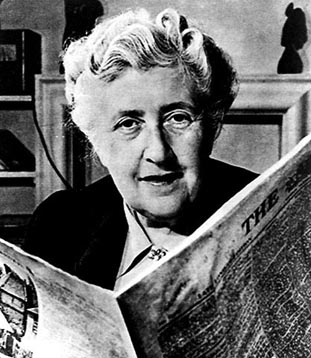
Christie 1890 – 1976

I have long been a fan of Agatha Christie and it was she who sparked my love affair with novels of the criminal kind long before modern crime writers put their graphic, and often gory, pens to paper. Her ingenious storytelling has me lifting layer after layer of delicious and dastardly detail with every page I turn and her quirky protagonists capture my imagination with their idiosyncracies and perversity.

Christie’s first murder mystery was The Mysterious Affair at Styles and was published late in 1920 in the US (followed by the UK early in 1921). She went on to write over 200 of the little blighters as well as 6 novels under the pseudonym Mary Westmacott. That’s a lot of tap-tap-tapping in my world!

It all started with Parker Pyne Investigates when I was about 11 and I went on to enjoy books, films and plays – like The Mousetrap, which has been running on the West End continuously for 60 years and began life as Three Blind Mice – as Jane Marple and Hercule Poirot were brought to life for me again and again. There’s the international – Murder on the Orient Express, Death on the Nile, Evil Under the Sun – and the close to home – Murder at the Vicarage, 4.50 from Paddington, Pocket Full of Rye – to name just a few. And having only read/seen 31, I’ve still got quite a few to go.

Suchet masters Poirot’s peccadillos perfectly

This weekend, ITV3 is playing Poirot movies all day every day – I am in heaven. David Suchet is absolutely brilliant as the pernickety Poirot and I’ve managed to add Sad Cypress and The Hollow to my seen/read list today. Death on the Nile is running now but I’ve seen it before and know whodunit so it’s time to check out tomorrow’s TV listings to see what other Christie gems I can add to my cache.

And Mrs McGinty’s Dead is looking promising…

Turkish Delight…

Not a week has passed in this magnificent new year and already Gidday from the UK is bringing you delight from around the globe – Turkish Delight that is.

Jack Scott is a fellow expat – an Englishman in Turkey (Bodrum in fact) – and he’s written a book. His blog, Perking the Pansies is his catalogue of daily thoughts on the world of two gay men in foreign land – in turns thought-provoking and funny, always witty and honest. 

And now there’s the book…

This is not just a collection of blog posts. Rather Jack weaves the tale of the dichotomous life of an expat with poignancy and humour. The wondering where you belong, what ‘life’ to build and how to bridge the gap between life BE (Before Expat) and the unfamiliar ‘now’ remains as relevant to me now as eight years ago when I arrived in the UK and I look forward to finding out what happens next for Jack and Liam.

So without further ado, I am proud to present Gidday’s first guest for 2012, Jack Scott.

———————————————————-

Gidday from Turkey

Here on Gidday from the UK you’ll read about an Aussie girl’s life in Blighty and beyond, her thirst for reading and her need to scratch those itchy travelling feet. Her writing is eloquent, varied, fun and informative. I’ve always got along with Antipodeans. We share similar cultural roots and laugh at the same things, but our cousins Down Under aren’t afflicted with the same level of debilitating cynicism that stalks many Brits these days. I find this refreshing. To my eternal shame, I’ve never been to Oz. My partner, Liam, has. He loved it and wanted to stay. Forever. He even considered re-training as a hairdresser to gain enough points to emigrate (crimpers were in short supply at the time, apparently). From civil servant to coiffeur would have made a dramatic career change. He thought better of it when he realised it was a gay cliché too far. That was before he met me, of course.

When Gidday writes about London, it’s like a magical trip down memory lane for me. I enjoy our current lives as a wanton Lotus Eaters here in Turkey, but London Town is my home town and it’s where my heart is. I love Turkey but I’m in love with London. This ‘here and there’ tension is one of the recurring themes of my new book, Perking the Pansies, Jack and Liam move to Turkey. Were we insane to sell up, chuck in the jobs and move lock, stock and barrel to a Muslim country? Well, we’re still here but it’s been a rocky road. When I was recently asked to sum up our time in Turkey, I struggled to paraphrase the complexity of our experiences and emotions: ‘misery and joy, bigotry and enlightenment, betrayal and loyalty, friendship, love, earthquakes, birth, adoption and a senseless murder.’ Life in the Smoke was never this eventful. You couldn’t make it up.


Thank you so much to Gidday for featuring Perking the Pansies on the Book Nook list. I’m in elevated company. If you like what you see, the book is available on paperback and Kindle at Amazon.co.ukand Amazon.com.
———————————————————-

ps…If you want to see what I thought, pop over to The Book Nook and check out No. 57. Alternatively, if you are looking for a veritable pantheon of praise, I and many others have spread the word on Amazon so you can click here for that.

Done and Dusted…Commuting Gems

This week, about 10 weeks ahead of schedule, I smashed the 50 Book Challenge.

That’s right peeps – I’ve read 50 books this year.

(Actually this morning it stands at 51 but who am I to quibble over such a detail?)

Along the way, I unearthed some real Commuting Gems, writers that will continue to feed my long and literary journey to and from work every day. Douglas Kennedy made the grade early – I have read three of his books this year – closely followed by slightly off-centre crime fiction from Chris Brookmyre (I’ve read two of his). More recently, I discovered the joys of Jonathan Frantzen, Jo Nesbo and Scott Mariani and have already started my next Ben Hope Adventure (Mariani’s protagonist).

I have also travelled far and wide from the comfort of my reading spot(s) – through the post ‘et tu Brutus?’ period of the Roman Empire (Colleen McCullough) and in a black cab across America with the incomparable everyman himself, Stephen Fry. I have immersed myself in the cultural melting pot of a Russian community in China with Kate Furnivall and stood in awe of the great and mighty Vesuvius with Robert Harris.

Let’s not forget the little bit of star-spotting l managed either. I rubbed literary shoulders with Sir Elton, Alistair Campbell, Billy Connelly, Jane Austen and young Queen Victoria!

The stalwarts of my literary days gone by were there too – Lionel Shriver, Michael Connelly and Dick Francis (although after three of the latter, I might say nay – neigh, geddit? – to a Francis horse-racing extravaganza for a while).

I’ve also dropped in on old favourites like Heathcliff & Cathy and Meg, Jo, Beth & Amy. I read about risk and danger, and about a girl who played with fire and then made things worse by kicking the hornet’s nest. 

I’ve even managed both a trip back to old Melbourne town (courtesy of Christos Tsiolkas) and a joyful celebration with fellow expat Bill Bryson, of the fabulous place I now call home.

Who knew that commuting four hours each day could bring such joy!

Not all was smooth sailing (or commuting if you prefer). Three made my ‘Disappointing’ List – number 6 from Margot Berwin, number 15 from David Gibbins and 39 from Dawn French. Not so marvellous. But 3 out of 50 (that’s just 6% says she, whipping out her trusty calculator to double check her mental maths) ain’t bad. And look at all of the things I have experienced and discovered.

So if you’ve been inspired at all by my bookish banging on, or are looking for some great reads to add to your own (e)bookshelf, you can see them all – along with what I thought of them – at The Book Nook which, in the spirit of encouraging readership and literacy, I will continue to update.

Happy reading peeps!