The story of Spitalfields

I love discovering London’s hidden stories and last Saturday I joined Blue Badge Guide Paula Cooze to discover to the story of Spitalfields.

It’s not the first time I’ve ‘toured’ with Paula, having started my fan-dom in September 2013 in the shoes of Matthew Shardlake followed by an architectural wander around the City four months later and then an amble around the Globe mid 2014.

So you can see that it’s been some time since a missive from Paula has found its way into my inbox and it was perfectly timed as Spitalfields is an area I brushed past earlier in the year and I have been itching to do ‘more’.

Wave after wave of immigration has shaped this gritty pocket of London and what was once slum housing and dangerous streets, has become regarded as one London’s places to be. In fact the gentrification of Spitalfields is fostering considerable debate and even protest, the most recent being the attack on the Cereal Killer Cafe at the top end of Brick Lane in September.

It’s a part of London bursting with expression, riven with side streets and alleyways and clothed in a patchwork of colour and smell. I was so excited that, in babbling on about it to friends after I’d booked my place, I actually inspired a couple of them to come along.

Spitalfields was named for the priory of St Mary Spittel, founded in 1197 in a field right next to the site of the current market. The area lay just outside the walls of the City of London and attracted many merchants and craftsman who were not part of the restrictive City Guilds operating inside the walls.

The multicultural history of Spitalfields is steeped in the ‘rag trade‘ and a fitting place to start our trip down memory lane was with a visit to Petticoat Lane. This street – now called Middlesex Street – was home to many Spanish immigrants in the early 17th century and although the famous market was only formalised in the 1930s, it has always been the place to come for cheap, second-hand clothing.

Petticoat Lane(640x360)

The Huguenot silk weavers arrived in the late 1600’s to capitalise on the area’s burgeoning reputation as a garment district and were followed in the early 1800’s by the Jews fleeing the pogroms in Russia. Both fled persecution with little but their trade and so their sewing machines were a life-line, the only way for them to earn a living and survive each day in this then slum-ridden part of London.

Silk for sale (640x360)

This beautifully preserved silk weaver’s shop and residence in Raven Row is now an art gallery so you can take a wander through to see how the more affluent lived in the past and how the locals are expressing themselves today.
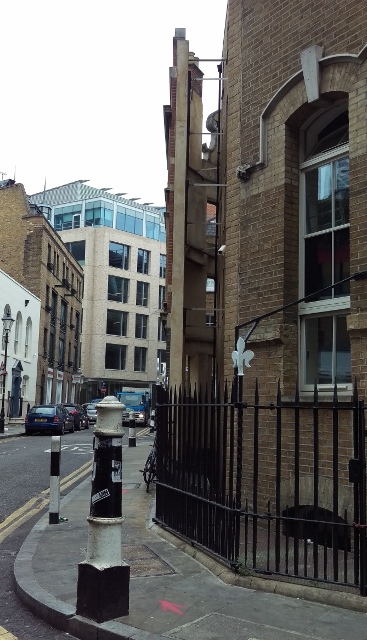
Cover up (367x640)

When we turned around from the silk weaver’s windows, Paula pointed out this controversial facade running along the back of Lilian Knowles House.

We headed down Artillery Row – the name a nod to King Henry VIII’s gifting of the area to the military during his reign in the 16th century – turned left into Crispin Street and passed alongside the Providence Row Night Refuge (now called Lilian Knowles House). It was here that Paula added yet another immigrant community to her story – the Irish, arriving in the mid 1700’s with their dreams of escaping the potato famine in Ireland to build a brand new life in America. The majority could not afford the dream and so stopped where the money ran out – in London.

We walked around past the ‘new’ frontage of Spitalfields market, stopping to admire number 40 Brushfield Street. Verde & Company Ltd is a tribute to both the slow food movement and the history of the area – Paula mentioned that author Jeanette Winterson is one of the owners…and that a hot chocolate will set you back about £5. (Just as well the more affordable – not by much – Patisserie Valerie is across the road.)

Jeanette Winterson shop (640x360)

We then turned right to head north(ish) though Bishops Square, pausing at the old Huguenot silk weaver’s residence at 18 Folgate Street (which has been painstakingly restored by Dennis Severs – pundits really rate the multi-sensory tour)…
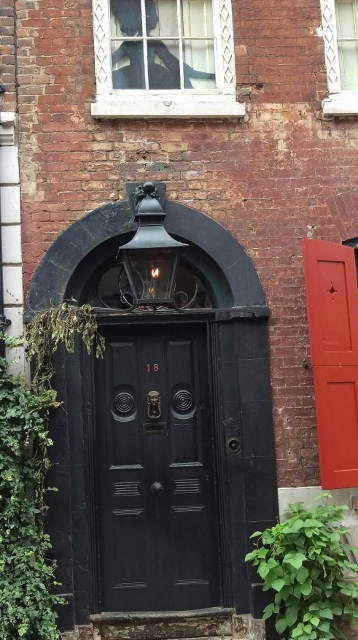
Cotton Merchant (358x640)

…and with a quick left down the alley at the end of Blossom Street (the most inappropriate name for a street ever), we emerged at the bottom end of Shoreditch High Street. Ambling along Bethnal Green Road and back down to Brick Lane Paula explained to us a little about the street art scene.

Locksmith

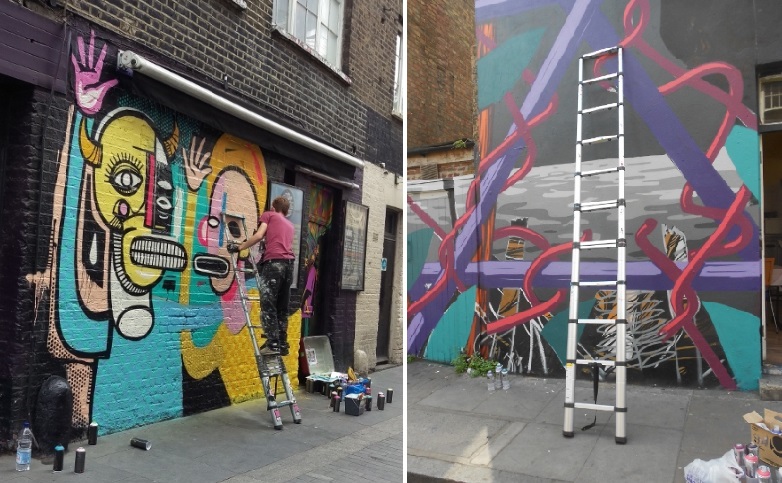
This commissioned street art adorns a local locksmith on Bethnal Green Road. That’s the entrance on the right painted as the opening of a vault.
still there

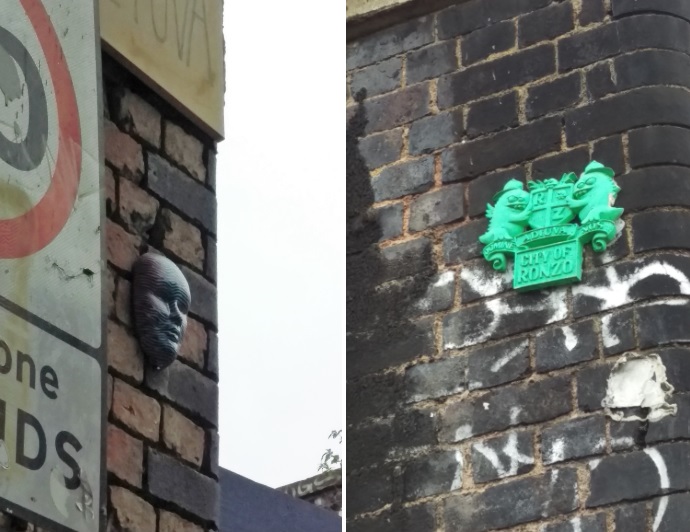
Nice to see two of my favourites from my walking tour through Shoreditch in June – Gregos on the left and Ronzo on the right.

Locals

Life imitating art? Or is it the other way around….

Transport

Street art frames transportation for the young…while this Vespa was one of many I saw, perhaps appealing to the young at heart?

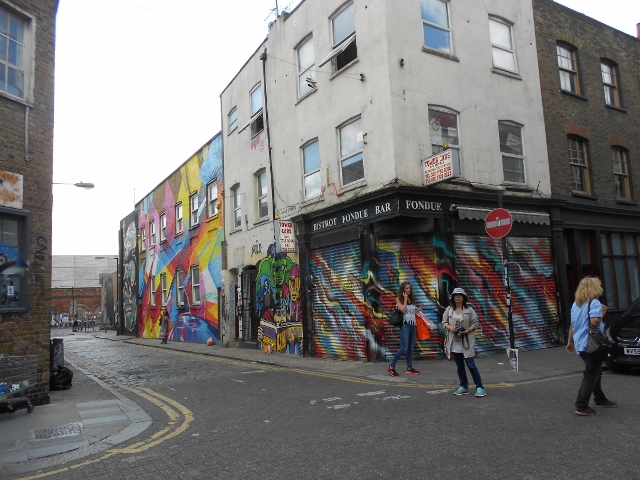
After cutting through the Old Truman Brewery complex and along Commercial Road (this is the side of Spitalfields Market that has had its original facia preserved), we made our way down Wilkes Street – where Keira Knightley‘s pad is up for sale – and into Fournier Street.

Keira's pad(640x360)

Keira’s townhouse has been up for sale for a while – I’m not sure whether it’s the price (the guide price on rightmove.com is a paltry £3 million) or the purple that’s deterring prospective buyers…

Architecture(640x360)

Wonderfully preserved buildings along Fournier Street.

And it’s here that Paula told the last of her stories and bade us all farewell. Another great tour from Paula – done.

It’s extraordinary to think that we spent a story-packed couple of hours in such a small area – here’s a rough map of our route…

Spitalfields Walking Tour map

So I’d really encourage you to have a look around the area for yourself – I’ll be checking out a visit to Dennis Severs’ house to really immerse myself in history.

But really, to get the full story, you’ll have to wait – perhaps patiently – for the next time Paula crosses the city.

Re-engaging

I’ve been a bit of a slacker since moving to the new giddayfromtheuk.com site at the start of this year. Being a less busy year on the travelling-for-work front, I had anticipated a renewed burst of blogging but my frequency has dropped to fortnightly and I seem to have lost that flow of seeing things that inspire me and then tap-tap-tapping away to get my thoughts out into the blogosphere.

Is it because I am not inspired or have nothing to say?

Not likely.

I got a bit of a boost this week when I attended a master class called Secrets of Successful Blogging. Touted as talking about professional blogging ie. making money from it all, at first I wasn’t sure what I would get out of it as I’ve been a bit reticent to plaster ads all over my baby blog. But on the night all three bloggers talked about the writing opportunities that had come from their blogging exploits and that’s something that really interests me.

I also think that having a little digital savvy could set me apart from others in my field (marketing strategy and innovation) from a professional point of view. The people I work with are generally not on Twitter and when I mention that I write a blog, I’m met with a mix of fascination and curiosity, plenty of questions and a few requests for a link to read it so continuing to build ‘muscle’ in this area can only be a good thing.

Aside from the inspiration of getting back into posting weekly that I was hoping for, I learnt a few ‘technical’ things that have inspired me to get moving again – here are my first two.

1. Use Instagram

Given I am always taking photos of things and posting them on my personal newsfeed on Facebook, this seemed an easy addition to make. I’ve had a bit of a go this week and I must say it’s been pretty painless to post something each day. It also means that with just one share, I can be on three social media channels: Instagram, Twitter – both as GiddayfromtheUK – and Facebook. This was my opening gambit…

View over the Thames at sunrise from Whitehall Gardens

View over the Thames at sunrise from Whitehall Gardens

And today I was inspired to post closer to home…

Inspired by this splash of gorgeous Autumn colour against the red bricks in my street.

Inspired by this splash of gorgeous Autumn colour against the red brick houses in my street

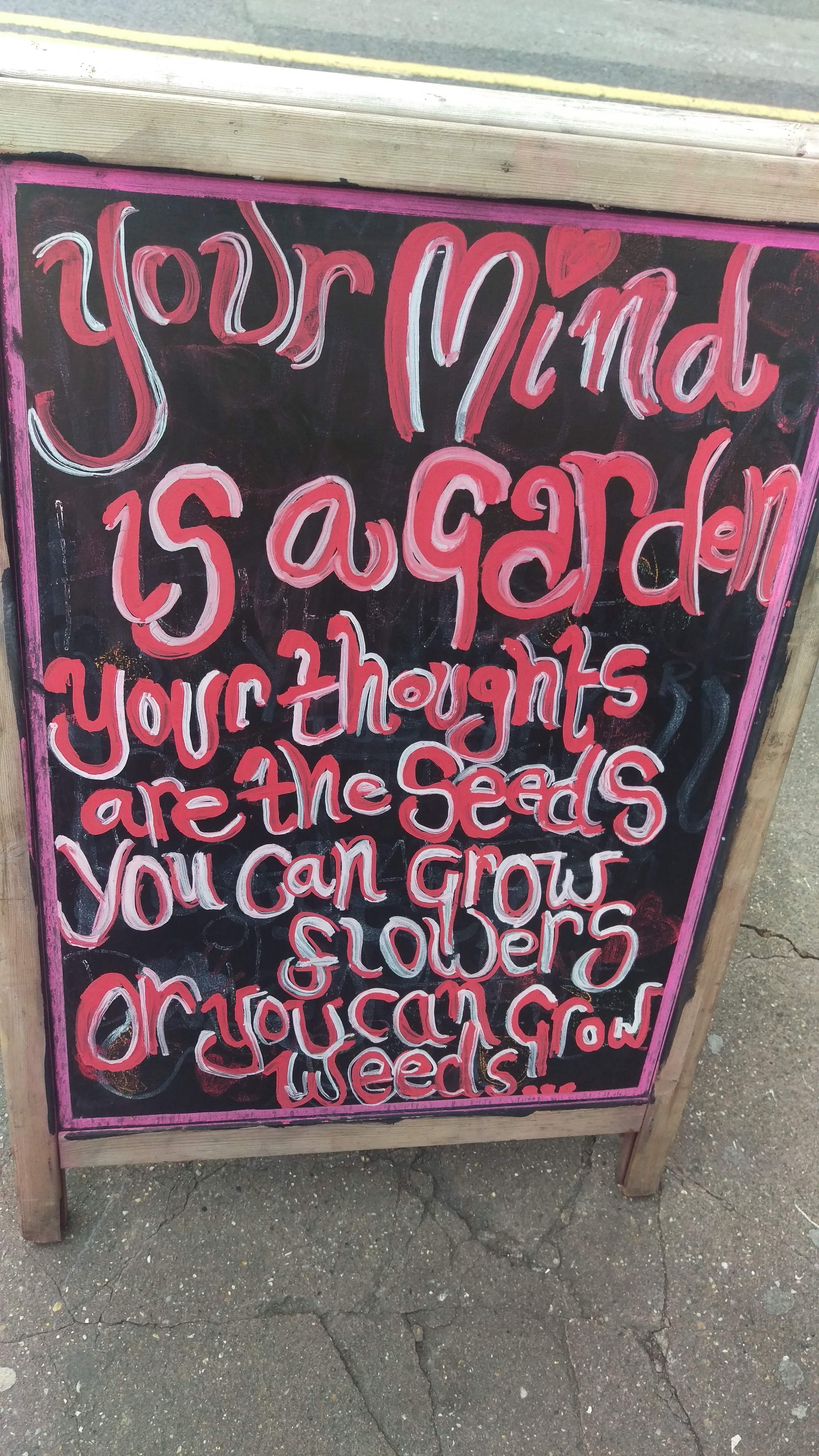
And there was a literary foray and some wise words from the local florist on the way.

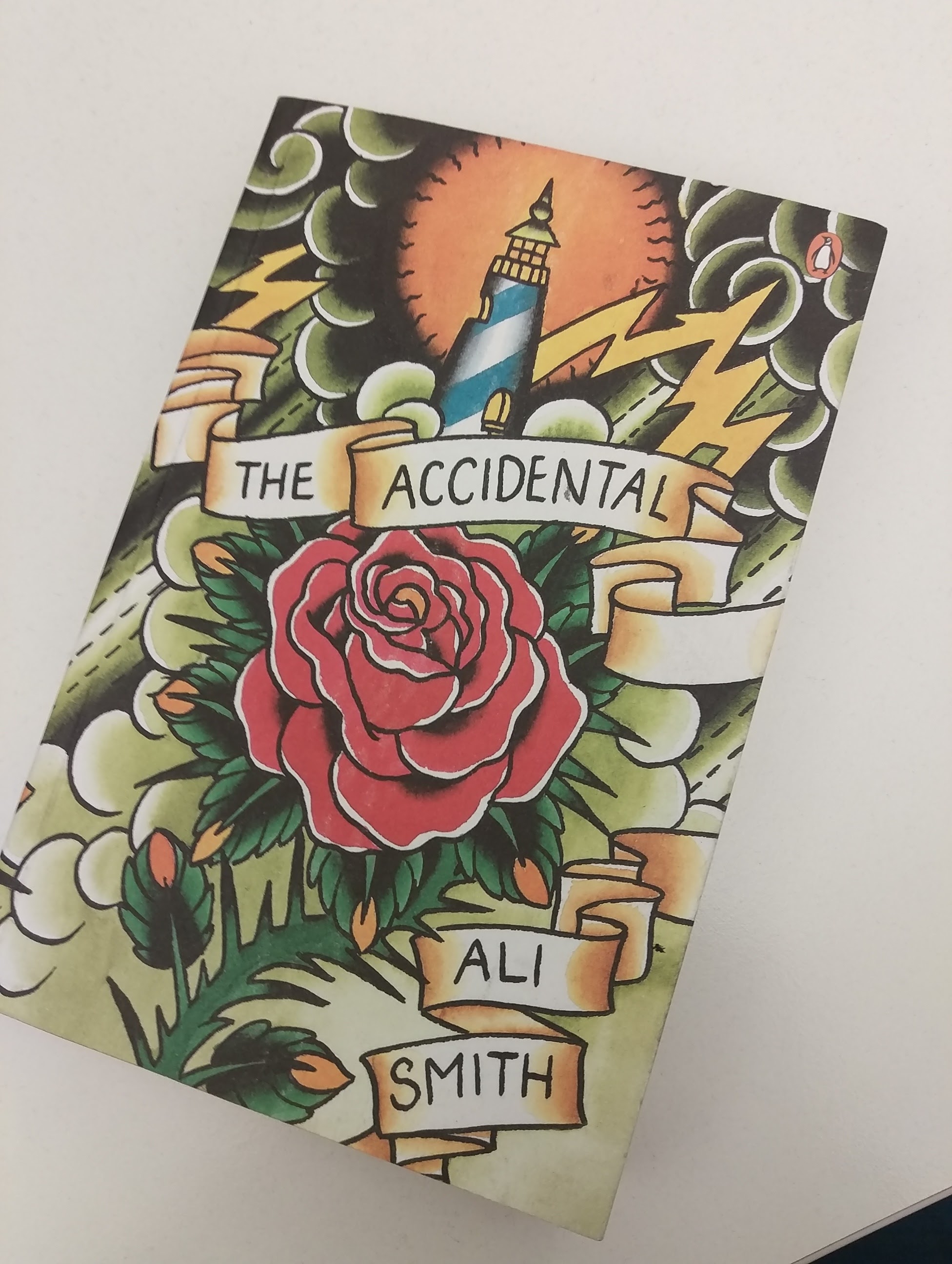
Having a Kindle, I don't see book covers all that often but this one was so fabulous I actually bought a book!

Having a Kindle, I don’t see book covers all that often but this one was so fabulous I actually bought a book!

Needless to say I love flowers...

Needless to say I love flowers…

I just have to remember to start with Instagram and share from there…old habits die hard you know.

2. Transfer my old site posts across to the new website.

*groan*

I have heard some absolute horror stories about doing this so had gotten around this (so I thought) by back linking to posts on Gidday from the UK’s old blogger site. But some advice from @eatlikeagirl Niamh Shields on the benefits of using all of that past content for up-ping my Google presence has convinced me that I should take my whole 5+ years of witterings and get them over here.

The better news is that apparently for a reasonable price I can get someone to do it for me…

*relief*

So stay tuned peeps., thanks for your patience during my ‘spotty’ phase and if anyone has any good advice on blogging, technical or otherwise, I’d love to hear it!

The window

Let me start this by saying I had an awesome Saturday last weekend. It was filled with some of the things I love best – literature, history, discovery and most of all, London.

I had spent a fascinating hour at the old Roman House and Bath on Lower Thames Street right opposite the Billingsgate Fish Market. The City of London is an area I’ve explored over the last few years through walking tours (In Shardlake’s Shoes) but it’s not on my way to any frequent haunt so adventures tend to be a result of turning left instead of right, peering around unbidden corners and just venturing into open doors.

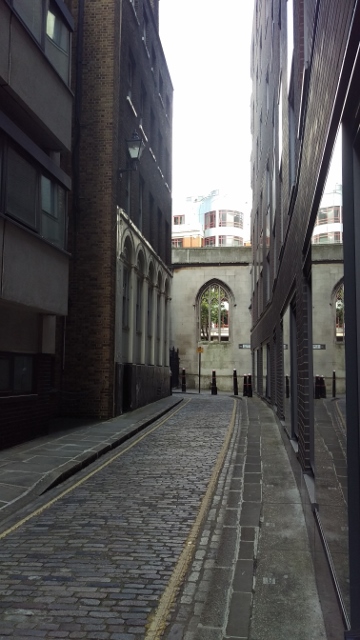
With some time to kill before heading to the Kings Place Festival, rather than head directly back to Monument Station, I let myself meander aimlessly along cobbled lanes admiring the architectural mix of old next to new.

IMAG3435 (360x640)

I had ambled up St-Mary-At-Hill toward Eastcheap when I saw this off to my right.

The window (small)

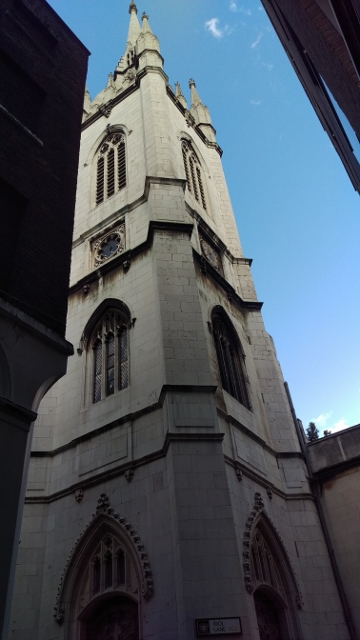
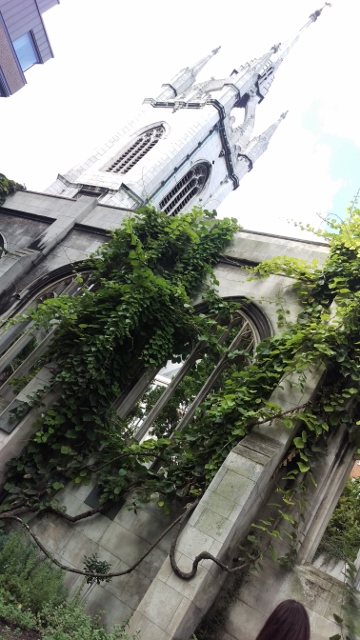
Intrigued, I headed towards it, the street silent and shaded against the warm afternoon sun. As I drew closer, I looked up and spied a steeple chalked against the blue of the sky.

Tower (360x640)

The sunlit window beckoned and as the cobbles turned left into Idol Lane, it became part of something much bigger. The tower in front of me rising up to unite the disparate parts of steeple and window into one glorious whole.

IMAG3397 (640x360)

IMAG3413 (360x640)

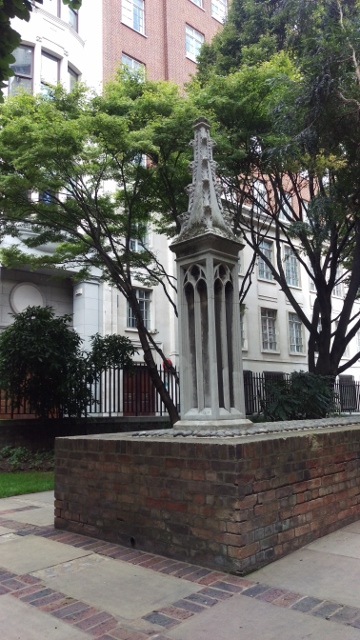
St-Dunstan-in-the-East – all sweeping curves and delicate green. A little piece of history tucked just a few steps back from the dust and traffic on Lower Thames Street. I smiled and I could feel the warm anticipation of discovery growing inside me. The black iron gate was open so I edged through, curious and quiet, as though not to disturb the peace of the garden.

IMAG3430 (360x640)

IMAG3401 (640x360)

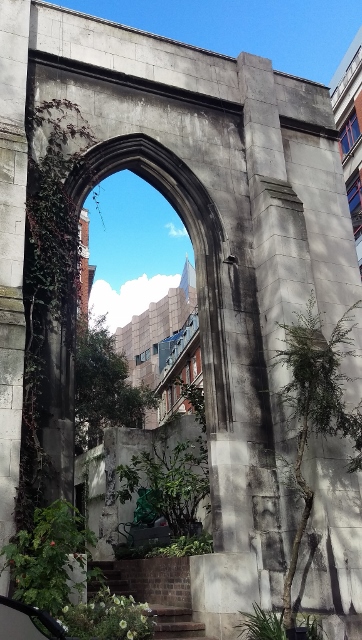
I wandered along the leafy paths drinking in the beauty of this patch of nature and history entwined. Each turn revealed a stunning view, each door a different aspect to behold.

IMAG3415 (362x640)

IMAG3426 (640x383)

IMAG3423 (360x640)

IMAG3424 (640x360)

The delicate shapes of the old walls reached up amidst the modern cut of the City, softening its edges and somehow showcasing the modern skyline. There’s a mix of old and new that I love about London – the way that each seems to compliment, even enhance, the other. I don’t think anywhere does it better.

IMAG3416 (640x360)

My breath caught over and over again as I gazed around me. I was moved, wanting to absorb each moment and imprint it into my mind. At the same time, I wanted to share the fullness of it. I found myself retracing steps, phone in hand hoping somehow to capture a fragment of what I was feeling in order to pass it on.

I typed my first draft of this post an hour later, sitting on the floor of Kings Place waiting for the event I’ve booked in for to start. It was a download I couldn’t stem, a rambling deluge of words and feelings for such a short space of time that had become so large and urgent in my memory.

Now I reshape it, ordering it, adding the photos which speak to my heart the most. There’s joy in revisiting the photos I took. They return me to places I stood – the central garden where the wiry black boughs framed by gothic arches were misted with emerald leaves, the far reaches of the path where I could see the red piped curves reaching from the bricked corner of the building next door – and the things that I felt – the warm sun on my face, the cool sweat on my back that made my t-shirt cling to the place that my backpack had been.

IMAG3429 (400x640)

And I smile again. It feels like the same smile as when I first set eyes on that black iron gate. And I feel grateful – for the moment, for the discovery and for the opportunity to live in this magnificent city I am lucky to call home.

To my mind, that’s not bad for a Saturday.

Not bad at all.

Under foot

The Museum of London is my favourite museum. When I first arrived in London, I spent a too-short couple of hours sheltering there from the January cold before a meeting-over-a-drink on London Wall and over the years I have visited several times, not just for new events but also to revisit the permanent exhibition. It’s the patchwork of all of London’s faces through history that I find so endlessly fascinating.

Anyway, the Museum is trialling a series of Archaeology Archive events over the next few months, opening up sites for the public to visit and to learn more about what went on here well before we were a twinkle in anybody’s eye. So at 2.45 yesterday afternoon, I entered the nondescript door at 101 Lower Thames Street and followed our Museum of London guides, Joe and Nicola, down the short flight of stairs to the Roman House and Bath.

The house and bath is thought to be from the period leading up to 400AD – the story of the site came to life under Nicola’s passionate telling: the building and its abandonment – probably around the late 4th/early 5th century when Rome withdrew its support from Londinium – the unusual layout of the bath house and why it might have been built that way, and how archaeological evidence – or absence thereof – plays its part in refining the story. There still remains some debate as to whether this was a mansio – a ‘stopping point’ – or a family home but that in no way diminished the impact of what we saw.

The tour began with a look at the east wing, what was thought to be the furnace room and the remains of the hypercaust heating system beneath the floor.

East wing with hypercaust tiles (640x360)

The east wing – you can see hypercaust tiles to the right. The furnace room is on the other side of the walkway and links through a series of channels under the floor to circulate warm air throughout.

We then spent some time looking at the bath. Comprised of a frigidarium cum change room in the centre, the tepidarium (warm room), caldarium (hot room) and plunge pool, Nicola’s narration took us back over 1600 years, introducing us to the family who may have lived here.

bath layout (640x360)

You can see the layout of the bath here. The frigidarium was the flat area in front, to the right you can see the site of the caldarium (hot room) with its hypercaust tiles and the furnace that you can see just on the outside of the wall). The family would have walked through a small connecting room to the tepidarium (warm room) on the other side (left side of picture).

They may have trodden the tessellated floor of the frigidarium to change, walked through to the tepidarium to acclimatise to the heat, then visited the caldarium  for a short time before returning to the tepidarium to relax, chat and receive the cleansing ministrations of various experts (scraping the skin with a strigel was a common method of removing the dust and grime of London).

tessalated floor (640x360)

Remains of the tessellated floor of the frigidarium

IMAG3374 (640x360)

The tepidarium – you can see the remaining floor level tiles sitting above the the hypercaust pillars

And let’s not forget an invigorating dip into the plunge pool before leaving the bath.

IMAG3366 (640x360)

The plunge pool was located at our backs as we looked over the frigidarium. It’s not huge – just enough for a dip in and out.

Just under an hour later, our small group headed back up the stairs and, after signing the visitors book, emerged onto the sunlit street. I still find it quite hard to believe that all of that fabulous history lies beneath an unassuming office block opposite the imposing Billingsgate Fish Market on a roadwork-strewn City street.

The Roman House and Bath is a Scheduled Monument which means that it is registered as one of Historic England’s 5627 important archaeological sites. It also means that it is a legal requirement of the owners/occupiers of the property to protect the site. The Museum of London plays a big part in this with teams of historians, archaeologists and conservators overseeing preservation efforts.

This trial – the opening of their Archaeological Archives – is an effort to raise public consciousness about London’s history and encourage visitation albeit, with a small fee, in the hope that there will be support and funding for a permanent programme.

If you are fascinated by history and/or London and have an hour one weekend to visit the Roman House and Bath – or any of the other openings in this year’s trial – please do it. Being able to stand beneath the street, to see this and listen to the expertise and passion of people like Nicola and Joe from the Museum of London is an absolute privilege.

It would be a shame if the doors were closed again and the conservators were left to appreciate London’s past alone.

———————————————————–

For more information about this special programme, visit; http://www.museumoflondon.org.uk/london-wall/whats-on/adult-events/archaeology-events/

Beyond Lovers Walk

I have been stepping out at work as part of a campaign called Get the World Moving. This is a global initiative that targets employee well-being in businesses, getting companies to sign up and submit some employee teams in order to encourage more activity on a day-to-day basis. The short story is the ‘target’ is 10,000 steps each day for 100 days and I am just below that at an average (at day 52) of 9,585, a substantial  improvement on where I started.

Wearing a pedometer and recording the results each day is really fascinating with even the fit freaks amongst us (you know marathon runners, triathletes and the like) uniformly horrified at how sedentary our daily lives are. Whilst my activity is reasonable during the week, walking on my daily commute with one or two swims to top this up (each of my 1,600m dips adds 7,600 steps), it has particularly inspired me to do some sort of walking activity on the weekend whether this is just walking further to do errands, or even a walking tour or two. You see I do like to disappear into Chez Gidday on the weekend and though I might be busy, if I don’t leave the house I am flat out reaching 3,000 steps.

So armed with my Walkit app, I set out in yesterday’s mild sunshine and discovered some more of Finchley’s hidden gems.

I started by turning off the main road into the rather whimsically named Lovers Walk. As I ventured further away from Ballards Lane, the houses seemed to recede until it felt like a woodland path rather than a suburban shortcut.

Lovers Walk

I crossed the railway bridge, made a quick dog leg across Nether Street and continued beneath the leafy canopy to find a trickling stream – Dollis Brook to be exact…

Stream 1

…and a lovely patch of green sprawled under a cotton-cloud sky.

Open Space

Turning left I continued along the Dollis Valley Greenwalk, the path patchworked with summer sunshine and  dappled shade.

Path Montage 1

The brook continued its calm, rhythmic tinkling beneath the trees and I breathed in the lush green loveliness. At the same time I was in state of disbelief – had I really only just discovered this little slice of peace and quiet so close to home?

Path Montage 2

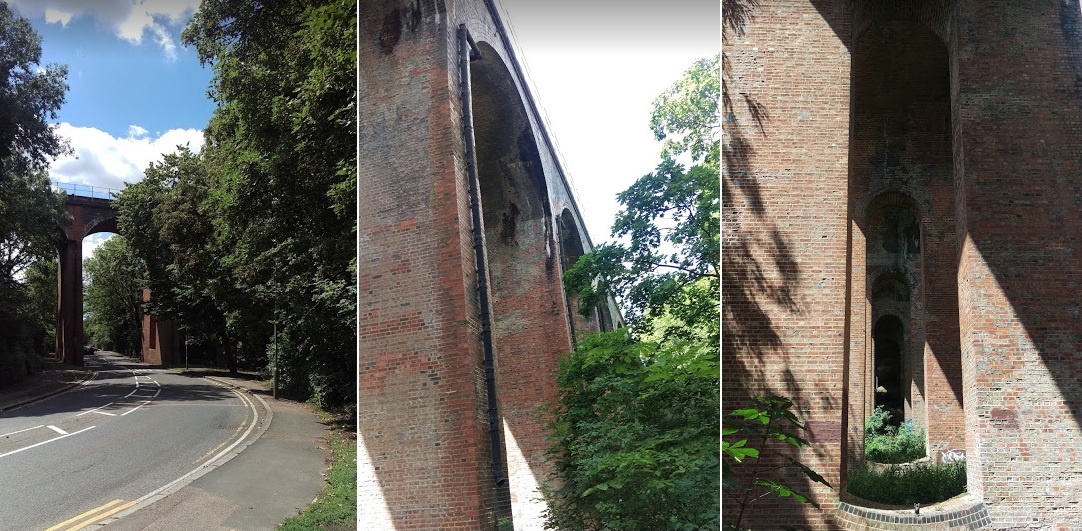
The path emerged on to Dollis Road, just near the viaduct.

Aqueduct 1

The viaduct was completed in 1867 as part of the old Edgware, Highgate and London Railway and today carries Northern Line underground trains between Finchley Central and Mill Hill East.

Aqueduct montage

Crossing beneath the arches, I followed the footpath around and turned left heading back up towards the main road again. After a little over 10 minutes, I found myself standing on Dollis Avenue.

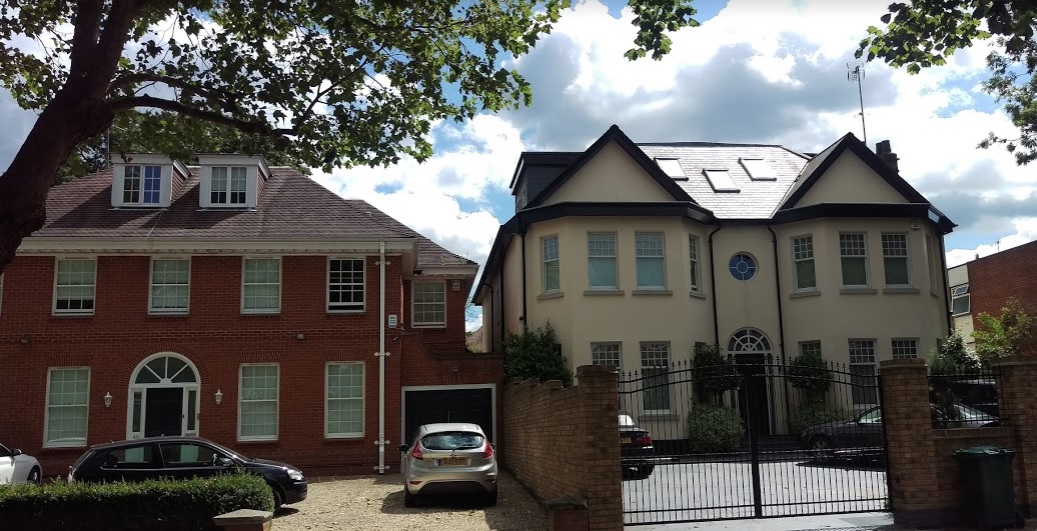
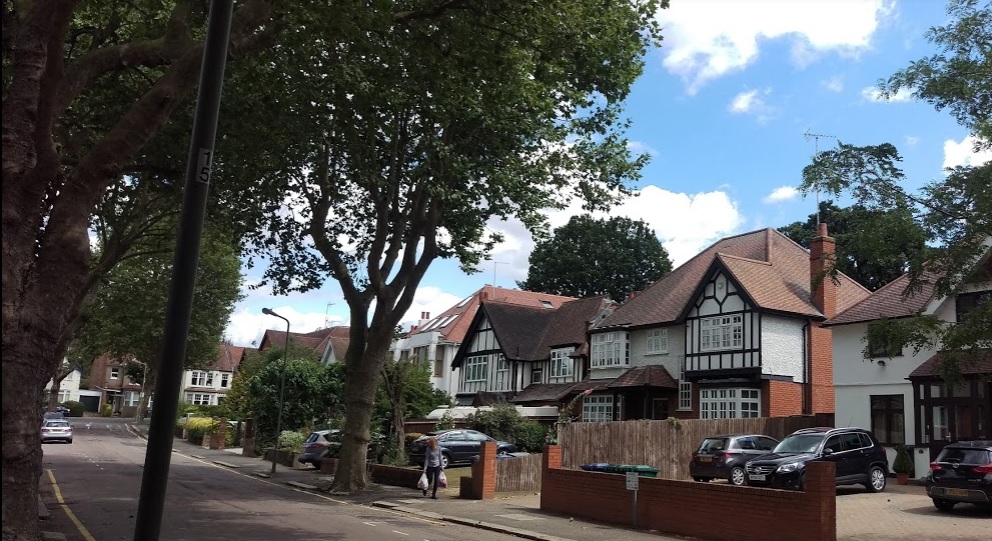
Dollis Avenue houses

Dollis Avenue

The avenue curves around to the right and meets back up with Regents Park Road – I had previously ventured about 150 meters down the avenue from the main drag to the Royal Mail collection office and had never noticed much beyond the grey commercial buildings. So I was open-mouthed with surprise to find such salubrious accommodation no further than a 5 minute walk away.

Dollis Park

Soon I was back amidst the hustle and bustle of Finchley Central but not before I copped myself an eye and nose-full of this delicious lavender…

Lavender

All up I spent just over an hour wandering about 2 miles and it was great way to get out of the house and enjoy the discovery of something new. The funny part is that when Lil Chicky was visiting in January we geocached around the viaduct so it meant I could join up some geographic dots – and found a much prettier route to the viaduct as well.

The Greenwalk is actually 10 miles long and connects Barnet Gate Wood (the Battle of Barnet in 1471 was one of the final battles in the War of the Roses) with the northern extension of Hampstead Heath. I’m not so inspired that you’ll find me covering the entire 10 miles – that’s 16km – in one go but it seems I’ve found a good halfway point and the only decision required is really whether to turn left to the Heath or right towards history.

Who knew that Lovers Walk would yield all of that?

If street art ruled the world

Yesterday I went on a street art walking tour through London’s East End.

Inspired by the discovery of Hosier Lane in Melbourne during my visit with loved ones Down Under, I’ve been keen to explore more on this side of the world since my return in January.

At 10am on a lovely sunny Saturday in London, about twenty-five of us met our guide, Dave, at the Goat Statue at Spitalfields market. This is the goat, not Dave…

The Goat Statue

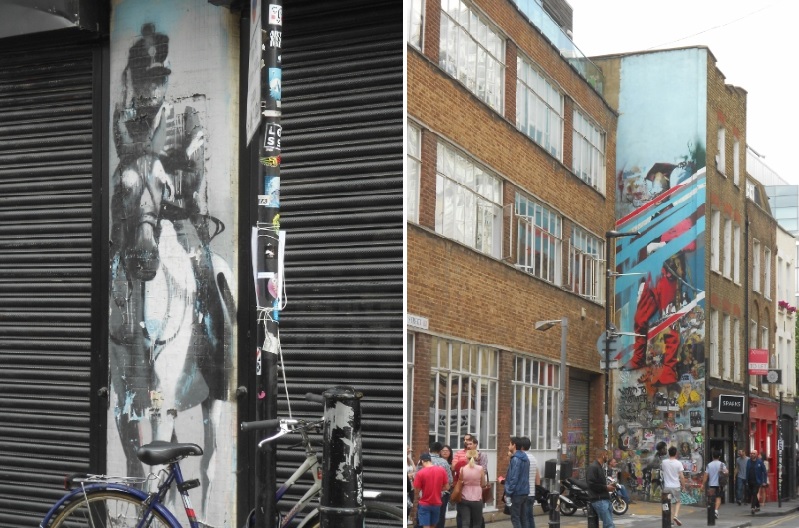
As we meandered towards the church, Dave gave us a bit of an introduction to street art/graffiti and the emergence of London’s street art culture. He also explained that given the temporary nature of street art, the myriad of stickers on lamp posts and other street furniture can serve as a handy guide as to who’s been contributing to the urban art scene in the area at any particular time – a bit like passport control for those in the ‘street art’ know.

The example below shows the iconic winged figure of well-known artist D*face in sticker form in Brushfield Street and then his installation in the Old Truman Brewery Complex.

DfaceWe turned right at the church then took a left into Fashion Street and that’s when things really started to happen…here’s Dave introducing us to three different styles and artists – more on some of these later.

Dave in Fashion Street

I did find the bike image stenciled onto the road particularly amusing in this picture – the urban art scene rails against the things that the establishment tells us we must do (like staying in the bike lane?).

This is probably a good point to address the questions of ‘what is street art’ and ‘how is it different from graffiti’.

According to Dave, the definitions are many and varied but for him, graffiti (below left) is created for the appreciation of the urban art community who can, for example, really appreciate the intricacies of a tag. Street art (below right) is created with a wider audience in mind – Dave told us to “think of images you might consider being on a t-shirt or as a piece of art in your home”.

temporary

Both might consist of painting, stickers, paste ups or other types of ‘installations’  and both can be done with or without permission. But after seeing a few works in progress, I was left with the over-riding premise of street art/graffiti being both temporary and accessible in nature despite permissions granted – check out the works in progress below.

WIP

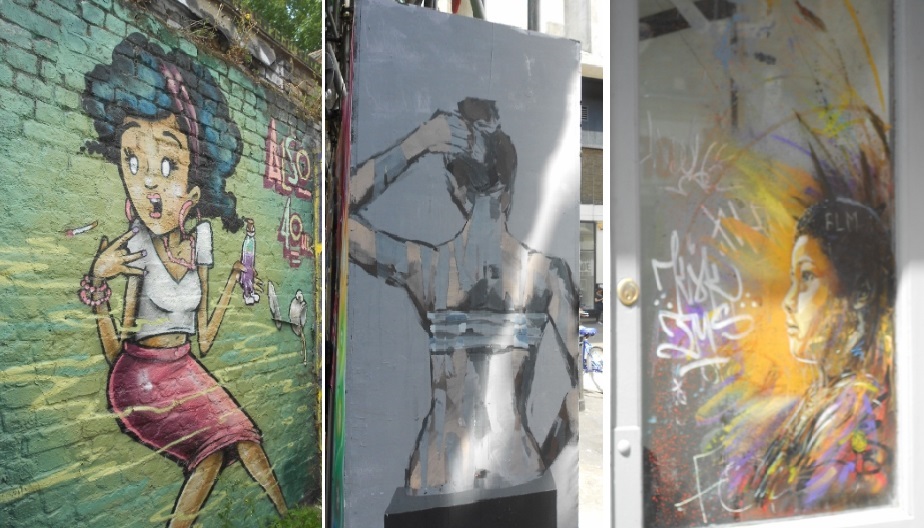
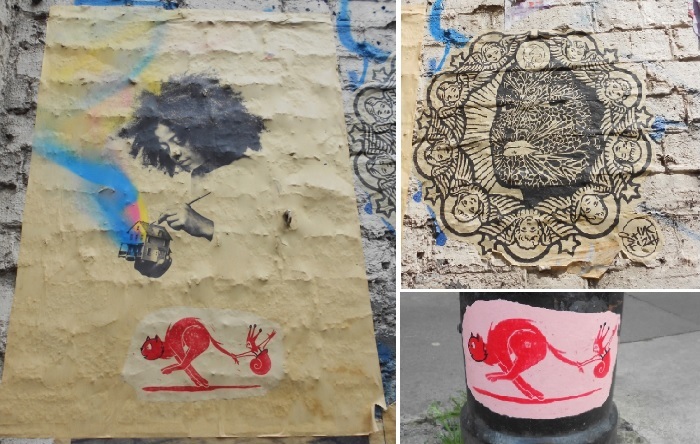
We wandered along Fashion Street, learning about different techniques as we went. Below are some examples of paste-ups – where the artist has completed the image elsewhere prior to pasting it on the walls. The top left image was created using screen printing for the main image with the coloured smoke added in situ.

Paste Ups

You can also see the temporary nature of urban art at work here with the later addition of the ‘cat chariot’ to the bottom of the original piece, a practice we saw a lot throughout the tour. Another common practice is for artists to spread their work in an area to make their mark – we saw two more of the ‘cat chariot’ further along Fashion Street and more scattered along our walking route.

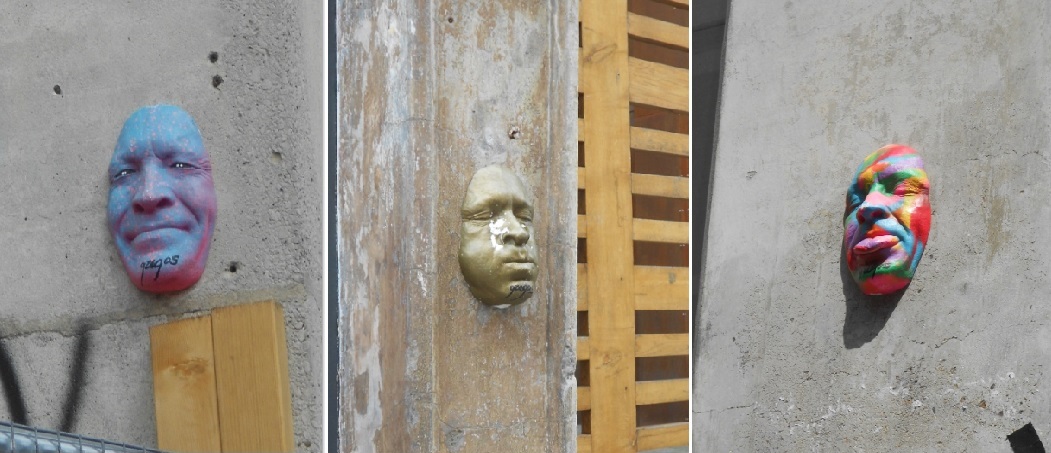
An artist currently distributing himself throughout the area is Gregos. He’s a French sculptor who creates painted molds of his own face. He has installed two batches of these in London so far.

Gregos

We saw these three on our route, ‘stayers’ from his last batch of fifty earlier this year. (Dave assures us that having met Gregos, this really is his face.)

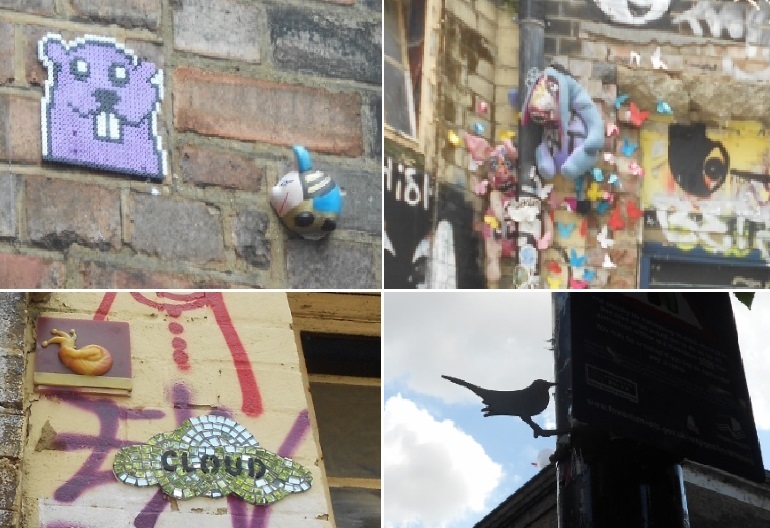
Speaking of sticking things on the wall, there were loads of other things to find if you kept your eyes peeledStuck on

The piggy you can see in the photo top left is part of a series by Love Piepenbrinck. We found them in all sorts of places and while we thought they were cute, it would appear that the urban artists themselves are quite enamoured of this idea. We found a number of works had been created around the little sculpture, leaving the ensconced piggy right where it was – maybe Piepenbrinck’s piggies will mark an era of (semi-) permanence?

The other pictures are just different examples that appealed to me: Eeyore perching gloomily amongst a frenetic background, the mirrored cloud that changed depending on my angle of reflection (pardon the pun –  couldn’t help it!) and the urban tweetie attached to a council sign.

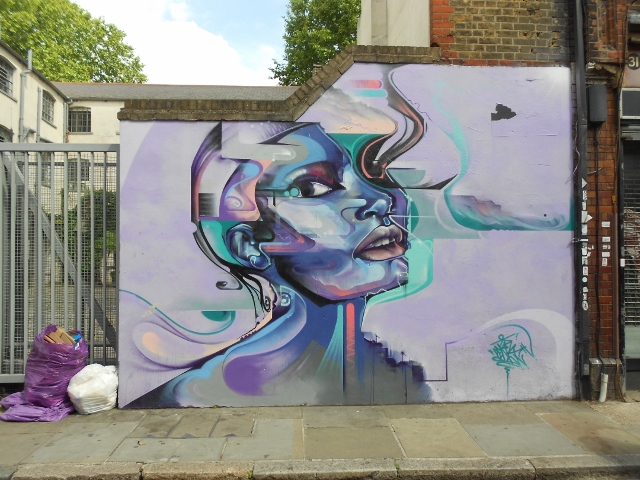
This next image was quite stunning and really struck me with all of its purple and turquoise hues. Dave confirmed here that the artist had been granted permission (by the owner of the wall, not the council) to paint here.

Purple woman

However, what was even more amazing is that this was all painted with spray cans. Can you imagine trying to create this kind of delicate imagery with a set of spray cans? (I probably couldn’t even manage it with a paint brush). It gave me a new appreciation of the talent of these artists. Here are some more ‘girls’ I particularly liked…

Women

One of the elements of street art is the speed and ‘furtiveness’ required as most is completed without permission. One of the techniques used to aid this is stenciling (Banksy is a well-known exponent of this). The image on the right is painted on the door of a barber shop and so whilst the artist had probably obtained permission, this intricate portrait was still created using a whole series of stencils.

We saw some great commemorative art as well. Joe’s Kid (below left) actually runs the coffee shop that owns the wall and Charlie Burns (below right) ran the business whose shutters are right next to his image.

generations

The Charlie Burns image also embodies the dripping effect evident in much street art – let’s face it, if you’re trying not to get caught, you don’t spend time dabbing at the drips! In this case the artist, Ben Slow has used it to effect on the left hand side of the image and then merged into photo-realism as he moved towards the right.

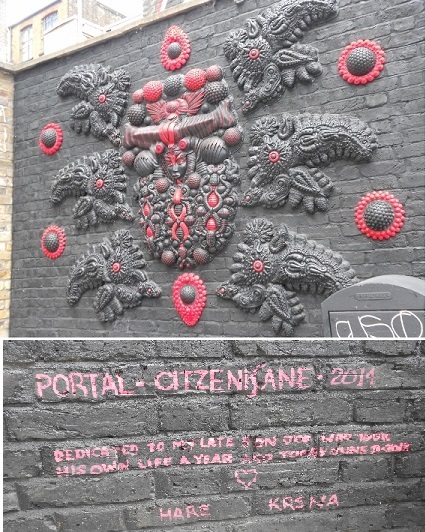
And the piece below – just off Bethnal Green Road – is by Citizen Kane (CZK) and commemorates the suicide of his son in 2013.

Citizen Kane

Street artists are also known for their strong anti-authority philosophies and these next two are great examples of taking a humorous and well-aimed poke at the establishment.

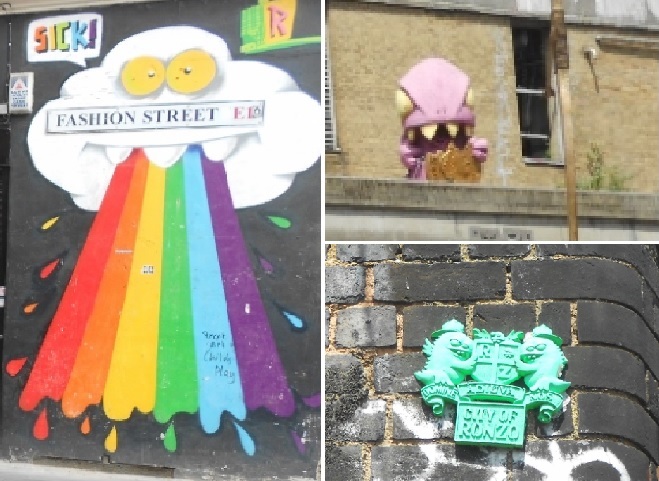
Ronzo is a German artist and his style is typified by the bulging eyes and the tombstone teeth of his monsters.  We saw the rainbow image earlier in Fashion Street. On the right you can see Crunchy, The Credit Crunch Monster, Ronzo’s mascot for the global financial crisis, in the Old Truman Brewery complex while the City of Ronzo crest was on the railway bridge at the top end of Brick Lane. This guy gets around…

Ronzo

Frenchman Clet Abraham is another exponent of thumbing one’s nose at authority and uses his witty imagery on existing ‘displays of authority’ (street signs) to make his particular mark.

street signs

Nathan Bowen is yet another using his art to make a statement. Using marker pens in his signature style, he makes this plea for peace in Syria below.

Nathan Bowen

Conor Harrington‘s work also appeared in a couple of different places along the way…

Conor Harrington

…and he also worked with U2 on Crystal Ballroom, part of their Songs of Innocence project. (He’s the artist in the video.)

No street art tour – of London anyway – would be complete without Banksy so we snuck through the gates of Shoreditch nightclub Cargo to see this…

Banksy

Yes, it is behind perspex but while not in the temporary and accessible spirit of street art, I’m pretty glad I got to see a real Banksy. And yes, his real identity remains a mystery, even to Dave. (There’s more street art in Cargo – even another Banksy so might be worth popping down to Rivington Street.)

There was so much more on this almost 4 hour tour and it gave me a new appreciation for both this pocket of East London – about which I knew very little – and the urban art scene – about which I knew even less. I didn’t like everything – probably only half of what I saw really appealed to me but it’s interesting how with a little bit of background, the whole genre opened up and became absolutely fascinating.

And let’s face it, if street art ruled the world, there’d be a whole lot more of this…

Coloured walls

…and for my part, that just adds some welcome colour to a day.

If you are in London and fancy a bit of urban art for yourself, check out Shoreditch Street Art Tours – Dave is obviously a guy ‘in the know’ and for just £15, it makes for a pretty cost-effective and entertaining education!

Men of imagination

I’ve had an extra couple of days off to extend my Easter into a 6-day break and it’s been a lovely mix of lolling about at home and getting out and about to explore more of this amazing city.  As some of you know, the Museum of London is a favourite of mine but this time I went to wander through the Sherlock Holmes exhibition (which finishes on the 12th of April – how did I nearly miss this?)

icons of Holmes

Detective Sherlock Holmes featured in the 4 novels and the 56 short stories of Sir Arthur Conan Doyle. Conan Doyle trained as a physician in Edinburgh in the late 1800s and also started writing during this period. He had limited success until the publication of Holmes’ first outing in A Study in Scarlet in 1886 with the sequel, A Sign of Four, published in 1890 while Conan Doyle was studying opthalmology in Vienna. He then wrote The Adventures of Sherlock Holmes and The Memoirs of Sherlock Holmes, each comprised of 12 short stories and elevating Conan Doyle to being one of the best-paid authors of the time.

But Conan Doyle was unhappy with the time ‘taken away’ from more serious writing pursuits and in 1893 wrote The Final Problem, plunging Holmes and Professor Moriarty to their deaths at Reichenbach Falls. But Holmes had taken such a firm hold in people’s minds that in response to public outcry, Conan Doyle resurrected his popular protagonist in 1901’s The Hound of the Baskervilles and continued to scribe his consulting detective’s adventures until 1927.

It is worth remembering that Holmes is a man of imagination – the imagination of Sir Arthur Conan Doyle. Conan Doyle created a quirky, impatient and sometimes unlikable character who loved the gossip columns and yet was in equal parts enthusiastic and dismissive of society and its pretensions; who could wax lyrical on criminal method and motivation yet exhibited such anti-social behaviour that at times, you might question how Holmes could have any insight into people at all. I wonder whether there was something in Conan Doyle’s interest in freemasonry and mysticism that brought an extra potency to his complex and quite frankly addictive protagonist.

Anyway, I love these stories and although I have not read them all, I have seen many of the TV adaptations starring the marvelous Jeremy Brett. So it was with Brett’s brooding portrayal in mind that I entered through the bookcase and spent just over 90 minutes wandering though both memories and memorabilia.

the bookcase

It was fabulous and I am now reading The Adventures of  Sherlock Holmes again.

Then yesterday I went to visit Churchill’s War Rooms. I’ve been meaning to do this for years and so I battled the Easter holiday hordes trundling along Whitehall and descended the steps beneath King Charles Street to the museum below. This underground labyrinth contains both the original War Rooms – left as if someone simply turned the lights off in 1945 and closed the door behind them, leaving everything just as it was – and the Churchill Museum, which covers this charismatic man’s entire life.

Like Holmes, Winston Churchill was a strong and opinionated character who fell in and out of the affections of his public. He was a committed politician and stood for office several times in his constituency and for the office of Prime Minister. He also wrote from the age of 21 to supplement his income and was awarded the Nobel Prize for Literature in 1953.

I feel devoutly thankful to have been born fond of writing. Churchill, Authors’ Club, London, 17 Feb. 1908

Had World War II not broken out Churchill may have been written off as a failure. Despite early popularity as a war correspondent and his escape from capture during the Boer War, he lost his position as First Lord of the Admiralty following the Gallipoli campaign and his opposition to home rule in India and support of the abdication of Edward VIII throughout the 1930s did nothing to restore his reputation. It was during this period that Churchill raised his concerns regarding the activities of Hitler and continued to warn against the dangers of appeasing such a man. His warnings went unheeded not only because of Churchill’s reputation as a war-monger but also due to Britain’s aversion to embarking on another ‘bloody’ war.

But circumstances conspired to create the right place and time and Churchill captured the public’s imagination by demonstrating his great passion for his country in his speeches – the words he wrote and then delivered into history:

We shall fight on the beaches, we shall fight on the landing grounds, we shall fight in the fields and in the streets, we shall fight in the hills; we shall never surrender, Churchill to the House of Commons, 4 Jun. 1940

There were many other speeches which stirred the nation and in fact the world, and Churchill went on to lead his country both during and for some periods after the war and to continue writing the pages of history until his death in 1955.

I consider that it will be found much better by all parties to leave the past to history, especially as I propose to write that history myself.  Churchill, speech to the House of Commons, 27th Nov. 1914

That two such iconic British characters can cross the divide between fact and fiction is quite extraordinary to me. While we will never know Sherlock Holmes (because he’s not actually a real person), the visit to the War Rooms made me wonder how much of the real man – Churchill – is about the ‘facts of the matter’ versus being inspired by the imagination.

Churchill campaign poster

How do we ever know where the facts end and fiction begins?

9 minutes of glory

When I first visited London in 2000, I was smitten by all of the things that a tourist to this great city is usually smitten by – the iconic images seen in movies, read about in books and learnt about in high school. That it’s all real is amazing. That it’s all so old is inspiring.

I loved both history and literature at school and so was especially keen to visit Westminster Bridge, having been inspired by William Wordsworth’s Composed upon Westminster Bridge, 3rd September 1802:

...The City now doth, like a garment, wear / The beauty of the morning.

When I stood on the bridge just over 14 years ago, snapping eagerly away at the gilded clock tower of Big Ben, its face smiling benignly over the Houses of Parliament and Westminster Abbey, little did I imagine that I would ever walk beneath those historic spires on a daily basis.

For the last 18 months, I have been based in an office less than 500 metres away from these icons of London. Each morning, I emerge from Westminster tube station beneath that resplendent clock tower and walk the 0.4 of a mile to the office (about 9 minutes) with Westminster Palace at my elbow to the left and Westminster Abbey just across the road to my right. And then I get to do it all again – in reverse – on my way home.

I am regularly filled with this feeling of delighted disbelief – when the little voice whispers softly in my head, ‘This is my life. I really did this.’ I can’t help but smile. It seems impossible to be immune to this sense of wonder and I remain astounded that it has not yet paled. Samuel Johnson wrote, ‘The man who is tired of London is tired of life’ – I know what he means.

In those moments of wonder, I find myself pausing for a little longer in an attempt to capture the moment. My Facebook friends know only too well how much I love to snap and share and in doing a little phone gallery spring cleaning the other day, I was so struck by the range of photos I had taken in the last few weeks that I wanted to share them with you too.

So welcome to my commute…

Arriving at the top of the stairs at Westminster tube station, I pop into a nearby coffee shop and emerge with cup – and often camera phone – in hand to this…

underground sign

A short walk takes me to the corner of Bridge Street and Parliament Square giving me this view of the Houses of Parliament (Westminster Palace) as I cross the road…

Westminster Palace from Whitehall

…this view of Whitehall – which leads past Downing Street and up to Trafalgar Square – over my right shoulder…

Looking down Whitehall

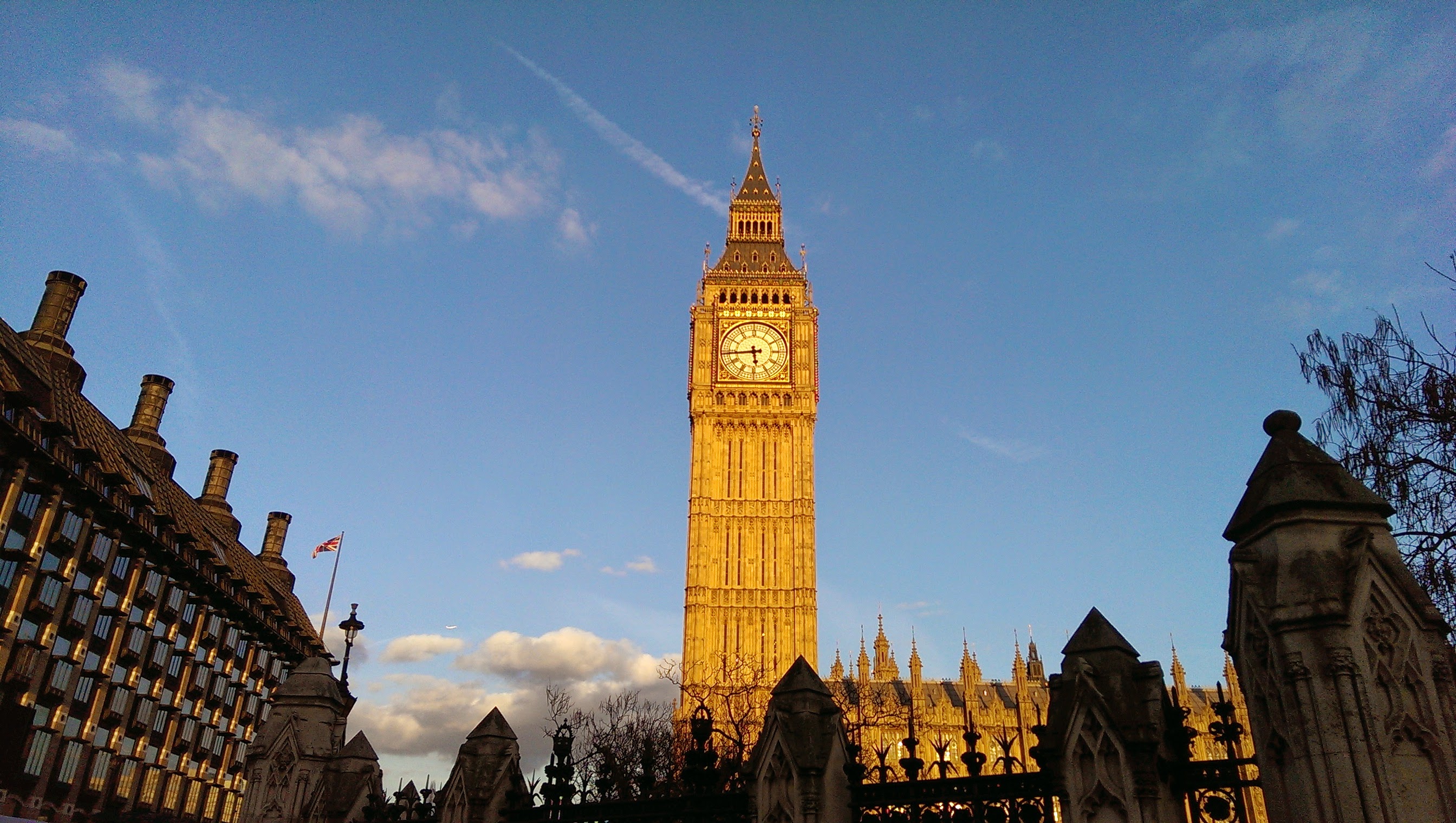
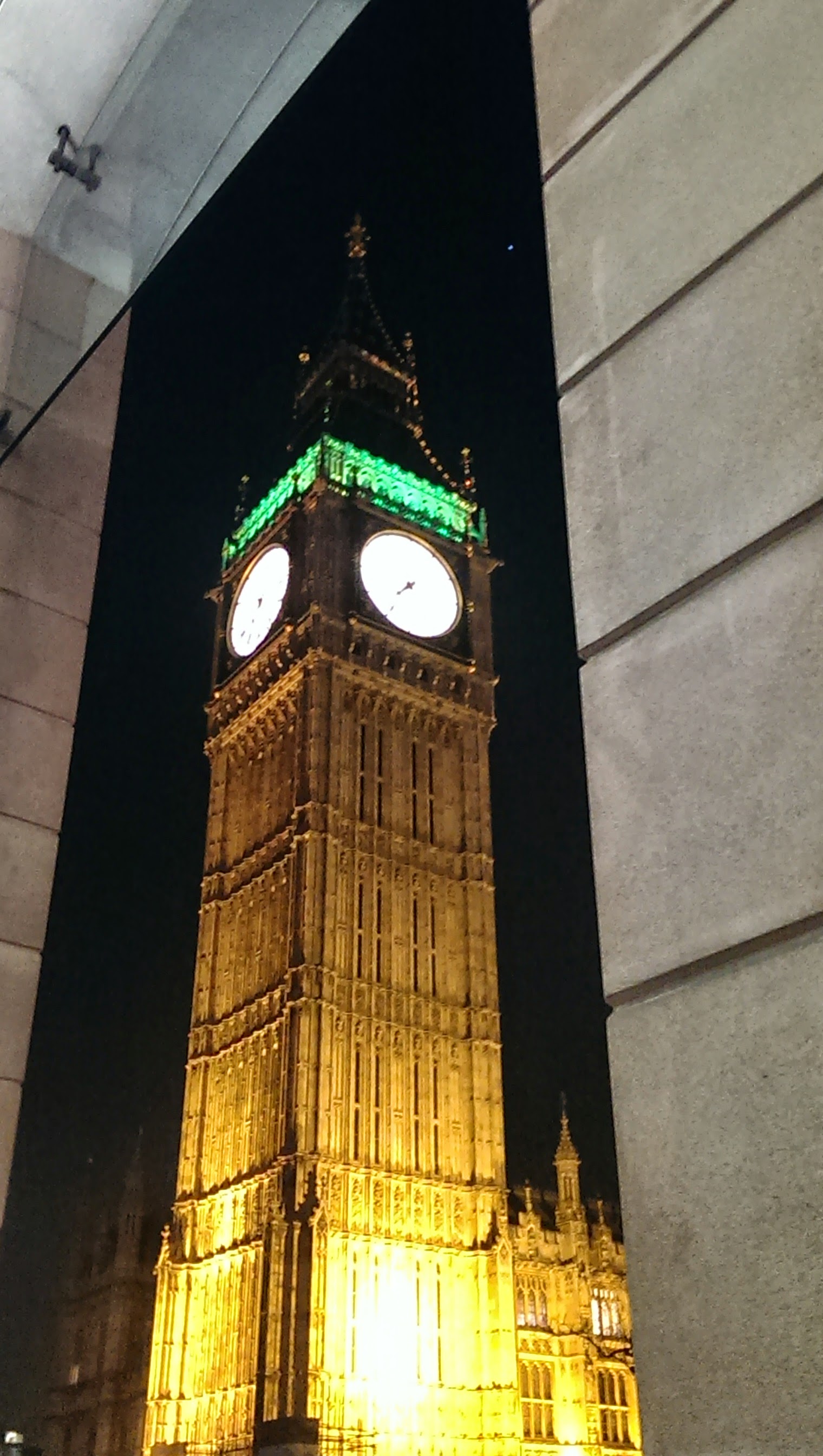
…and the clock tower to my left. This particular shot was taken in the afternoon but sometimes I get my timings right and my commute is accompanied by the deep chimes of Big Ben heralding the hour.

Big Ben

I walk right past the Palace – this was taken from the end of the palace building looking back towards the tube station (now hidden behind the walls of Westminster Hall).

Return journey

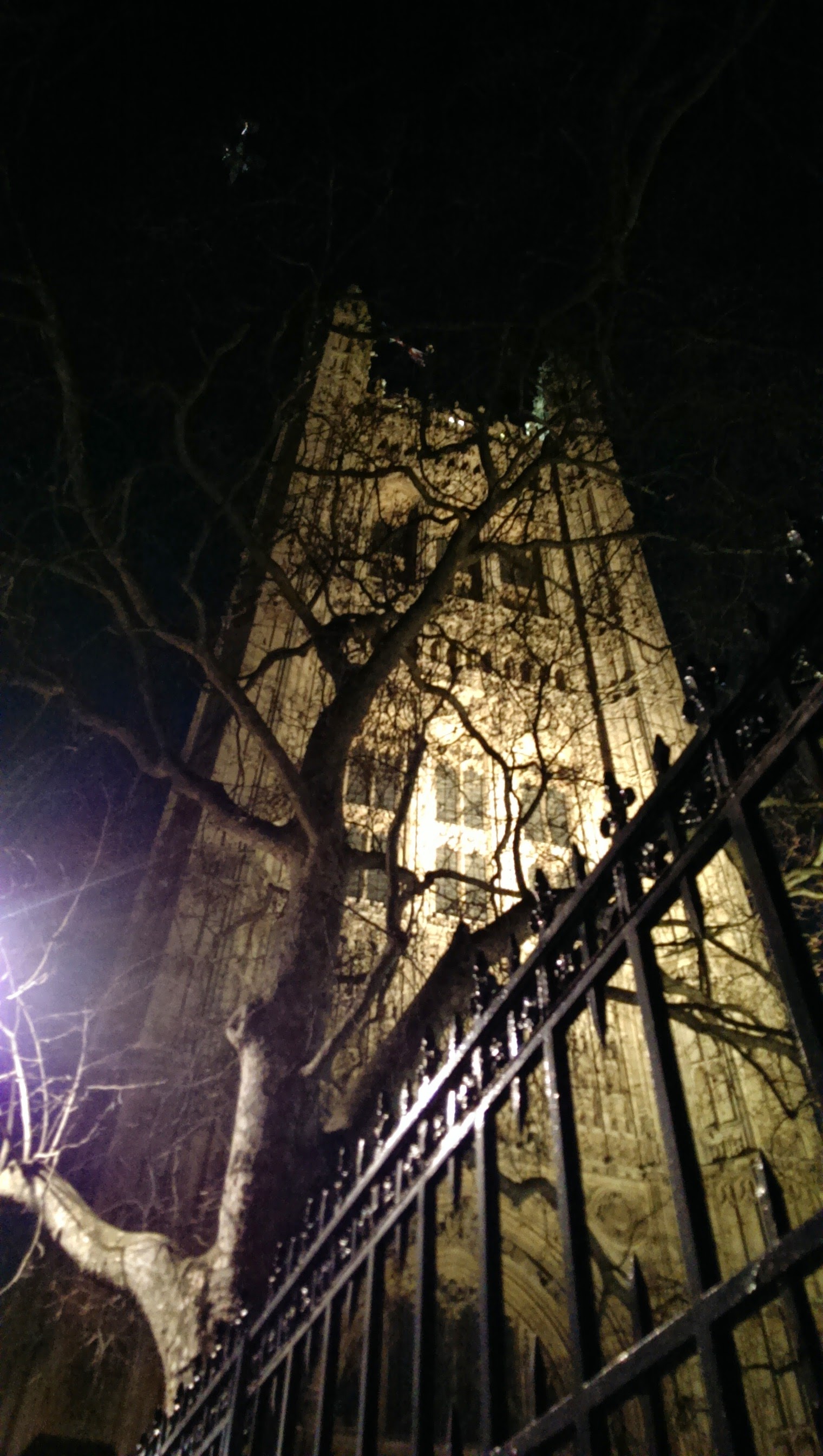
Looking upwards provides another spectacular view, this time of Victoria Tower which houses the Norman Porch and the Sovereign’s Entrance – this is the only route that the Queen is allowed to use to enter the building (which she most famously does each year at the State Opening of Parliament.)

Norman Porch

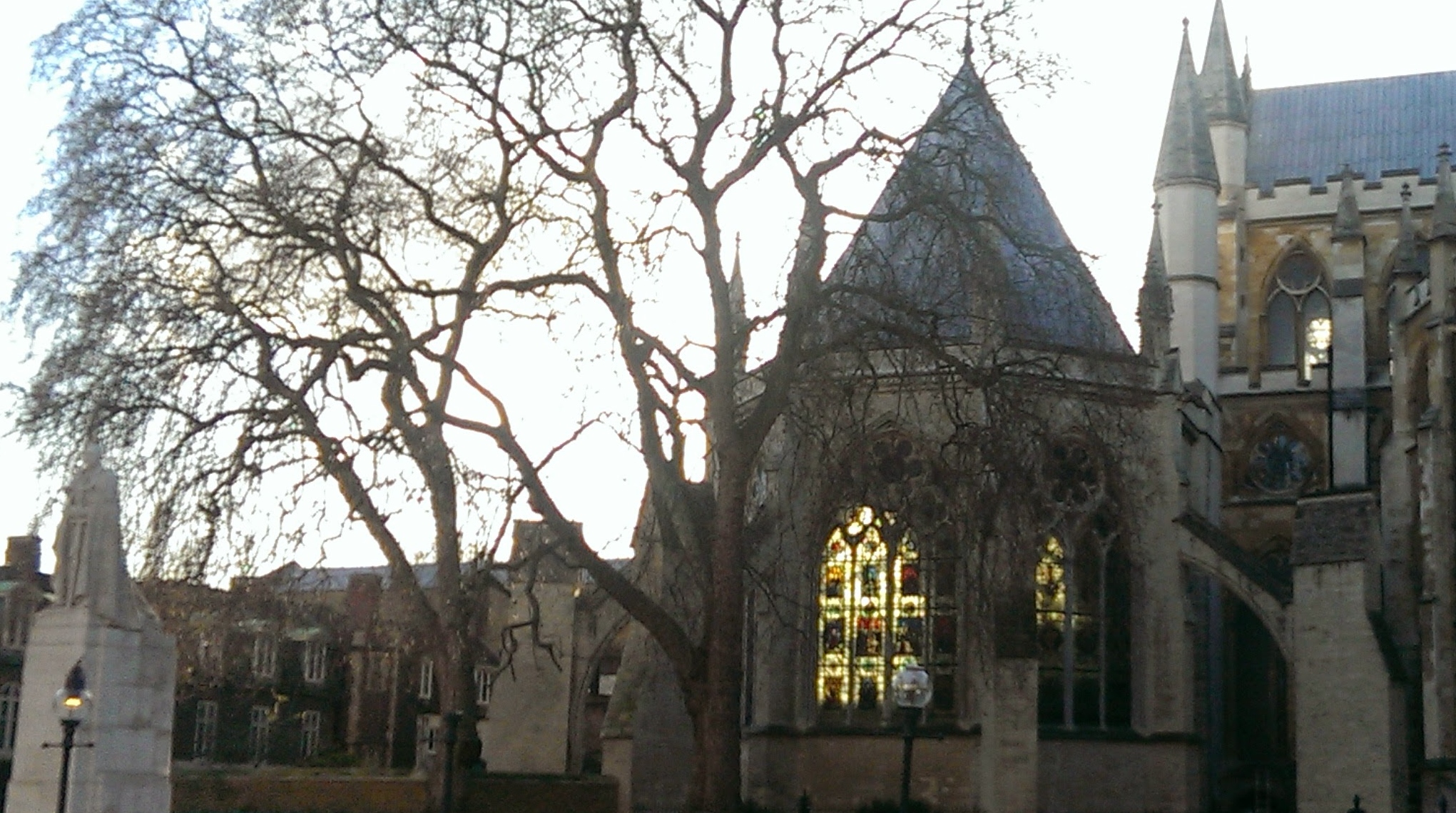
Taken from the same place but on a different day and in another direction, this is Westminster Abbey, home to the Coronation Chair (Westminster Abbey has been the church for every coronation since 1066), Poet’s Corner and the Grave of the Unknown Warrior. The two square towers are the ‘back’ of the main entrance.

IMAG2340

Just last week I captured the afternoon light streaming through the stained glass of the Abbey’s windows…

Abbey Windows

…and this 700 year old building doesn’t look too shabby at night either.

Abbey night

And then the glowing clock face marks my return to Westminster station again. This picture was taken by pausing during my normally rapid clip along the concourse that runs back towards Westminster Bridge and the stairs down to the tube.

Big Ben framed

So that is my commute peeps. Well 9 minutes of it anyway and in a total of 40 minutes – that’s an awesome and glorious 22.5%. Every. Single. Day.

(Except Saturdays and Sundays and Bank Holidays and vacation days and…oh well you get the picture.)

Let’s face it, if I’ve got to commute anywhere, I’m rather glad that it is this one.

On transformation

It’s been busy on the extra-curricular front lately and I’ve experienced such an extraordinary trio of events that it’s actually taken me a while to shape all of the amazing stuff I’ve seen and heard into something more than a rambling discourse.

Let me start at the beginning.

I love Flamenco. I’ve loved it ever since the moment I first set eyes on it in Seville in 2002. I love it deeply and passionately, like the spirit of the dance itself. And a little over two weeks ago I was in the audience for Flamenco Gala, the event that marked the opening of the London Flamenco Festival.

It was an hour and 45 minutes of pure transformation. Each piece was filled with its own essential character: intense sensuality, sartorial elegance, youthful impertinence. (And that was just the three ‘leading’ men.) There were no stage sets and no props, each performance needing only the cast of dancers, musicians and singers to capture its essence and cast it out into the audience. I reached out to grab it and never wanted them to stop.

These people transformed Sadlers Wells with their passion and fierce charm, drawing us in and holding us in their thrall until the very last compás. As the last note faded, the theatre filled with woops and bravos and cheering and my arms ached from clapping for so hard and so long. It was utterly thrilling (and may have had something to do with my insomnia that night).

The following week I went hear Thomas Heatherwick speak on surprise, ingenuity and transformation. This is the man who has hit the headlines here in London with his new London bus design and who alongside Joanna Lumley, has been inspired to transform Londoners’ relationship with the Thames through the Garden Bridge proposal. He is also the man who, during London’s 2012 Olympic Games, transformed the Opening Ceremony: an extraordinary moment in Olympic history that showed how the true spirit of the Games – a coming together of 204 nations in a single endeavour – could be epitomised in the lighting of the flame.

He has been doing many other things and for just over 2 hours, talked passionately about transforming our urban environments through a unique blend of redefining the brief and solving ‘the problem’. I didn’t love every project he showed us but I had a strong opinion on each and for me, that’s what sets this catalogue of innovative design ahead of the rest.

And then last Sunday I went to see an interview with novelist and academic Howard Jacobson. I’ve never read any of his books but I had read articles he’d been quoted in and was curious to hear what he had to say. His new book J, imagines a dystopian future where many ‘Js’ are banned – no jokes, no jazz and no Jews.

The discussion became less about the story itself (excellent, no spoilers!) and more about ideologies and the human need for argument to keep such ideologies alive. Being Jewish himself (the interview was part of Jewish Book Week), he particularly talked about the notion of Christian/Jewish argument being at the source of each of these ideologies and that without one, perhaps the other would not exist. He posed the question that if the opposing view just disappeared and there was no need to defend a position, would an ideology simply run out of steam? I thought about that all the way home.

The theme that has so enchanted me about these three events has been their ability to transform, whether in bringing a passionate past to life, a striking twist to an urban landscape or a thought-provoking version of a possible future. I love that these experiences stimulate my imagination and for days afterwards, I felt inspired creative and somehow emboldened in my day to day endeavours.

And it seems to me that these people and others like them – who keep exploring the what ifs about our world – are the ones who, with every step, design or idea will inspire us to break out of our comfortable cocoons and strive for new horizons.

monarch-butterfly

British…With A Twang

I’ve been living in London now for more than ten years and lately I’ve been thinking about forking out some of my hard-earned pounds for British citizenship. 

I have no plans to make my home elsewhere. I’ve blogged before about my pride in the life I have built here and I still love London. Yet there is a part of me that wonders whether some change in legislation or circumstance might result in my losing my right to live and work here (for the uninitiated, this is called Indefinite Leave to Remain in the UK).

With all of the travelling that’s been going on of late, I love nothing better than coming back to London’s grit, its hustle and its stiff upper lip-ness – things that I never thought I’d love given the qualities I miss most from Down Under are our laconic ease and quintessential directness. And my London friends tell me that I’m still identifiably Australian.

But in the last few weeks, meeting new people has been met with ‘You sound English – but there’s a twang in there? Where are you from?’ as opposed to the previous ‘Are you from Australia or New Zealand?’

Back in June 2011, I read an article in the Australian Times which asked Are You Losing Your Australian-ness? and at the time, I identified two things:

1. I was about 41% of the way along the list of 12 steps indicating British-ness.

2. That British-ness would overtake me after about a decade.

So it seems that the article was true to its word – linguistically speaking that is. But as we Australians can maintain our Aussie citizenship and hold a British passport, it’s not like I have to relinquish everything. It will just be that my divided heart will be manifested in dual nationality. 

Life has a funny way of throwing one a curve ball and while I might be sitting in the dugout waiting for the next ‘batter up!’ (I’m in America at the moment so please excuse the additional third-cultural reference), previous innings have shown that it’s best to be a little prepared.
So it means I have to fork out some cash and get a few details together…like details of the last five years of travelling…to complete my application. 

Now that’s going to take some doing…


…because quite frankly, this is just the tip of the iceberg!