Victorian vista – benvenuto!

When last I posted, I was sitting at Heathrow Airport waiting for my flight to visit Seattle-A in – yes you guessed it – Seattle. A couple of busy weeks have elapsed since my return and I have finally sorted the photos and stories enough to warrant a ‘what I did’ post. Suffice to say that in ten days we did many things – weekend excursions, a girls night out, hanging out with the little dudes and considerably more ice cream consumption than I am used to (just as well I got a swim in!)

We also took a trip up to Canada to celebrate a certain person’s significant birthday last month so on a very rainy Tuesday morning (the only rain of my 10 day trip), we boarded the clipper and cruised north to the harbour city of Victoria.
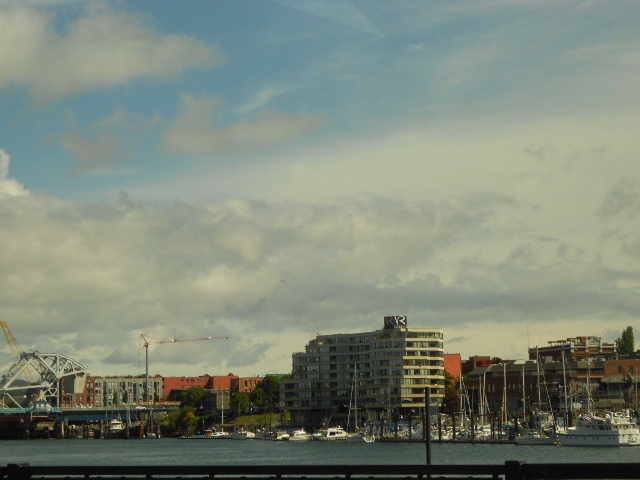
We had decided to add a trip out to The Butchart Gardens to our clipper and hotel package and before we knew it, we were through immigration and on the bus for the 45 minute drive out to Saanich.  Seattle-A was quite excited…
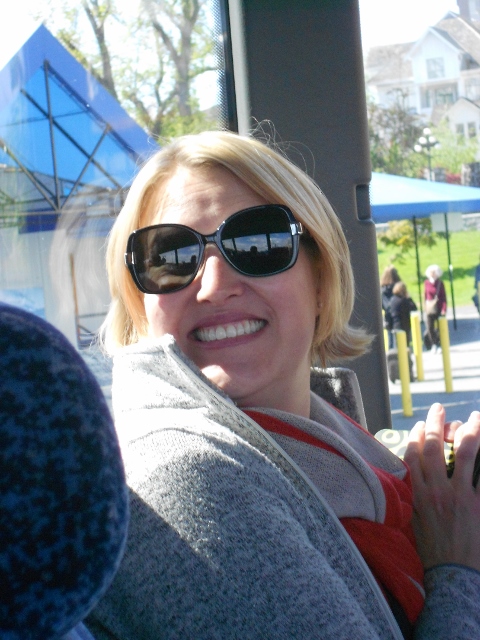
Seattle-A Butchart-bound

Jennie Butchart created her first project, the Sunken Garden, in the exhausted limestone quarry on the family’s property during the early 1900s. Between 1906 and 1929 she then went on to cultivate the Japanese Garden by the sea, the Italian Garden on the old tennis court and the Rose Garden. Today, the Gardens remain a family enterprise and are visited by more than 1 million people each year – with over 22 hectares of public gardens (on a 54 hectare property), I suspect there is probably plenty to keep them busy.

And so we spent a good couple of hours breathing in the fresh clean air and gaping at the extraordinary beauty that greeted us around every corner.
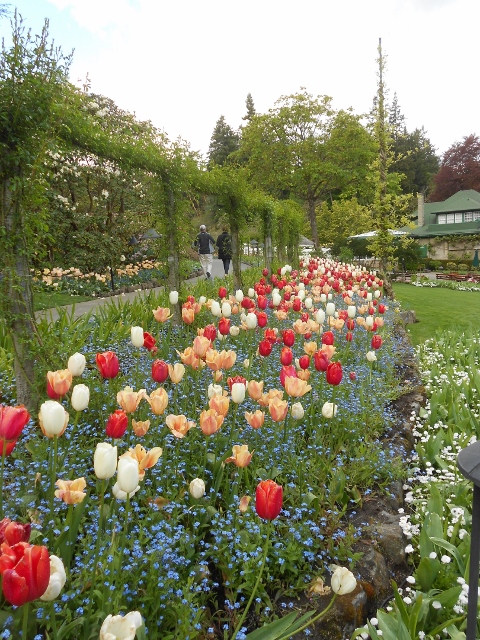
Red white & yellow tulips

An advertised feature of the gardens are the tulips. They were absolutely everywhere and in every conceivable size and colour – this display was right at the beginning as we walked in.

We headed for the Sunken Garden first…I had a little chuckle to myself at the irony of going up to reach them.

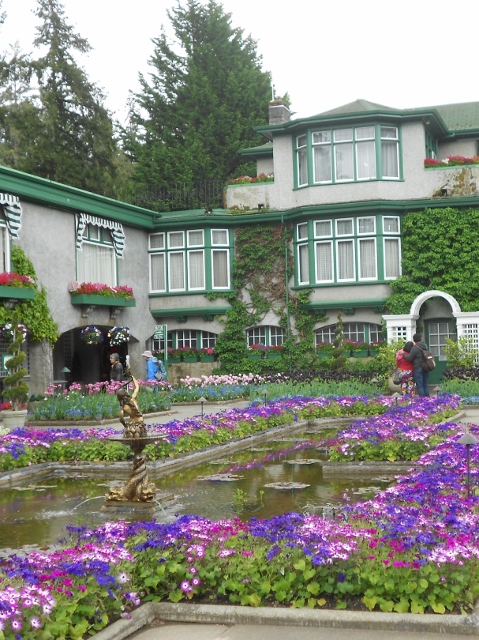
Sunken Garden

The Sunken Garden was spectacular and the going up was definitely worth this view of it. Following the gently curving paths brought us face to face with all sorts of permutations of colourful foilage, fragrant blooms and calm stretches of water.

Red and white

This was such a pretty display and having never seen these red and white striped flowers before, I had to a) take a photo and b) include them in this post. I do not know what they are…do your worst people.
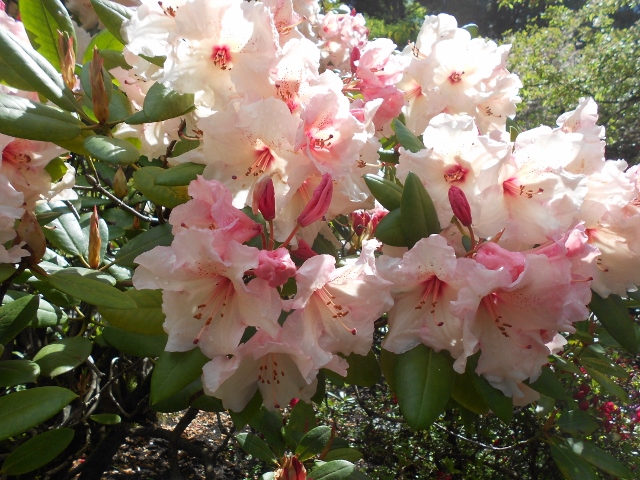
Pale pink

Even though I had seen these before, they were just so pretty I had to take this photo. (I have also forgotten what these are called…green thumb I am not.)
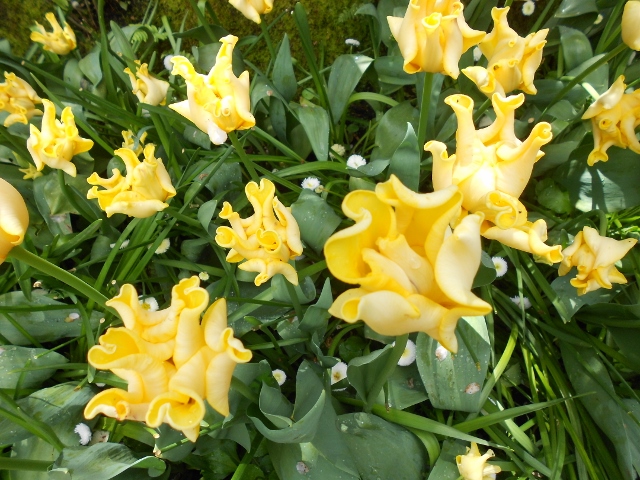
Curly yellow roses

We thought that these were roses but the curly petals lent a more unorthodox prettiness.

White daffs

Daffodils are my favourite flower and while their bright yellow sunshine-iness is a big part of their usual appeal for me, I was struck by the simple delicacy of these pure white ones.

Water feature

This water feature was at the far end of the Sunken Garden and quite spectacular. In posting this photo on Facebook to announce brag about my travelling exploits, I received four different replies in quick succession from people who had been ‘here’ before (obviously a more famous ‘gardens’ than I had given them credit for). One of these was from Dad who posted the ‘same’ photo taken when visiting a few years ago.

Leaving the Sunken Garden, we headed up to the concert lawn…

April on carousel horse

Here’s Seattle-A demonstrating that inside every grown woman, there remains a little girl wanting a pony

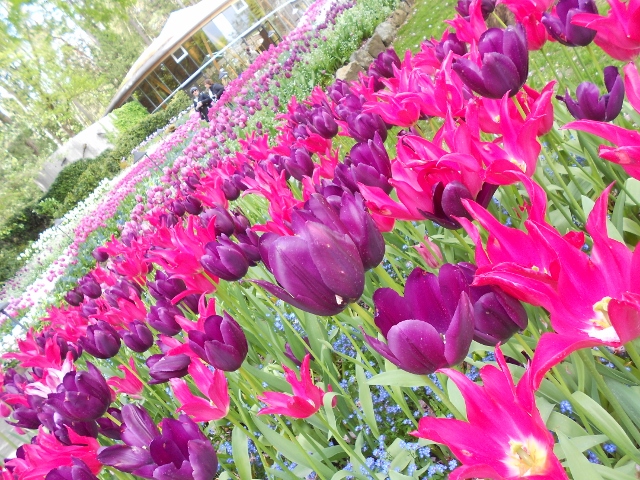
Pink & Purple tulips

More tulips…especially for Lil Chicky.

Me and totem pole

This one is to prove that I was there too: the totem pole shows Eagle with Salmon, Orca, Bear with Salmon…and moi.
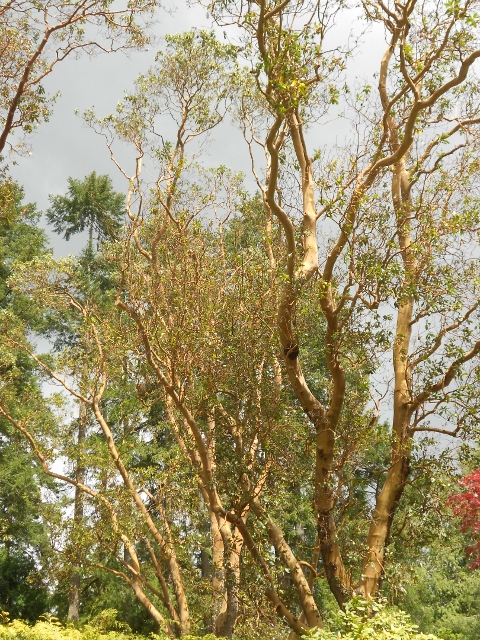
'Aussie' trees

We were struck by how much these looked like Australian paperbarks. They are not Australian paperbarks – we asked – but for the life of me, I cannot remember what they were. Yet another horticultural #fail.

Rare Mongolian PoppyWe were keen to see these Himalayan blue poppies as they only flower for about 6 weeks each year (and we had missed the ‘rose’ season…more on that next). There was a whoop of discovery upon finding a smattering of these bright blue blossoms.
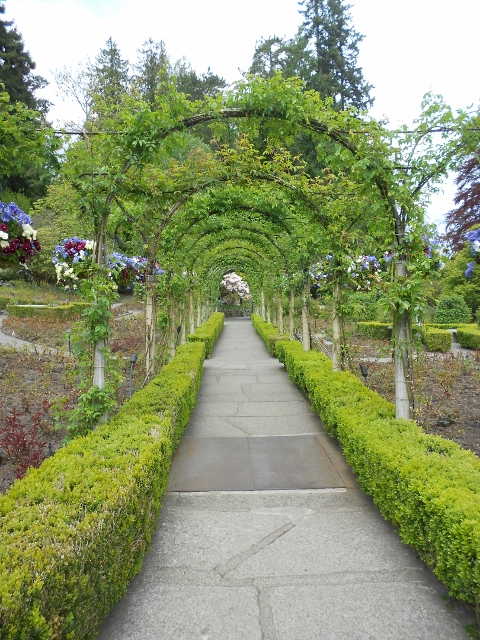
Rose(less) garden

This is the archway through the rose-less Rose Garden. Timing is everything – if you like roses.

Next it was down into the Japanese Garden…

Japanese garden

Stepping stones

Weird white flower

There was some strange flora in this garden. This one was definitely one of the weirdest flowers I’ve ever seen (and which still remains a mystery)…

Bubble tree

…and clearly there’s nothing like keeping oneself busy with a spot of topiary, tree-shapery, pruning. Because 54 hectares is not enough…

Red Bridge

Of the many amazing photos I managed to take, I think this one is my favourite – it looks so beautiful that it seems not real (but it definitely was!)

Nature's window to the cove beyond

We came upon this in a back corner of the garden. I know. This looks like nothing special but if you look through this little window of nature…

The cove 'beyond'

…you’ll see the cove beyond it that backs onto the Butchart property.

We wandered out of this oriental lushness towards the main buildings again to be greeted by another expanse of tulips…

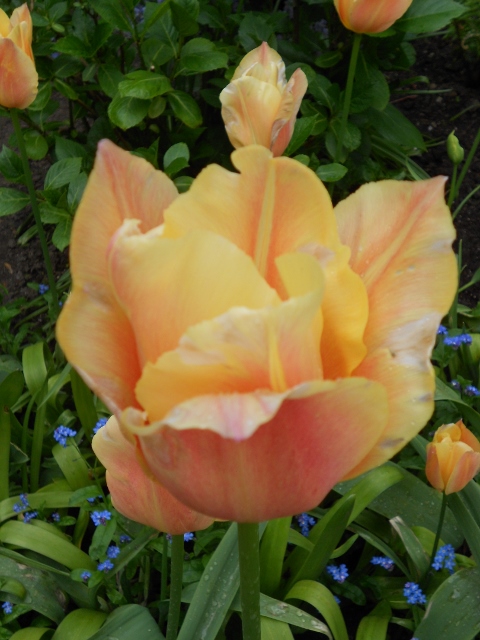
Pink tulips

Apricot rose…and a raft of sunset-coloured roses.

The Italian GardenWalking through the gap in the hedge, we found ourselves in the Italian Garden, the most formal and the smallest of the gardens we’d seen.

At this stage we’d been meandering in the fresh air for a couple of hours so we were delighted to be met with an opportunity for refreshment…

Ice creamBenvenuto indeed! The Maple Walnut Gelato was delicious.

And with that, it was time to return to the bus for the snooze ride back to Victoria and to our hotel where the view from our balcony turned out to be this…

From the Inn at Laurel Point

And as we relaxed on the balcony at the end of our first day ‘abroad’, we sighed contentedly and wondered at the hardships we had been forced to face together…and planned 24 hours of foodie forays to keep us entertained for the remainder of our visit.

More(ish – see what I did there?) on this soon…but if you are venturing out BC way, make a note-to-self – The Butchart Gardens is a ‘must-see’.

The equality emporium

I am typing this from the BA Lounge at Heathrow Airport, waiting for the flight that will take me across the pond to Seattle-A and her boys for a glorious 10 days of ‘hanging out’.

As with all airport journeys I leave plenty of time to allow for a) North Circular and Heathrow spur traffic b) a less than fast Fast Track and c) breakfast and a spotty reading of the Financial Times. Today there was no traffic and Fast Track lived up to its name so I have plenty of time to dash off a little post.

This one is inspired by something I saw on Springwise.com yesterday and got me thinking about that equal pay question. You see this was about a pop-up shop called 76<100 where you ‘pay what you’re paid’. So if you’re a woman and you buy something in this Pittsburgh emporium, you pay only 76% of the price because that’s the gender pay gap in Pittsburgh. (Springwise reports that the plan is to expand this concept to New Orleans next where the store will be called 66<100 – you do the maths. You can find out more at http://www.lessthan100.org.)

I’m reading all sorts of things in the media about women ‘issues’ – after all the suffragettes won the right to vote here in the UK a century ago and the general theme of all of these rallying cries is that we have not come so very far. The use of the word feminist is emerging in common parlance again after years of being tarred as the ‘other F-word’ and an election would not be an election in the UK without most of the parties bandying ‘women issues’ about as part of their appeal to the swinging voter (anyone see Labour’s pink campaign bus – I mean REALLY?)

For the most part it just sounds like noise to me and while I accept that there is still a gap to bridge, I just think that there are so many of these bridges to build and for so many of us. The problems of women’s representation on Boards and equal pay – while I do acknowledge their importance – pale when I think about the things I read, that I have never been exposed to – rape, ostracision, FGM, beatings and other torments seem a much greater problem to fix. And not just for women but for all groups who are at the ‘skinny end’ in the balance of society’s power.

And then last night I read the latest post from fellow blogging friend, Travelling Penn (travellingpenn@wordpress.com). We worked together a long time ago – she has since retrained as a communicator for World Vision and travels to far-flung places to support aid efforts for the world’s poorest and most powerless. She has been posting on Facebook recently about the power of global aid efforts to help those affected by the earthquake in Nepal. Anyway, in her post she shared some numbers – 60 million people facing an humanitarian crisis, 36 million of those children.

It puts the notion of equality into a different light doesn’t it?

It is an overwhelming set of numbers and my friend writes about remembering the face of each child she has helped to avoid despairing as she tots up the columns. And I thought to myself, whatever the crisis of equality – whether it’s gender, sexuality, poverty, race, religion…the list goes on – the difference we make is really person by person and moment by moment.

So when next I am admonished to ‘step up’ and ‘lean In’, I will do just that. Because while I’m just one person, so are all of the people I come into contact with each day. And with a little extra from all the ones, I have to believe that it is possible to make a difference.

2015-05-01-08-33-52-1022264415


Smartie

This morning on the way to work, I opened an email from Mum containing some sad news – that Smartie (the cat) had died.

Smartie and sister Kit Kat arrived at Mum’s beachside pad about 12 years ago and quickly made themselves part of the family. While the hormonal effects of having them spayed led to their affectionate dubbing as Fatty and Scatty by Lil Chicky, there was no doubt of their permanent place in all of our hearts, especially Mum’s.

I’ve been living overseas for 11 of those 12 years and Kit Kat and Smartie have been every bit a part of my familial pilgrimages Down Under, whether curling themselves through my legs as I come through the door, mewling plaintively as I sit in ‘their spot’ on the couch or purring quietly next to me in Mum’s tiny courtyard garden, me draping one hand over the side of the chair to stroke an upturned chin or bowed head while I read.

Even so, I was surprised by how upset I felt by the news.

I walked along Victoria Embankment to the office today, through Whitehall Gardens with the Thames on my left, the morning sun glistening gently off the water. And it was the perfect place to give in to my tears. I cried for the cat for whom endless patting would never be enough. The cat who climbed into the bathroom sink each morning to watch Mum put her makeup on. The cat who sat out in the rain yesterday and then hid herself away to die.

I cried for Kit Kat, wondering where her sister and playmate has gone.

And I cried for Mum, for whom this is so sad a loss. Her email brought her worry, her search for Smartie and her sad discovery all the way across the world to the banks of the Thames and it pierced my heart to read her words and reflect on Smartie’s affectionate – albeit insistent – charm and the Smartie-shaped gap left by her passing.

As I dried my tears. I kept thinking to myself it’s not Mum, it’s not Lil Chicky or anyone else in my family. It’s not like the family pets we lost as I grew up, the ones I shared a house with and shouted at in frustration to ‘get off my beanbag’ or ‘leave the sausages alone’. But there it was anyhow – a heaviness in my heart and warm tears in my eyes.

Smartie now lies peacefully in the bower in Mum’s tiny courtyard garden.  The very place she’d come to find me, meowing insistently until my hand fell from the arm of the chair to rub my fingertips between her ears.

May she rest in the place I always found peace.

paw prints

Men of imagination

I’ve had an extra couple of days off to extend my Easter into a 6-day break and it’s been a lovely mix of lolling about at home and getting out and about to explore more of this amazing city.  As some of you know, the Museum of London is a favourite of mine but this time I went to wander through the Sherlock Holmes exhibition (which finishes on the 12th of April – how did I nearly miss this?)

icons of Holmes

Detective Sherlock Holmes featured in the 4 novels and the 56 short stories of Sir Arthur Conan Doyle. Conan Doyle trained as a physician in Edinburgh in the late 1800s and also started writing during this period. He had limited success until the publication of Holmes’ first outing in A Study in Scarlet in 1886 with the sequel, A Sign of Four, published in 1890 while Conan Doyle was studying opthalmology in Vienna. He then wrote The Adventures of Sherlock Holmes and The Memoirs of Sherlock Holmes, each comprised of 12 short stories and elevating Conan Doyle to being one of the best-paid authors of the time.

But Conan Doyle was unhappy with the time ‘taken away’ from more serious writing pursuits and in 1893 wrote The Final Problem, plunging Holmes and Professor Moriarty to their deaths at Reichenbach Falls. But Holmes had taken such a firm hold in people’s minds that in response to public outcry, Conan Doyle resurrected his popular protagonist in 1901’s The Hound of the Baskervilles and continued to scribe his consulting detective’s adventures until 1927.

It is worth remembering that Holmes is a man of imagination – the imagination of Sir Arthur Conan Doyle. Conan Doyle created a quirky, impatient and sometimes unlikable character who loved the gossip columns and yet was in equal parts enthusiastic and dismissive of society and its pretensions; who could wax lyrical on criminal method and motivation yet exhibited such anti-social behaviour that at times, you might question how Holmes could have any insight into people at all. I wonder whether there was something in Conan Doyle’s interest in freemasonry and mysticism that brought an extra potency to his complex and quite frankly addictive protagonist.

Anyway, I love these stories and although I have not read them all, I have seen many of the TV adaptations starring the marvelous Jeremy Brett. So it was with Brett’s brooding portrayal in mind that I entered through the bookcase and spent just over 90 minutes wandering though both memories and memorabilia.

the bookcase

It was fabulous and I am now reading The Adventures of  Sherlock Holmes again.

Then yesterday I went to visit Churchill’s War Rooms. I’ve been meaning to do this for years and so I battled the Easter holiday hordes trundling along Whitehall and descended the steps beneath King Charles Street to the museum below. This underground labyrinth contains both the original War Rooms – left as if someone simply turned the lights off in 1945 and closed the door behind them, leaving everything just as it was – and the Churchill Museum, which covers this charismatic man’s entire life.

Like Holmes, Winston Churchill was a strong and opinionated character who fell in and out of the affections of his public. He was a committed politician and stood for office several times in his constituency and for the office of Prime Minister. He also wrote from the age of 21 to supplement his income and was awarded the Nobel Prize for Literature in 1953.

I feel devoutly thankful to have been born fond of writing. Churchill, Authors’ Club, London, 17 Feb. 1908

Had World War II not broken out Churchill may have been written off as a failure. Despite early popularity as a war correspondent and his escape from capture during the Boer War, he lost his position as First Lord of the Admiralty following the Gallipoli campaign and his opposition to home rule in India and support of the abdication of Edward VIII throughout the 1930s did nothing to restore his reputation. It was during this period that Churchill raised his concerns regarding the activities of Hitler and continued to warn against the dangers of appeasing such a man. His warnings went unheeded not only because of Churchill’s reputation as a war-monger but also due to Britain’s aversion to embarking on another ‘bloody’ war.

But circumstances conspired to create the right place and time and Churchill captured the public’s imagination by demonstrating his great passion for his country in his speeches – the words he wrote and then delivered into history:

We shall fight on the beaches, we shall fight on the landing grounds, we shall fight in the fields and in the streets, we shall fight in the hills; we shall never surrender, Churchill to the House of Commons, 4 Jun. 1940

There were many other speeches which stirred the nation and in fact the world, and Churchill went on to lead his country both during and for some periods after the war and to continue writing the pages of history until his death in 1955.

I consider that it will be found much better by all parties to leave the past to history, especially as I propose to write that history myself.  Churchill, speech to the House of Commons, 27th Nov. 1914

That two such iconic British characters can cross the divide between fact and fiction is quite extraordinary to me. While we will never know Sherlock Holmes (because he’s not actually a real person), the visit to the War Rooms made me wonder how much of the real man – Churchill – is about the ‘facts of the matter’ versus being inspired by the imagination.

Churchill campaign poster

How do we ever know where the facts end and fiction begins?

9 minutes of glory

When I first visited London in 2000, I was smitten by all of the things that a tourist to this great city is usually smitten by – the iconic images seen in movies, read about in books and learnt about in high school. That it’s all real is amazing. That it’s all so old is inspiring.

I loved both history and literature at school and so was especially keen to visit Westminster Bridge, having been inspired by William Wordsworth’s Composed upon Westminster Bridge, 3rd September 1802:

...The City now doth, like a garment, wear / The beauty of the morning.

When I stood on the bridge just over 14 years ago, snapping eagerly away at the gilded clock tower of Big Ben, its face smiling benignly over the Houses of Parliament and Westminster Abbey, little did I imagine that I would ever walk beneath those historic spires on a daily basis.

For the last 18 months, I have been based in an office less than 500 metres away from these icons of London. Each morning, I emerge from Westminster tube station beneath that resplendent clock tower and walk the 0.4 of a mile to the office (about 9 minutes) with Westminster Palace at my elbow to the left and Westminster Abbey just across the road to my right. And then I get to do it all again – in reverse – on my way home.

I am regularly filled with this feeling of delighted disbelief – when the little voice whispers softly in my head, ‘This is my life. I really did this.’ I can’t help but smile. It seems impossible to be immune to this sense of wonder and I remain astounded that it has not yet paled. Samuel Johnson wrote, ‘The man who is tired of London is tired of life’ – I know what he means.

In those moments of wonder, I find myself pausing for a little longer in an attempt to capture the moment. My Facebook friends know only too well how much I love to snap and share and in doing a little phone gallery spring cleaning the other day, I was so struck by the range of photos I had taken in the last few weeks that I wanted to share them with you too.

So welcome to my commute…

Arriving at the top of the stairs at Westminster tube station, I pop into a nearby coffee shop and emerge with cup – and often camera phone – in hand to this…

underground sign

A short walk takes me to the corner of Bridge Street and Parliament Square giving me this view of the Houses of Parliament (Westminster Palace) as I cross the road…

Westminster Palace from Whitehall

…this view of Whitehall – which leads past Downing Street and up to Trafalgar Square – over my right shoulder…

Looking down Whitehall

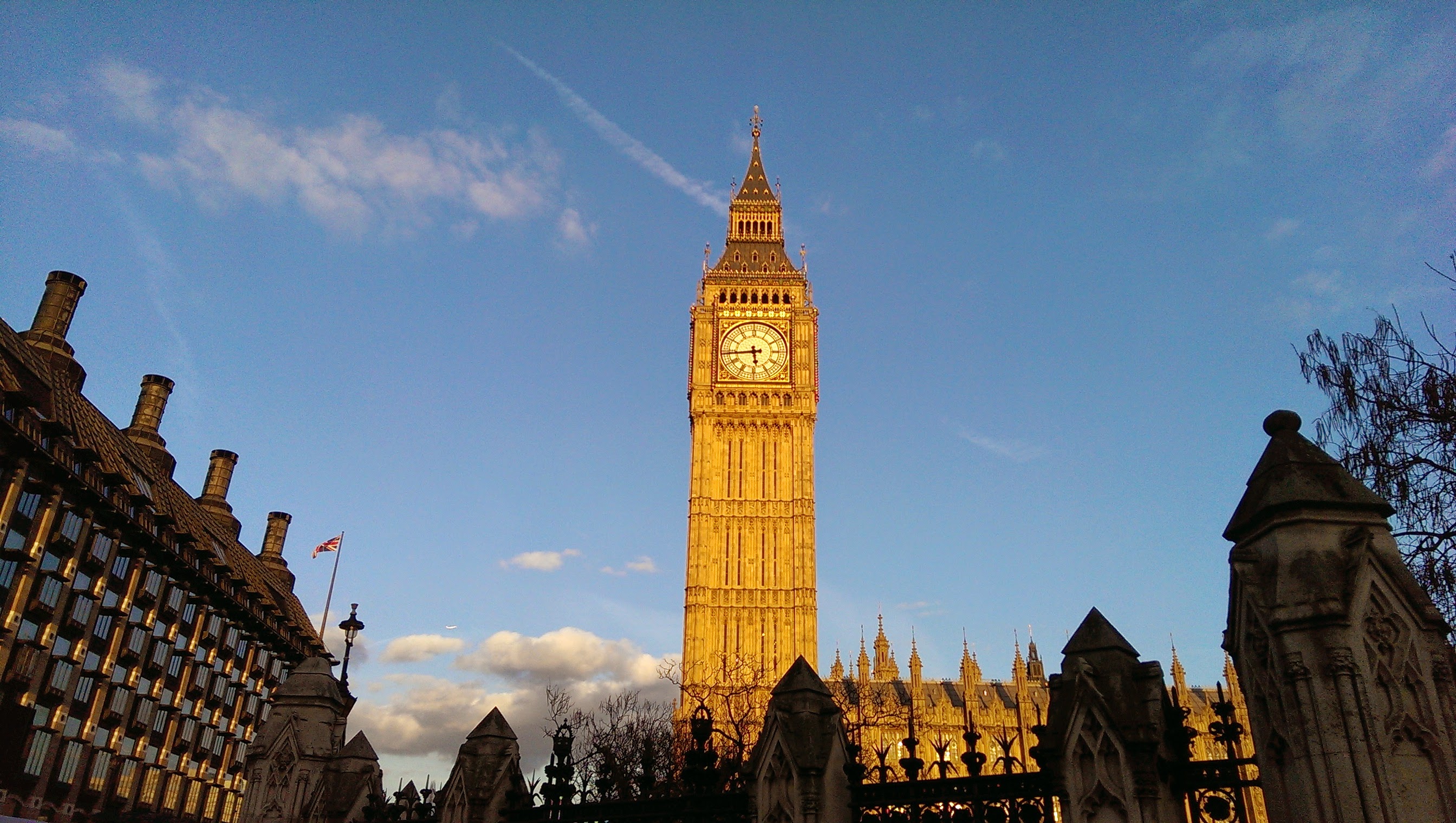
…and the clock tower to my left. This particular shot was taken in the afternoon but sometimes I get my timings right and my commute is accompanied by the deep chimes of Big Ben heralding the hour.

Big Ben

I walk right past the Palace – this was taken from the end of the palace building looking back towards the tube station (now hidden behind the walls of Westminster Hall).

Return journey

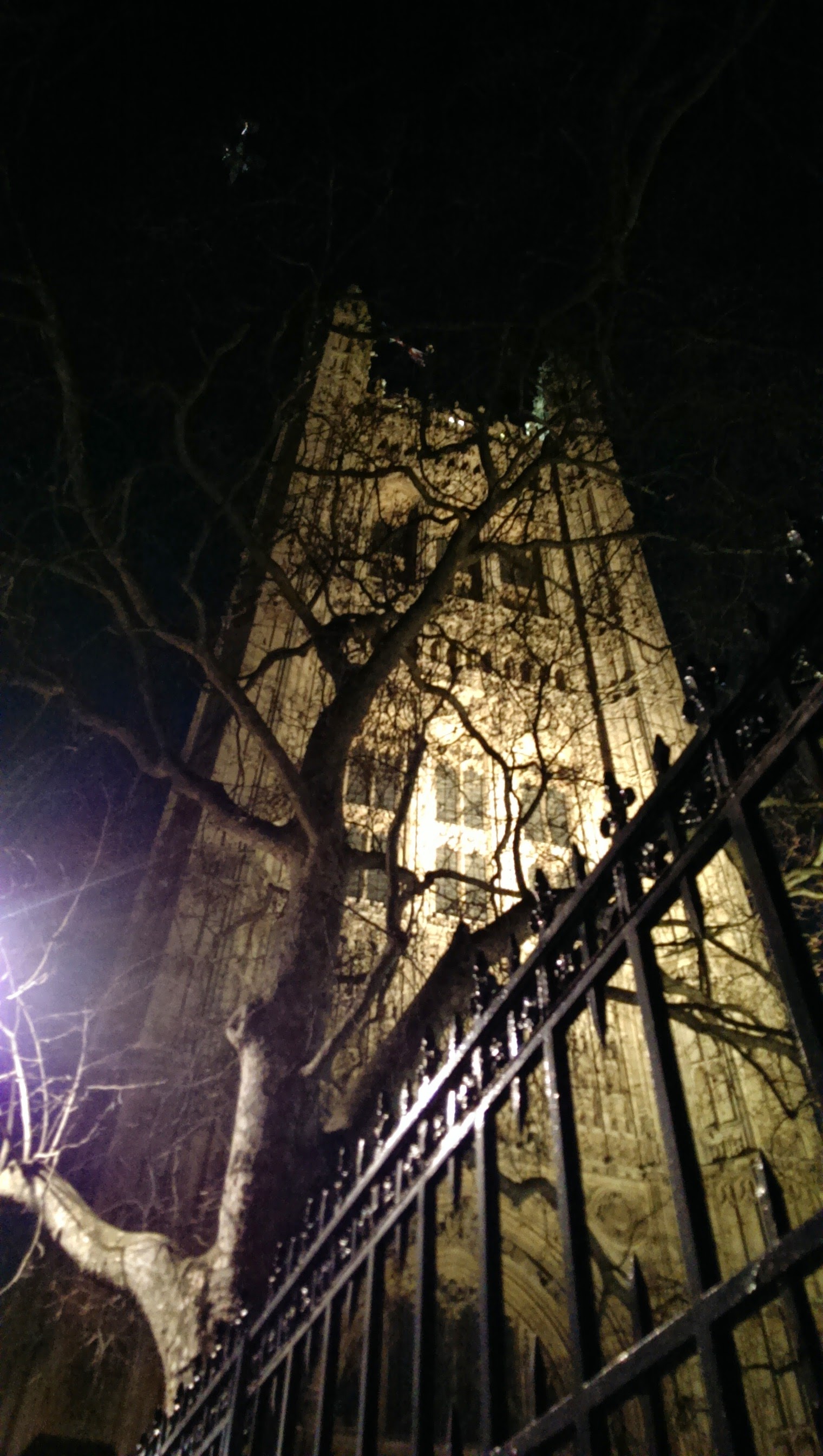
Looking upwards provides another spectacular view, this time of Victoria Tower which houses the Norman Porch and the Sovereign’s Entrance – this is the only route that the Queen is allowed to use to enter the building (which she most famously does each year at the State Opening of Parliament.)

Norman Porch

Taken from the same place but on a different day and in another direction, this is Westminster Abbey, home to the Coronation Chair (Westminster Abbey has been the church for every coronation since 1066), Poet’s Corner and the Grave of the Unknown Warrior. The two square towers are the ‘back’ of the main entrance.

IMAG2340

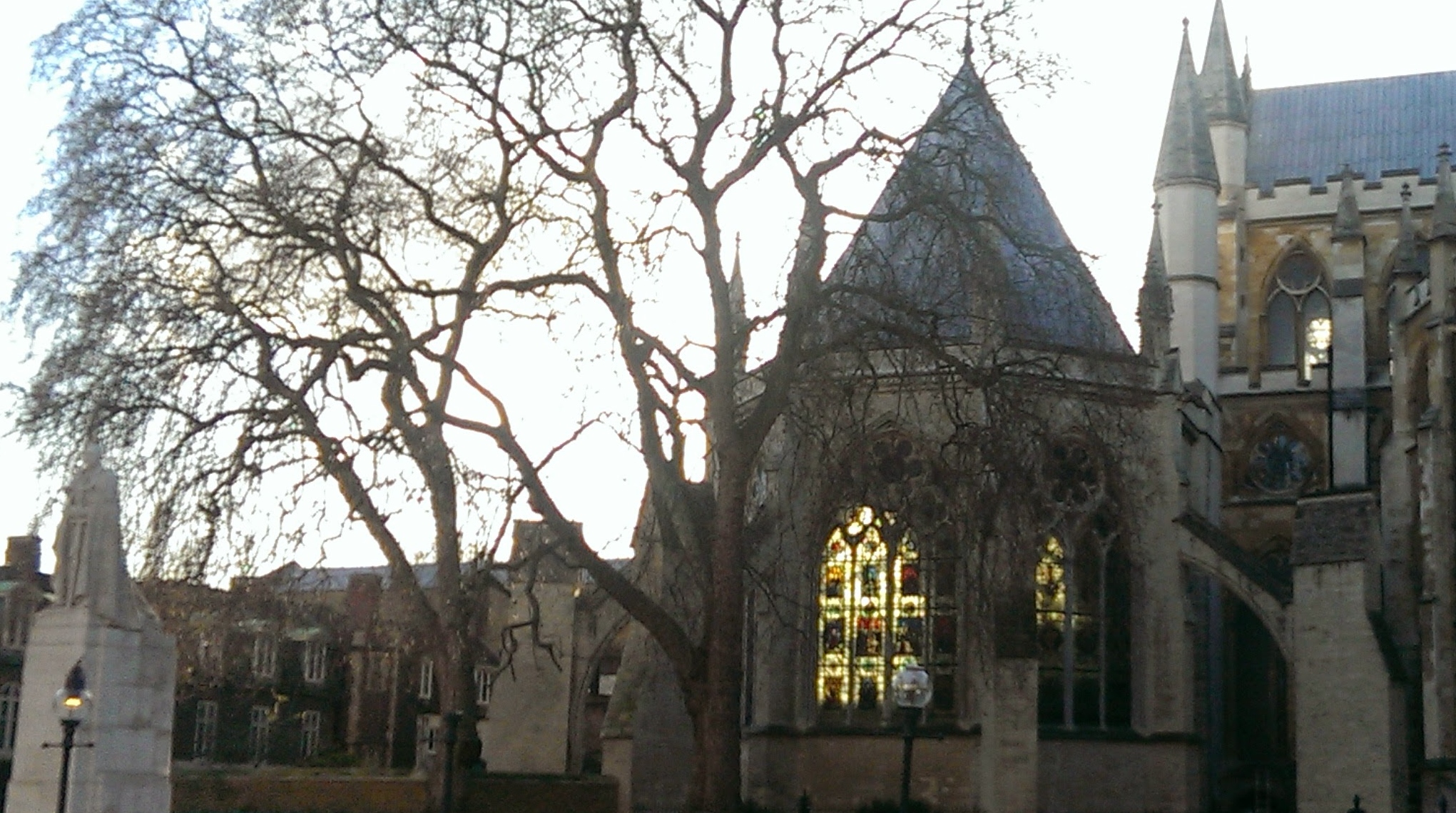
Just last week I captured the afternoon light streaming through the stained glass of the Abbey’s windows…

Abbey Windows

…and this 700 year old building doesn’t look too shabby at night either.

Abbey night

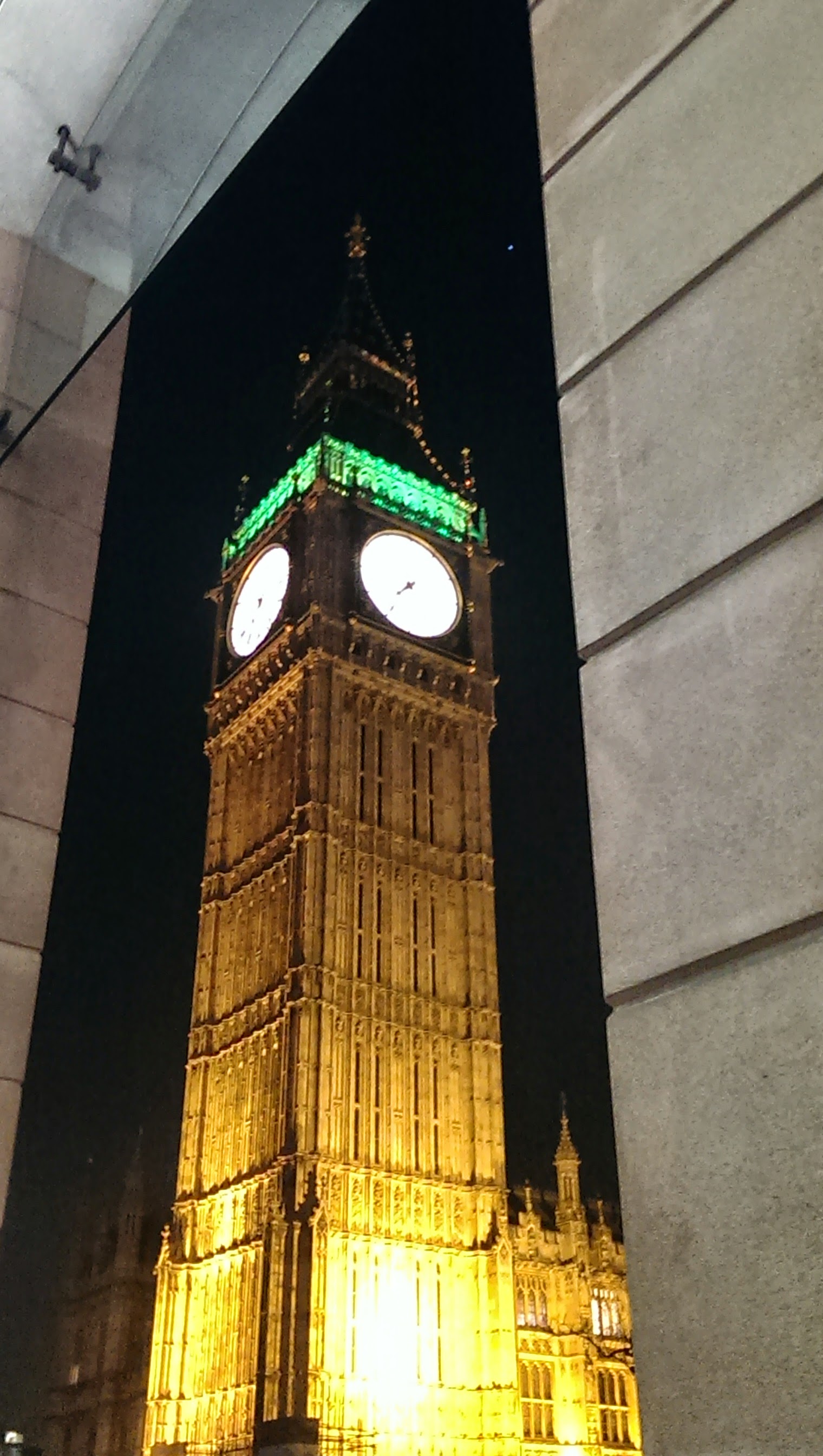
And then the glowing clock face marks my return to Westminster station again. This picture was taken by pausing during my normally rapid clip along the concourse that runs back towards Westminster Bridge and the stairs down to the tube.

Big Ben framed

So that is my commute peeps. Well 9 minutes of it anyway and in a total of 40 minutes – that’s an awesome and glorious 22.5%. Every. Single. Day.

(Except Saturdays and Sundays and Bank Holidays and vacation days and…oh well you get the picture.)

Let’s face it, if I’ve got to commute anywhere, I’m rather glad that it is this one.

Laps(e)

Last August I started swimming again. Not the splashing about or floating around in the resort pool kind but the concerted continuous heart-rate-raising sort.

It has been six years since the last watery bout, the reason for the hiatus largely a combination of busy-ness, injury and just plain laziness. But interestingly, what drove me back was not physical but mental. I was looking for peace.

This might sound strange and you may expect that physical well-ness might be a greater driving force – after all swimming is credited with toning muscles, increasing both heart rate and flexibility and improving breathing all with less stress on the body than many other forms of exercise (quite important when you’re both injured and unfit). But having been promoted into a new job at the end of 2013 with all that taking ‘ a step up’ entails (stretch number 1), some pretty unrelenting spates of overseas travel (stretch number 2) and a general lack of good quality, restful sleep (stretch number 3), my mind was stretched to breaking point and I needed to ‘make it stop’.

So at the end of August, into the pool I went –  a 16m rectangular water bath in the basement of the building at work – and except for my 3 weeks away over Christmas, I have ploughed up and down for 40 minutes, lap after lap after lap, at least once a week.

Every week I climb down the ladder, the water temperature slightly cool against the warmth of my skin. I push off from the end, head down, feet kicking and arms reaching forward rhythmically, hands slightly cupped to gather and pull then reach forward again. My hair slicks back and my body feels buoyant and sleek – like an arrow moving purposefully along the surface of the water – as I knock off the first fast, heart-rate-raising laps.

Then the pulse shifts and there’s a different effort required, one that draws from somewhere deeper in order to calibrate the energy of breathing and body. The constant flow of arms and legs becomes meditative as the techniques learned in the early mornings and swim meets of childhood kick in. My mind wanders then returns to the water then wanders away again. Thoughts tumble around in between limbs and muscles and breath – sometimes from the day, sometimes from longer ago and I let them all trundle about at will with the rhythmic reach-and-pull, reach-and-pull, reach-and-pull in the background.

There’s something about letting thoughts roam without driving for some sort of order or resolution that settles them somehow.

Then my arms tire, my body rolls with fatigue and I focus again on the water. Technique moves to the forefront as I check that my arms stretch forward, that my core draws in to hold my position and that my kick doesn’t slacken its pace. My head swings to the right with every stroke, methodical in its pursuit of air. I count the laps down in my head, the promise of the end driving me on until I touch for the final time. I rip off my goggles and exhale gratefully. One hundred laps – done.

It started slowly – 50 laps with a rest after every ten – and as the muscle memory and fitness has returned I’ve been able to increase the laps I churn out each time. Every swim has a different cadence: sometimes it’s harder to get started, some days there’s a definite dip in the middle (pardon the pun) and sometimes those last laps drag remorselessly. And the day I’ve had seems to have no bearing – I’ve gotten enthusiastically in the water on some days to be met with a feeling of ‘swimming through treacle’ while on others, the water feels like silk and lethargy seems to float away with every stroke.

But more importantly, for 40 minutes each week I stop referee-ing all of the little voices and let my head just sort itself out.  And in all of the reach-and-pull, reach-and-pull, reach-and-pull, I find my very own piece of tranquility.

underwater 1

On transformation

It’s been busy on the extra-curricular front lately and I’ve experienced such an extraordinary trio of events that it’s actually taken me a while to shape all of the amazing stuff I’ve seen and heard into something more than a rambling discourse.

Let me start at the beginning.

I love Flamenco. I’ve loved it ever since the moment I first set eyes on it in Seville in 2002. I love it deeply and passionately, like the spirit of the dance itself. And a little over two weeks ago I was in the audience for Flamenco Gala, the event that marked the opening of the London Flamenco Festival.

It was an hour and 45 minutes of pure transformation. Each piece was filled with its own essential character: intense sensuality, sartorial elegance, youthful impertinence. (And that was just the three ‘leading’ men.) There were no stage sets and no props, each performance needing only the cast of dancers, musicians and singers to capture its essence and cast it out into the audience. I reached out to grab it and never wanted them to stop.

These people transformed Sadlers Wells with their passion and fierce charm, drawing us in and holding us in their thrall until the very last compás. As the last note faded, the theatre filled with woops and bravos and cheering and my arms ached from clapping for so hard and so long. It was utterly thrilling (and may have had something to do with my insomnia that night).

The following week I went hear Thomas Heatherwick speak on surprise, ingenuity and transformation. This is the man who has hit the headlines here in London with his new London bus design and who alongside Joanna Lumley, has been inspired to transform Londoners’ relationship with the Thames through the Garden Bridge proposal. He is also the man who, during London’s 2012 Olympic Games, transformed the Opening Ceremony: an extraordinary moment in Olympic history that showed how the true spirit of the Games – a coming together of 204 nations in a single endeavour – could be epitomised in the lighting of the flame.

He has been doing many other things and for just over 2 hours, talked passionately about transforming our urban environments through a unique blend of redefining the brief and solving ‘the problem’. I didn’t love every project he showed us but I had a strong opinion on each and for me, that’s what sets this catalogue of innovative design ahead of the rest.

And then last Sunday I went to see an interview with novelist and academic Howard Jacobson. I’ve never read any of his books but I had read articles he’d been quoted in and was curious to hear what he had to say. His new book J, imagines a dystopian future where many ‘Js’ are banned – no jokes, no jazz and no Jews.

The discussion became less about the story itself (excellent, no spoilers!) and more about ideologies and the human need for argument to keep such ideologies alive. Being Jewish himself (the interview was part of Jewish Book Week), he particularly talked about the notion of Christian/Jewish argument being at the source of each of these ideologies and that without one, perhaps the other would not exist. He posed the question that if the opposing view just disappeared and there was no need to defend a position, would an ideology simply run out of steam? I thought about that all the way home.

The theme that has so enchanted me about these three events has been their ability to transform, whether in bringing a passionate past to life, a striking twist to an urban landscape or a thought-provoking version of a possible future. I love that these experiences stimulate my imagination and for days afterwards, I felt inspired creative and somehow emboldened in my day to day endeavours.

And it seems to me that these people and others like them – who keep exploring the what ifs about our world – are the ones who, with every step, design or idea will inspire us to break out of our comfortable cocoons and strive for new horizons.

monarch-butterfly

Rites of Passage

Today I had a grand plan to complete some posts that have been lounging about in the Gidday pipeline in various states of draft-ness.

But today London is basking in a gloriously sunny 16C and after months of a) commuting in woolly tights (among other items of apparel) and b) weekends snuggled up indoors, I could not resist the temptation to make a quick Plan B – a couple of hours catching up on my Vanity Fair reading on the back patio with sun warming – yes warming! – my bare arms and shoulders.

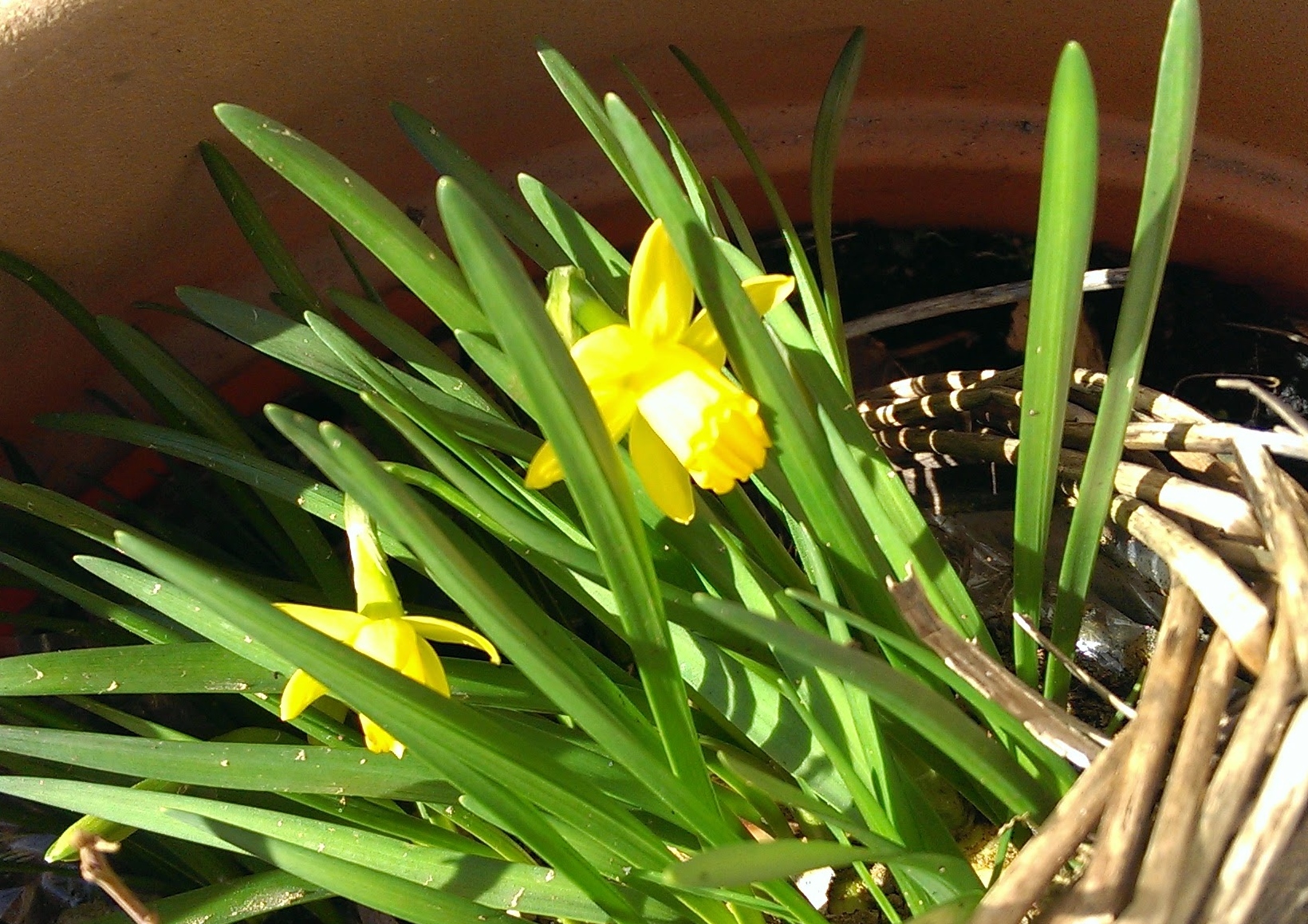
And it would appear that March is certainly living up to its name as London marches resolutely into Spring. Much to my delight, I found my first daffodils bobbing their merry yellow heads on the patio…

IMAG2282

In other news, after my dual personality nationality status was bestowed upon me back on a grey day in January, last night’s post held another important rite of passage – my first British passport.

IMAG2280

So there was nothing for it but to celebrate with yet another rite of passage – scoffing a couple of Mint Slice biscuits, packets of which have been recently discovered on Ocado courtesy of a helpful tip from fellow Aussie witterer, Vegemite Wife. (Thanks mate!)

IMAG2274

So that’s me sorted. How are you marking the change of seasons?

The Great British Boast Off

You might think that the British are a modest bunch. Not for them the brash competitiveness of the Americans, the super-styled ‘look at me’ of the Italians, the colourful flamboyance of the Brazilians or the voluble national pride of the Indians. No, Brits are self-effacing, stoic types who enjoy a moan through their stiff upper lip much more than a me-moment.

Or do they?

The proliferation of ‘Great British’ television shows might suggest otherwise and whilst singing contests for warbling amateurs demonstrating their vocal chops have long been a fixture of reality TV, a range of more everyday pursuits have found their way into our living rooms.

To my mind, this spate of TV DIY-ness began with The Great British Bake Off.

For the uninitiated, a group of home bakers compete in a flurry of flour, butter, eggs and sugar to win the title of Britain’s Best Amateur Baker. The series began on BBC2 in 2010, when Britain’s recession forced wallets closed and people indoors. Five series on, GBBO has reached both BBC1 and an average viewership of more than 10 million (up from 2.7 million in Series 1). It has spawned spin-offs such as Junior Bake Off, The Great Comic Relief/Sports Relief Bake Off (2 series of each so far – the Comic Relief version is running at the moment) and segued jauntily into 15 other countries – I’m thinking that Denmark’s The Great Baking Joust (Den Store Bagedyst) sounds like quite a competitive arena versus the British Bake Off tent that I know and love. Series 4 attracted more than 10,000 applicants and 2014’s Series 5 was accompanied by An Extra Slice where the latest departures could lament the justice of their elimination.

The series has been credited with reigniting the public’s love of baking and I count myself amongst this number. During said recession, finding a relatively low cost hobby to keep my hands busy and my mind off the financial challenges my circumstances had brought to bear provided many moments of simple and joyful accomplishment. And I find nothing more enjoyable (well, maybe a gutsy red wine with some great cheese) than curling up on the comfy couch after a hard day at the office for a little armchair judgement of a dozen spatula-wielding amateurs.

It would seem that success breeds….well copycats. And every time I turn on the telly, there appears to be yet another amateur home-challenge to be taken on.

2015 has already given us the third series of The Great British Sewing Bee. It’s a similar format to GBBO with ten sewers (yes that’s what they are called – an unfortunate homographic coincidence and should be pronounced so-er) judged by experts from The Women’s Institute and from Savile Row for their worthiness to the claim of Britain’s Best Home Sewer (now remember the pronunciation peeps). Contestants stitch their way through three challenges – Pattern, Alteration and Made-to-Measure – to produce, among other things, necklines, patch pockets, men’s shirts and evening dresses. It appears to be gathering momentum with the number of episodes doubling to eight for Series 3.

Then there’s The Big Allotment Challenge, again from the Beeb. Series 2 has just concluded with nine budding horticulturists taking on six weeks of Grow, Make and Eat challenges in the heart of the English countryside. This enterprise takes a bit more long term planning for the chosen green-fingers-and-thumbs (4 months) – even I know that it takes longer than a few episodes to grow a bounty – and as a bonus, throughout the series you could download each contestant’s plot layouts if you felt particularly inspired to ‘allot’ for yourself. In case you are wondering, I did not, despite my efforts to cultivate a little self-sufficiency with a Gidday HQ patch at a previous time and location.

And then The Big Painting Challenge starts tonight with week one’s theme – landscapes – to be painted at Hogwarts (aka Alnwick Castle, Northumberland). Ten amateurs will pit their paintbrushes against each other to be crowned Britain’s Best Amateur Painter where the glory of winning  the title seems to hold significant appeal. Consider this: the show attracted more than 6,000 applicants against the Sky Arts Landscape Artist of the Year (previously Portrait Artist of the Year)  which offered the winner a £10,000 commission (and which is added to the National Trust‘s permanent collection) and a previous show, BBC2’s defunct Show Me The Monet, giving the winning artist the chance to sell their works in a London gallery.

So despite the self-effacing stereotypes that abound, these shows suggest that the Brits do like a contest and that the glory of a title is enough to encourage them off their couches and into their kitchens, sewing rooms and the great outdoors. This may not be surprising when you consider that titles still ‘matter’ here and ‘lordship’ is bestowed on those not born to it on what seems to be a pretty regular basis.

Rumour has it that the next in the BBC’s arsenal of challenges is one for the angler – travelling around the world to prove themselves across a range of fishing locations and techniques. It just might be worth watching this – after all what could be more entertaining than to see who will be crowned…

…The Big Fish?


Old places, new faces

I spent a couple of weeks in Melbourne with family over the Christmas/New Year period and one of the things that I love to do (and miss) is hang out with my sister. There are the things we girls traditionally do – shopping, manipedis and generally hanging out over coffee (and I was reminded once again that Melbourne has the best coffee in the world) – and then there are the moments of ‘inspiration’ subject to how we are feeling at the time.

We were off to partake in a musical favourite of mine, Grease. I know every word and every song (having played Frenchie in our high school production) so I was looking forward to an afternoon of energetic A-Wop-Boppa-Looma-A-Wop-Bam-Boom-ing. And it was on the way to the theatre that I stumbled across a distinctly different face of Melbourne.

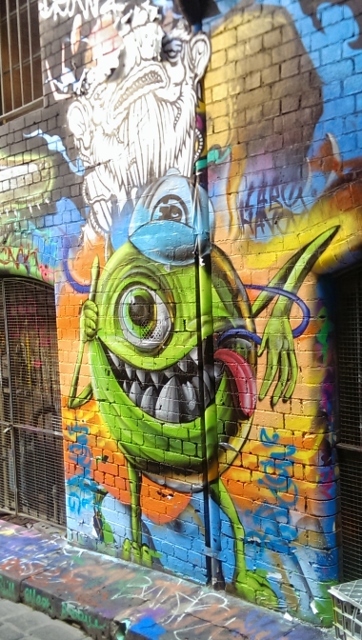
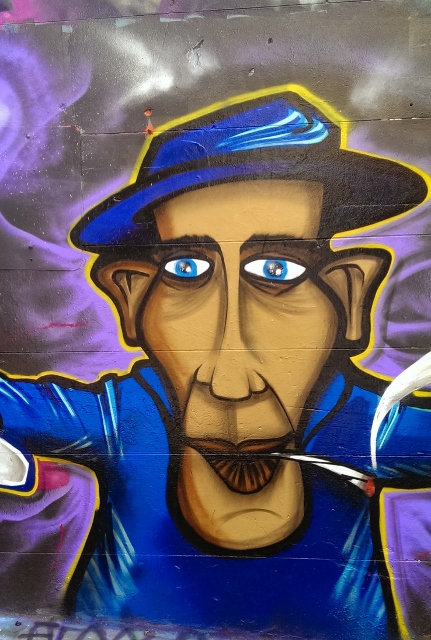
Hosier Lane is a cut through between Flinders Street and Flinders Lane alongside the Forum Theatre. It is an unexpected riot of vibrant colour and expression in the midst of the area’s architectural melting pot of gothic (St Paul’s Cathedral), Moorish Revival (Forum theatre), French Renaissance (Flinders Street Station) and contemporary (Federation Square) styles. I could not stop myself from whipping out my phone in an attempt – let’s face it, these things are never as good ‘on film’ – to capture its brilliance.

Hosier Lane 1

We made our way along the alley, the air littered with ‘ooohs’, ‘aaahs’ and the subtle snap of selfies. My head swivelled touristically from side to side to admire each urban canvas and as I meandered along the cobbles with the other Sunday strollers, what struck me most was the how vividly the character of each of Hosier’s painted residents had been brought to life.

Hosier Lane 2

Are any of you old enough to remember this young lady from The Wacky Races

Hosier Lane 3

…or youthful enough to know this ‘lovable’ pair from Monsters Inc.?

Hosier Lane 4

Hosier Lane 5

I have been told that shoes hanging from a light indicates where one can score a fix…or is this just an urban myth?

Hosier Lane 6

I would not like to meet this dude in a darkened alley, alone or otherwise…

Hosier Lane 7

…although the location nearby of Ganesha, the remover of obstacles, could be considered fortuitous.

Hosier Lane 8

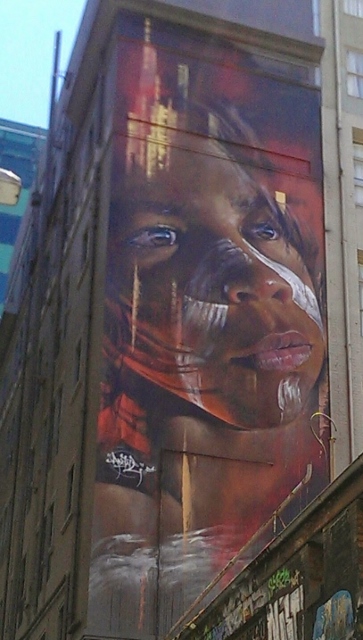
And last but certainly not least, a look skyward evoked the spirit of Australia’s indigenous past.

Hosier Lane 9

Street art continues its emergence as the next ‘big thing’ and a quick google on the way home from the theatre yielded both a list of sites to visit and the hows and wherefores of getting your particular expression of self into Melbourne’s urban spaces.

Unfortunately, we did not get to any of the others during my sojourn Down Under but it has inspired me to look for even more of this in London having browsed Brixton’s backstreets last year. And it would appear – according to a range of stuff-to-do sources that drop into my Inbox on a fairly regular basis – that East London is the current jewel in this city’s urban art crown.

So stay tuned…Shoreditch, here I come!